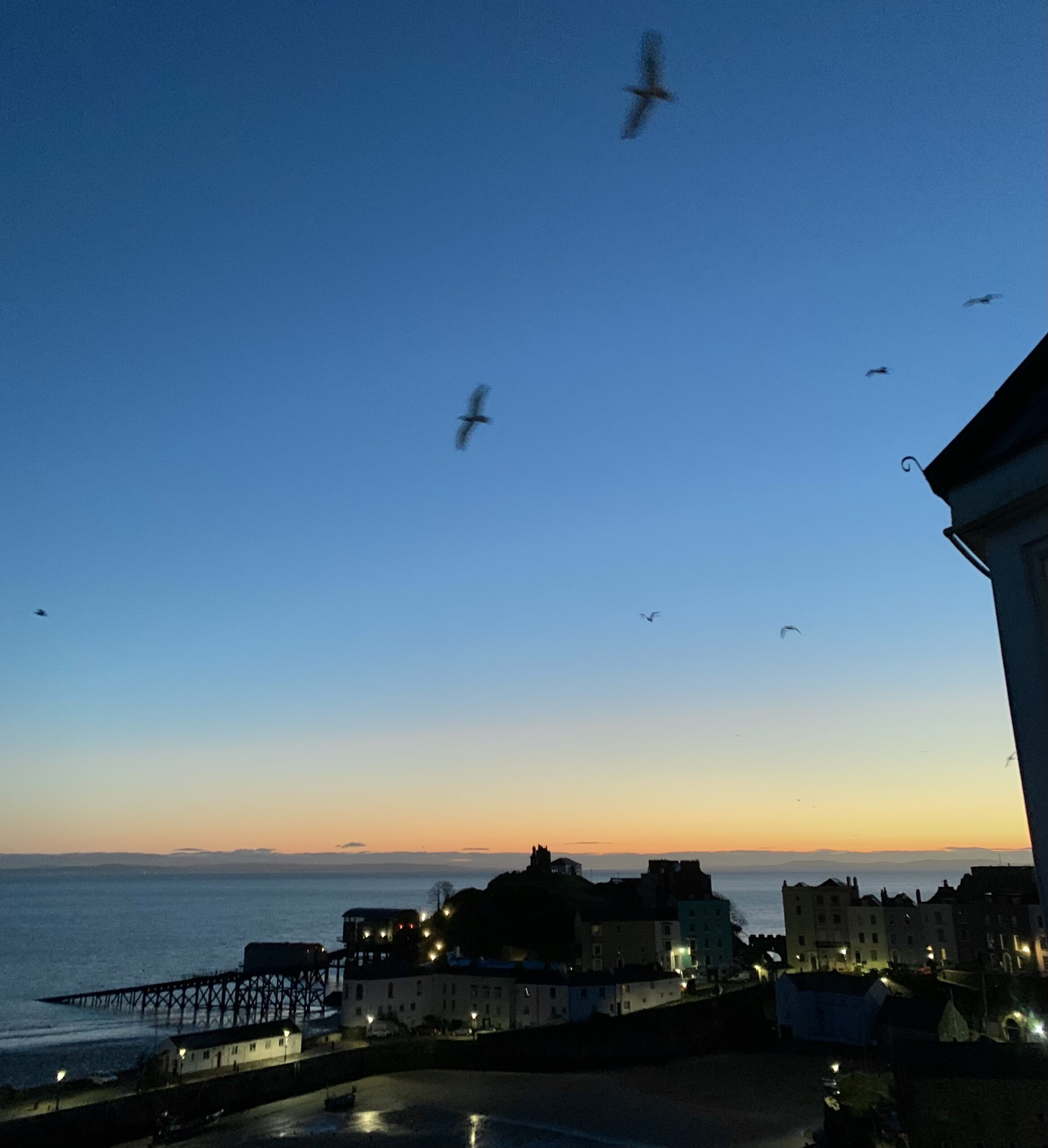
It’s a miserable day today in Cardiff. Grey, dark and rainy. Typical November weather. I am sitting at my desk with the light on although it’s only midday. Inside my head however, the sun is shining, at least figuratively, because my first OER24 submission is in!
the 15th annual conference for Open Education research, practice and policy will be organised by ALT, the Association for Learning Technology, in partnership with Munster Technological University (MTU).
MTU offers an excellent space for all members of the open education community to collaborate, learn and share in an inclusive environment. We are excited to welcome OER participants from the UK and across the world to the MTU Bishopstown Campus in Cork, Ireland.
Dates: Wednesday 27 and Thursday 28 March, with the GO-GN workshop on Tuesday 26
OER24 will bring together the strong Irish Open Education movement and international participants to leverage our shared expertise for change in policy and practice.
Now, I have blogged quite a lot about the OER Conference over the past few years, culminating in one very long post (love letter) to the event last year… as OER23 was my final event as CEO of ALT and an unforgettable conference.
The start of a new chapter
This year however, I get to return as a delegate for the first time, and hopefully as a presenter, too. Thanks to the great work of all involved, the Call for Proposals was out earlier than usual, giving me extra impetus to get my thoughts in order and draft my first ever ‘external’ submission to the event.
I love the themes the Chairs and Committee have picked this year:
The conference will put the spotlight on Open Education practices through five themes:
Open Education Landscape and Transformation: This theme explores Open Education and its transformative potential, with a particular emphasis on key initiatives and developments in the Irish education and training context.
Equity and Inclusion in OER: This theme delves into the role of Open Educational Resources (OER) in serving marginalised groups and in promoting inclusivity, diversity and equity in open education.
Open Source and Scholarly Engagement: This theme focuses on the connection between Open Education, Open Data, the Open-Source movement, and digital scholarship/librarianship, showcasing the collaboration of researchers across these areas.
Ethical Dimensions of Generative AI and OER Creation: This theme highlights the ethical considerations surrounding the use of generative AI for content creation and its potential in making educational content more accessible.
Innovative Pedagogies and Creative Education: This theme explores the intersection of Open Education with instructional design and learning design, examining creative practices and innovative pedagogies that enhance the learning experience.
And I picked the theme around innovative pedagogies and creative education for my submission. My hope is that if everything works out as planned, I’ll be there with my partner and his colleagues from the Open University as well as my colleagues from Reclaim Hosting, and of course I can’t wait for an opportunity to see at least some of my former team at ALT in person, too. Hugs will most certainly happen.
Get your proposals submitted!
If you are thinking of making a submission, I would really encourage you to put one in. You only need between 250 – 500 words and there are a lot of fun formats to choose from, ranging from workshops to presentations and, of course, the one and only GASTA format, which promises to be 5 minutes of unforgettable fun.
This is a conference where you will not only be welcome, but which will recharge those batteries of enthusiasm and hope for the whole year… (just look at the keynote line up!).
Fingers crossed, I’ll be seeing you in Cork in March!
Enjoyed this post? Get my free monthly newsletter directly to your inbox.
I recorded this podcast episode reflecting on the first month of working in my new business full-time. A BIG thank you to everyone who’s helped me along the way.
Enjoyed this post? Get my free monthly newsletter directly to your inbox.
Earlier this week I got to join the folk from Reclaim Hosting for a spooky radio extravaganza! Across a couple of different timezones and radio stations, Reclaim Radio and DS106Radio, we ROCKED the airwaves.
I love radio as a medium to have fun for virtual teams. It’s super engaging, not screen based, it’s synchronous and at the same time gives everyone space to do other stuff whilst listening. It’s also, when you have a team as capable as this, a pretty easy thing to do 🙂
When we started planning for this, we offered different ways to get involved:
Share your favourite halloween tunes and we’ll play your tunes
Get on the radio with other Reclaim folk, chat about what you are working on, share scary stories.. And have fun!
Get on the radio as a host, spin up the tunes and invite special guests to chat with on air.
Not everyone wants to hear their own voice on air after all, and the whole point of doing something like this is that everyone can join in and have a bit of fun without feeling that they need to commit to a whole hour.
Here is the programme we ended up with as a result:
8:00am ET – Halloween Tunes with Meredith
9:00am ET – Scary Special: Jim & Maren
10:00am ET – Pumpkin Hour with Maren & Meredith
11:00am ET – Halloween Tunes from the team
12:00pm ET – Old Time Radio Hour: the Scary Stories of Suspense
1:00pm ET – Radio Roundup with Amanda & Pilot
2:00pm ET – Halloween Tunes with Jason
3:00pm ET – Scary Tech (and Non-Tech) Stories with Amanda & Jason
4:00pm ET – Halloween Tunes with Taylor
5:00pm ET – Fright Night: Tunes from the Infrastructure Team
The weird and the wonderful
What I loved about the radio day was the variety of things that happened: from Italian horror movie soundtracks and The Cure to low-fi listening tunes, and from vintage story telling to news about what’s happening across the community, it was simply awesome!
Folk joined in as they started to listen to the programme, saying hi on Mastodon and Discord, and sharing pics and stories along the way.
I loved the radio shows on DS106 radio during the dark days of 2020 and 2021. Obviously my personal favourite was the Sunday Special that I was part of with Anne-Marie Scott and Tannis Morgan, but although a lot of fun was had, and at the time fun was a very scarce ingredient in life, it was very much radio of its time. Pandemic times.
I remember hearing Jim and his family broadcasting from Italy, and us listening here in Wales, feeling like we were able to connect despite the long periods of lockdown.
Our spooky Halloween radio show this week helped me reflect that whilst we still need to connect, and share and be present with each other, it is a huge relief to be doing so in context less dominated by the pandemic. We’ve learnt to value opportunities to have fun and be together more, I think, than we did before 2020.
Just like the excellent GIF game that makes the Reclaim Roundup a must read each month, the radio brought together all the weird and wonderful scary tech (and non-tech) stories and tunes for a day to remember.
What you didn’t see
Part of my work with Reclaim as I see it, is about finding pockets of space and time in which this team of people who work so hard and who practice such heartfelt care about all they do, from answering support tickets to developing new products, get to have a moment to take a breath and revel in their achievements.
Reflecting on success, feeling proud…, those things can be a lot harder to do than moving on to the next task, or pick up the next ticket. Just like in every other organisation I have ever worked with, here, too, is a never ending list of things to do. There is always pressure, always more that could be done, and new, exciting ideas on the horizon. I love seeing those glinting in the distance.
What I have also learnt, however, is that there is ALWAYS something glinting on that horizon, and ALWAYS a long list of tasks and that it’s up to us to make the time and hold the space to say “YAY! WE ROCK!” every once in a while.
I missed some of the Halloween fun (because timezones), but the next day I spent some time looking at the chat behind the scenes, the chat you didn’t see, and I was thrilled to see folk sharing photos of their front doors, ready for trick or treating, the chat, the banter and the GIFs. Those moments are what makes a team thrive, and they are what makes the memories that we will still recall long after the routine of weekly meetings is forgotten.
It was a privilege and an awful lot of fun to be part of our Halloween Radio programme, so you won’t be surprised to hear that there might just be some more in store come the end of the year. Maybe there will be an opportunity to make a song request, or send in edtech holiday greetings… whatever we decide to do – I hope to see you on the airwaves.
Enjoyed this post? Get my free monthly newsletter directly to your inbox.
It’s my third week as a hybrid organisation of one, and I am enjoying the new working routine! It’s very busy and also tiring to have so many new things to deal with each day, but it’s very much what I was expecting.
What I am missing at times is of course the colleagues I have worked with for many years, and in a more abstract sense, a bit of fun and interaction that comes with being part of a team. From the research I have done about hybrid working and virtual teams, I know that it takes a lot of effort and intention. So I set about making my own fun.
Regular readers will be very familiar with Posey, my dog, who for the past three years (well, nearly) has kept a faithful vigil next to my desk. Together we get through long conference days, difficult meetings, research reports and course design. And Posey is a dog who knows how to make her own fun. Sometimes just by rolling round on the carpet in the sunshine, or with her favourite cuddly toy.
But back to Halloween and hybrid working. In case the connection seems tenuous, I think Halloween is a good example of the kind of thing that in a co-located working environment is hard to miss. Cafes and canteens may have seasonal treats or pumpkin flavoured everything. There is likely to be talk of trick or treating… plans for the holidays and so on. Interaction like the ‘Secret Santa’ gift exchange is hard to replicate when you are in a team that’s distributed across the globe or when, like me, you are a team of one.
The ‘spooky’ side of home and hybrid working is that it can often feel quite lonely or isolated. Sometimes you don’t talk to another human being all day, and when you finally step away from your desk it’s dark outside. Days can easily blend into each other into one long grey slog.
Marking days like Halloween or a change in season provides me a bit of inspiration to have some fun, be silly and join into activities that I wouldn’t usually, and which can make my day more memorable.
This year, I am organising some radio with the wonderful folk at Reclaim Hosting, as part of my work with them. Get ready for Reclaim Halloween Radio on DS106radio come October 31st! I have some small decorations in my office as well, some autumn blooms and a small pumpkin and… fun tights to wear in orange and purple. Some of you may roll their eyes here, but those of us who appreciate those things will understand. In my mind, everything that helps inject some fun into my day is fair game.
Enjoyed this post? Get my free monthly newsletter directly to your inbox.
… and come walk with me. How about a day along the windswept West Wales Coastal Path? The title image for this post is taken at the tip of the St David’s peninsula around this time of year. Let’s have a day buffeted by autumn winds surrounded by colourful heather, looking out to the endless horizon. I would love to have a day like that today.
In reality, although that part of the Coastal Path is only just over two hours from my desk, I am much more likely to take a walk along the Taff Trail with the dogs today. Not quite as dramatic when it comes to scenery, but my daily miles are a wonderful daily escape, a practice for my body and mind that benefits my wellbeing as well as my productivity.
Walking is a big part of my life. It’s a necessity when you have two big dogs that want to cover 3-5 miles a day. It’s a hobby, as I walk, jog and run my way to greater physical fitness. It’s also where I like to think, reflect and have important conversations. Over the past ten years, it’s definitely become a kind of superpower that gets me through tough days.
I like walking on my own, with the dogs, with someone else, sometimes with headphones in, sometimes in my head, alone with my thoughts. During my postgrad years I developed an academic interest in walking, and some of my PhD thesis was based on ethnographic walking and a phenomenological exploration of place and landscape, so it’s fair to say that I’ve read quite a lot a about walking as a practice, as a method of enquiry, as a way of life.
It’s always inspiring to read of great explorations or long walks, spanning a whole country for example. My own walking has stayed at a much more quotidian scale. I don’t really care whether I’m taking turns in my local park, walking through bustling city streets or trudging along the Coastal Path. What is important to me, and what makes it work, is that I get to reflect and process whatever is on my mind that day. If I have the company of a coach or a friend (or most commonly my partner), I have the added benefit of someone else’s perspective and the principle remains the same.
When I worked with my mentor Margaret we used to meet up every few months for a longer session, and we always tried to make it a walk. Between these meetings all our work happened online, via email or a phone call, but whenever I really needed to think something through, figure out a new vision for the next three years or confront a difficult situation in my role as CEO, we would walk together and talk it through.
Parenting books often suggest that the best way to have conversations with teenagers is not to sit around a table, facing each other, but to create a less confrontational atmosphere when you are side by side, driving in a car or walking somewhere for example.
In a work context, particularly if you work virtually, there’re many situations in which you face each other, or a whole screen or room full of people. You face each other, stare at your own reflection, at someone’s bad hair day and so forth. It’s not often conducive to focusing on thinking and reflecting. Screens are distracting.
Stepping away from the screen can feel hard. Technology is sticky, capturing our attention, and removing yourself from its constant nudges is a key reason why taking a walk is helpful. Walking is an embodied experience, you are moving through the world, experiencing it with your senses. All of which is helpful for getting a fresh perspective and to gain clarity.
Of course, it’s not often possible to head out for a whole day on the Coastal Path. More often, a walk around the local area has to suffice, and in my experience it works just as effectively. With a bit of forethought you can even gain some of the benefits of a walk indoors. Whenever I don’t have the time to actually go outdoors, and I have a call I really need to focus on, I put my headphones in, put the screen to sleep and pace up and down in my office. Sometimes with my eyes closed, sometimes looking down at the floor or nowhere in particular. I am still moving, focusing, and not distracted by screens. It does take some practice and discipline to make this work, and it’s much easier to give yourself the benefit of actually going for a walk, but on days when you have 10 back to back meetings it may be the only option.
I am really looking forward to exploring how to step away from the screen in my upcoming course on hybrid working. I am not sure if many people realise that walking can be a hybrid working superpower… but we’ll have fun finding out. Incidentally, I designed the course to be podcast based, focusing on audio rather than video content, so that folk who would like to walk along with me could do so as they work through the course. It’s free, so why not register 🙂
Some of my coaching clients, for whom I also offer walking sessions, really enjoy having a session talking on the phone whilst exploring their local park and pathways. And sometimes, when we are able to meet in person, we get to walk and talk together. Those are always the most exciting days for me.
I haven’t done any coaching on the Coastal Path as yet, but I have had many, many excellent conversations whilst exploring that beautiful part of the world. So.. if you are ever in South Wales or if you have a path near you that would make for a good place to think, get in touch.
Enjoyed this post? Get my free monthly newsletter directly to your inbox.
This past week all my networks about hybrid and virtual working have been dominated by attention grabbing headlines from this year’s KPMG CEO Outlook survey:
Most bosses think you’ll be back in the office 5 days a week within 3 years (Fortune)
Two-thirds of CEOs think staff will return to office five days a week (The Guardian)
Most executives expect a full return to the office by 2026 (The Times)
These headlines are usually accompanied by predictions around the disadvantages employees not willing to return might face:
87% of CEOs globally – 83% in the UK – told us it’s likely or very likely that employees who make an effort to come into the office will be rewarded with favourable assignments, raises or promotions.
There is some mention of the need to carefully handle a return to the office, to take into account what employees need and want, but overall, there is a strong sense of relief that established corporate power structures are flexing their muscles by demanding that workforces return to their rightful place in every sense of the word.
When I carried out the research for my book on virtual working, I found a distinct lack of evidence that the employment policy landscape in the UK or the US was changing. Other countries, especially around Europe, used the increase in home working during the pandemic to establish laws around employees’ rights to disconnect. But here in the UK there was no sense from government of urgency to create similar policies for the long term. Instead, UK policy flexed to accommodate emergency measures and short-term solutions.
So what do we really know about what the landscape looks like in the UK beyond the outlook of CEOs? Are workplaces really preparing for a return to the office, five days a week?
This is an interesting report, based on YouGov survey data, that explores flexible and hybrid working in the UK. The report focuses on employer and employees perspectives related to changes to flexible working law.
What I found most useful is that the report gives you a sense of what the current overall scale of flexible and hybrid working is in the UK, and also how many different practices this encompasses, with everything from working from home to having a four-day week and from zero-hour contracts to career breaks.
Hybrid working, in the context of this report, requires employees to still be in the workplace for a specific number of days per month or per week. The report states: “Over half (52%) require hybrid working employees to be in the workplace for a minimum number of days in the working week/month, while 46% do not. Private sector employers are more likely to say they have a minimum requirement, and voluntary sector employers are more likely to say they do not. Overall, employees are most likely to be required in the workplace for two (35%) or three (33%) days a week.
Is this a long-term trend? Or simply organisations operating more or less as before, but with more flexible and hybrid working added on top of existing practices? When it comes to long-term impact on resourcing office space, pay and equality, the report only includes brief mentions. It does highlight that employers perceive a positive impact on productivity, recruitment and retention as well as employee financial wellbeing.
When it comes to hybrid working specifically, the report states that “Eighty-three per cent of organisations have hybrid working in place. Forty-five per cent have a formal policy, 24% take an informal approach, and 13% are developing policies through learning/trialling. When CIPD last asked this in a similar survey in June 2022, fewer had hybrid working (77%) and fewer had formal policies in place (34%).”
This is really interesting, particularly when thinking about the managers leading teams in half the organisations that have hybrid working in place, but do not have formal policies. The need to develop skills for manage this scale of changes in the workplace is clearly becoming more urgent as the proportion of workplaces who offer flexible and hybrid working increases. The report reflects this as a negative impact of more flexible and hybrid working:
Specially, ability of managers to lead teams effectively (-18)
and identify as challenging for managers managing remote teams from a wellbeing and performance perspective (41%)
Developing your skills as a leader or manager in this context is particularly difficult because so few organisations have expertise to draw on and there is little formal training led by experts who actually have a track record beyond their personal experience of working from home.
Interested in evolving your approach to Hybrid Working? Registration for my next course starting 20th October is now open and it’s free for everyone. Sign up today.
Changes to workplace laws
One of the biggest changes in the UK this year is the Employment Relations (Flexible Working) Bill. This Bill has wide-reaching consequences for employers and employees, including granting employees the right to request flexible working from day 1 instead of after 26 weeks (background info) with the aim to make employment ‘flexible by default’.
As part of the work of the Flexible Working Taskforce, there now are a growing number of resources for employers and employees, including:
This follows on from last year’s UK consultation Making flexible working the default (December 2022) which included a focus on better understanding how informal flexible working operates in practice. It is very clear how far-reaching this particular issue is, even if the proposed changes to employment law don’t encompass all aspects:
Flexible working doesn’t just mean a combination of working from home and in the office – it can mean employees making use of job-sharing, flexitime, and working compressed, annualised, or staggered hours. … The ‘Making flexible working the default’ consultation recognised that flexible working is different for every employee, employer, and sector – it does not come in one size only. For an office worker, they may benefit from a job-share so they can better care for their children, or a factory worker may request different shift patterns that suit their balance between home and work. Because of this, the government will not instruct employers or employees on how to carry out their work, instead we encourage both parties have constructive and open-minded conversations about flexible working and find arrangements that work for each side.
However, the proposed changes do not go far enough in addressing the wider issues at stake here and this WIRED article provides a helpful insight into what’s not being tackled.
What does this tell us?
The change in the law around flexible working seems to be paying lip service to what employees demand, but is not going far enough in tacking the hybrid working issue that grab the headlines. This bill won’t protect the rights of employees if bosses increase demands to return to the office full time or ensure that those not returning won’t be disadvantaged. It doesn’t put onus on employers to up skill managers or upgrade infrastructure to exploit the full potential that hybrid working could offer. What it covers is too broad an area and not clearly enough defined to support hybrid working specifically.
There’s also something else at stake here, which comes out in the KPMG survey, a sense that work is all about people, “that business are about people, after all”. There is a lot of talk of nurturing wellbeing, supporting careers and offering the right sort of value proposition to employees with whom “hybrid working is extremely popular”.
Businesses are about making profits, and I am pretty such that the companies that take part in the KPMG survey and those quoted as ‘leading the return to the office’ such as Amazon and Google, are not seeing how giving employees more flexibility, continuously up-skilling managers to adapt to flexible workforces and making less use of extensive corporate campuses will benefit their bottom line.
Hybrid working is extremely popular not because some people can’t see that it’s more fun to have a coffee with colleagues than staring at endless video calls through a laptop screen. Hybrid working is popular because it enables people to cope with the competing demands of their lives, including family or caring responsibilities. It means spending less time and money on commuting, eating lunch alone and buying office appropriate clothes. Hybrid working has opened up a new perspective for many that work matters less, and being outside, spending time with family or simply taking a breath is more important than work.
Yes, hybrid working is complex and not without downsides, as I have explored at length elsewhere, but these headlines about mandating a return to the office seem to be much more about executives clinging onto old power structures than caring about people. Let’s not give into that and instead use the momentum created by the increase in hybrid working during the pandemic to shape the future of work for good.
Enjoyed this post? Get my free monthly newsletter directly to your inbox.