Author: Maren Deepwell

  • The start of a whole new chapter: Day 1

    The start of a whole new chapter: Day 1

    Today is an exciting day. It’s the first Monday of the first week in which I am full-time in my new business. Maren Deepwell Coaching & Consultancy is now fully underway. Woohooo!

    It’s been a long time coming, and I didn’t really know what to expect from today. It feels a little strange not to return to the familiar busy inbox and long-time colleagues after returning from a two week holiday. Instead I sit at the same desk, in the same room, but in the unfamiliar virtual HQ of my new venture. It does feel strange and also thrilling.

    As I have had months to wait, plan and prepare for this day, I have intentionally made a schedule for my first day and my first week on the job. The purpose is to provide a structure within which I can start to establish my new workflows, processes and routines.

    Of course, the structure I put in place needs to flex in response to the demands of the new projects and clients I get to work with, that was clear to me from the outset. That said, one of the reasons why I set out to work on a free-lance basis is that I get to have a lot more control over what my days look like.

    Monday mornings are not my favourite time of the week, and used to be taken up with a lot of catching up with emails, staffing matters, meetings and so forth. When I sat down to decide what my ‘ideal’ start to the week would look like I had to pause and think. After decades of not having much choice, suddenly having all options open felt a little daunting. Quickly I realised that what I really want to start the week with is time to think. To use the energy, focus and creativity I have early in the day to work on things that require some vision and some uninterrupted time to think.

    Thus, my schedule for first thing Monday morning now reads: thinking time. And it feels awesome to have such a start to the week.

    Today was my first morning of thinking about things, and I am quite pleased with how it went. I use Asana to plan and organise my work, and I set up a weekly task for Monday mornings, so I can keep a running list of anything that I need to work on or think about. Today’s list included writing a strategy document for the remainder of this year, to update my business plan for Q3, and to think about my financial strategy and reporting. Plus, blogging my first day.

    Our day at home started early today, so I was at my desk first thing, with a blank screen in front of me, ready for ‘thinking time’. It’s a bit odd to change jobs as a home-worker, as you don’t have a lot of physical changes to help you make a transition like this: No new commute, new office, new desk or coffee with new colleagues.

    Instead, I made efforts to change my digital set up and create a new workspace for myself: a new desktop, a new desktop organiser, new tools like a new email client, calendar and so forth, as well as nice filing structures etc.

    Working with Canva and Asana, I made good progress on the strategic tasks for the day, updating various plans and actions, scheduling tasks and thinking through what I would need to do to achieve my objectives for the last few months of the year.

    It really helps that I already have a couple of exciting projects lined up, working with the amazing team at Reclaim Hosting and also continuing with the wonderful AmplifyFE Project, as well as my coaching clients and upcoming hybrid working course. So this first week already feels quite buzzy.

    It’s been a while since I started a new role, but what I am quite certain of is that time flies when you have a lot of new experiences, and so I want to chronicle some of my days via the blog (and some via my closed work journals). I love looking back at my entries from previous roles and projects, and reflect on how much things have developed since.

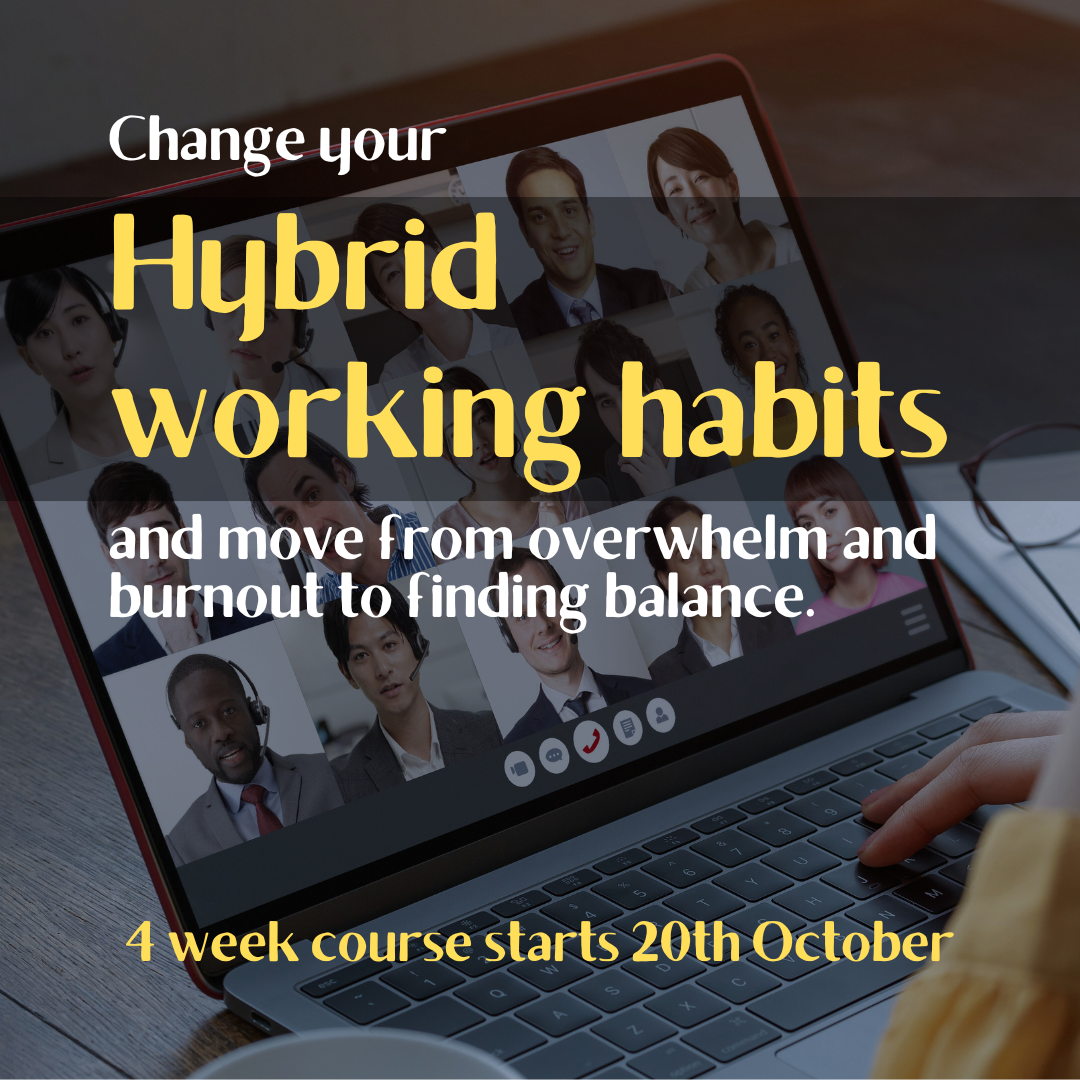
    If you are interested in the hybrid working course. Join us from 20th October – register free now.

    Enjoyed this post? Get my free monthly newsletter directly to your inbox.
  • Holiday debrief (in watercolour)

    Holiday debrief (in watercolour)

    It’s my first day back at my desk today after a two week break, and I am happy to report that both rest and fun where had! It’s been a while since I had two weeks off, and my top tip for my future self is to do that more often. One week is never quite enough to really relax, and I loved the extra days before and after travelling to Crete that the extra week afforded me.

    My partner and I did plenty of reading by the pool, mini golf, gym, lazy lunches and even longer dinners, enjoying the late summer vibes and Greek produce. Pretty much every picture has me eating or drinking or my face is hidden in a book. I took five books on holiday (I prefer taking printed versions abroad), and all were devoured.

    My other activity on holiday was to take A LOT of pictures of plants, and to turn some of them into water colours. Having not done a lot of drawing for a while, and I really enjoyed the creative, easy practice of making a drawing a day. It was awesome to indulge in my love of plants, and to learn more about the local plants along the way.

    Here’s a peek at the result:

    Now that I am back, I’m busy getting ready for some new projects, including the next run of my podcast based hybrid working course. Join us from 20th October – register free now. Keen to learn a bit more about the story behind the course and how I came to be so interested in all things hybrid and virtual working? Listen to the story which spans from Germany to London in my art school years, and from Athens to Oxford as my work moved from Art to Anthropology and then Education, this episode sets out what I think is interesting about hybrid and virtual working, why it’s important and why now is the time to really find ways of working that work for you.

    Enjoyed this post? Get my free monthly newsletter directly to your inbox.

  • The story behind… Hybrid Working Habits

    The story behind… Hybrid Working Habits

    In this week’s podcast I share some of my personal history and how I came to be so interested in all things hybrid and virtual working. From Germany to London in my art school years, and from Athens to Oxford as my work moved from Art to Anthropology and then Education, this episode sets out what I think is interesting about hybrid and virtual working, why it’s important and why now is the time to really find ways of working that work for you.

    Listen to the episode:

    What are your hybrid working conundrums? Leave a comment or email me with you questions and problems when it comes to hybrid working, and I’ll pick these up in the upcoming episodes.

    Learn more about the course

    Change your Hybrid Working Habits, my new 4 week course, starts 20th October 2023.

    One of the consequences of the global pandemic in the workplace is an increased demand for flexible and hybrid working. In response, employers are offering staff to work from home more regularly, and come into the office or on campus for less time each week. Flexible working is intended to increase staff satisfaction, productivity, and retention at a time when we have moved from the great resignation of 2021 to an endemic of ‘quiet quitting’. At the same time, effectively working from home has become a sought after skill in the workplace, particularly as some of the negative impacts of long term home working on (mental) health, equality, diversity and inclusion and staff engagement have started to emerge. 

    Bridging the gap between the growing hybrid workforce of knowledge workers and the (lack) of organisational vision for the post-pandemic workplace, are the managers and leaders leading increasingly virtual teams. It is their job to translate the newfound flexibility into effective collaboration between colleagues. It is their challenge to establish communication channels that engage a hybrid workforce with diverse needs, balancing work with other commitments. A workforce for whom coming to the office or on campus may be a hated necessity or indeed a much sought after opportunity. Not everyone loves working from home, sharing a desk or meeting in a coffee shop. 

    If you are looking to move from overwhelm and burnout to finding balance, then this course is for you. 

    Develop the skills you need

    This course is designed to help develop skills to:

    • Audit your hybrid working habits to find out how your current habits are impacting on you and what to change;
    • Set boundaries for a better life/work balance and stick to them even when things are busy;
    • Increase productivity away from the screen by using strategies for communicating and collaborating outside of meetings;
    • Communicate more effectively in the hybrid workplace in a way that works for you and reduces digital overwhelm.

    Course activities

    Listen to the podcast

    The course has four parts and each part is introduced by a podcast episode that sets out the key ideas for the topic. I have chosen the podcast format to enable you to follow the course at your own pace, listening when it suits you and also to minimise screen time needed to take part in the course. Whether you listen to the course as you walk the dog, cook or sit in a comfy chair, this course is designed to take you away from your screen and constant stream of notifications. You just have to listen.

    Reflect on your practice in weekly hangouts

    Each topic is accompanied by prompts and questions to help you reflect on your professional practice. We will use these prompts in weekly course sessions to take a deeper dive into ways of working in the hybrid workplace and reflect on how your habits aligns with your goals and values. You can choose whether you write your reflections down, share them with others in the course or keep them private for yourself.

    Explore new ways of working

    Each topic comes resources and tools to explore. You can try out new idea for yourself or join one of the weekly drop-in sessions for personalised support.

    Who is the course for?

    This course is designed for emerging and established leaders and managers working in a hybrid or fully virtual setting in education and the not-for-profit sector. We will focus on how to develop effective home/hybrid working strategies. Whether you are collaborating online on a project, organising distributed volunteers or managing a whole hybrid working department, this course will support you to move from overwhelm and burnout to finding balance.

    Register today

    4 Week Course Listener – free

    • Listen via your favourite podcast app
    • Follow at your own pace
    • Explore resources via the show notes
    • Upgrade anytime!

    4 Week Course Explorer – £29

    • Course content straight to your inbox
    • Weekly course hangout & drop-in support
    • End of course summary with resource pack
    • Certificate & badge upon completion

    4 Week Course Explorer + Personal Coaching – £229
    Course Explorer package PLUS:

    • 4 x 1-to-1 coaching sessions tailored to you
    • resources and tools
    • personal plan and accountability check-ins

    Register now

    Enjoyed this post? Get my free monthly newsletter directly to your inbox.
  • There’s nothing more permanent than a temporary hack

    There’s nothing more permanent than a temporary hack

    This morning’s Memex 1.1, John Naughton’s Substack newsletter, including this quote by Dave Winer: “There’s nothing more permanent than a temporary hack.” and it feels like a great theme for my day today, which I am spending sorting through my own temporary hacks from the past 15 years.

    It’s my day to clean out my archive of files and emails at ALT, the last steps in a long handover process. Documents I filed away in 2017 to be reviewed later are stacked alongside old references I have written for former employees and pictures from past keynotes.

    Most of this stuff can just be deleted all together, but I am mindful that some things are important for the organisation’s history and legal records, GDPR permitting.

    What I am pondering if how many times I didn’t circle back to things I implemented as a temporary hack, and hence today’s quote really chimed with me. Here are some examples of what I’ve come across:

    • My CMALT portfolio that I published in a Google folder (an organisation-hosted Google folder, for which, I just discovered, you can’t transfer ownership outside of your organisation’s domain);
    • An email filter I set up in 2015 when I first joint a very busy Jiscmail list, and which has quietly filled up a folder with tens of thousands of emails since… EEEEK;
    • A shortcut to a file to a shortcut to a file to a shortcut to a file….;
    • Lists of things I want to do, and a lot fewer lists of things I did! Fortunately I discovered a file with old appraisals going back to 2008, so hopefully somewhere in there are records of what I accomplished in more detail than the lists I sporadically kept.

    Even Gmails hefty power is taking time to delete all the emails, one year at a time. It feels extremely satisfying however, and is also necessary, as my new free-lance role within the organisation is limited to a specific project and I want to ensure that I have a clean footprint on which to work.

    As I delete things, I also need to bring some order to my own domain, and again the newsletter provided some inspiration in the form is this XKCD comic about university websites:

    University Website (XKCD, 773)

    It’s easy to fall into the same traps for one’s own website as organisational ones.

    Enjoyed this post? Get my free monthly newsletter directly to your inbox.
  • Plant pace… moving through change

    Plant pace… moving through change

    Yep, this is another post about houseplants… or rather things we can learn from plants. I’ve previously published leadership lessons from office plants and in the same spirit this post is all about houseplant inspired tips for managing a period of change or transition.

    It’s inspired by my own experience of moving between jobs this month and my adventures in caring for a growing collecting of plants in my home and home office. It’s the first time in a long while that I am changing jobs, but the last few years have brought so much uncertainty with them that I feel I have quite a lot of practice of coping with the unexpected. What the last few years have also highlighted for me is how important it is for us to have strategies for periods of transition – and like many I found solace and inspiration in bringing a bit of green indoors.

    So in the spirit of open practice, here are my personal reflections and practical tips. You can also listen related episode of my podcast on Apple Podcasts.

    Allowing time to be less productive

    One of the things I have struggled with a lot in recent months is just how much there is I don’t know or can’t control, both when it comes to changing jobs and also in relation to my plant collection. Although I am looking forward to the changes ahead, it’s still disconcerting not to know what the next day, week or month will bring, how it will feel, if what’s ahead is fun or frightening. While I have plenty of practice in dealing with uncertainty both professionally and personally, the emotional toll of not know is still there.

    Hence there is a lot of need to get comfortable with accepting what I can’t control and to sit with my feelings, comfortable with being uncomfortable. Spending time with plants is one way of making that space and time to acknowledge to myself (and where appropriate to others) what I am feeling. I might go for a walk or sit quietly somewhere, or lie on the sofa cuddling my dog. The particulars don’t really matter. What does matter is that in that extra time I need I am not being as productive as usual. I am not achieving or working in the way I usually do. It’s a season of change, and just like my plants aren’t always growing new leaves or in bloom, I am adjusting and trying to enjoy this period for what it is.

    Reflecting to gain perspective

    Reflecting is a key part of my professional practice. I like reflecting in conversation, by writing in my journal, or just thinking about things. That said, at the moment I am finding it difficult to focus. I sit in front of a blank page and I can’t find the words to start. There seems to be too much to reflect on to know where to start, or indeed everything I can think of doesn’t seem worth mentioning.

    Fortunately, I have a coach whom I get to lean on in times when my own capacity to gain perspective is low, but I also found some prompts to help me reflect. What I do is to start on a fresh page, and write down 3-5 questions that I then answer in turn. Here are some examples of the kind of questions I ask myself:

    • What was hard today?
    • How would you like tomorrow to be different?
    • What do you wish you had done or said differently?
    • Why are you feeling the way you do?
    • What has changed in the past week/month?
    • What are you looking forward to next?
    • What would you wish would go away?

    I have some very small succulents at the moment, and they are so interesting to watch. Day to day they don’t really change, and sometimes I give them to much water or too little, and some of them don’t like it, but with patience, they do change and grow and you can also really see those changes over a period of time. Similarly, in my journal, I can usually only spot the patterns when I look back at what I wrote 3 months or even a few years ago. It serves to remind me that my current perspective is always limited by the here and now.

    Focus on what stays constant

    Even in times of transition many things remain the same and it can help to focus on these. For me, it’s easiest to find constants in my home, my daily routine and my own skills and capacity. Here are some examples:

    Home: I like finding my favourite comfy spots to read and have tea. Particularly during a stressful day, I enjoy looking out of the window and observing the outside world. I also have a great fondness for plants, and I have about 10-15 houseplants in my office. Plants change at a much slower rate, as they grow and develop. I enjoy observing them closely and soak up some of their patience and calm along the way.

    Daily routine: tea in the morning, walking the dogs, even answering emails can be comforting routines. I really enjoy routines and habits, even though my week is not planned out in every respect. I like having flexibility to decide when I want to exercise or do chores, but doing familiar things is still comforting.

    Skills and competencies: one of the things I find most comforting about change is that I can continue to rely on my own skills and competencies even when the context in which I apply them changes. For instance, I love planning and organising things. I enjoy being creative and producing content. My work rate is extremely high, and I get a lot done. All of these aspects remain the same, and I try to lean into those strengths.

    This plant, an Oxalis, arrived at my office from a local plant fair very recently. It usually grows near water, like a brook or stream, and is used to having some sun, but not too much, and to be kept moist and not dry out. So far, I am happy to say, I haven’t managed to kill it, but there’s always a high probability of failure with a new plant I am still learning about. I don’t know yet how the plant will adapt to my office, or what it might need. Context is everything, and with a change in environment there’s always a risk of failure. Like with plants, people, too, need conditions to thrive, and they provide a constant reminder of that.

    There are other strategies that work for me at the moment, including making time to practice gratitude, taking breaks, planning for a holiday and re-inventing some of my weekly routines. In short, everything I do when moving at ‘plant pace’ (slow, intentional, balanced, looking after my needs) feel good and are helpful in this period of transition.

    There are also some things that aren’t working for me:

    Can’t rush settling in

    One of the aspects about change that frustrates me is that you can’t rush it. Things take time to adjust, and other people and processes need time to catch up. Most importantly, I need time to adjust. And yet, my mind would like it to be sometime in the future when everything feels settled and the new routines have become familiar.

    Feeling unsettled is hard and most of the time actually making a plan happen takes a lot longer than conceiving of it in the first place. Although I can comprehend that things simply take time to change, and that I need time to adjust and process everything I still find it frustrating at times.

    Digital difficulties

    The other part of transitions that I find difficult is in how many different places information needs to be updated. From social media sites to email footers, to life admin and address books, it feels like a mammoth task to even change my email address. That is one aspect of changing roles that I really don’t enjoy as it’s simply tedious to go through and unsubscribe, update or delete everything.

    I am going to check back in on this in a few months, partly to report back on progress, and also to get a feel for how my perspective is shifting as the transition continues.

    Enjoyed this post? Get my free monthly newsletter directly to your inbox.

  • Memories #altc23

    Memories #altc23

    Well… it’s been quite a week, quite a conference and quite an end to my time as CEO of ALT. I’d previously blogged my love letter to ALT’s Annual Conference, and also my goodbye and thanks as CEO of ALT. I felt well prepared going into the conference week, but as it turned out, it was a lot more emotional and a lot more intense. So in this post I want to bring together at least some of the memories and moments that made it special for me, to help process what has been a wonderful if overwhelming time for me, and to capture the amazing and kind feedback and messages I received.


    Conference opening (Image by Anne-Marie Scott)

    It was a week packed with inspiration and joy, and I won’t be able to mention everything that’s happened, but suffice to say that this was a week to remember for our community, with a lot of firsts and a lot of milestones achieved!

    Messages from Members

    Thank you to everyone who sent me a message before and during the conference. It’s been incredible for me to have so much feedback, kind words and encouragement. I especially appreciate the cards that arrived by post which made for a nice surprise! It was so wonderful to see many former Trustees and staff at the conference and this picture with my predecessor Seb Schmoller really made me giggle – it’s definitely heartfelt 🙂

    In addition to the messages on social media including Twitter and LinkedIn, many Members have added to this public card:

    ALT AGM and CEO handover 2023

    Handover at the AGM

    The Board of Trustees of ALT and especially our Chair, Helen O’Sullivan, were both generous and kind in allowing me the exit I desired. I am mindful that not many people get to choose how to depart from a job, even a long-term role, and I appreciated it very much. It was a very emotional moment to sit at the AGM and listen to Helen read out feedback from the Trustees and Members, and a big highlight for me. I also received beautiful gifts, including this lovely set of CEO pens:

    I am very fortunate that ALT’s new CEO Billy Smith is so gracious as a leader, and his support during these final days of handover has been instrumental in ensuring a smooth transition.

    If you’d like to watch the actual handover, here is the recording.

    Special Award

    I was very touched to received a special award for my Outstanding Contribution to ALT at the Gala Dinner. The award was presented by my long-time colleague and friend, Jane Frankel, who has so capably managed ALT’s finances over much of my time as CEO. Jane’s words on stage and her heartfelt congratulations on behalf of the whole staff team mean a lot to me.

    Award moment (Image by Anshul Lau)
    Receiving my award (Image by Martin Hawksey)
    Thanking everyone (Image by Fiona Jones)
    Gala Dinner in best company (Image by Martin Weller): Left to right:David Hawkridge, Maren Deepwell, Martin Hawksey, Martin Weller, Scott Farrow, Steven Verjans, Jane Secker and Christ Morrison

    The next morning dawned and with it the end of a very special week, a very special moment in my career: Thank you so much for making my last day so special. I am very touched.

    Many people have asked me for my new contact details… get in touch with maren[@]marendeepwell.com or via my website. You can also subscribe to my podcast and monthly newsletter . I’ll be posting regular updates and resources on my blog, on LinkedIn and Instagram.