At the start of the year, I shared my intention to find more joy in music and radio. Music is a great way to brighten up busy days, especially at this time of year. The days are long and grey, the sun is only slowly making a return to early mornings and evening after work. I don’t know about you, but I can use every bright spot I can find just now.
Now, plenty of us listen to the radio or to music as we work, so I don’t think you’ll be surprised to hear that I, too, love a few tunes to cheer up my Monday mornings. In my case, I have a couple of different ways to enjoy music at my desk:
There’s background beats and meditation music to start with. Whether I listen to Lou Reed’s Hudson River Meditations, the sounds of rain against a window or lo-fi background beats, a calm soundtrack is usually part of my daily routine. My dog Posey settles down in her basket next to my desk as soon as she hears the low music start to flow through my office. She knows that this is the signal that I am going to be lost in spreadsheets or working on a new course design for a few hours.
Then there’s listening to albums and playlists. I usually prefer to listen to vinyl on my record player, which is about 4 feet from my seat. There’re some practical advantages to listen to records rather than digital music: I need to get up every so often to flip the record, which is good for my body. Also, the play time of the record is limited, rather than endless as it would be on a digital platform, prompting a break from work to decide what next to play. I might walk downstairs to get another record and make some tea. It’s a healthy disruption.
I do also listen to digital music, usually playlists, and that can be an excellent way to find the right soundtrack for a particular time of the week. Fridays for example I often listen to beach/holiday themed playlists.
Commercial radio is rarely my choice of listening, mostly because I find the disruptions of talking annoying, but I do love indie internet radio.
Talking of radio, I am a big fan of working radio, playing and sharing tunes with colleagues, and I am very lucky that the folk I work with at Reclaim are into this, too. Cue a lot of afternoons of random tunes on our in-house radio station. To me, it’s a fabulous way to connect with folk across timezones. Especially if you are all distributed across the globe, radio can be a powerful way to connect.
For this blog post there is a special podcast with tunes that you can listen to on Spotify. Alternatively, I have listed the songs in the show notes for the episode so that you can listen along on the platform of your choice. Enjoy!
The book that really stayed with me last month was Coach the Person not the Problem by Marcia Reynolds. It’s a fascinating read full of practical guidance and insightful ideas, and a great read if you are interested in developing a coaching approach to leadership or your coaching and mentoring skills.
There was a lot to take away from the book, such as a really useful habit to set an intention for a conversation or a coaching session at the start. For example, you might choose to focus on feeling open or curious or caring, and focus on that before the conversation starts. It sounds obvious, but in my experience that’s harder to put into practice than it sounds.
I have a whole spectrum of interactions in any given week, and I am about to start mentoring young adults as part of a national programme, too. I don’t really know what to expect or what unexpected emotions, situations or challenges the clients I work with may bring into our session on any given day. I found the step by step guidance on how to establish and maintain a certain focus extremely helpful!
On my radar for this month
I read a lot of fiction in January, so these two titles are still on my list to read from last month:
Goth – A History by Lol Tolhurst
The Coaching Habit. Say Less, Ask More & Change the Way You Lead Forever by Michael Bungay Stanier
Non-fiction reading 2024
Creativityand culture
Art Matters by Neil Gaiman and Chris Riddell
Big Magic by Elizabeth Gilbert
Hybrid working and leadership
Flow: The Psychology of Optimal Experience by Mihaly Csikszentmihalyi
Rooms of Their Own (Where Great Writers Write), Improbable Libraries and Shedworking, all three by Alex Johnson
Working Identity: Unconventional Strategies for Reinventing Your Career by Herminia Ibarra
Coaching and reflective inquiry
The Big Book of Beautiful Questions by Warren Berger
Coach the Person not the Problem by Marcia Reynolds
Liked this post? Subscribe to my free monthly newsletter:
I made a fun discovery today: It’s now been over ten years since I started this list of things I have done. Wow! I had no idea it had been that long, and seeing those entries from 2013 made me pause and reflect on the habit of keeping the list, a decade in the making.
Why did I start tracking progress in this way?
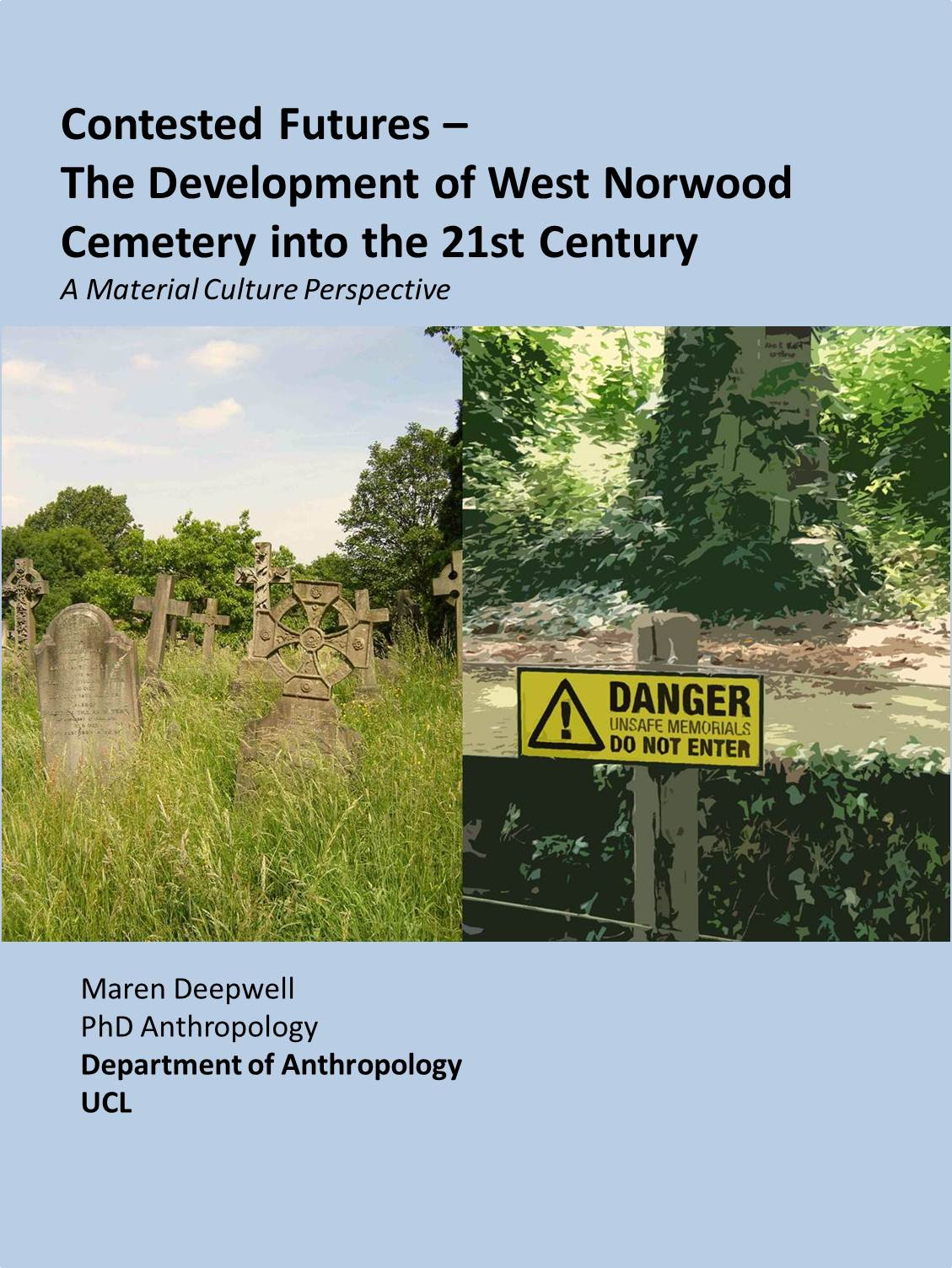
My archive page is a lot like a personal vault. If you scroll all the way to the bottom of the page you’ll see that at the start I added some entries a bit like you would on a CV. I added dates of degrees I completed and images of things like my doctoral thesis from 2008:
Initially, I added these things as I was moving blogs, and I didn’t want to loose track of what I was up to. I was just in the finishing years of my graduate studies, and started working full-time and I had no real idea of what was going to happen next.
For a while, in the first few years of working at ALT, I didn’t really keep a record of anything until I started blogging publicly again in 2010 on WordPress, rather than my old Google Blogger sites. But then from 2013 onwards I started keeping a running list of projects I completed, conference papers, media stuff and so on.
Looking back to 2013, this entry makes me smile: June: Radio 4, Today Programme . Not particularly helpful for anyone other than myself, but it does bring back the morning I spent nervously sitting next to a very intimidating John Humphreys in the BBC radio studios in London. Similarly, in 2014 I went to the European Parliament in Brussels… noted in a similarly cryptic entry, but equally memorable for me. And although the 2015 link to an appearance on Parliament TV still works, many of the older links have rotted.
As we progress through the years the list of things I recorded each year becomes both longer and more comprehensive, particularly as I started to add links to blog posts on my own domain that contain a lot more information about a specific event or project. 2020’s entry is a bit shorter, but it looks remarkably ‘normal’ given everything that happened that year.
What do I use it for?
So, how is this useful?
Well, the practice of making the list and adding new entries to it is useful to me in itself. I could probably use a tool to compile this kind of information for me, but there’s great value for me in the act of processing what I have done and reflecting on it as I make the list.
For example, adding new items to the 2024 section of the list earlier today made me realise just how busy a year I have had so far, and we are only three weeks into it:
Workshop: Leading Hybrid Teams. Senior Leadership Team Away Day, University of Edinburgh, January 2024;
Article: Are you returning to the office, five days a week? Exploring the future of hybrid working. Learning Magazine, January 2024
So on a regular basis, as I publish something or a new project gets scheduled or completed, I will update the list, add links and date each entry. Wherever possible I try to capture what I am doing in a blog post as I add it to the list, so that I don’t have to rely on external websites to retain the information.
Then, on a monthly basis as I compile my newsletter, I refer back to the list, and cross-check what else I may want to mention. This is super helpful for me and makes compiling the newsletter pretty easy.
I also use the list as an archive in case someone asks me what talks I have recently given or what papers I have published on a particular topic and I make use of it for reviewing my progress or performance.
It’s a kind of super power when it comes to things like annual appraisals or planning career development. It doesn’t take me long to answer the questions like ‘What have you done in the past year ?’ or make a list of articles I have published. That is magnified if I want to write end of year reviews or reflections.
It’s important to me to keep learning and developing and over the years keeping this archive up to date has become a natural process of my workflow, just as blogging or journalling have become part of my practice.
Tips for starting your own archive
If you are keen to start your own list, get started with literally anything. You could add a workshop you have run or an event you attended, or even books you’ve read. You could add projects you have been involved with or led, or papers you have published.
The key is not to worry whether something is worthy of being included, and to simply include everything. I find once you start making a list of everything, things quickly amount to more than expected.
Over time, as you practice keeping the list, the satisfaction of adding to it will become a good motivator for keeping going but initially it can be difficult to find the courage to get started.
You might prefer to keep your list private, which is completely fine. The reason I have mine on my blog is that I am comfortable working here and I use my blog every few days. It’s a convenient place for me to refer back to or to send people to, but I don’t think the page that shows my archive gets a lot of visitors.
For me however it is priceless, and it reminds me when I have low days how much I have achieved over the years. Maybe your list will do the same for you.
One consideration for me is that I want to do what I can to keep the data safe. That is why I don’t rely on a platform like LinkedIn to keep this information. In an ideal world I might update the information somewhere like that, a network where folk who consider working with me might more easily get an idea of what I have accomplished. However, although that would be useful, I don’t trust that the information will still be there in 10 years or that it won’t suddenly get reformatted or repurposed as platforms change. Thus, I keep it here on my own domain first and foremost, and I update everywhere else when I feel it’s necessary.
So, good luck if you are just getting started and kudos to you if you are already on your way to keeping that precious list of everything you’ve done.
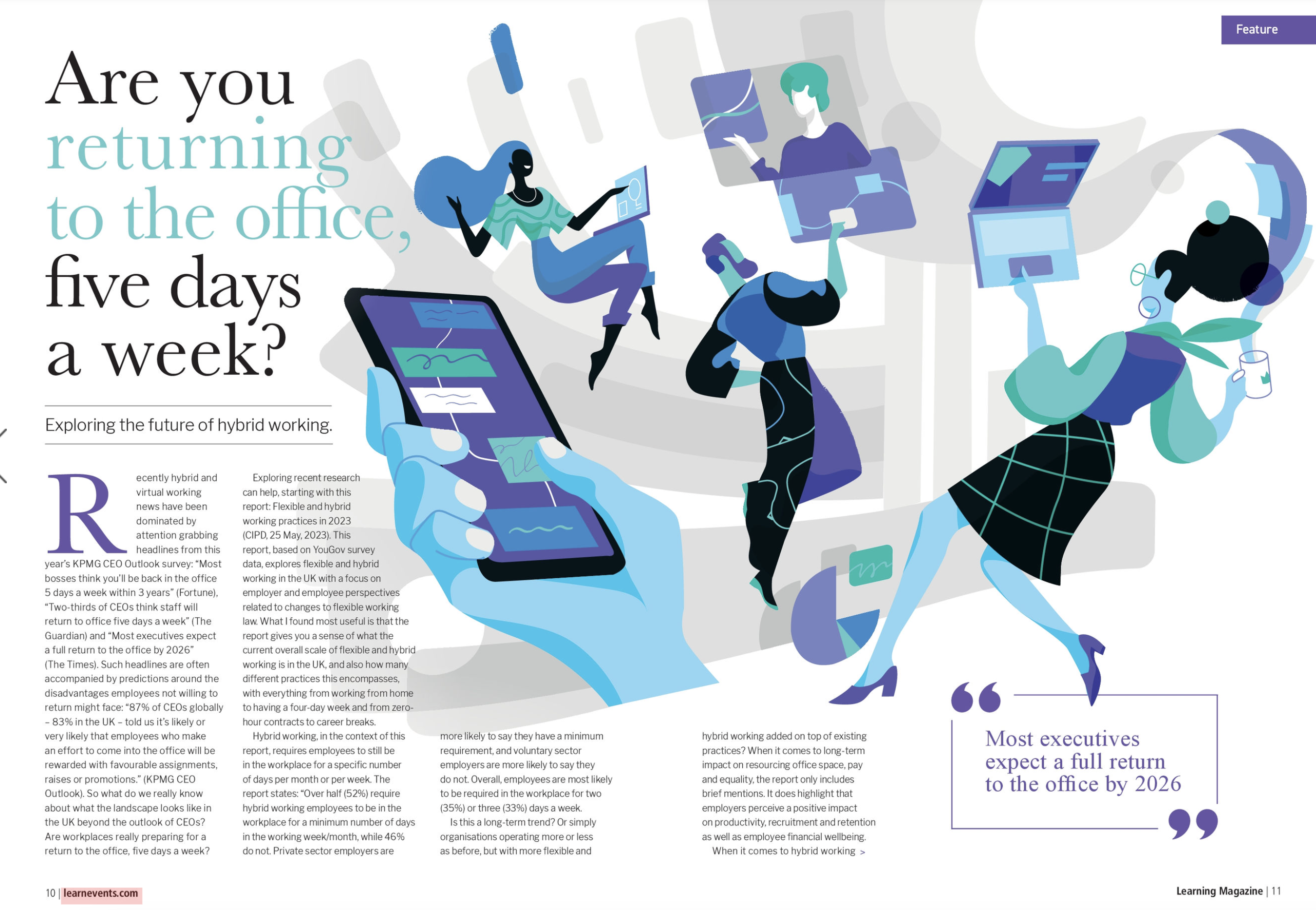
I am really looking forward to speaking an next week’s World of Learning Summit. In preparation for the session and to offer an insight into what my session will be about, I contributed an article to the Learning Magazine: you can read the article freely online.
Screenshot of the article with the caption: Are you returning to the office, five days a week?
My session at the summit is on Wednesday, and focused on offering an interactive discussion forum for leaders. We’ll explore hybrid working recruitment and retention, new trends in hybrid working and also challenges that arise over time from recruitment to long term retention.
Look out for the slides of the session, which I’ll be sharing via my linktree.
Don’t miss a post. Subscribe to my free newsletter and get a summary of everything once a month to your inbox.
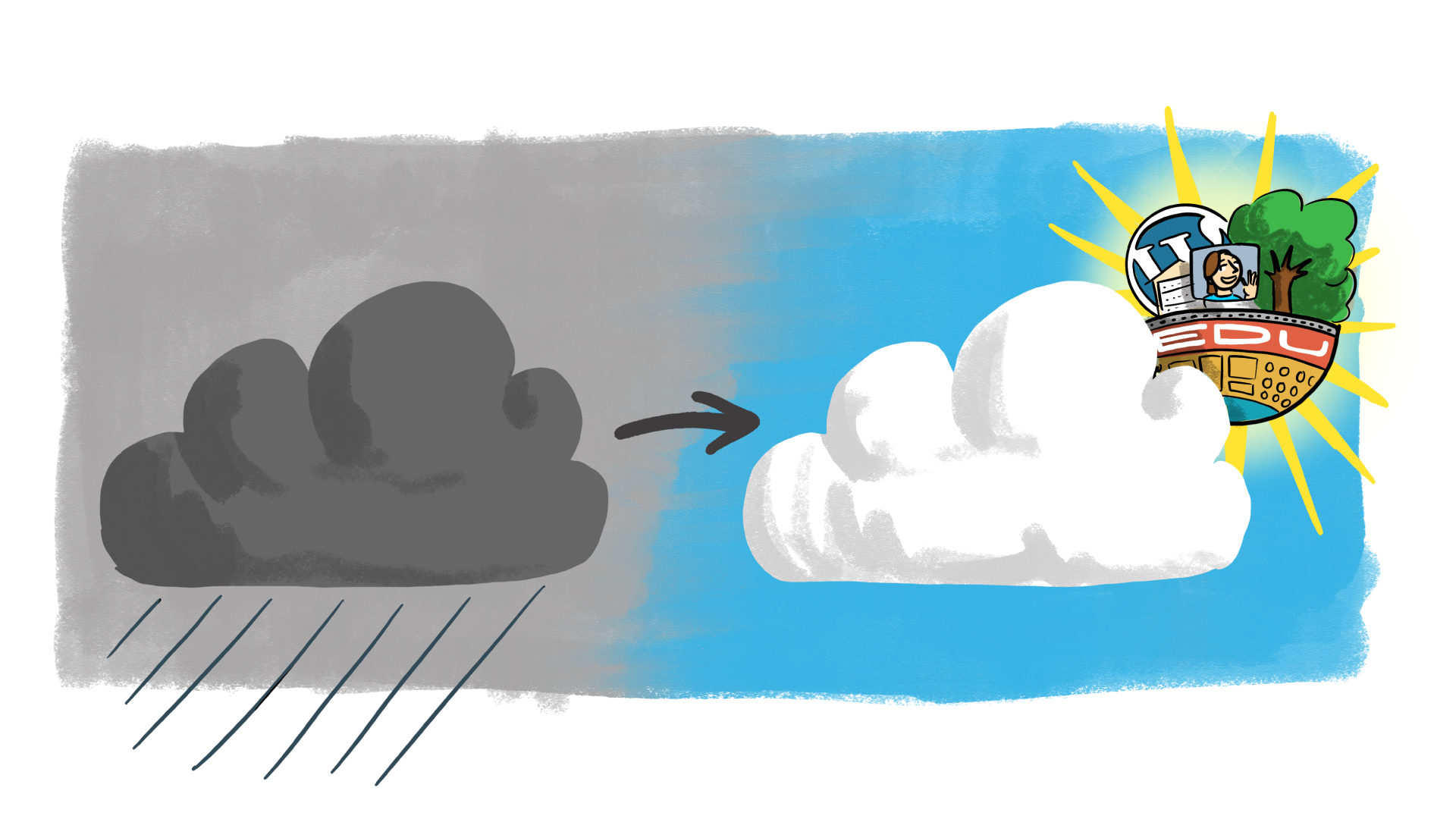
The recent launch of ReclaimEDU has got me blogging… always a good sign.
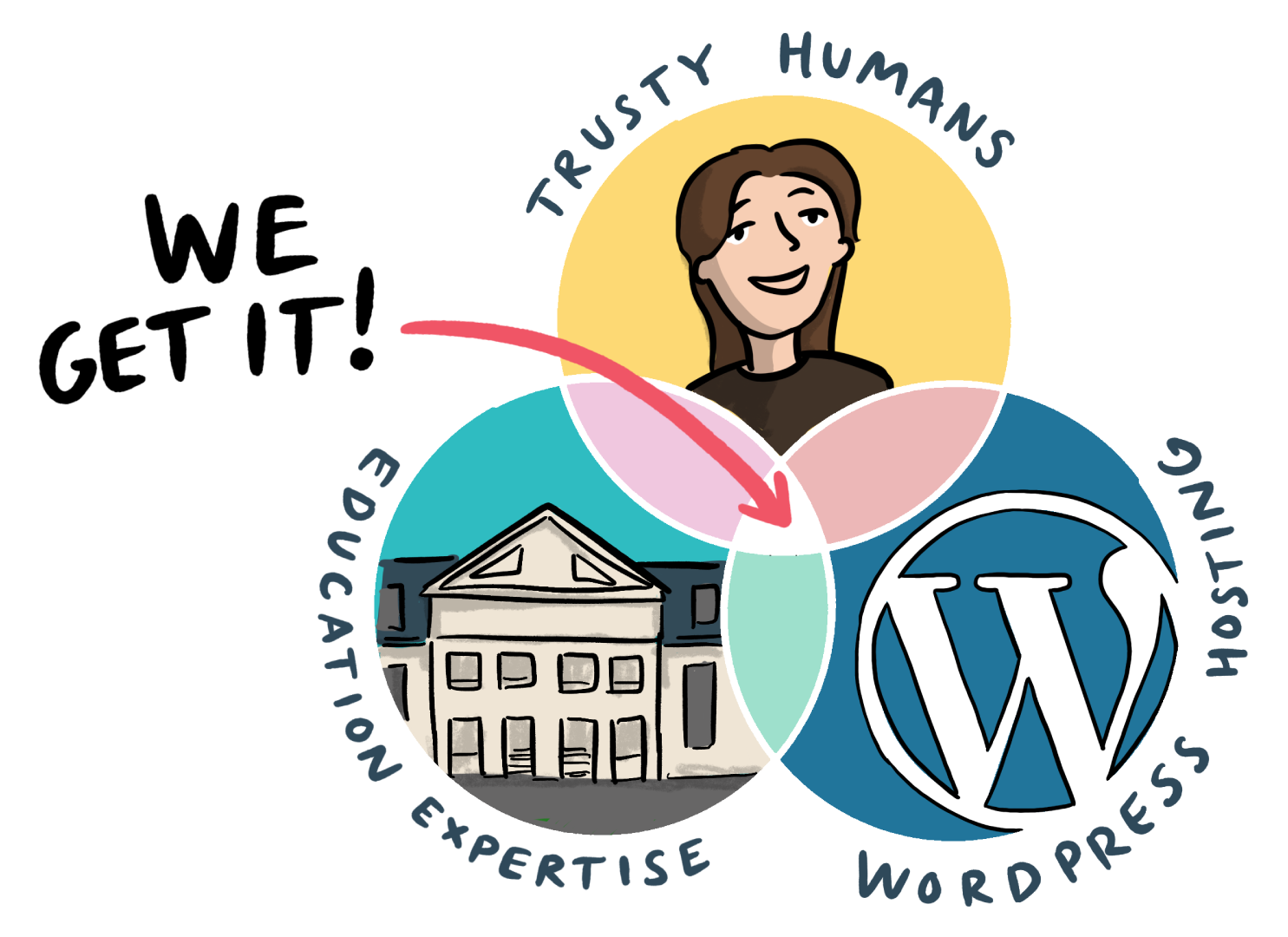
Now, working with the team at Reclaim has many perks, one of which was to learn more about this new offering before it was even launched. Jim talked us through it in the way only he can, and although I am learning more about the technology that makes this all possible what really did grab my attention immediately was the artwork.
I love the work Bryan has created with Reclaim Hosting for nearly ten years now and this ReclaimEDU launch is a great example of why it is so powerful. You don’t really need the words to get the idea. ReclaimEDU feels like a long way down the road from the origins of Hippie Hosting more than a decade ago… but many things remain constant. And one of those is that it continues to be is meticulously informal. That’s the bit I am particularly interested in.
Meticulous informality is a phrase that Martin Weller coined in 2019, in relation to the ALT Annual Conference. In the years since, and as our professional relationship turned into a personal one, we have often come back to the concept in our conversations and found it helpful in describing something we both value about a certain way of working, particularly since a lot of our interactions are happening online nowadays.
So what does it mean to be meticulously informal, and why do I think it matters? Let me try to explain what it means to me:
In the context of event planning, for example, I would describe it as a result of planning ahead so well that on the day you can lean back and enjoy it, knowing that you have most eventualities covered and can deal with any impromptu things that come up. It also means treating the individuals whom you work with not as generic actors in the event (the keynote, a panel speaker) but take into account their context: someone coming from far away who’s not been in the country before, someone who’s never given a keynote before, someone who’s nervous… and so on. It’s also about being present. Walking the walk. And that takes a lot of emotional energy.
I’ve been lucky enough to be at some events that really encapsulated that balance perfectly (yes, I am looking at you, wonderful OER Conference) and yet events aren’t the only place where meticulous informality matters.
When it comes to hybrid working, it really makes a difference, and it’s not something you can fake. When it comes to meticulous informality, people can tell whether you are going through the motions or truly making an effort. Effort is the operative word here as a meticulously informal workplace takes a lot of it. It’s no accident that one of the flex courses Reclaim’s Edtech team ran was all about hybrid working. I came on board to work on this course because we were interested in exploring all the different ways in which we can foster those interactions and habits that create a sense of meticulous informality in a team.
Which brings us back to Reclaim Hosting itself, where this kind of thing is not only valued but also shaping force that is reflected in everything the company does. After all, how many hosting companies do you know who get their team to sit around a drawing pad with Bryan Mathers as a first step to launching a new service (a service, incidentally, that as far as I can tell is needed because clients want to put more and more high level sites onto infrastructure they trust working with people who get it – people who are meticulously informal not only when they answer support tickets or chat about blogging on Discord, but also when it comes to designing new flagship services).
Incidentally, Visual Thinkery, where the process is in many ways more important than the eventual (amazing!) output, is another example of meticulous informality at work. What makes it work in both cases is a mixture of incredibly hard work (and a good measure of genius), as well as that all important understanding of why the informal bit matters. When I saw the ‘We get it!’ image above that Bryan created with the team, I immediately thought ‘Yes! They do get it!’. Yes, they are really good at what they do and they work very, very hard to constantly improve the infrastructure and support, and they also treat you like a human being, they care, they get it. (And, as an afterthought, they are human beings, too, which nowadays probably isn’t a given when it comes to supporting you with your hosting.)
It matters to me that I get to work with people who share that sense of what I think of as meticulous informality. It matters because I am more than a metric. Being more than a metric, more than a data point was the focus of my keynote for the ETUG Conference in Kamloops, Canada, in 2019 and it’s been a theme I have come back to again and again since. I see meticulous informality as a way to create that all important space needed to relate to each other as human beings, be that at events or at work or hosting your domain, and not give in to technologically determined transactional behaviours.
It’s been great fun this week to head up to Edinburgh to facilitate an away day for a senior leadership team at the university, and I wanted to share a few snippets of what made the day really memorable for me. The focus for the day was all about hybrid working and leading people and projects in a continually changing context, managing the enduring impact of lockdown working alongside emerging policies and priorities. Here are some reflections:
First of all, there’s the venue! The photo of this post shows the building where we spent our day with a beautiful view of Arthur’s Seat. It was great to have a venue which had such scenery on the doorstep, particularly as we could see the hill from the meeting room where we were based for the day. Lots of natural light and air always helps, I find. The venue was a good fit for some of the activities I had built into the day, designed to encourage everyone to step away from their screens and do some thinking together whilst getting some movement in.
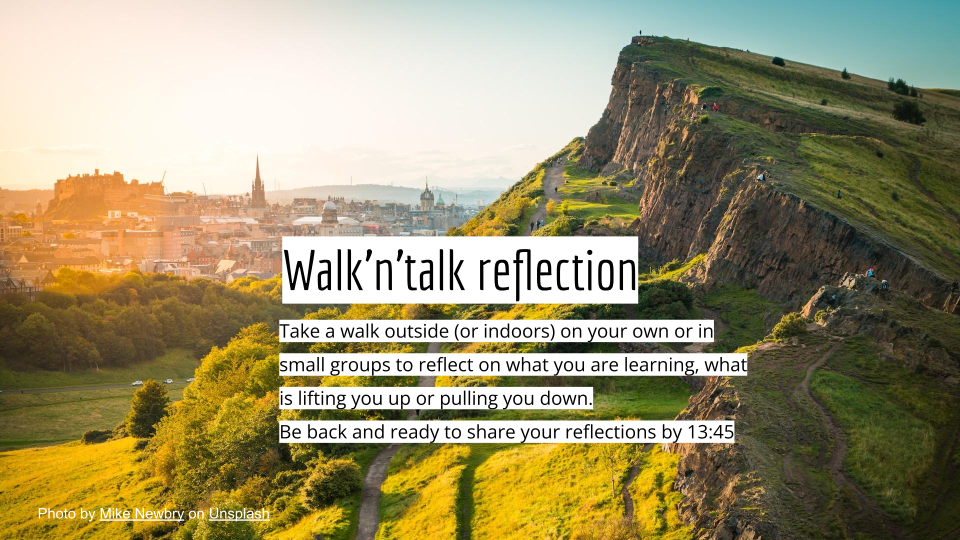
The walk and talk reflection after lunch was a really popular part of the day, giving everyone time and space to talk about things in a less formal setting than sitting around a meeting table. This activity also offered those who needed some quiet time to reflect on their own a way to do that between a busy morning of group working and the afternoon brainstorming session.
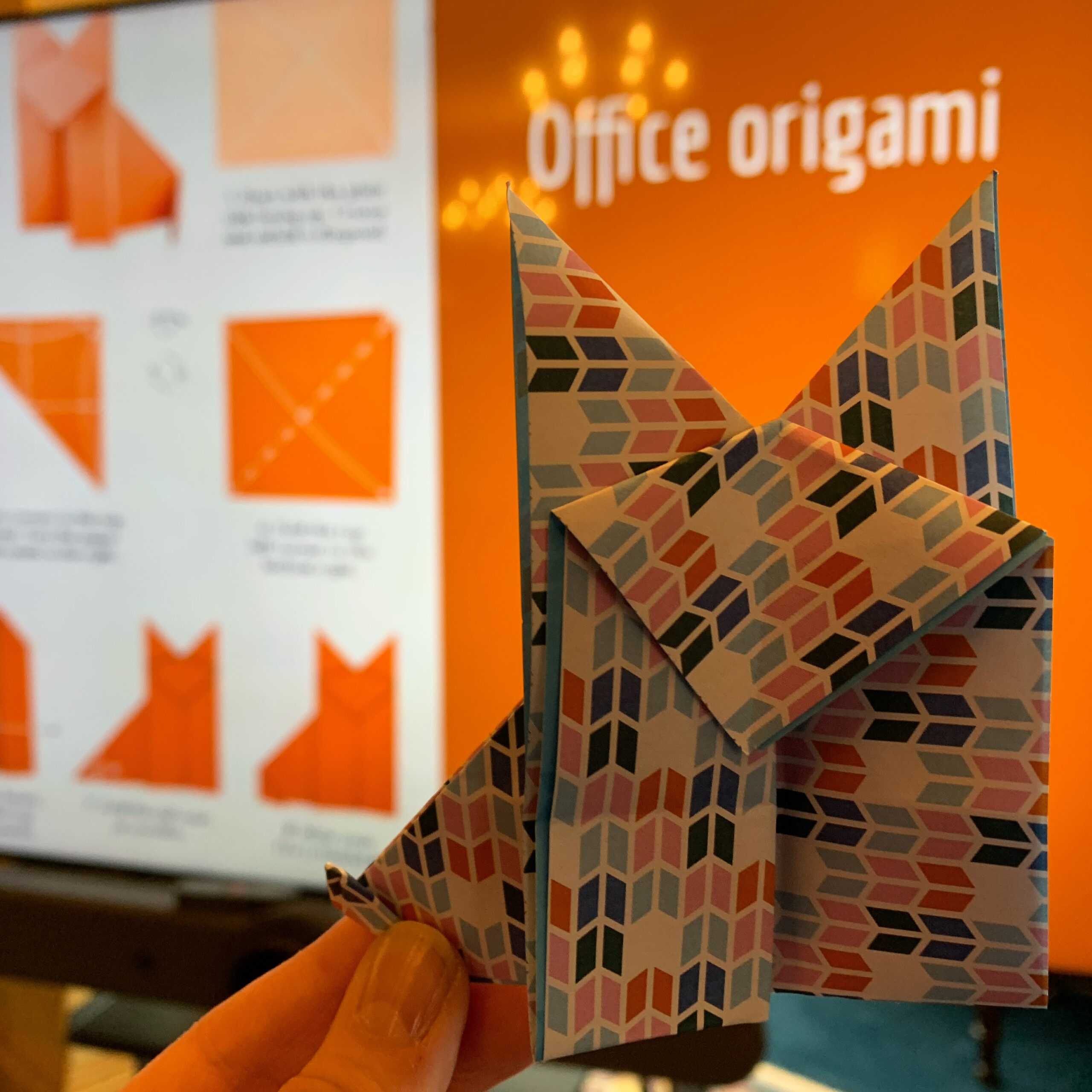
One of the sessions on the agenda explored fresh ideas for fostering a sense of community and encouraging engagement in hybrid workplaces. For example, we discussed how working radio or shared playlists could work, even scope to have a silent disco… 🙂 . I loved that idea in particular. We also tried out office origami as a communal activity.
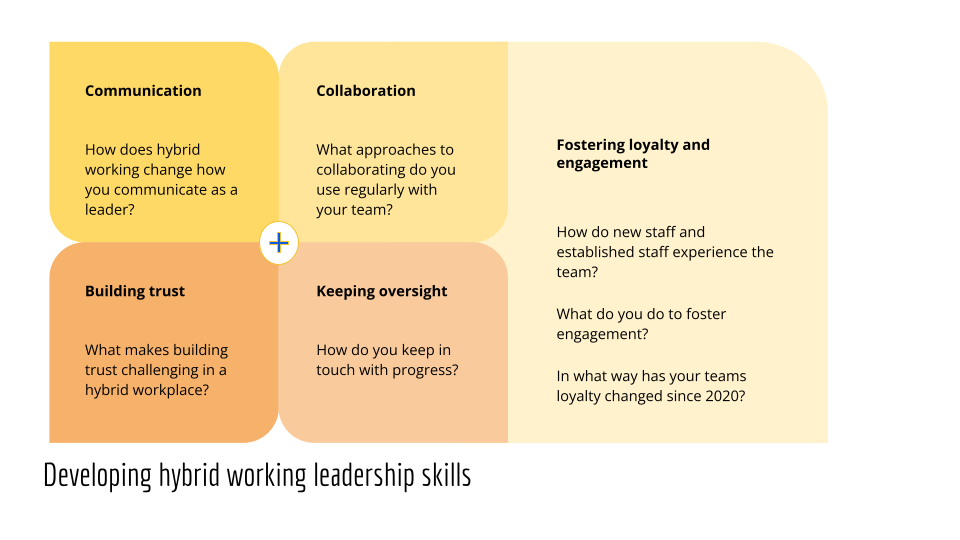
Now, for most of the day we worked on hybrid working leadership skills, exploring areas like communication and collaboration as well as building trust and keeping oversight of progress. Most importantly we talked about fostering loyalty and engagement, considering how the experiences of new and established staff could differ and how the role of leaders changes over time as hybrid working becomes more established.
What was really inspiring for me throughout the day was to see all the experience and expertise a team like this can bring to bear on the challenges of hybrid working. Working in learning technology builds a lot of capacity for the challenges ahead, especially as there are a lot of things we know about blended learning that can now be applied to hybrid working.
I had quite a few requests from folk elsewhere who are interested in hosting a day like this at their institution or take part in an online version. If you’d like to be added to the waiting list for that, get in touch.
Keep in touch with new events and the work I am doing by subscribing to my free monthly newsletter.