I love being online, and I love the communities I am part of online. As someone who relies largely on the internet to sustain long distance relationships with family and friends as well as collaborating with work colleagues on a daily basis, I am very invested in my corners of the web.
It takes a lot of effort however to keep those spaces good spaces to be in, on platforms like Discord and Mastodon, as well as this blog – my own domain for the past twenty years. In one of my favourite blog posts of the year, my partner Martin Weller reflected on the fragmentation of social media landscape to the tune of 70s disco tracks.
For me, the ‘secret sauce’ that keeps the network I am in truly fun, inspiring and genuine is the work happening in and around open education. From the OER Conference to working across various Open Education initiatives and group publications like this one from earlier in the year (Openness in Education as a Praxis: From Individual Testimonials to Collective Voices). For me, for the past 10+ years that usually involves the folk from Reclaim Hosting, the people who help you (and your students) get – and keep – a domain of one’s own. Incidentally, I have been digging into the archives and came across this gem of a post, from 2014, in which Jim Groom recounts how:
…we are still hoping to team up with Audrey Watters and Kin Lane to start realizing the vision behind “Reclaim Your Domain” as an extension of the Reclaim Hosting environment. Not just commodity hosting, but a space to synch, archive, and own your social presence around the web, while at the same time developing crucial web literacy skills.
Domains have been reclaimed, and ten years into the making there is no sign of letting up – Reclaim is thriving through technology as well as community. The community bit is the part I am especially excited about, and getting to work with the team that makes a packed calendar of events happen is a privilege as well as a lot of fun.
So this month, as we near the end of 2023, there is a whole host of activities to get involved in, as well as a very special session of festive karaoke, which is happening on December 22nd!
You’ll be able to watch the show on Reclaim.TV or listen in on Reclaim Radio… and if you let us know that you’d like to join us, then you can sing your festive favourites to your hearts content.
Me, I live in fear of karaoke, and unfortunately there’s a lot of evidence of how true those feelings are on YouTube. However, there must be a song by The Cure that I can co-opt as “festive”, and I am really looking forward to joining in, and reclaiming a bit of online fun before I head off into the holidays.
It’s a miserable day today in Cardiff. Grey, dark and rainy. Typical November weather. I am sitting at my desk with the light on although it’s only midday. Inside my head however, the sun is shining, at least figuratively, because my first OER24 submission is in!
the 15th annual conference for Open Education research, practice and policy will be organised by ALT, the Association for Learning Technology, in partnership with Munster Technological University (MTU).
MTU offers an excellent space for all members of the open education community to collaborate, learn and share in an inclusive environment. We are excited to welcome OER participants from the UK and across the world to the MTU Bishopstown Campus in Cork, Ireland.
Dates: Wednesday 27 and Thursday 28 March, with the GO-GN workshop on Tuesday 26
OER24 will bring together the strong Irish Open Education movement and international participants to leverage our shared expertise for change in policy and practice.
Now, I have blogged quite a lot about the OER Conference over the past few years, culminating in one very long post (love letter) to the event last year… as OER23 was my final event as CEO of ALT and an unforgettable conference.
The start of a new chapter
This year however, I get to return as a delegate for the first time, and hopefully as a presenter, too. Thanks to the great work of all involved, the Call for Proposals was out earlier than usual, giving me extra impetus to get my thoughts in order and draft my first ever ‘external’ submission to the event.
I love the themes the Chairs and Committee have picked this year:
The conference will put the spotlight on Open Education practices through five themes:
Open Education Landscape and Transformation: This theme explores Open Education and its transformative potential, with a particular emphasis on key initiatives and developments in the Irish education and training context.
Equity and Inclusion in OER: This theme delves into the role of Open Educational Resources (OER) in serving marginalised groups and in promoting inclusivity, diversity and equity in open education.
Open Source and Scholarly Engagement: This theme focuses on the connection between Open Education, Open Data, the Open-Source movement, and digital scholarship/librarianship, showcasing the collaboration of researchers across these areas.
Ethical Dimensions of Generative AI and OER Creation: This theme highlights the ethical considerations surrounding the use of generative AI for content creation and its potential in making educational content more accessible.
Innovative Pedagogies and Creative Education: This theme explores the intersection of Open Education with instructional design and learning design, examining creative practices and innovative pedagogies that enhance the learning experience.
And I picked the theme around innovative pedagogies and creative education for my submission. My hope is that if everything works out as planned, I’ll be there with my partner and his colleagues from the Open University as well as my colleagues from Reclaim Hosting, and of course I can’t wait for an opportunity to see at least some of my former team at ALT in person, too. Hugs will most certainly happen.
Get your proposals submitted!
If you are thinking of making a submission, I would really encourage you to put one in. You only need between 250 – 500 words and there are a lot of fun formats to choose from, ranging from workshops to presentations and, of course, the one and only GASTA format, which promises to be 5 minutes of unforgettable fun.
This is a conference where you will not only be welcome, but which will recharge those batteries of enthusiasm and hope for the whole year… (just look at the keynote line up!).
Fingers crossed, I’ll be seeing you in Cork in March!
Enjoyed this post? Get my free monthly newsletter directly to your inbox.
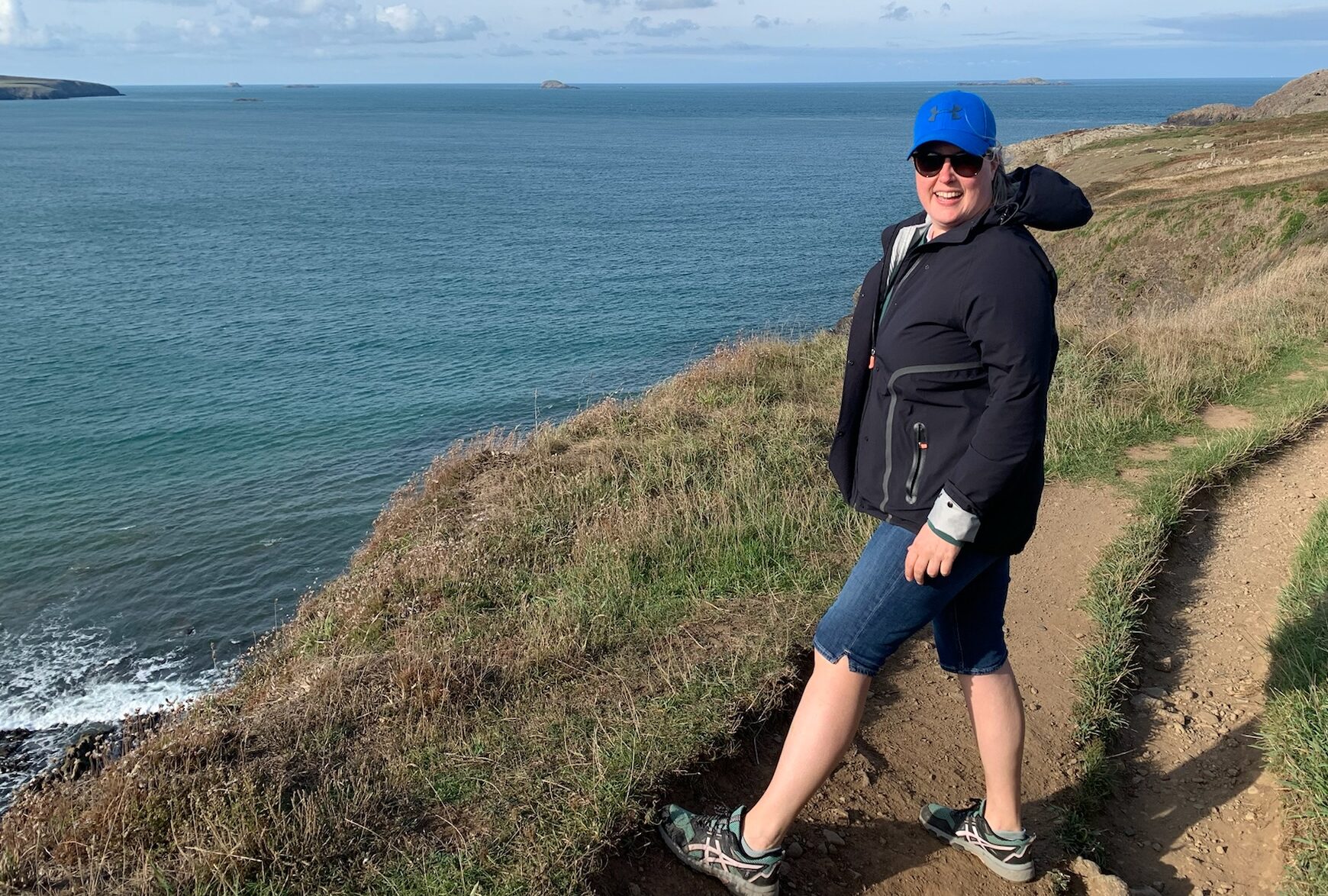
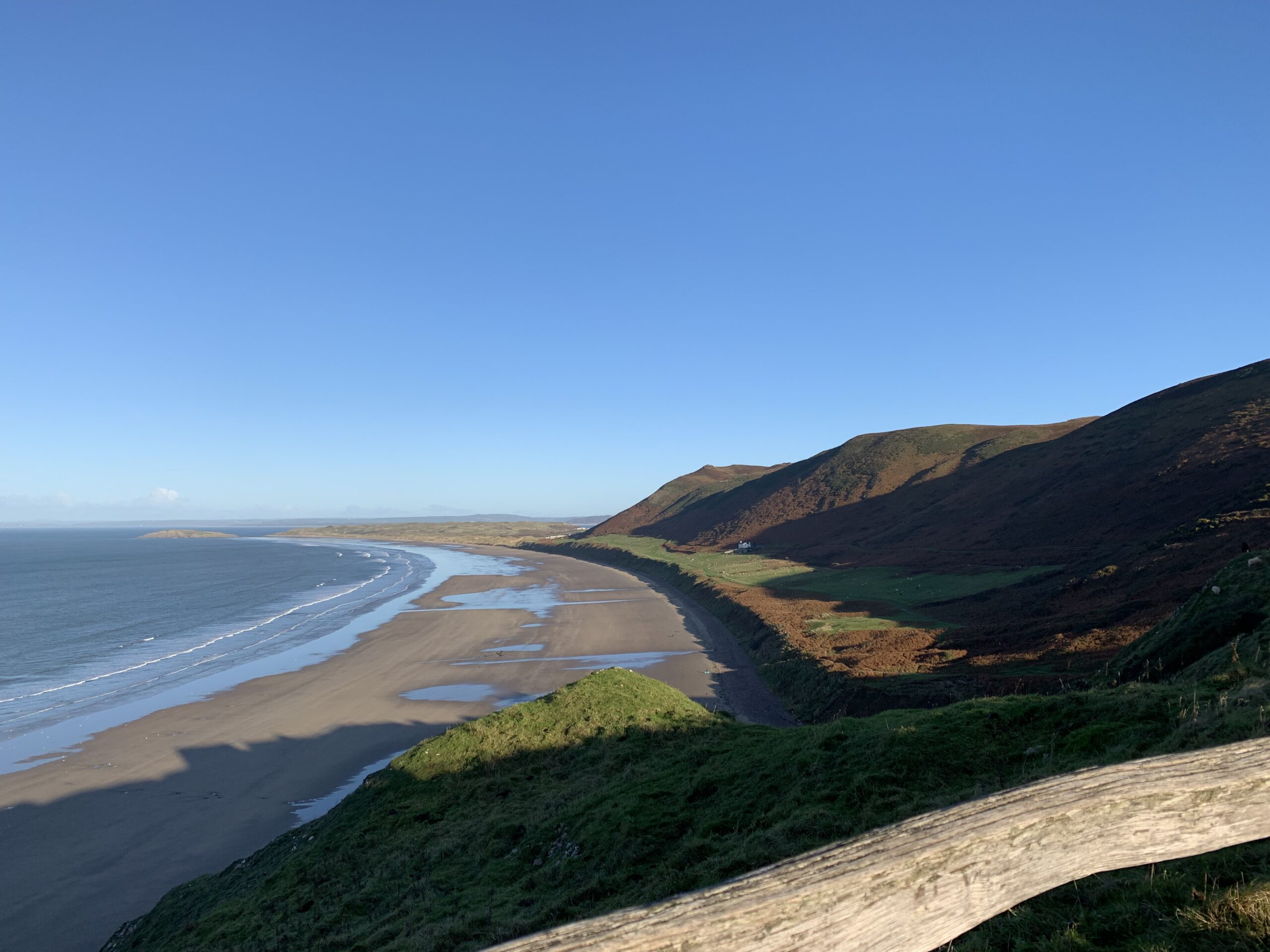
… and come walk with me. How about a day along the windswept West Wales Coastal Path? The title image for this post is taken at the tip of the St David’s peninsula around this time of year. Let’s have a day buffeted by autumn winds surrounded by colourful heather, looking out to the endless horizon. I would love to have a day like that today.
In reality, although that part of the Coastal Path is only just over two hours from my desk, I am much more likely to take a walk along the Taff Trail with the dogs today. Not quite as dramatic when it comes to scenery, but my daily miles are a wonderful daily escape, a practice for my body and mind that benefits my wellbeing as well as my productivity.
Walking is a big part of my life. It’s a necessity when you have two big dogs that want to cover 3-5 miles a day. It’s a hobby, as I walk, jog and run my way to greater physical fitness. It’s also where I like to think, reflect and have important conversations. Over the past ten years, it’s definitely become a kind of superpower that gets me through tough days.
I like walking on my own, with the dogs, with someone else, sometimes with headphones in, sometimes in my head, alone with my thoughts. During my postgrad years I developed an academic interest in walking, and some of my PhD thesis was based on ethnographic walking and a phenomenological exploration of place and landscape, so it’s fair to say that I’ve read quite a lot a about walking as a practice, as a method of enquiry, as a way of life.
It’s always inspiring to read of great explorations or long walks, spanning a whole country for example. My own walking has stayed at a much more quotidian scale. I don’t really care whether I’m taking turns in my local park, walking through bustling city streets or trudging along the Coastal Path. What is important to me, and what makes it work, is that I get to reflect and process whatever is on my mind that day. If I have the company of a coach or a friend (or most commonly my partner), I have the added benefit of someone else’s perspective and the principle remains the same.
When I worked with my mentor Margaret we used to meet up every few months for a longer session, and we always tried to make it a walk. Between these meetings all our work happened online, via email or a phone call, but whenever I really needed to think something through, figure out a new vision for the next three years or confront a difficult situation in my role as CEO, we would walk together and talk it through.
Parenting books often suggest that the best way to have conversations with teenagers is not to sit around a table, facing each other, but to create a less confrontational atmosphere when you are side by side, driving in a car or walking somewhere for example.
In a work context, particularly if you work virtually, there’re many situations in which you face each other, or a whole screen or room full of people. You face each other, stare at your own reflection, at someone’s bad hair day and so forth. It’s not often conducive to focusing on thinking and reflecting. Screens are distracting.
Stepping away from the screen can feel hard. Technology is sticky, capturing our attention, and removing yourself from its constant nudges is a key reason why taking a walk is helpful. Walking is an embodied experience, you are moving through the world, experiencing it with your senses. All of which is helpful for getting a fresh perspective and to gain clarity.
Of course, it’s not often possible to head out for a whole day on the Coastal Path. More often, a walk around the local area has to suffice, and in my experience it works just as effectively. With a bit of forethought you can even gain some of the benefits of a walk indoors. Whenever I don’t have the time to actually go outdoors, and I have a call I really need to focus on, I put my headphones in, put the screen to sleep and pace up and down in my office. Sometimes with my eyes closed, sometimes looking down at the floor or nowhere in particular. I am still moving, focusing, and not distracted by screens. It does take some practice and discipline to make this work, and it’s much easier to give yourself the benefit of actually going for a walk, but on days when you have 10 back to back meetings it may be the only option.
I am really looking forward to exploring how to step away from the screen in my upcoming course on hybrid working. I am not sure if many people realise that walking can be a hybrid working superpower… but we’ll have fun finding out. Incidentally, I designed the course to be podcast based, focusing on audio rather than video content, so that folk who would like to walk along with me could do so as they work through the course. It’s free, so why not register 🙂
Some of my coaching clients, for whom I also offer walking sessions, really enjoy having a session talking on the phone whilst exploring their local park and pathways. And sometimes, when we are able to meet in person, we get to walk and talk together. Those are always the most exciting days for me.
I haven’t done any coaching on the Coastal Path as yet, but I have had many, many excellent conversations whilst exploring that beautiful part of the world. So.. if you are ever in South Wales or if you have a path near you that would make for a good place to think, get in touch.
Enjoyed this post? Get my free monthly newsletter directly to your inbox.
Today is an exciting day. It’s the first Monday of the first week in which I am full-time in my new business. Maren Deepwell Coaching & Consultancy is now fully underway. Woohooo!
It’s been a long time coming, and I didn’t really know what to expect from today. It feels a little strange not to return to the familiar busy inbox and long-time colleagues after returning from a two week holiday. Instead I sit at the same desk, in the same room, but in the unfamiliar virtual HQ of my new venture. It does feel strange and also thrilling.
As I have had months to wait, plan and prepare for this day, I have intentionally made a schedule for my first day and my first week on the job. The purpose is to provide a structure within which I can start to establish my new workflows, processes and routines.
Of course, the structure I put in place needs to flex in response to the demands of the new projects and clients I get to work with, that was clear to me from the outset. That said, one of the reasons why I set out to work on a free-lance basis is that I get to have a lot more control over what my days look like.
Monday mornings are not my favourite time of the week, and used to be taken up with a lot of catching up with emails, staffing matters, meetings and so forth. When I sat down to decide what my ‘ideal’ start to the week would look like I had to pause and think. After decades of not having much choice, suddenly having all options open felt a little daunting. Quickly I realised that what I really want to start the week with is time to think. To use the energy, focus and creativity I have early in the day to work on things that require some vision and some uninterrupted time to think.
Thus, my schedule for first thing Monday morning now reads: thinking time. And it feels awesome to have such a start to the week.
Today was my first morning of thinking about things, and I am quite pleased with how it went. I use Asana to plan and organise my work, and I set up a weekly task for Monday mornings, so I can keep a running list of anything that I need to work on or think about. Today’s list included writing a strategy document for the remainder of this year, to update my business plan for Q3, and to think about my financial strategy and reporting. Plus, blogging my first day.
Our day at home started early today, so I was at my desk first thing, with a blank screen in front of me, ready for ‘thinking time’. It’s a bit odd to change jobs as a home-worker, as you don’t have a lot of physical changes to help you make a transition like this: No new commute, new office, new desk or coffee with new colleagues.
Instead, I made efforts to change my digital set up and create a new workspace for myself: a new desktop, a new desktop organiser, new tools like a new email client, calendar and so forth, as well as nice filing structures etc.
Working with Canva and Asana, I made good progress on the strategic tasks for the day, updating various plans and actions, scheduling tasks and thinking through what I would need to do to achieve my objectives for the last few months of the year.
It’s been a while since I started a new role, but what I am quite certain of is that time flies when you have a lot of new experiences, and so I want to chronicle some of my days via the blog (and some via my closed work journals). I love looking back at my entries from previous roles and projects, and reflect on how much things have developed since.
In this week’s podcast I share some of my personal history and how I came to be so interested in all things hybrid and virtual working. From Germany to London in my art school years, and from Athens to Oxford as my work moved from Art to Anthropology and then Education, this episode sets out what I think is interesting about hybrid and virtual working, why it’s important and why now is the time to really find ways of working that work for you.
Listen to the episode:
What are your hybrid working conundrums? Leave a comment or email me with you questions and problems when it comes to hybrid working, and I’ll pick these up in the upcoming episodes.
One of the consequences of the global pandemic in the workplace is an increased demand for flexible and hybrid working. In response, employers are offering staff to work from home more regularly, and come into the office or on campus for less time each week. Flexible working is intended to increase staff satisfaction, productivity, and retention at a time when we have moved from the great resignation of 2021 to an endemic of ‘quiet quitting’. At the same time, effectively working from home has become a sought after skill in the workplace, particularly as some of the negative impacts of long term home working on (mental) health, equality, diversity and inclusion and staff engagement have started to emerge.
Bridging the gap between the growing hybrid workforce of knowledge workers and the (lack) of organisational vision for the post-pandemic workplace, are the managers and leaders leading increasingly virtual teams. It is their job to translate the newfound flexibility into effective collaboration between colleagues. It is their challenge to establish communication channels that engage a hybrid workforce with diverse needs, balancing work with other commitments. A workforce for whom coming to the office or on campus may be a hated necessity or indeed a much sought after opportunity. Not everyone loves working from home, sharing a desk or meeting in a coffee shop.
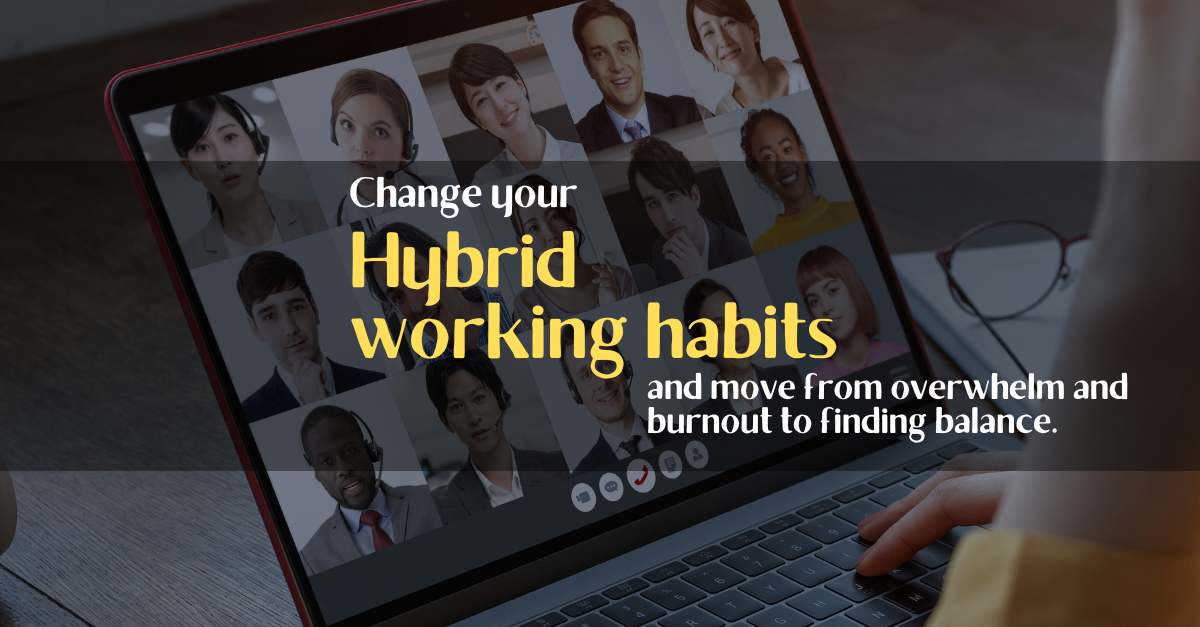
If you are looking to move from overwhelm and burnout to finding balance, then this course is for you.
Develop the skills you need
This course is designed to help develop skills to:
Audit your hybrid working habits to find out how your current habits are impacting on you and what to change;
Set boundaries for a better life/work balance and stick to them even when things are busy;
Increase productivity away from the screen by using strategies for communicating and collaborating outside of meetings;
Communicate more effectively in the hybrid workplace in a way that works for you and reduces digital overwhelm.
Course activities
Listen to the podcast
The course has four parts and each part is introduced by a podcast episode that sets out the key ideas for the topic. I have chosen the podcast format to enable you to follow the course at your own pace, listening when it suits you and also to minimise screen time needed to take part in the course. Whether you listen to the course as you walk the dog, cook or sit in a comfy chair, this course is designed to take you away from your screen and constant stream of notifications. You just have to listen.
Reflect on your practice in weekly hangouts
Each topic is accompanied by prompts and questions to help you reflect on your professional practice. We will use these prompts in weekly course sessions to take a deeper dive into ways of working in the hybrid workplace and reflect on how your habits aligns with your goals and values. You can choose whether you write your reflections down, share them with others in the course or keep them private for yourself.
Explore new ways of working
Each topic comes resources and tools to explore. You can try out new idea for yourself or join one of the weekly drop-in sessions for personalised support.
Who is the course for?
This course is designed for emerging and established leaders and managers working in a hybrid or fully virtual setting in education and the not-for-profit sector. We will focus on how to develop effective home/hybrid working strategies. Whether you are collaborating online on a project, organising distributed volunteers or managing a whole hybrid working department, this course will support you to move from overwhelm and burnout to finding balance.
Register today
4 Week Course Listener – free
Listen via your favourite podcast app
Follow at your own pace
Explore resources via the show notes
Upgrade anytime!
4 Week Course Explorer – £29
Course content straight to your inbox
Weekly course hangout & drop-in support
End of course summary with resource pack
Certificate & badge upon completion
4 Week Course Explorer + Personal Coaching – £229 Course Explorer package PLUS:
This morning’s Memex 1.1, John Naughton’s Substack newsletter, including this quote by Dave Winer: “There’s nothing more permanent than a temporary hack.” and it feels like a great theme for my day today, which I am spending sorting through my own temporary hacks from the past 15 years.
It’s my day to clean out my archive of files and emails at ALT, the last steps in a long handover process. Documents I filed away in 2017 to be reviewed later are stacked alongside old references I have written for former employees and pictures from past keynotes.
Most of this stuff can just be deleted all together, but I am mindful that some things are important for the organisation’s history and legal records, GDPR permitting.
What I am pondering if how many times I didn’t circle back to things I implemented as a temporary hack, and hence today’s quote really chimed with me. Here are some examples of what I’ve come across:
My CMALT portfolio that I published in a Google folder (an organisation-hosted Google folder, for which, I just discovered, you can’t transfer ownership outside of your organisation’s domain);
An email filter I set up in 2015 when I first joint a very busy Jiscmail list, and which has quietly filled up a folder with tens of thousands of emails since… EEEEK;
A shortcut to a file to a shortcut to a file to a shortcut to a file….;
Lists of things I want to do, and a lot fewer lists of things I did! Fortunately I discovered a file with old appraisals going back to 2008, so hopefully somewhere in there are records of what I accomplished in more detail than the lists I sporadically kept.
Even Gmails hefty power is taking time to delete all the emails, one year at a time. It feels extremely satisfying however, and is also necessary, as my new free-lance role within the organisation is limited to a specific project and I want to ensure that I have a clean footprint on which to work.
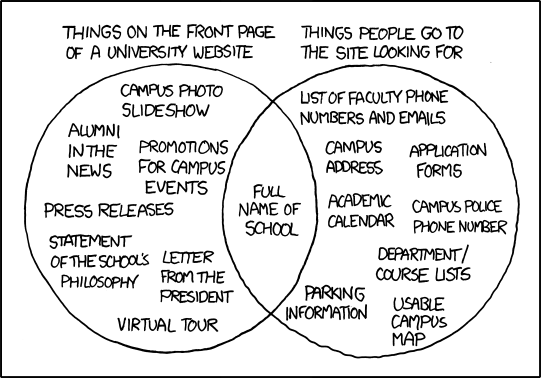
As I delete things, I also need to bring some order to my own domain, and again the newsletter provided some inspiration in the form is this XKCD comic about university websites:
University Website (XKCD, 773)
It’s easy to fall into the same traps for one’s own website as organisational ones.
Enjoyed this post? Get my free monthly newsletter directly to your inbox.