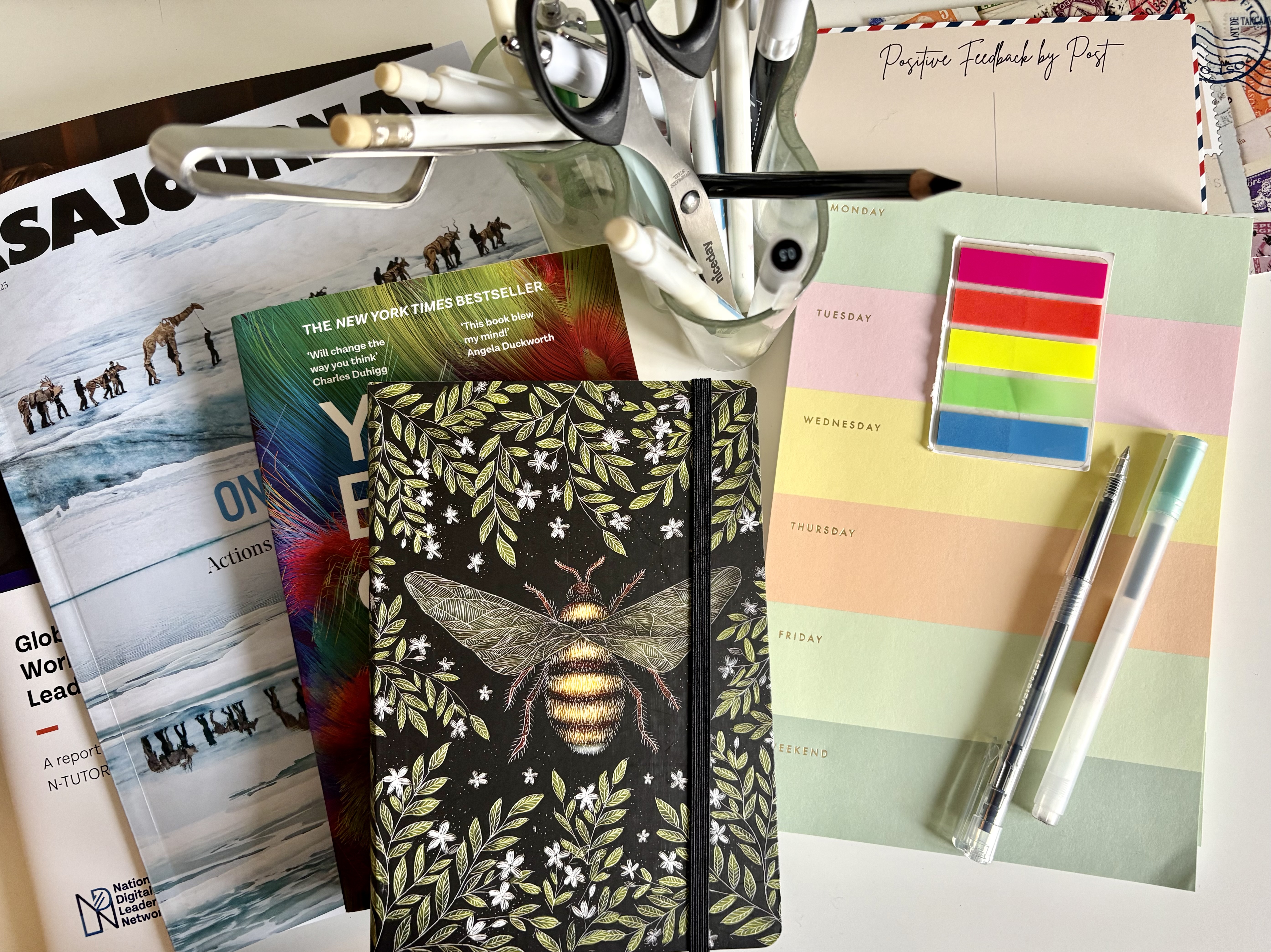
One of my fellow coaches, Helen, a wonderful executive coach for Headteachers, recently shared online that her word of the year for 2026 is ‘analogue’ and that was music to my ears. As regular readers know, I’m a big fan of all things analogue, and the post prompted me to re-read The Revenge of Analogue by David Sax. Although the book was published ten years ago, and some of the research it mentions has been superseded, it’s central argument holds fast and the industry case studies of how industries were revived not for nostalgic reasons, but for business reasons are even more relevant today.
As in my previous post about using a Done List as an antidote for that pervasive sense of always having to get even more done, I’m blending my long days of digital productivity and working online with analogue activities, to make space for strategic thinking, reflection and planning. One of the questions I get asked the most on training days however is just how to carve out the time and actually create some offline head space when the pace of digital productivity feels simply relentless?
One strategy I find very effective is to add an analogue work bag to your toolkit.
From analogue to analogue (work) bag
If you haven’t come across the term, a so called “analogue bag” is a bag or basket filled with everything needed to engage in analogue activities and stay offline (I came across an interesting article recently that explains this phenomenon further). In the context of being at home and avoiding loosing valuable hours of attention to (doom)scrolling, you might fill your bag or basket with things like craft supplies, knitting needles and yarn, pen and paper, a journal, books or puzzles. In short, whatever supplies you find engaging and stimulating to engage in analogue activities.
In order to translate this approach into a work context, all you need to do is to swap the contents of the bag or basket. Here is what that might look like:
- pen and paper for making notes
- post-it notes for reminders and planning
- coloured pens/whiteboard markers if you have a bigger surface available
- a planner or diary for longer-term perspectives
- printed trade or research journals to catch up on what’s new
- a book, such as a technical manual, non-fiction or a biography for inspiration
You’ll likely already have such things around your work space. The purpose of the bag (or basket, desk drawer, dedicated shelf or similar) is to make sure all of these are easily available to you, rather than lost in a forgotten drawer somewhere. Use the bag to offer inspiration and practical ways to get started with planning, reflecting, strategising or research as soon as you step away from the screen.