It’s a miserable day today in Cardiff. Grey, dark and rainy. Typical November weather. I am sitting at my desk with the light on although it’s only midday. Inside my head however, the sun is shining, at least figuratively, because my first OER24 submission is in!
the 15th annual conference for Open Education research, practice and policy will be organised by ALT, the Association for Learning Technology, in partnership with Munster Technological University (MTU).
MTU offers an excellent space for all members of the open education community to collaborate, learn and share in an inclusive environment. We are excited to welcome OER participants from the UK and across the world to the MTU Bishopstown Campus in Cork, Ireland.
Dates: Wednesday 27 and Thursday 28 March, with the GO-GN workshop on Tuesday 26
OER24 will bring together the strong Irish Open Education movement and international participants to leverage our shared expertise for change in policy and practice.
Now, I have blogged quite a lot about the OER Conference over the past few years, culminating in one very long post (love letter) to the event last year… as OER23 was my final event as CEO of ALT and an unforgettable conference.
The start of a new chapter
This year however, I get to return as a delegate for the first time, and hopefully as a presenter, too. Thanks to the great work of all involved, the Call for Proposals was out earlier than usual, giving me extra impetus to get my thoughts in order and draft my first ever ‘external’ submission to the event.
I love the themes the Chairs and Committee have picked this year:
The conference will put the spotlight on Open Education practices through five themes:
Open Education Landscape and Transformation: This theme explores Open Education and its transformative potential, with a particular emphasis on key initiatives and developments in the Irish education and training context.
Equity and Inclusion in OER: This theme delves into the role of Open Educational Resources (OER) in serving marginalised groups and in promoting inclusivity, diversity and equity in open education.
Open Source and Scholarly Engagement: This theme focuses on the connection between Open Education, Open Data, the Open-Source movement, and digital scholarship/librarianship, showcasing the collaboration of researchers across these areas.
Ethical Dimensions of Generative AI and OER Creation: This theme highlights the ethical considerations surrounding the use of generative AI for content creation and its potential in making educational content more accessible.
Innovative Pedagogies and Creative Education: This theme explores the intersection of Open Education with instructional design and learning design, examining creative practices and innovative pedagogies that enhance the learning experience.
And I picked the theme around innovative pedagogies and creative education for my submission. My hope is that if everything works out as planned, I’ll be there with my partner and his colleagues from the Open University as well as my colleagues from Reclaim Hosting, and of course I can’t wait for an opportunity to see at least some of my former team at ALT in person, too. Hugs will most certainly happen.
Get your proposals submitted!
If you are thinking of making a submission, I would really encourage you to put one in. You only need between 250 – 500 words and there are a lot of fun formats to choose from, ranging from workshops to presentations and, of course, the one and only GASTA format, which promises to be 5 minutes of unforgettable fun.
This is a conference where you will not only be welcome, but which will recharge those batteries of enthusiasm and hope for the whole year… (just look at the keynote line up!).
Fingers crossed, I’ll be seeing you in Cork in March!
Enjoyed this post? Get my free monthly newsletter directly to your inbox.
Well… it’s been quite a week, quite a conference and quite an end to my time as CEO of ALT. I’d previously blogged my love letter to ALT’s Annual Conference, and also my goodbye and thanks as CEO of ALT. I felt well prepared going into the conference week, but as it turned out, it was a lot more emotional and a lot more intense. So in this post I want to bring together at least some of the memories and moments that made it special for me, to help process what has been a wonderful if overwhelming time for me, and to capture the amazing and kind feedback and messages I received.
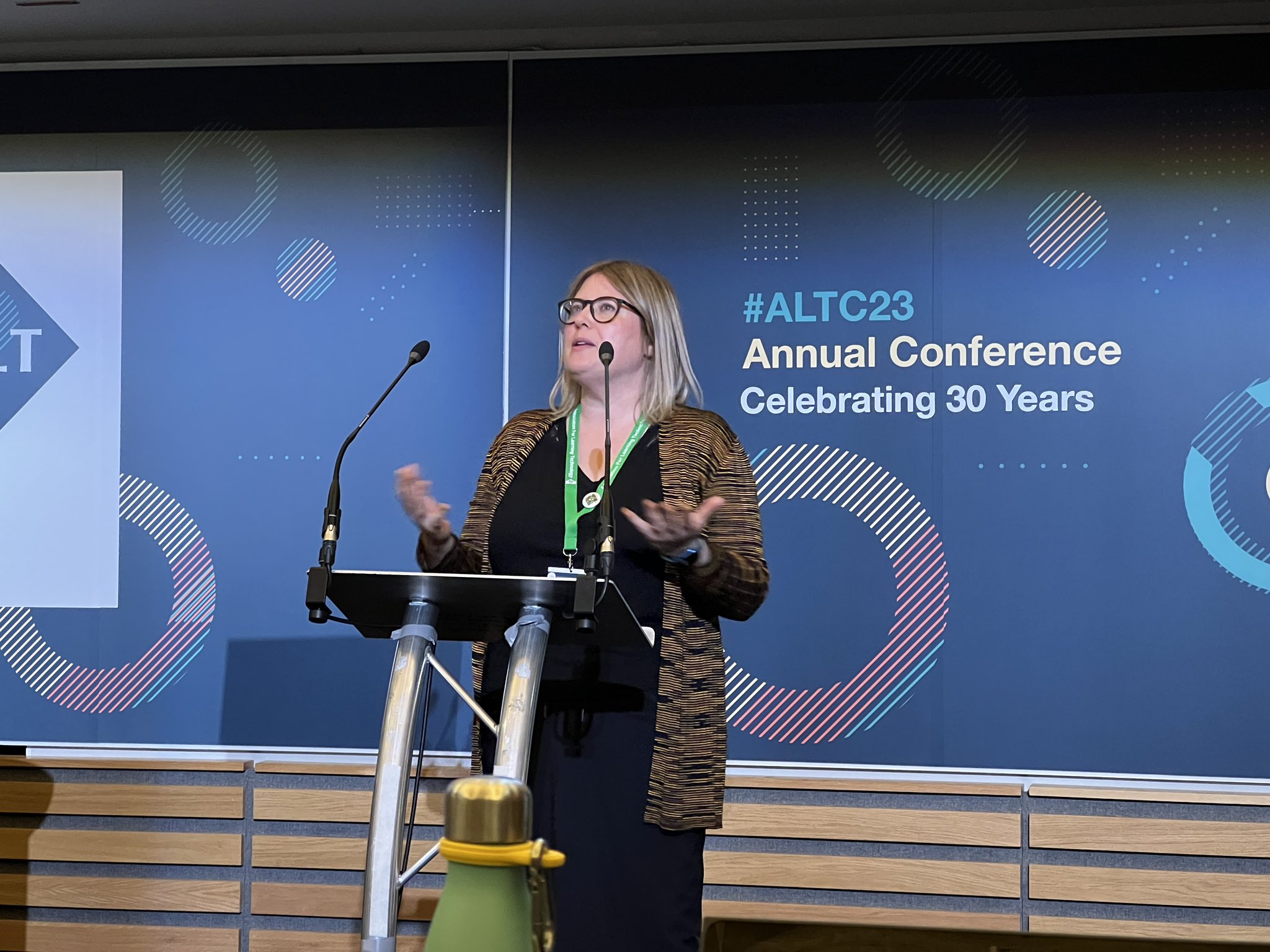
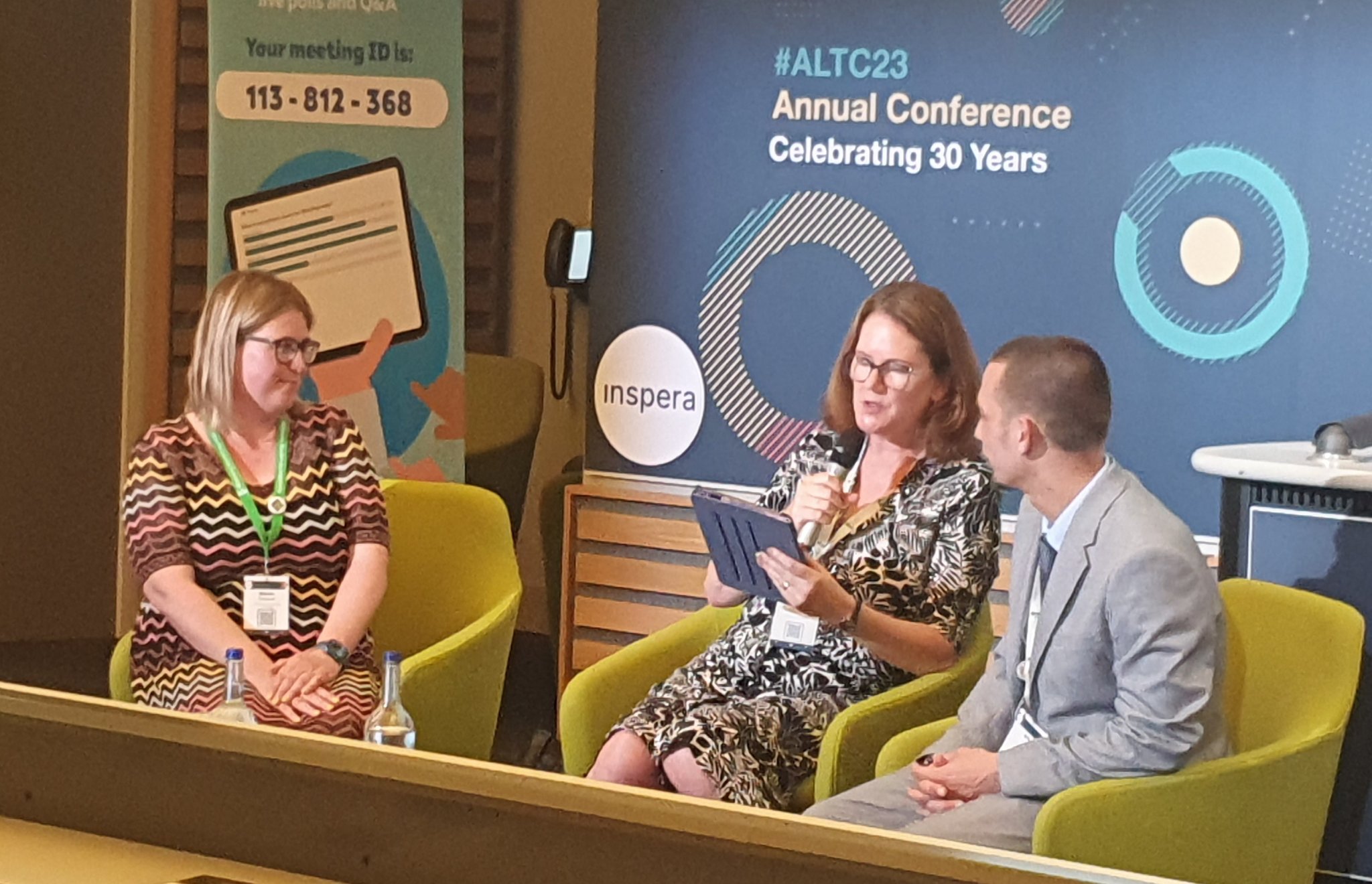
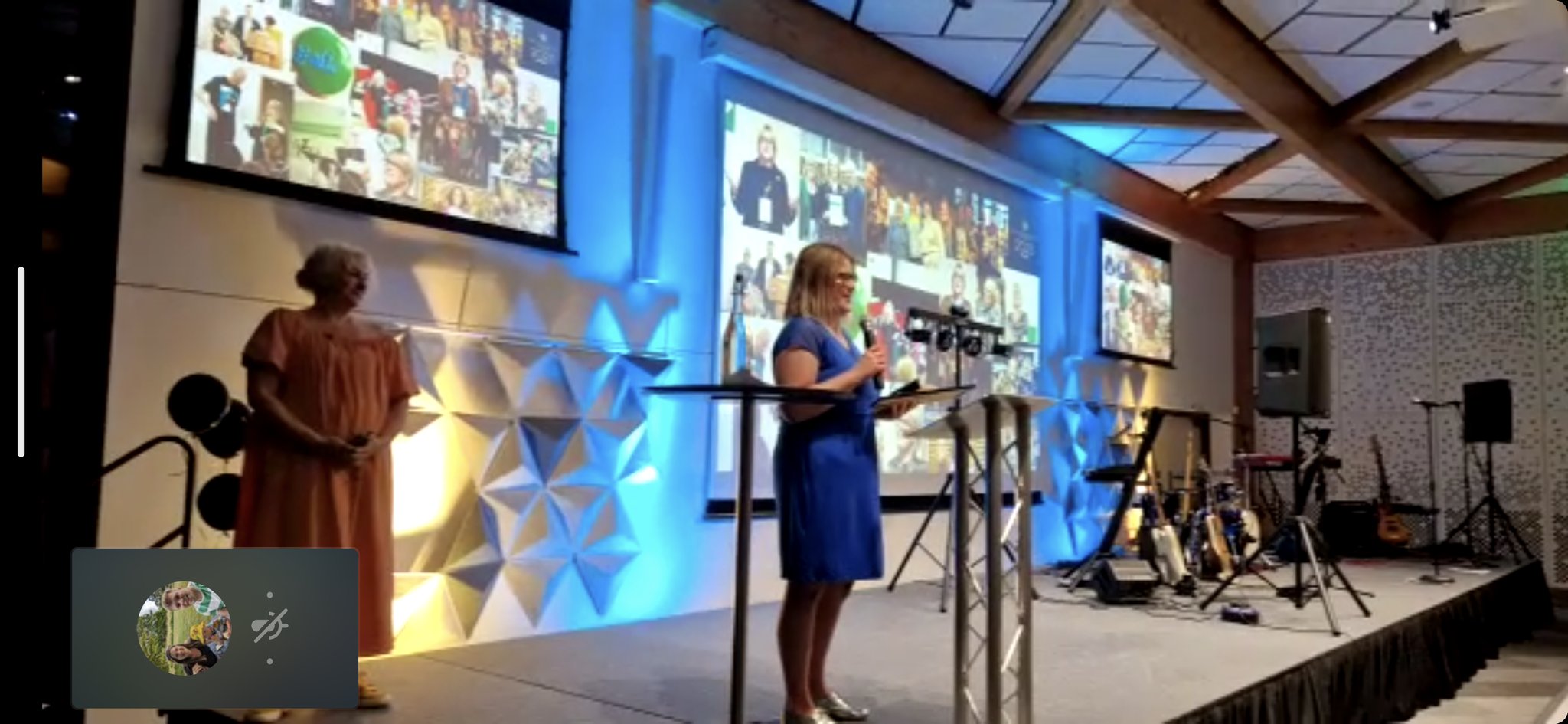
Conference opening (Image by Anne-Marie Scott)
It was a week packed with inspiration and joy, and I won’t be able to mention everything that’s happened, but suffice to say that this was a week to remember for our community, with a lot of firsts and a lot of milestones achieved!
Messages from Members
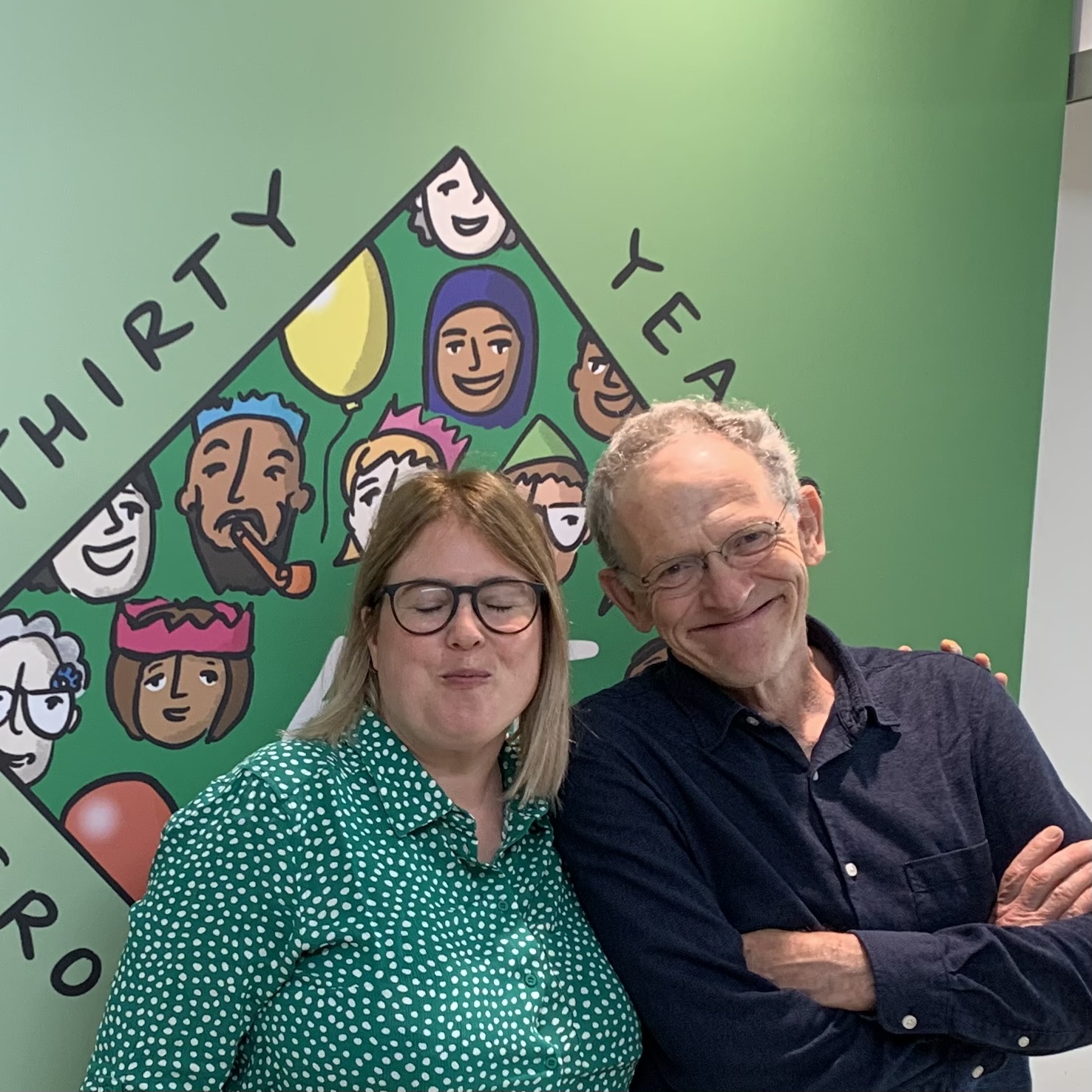
Thank you to everyone who sent me a message before and during the conference. It’s been incredible for me to have so much feedback, kind words and encouragement. I especially appreciate the cards that arrived by post which made for a nice surprise! It was so wonderful to see many former Trustees and staff at the conference and this picture with my predecessor Seb Schmoller really made me giggle – it’s definitely heartfelt 🙂
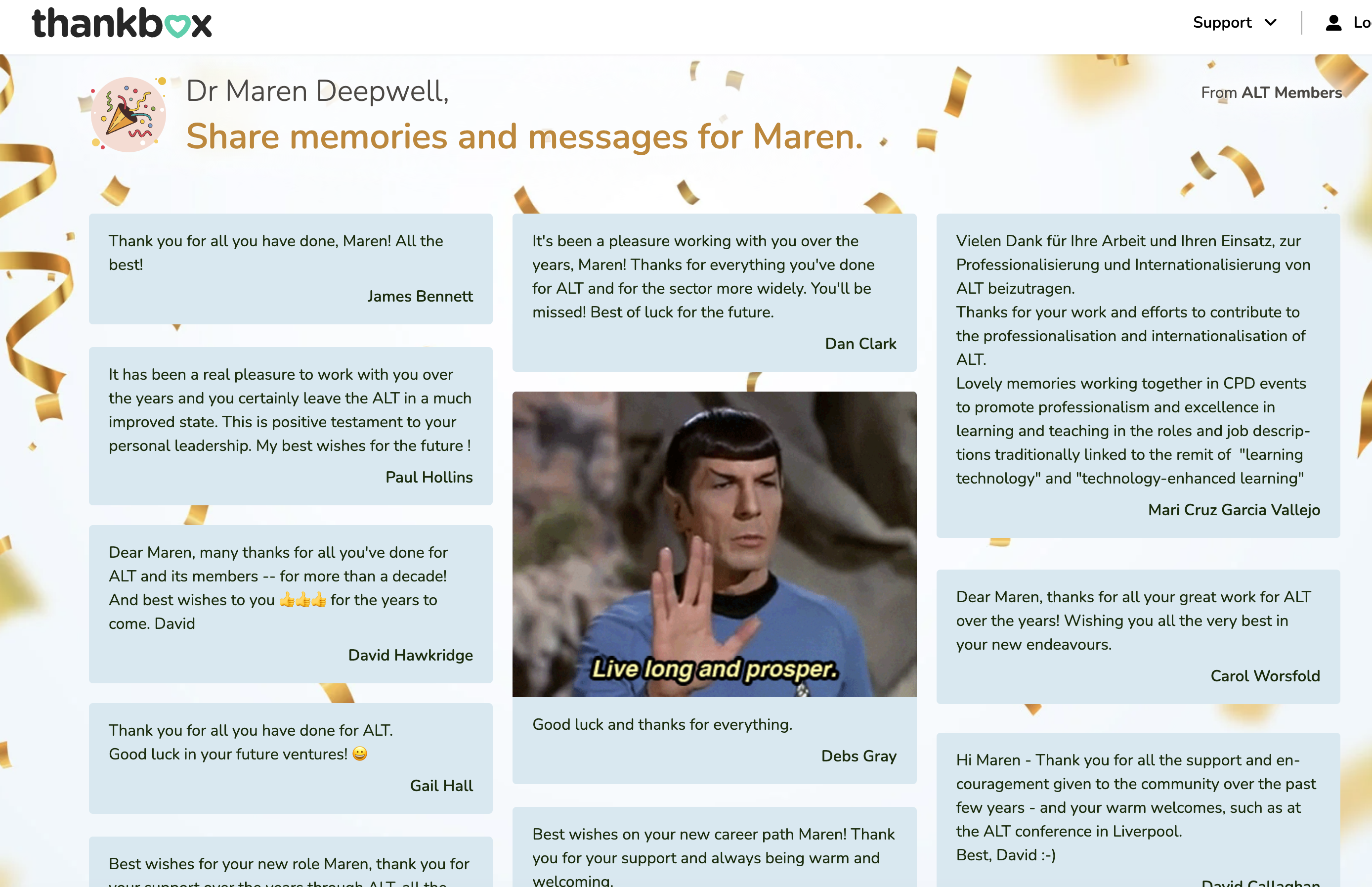
In addition to the messages on social media including Twitter and LinkedIn, many Members have added to this public card:
ALT AGM and CEO handover 2023
Handover at the AGM
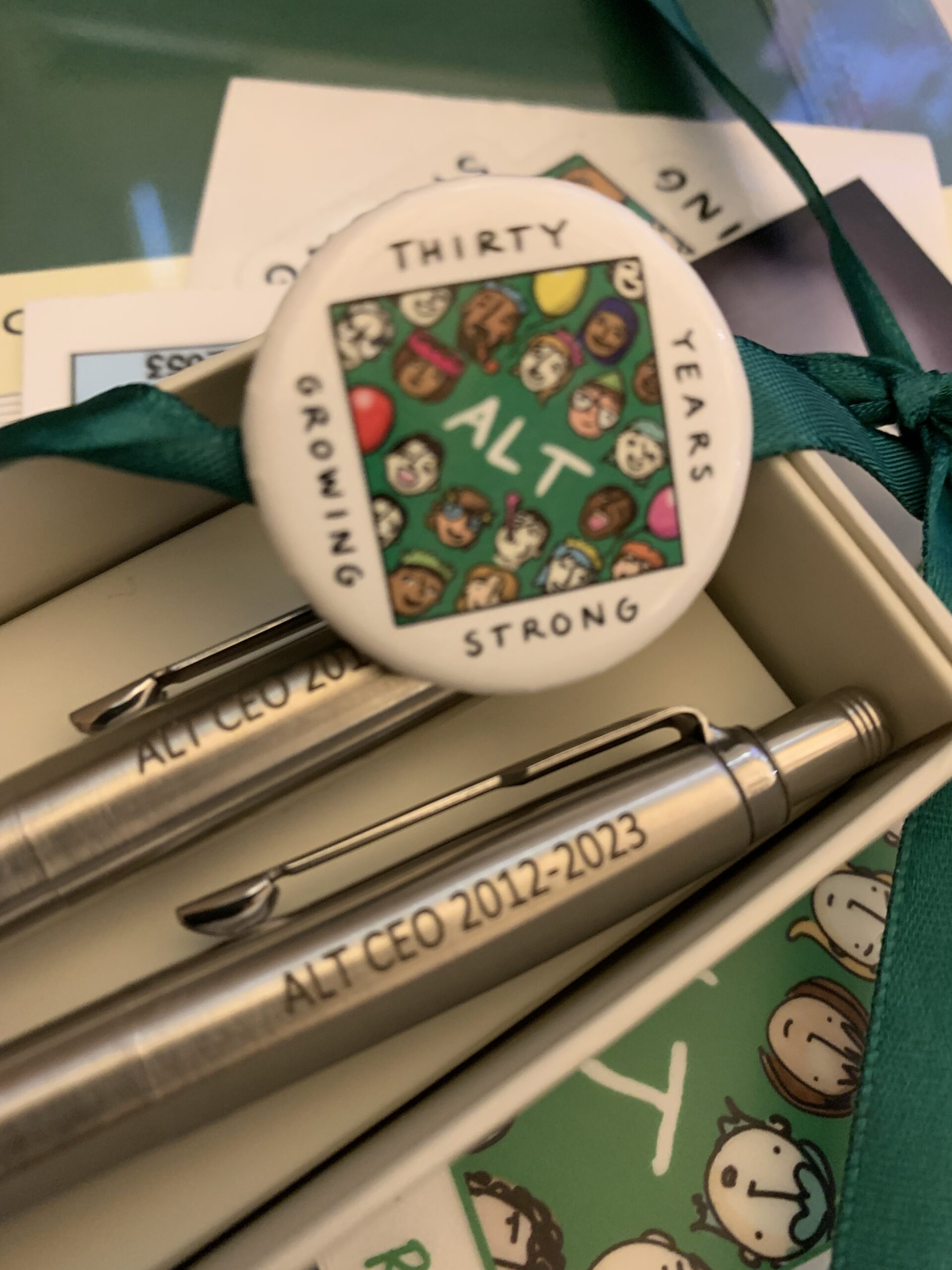
The Board of Trustees of ALT and especially our Chair, Helen O’Sullivan, were both generous and kind in allowing me the exit I desired. I am mindful that not many people get to choose how to depart from a job, even a long-term role, and I appreciated it very much. It was a very emotional moment to sit at the AGM and listen to Helen read out feedback from the Trustees and Members, and a big highlight for me. I also received beautiful gifts, including this lovely set of CEO pens:
I am very fortunate that ALT’s new CEO Billy Smith is so gracious as a leader, and his support during these final days of handover has been instrumental in ensuring a smooth transition.
If you’d like to watch the actual handover, here is the recording.
Special Award
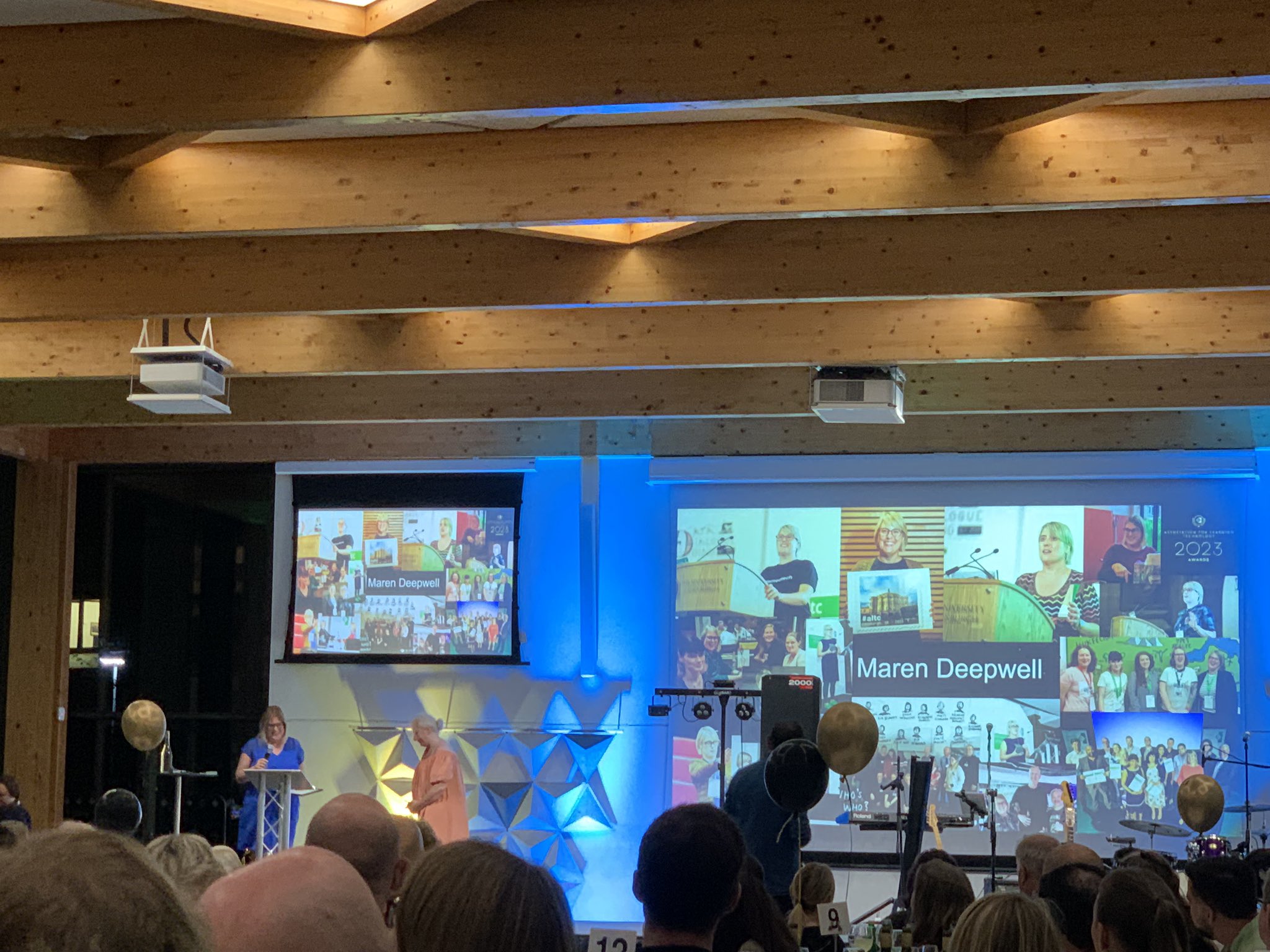
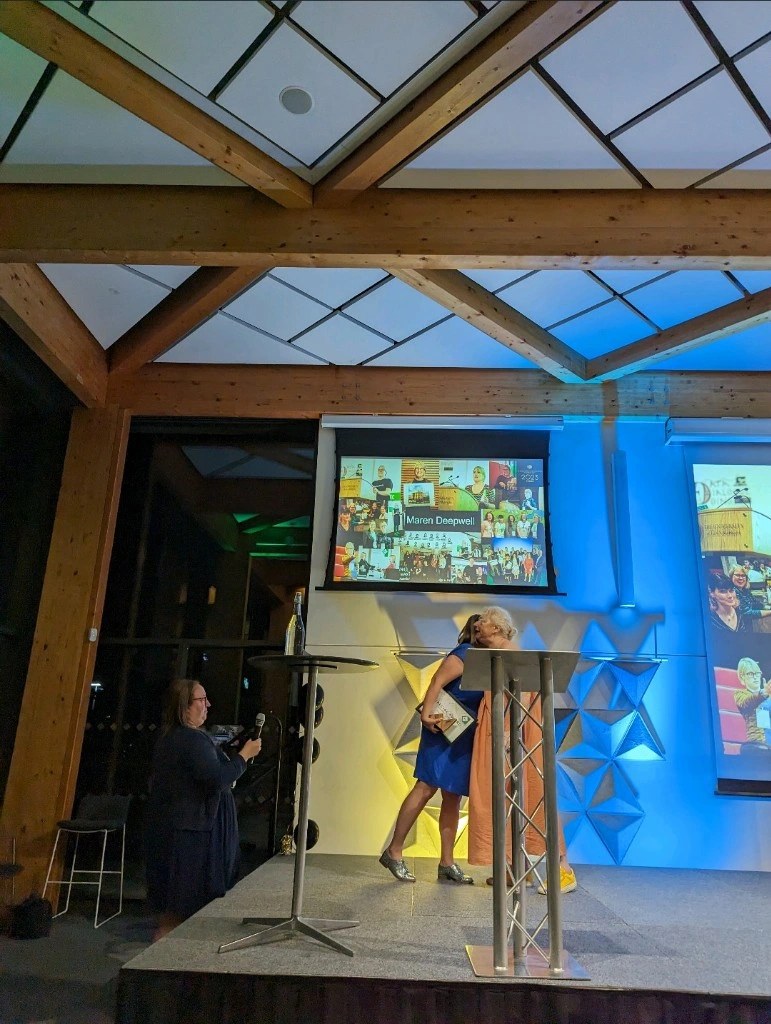
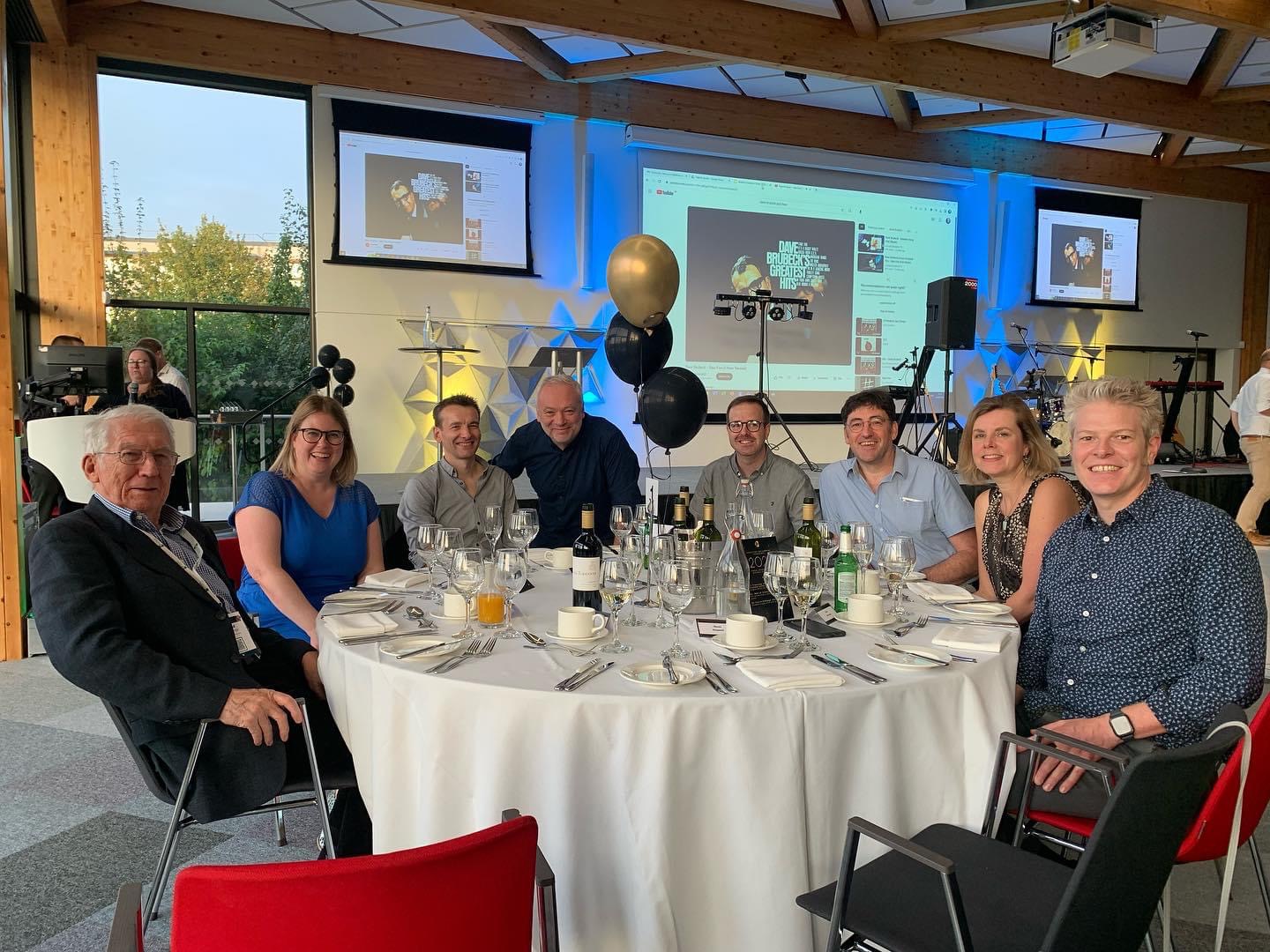
I was very touched to received a special award for my Outstanding Contribution to ALT at the Gala Dinner. The award was presented by my long-time colleague and friend, Jane Frankel, who has so capably managed ALT’s finances over much of my time as CEO. Jane’s words on stage and her heartfelt congratulations on behalf of the whole staff team mean a lot to me.
Award moment (Image by Anshul Lau)Receiving my award (Image by Martin Hawksey)Thanking everyone (Image by Fiona Jones)Gala Dinner in best company (Image by Martin Weller): Left to right:David Hawkridge, Maren Deepwell, Martin Hawksey, Martin Weller, Scott Farrow, Steven Verjans, Jane Secker and Christ Morrison
The next morning dawned and with it the end of a very special week, a very special moment in my career: Thank you so much for making my last day so special. I am very touched.
Wow! I woke up to this on my bedside table… Thank you so much for making my last day so special. I’m very touched. pic.twitter.com/8hL9cW0skH
It’s this time of year again! Time to prepare for ALT’s Annual Conference, pack your gadgets, conference shoes, pin badges, stickers, research notes and gala dinner outfit(s) and make your way to Warwick or indeed online (although in that case most of the above applies likely only to the top half of you which may be on camera 🙂 . Also, don’t forget to pack a piece of #edtech or #altc history for the onsite display/museum. It’s a collaborative effort and only as good as what we can bring together.
I am VERY MUCH looking forward to this year’s editions of our conference, and I hope you are, too. It’s no small feat to run a successful conference for THIRTY years, and I am so proud to have been to quite a few (but definitely not the most, as plenty of others have been to more).
Before we jump into the fun, here is the usual reminder to register if you haven’t done so, as the early bird deadline is approaching (6 August 2023).
Why I love this conference!
As you can tell from the long list of posts below, I am a big fan of our conference, and over the years I have reflected a lot on why that is – and why it matters. Having worked my way through the posts (and pictures) from 2008 to this year, I have come up with three things that I feel make a big difference to this event, and that to me make it very special indeed.
Obviously, as the CEO of the organisation that organises the conference it’s part of my job to be its strategic cheerleader and ambassador (just as it will be Billy’s when he becomes the next CEO of ALT in a month’s time). Part of my role involves working closely with the Co-Chairs and our Conference Committee ( fantastic volunteers led with vision and great commitment by Santanu and Lawrie this year), our partners and sponsors (who always make a huge difference to the success of the event) and speakers, Trustees, ALT Members and staff not just during the event, but also for the months leading up to it. My year very much revolves around the conference project plan, as do my holiday plans (June, before it gets manic, and late September, to recover).
Since I joined ALT in 2008 there’s been no quiet summer for me (or indeed my fabulous colleagues who work their socks off while most other people in education try to fit in some sort of well earned break). Instead, at this time of year my days get longer, my inbox gets busier and the quality time I spend with risk registers increases exponentially.
Each year, things go wrong, and each year we try to improve and evolve aspects of the conference. We learn, we try again, differently, harder. I am all too aware that we don’t always get things right, and that there is always more we could do. And yet I have seen many other events come and go in the past 15 years, and ours is still here, still relevant and it still matters.
Here is why I think that is (and I am looking forward to learning what you think):
C stands for… collaboration, community and… criticality
Over the years, our conference has become the thing ALT is most closely associated with. I meet many who call ALT by the hashtag, and in many ways I have always been delighted that in this context the letter ‘c’ can stand for not only the word conference, but also collaboration and community.
In many ways, the conference is an engine of collaboration for our community, forging new connections and reinvigorating partnerships and networks across sectors. It’s where many projects start, and friendships are formed. I am always amazed by how much inspiration we bring together over the three days.
Importantly, and not in common with all that many other events of this nature, the c also stands for criticality. And that element is absolutely crucial. As the professional body for Learning Technology we are obviously aiming to spread knowledge, to share expertise and to advocate for professional recognition, in short we want to make everyone more aware of how important our field is and how impactful the work of the professionals we represent is. We are also aware, however, that the intelligent use of digital technology in education requires us to be critical, to reflect and examine its impact, its history and theory and its wider context.
I often hear first time delegates who are surprised (and pleased) that not every session at the conference is a glowing review or enthusiastic case study for a new tool or platform and that you are likely to step into just as many sessions who share lessons learnt of when things went wrong, or exploring ethical conundrums.
This year’s keynote line up reflects this aspect of our conference very strongly and I am proud that over the past ten years we have used this international platform to amplify the voices of influential thinkers like Tressie Mcmillan Cottom and Audrey Watters.
#altc is not just for September
There is no doubt that the conference is a huge highlight of the year for our community. So much happens in the conference week, from our Annual General Meeting (my last as CEO as I will be stepping down and handing over to Billy on that day) to the Learning Technologist of the Year Awards, to the CMALT Ceremony and the Honorary Life Membership Award as well as launching new initiatives like this year’s launch of the first ever apprenticeship ALT has formally endorsed and new projects for CMALT, our professional accreditation scheme.
Each year, the conference brings together a huge concentration of activity and engagement, encouraging Members to get involved in a whole range of activities and groups and inviting newcomers to join ALT and discover the valuable support, connections and resources we share.
And yet, unlike many communities that are grouped around a particular conference and only come together once a year, we work together on a packed calendar of events, publications, news and policy developments throughout the year.
Our conference may be our biggest showcase, and yet there are so many other highlights throughout the year that it is hard to mention only a few. Preparing my handover for our new CEO has given me a renewed appreciation just how much we do as an Association and how many separate activities, groups, committees and milestones there are throughout the #altc year.
That is one of the key reasons why this conference is so special: it’s not organised by a production company or an events department in isolation, bringing together well known names with no other connection than that they are suddenly on the same agenda together. Instead, it’s a community-led event, that is shaped by the work, and the thinking, that goes on day in day out. At it’s best, our conference is welcoming and warm, and ‘meticulously informal’ in just the right measure.
The people who help organise it, the speakers who submit proposals, the participants who register… the majority of the hundreds of people who we see each September are likely connected to ALT already in one way or another. They may not be able to come each and every year, but they have voted with their feet since 1993… and they have voted to come back again and again.
We foster empowered edtech professionalism
When I closed my keynote in 2018, a wonderfully nerve-racking talk I won’t soon forget, I quoted a Public Enemy song lyric from Harder Than You Think:
If you don’t stand for somethin’ You fall for anything
Public Enemy
That sentiment still rings true to me today, nearly five years later, and forgive me if I quote my own words here:
When we ask who shapes the future of Learning Technology – my hope is that we don’t leave it up to others. My hope is that we continue to participate in the conversation, that we make our voices heard and listen to others.
When I first stood in this theatre in 2009 I saw great potential in what could be achieved by this community and I wanted to contribute to it. Nearly 10 years later I have seen parts of that vision come true, but there are much bigger things still to come.
And that is up to all of us. So I invite you to share your hopes, your vision and make your own voice heard.
My altc Keynote 2018
What I saw first in 2009, and then talked about in my keynote in 2018 still stands today. This year, as we gather once again, I look forward to seeing the process of shaping the future of Learning Technology in practice, through the vision and the voices of our community.
That is why I love this conference and I look forward to celebrating thirty years of this very special event together with you all, with our Trustees and staff, and with our new CEO, in a few weeks time in Warwick and online.
Image credit: Picture by Chris Bull for Association for Learning Technology ALT conference 2019 , Edinburgh.rDay two – Wednesday 4th September.rrwww.chrisbullphotographer.com
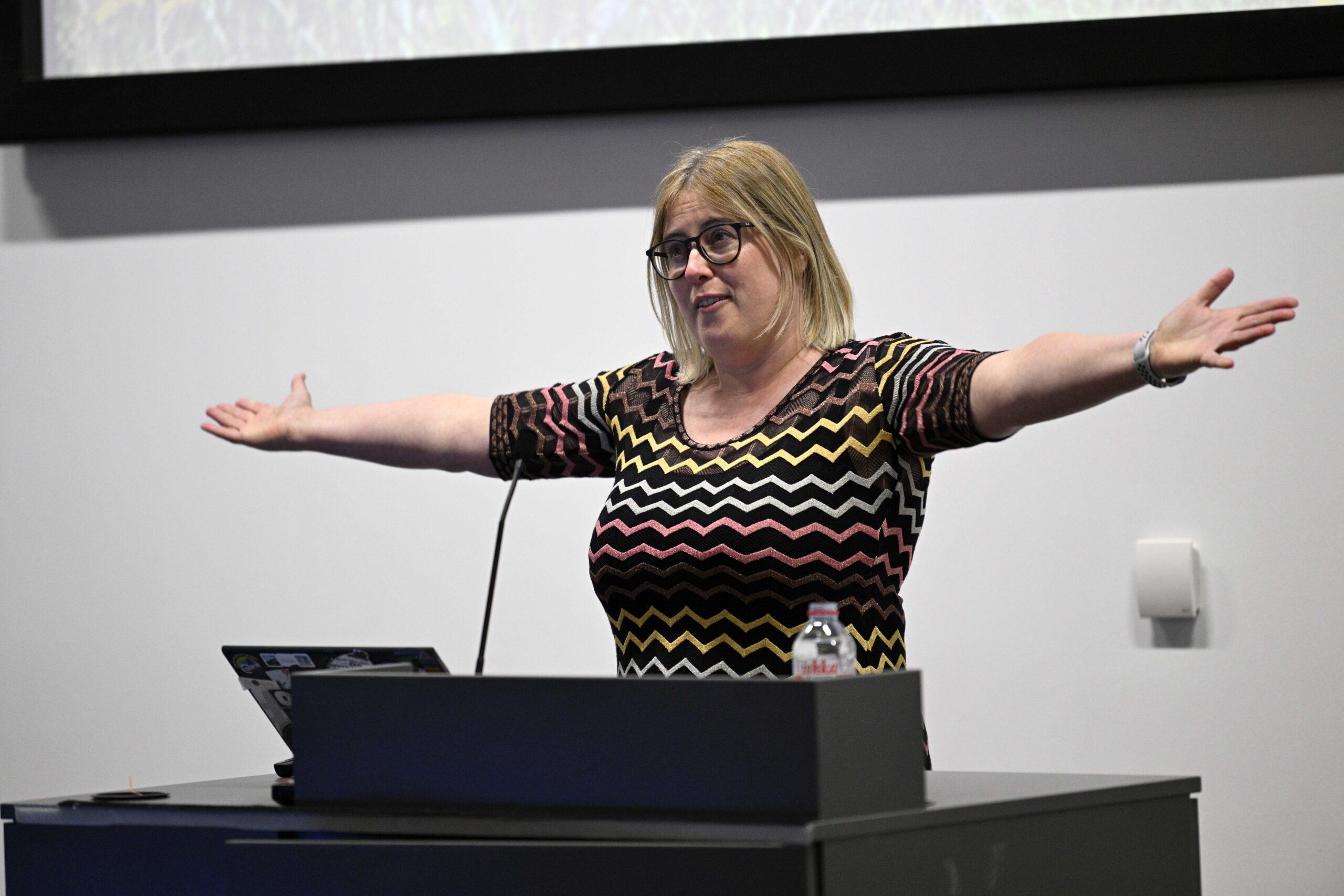
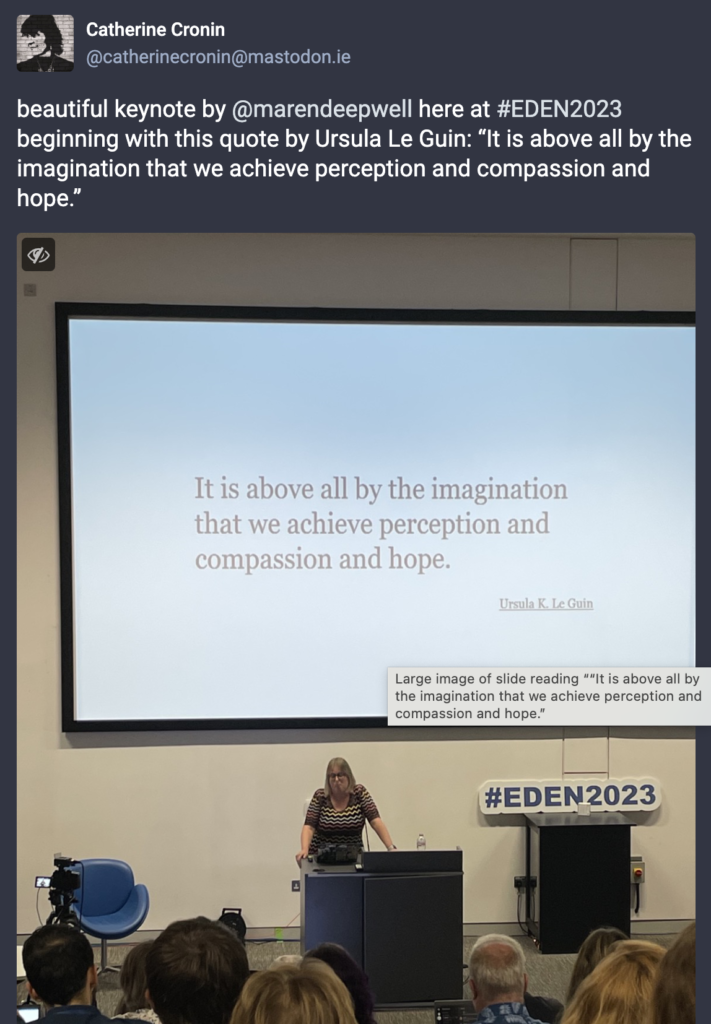
I had a fabulous time at the EDEN Annual Conference, and really enjoyed giving my keynote on Tuesday. If you’d like to revisit the talk, you can explore the slides and a summary or watch the recording on Youtube:
It’s been inspiring and motivating to have input and feedback from so many delegates, and it was an honour to share the stage with so many brilliant speakers in Dublin.
If you’re keen to catch up with talks and resources, revisit the conversation #EDEN2023, or watch one of the many videos available on the EDEN Youtube Channel.
ALT and EDEN have much in common, and I enjoyed spending three days with colleagues from across Europe and many other parts of the world sharing practice and policy. It reminded me of how much we have in common and how much we can learn from each other if we take the time to do so.
This was my first experience of the EDEN Annual Conference, but not my first time at DCU, this year’s host organisation, and I was very impressed by how welcoming and well-organised the event was. Dinner at the digital museum for immigration, EPIC, was a particular highlight for me.
Image credit: with kind permission of Mark Brown, DCU / EDEN 2023.
Enjoyed this post? Get my free monthly newsletter directly to your inbox.
Next week, the OER Conference comes to Inverness, and I am very much looking forward to it! There’s a packed programme, lots of ways to engage and the anticipation has been building for months, as these guest posts show. OER23 has a super Conference Committee of nearly 100 volunteers who have worked together for months to peer review papers, organise social activities, help plan conference delivery both in person and online and spread the word about the conference far and wide.
Why this post?
I’ve had a professional involvement with the event since 2015, and I’ve been one of the lead organisers since 2016, helping to steer the event through years of growing in impact and engagement followed by the crisis of spring 2020 and the (post) pandemic years since then.
I’ve had the pleasure and the privilege to be involved in many wonderful events over the past 15 years, and it’s not possible to pick a favourite amongst so many special moments, moving keynotes and memorable evenings.
That said, when it comes to my own practice, the OER Conference is probably the event from which I have learnt the most, at which I had those conversations that changed the path of my career and encounters that have led to a decade of collaboration. Openness in all its forms is fundamental to my work and my worldview and the OER Conference was my gateway to that world.
So, as this is my last year as one of the lead organisers, I want to say thank you to the OER Conference and this blog post is full of love for what has been quite a ride… .
Looking back at my journey with the conference
You won’t be surprised to see that I have written a lot about the OER Conference since 2015. Going through these posts there is so much that jumped out at me, so here are some personal highlights that give you a flavour of the journey we’ve been on to get to Inverness next week:
2022 was the year when things started to come together again (cautiously)
‘Wow. It’s really happening. This time, we are hitting not only the virtual but also the physical road again in order to journey to the OER Conference. OER22 here we come!
The last time the OER Conference took place as planned as in Galway in 2019, and since that time, three years ago, no edition of this very special event has gone to plan. In 2020, OER20 pivoted online with less than two weeks to go, and became very much a pandemic conference. In the crisis mood of those early days of the pandemic, OER20 became a free event with refunds winging their ways across the globe to participants who suddenly had a lot more to worry about than a cancelled conference. …’
What I recall most clearly about last year, is that 2022 was the year of careful hugging.
2021: OERxDomains21
The 2021 edition of the conference brimmed with creativity and joy against a backdrop of bleak pandemic reality. We had hugely high expectations and months of work from everyone all aimed at Reclaiming the Joy of EdTech. OERxDomains21 was also a conference of firsts:
… the first time we had FIVE Co-Chairs – who brought all their expertise, passion and ideas to bear.
… the first time participants remixed 159 conference badges.
… the first time we recorded 220 of 236 participants synchronously networking online on Discord, flooding the Hallway Chat, Introduction Channel and resource pool with contributions.
… the first time that these two organisations (ALT & Reclaim Hosting), and two conferences (OER and Domains), mashed up together to create this new, joint event bringing two communities together.
… the first time that we delivered a synchronous and asynchronous programme for participants from 18 countries and plenty of time zones for a total of 75 hours of programming.
… the first time that we found streaming platforms that made high quality recordings immediately available to participants and then to the public, enabling late arrivals to catch up and supporting delegates from across the globe.
… the first time we delivered an event with a staff team of 11 (up from the usual 5-6), many of whom had never met before.
… the first time that we delivered an online event without Martin Hawksey, who headed up ALT’s event delivery for the past seven years (waving to you, Mr Hawksey, I hope we did you proud :).
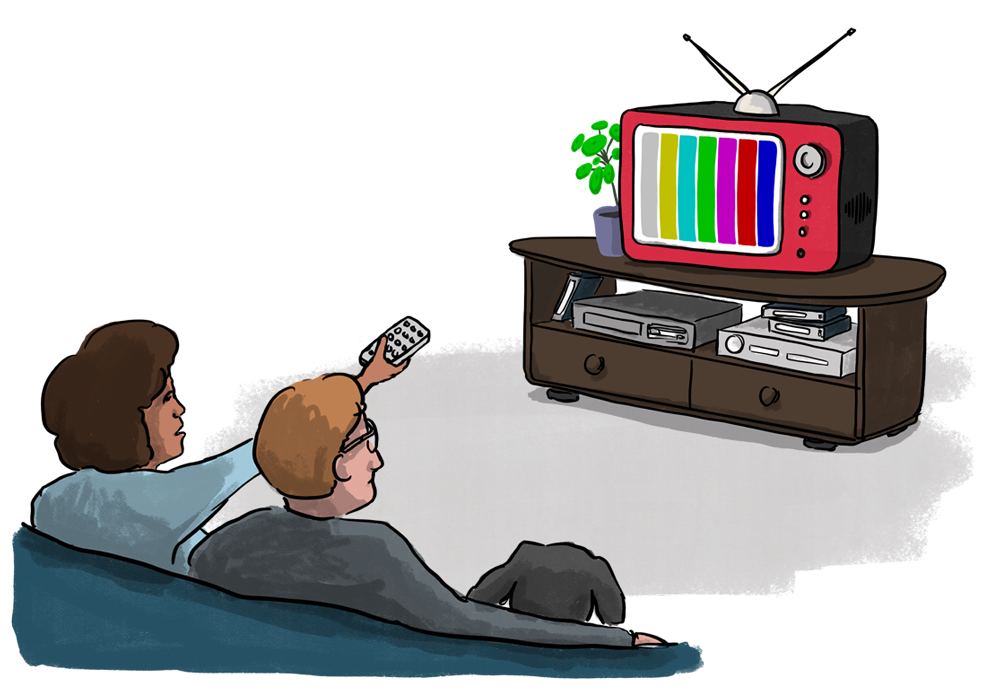
… the first time anyone had the most special TV programme design that went from emails to programme pages and beyond thanks to the work led by Reclaim Hosting, enabling our participants to quite literally step into their own Community TV Channel.
… the first time we managed staff handover between time zones seamlessly between sessions as one staff team ended their day and the other arrived.
My most vivid memory from that year is Jim Groom singing ‘we did it again’ over and over.
2020
The year before, 2020, things looked very different. A lot of what I have written about the cancelled conference that lost us a huge amount of money and still happened with 1100 people online with only two weeks notice to move from in person to online… is hard to read now. At the time we had no idea of how long the impact of those early weeks of crisis would stay with us. But even in those dark days, there was joy at OER:
For me personally, there were two moments that really captured both the joy and the sadness of the times in very unique ways.
One was a live online session led by Frances Bell celebrating the FemEdTech Quilt of Care and Social Justice. You can catch both the recording of the session and the accompanying video via the conference page. I have contributed to the quilt project both personally and professionally and yet the power of the live session really took me by surprise. I don’t think any webinar moved me to tears along with half the audience before this. It was a moment of connecting with fellow collaborators across the globe that was so special and made the distances and isolation between us, the crisis we are all weathering, palpable.
The other session was the evening’s #OER20 #KaraOERoke Night. I don’t think I had laughed more than that in weeks. It was very special, but also fun and incredibly moving to see conference participants and their families join in with the Frozen song, reviving classics and demonstrating their singing ability with everything from Motörhead to Kate Bush. Those moments, whether online or in person, are unforgettable.
It still rings true to me, reading this three years later. Those moments are unforgettable. Yes, so much of what we do has started to take place in person again, but not because online wasn’t enough or good. We do so much online. Being able to connect in person, alongside all we do virtually, is a joy (and a privilege), that I wouldn’t want to give up.
2019
No year did connecting in person feel more important to me than in 2019, when OER came to Galway:
Openness is many things to many people and the vision that the conference co-chairs have brought to the event has really inspired me and helped me reach a new understanding of the challenges we face by including more diverse voices and perspectives and also by ensuring that openness has been stitched into the fabric of OER19.
In turn, that has inspired the work that ALT does to support this conference in the run up to the event such as tweaking our systems to encourage more sharing, the Board of Trustees funding more scholarship places for students than ever before, contributing to global events during Open Education Week led by the Open Education Special Interest Group, and post-OER19 to the Creative Commons Global Summit. …
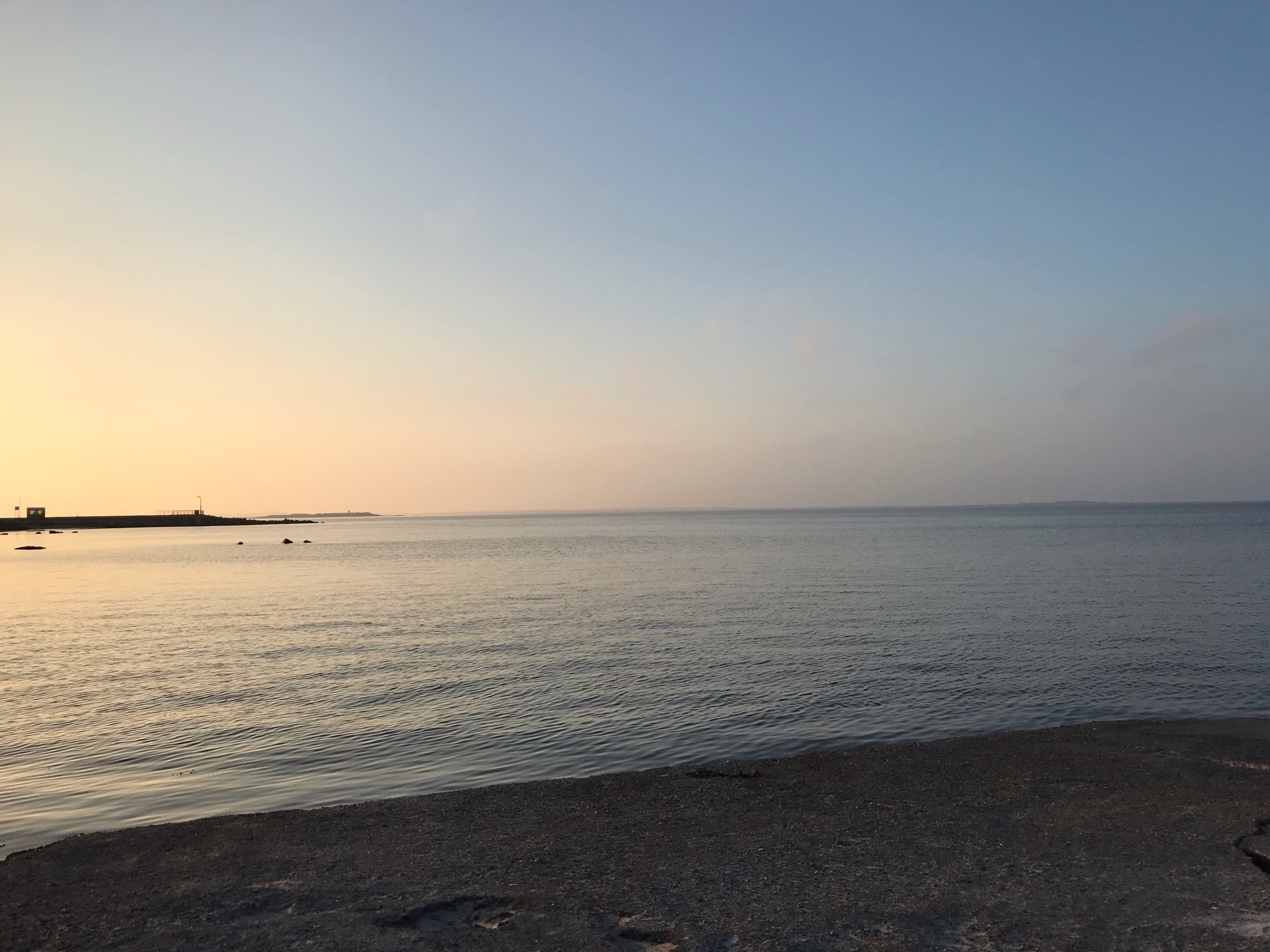
Thanks to everyone involved, everyone who puts time and effort and resources into making OER19 happen, I feel like actually getting to go to the event in Galway is just the finishing flourish. OER19 has been a living, breathing, inspiring part of my professional practice for over a year already. But when I watched the sun rise over Galway Bay nearly a year ago, I didn’t realise how rich, how thought provoking and nourishing a journey working on this event would be. I’m grateful that I have been able to contribute, and I look forward to playing my part in making it happen and to build on what will be shared at OER19 to continue to promote openness and support those involved in the coming year, weaving a stronger thread of openness into the fabric of things.
Being a keynote speaker can be a powerful thing particularly if you choose to use the platform it gives you for a cause that chimes with your audience. And it seems that in the case of OER19 that definitely happened. So much emotional investment and enthusiasm is rare at conferences I attend and as we are now nearly two weeks after the event and the posts and discussions keep on flowing this is further reflected in the continued engagement and activity. So there are fresh role models for me to be inspired by, keynotes to relive that really struck a chord and transcend what you can normally expect from an hour in a lecture theatre. And indeed there are many involved in making OER19 happen whom I have been inspired by in the past, like the Co-Chairs Catherine Cronin and Laura Czerniewicz, alongside Jim Groom, Lorna Campbell and Sheila MacNeill, or Bon Stewart, Martin Weller and Maha Bali and Jane Secker. All of whom have kept their audiences spellbound at previous OER or ALT’s Annual Conferences and I remember sitting back, listening, enjoying what each contributed to those events and to my own thinking. Some of these talks opened up my perspective to completely new concepts or problems, others inspired me with their example and encouraged my own practice. But each have made the hour I spent listening and participating very special, a moment stuck in my mind.
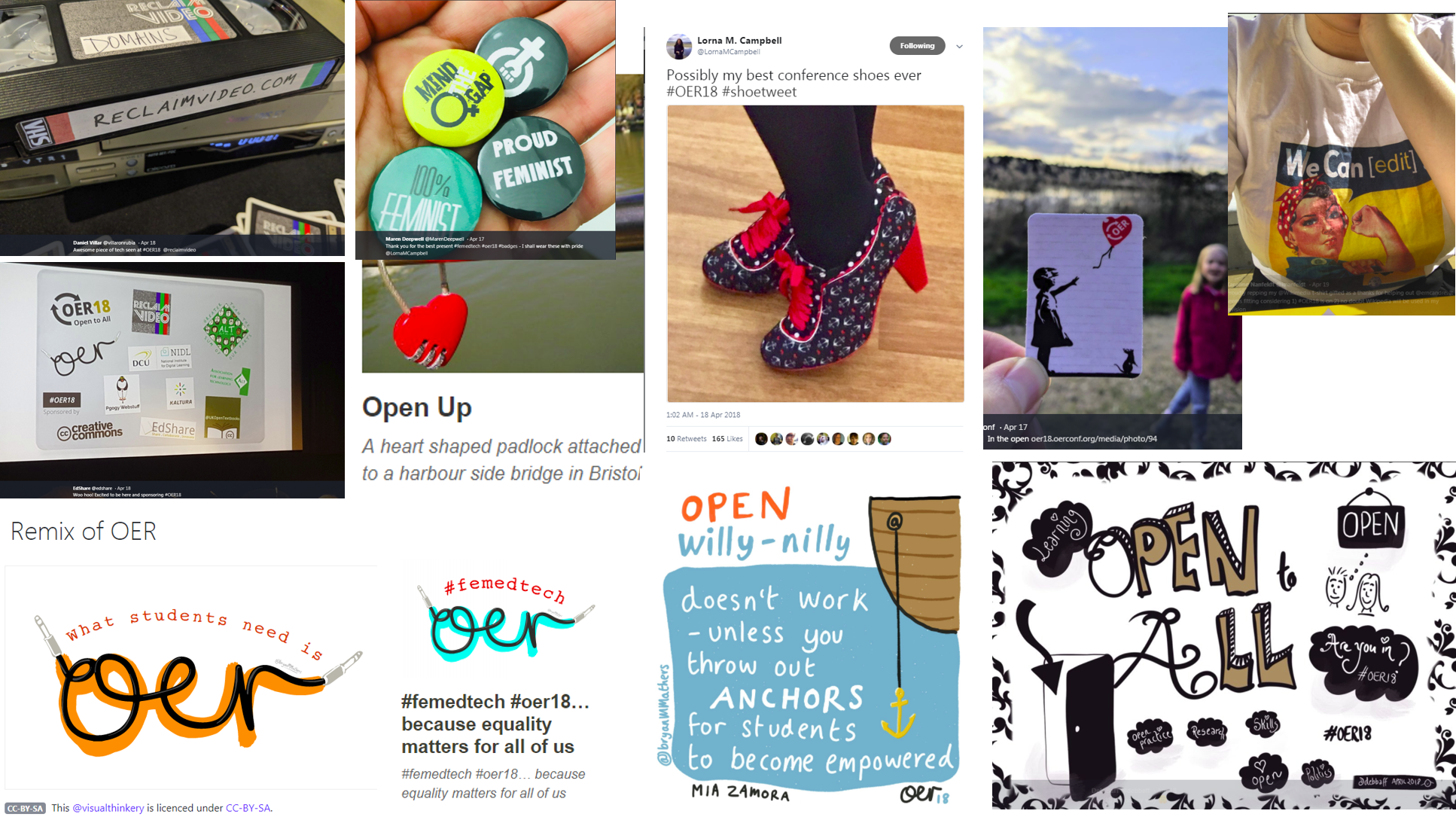
Galway was a beautiful conference destination, and OER Conference fortunately is not too big to take advantage of going off the beaten track. In 2018, OER took over the Waterside cinema in Bristol… and (obviously) it all kicked off with a VHS tape and – shoes!
It all started with a shoe tweet … and like the insightful and thought-provoking narrative that Lorna presented in her opening keynote, the red ribbons on her shoes started to wind themselves through our conversations over the following two days. The anchors and the nautical theme that reflected both Lorna’s research interest and the conference location reflect a thoughtfulness that was part of every aspect of Lorna’s talk and I was grateful to be able to sit back and listen as her vision took shape. …
There is a strong component of gift giving and exchange at OER Conferences as people who have never or only rarely meet in person exchange tokens that express and develop their digitally conducted relationships. It’s an opportunity to show what you stand for, what you believe in, to share and show your colours.…
Far beyond the swag was a boat tour, sunshine (the weather gods are definitely on the side of openness), music, walking tours and apprenticeship – OER18 brought people together to learn from each other, see the world from a new perspective and to listen to the other voices in our community.’
More than swag: #oer18 material & visual culture https://marendeepwell.com/?p=1453
I blogged a lot about OER18, and I still look back at the sunny days at the harbour side in Bristol with real joy. In those years, the event created such momentum, and a wonderful tradition of nearly every participant being a speaker, too!
We used to joke that OER is the conference for which keynotes could be randomly chosen from anyone in the room. Everyone had a story to tell, everyone had a voice. And that’s still the case today. Looking down the list of participants this year, there are so many past and future keynotes.
2017
This was especially true in 2017, when OER came to London for two days of capital fun and high impact open policy making. This was also the conference that opened with Maha Bali’s incredible keynote – that alone made it a stand out year!
My hope for OER17 was to make time for people and conversations. That was probably the most enjoyable aspect of my days, and like many other participants I was delighted to be able to connect in person with many individuals from my social networks. One of the highlights was joining a Virtually Connecting session with Lisa Taner and Lucy Crompton-Reid, facilitated by Martin Weller – and I am grateful to Maha Bali for inviting me. You can now watch it on YouTube .
Meeting participants from different continents and having a conversation that bridges the physical divide was a great way of seeing things through someone else’s eyes. The social events before and during the conference were another good time for catching up and I was impressed by the bowling, ping pong and karaoke going on all around.
London followed Edinburgh and Cardiff as host cities of OER in 2016 and 2015 respectively. I may be biased, as I love Scotland, but I think the glorious sunny days right in the heart of Edinburgh may have been my favourite OER days:
2016
On the train on the way to Edinburgh to the OER16: Open Culture conference I was past York and heading North when the sun came out. A while later the train tracks approached the coast and I looked out at the sea for the first time in months. A wide blue sea under an open sky. In the distance LEGO-brick like shapes of container ships appeared as we neared the shipping lanes and in the brilliant sunshine we approached our destination. It felt like this conference certainly had good meteorological karma. …
Melissa Highton’s closing keynote gave me a glimpse into what it takes (and whom!) to make OER and openness work at scale across a whole institution, for hundreds of staff, tens of thousands of students and the wider community. Armed with a strong vision and persuasive arguments for senior decision makers it was awe-inspiring to hear at what scale and with what commitment Melissa leads colleagues working to achieve the university’s vision for openness. For someone in my position who has to make arguments for openness all the time, there was a lot to take away and adapt in this presentation.
Led by the Open Education Special Interest Group alongside many other groups across the community this engagement continues to further the work ALT does in Open Education, advocating for change and influencing UK policy makers. There is a whole body of policy work that the OER conference has inspired and sustained in the UK and internationally the importance of which is not be underestimated.
2015
Back in 2015, the start of my time with the OER Conference, I had no idea when I was sitting in the beautiful Royal College of Music in Cardiff, that this event would have such an impact on my practice and my wider work for ALT in the years to come.
Looking back at the blog posts that chart my evolving thinking about open leadership, I can trace the connections between those (for me) early days, and the work I now do on leading virtual teams:
When I recorded a podcast this week, on why open practice is so important for leaders in hybrid and virtual workplaces, I looked back at those posts and reflected on how much has changed:
Little did I know then how important open leadership would become for me as we closed ALT’s offices in 2017 and later managed a global crisis from home.
As I look forward to this year’s event in Inverness, I feel grateful for all the fun, inspiration and creativity that the OER Conference has brought me.
With my CEO hat on I have had to carefully balance the bottom line with wider impact and that equation has become more precarious since 2020. But if I’ve learnt anything from my work with the OER Conference is that the balance sheet doesn’t tell you all that’s important and that this particular event is important to so many people, that it happens even when a global pandemic cancels all plans two weeks before.
It takes a village… and fortunately this conference attracts just that: passionate and politically astute co-chairs, committed and hard working committee members, enthusiastic and inspiring speakers who double as participants, unique keynotes, influential researchers and super staff that help bring it all together.
So as we prepare to bring the proverbial band back together online and in the Scottish Highlands next week, aiming to ‘do it again’ as Jim Groom might sing, I say hats off to you for making it happen!
Thank you for your involvement over the years, for your contribution, for helping make this conference a spiritual home for many, me included.
P.S.
2015 was not only the year in which I attended the OER Conference properly for the first time, it was also the year that I met Martin Weller, then OER15 Co-Chair, and later a Trustee and President of ALT until 2020. Little did I know then that six years later, six years that felt like an age thanks to a global pandemic, divorce and several house moves, Martin and I would end up sharing a home, two dogs and our lives together.
Our home has OER sofa cushions and Bryan Mather’s OERxDomains21 conference artwork on the wall, and you won’t be surprised to hear that our shared commitment to openness in general and open education in particular is one of the things we have in common. So in a very personal sense the OER conference has brought me, in a roundabout way, great happiness, and for that alone I will always have a whole lotta love for it.
This week, I am looking forward to speaking at Bett for the first time in a few years, having missed last year’s event with Covid 🙁 . This year however promises to be a lot of fun, and I am excited to speak alongside two inspiring colleagues: uiyin Wong and Julie Voce.
The Association for Learning Technology was established 30 years ago, in 1993. Since then, much has changed! Yet as the decades have become ever more digital, our focus on the central role of human agency and expertise has remained strong. This session brings together findings from benchmark surveys, insights from leaders and practical resources to help tackle professional development and recognition challenges in the sector. We will share new findings from ALT’s Annual Survey 2023, charting how practice is shifting in the sector and what institutions are investing in. We will also reflect on the continued challenges rapid digital transformation poses for staff development and professional recognition.
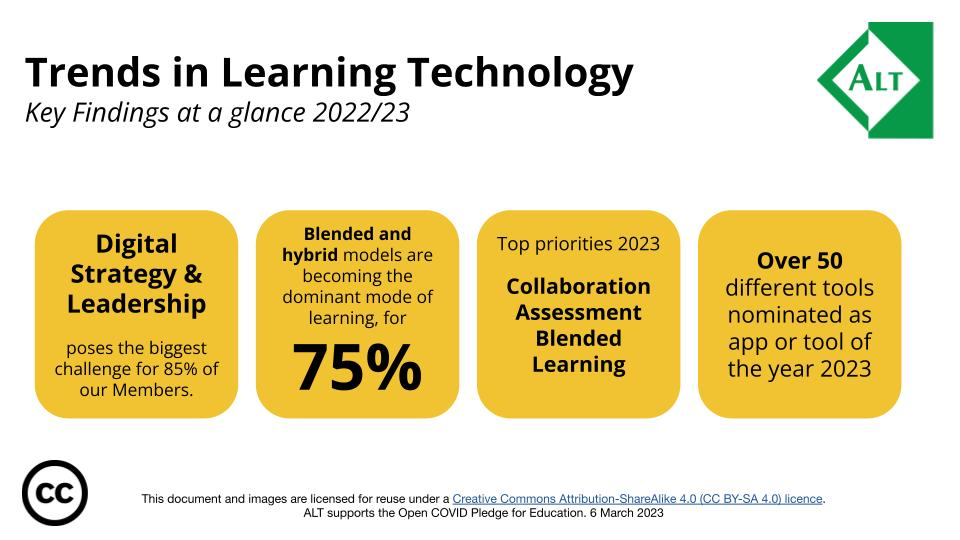
This year, the survey explores the main trends in learning technology with a focus on the digital transformation, that includes:
The top nominated tools as the software of the year
Models of learning in the UK
Biggest challenge for digital transformation
This survey is available to provide an insight into how Learning Technology is being used across sectors as well as identifying emerging trends in current and future practice.