Category: Conferences

  • Reclaiming our socials: SUNY Digital Learning Conference 2024

    Reclaiming our socials: SUNY Digital Learning Conference 2024

    Last year’s experiment in the fediverse, Mission Mastodon, helped me onto a new path to reclaim my social media presence. At the time, I was contemplating what best to do in the face of the demise of Twitter and the fragmentation of my networks. Add a career transition into the mix, and a couple of new professional communities, too, and you will understand why I spent more time than before trying to find a way of connecting and sharing that works for me.

    This week I am joining my Reclaim colleagues Amanda Schmidt and Taylor Jadin for a workshop focused on precisely these issues at the 2024 SUNY Digital Learning Conference. The format of the session is very interactive, and should leave plenty of time for discussion with delegates. I am really curious to learn what approaches other’s find helpful when navigating the social media landscape of today.

    The theme of the conference this year is Educating for Digital Citizenship and I am super excited to be taking part and learn more about all the topics on the agenda. I am particularly looking forward to the featured speakers: Data, Discrimination, and Democracy: A Conversation with Chris Gilliard and Kathleen Fitzpatrick on Open Matters.

    Drawing of coloured screens with the words Reclaim Networks

    Our workshop at a glance

    • Title: Reclaiming our Socials… and how you can too!
    • Subtitle: Reclaim Hosting’s journey to demonstrate digital agency
    • Track: Digital Activism
    • Format: Presentation
    • Presenters: Amanda Schmidt, Maren Deepwell & Taylor Jadin, Reclaim Hosting

    Abstract: Given the fall from grace we’ve seen various social media platforms experience recently— from Twitter’s transition to X, to Substack’s implosion— now is the time to think critically about how to be informed, and autonomous, digital citizens.

    We’re seeing more and more social media users finding themselves immersed in platforms they’ve spent many hours cultivating community and content on, only to feel the rug pulled out from under them when that platform does or supports something that doesn’t align with those users’ values.

    At Reclaim Hosting, we’ve always been more comfortable working in spaces that are as open as possible so that we have as much control over our content and communications as possible. Our socials, however, were always stuck with the big-box providers. With the rise of the fediverse, we’re taking our autonomy back. Join us as we discuss the Reclaim Hosting team’s transition to Mastodon, a self-hostable, decentralized social networking platform, and Ghost, an open source blogging platform.

    We’ll discuss our perspectives on the current state of social media affairs, walk participants through our open setup, and demonstrate how to reclaim your socials!

  • OER24: The sound of Open Practice in social media wilderness

    OER24: The sound of Open Practice in social media wilderness

    I am REALLY looking forward to OER24 this year, not least of all because I get to share the stage with Martin as we present out (first ever) short talk on podcasts and radio. If you are curious what we’ll be talking about, you are in the right place:

    Read a short summary of our talk

    How do you share open practice and foster innovation in Open Education in the age of social media fragmentation? What supports and amplifies peer-learning and knowledge exchange between Open Education practitioners as social media platforms like X become increasingly hostile spaces?

    This presentation examines how the changes in social media impact open practice and highlights alternative media of radio and podcasts as a way to share practice and explore ideas. 

    Podcasts have grown in popularity over the past decade, with many easy to use tools for their production and consumption. In 2022 50 percent of respondents in the US aged 12 to 34 years old had listened to a podcast within the preceding month and 79 percent of U.S. consumers aged 12 years or above are aware of podcasting, up by more than 30 percent from a decade ago. Their use in education is expanding, with Shamburg (2021) reporting that educators have used them to discuss topics in a more informal way. 

    They thus provide an ideal medium for exploring open practice and experimenting with ideas, formats and topics. Internet radio is not a new medium in open and distance education, and during the pandemic saw a resurgence as educators took to the airwaves on grassroots stations such as DS106 Radio. In this session the speakers will explore their experience of using these two forms of media to develop their own professional practice and explore ways of connecting with audiences beyond spaces such as X and share lessons learnt. 

    Listen to the preview

    Join us as we discuss our presentation at OER24, a conference all about Open Education, 27-28 March 2024, Cork, Ireland. Listen to the preview podcast with Special guest: ⁠Martin Weller

    ⁠Presentation slides (incl. references)

    Enjoyed this post? Subscribe to my free monthly newsletter:

    [newsletter_form type=”minimal”]

    Image credit: Playing Card by @visualthinkery is licensed under CC-by-sa. Remix by Maren Deepwell.

  • Reclaiming #Edtech4life in Open Education (at OER24)

    Reclaiming #Edtech4life in Open Education (at OER24)

    In a month today, I’ll be at the OER Conference in Cork, and I am really looking forward to it! I am huge fan of this event, and encourage you to have a look at the programme and register if you haven’t yet done so and are planning to come.

    This year I am co-presenting two short sessions, starting with Reclaiming #Edtech4life in Open Education which is a joint venture with Meredith (Fierro) Huffman and Jim Groom. Here’s what we are planning to speak about:

    How do you make innovation work when the day job as an (edtech) educator gets ever busier? Where do you find not only solutions to practical problems but someone who speaks your language? When your day job is largely edtech focused and your focus is in practice, not policy or research, it can be challenging to find communities of practice that advocate for open – open in the sense of software and licensing, but also open in the sense that the community is welcoming, open to new ideas, and open to change. 

    Over the past 10 years our organisation has built a growing community of practice on the back of our day to day business activities. Yes, we are a small commercial company, but we bring a lot of expertise of working in Higher Ed to the table and we walk the walk of open education. 

    In this presentation we’ll share practical approaches inspired by communities like Equity Unbound and the ALT Open Education Special Interest Group  to connect with educators and edtechs from across the US and internationally sharing practice via community chats, micro courses, live streams and radio shows. We’ll share lessons learnt from running a hub for professional development every day of the year, a place in which open educators can engage in anything from trouble-shooting wordpress installations to tinkering with next generation tools. We offer a safe space to explore with peers, to play, to fail and make new connections along the way.   

    Resources and references

    Road to OER24

    Last week Meredith and I did a community stream all about our prep for the conference as well as sharing lots of the love we have for the event, memories from previous years and giving a bit of a preview of what we hope to speak about.

    You can watch the recording below, and join us on the road to OER24! See you there 🙂

    Enjoyed this post? Subscribe to my free monthly newsletter:

    [newsletter_form type=”minimal”]
  • Preview: World of Learning Summit

    Preview: World of Learning Summit

    I am really looking forward to speaking an next week’s World of Learning Summit. In preparation for the session and to offer an insight into what my session will be about, I contributed an article to the Learning Magazine: you can read the article freely online.

    Screenshot of the article with the caption: Are you returning to the office, five days a week?

    My session at the summit is on Wednesday, and focused on offering an interactive discussion forum for leaders. We’ll explore hybrid working recruitment and retention, new trends in hybrid working and also challenges that arise over time from recruitment to long term retention.

    Look out for the slides of the session, which I’ll be sharing via my linktree.

    Don’t miss a post. Subscribe to my free newsletter and get a summary of everything once a month to your inbox.

    [newsletter_form type=”minimal”]

  • The outlook is… meticulously informal

    The outlook is… meticulously informal

    The recent launch of ReclaimEDU has got me blogging… always a good sign. 

    Now, working with the team at Reclaim has many perks, one of which was to learn more about this new offering before it was even launched. Jim talked us through it in the way only he can, and although I am learning more about the technology that makes this all possible what really did grab my attention immediately was the artwork

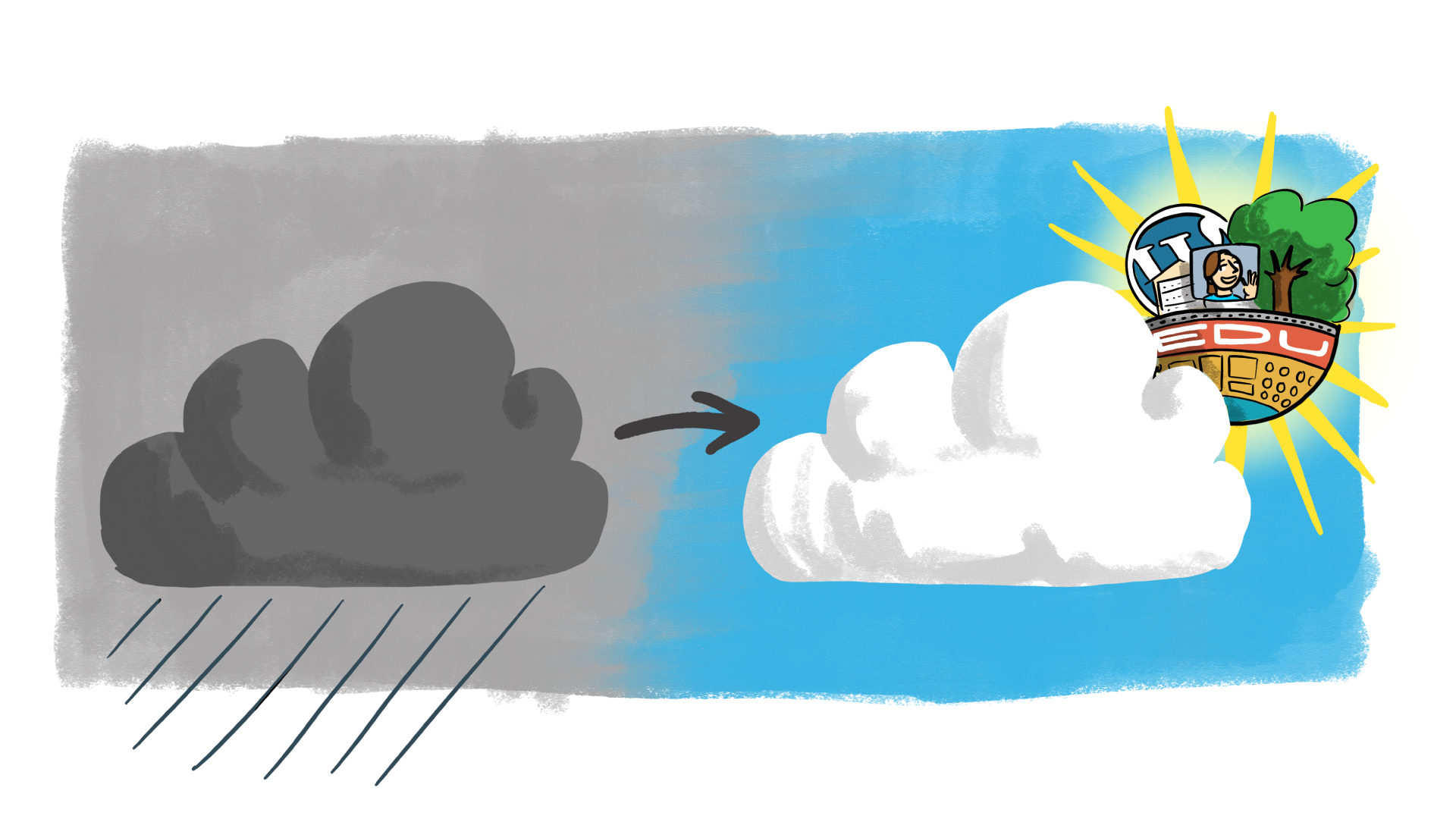
    I love the work Bryan has created with Reclaim Hosting for nearly ten years now and this ReclaimEDU launch is a great example of why it is so powerful. You don’t really need the words to get the idea. ReclaimEDU feels like a long way down the road from the origins of Hippie Hosting more than a decade ago… but many things remain constant. And one of those is that it continues to be is meticulously informal. That’s the bit I am particularly interested in. 

    Meticulous informality is a phrase that Martin Weller coined in 2019, in relation to the ALT Annual Conference. In the years since, and as our professional relationship turned into a personal one, we have often come back to the concept in our conversations and found it helpful in describing something we both value about a certain way of working, particularly since a lot of our interactions are happening online nowadays.

    So what does it mean to be meticulously informal, and why do I think it matters? Let me try to explain what it means to me:

    In the context of event planning, for example, I would describe it as a result of planning ahead so well that on the day you can lean back and enjoy it, knowing that you have most eventualities covered and can deal with any impromptu things that come up. It also means treating the individuals whom you work with not as generic actors in the event (the keynote, a panel speaker) but take into account their context: someone coming from far away who’s not been in the country before, someone who’s never given a keynote before, someone who’s nervous… and so on. It’s also about being present. Walking the walk. And that takes a lot of emotional energy.

    I’ve been lucky enough to be at some events that really encapsulated that balance perfectly (yes, I am looking at you, wonderful OER Conference) and yet events aren’t the only place where meticulous informality matters. 

    When it comes to hybrid working, it really makes a difference, and it’s not something you can fake. When it comes to meticulous informality, people can tell whether you are going through the motions or truly making an effort. Effort is the operative word here as a meticulously informal workplace takes a lot of it. It’s no accident that one of the flex courses Reclaim’s Edtech team ran was all about hybrid working. I came on board to work on this course because we were interested in exploring all the different ways in which we can foster those interactions and habits that create a sense of meticulous informality in a team.

    Which brings us back to Reclaim Hosting itself, where this kind of thing is not only valued but also shaping force that is reflected in everything the company does. After all, how many hosting companies do you know who get their team to sit around a drawing pad with Bryan Mathers as a first step to launching a new service (a service, incidentally, that as far as I can tell is needed because clients want to put more and more high level sites onto infrastructure they trust working with people who get it – people who are meticulously informal not only when they answer support tickets or chat about blogging on Discord, but also when it comes to designing new flagship services). 

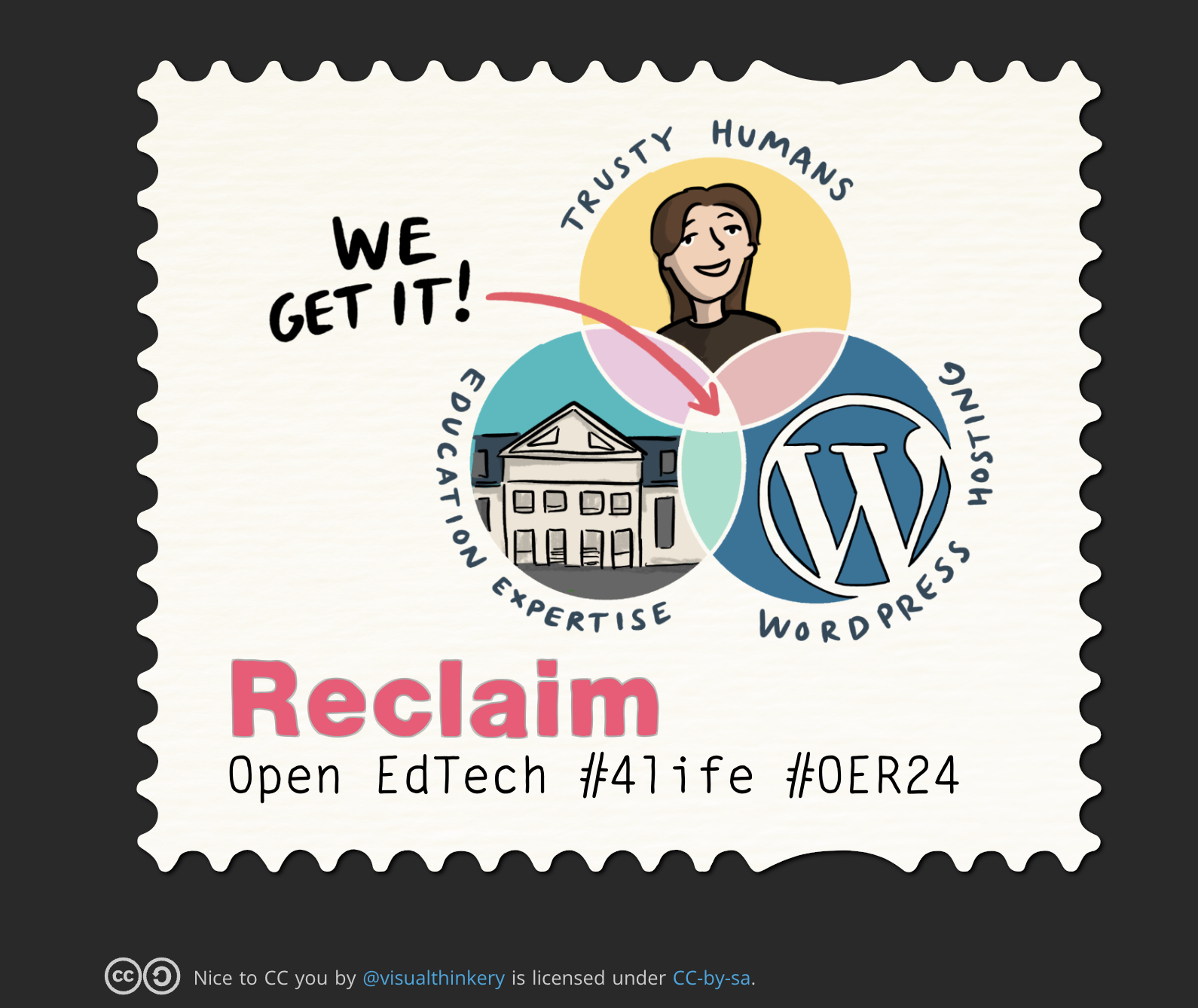
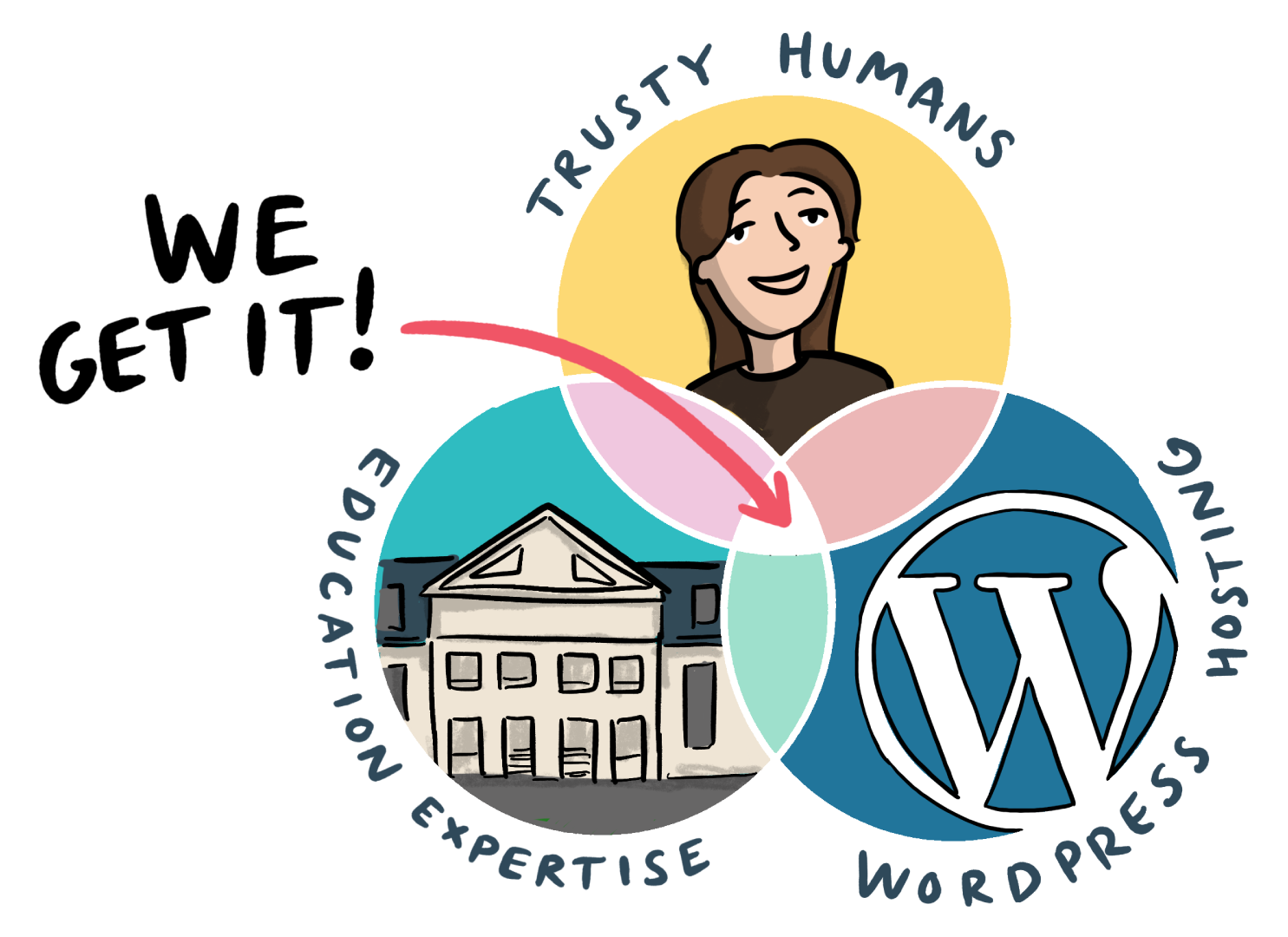
    We get it! More artwork from the ReclaimEDU page.

    Incidentally, Visual Thinkery, where the process is in many ways more important than the eventual (amazing!) output, is another example of meticulous informality at work. What makes it work in both cases is a mixture of incredibly hard work (and a good measure of genius), as well as that all important understanding of why the informal bit matters. When I saw the ‘We get it!’ image above that Bryan created with the team, I immediately thought ‘Yes! They do get it!’. Yes, they are really good at what they do and they work very, very hard to constantly improve the infrastructure and support, and they also treat you like a human being, they care, they get it. (And, as an afterthought, they are human beings, too, which nowadays probably isn’t a given when it comes to supporting you with your hosting.) 

    It matters to me that I get to work with people who share that sense of what I think of as meticulous informality. It matters because I am more than a metric. Being more than a metric, more than a data point was the focus of my keynote for the ETUG Conference in Kamloops, Canada, in 2019 and it’s been a theme I have come back to again and again since. I see meticulous informality as a way to create that all important space needed to relate to each other as human beings, be that at events or at work or hosting your domain, and not give in to technologically determined transactional behaviours.

  • OER24 – Here we come

    OER24 – Here we come

    It’s a miserable day today in Cardiff. Grey, dark and rainy. Typical November weather. I am sitting at my desk with the light on although it’s only midday. Inside my head however, the sun is shining, at least figuratively, because my first OER24 submission is in!

    OER24, in case you are new to the conference, is:

    the 15th annual conference for Open Education research, practice and policy will be organised by ALT, the Association for Learning Technology, in partnership with Munster Technological University (MTU).

    MTU offers an excellent space for all members of the open education community to collaborate, learn and share in an inclusive environment. We are excited to welcome OER participants from the UK and across the world to the MTU Bishopstown Campus in Cork, Ireland. 

    Dates: Wednesday 27 and Thursday 28 March, with the GO-GN workshop on Tuesday 26

    OER24 will bring together the strong Irish Open Education movement and international participants to leverage our shared expertise for change in policy and practice. 

    The Call for Proposals is open until Sunday 12 November 23:59 (anywhere in the world).

    https://www.oer2024.co.uk/

    Now, I have blogged quite a lot about the OER Conference over the past few years, culminating in one very long post (love letter) to the event last year… as OER23 was my final event as CEO of ALT and an unforgettable conference.

    Conference logo for OER23 with a background of hearts in different colours

    The start of a new chapter

    This year however, I get to return as a delegate for the first time, and hopefully as a presenter, too. Thanks to the great work of all involved, the Call for Proposals was out earlier than usual, giving me extra impetus to get my thoughts in order and draft my first ever ‘external’ submission to the event.

    I love the themes the Chairs and Committee have picked this year:

    The conference will put the spotlight on Open Education practices through five themes:

    • Open Education Landscape and Transformation: This theme explores Open Education and its transformative potential, with a particular emphasis on key initiatives and developments in the Irish education and training context.
    • Equity and Inclusion in OER: This theme delves into the role of Open Educational Resources (OER) in serving marginalised groups and in promoting inclusivity, diversity and equity in open education.
    • Open Source and Scholarly Engagement: This theme focuses on the connection between Open Education, Open Data, the Open-Source movement, and digital scholarship/librarianship, showcasing the collaboration of researchers across these areas.
    • Ethical Dimensions of Generative AI and OER Creation: This theme highlights the ethical considerations surrounding the use of generative AI for content creation and its potential in making educational content more accessible. 
    • Innovative Pedagogies and Creative Education: This theme explores the intersection of Open Education with instructional design and learning design, examining creative practices and innovative pedagogies that enhance the learning experience. 
    https://www.oer2024.co.uk/

    And I picked the theme around innovative pedagogies and creative education for my submission. My hope is that if everything works out as planned, I’ll be there with my partner and his colleagues from the Open University as well as my colleagues from Reclaim Hosting, and of course I can’t wait for an opportunity to see at least some of my former team at ALT in person, too. Hugs will most certainly happen.

    Get your proposals submitted!

    If you are thinking of making a submission, I would really encourage you to put one in. You only need between 250 – 500 words and there are a lot of fun formats to choose from, ranging from workshops to presentations and, of course, the one and only GASTA format, which promises to be 5 minutes of unforgettable fun.

    This is a conference where you will not only be welcome, but which will recharge those batteries of enthusiasm and hope for the whole year… (just look at the keynote line up!).

    Fingers crossed, I’ll be seeing you in Cork in March!

    Enjoyed this post? Get my free monthly newsletter directly to your inbox.