It’s been an eventful summer already, and the next big event is just around the corner: on 18th August the DS106 Radio Summer Camp returns! YES!
Regular readers will know that I am a huge fan of all things audio and especially radio. So for the past few years it’s been a real pleasure for me to be working with folks who share my enthusiasm and are game to have radio based events, too. Two years ago we ran our first full-radio online event which turned out to be a real success and ever since we have been experimenting with the format.
This month we are running a 1 day event on the DS106 Radio airwaves, 12 hours of radio to listen to, join in with and blog along to. It’s online conferencing without a screen. All you need to do us tune in – and I very much hope you will as it’s promising to be a very fun day indeed.
There’s a mix of music, chat and interviews with special guests, a game session and campfire socials, too (check out the schedule).
One of the things I love about radio-based events like this is that it encourages different types of conversations, and allows for more informal, impromptu encounters and thinking out loud, that listening to someone go through a Powerpoint presentation just doesn’t.
Another great benefit is that folk who are listening don’t have to be at their desk or stare at a screen to participate. Instead, you can listen in live (and we usually make recordings available afterwards so you can catch up with session you’ve missed).
Having had the privilege of attending some conferences in person earlier in the summer, I feel this is the next best way to connect with colleagues at a distance, and because it’s free and on the radio, there’s no Zoom link to find or webinar software to make work.
Come along and join in the DS106 Radio Summer Camp.
It’s that time once again: time to blog about this year’s OER Conference! This year I got started early, and submitted a guest post to the altc blog: Openness Reimagined… from How to Who.
I missed last year’s event unfortunately, so I am doubly glad to be heading to Milton Keynes this year, and the programme looks amazing, kudos to the conference committee led by Dr. Robert Farrow and Dr Beck Pitt under the theme Openness Reimagined: Continuity, Change and Shared Vision and OER26 will also celebrate several anniversaries, including 20 years of OpenLearn and 30 years of the Journal of Interactive Media in Education.
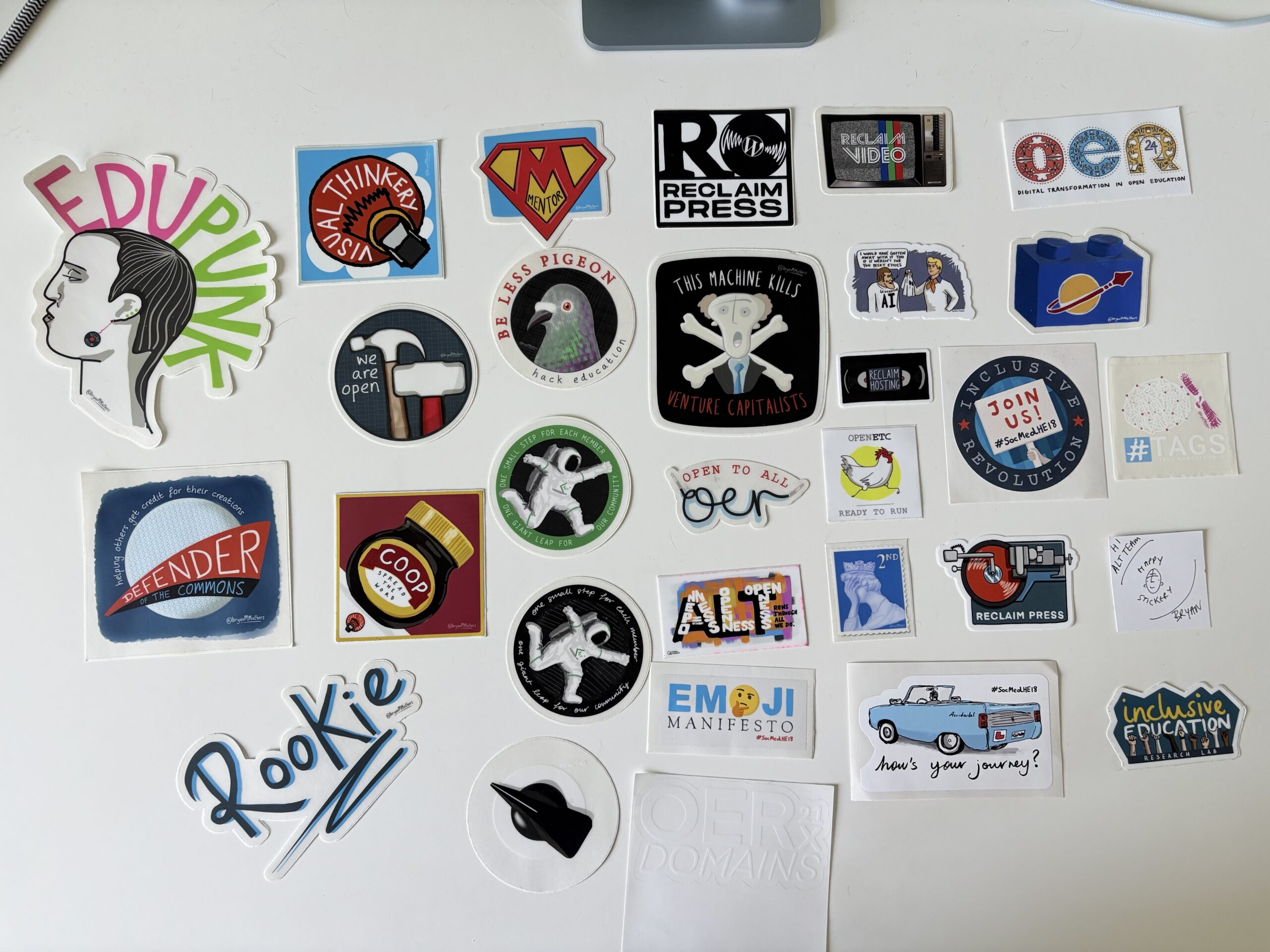
I volunteered as a member of the Conference Committee, taking part in the peer review process and planning sessions in the months running up to the event, which has only heightened my anticipation. And so, with a bag full of stickers I am heading to the Open University, proud to have two sessions in the programme.
First up, I’m VERY excited to give a session about the case studies I have been working on with Reclaim Hosting. As I blogged on the Reclaim Blog:
Reclaim has long been a supporter of this wonderful conference and in 2021 we even joined forces for OERxDomains21. We took part in 2023 in Scotland, and in 2024 in Ireland, and this year we are heading to the UK’s Open University for much open education goodness!
Looking back at these conferences I have fond memories of my talk in 2024 together with Meredith Huffman, and all the fun we had hanging out with Alan Levine and Bryan Mathers, which led to the now legendary DS106 Radio Summer Camp. So what’s in store for this year, I hear you wonder:
From Experiment to Enterprise: Open EdTech Case Studies
Inspired by the conference theme “Open Practices and Pedagogical Innovation” our talk will showcase key points from several new Open EdTech case studies that show who and how institutions who are at the forefront of Open EdTech adoption develop, scale and deploy open source educational services. As well as showcasing how open source technologies move from experiment to enterprise service, we will highlight just how important such work is for developing digital capabilities, for faculty and for students.
I’m really proud of this piece of work and feeling privileged indeed that I’ll get to showcase this work which is very much a collaborative effort with Jim Groom, the whole Reclaim Team and of course the amazing educators and technologists that have kindly given their time and told their stories.
At the recent ILTA Conference I talked about a different case study, and although it landed very well indeed and there was a lot of interest in how to build digital capabilities with Domain of One’s Own for example, I am looking forward to taking this project to a dedicated Open Education event, and take a deeper dive into the open aspects of the work.
I also submitted an experimental session about the research for my second book, a session which is part podcast, part walk and a whole lot of storytelling. Although it’s a different part of my practice, it is conceptually aligned with the Reclaim case study, as it is also about open practice and how to use technology to navigate today’s uncertain and fast moving Higher Education landscape.
If you’d like to take a closer look, check out the dedicated podcast episode below.
Today was a fab first day of the #EdTech26 Conference, the Irish Learning Technology Association’s annual EdTech Conference, 3-4 June in Dublin, celebrating its 25th anniversary under the theme EdTech You: Digital Learning From How to Who – and what a wonderful day it was!
I shall certainly have to blog more about the conference which I have long been a fan of and this year’s event has only strengthened my appreciation for such a wonderful community event.
Explore my talk
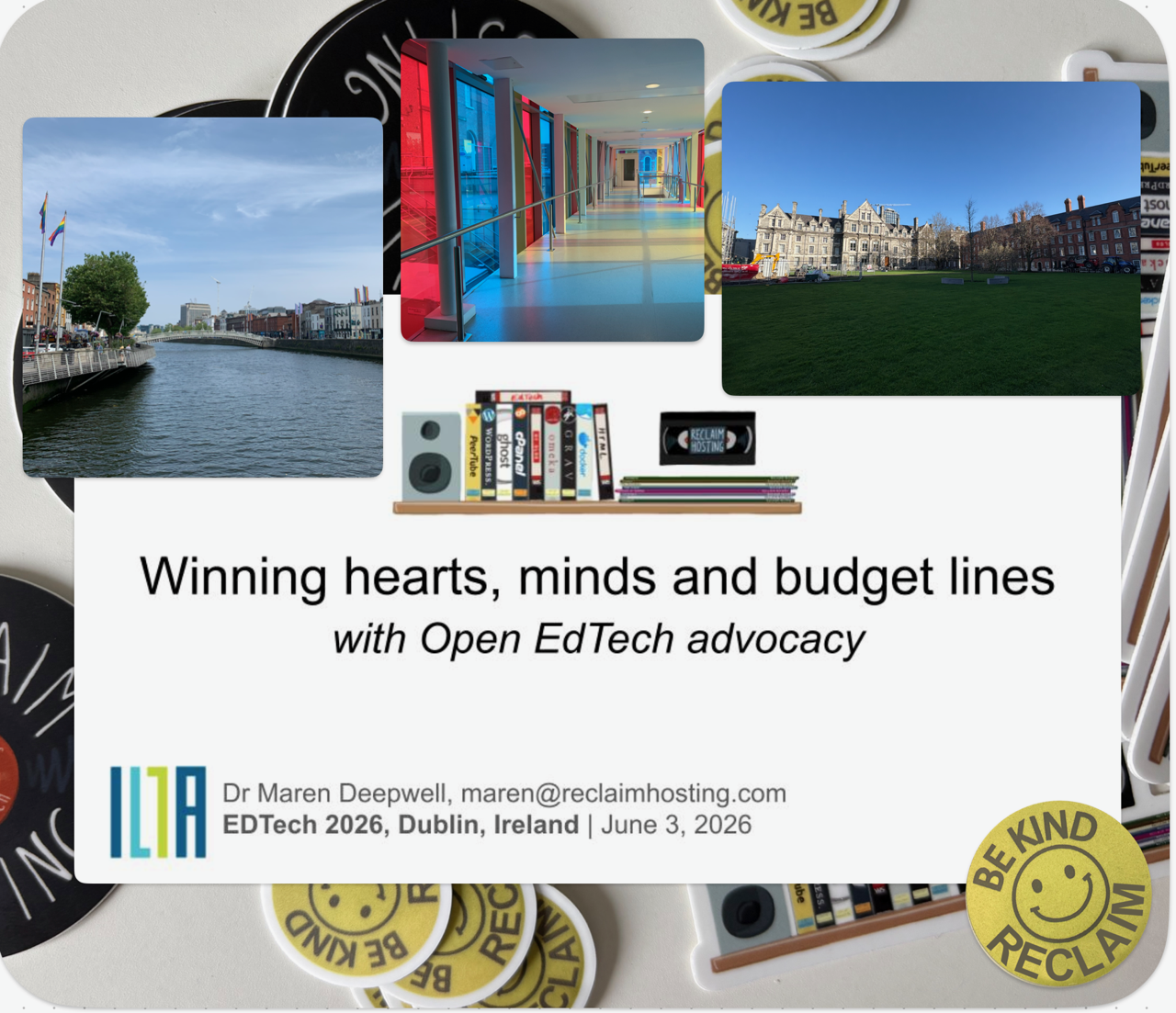
I was happy indeed to contribute a short talk to the conference, so here’s the link to explore the slides and resources. Many thanks to Kate Molloy for chairing it so kindly and for making us all feel so very welcome!
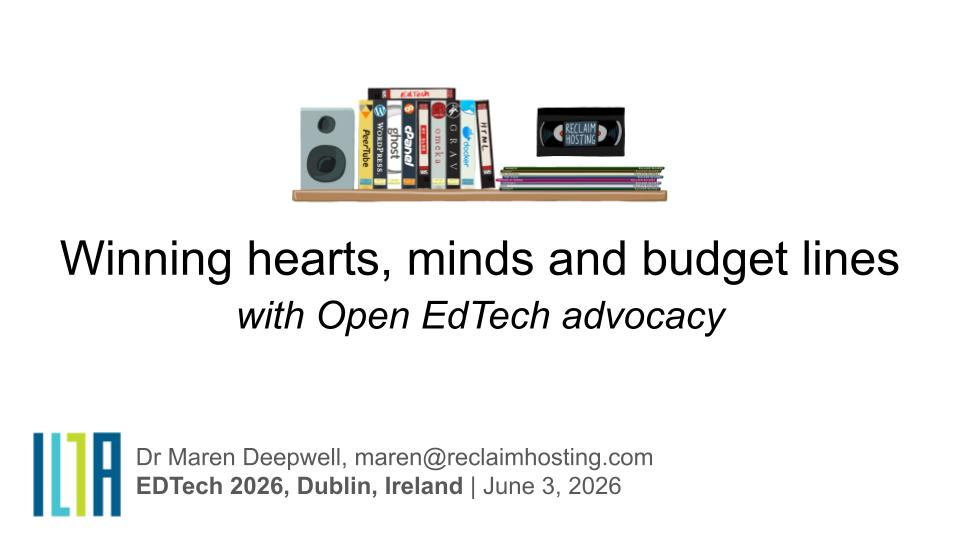
Presentation title slide
Thank you to everyone who came along, asked questions and the biggest thank you to the wonderful folk and my colleagues at Reclaim who made the featured case studies such a joy to work on and share with the ILTA audience today!
In June this year two conferences take place that celebrate important milestones in Open Education and Learning Technology: the Irish Learning Technology Association’s annual EdTech Conference, 3-4 June in Dublin, celebrates its 25th anniversary under the theme EdTech You: Digital Learning From How to Who. Just a few weeks later the OER26 Conference convenes at the Open University in Milton Keynes, to focus on Openness Reimagined: Continuity, Change and Shared Vision and celebrate several anniversaries, including 20 years of OpenLearn and 30 years of the Journal of Interactive Media in Education.
As a big fan of both conferences and their communities, between which there’s plenty of crossover, I am fortunate to attend both this year and a deeper dive into the themes of both events prompted me to reflect on the crossover between the themes, and how each of these events may act as a catalyst for action and for hopeful change across sectors.
The ILTA Co-Chairs, Dr Rob Lowney and Kate Molloy, and the organising committee, pose the following questions:
“We invite you to join us in a conversation that asks:
Who was, is and should be the people of your/our Edtech community?
Who was, is or was missing from conversations about digital pedagogies ?
Who are we designing for (or against) in EdTech, and who is missing?”
For me, these questions relate closely to the wider context and the challenges it poses which are at the heart of OER26 led by Dr. Robert Farrow and Dr Beck Pitt:
“Openness has expanded participation, reshaped practice, and challenged assumptions about who education is for and how it should be delivered. Yet openness is not static. It evolves alongside the social, political, and technological conditions in which it operates. The rapid development of AI systems, platform-based infrastructures, shifting policy environments, new economic pressures, and renewed global debates about equity and justice are reshaping the terrain of open education.”
In both themes I see a call to (collective) action, a sense of urgency that care and connection should help determine the shape of things to come, rather than allowing technological imperatives to set the agenda. In addition, the milestones being celebrated reflect decades of valuable expertise and experience, of knowledge about the “how” of innovation in both open education and learning technology, and the invaluable work of (often volunteer) reviewers, contributors and collaborators.
Times may feel more uncertain than ever, and this is precisely why events like this, organised by member organisations in partnership with universities and volunteers, are so important: they open up space for reflection and discussion, galvanise action and help build new alliances and collaborations.
So here’s to you, OER26 and EdTech 2026! Like hundreds of fellow participants, I very much look forward to celebrating the milestones, swap stories and share inspiration come conference week!
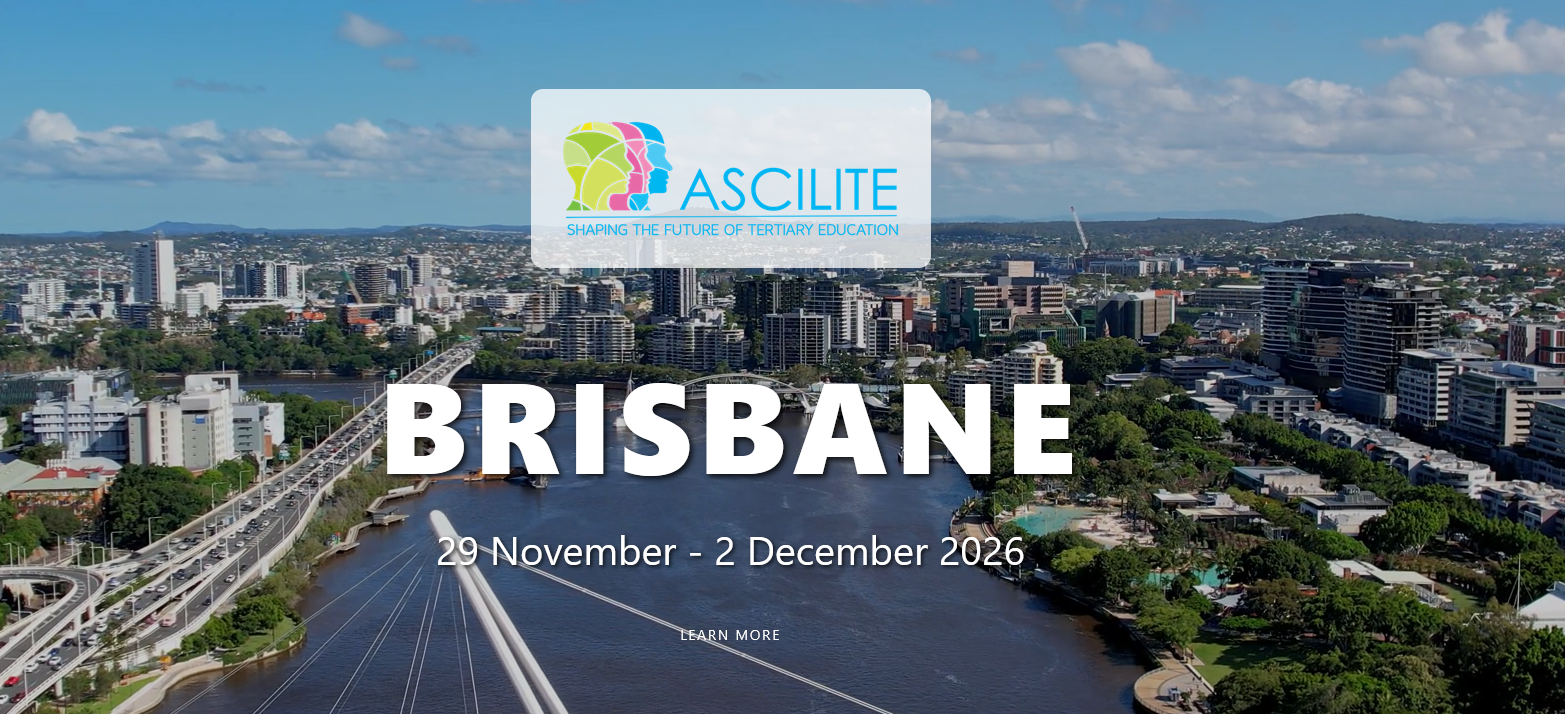
It’s been a while since I got a keynote invite that had me checking flight schedules. For many good reasons, nowadays I give most of my keynotes from my home office. So it was extra exciting to see the announcement for the 2026 Annual Conference organised by ASCILITE come out last week!
Although I worked closely with colleagues in Australia and New Zealand during my time at ALT, this is one event I never made it to in person, and to be invited to keynote this year means a lot to me. The theme of the conference is “The Future is Connection: Collaboration, Creativity and Compassion in a Digital Society” and that’s right up my street.
So all being well, at the end of this year I’ll be making my way to Brisbane for a week of conferencing with colleagues whom I have known and worked alongside with for over a decade, but many of whom I’ve never met in person.
Registration and the Call for Proposals will come out soon, and sponsorship opportunities are already available, so reach out to the excellent organising committee if you’d like to get involved!
Closer to home
I’m also really looking forward to ILTA’s 25th Anniversary Conference which is taking place in early June in Dublin, and which looks very sharp indeed in terms of both the themes and the folk involved. If you haven’t yet seen Eamon Costello’s conference intro video, or connected with the fantastic duo of conference co-chairs, Rob Lowney and Kate Molloy, then you are missing out.
The Call for Proposals is closing soon, 1 March, and I know I am working on my submission 🙂
I’ve also volunteered to be a member of the OER26 Conference Committee, also scheduled to take place in June, and I am looking forward to being involved with this, my probably favourite open education event of the past decade.
Global open (reclaimed)
Much sooner on my calendar is Open Education Week 2026, which has been a firm fixture in my year for a long time, and which keeps getting better every year (in no small part thanks to the masterful efforts of Alan Levine and his OE Global colleagues who make putting together a week-long (or year-long!) global event across every timezone available EASY! Hats off, friends, for walking the walk and bringing us all together.
Like in the past two years I’m excited to contribute to this event with colleagues at Reclaim, another team that makes open educational technology look easy, and who tirelessly produce and share useful open resources on one of my favourite blogs on the web (disclaimer: I get to contribute posts there, too, and will indeed shortly publish our plans for Open Education Week, so look out for that!).
As I blogged earlier this year, I am making a concerted effort to find more ways to travel and connect with folk in person, and my trip to Scotland in January really inspired and energised me, giving me more motivation to make plans for the next six months.
If you are heading to any of these events, get in touch and let’s get together for a catch up and a coffee.
It’s been a lot of fun to be part of the team behind Reclaim Open last week. I love the buzz that comes with delivering an event months in the planning, especially when there’s so much innovation in the mix. In this post I share some reflections on the process behind the scenes, but first… you might ask why go a different path when it comes to online events? There are plenty of tried and test formats, platforms and services out there, so there’s no real need to re-invent the format yet again. Or is there?
Tailored format: A first amongst firsts
Reclaim Open has always been a creative, one of a kind conference, celebrating many firsts in its inspiring history. So it feels only fitting that this year’s format followed in the footsteps of firsts and broke new ground taking the conference online, onto a blog near you, to DS106Radio, to the game table, the quiz, the keynote panel and student showcase. It’s a privilege when you work in a community of digital educators that you *can* push things into a new direction and still take enough people with you to make it work.
Likewise, working in a small team with lots of competing priorities and limited resources always brings out the best in conference planning to my mind, because you focus on what you really, really want to do for and with your participants, rather that rehashing things just because you’ve done them before.
Jim and I have a running joke about conferencing firsts, and I feel it’s certainly time to sing it one more time: “We did it again.”
Blog-A-Thon
We started the event with twelve hours of blogging, with a post being published on the hour, every hour. It was fabulous, and offered space and time for conversations to develop, for connections to be made.
As with every format that you invent on the fly, there were some minor practical issues in the first hour or two, but after a little while everyone got into the stride of the Blog-A-Thon and the chat bloomed. It brought back memories of amazing conference formats like PressED, and TAGSExplorer Twitter-hashtag conversations, and reminded me precisely why it can be so much fun to work on the open web. Swapping rss feeds and blog roll links was in full swing by the time the first afternoon rolled around, and the community of practice group was very active alongside new faces and first time participants.
Digitals virtuosity
Switching between formats, moving from radio to website, and from webinar to game show takes A LOT of doing. It only works because the team behind the event has the highest level of digital skills, confidence and tech set up.
Briefing staff in whatever format you use to ensure speakers get the support they need and have a good experience is one of the most crucial things about online conference delivery in my experience, and it’s hard enough when your are using one platform to do everything. It becomes a lot more demanding when you switch between formats, managing dozens of speakers across time zones, from single individuals with slides to group plenaries that host 8 speakers simultaneously.
Big kudos to everyone involved for upping their game!
It takes heart
In this age of AI and digital abundance it’s easy to loose heart, to feel that one’s voice doesn’t really matter, especially if what you are interested in goes against the dominant narrative. It takes a lot of heart to make your voice heard above the noise, and one of my hopes for the conference was that it would deliver a much needed dose of inspiration and encouragement to everyone participating – and wow, it really did!
Bonnie Stewart’s keynote was simply awesome and helped open up that conversation during the event, and is definitely worth re-watching and is the student showcase that brought together four very different, innovative projects and opened up the keynote stage to emerging voices from the open web.
… and my session
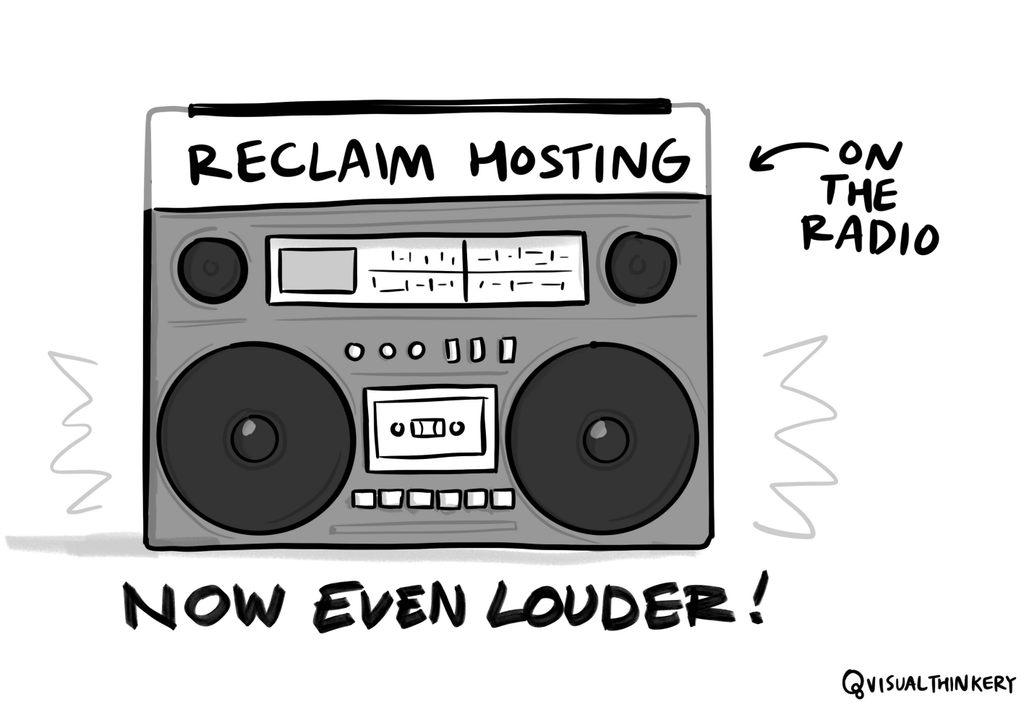
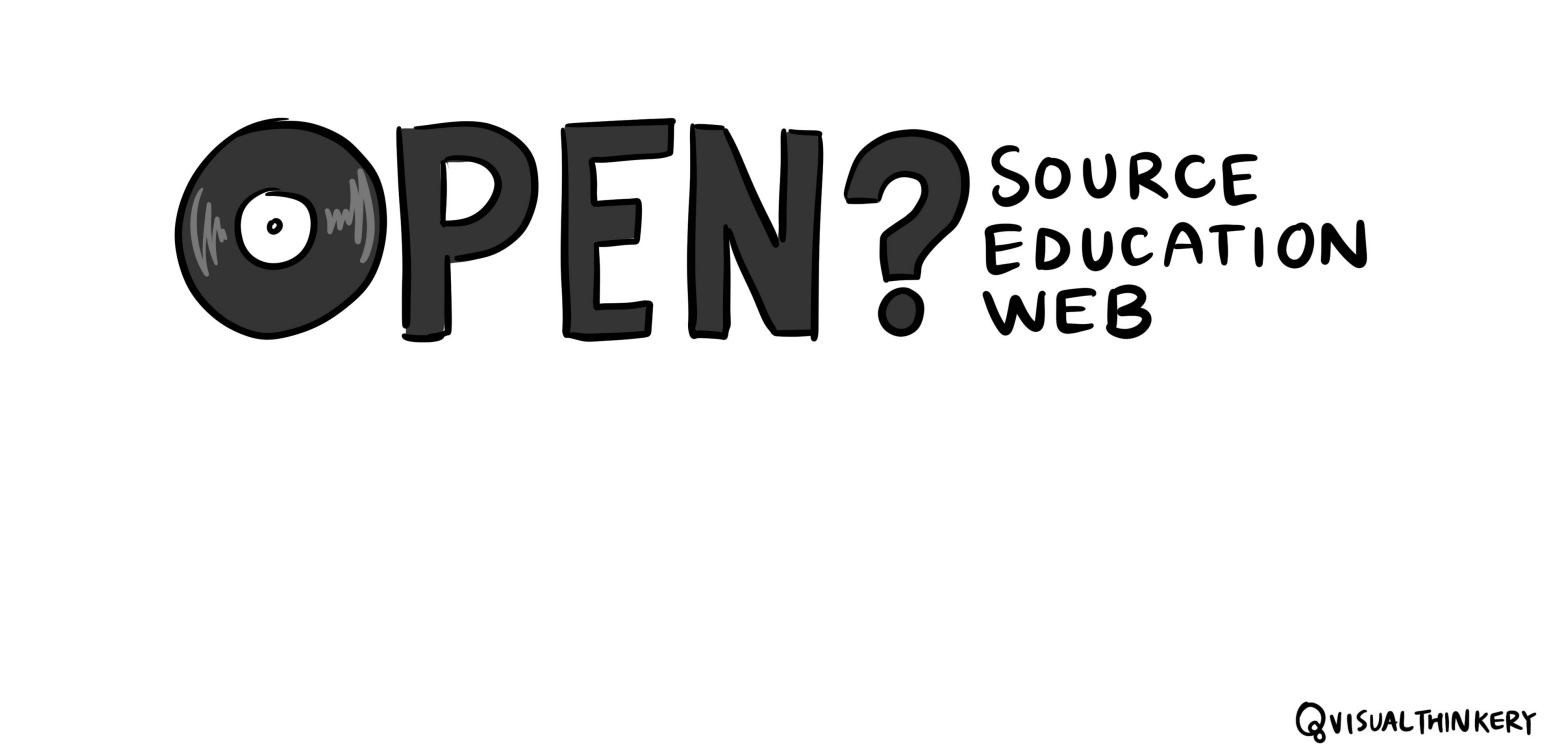
If you’d like to take a closer look at my own session, then listen to last week’s podcast episode in which I explain a bit about the back story and share highlights from my session. Thanks to Bryan Mathers for the awesome illustration: