Author: Maren Deepwell

  • Running. Trials and tribulations.

    Running. Trials and tribulations.

    I have been blogging about getting back into running for the past two years. This journey back into running has felt really tough at times, and at the same time I am well aware that it doesn’t signify in the face of what many others face daily, especially in these often gloomy times.

    This is blogging as personal record keeping, and as such only really of interest if you are prepared to suspend the ‘so what!?!?’ instinct for a while.

    The story so far

    In 2021, I blogged about reclaiming my morning run, and making my way back to running… little did I know that shortly after I wrote those posts I would have to stop not only running but exercise all together for a long while. Then in December 2022 I tried to get back into it again… and now, six months later I have (I hope) finally reached a new milestone.

    Rather than blogging about hoping to get back into running, I am now actually running. Phew! and YAY!

    Last month I ran 5k for the second time this year and now I am back to running 3-4 times a week, slowly working my way up from 5k to 10k and beyond. I’m blogging about this (admittedly unimpressive) achievement not because of what I did, slowly plod along for 3 miles on a sunny Sunday, but because of what it represents to me: this run was very hard won.
    At the start of this year I finally recovered from a serious, year-long shoulder injury. It took far more time, money and effort to restore my shoulder to normal mobility than I ever imagined and once I was able to get dressed on my own again and attend a gentle yoga class, I assumed the job was done. I felt ready to return to my usual activities.

    As I’d kept working throughout most of the year that I was injured, taking some days off for hospital treatment and physio, and kept doing lots of things as normally as possible, it didn’t really sink in for a while how much strength, flexibility and fitness I’d lost overall, or how much physical confidence.

    Fortunately I can afford to keep going to see my physio every 4 weeks, and with his help I started the long journey back to being able to do things. Obviously day to day activities were the main focus of my recovery: being able to get dressed again on my own, getting things from kitchen cupboards.. being able to walk the dogs on my own. Being able to travel for work, carrying a laptop case and so on. Physical exercise however did and continues to play an important role as it helps not only my body but also my mental health.

    Running, which has long been my most effective coping strategy for a stressful and demanding week, started 30 seconds at a time. Then a minute. Then two.

    After 3-4 months, over the course of this spring, I got used to doing 30 min of exercise again. A big achievement. Although my phone unhelpfully reminded me that by every measure my efforts were ‘below average’, it meant a lot of progress for me. My yoga teacher was a big source of encouragement and helped me find some joy in moving my arms and legs, tentatively at first, fearful of pain and injury.

    Brief rant about sports bras

    Although I appreciate the sentiment that all you need for running is a pair of trainers and to head out of the door, my experience as a curvy middle aged woman has never really lived up to that. Anyone who’s ever wrestled into a sports bra with a 5 hook fastening at the back will appreciate that the combination of a shoulder injury that reduces mobility + getting back into running is not fun. I am still waiting for the promise of technology and design to deliver the hype that every single new overpriced sports bra promises for me and all the other people frequenting chat forums on chaffing and avoiding bounce.

    Mind AND matter

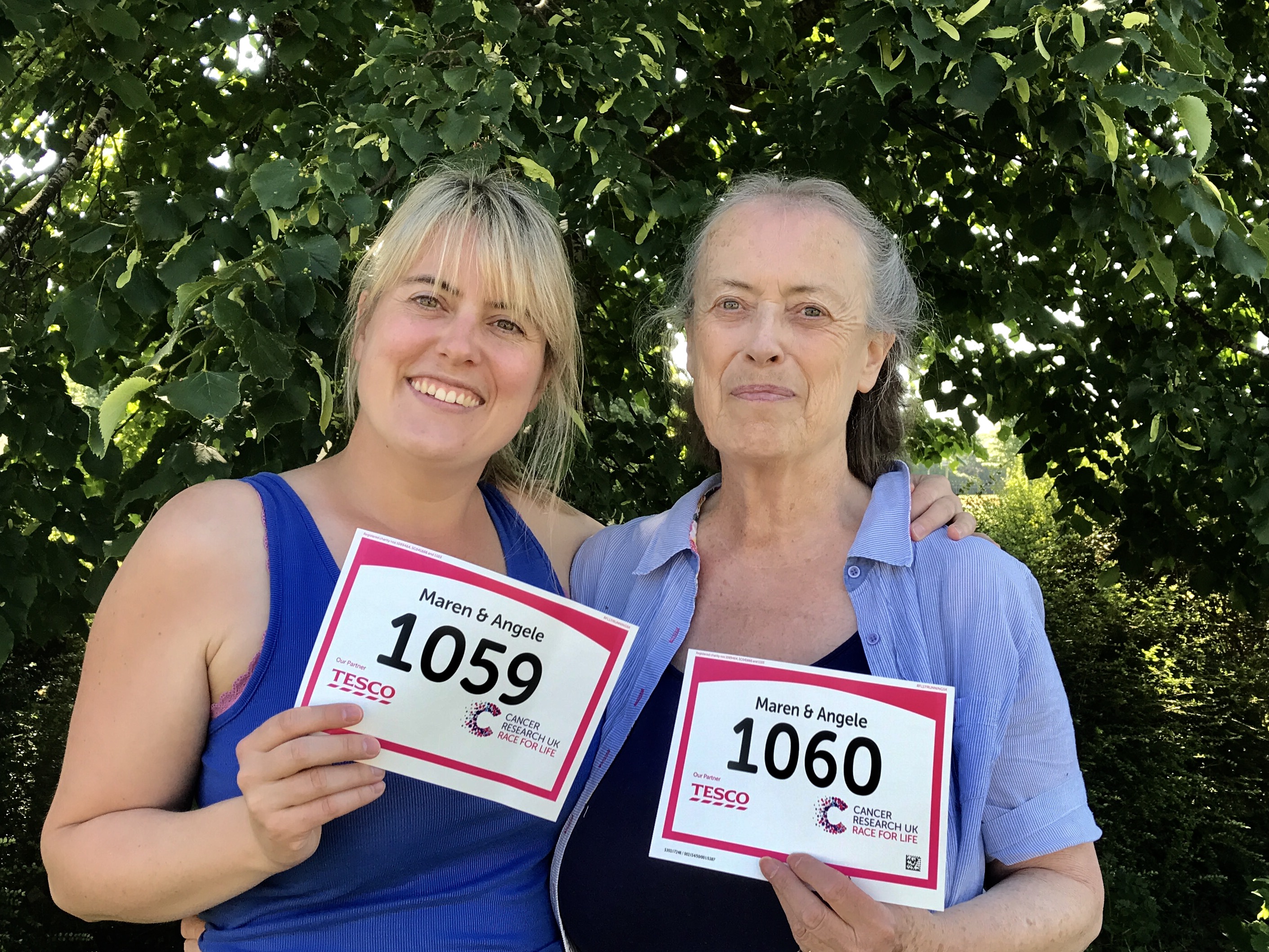
    I’ve always run for primarily my mental health, finding calm and release in the ritual of heading out in the mornings. In my most anxious years, I ran nearly every morning, capturing serene sunrises in all seasons. I also ran to raise money for the cancer charities supporting my mum’s recovery from lymphoma, and gradually half marathons became an achievable goal. Running felt empowering and gave me balance, as well as a connection to the outside world that I have missed a lot during the past few years when my weekly milage was low or nonexistent.

    Once I got some fitness back and managed to get out of the door regularly, I was expecting things to get easier, but my body and my mind were not happy to cooperate. I had every ache and pain in the book after just minutes of running and a sense of fear and panic that was not helpful at all. A mile seemed entirely unachievable.

    After a few weeks of being stopped in my tracks by this mental block, I tried a different approach: I tried a running meditation, headed out and had only one goal: run slowly for 5k and don’t stop no matter what. Slow down if you need to (I did) but do not stop. And… it worked. Mind AND matter, with a lot of help for the mind.

    Now, a few weeks on, I am back to a regular routine, a very gentle one, but a routine nonetheless, for the first time in a long time and it feels great. I am back to listening to music or just letting my thoughts wander, enjoying the feeling that I have a bit of my morning all to myself before another busy day begins.

    Enjoyed this post? Get my free monthly newsletter directly to your inbox.

  • Meditation and mindfulness in a virtual team

    Meditation and mindfulness in a virtual team

    During the recent Mental Health Awareness Week, I looked for new tips and ideas for virtual and hybrid teams keen to embed mindfulness and meditation into their ethos.

    I’ve previously shared tips, which I have updated and included again below. This year my focus has specifically been on finding resources for meditation and mindfulness.

    Sometimes it can be most helpful to bring in external facilitators to lead this kind of work, and run live sessions for teams. One of the challenges however is to schedule these sessions at a time when everyone can attend and also find a format that meets the needs of diverse individuals.

    So instead of looking for a specific course or facilitator, I have been looking to find approaches that are easily available and accessible in a flexible way, so that colleagues can engage as and when they wish to. There are a lot of free resources online as well as specialised apps such as Headspace, Calm Business and Insight Timer for Work.

    We tried Insight Timer for Work and offered colleagues the opportunity to explore resources such as meditation recordings in a huge library of content available in 44 different languages. We are a small team, and as such as weren’t focused on creating a particular level of engagement or meeting goals. We don’t use the analytics that the platform can provide.

    Instead, we started to share content we came across that was helpful to us, and we organised an informal meet up for staff to spend 15-20 min online. To make this as flexible as we can, the format we adopted brings us together in a video call at the start of the session, and we say hello and check-in with each other. It’s encouraged but not required to share what 5 or 10 min track you are planning to listen to. Then cameras and mics are switched off, and everyone engages in their meditation or mindfulness activity. At an agreed time, we return to the video call, and reflect a little on how we got on.

    Scheduling the meeting provides a way to stay accountable to the intention to take a mindful break for those who want it, and is opt-in only. We decide each time if we want to meet again, and then put another date in the diary.

    It’s a small step, but a welcome reminder to take a breath in what is a very busy time indeed.

    More Tips for hybrid and virtual teams:

    • Create time and space to talk: For many people working from home seems to be a never ending marathon of back to back meetings in Teams or Zoom. That’s a tough context in which to create time or space to talk about mental health. I’ve often blogged before about different ways of working, around a document, whilst walking, offering time to reflect and write together… and you really need to find pockets of time and space that suit your team(s) in order to get meaningful conversations.
      In addition to weekly group meet ups, make time to have one to one catch ups and wherever possible don’t schedule meetings back to back for the whole day or week. Consider how you might use informal and formal spaces which are always there, such as chat channels, for meet ups, chat and conversations.
    • Read the signals: For some, what works for everyone else isn’t a good fit. That applies to in person management just the same, but I feel working virtually increases the danger of missing obvious signals. If you have just come from one meeting and the other person has done something different, it’s easy to talk at cross purposes. So if you are talking about personal stuff, asking about wellbeing or mental health, you need to be prepared to look out for subtle signals, including tone of voice or chat, body language and even emoji.
      It’s helpful to have a communication channel in which discussing sensitive topics is safe and personal. Or rather than changing how you talk, consider what else you can modify to create a different atmosphere: go for a walk and talk; or have a phone call with cameras off. We don’t always feel the same, so our working practice shouldn’t always be the same either.
    • Talk about mental health: aim to normalise talking about mental health in an appropriate way and check in on how everybody is doing regularly. Clearly sign-post ways to seek expert or confidential advice such as via HR professionals, at appraisals, through organised coaching, therapy and other support.

    Enjoyed this post? Then listen to my podcast episode on mindfulness and meditation:

  • ALT appoints new Chief Executive: Billy Smith

    ALT appoints new Chief Executive: Billy Smith

    We are delighted to update members that the Association has appointed Billy Smith as our new Chief Executive. 

    Since the announcement of this leadership transition in February, the recruitment panel, chaired by ALT’s Chair Helen O’Sullivan, has worked through a rigorous and competitive selection process that involved the staff team, Trustees and ALT’s HR and EDI advisors.

    Helen commented: 

    “Billy immediately stood out from the strong pool of applicants through his strong commitment to the values and principles of ALT as a membership organisation. His energy and enthusiasm impressed the Panel and we are confident that he is the right person to take ALT forward into the next phase of our development.”

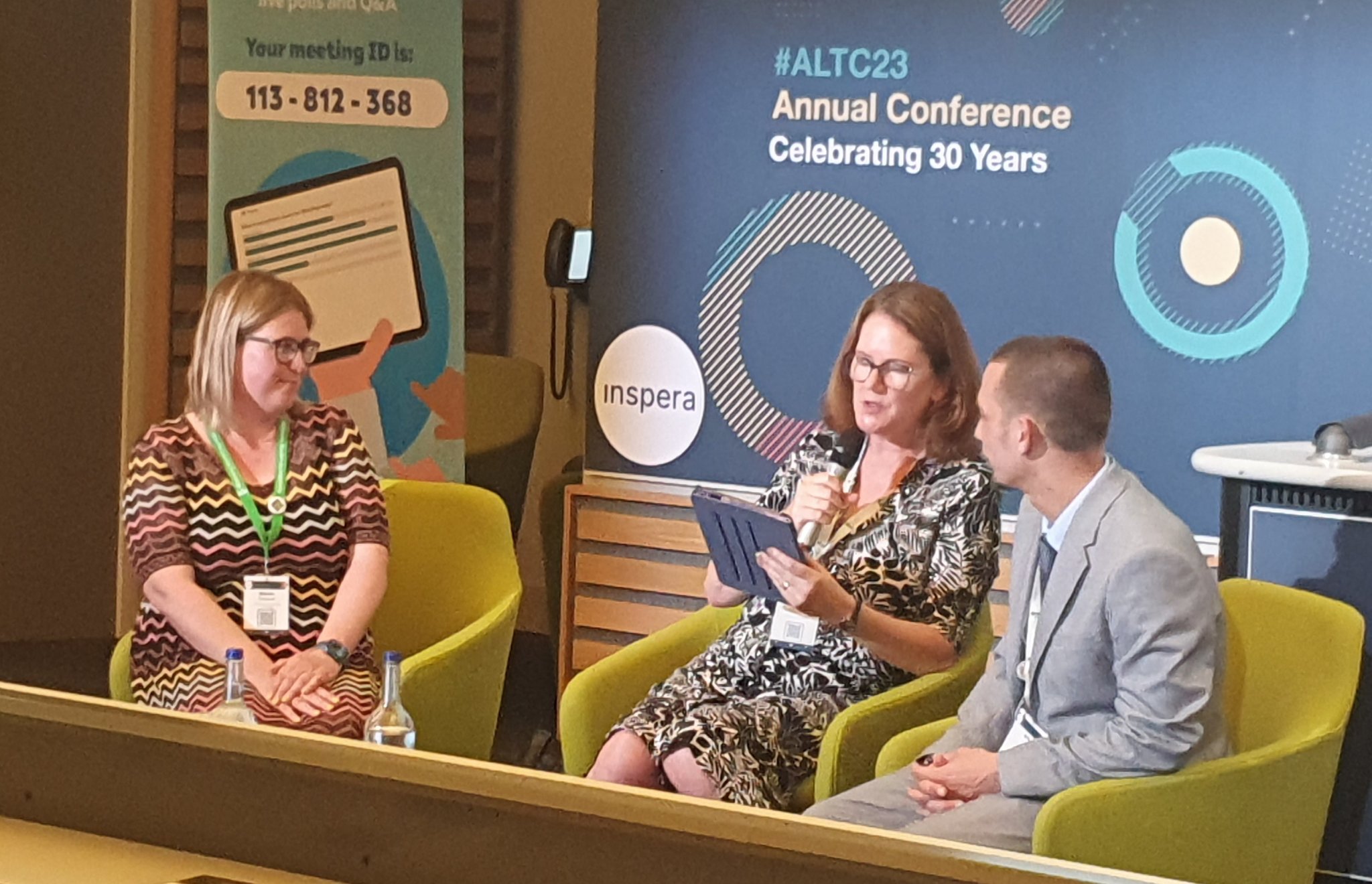
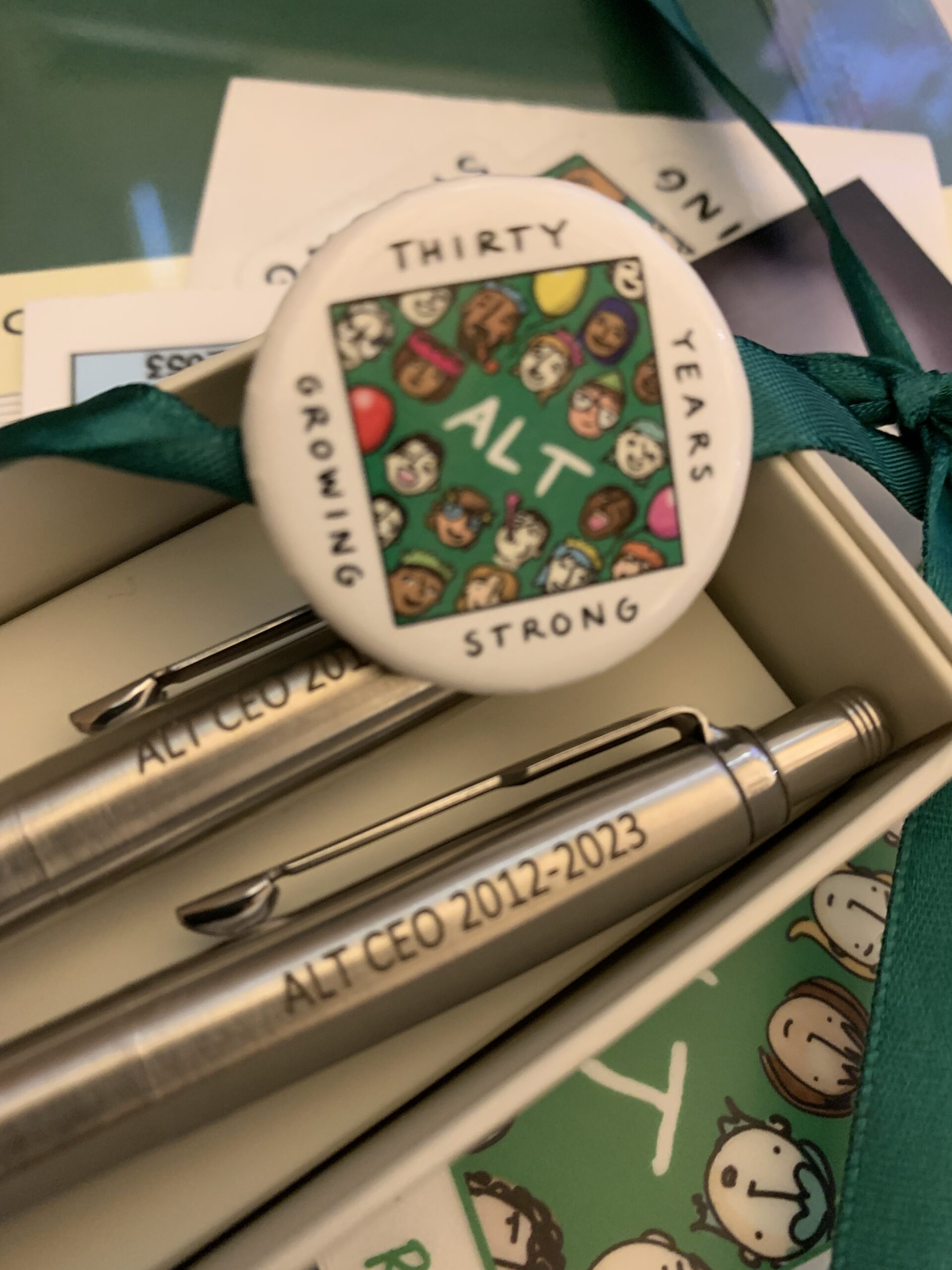
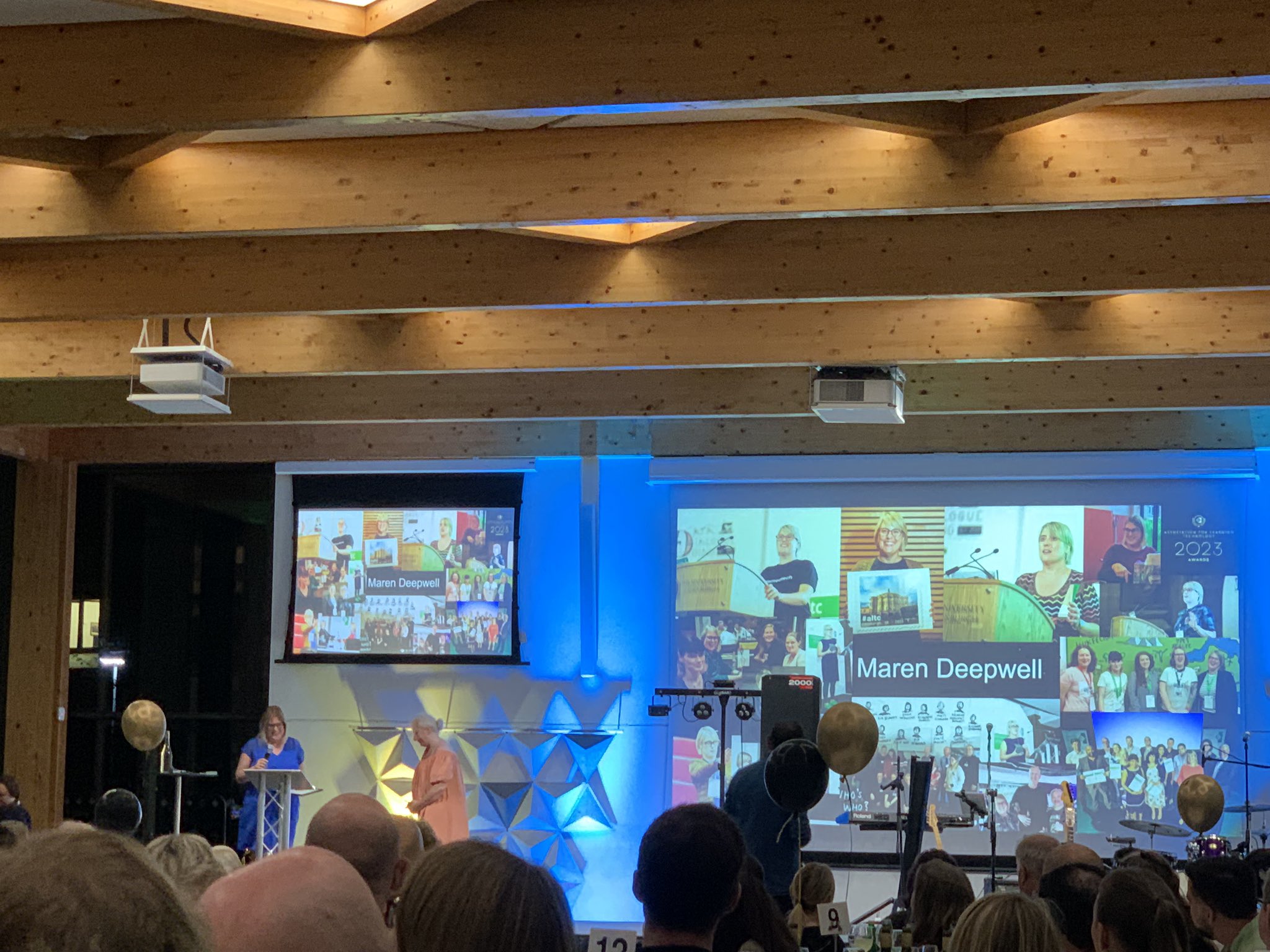
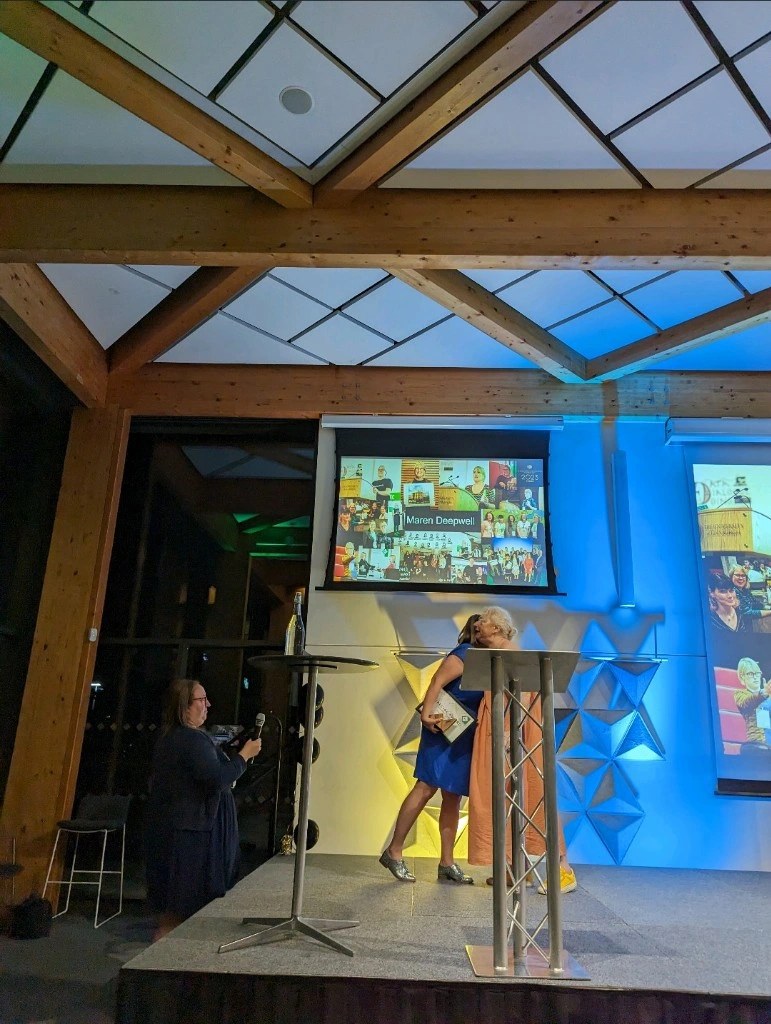
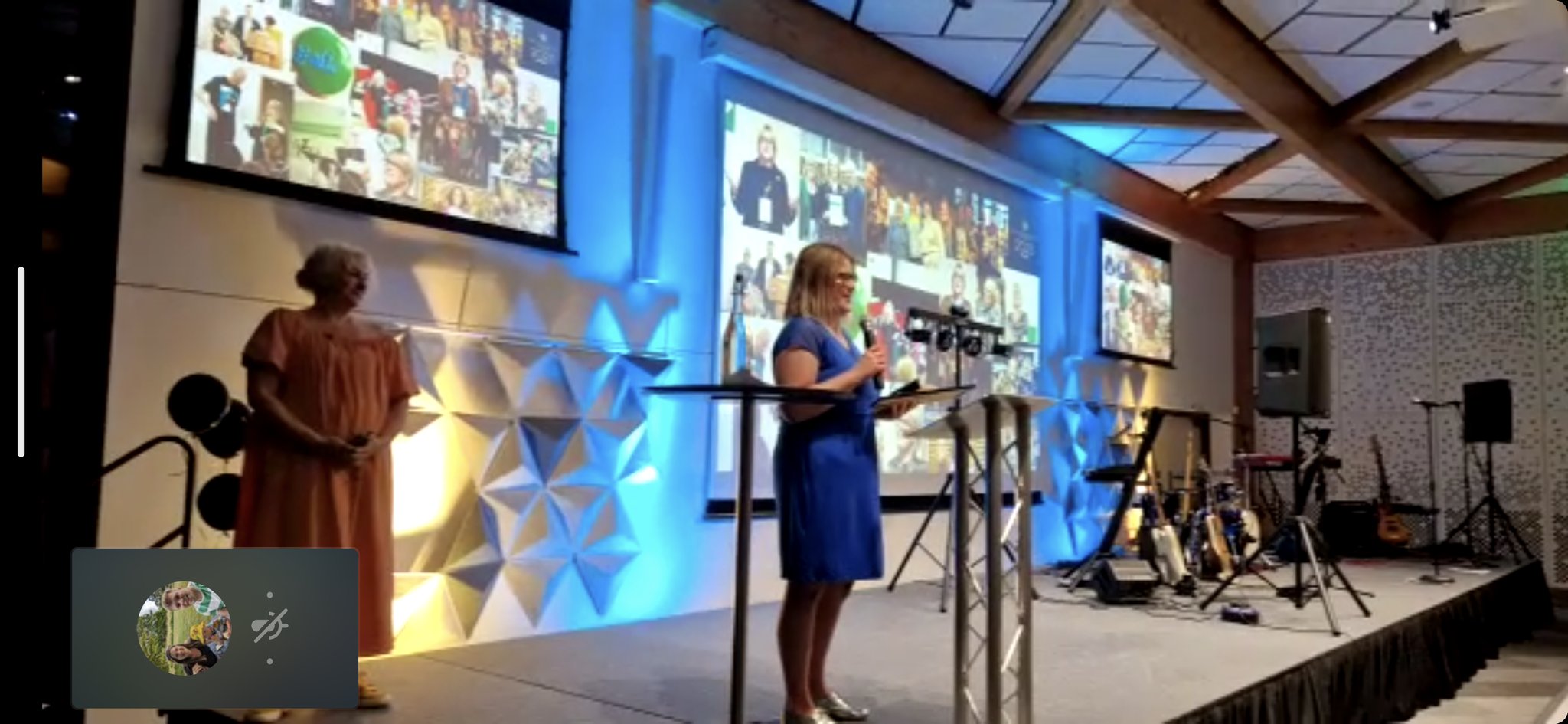
    Billy will join the team in early August and formally take on the role of Chief Executive at this year’s Annual General Meeting, which will take place on Wednesday, 6th September 2023 during our Annual Conference in Warwick. The AGM will also be our opportunity to say thank you to Maren Deepwell, who will step down as Chief Executive on that date.

    We invite you to warmly welcome Billy together with our Members, staff and Board of Trustees. 

    Read the full announcement on the ALT website.

  • A party without a cake is just a meeting…

    A party without a cake is just a meeting…

    June is my birthday month and inspired by my upcoming celebrations, I thought I’d share some ideas about celebrating occasions like birthdays or milestones at the home office. You may prefer to ignore these all together or not celebrate with work colleagues, and I share some of the reluctance. However, during the pandemic especially, celebrating birthdays became a welcome focus for our virtual team, an excuse to spend an hour or two doing something other than fire fighting. And so, I came to enjoy and value moments of connecting with colleagues and spending time having a few laughs more and more.

    Like many people I prefer not to work on my actual birthday, and take a bit of time off. Alongside the time away from work, I make it a point to have some celebration at work, and to share something that I am comfortable to with colleagues as a way to get to know each other a bit better.

    In 2020, when I turned 40 having moved to a new city just months before, at the start of lockdown here in the UK, my colleagues organised a surprise birthday party, dropped off by a safely socially distanced colleague who lived close enough to make it both legal and practical to visit me in my garden. We ate cake, with other colleagues joining via video call, and I received lots of small, thoughtful gifts and cards that brought a huge amount of cheer to me during a dark time.

    As a manager or a leader it’s especially important I find to spend some time with colleagues informally, and when you are based at home or a hybrid worker, then those opportunities can be few and far between. More often than not, team days or long planned meet ups don’t happen with everyone involved, and although interacting online can feel less connected, it is often more achievable.

    So here are some ideas to help make that moment of celebration stand out a little, and create memories:

    • Switch away from your usual platform: switching platforms can be a really powerful way of changing the tone of your interactions with your colleagues, especially if you have a less formal alternative to the usual Teams or Zoom calls;
    • Experiment with backgrounds: if you can’t step away from the habitual online space or even if you can, consider have a bit of fun with different backgrounds. You can pick a theme (Tropical Island, Outer Space) or just encourage people to pick something fun and off beat – it really makes a difference when you are not staring at the same old corporate backdrops for a bit;
    • Play some tunes: play some music as you are all joining, so people coming into the space immediately have a different experience from usual. You can invite suggestions for songs, make a themed playlist, and of course birthday tunes or similar could be fun, too (if not necessarily to sing along to);
    • Have a plan for the session: I’d advise against inviting folk and simply hoping fun will happen as it probably won’t. Have a loose plan for the session, and limit the time from the start. 20-30 min is probably enough, depending on how many people are coming, and have an activity such as sharing a snack, unwrapping gifts, presenting a card or saying a few words, planned for the start and end. If you expect folk to take a picture with everyone waving (I would recommend against it), then warn everyone in advance;
    • Consider going off camera: Lots of fun can still be had on voice only or even text chats when you are celebrating or socialising, and it offers a lot more flexibility. Setting up a dedicated chat space can offer options for everyone to take part from wherever they are and work especially well later in the working day or first thing;
    • Don’t take up breaks: Many home and hybrid workers have strong routines around their breaks that they value. So wherever possible don’t assume that folk will want to give up their lunch hour or meet after work. Connecting socially is an important part of team building, and well worth an hour during your work day;
    • Engage the senses: Seeing and hearing are the senses we use the most in front of our screens all day long, so to make an activity more memorable, consider how you can engage more of your senses: if you can, share a drink or something to eat, either provided by post or brought by everyone themselves, and spend a bit of time focusing on that.

    I’m very much looking forward to putting some of this into practice as I celebrate my birthday at my home office, and I’ll be sharing what we got up to in a follow up blog post.

    Enjoyed this post? Get my free monthly newsletter directly to your inbox.

  • Career transition update: May 2023

    Career transition update: May 2023

    In this month’s update, I want to share how things are going now that we are entering a very busy period, both in ALT’s year and my coaching business.

    Balcony with sea views.

    Reflecting on the past month at ALT…

    This month at work has been incredibly busy, but also included a wonderfully relaxing week of annual leave! May is the month in which we review progress made in Q1, finalise our annual accounts, start working on our Annual Conference in earnest and… a host of other activities that keep everyone across the organisation very busy.

    May was also the month in which the recruitment process for my successor stepped up a gear, which added more tasks to the days of Trustees and staff alike. It’s been a very rewarding and illuminating process, which I feel very positive about. Thinking back to my own ordeal applying for this role, from the extensive prep, to the nerve-racking interview days, to extensive online tests and skills scenarios… I feel for everyone involved. It takes a lot of time and effort to prepare a CEO application and even more to be successful at the end. Hats off to all who applied and threw their hats into the ring.

    I am very much looking forward to the public announcement introducing ALT’s next CEO, which will be coming out next month, so keep an eye out on all our channels 🙂

    … in other news

    I have been working hard on a brand new project that is concluding this week: How to… Lead Virtual Teams: The Course! It’s the first course I have developed for my new venture and it’s been a fantastic project. The course took place over seven weeks in April and May. As a podcast based offering it afforded a lot of flexibility and tailored support for managers and leaders and attracted around 50 participants from across sectors.

    Course logo

    It’s been fantastic to wrap up the first successful run of the course, and interesting to read contributions and reflections from those involved. Definitely a project I am hoping to repeat come autumn.

    My formal coach training is continuing this month, and investing in my own professional development is really important just now. Working with more and less experienced coaches and mentors is really helping me understand more about how to develop my own approach and what aspects of coaching I want to focus on.

    I am still looking for clients for the summer, so if you’re interested in coaching with me, head over to my coaching page for more information or just get in touch for an informal conversation. I currently offer discounted packages and for professionals who are not supported by their employer and for whom cost is a barrier to coaching, I also offer pro bono coaching sessions.

    Enjoyed this post? Get my free monthly newsletter directly to your inbox.

  • #LVT23 – How to Lead Virtual Teams: Part 6 – Set intentions for your practice

    #LVT23 – How to Lead Virtual Teams: Part 6 – Set intentions for your practice

    Congratulations on making it to the last part of the How to Lead Virtual Teams course!

    In this final part of the course, we are going to complete a closing reflection. Our focus now shifts back to your intentions for the course and how you might develop your professional practice.

    Listen and reflect

    This week, the podcast (25 min) includes a guided reflective exercise to help you reflect on what you have learnt and how to translate that into practice. You can listen to the episode as usual, or take a more structured approach and bring a notebook and pen to note down your reflections as we go along.

    We are going to focus on:

    • What did you learn? What did you learn about your approach to leading virtual teams?
    • How has your approach evolved or changed in the past few weeks?
    • What first steps do you need to take to apply what you have learnt?

    After you have listened to the podcast, take some time to write down further thoughts and reflections. If you’d like to share your reflections with others, share them using the hashtag #lvt23 on MastodonInstagram and Twitter. I’ll be looking out for your posts.

    Set intentions for what’s next

    Below are the links to all the course materials, so you can revisit them in your own time. Taking part in this course should act as a prompt and support you to develop your approach to leading your team, project or organisation. If you are not sure what the next step is, here are some ideas to get you started:

    Gather feedback: use this course as a basis for gathering feedback from colleagues and peers and learn more about what aspects of your approach work well and what aspects you can develop further. Leaders and managers often find hybrid working lonely and it can be hard to identify why certain situations or relationships aren’t working the way you expect. Ask specific questions or focus on particular aspects of your approach, such as 1:1 meetings or sprints when asking for feedback.

    Make a plan: use the ideas from the course to set out a development plan for yourself, and identify practical aspects of your current work set up, routines or strategies you’d like to develop. Making a milestone plan can be a really helpful step and this podcast episode gives you a step to step guide to getting started.

    Identify support required: if you are feeling overwhelmed now might be a good time to take a step back and focus on what support you might need to support your professional development and wellbeing. Look out for a special coaching offer for course participants via email.

    Explore all course materials

    All course materials are freely available:

    Week by week

    Share your feedback about the course

    Thank you so much for taking part! It’s been a fantastic experience to share the past few weeks with you all and I hope you’ve found something along the way that’s inspired you and helped develop your approach to leading people and projects in the hybrid or fully virtual virtual workplace.

    This is the first iteration of How to Lead Virtual Teams. I’m keen to hear your feedback, good and bad, so that the next run can be even better. Please take a few minutes to complete this course evaluation form. Thanks!