This is a special year for our Association as we celebrate thirty years since ALT was established in 1993. As we prepare to mark this important anniversary as the leading professional body for Learning Technology in the UK and as an independent charity serving our membership, we want to focus on how we can build on what has been achieved as well as what’s ahead.
Help shape what’s next
Our work across sectors, serving a growing community with diverse needs and priorities depends on your input and we invite you to complete ALT’s Annual Survey for 2023. Help shape what is ahead and contribute to our unique insight into how Learning Technology is used across sectors as well as identifying emerging trends in current and future practice. The survey provides an important insight into how professional practice within the field of Learning Technology is developing. The purpose of this survey is to:
Help map professional practice and development in Learning Technology;
Chart how Learning Technology is used across sectors;
Understand current practice to better meet the needs of and represent our Members.
The Annual Survey also helps to improve ALT’s monitoring and reporting in order to promote equality, diversity and inclusion. The closing date for responses is 5 February 2023 . Complete the survey now.
New events programme launching for 2023
Our events programme is at the heart of the work we do and attracts over 5,500 participants a year. Through a varied programme of webinars, workshops and conferences we increase access to expertise and continuing professional development (CPD) for Members and participants from across education and training sectors. ALT’s new events programme that has been developed to meet the needs of our community and deliver value for our Members.
We are launching a new annual virtual summit for (emerging) leaders which will focus on key issues identified through our annual survey;
Our highly successful CPD webinar series will expand to include experts from across sectors, offering regular professional development aligned with the CMALT accreditation framework;
ALT’s flagship Annual Conference and OER Conference will continue to innovate as leading hybrid conferences in their field;
Our new in person 1 day events, taking place annually across the UK, will expand opportunities for networking and knowledge sharing.
We are really excited to bring new events into our established calendar of activities and to continue our CMALT Webinars and support the work of ALT Member and Special Interest Groups.
I am delighted that we have an updated Memorandum of Understanding (MoU) with ASCILITE. There is a long-standing collaboration between ALT and ASCILITE and in recent years we have actively worked together on initiatives including CMALT Australasia and baselining best practice Open Access journal publication.
This Memorandum of Understanding (MoU) provides a framework for areas of joint working between ASCILITE and the Association for Learning Technology. It sets out how the two organisations will work together to ensure that shared objectives are taken forward and provides a platform on which to build joint working.
Did you miss…?
A quick summary of highlights from across our community:
It’s Winter Solstice today and over the past few years this has become the date on which I write my review of the year. For me, these reflections are a helpful way to wind down from work and move to focus on things away from screens, to get outdoors, walk the dogs and enjoy the luxury of not having a schedule.
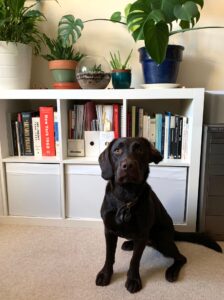
Posey, who is asleep in her basket next to me, has been my work companion for much of this year, adjusting to days spent in a room filled with exciting things that *could* be chewed, but that, thanks to the wisdom and patience that being nearly two brings with it, are still mostly intact.
Attentive and highly intelligent, she has learnt our schedule off by heart, and knows exactly when video calls end, when we go and make tea (and go outside while we wait for the kettle to boil), and when, best of all, it’s time to head out for our big daily walk in the woods, along the canal or at the river.
When I look back at what I wrote this time last year, I can’t quite grasp how much has changed and how much has been achieved in the past twelve months. It’s mind boggling. In a good way.
At the same time, it’s been a mixed year for me personally. Great happiness and joy at home were overshadowed by a serious injury that required trips to the hospital for me, as well as much family upheaval and emergencies.
This is why it is especially important to me not to move on from this year without making space to celebrate the milestones of the past year, and to express my gratitude for inspiring and supportive colleagues, collaborators and friends.
No. 1 ALT is thriving at (nearly) 30
This is the first time since 2019, that we look back at a year during which we accomplished what we set out to do! Having spent much of the intervening period in crisis response mode, it’s a huge achievement for our Association to meet the strategic and operational goals we set for the year and, importantly, make real progress on the road to financial recovery post-pandemic.
This year was a year of firsts for us, from the first new hybrid format conferences to the first comprehensive governance review, new partnerships and projects, a new events programme and CMALT course development. I am hugely proud of all we have achieved this year (and the Impact Report that shares our highlights), and especially thankful for all the hard work our staff have contributed, led by our COO, Kerry.
We have also started long-term projects to overhaul some of our infrastructure, policies and practices, making them fit for the needs of a growing and diverse community as we prepare to celebrate our 30th anniversary. ALT was founded in February 1993, and it continues to be my absolute privilege to be part of the work we do as CEO.
No. 2 Leading Virtual Teams
When we closed our office doors in February 2018, we embarked on a new chapter in the organisation’s history, establishing new ways of working. We wanted to not only talk the talk, but walk the walk and… achieve more of our strategic aims with a distributed workforce and lower overheads.
I have led the organisation throughout this journey, weathering the ups and downs of operational transformation, and managing the crisis that hit us along the way. It’s been a huge learning curve for all of us, and we have shared what we learnt along the way in blog posts and webinars.
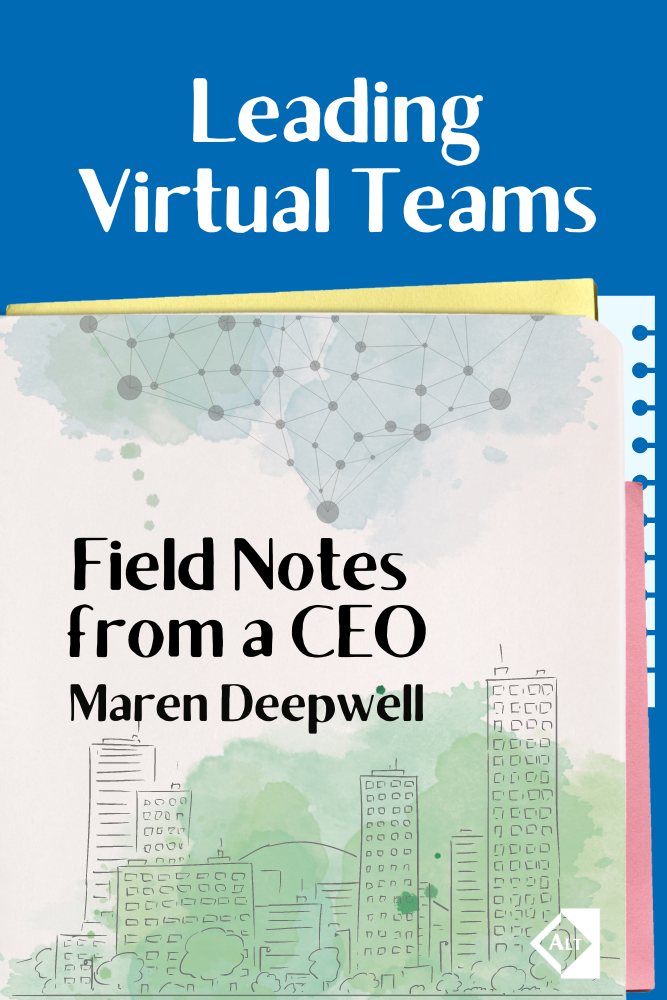
In this spirit of sharing knowledge, we came together earlier this month to celebrate the book launch of Leading Virtual Teams, with ALT’s Chair, Prof Helen O’Sullivan. You can now access the recording of us in conversation, sharing insights into ALT’s journey to becoming a virtual organisation and the story of how this book came to be and download your free digital copy.
Writing a book has long been a dream of mine, and I am thrilled with the kind comments and feedback I received. Thank you!
No. 3 A year of #femEdTech curation
Since February, each month for me started with #FemEdTech, first stepping back into the role of curator myself and also working together with other volunteers to set up a sustainable workflow that would enable others to get involved once again.
It was amazing to see individuals giving time and energy once more, to reinvigorate our corner of a social media platform which turned increasingly toxic as the year progressed. Maybe, in future our conversations may move elsewhere, but for this year, our network came back together around the #FemEdTech hashtag. And what a year we had.
Much of the focus of my work is in Higher Education, but this year, FE, Further Education, took centre stage. Working in partnership with Ufi VocTech Trust, ALT established AmplifyFE. Amplify is a ‘network of networks’ which launched in October 2020 and already connects over 2000 professionals in Further Education and Vocational Education, providing a strong networking community for them to share, collaborate and learn.
I love working in this space, and salute the inspiring colleagues that are part of our efforts. In my first year as CEO I was invited to join the Ministerial working group that published the influential FELTAG report, through which I met many long time colleagues and friends (including Bryan Mathers! A story which I re-told in The True Story of how a Westminster meeting led to… penguins, True Stories of Openness).
Many of us who are passionate about FE share a sense of frustration as unhelpful policy changes and drastic funding cuts continue to threaten this important sector. What happens to professional practice when these changes occur doesn’t often make the headlines, and part of the work we do as AmplifyFE is to chart exactly that: The 2022 community of practice audit covers over 260 communities of practice and provides a full new dataset and key findings, charting important changes to the sector landscape, including which communities have stopped or started their activities. When we launched the AmplifyFE Communities of Practice Sector Audit at the Week of VocTech, hosted by Ufi VocTech Trust, on the 14 November 2022, we had a fantastic response and this project continues to create insightful (and openly available) data that can be used by providers and policy makers as well as individual practitioners.
Thanks to support from our partners, we were able to share our work on a bigger, international stage: Levelling up Learning by Connecting Communities in Vocation Education and Training, a session I presented together with Emma Procter-Legg, at the OEB Global Conference in, Berlin, Germany, on 24 November was a huge milestone for us!
No. 5 The return of travel
That brings us to the return of travel.. or ‘meetings with legs’ and the singular pleasure of connecting with colleagues in person once again. I appreciated meeting my staff again for the first time after too long, to see Trustees and volunteers in person and, most importantly for ALT, to celebrate the return of hybrid events. OER22 was Co-Chaired by the Global OER Graduate Network, and was the first hybrid edition of this much-loved event and a stellar moment of community for us. A highlight for me was a special talk by Dr María Soledad Ramírez Montoya, UNESCO-ICDE Chair and part of the Open Educational Movement for Latin America, Tecnologico de Monterrey. Maria shared the work of the R4C-IRG Interdisciplinary Research Group: Scaling Complex Thinking for All at the Institute for the Future of Education.
My first trip of the year that involved an actual plane (for the first time since 2019) was an inspiring Assessment Hackathon, hosted at the Dublin City University on 25 May. This was closely followed by the run up to ALT’s Annual Conference in Manchester. It was a pleasure to see the conference convene successfully in a hybrid format for the first time. The event ended just minutes before the UK’s national period of mourning was announced, which meant that our community wasn’t able to share output from the event as widely. That doesn’t mean however that there isn’t a wealth of inspiration and resources to share, and I encourage you to explore the recordings from the conference sessions and the voices of the conference we have collated.
No. 6 Looking beyond COVID-19
The return of travel and the experience of hybrid events, reconnecting in person, gave me a sense of hope and looking beyond the pandemic even when the impact of the past few years could still be felt. The publication of Digital Learning in Higher Education – COVID-19 and beyond; which we celebrated with a launch webinar was a milestone on this journey.
I am grateful that I had the opportunity to co-author a chapter (Further non-teaching perspectives on aspects of the higher education sector impacted by COVID-19) with Matt Smith, Interim Head of Primary Education, University of Wolverhampton. It’s been inspiring to see this kind of initiative up close, and to be able to contribute some of the findings from ALT’s Annual Survey to this volume and also in this report on how the profession is changing.
No. 7 Open Voices
It’s been a year that prompted a lot of thinking about openness for me. Early on I was invited to contribute to OEG Voices 028: Looking into 2022 a wonderful podcast hosted by Alan Levine, which came out in February. Alan is a wonderful inspiration for so much of the work in open education, and I always value our conversations and the opportunity to collaborate with and learn from the OE Global community. Both OER22 and then later MYFest, the “Mid-Year Festival” (MYFest) which offered a “recharge and renewal experience” organised by Equity Unbound, offered opportunities to learn and listen which I valued very much. One practice I learnt more about is Intentionally Equitable Hospitality, and it prompted me to reflect more on the spaces with which we engage and how we can critically reflect and act in this context.
Towards the later part of the year I took part in OERCamp22 – zugehOERt 092 auf dem OERcamp: From Open Learning to Open Working, a conference podcast hosted by the one and only Chahira Nouira. Although we tried hard to make it happen, Chahira and I didn’t quite get to quite meet in person this year yet the warmth of the conversation made up for it!
No. 8 Hybrid working adventures
Since the start of the year I had DS106 in my life. As well as more impromptu radio jams with friends, I completed the first season of Remote Working Radio, monthly on DS106Radio. The radio show has since moved to become a podcast, but throughout the year the radio has been a place of joy and collaboration, story telling and listening.
A related project, with the amazing folk at Reclaim EdTech, was to work with Lauren Hanks on Hacks for Hybrid Working, a 4 week flex course in November. It was interesting to learn more about the format of flex courses, which are run regularly each month in the Reclaim EdTech community (check out the events calendar). I have experience of different formats of courses, but I hadn’t come across one yet that uses this format, combination of Discord, blog posts, videos and interactive sessions. With a blend of synchronous and asynchronous element, I love that these course fit around busy schedules, and are available to offer expertise and support when needed.
A highlight of the four weeks was definitely a hybrid working radio show on DS106 radio, for which we were joined by Jim Groom. Chatting hybrid working hacks for an hour was definitely too short! It was also stimulating for me to step into a different role professionally, and getting to focus on the design and delivery of a course. It’s been a few years since I last did that and it was useful to flex those muscles once again.
I also joined the ds106.social server and you can connect with me @marendeepwell[@]social.ds106.us. I do not post the same things across different platforms, so at the moment it’s a mix of reflections/comments on blog posts, pictures and re-sharing what I come across in the fediverse.
No. 9 Becoming a accredited coach
In January I officially started my coach training in order to become an accredited coach, an ICF Associate Certified Coach, via Katie Linder’s Higher Ed Coach Training. With a year of training and practice under my belt, I have started to develop my approach designed for professionals working in the third sector, education and learning technology, with a focus on leadership and career development, managing change and creative problem solving.
Being a CEO is a very rewarding role, which takes up a lot of my focus day to day. Over time, I have learnt that I am more effective in my role if it’s not my only priority. I like to keep learning and keep some hands on practice alongside my executive role. So for most of the past ten years, I have worked as on a free-lance basis alongside my role as a CEO, devoting a day a week to other projects.
I do some coaching with organisations and teams as part of my work for ALT, specifically supporting digital transformation and strategic development. Training to become a certified coach has given me the opportunity to offer some 1-to-1 coaching alongside my day job.
I am looking forward to completing the next part of my formal training in 2023 and become an ICF Associate Certified Coach.
No. 10 A thank you to blogging
My blog has a regular readership in the hundreds, so not particularly huge, and I mostly blog for myself. Sometimes to curate resources to refer to, sometimes to share practical tips, but largely it’s a space for me to think about what I am interested in and share parts of that.
In 2020 I really struggled for what to say. Work kept going, but my professional practice was so dominated by the crisis response, that I found it hard to articulate anything. Since then, I have published a lot on different platforms, but most of it is very much directed at the work I do, focused on projects like my book or specific events.
More recently, with the Twitter/Mastodon conversation in full swing, I came to the conclusion that I need to blog more. To hear my own voice represented here. I started blogging more than 20 years ago and I am grateful that I can continue that practice here, on my own domain.
So my intention for 2023 is to blog more, continue to reflect, learn and listen… .
Our team is currently moving to Asana. “Asana is a web and mobile “work management” platform designed to help teams organize, track, and manage their work.”
This is a big moment, as we have tried and not adopted various other similar tools including Basecamp, Trello, Google Tasks and Project Management tools within Google Workspace.
However, things are finally moving into place, and with a couple of colleagues alreday familiar with and/or inspired by the platform, we are embarking on the long road to embedding new ways of working in our virtual team.
One of the joys of adopting a new tool for me is the training. I love the process of learning about a new platform from the ground up, and there is plenty of support available in the form of online documentation, courses and online sessions.
I found the online training really helpful, and also completed the self-paced courses. It’s good to get the basics right and I want to get a good feel for what everyone in the team is learning.
Topics like:
Create Projects and Tasks
Keep work on track with clear Due Dates, Assignees, and Custom Fields
How to manage your own to-dos with My Tasks
How to effectively manage communication with teammates with Comments, Notifications, and Inbox
can open up great opportunities for discussing how we collaborate and work on projects as a team.
Re-imagining my to do lists
I recently blogged about winding down work for 2022 and part of the post was reflecting on and revisiting and pruning my to do lists.
Enter Asana.
I really found it helpful to have to revisit not only what’s on my to do lists but also how they are organised and what I keep where.
As part of my coaching with clients I often work through different models of prioritising work but I haven’t reviewed this for myself recently, so this is definitely going to be a priority as part of my transition.
I am considering some new lists, dedicated for things I want to do less of or stop all together as well as lists of things I want to do or need to track.
… getting everyone on board
Time to learn and embed a new platform like this is always a challenge. No matter what tool you use, it will take longer to transfer workflows and processes than just doing the established/familiar thing.
Also, it takes time for everyone to get a feel for why we are using this tool, why we are making this change, instead of continuing to use the established ways of working.
In our team we are not finding that too difficult at the moment, primarily because we are all agreed that things have to enable us to have a better overview of what we are all doing and where progress is being made.
It’s also a bonus that Asana offers lots of different ways for individuals to manage/view their own tasks in whatever way they prefer. That is popular with everyone.
Next steps
As well as my own to do lists and general projects, we are going to be moving 1-to-1 meetings into the new platform from January, which will support our use of Asana regularly. We are also moving our overall business plan, which is due to be updated in February, and again, supports regular use.
I have updated my portfolio AND am blogging about it, so YAY!
To recap, here is what I set out to do:
Updating my portfolio
ALT requires portfolios to be reviewed and updated every three years in order to maintain Senior Certified Member status and I am afraid my three years were up in late 2021. I applied for an extension (last year was manic for many reasons), and now I need to get underway with my review process.
I have had a look at the guidance first (I haven’t actually ever updated my portfolio before) and here is what I need to do:
Overview of CPD activities over the past 3 years, with 3 examples discussed and reflected on in greater depth
Updated future plans (300 words)
Updated Confirmation and date
At first I was not sure what I was going to use as examples of CPD activities over the past three years yet, but I once I reviewed my list of CPD activities, I found it easy to choose the examples.
You can have a look at my updated portfolio (which has been submitted for assessment).
Sign-posting updates
My portfolio is a Google doc and a number of related files, all shared by a folder. For the three year review I made a copy of my original document, re-named it and updated that.
To make it easier to assess, I highlighted the updated sections.
What I didn’t do
When I first submitted my Senior CMALT portfolio in 2018, it was an updated and expanded version of my original 2016 CMALT submission. It formed part of the pilot group for Senior CMALT.
In an ideal world, I would have liked to review and update/refine all aspects of my portfolio, including moving it over to a WordPress format, a task which I have been making little progress on for over four years.
On reflection however, I feel that I have done what the 3 year review process is designed to do and found it valuable to take stock of my development over the past 3-4 years.
I also find that the current format, the Google doc, really works well for me when it comes to making these updates. I am comfortable working in the format, so I don’t waste time fiddling with images or making it look more impressive.
As an assessor I see some beautifully presented portfolios, and I am always full of appreciation for professionals who can not only showcase their accomplishments and reflect on them, but to do so with real style! Kudos to you folk out there who create bespoke images, video and more.
Personally, having struggled to complete this task since September 2021, the thought of moving to a new format or doing a major update put me off. I am glad to have completed the required sections, which turned out to be fairly short at 500 words and 300 words and 3 examples of CPD.
If you are in the same boat as me and staring at the portfolio review deadline, good luck! You’ve got this 🙂
The big news is that I have completed the book and sent it to the publisher. After about 18 months of writing and reviewing, editing and finally formatting all the references I sent all the files off for editing yesterday.
It’s been such a joy to work on this book at evenings and weekends, but I am also glad to be free to enjoy the summer weather and focus on my main work during a busy period.
What’s next
There is a preview of the cover below. The book is due to come out in late October, and I am planning to share blog posts and resources for each chapter. The Open Access publication will be available to download for free first, and I also hope to produce a print edition on demand. I am also working on some related projects, more of which I will be sharing soon.
For now, I wish you all a good run up to the new academic year.
This month I am making the final edits, before sending the book to the publisher for copy editing in mid August.
I have also been working on the cover and thinking about what resources and activities I want to work on ahead of the book launch later this year.
As summer is the busiest time for me at work, progress is slow going just now, and I am making the most of the warm weather to spend time away from the screen.
Recent blog posts
I have been blogging more recently and shared an update about a recent team chat & bake, that would make a great addition to the team activities in the book.
One of the things we really enjoyed about the activity was to spend some time together as a team without having to focus on a particular deliverable. It felt more like a social activity and we also enjoyed sharing jokes about how we were getting on with the recipe. It worked great to all make the same recipe as we could compare our experiences and tastes.