Today I was delighted to take part in the launch of a new book:
Book cover image
Digital Learning in Higher Education
COVID-19 and Beyond
Edited by Matt Smith, Interim Head of Primary Education,University of Wolverhampton and John Traxler, Professor of Digital Learning, Education Observatory, University of Wolverhampton, UK and UNESCO Chair
Mapping the uncertain landscape of education in the wake of the COVID-19 pandemic, Digital Learning in Higher Education examines how Higher Education (HE) institutions have moved to widespread digital learning in an effort to maintain the educational experience. The book navigates the possibilities that lie ahead, using reflections from HE practitioners and other academic professionals to explore the beginnings of a new and brighter future for HE.
My contribution
I worked with Rachel Crookes and Matt Smith to co-author the chapter on Further non-teaching perspectives on aspects of the higher education sector impacted by COVID-19, based in findings from the ALT Annual Survey:
“ALT’s Annual Survey has run each year since 2014, with a number of the core questions remaining unchanged. We think it provides a unique insight into how learning technology is used across sectors as well as identifying emerging trends in current and future practice. Explore key findings from this year’s survey:
Trends in Learning Technology
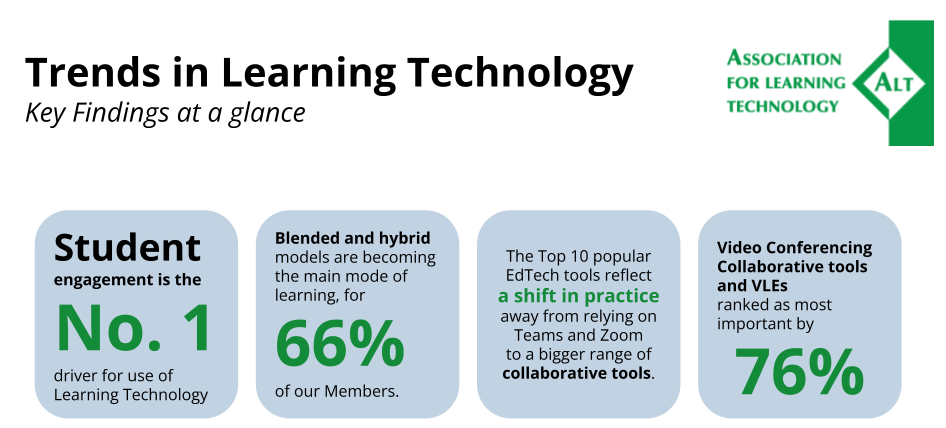
This report focuses on how the Learning Technology landscape is changing through a focus on tools and technologies and also professional practice. Our findings provide insight into how blended and hybrid models are becoming the main mode of learning, for 66% of our Members and that student engagement continues to be the number one drive behind the adoption of learning technology.
This report explores one of the key questions we ask in the survey: how are institutions investing in Technology-Enhanced Learning? We continue to see an increase in investment of over 30% overall, although smaller than the previous year, when 45% of Members reported an increase in their budgets. From 2020 to 2021, investment in permanent posts has increased from 32% to 54%, and for fixed term posts from 34% to 50%, emphasizing the continued and growing demands for Learning Technology professionals in the long term.”
This is my quarterly update as CEO of ALT on our progress as we move further into the year. We now provide access to expertise to a much wider community of digital practitioners. We work hard to champion professional recognition for a growing range of Learning Technology roles and we inform and support institution leaders engaging with digital education. Our strategy needs to reflect this growing remit.
Informed by the findings from our Annual Survey, our Board of Trustees and I have worked together to set strategic goals to move us firmly into this (post) pandemic landscape towards our Annual Conference and AGM in Manchester in early September.
One of the strategic priorities we have identified is to develop a new hybrid CPD and events programme, which will launch in autumn and set out a schedule of webinars, workshops and events running online and in person.
We are also looking to develop our professional recognition activities, including refreshing the ALT Awards and pathways to CMALT, details of which we hope to share with Members soon.
We launched a new collaboration to tell the stories from our community with ITN Productions: Digital Transformation. Building on the success of last year’s programme, this year’s film will explore the potential of digital technology in education and industry and its impact on approaches to learning.
News about this year’s AGM and Trustee elections will be published alongside the Call for Nominations for Honorary Life Membership in May. Look out for information about how to stand for election and how to vote.
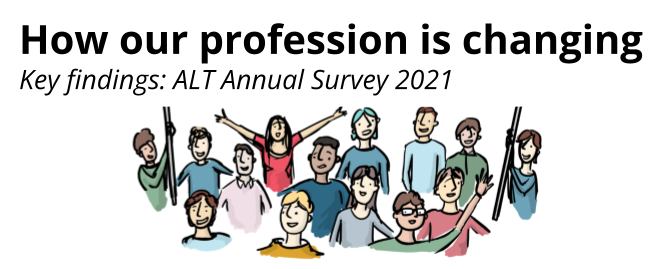
How our profession is changing
This second report from our Annual Survey explores one of the key questions we ask in the survey: how are institutions investing in Technology-Enhanced Learning? We continue to see an increase in investment of over 30% overall, although smaller than the previous year, when 45% of Members reported an increase in their budgets. From 2020 to 2021, investment in permanent posts has increased from 32% to 54%, and for fixed term posts from 34% to 50%, emphasizing the continued and growing demands for Learning Technology professionals in the long term.
ALT’s Annual Survey has run each year since 2014, with a number of the core questions remaining unchanged. We think it provides a unique insight into how learning technology is used across sectors as well as identifying emerging trends in current and future practice.
You can also read more about the report from ALT’s Chair, Helen O’Sullivan, and myself in this #altc blog post.
Celebrating the launch of the AmplifyFE Community Space in partnership with Ufi VocTech Trust
AmplifyFE is a partnership project which works to connect and amplify communities of practice for digital learning, teaching and assessment. The AmplifyFE Community Space works across the whole Further Education and Training sector in its widest terms engaging with vocational educators and those who support them.
The aim of this space is to:
Provide a place for vocational educators to share and learn from each other, increasing their access to learning technology expertise, digital pedagogy and professional development opportunities
Champion the use of accessible, inclusive learning technology to help those adult learners most impacted by the digital divide so that more people in the UK have improved access to vocational skills
Engage with FE groups and communities of practice and researchers in vocational learning to share best practice
Work across the whole Further Education and Training sector in its widest terms engaging with vocational educators and those who support them in FE Colleges, Adult and Community Learning (ACL), work-based and independent learning providers, prison learning, ESOL communities, ‘HE in FE’ providers, the whole, diverse sector.
To amplify the voice of professionals in strategic developments across the sector, led by organisations including ALT and Ufi.
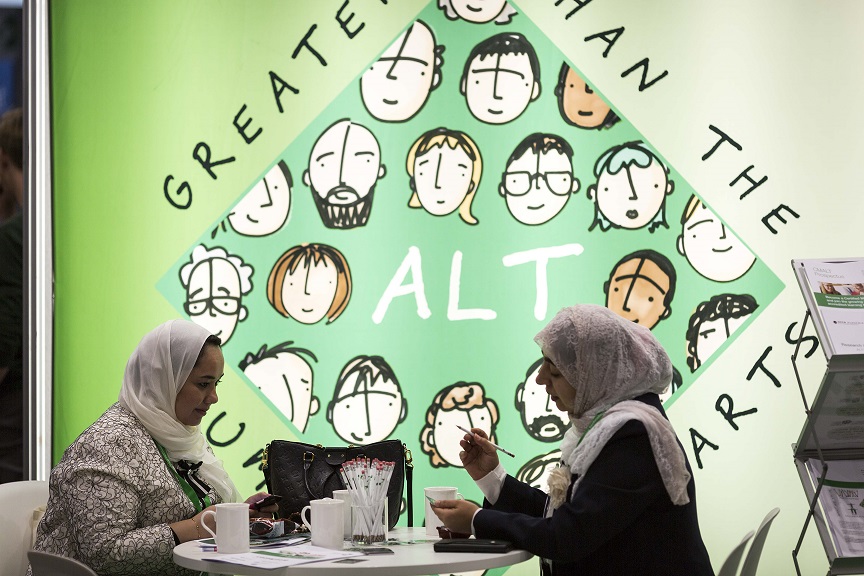
Picture by Chris Bull for Association For Learning Technology 11/9/18 ALTC 2018 day one. www.chrisbullphotographer.com
Preparing for our Annual Conference and AGM 2022
For the return of the Annual Conference to Manchester, 6-8 September 2022, we will bring together different critical perspectives from across our community that will examine the challenges ahead and question the shape of things to come. We are putting our values into practice and Members at the heart of the conference, so in this spirit the event will be chaired collaboratively by the Trustees of ALT.
Conference themes
Digital transformation beyond the crisis: what is your vision for learning, teaching and assessment? This theme is focused on how we are transforming education and training through digital practices in a post-pandemic world.
Co-creation with learners: this theme explores how to use digital technology in partnership with learners to design sustainable approaches that work for everyone. How can we co-create student engagement and enjoyment and make the learning experience more open, inclusive and equitable?
Emerging leadership for a new strategic vision: we are seeing a growth in more strategic responsibilities in roles with a focus on digital education and training. This theme is dedicated to the work and vision of both emerging and established leaders in both institutional and community roles seeking to share their expertise and learn from like-minded colleagues in a dedicated leadership strand of this year’s event.
Developing Digital Fluency: there has been a big shift in the digital skills and capabilities that we need to develop and recognise in both students and staff: from digital citizenship to critical data literacy and ethical considerations, what does it mean to develop digital fluency?
AmplifyFE: this conference strand is dedicated to proposals from the FE and Vocational Education sector, and we encourage submissions that share expertise around digital tools and technologies, skills development and collaboration (not competition).
Creativity wildcard: if your work doesn’t fit into the traditional research or practice themes, then this theme enables you to submit research, practice or policy proposals from any sector including Further Education, schools, vocational learning and training, lifelong learning and work-based learning.
We have been sharing the framework with the sector at a number of conferences and events this spring, including the THE Digital Universities Week and Ahead by Bett. ALT’s Framework for Ethical Learning Technology (FELT) is designed to support individuals, organisations and industry in the ethical use of learning technology across sectors. The following resources, including the FELT Reflective Self-Assessment are available to Members:
I like revisiting or exploring different frameworks to think with, not necessarily to adopt them whole, but because they usually offer me small nuggets of inspiration. Here are some examples of what I explored and what I found out along the way:
Ways to explore your traits, motivations or fears
Enneagram Core Motivations: This is a tool which combines modern psychology with an ancient personality system, and it helps you identify one of nine core motivations. There is a helpful post that explains how to choose your type, and plenty of free online tests available to experiment with. I found this really helpful as a prompt for reflection and enjoyed thinking about which core motivations I would NOT choose and why.
Gallup Clifton Strengths Assessment: this is a popular assessment tool, particularly in a work context. Whilst the assessment tools either require a paid subscription or one off fee for completion, there is a wealth of articles, tools and resources online via the official site. This could be good fit for you if you are working in a large organisation for example, and may be something employers offer.
Myers Briggs Personality Types: This is probably one of the best known frameworks, and it offers free online tests as well as resources to explore. I have done several of these over the years as part of recruitment and coaching, and always found it helpful not least because it’s interesting to see if your answers change over time.
Spark Types: This framework offers a free test to help you find your Spark Type and is based on the work of Jonathan Fields, and his accompanying book ‘Sparked – Discover your unique imprint for work and what makes you come alive’.
Harvard Business Review: If you prefer to explore rather than do an assessment, there are plenty of examples online to help you reflect on different leadership styles or personality types. I found the later video especially helpful as it focuses on potential limits rather than strengths.
Beyond finding a fit
At times, finding a framework you feel affinity with can be hard or feel unproductive. So here are some ideas for what I explored in that situation, starting with Emilie Wapnick’s TED talk and related book, How to Be Everything (and you can be a ‘multi-potentional-ite’). I have always been interested in working (and thinking) at the intersection of different interests, different disciplines, and so the perspective Wapnick shares chimes with me.
After finishing a complete draft of the book in April, my reviewer group has been busy working through each chapter. I have ~20 volunteer reviewers who provide feedback and I am really grateful for all the work they have been doing. This week, by 6th May, the review period comes to a close and at that point it will be my job to work through the comments and feedback and get the next draft of the book ready. This will also involve picking up formatting errors and trying to clean up the references as much as possible. During May and June I will also start work on the cover of the book and finalise the publishing deadlines for the production partner. Exciting times!
Virtual Teams at OER22
I really enjoyed talking about Virtual Teams at the OER22 Conference in 28 April. Long-time colleague and friend Lauren Hanks, Director of Operations at Reclaim Hosting and one of the Co-Chairs of last year’s edition of the OER Conference, and I, are getting together to reflect on the connections between open education and open approaches to online collaboration and work.
As leaders of virtual teams, we want to critically examine what lessons we can learn from open approaches to learning and teaching and how we can use that knowledge in an increasingly virtual workplace.
This session builds on a recent episode of the Remote Work Show on DS106 Radio, in which we started to unpack some of this.
Remote working radio…
I will be doing not one, but two remote working radio shows this month. Following on from our session at OER22, Lauren Hanks and I will be on the airwaves to continue our conversation. There is also a second show in the works for this month with a special guest joining the conversation, so look out for the dates and times for both.
Subscribe
Subscribe to receive monthly news about the Virtual Teams Book and remote working radio sessions.
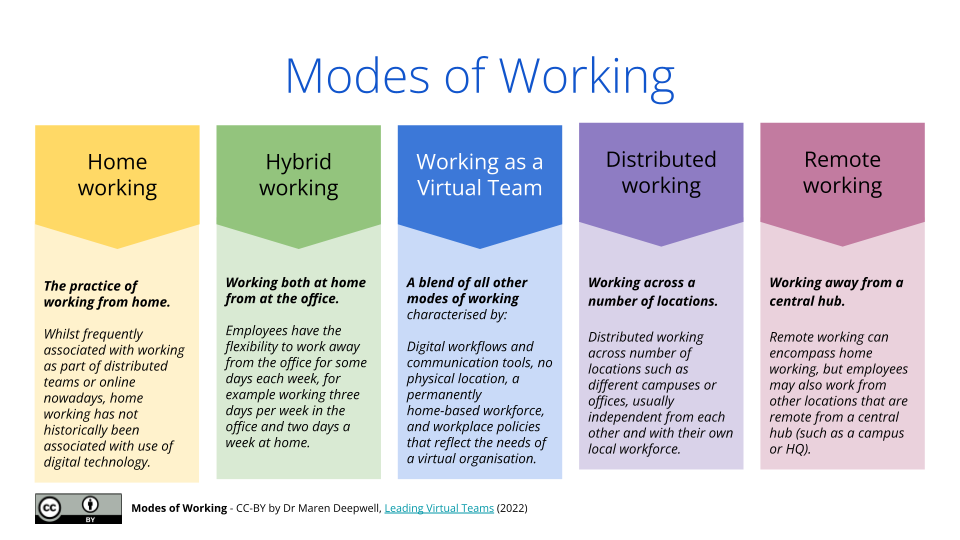
As part of my work on the Leading Virtual Teams book, I have been careful to define what is meant by terms describing different ways of working. It’s taken me a while to bring the various terms together, and to reflect on their meaning not just now, but also before the advent of digital technologies and more widely available, reliable, high speed internet connections.
In my childhood days for example, selling Tupperware from your garage was a popular way for women to work from home alongside bringing up children, for example, and that didn’t involve Zoom calls or being online at all.
Similarly, there are many industries in which distributed working (i.e. across a number of different geographical locations) or working remotely (away from a central location such as a campus or corporate HQ) has been commonplace well before we had the capacity to take much of our “office” with us in the form of a laptop or even mobile device.
Graphic showing an overview of different Modes of Working – CC-BY by Dr Maren Deepwell, Leading Virtual Teams (2022)
One of the key themes of the work I have been doing is reflecting on how the way we work impacts on us. More specifically, I am interested in how different modes of working impact on particular aspects of our lives such as physical and mental health, work/life balance or a sense of connectedness.
Inspired by my coach training, in which our coach trainer recently asked us to practice with a coaching tool called Wheel of Life, I have adapted this coaching tool to explore different ways of working such as working from home, hybrid working, distributed or remote working and working in virtual teams and reflect on how the way you work impacts on you and your life.
Here is one example focused on hybrid working:
Example of a wheel adapted to reflect on hybrid working
Each wheel contains eight sections, including one which is blank for you to add your own category. I have been experimenting with what categories to include based on the research I have undertaken, and the mix of what’s included changes for different modes of working.
For hybrid working, you could reflect on and score:
Home working environment
Work/life balance
Physical and mental health
Care and family responsibilities
Socialising with colleagues
Commute
Office or campus work environment
and… a category of your choice
Here is another example that I have completed for working as a virtual team:
Example of a wheel with scores adapted to reflect on working in a virtual team
In this example, I have added a lower score for “Virtual socialising with colleagues” and high scores for areas like “work/life balance” and “home working environment”.
Try out this resource
You can download this resource and use it or adapt it to better suit your particular needs.
BOOM! This month I am excited to share that I have completed the first draft of the book. It’s actually more like draft no. 3, but up to now I hadn’t ever written the conclusion, and now I have.
Now my 48,570 words or ~160 pages of work in progress have been shared with internal reviewers for comment and feedback until early May 2022. If you’d like to help review the book, please let me know and I’d be happy to share the complete draft with you.
There is still a lot of work to be done, but reaching a point at which I have a complete book feels like a great milestone.
Coaching update
In very exciting news I finished the first coach training course this month and thus I am a step closer to getting formally accredited as a coach. One of the things I am working on is a set of coaching style questions to help reflection on leading virtual teams… so watch this space for more updates soon.
Remote working radio… with special guest Lauren Hanks
I am very much looking forward to doing a special remote working radio show this month, with a special guest, in order to share current thinking in the run up to session we are hoping to run at the OER22 Conference in late April… join me and Lauren:
Wednesday, 13th April 2022 14:00 BST on DS106Radio
As this is a special episode, you can expect more conversation and fewer songs.. (and unfortunately no special requests).
Writing buddy update: Posey has helped me think through finishing the complete draft.