Tag: #altc

  • Openness Reimagined… from How to Who

    Openness Reimagined… from How to Who

    Originally published on the altc blog, 22 May 2026.

    In June this year two conferences take place that celebrate important milestones in Open Education and Learning Technology: the Irish Learning Technology Association’s annual EdTech Conference, 3-4 June in Dublin, celebrates its 25th anniversary under the theme EdTech You: Digital Learning From How to Who. Just a few weeks later the OER26 Conference convenes at the Open University in Milton Keynes, to focus on Openness Reimagined: Continuity, Change and Shared Vision and celebrate several anniversaries, including 20 years of OpenLearn and 30 years of the Journal of Interactive Media in Education. 

    As a big fan of both conferences and their communities, between which there’s plenty of crossover, I am fortunate to attend both this year and a deeper dive into the themes of both events prompted me to reflect on the crossover between the themes, and how each of these events may act as a catalyst for action and for hopeful change across sectors. 

    The ILTA Co-Chairs, Dr Rob Lowney and Kate Molloy, and the organising committee, pose the following questions

    • “We invite you to join us in a conversation that asks: 
    • Who was, is and should be the people of your/our Edtech community? 
    • Who was, is or was missing from conversations about digital pedagogies ? 
    • Who are we designing for (or against) in EdTech, and who is missing?”

    For me, these questions relate closely to the wider context and the challenges it poses which are at the heart of OER26 led by Dr. Robert Farrow and Dr Beck Pitt: 

    “Openness has expanded participation, reshaped practice, and challenged assumptions about who education is for and how it should be delivered. Yet openness is not static. It evolves alongside the social, political, and technological conditions in which it operates. The rapid development of AI systems, platform-based infrastructures, shifting policy environments, new economic pressures, and renewed global debates about equity and justice are reshaping the terrain of open education.” 

    In both themes I see a call to (collective) action, a sense of urgency that care and connection should help determine the shape of things to come, rather than allowing technological imperatives to set the agenda. In addition, the milestones being celebrated reflect decades of valuable expertise and experience, of knowledge about the “how” of innovation in both open education and learning technology, and the invaluable work of (often volunteer) reviewers, contributors and collaborators. 

    Times may feel more uncertain than ever, and this is precisely why events like this, organised by member organisations in partnership with universities and volunteers, are so important: they open up space for reflection and discussion, galvanise action and help build new alliances and collaborations. 

    So here’s to you, OER26 and EdTech 2026! Like hundreds of fellow participants, I very much look forward to celebrating the milestones, swap stories and share inspiration come conference week!

  • Rest and Resilience. CPD for Uncertain Times

    Rest and Resilience. CPD for Uncertain Times

    Earlier this month I joined forces with Lou Mycroft for an AmplifyFE webinar hosted by ALT. The theme we have picked is rest & resilience, inspired by both Lou’s work on radical rest and my work relating to building healthy hybrid leadership capabilities for uncertain times.

    Working with Lou is easy as breathing, because Lou is such a prolific facilitator. It’s always a joy to work with someone who is THIS good at making collaboration easy, who makes everyone feel welcome and who has a gift for explaining complex concepts in such a way that you can relate very easily. It was such a joy!

    Lou’s one of the people behind an innovative Instagram Magazine called Fusion, and inspired by our session I’ve submitted an article, which will hopefully be published in the summer.

    The recording of the session is now available to watch and you can also access the slides with links to the resources we discuss:

  • Member of ALT #4life.

    Member of ALT #4life.

    It’s not everyday that you get such an honour, to become an Honorary Life Member of the professional body you’ve belonged to for most of your career (read the ALT media release). It’s a huge privilege to join this illustrious group, to join peers whose work I admire and respect so much: Lorna Campbell and Josie Fraser, Frances Bell and Teresa MacKinnon, Julie Voce and Chris Jones, Linda Creanor and Seb Schmoller, Diana Laurillard and David Hawkridge.

    Screenshot from the AGM Presentation on 19th November 2025.

    ALT, the Association for Learning Technology, has been my professional home since I finished my PhD in 2008, and supports and empowers the community and networks I actively work with and in. Whilst working for ALT and serving as CEO, I maintained my own membership and successfully gained first Certified Membership (CMALT) and later Senior CMALT. I continue to act as an assessor for the scheme, and appreciate the opportunity to learn from peers going through the accreditation process.

    Like many fellow leaders in Learning Technology, I have brought a grounding in other disciplines to my work in Learning Technology and Open Education. That is one of the things I enjoy the most about working in this sector, as it makes for a rich theoretical context and practice, too. I arrived in the sector at a time of great change and economic crisis, and ever since then big waves of innovation, political and social change have continued to rock institutions and practitioners alike. Learning Technologists have thrived through it all, and have a lot of expertise and insight to share with other sectors, I feel.

    From serving on the FELTAG Ministerial Action Group, convened by the then Minister of State for Skills and Enterprise, Matthew Hancock and working with Diana Laurillard and Neil Morris on the hugely impactful Blended Learning Essentials courses; to laying the foundations for the AmplifyFE community of practice with Emma Procter-Legg and working on new pathways to accreditation and apprenticeships, my work in Learning Technology has been firmly anchored across sectors. FE, the sector in which I already felt welcome in at age 17, has always been a big focus for me, and ultimately led to my current work as a teacher, trainer and coach working with emerging and established leaders in education.

    My work with ALT Member organisations both for ALT and on a free-lance basis, including many Higher Education providers, expanded beyond the UK, and one of my fondest memories from the past decade is working with colleagues at the Hong Kong Polytechnic University under the BOLT project, and awarding CMALT certificates to a whole cohort of their staff in 2018/19.

    If there is one thing I have learnt by being part of this community it’s how much we have in common, across sectors and across international borders. In my work now in the UK, and with the team at Reclaim Hosting and Canadian and Irish colleagues in Open Education, I come across the same issues that ALT explored over the years. The technologies may change, and the context shifts, but at the heart of the work it’s still about empowering learners and educators in their use of technology, to be more ethical, equitable and sustainable.

    So thank you, fellow ALT Members, for this nomination and the honour to be recognised by the peers that mean the most to me. I look forward to continuing to contribute to the important work we do and support ALT and our community.

    Thank you.

  • A year after publication: Leading Virtual Teams

    A year after publication: Leading Virtual Teams

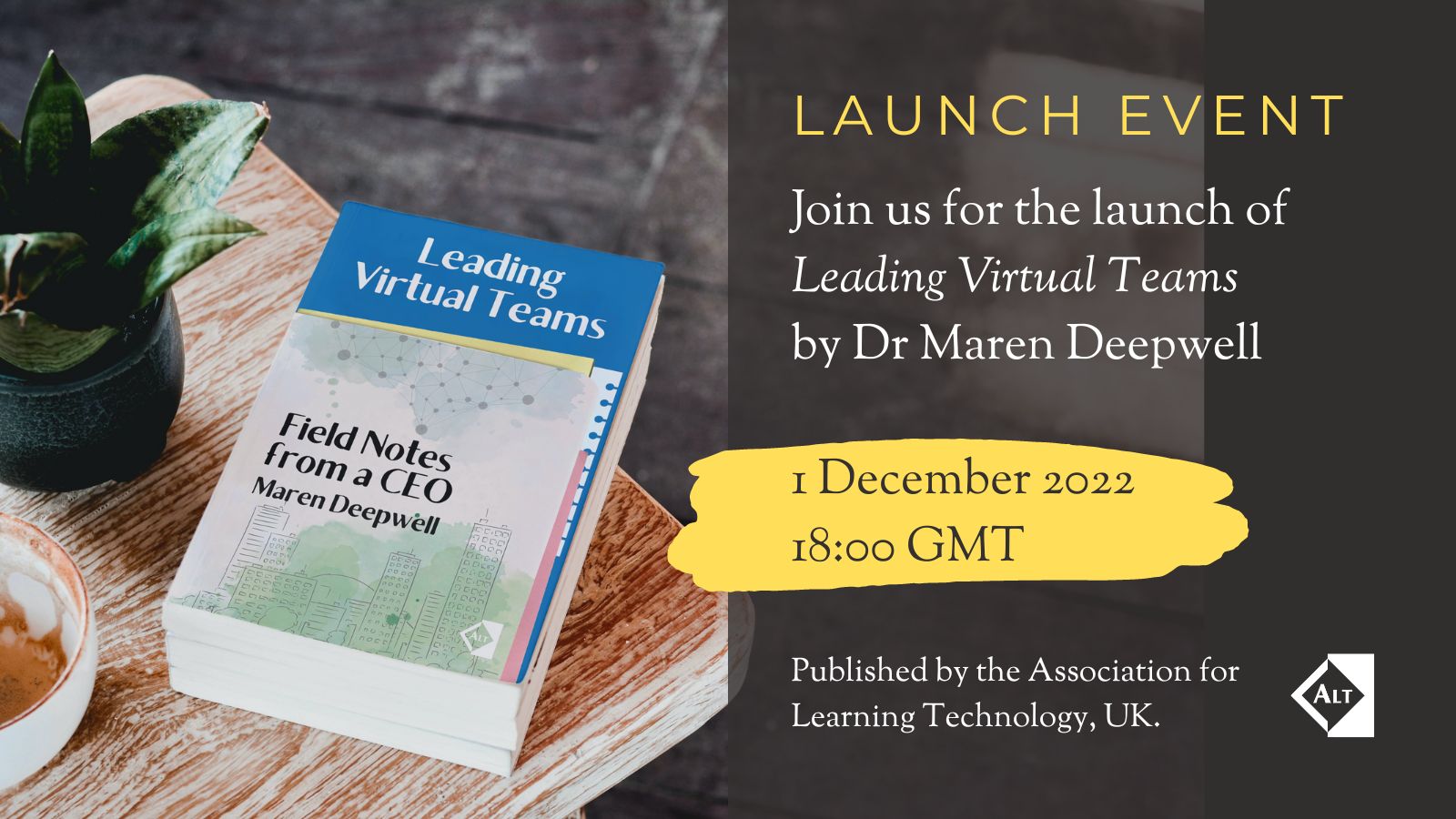
    A year ago my book Leading Virtual Teams was published, and I can very clearly remember all the wonderful excitement that led up to the launch, and am still grateful for all the encouragement for this Open Access publication.

    A year on, and the book, which was initially inspired by the work Martin Hawksey and I did at ALT, has turned into a whole host of resources, two free courses and a podcast which informs my wider work on hybrid working leadership development and coaching.

    A year in Leading Virtual Teams

    To celebrate the milestone, this post gives a quick overview over what’s happened in 2023 and if you are just discovering the book or my work, this is a great place to start:

    Open Access publication – December 2022

    Leading Virtual Teams – Field Notes from a CEO by Dr Maren Deepwell, was published in December 2022 as an open access publication by the Association for Learning Technology, UK. You can read and download a free digital edition, published as an Open Access publication by ALT in partnership with Open Academia.

    Digital edition – out now

    I also recorded a preview of the book on the podcast:

    Print edition via Lulu Press – January 2023

    The Open Access print edition, published by Lulu.com, came out in January and you can order it via:

    Podcast season 2 – March 2023

    I started the podcast in 2022, but in spring 2023 things really started happening. Each week, I share ideas and strategies for creative and fun approaches to help you succeed and lead in the hybrid workplace. Each episode includes tools, resources and strategies for different aspects of hybrid working, and links to blog posts and further reading.

    The podcast is available on different podcast platforms and I hope you enjoy the show. You can find it on: AnchorApple PodcastsGoogle Podcasts and Spotify.

    Free Leading Virtual Teams course launches – April 2023

    This was my first venture of translating the book into a course, and I learnt a lot along the way.

    If you’d like to explore the course, all materials are freely available:

    Week by week

    Podcast season 3 with weekly episodes – September 2023

    In September I was excited to have Season 3 of the Leading Virtual Teams Podcast finally underway. It’s a new season in every sense… and that is why I kicked off with ‘new pencil case’ moments in episode.

    This episode celebrated the start of September, and the new season or start of term for many of us. I have recently tried out a ⁠new gratitude journal⁠ share ideas for how to find bright spots in a busy time of year. I also give you a preview of what’s in store for season 3 and the upcoming run of the ⁠Leading Virtual Teams course⁠ in October.

    Free Hybrid Working Habits course launches – October 2023

    I have experienced a lot of ups and downs working from home, managing remote workers and collaborating virtually, and I chronicled this in my book, Leading Virtual Teams (2022). One of the things I learnt along the way is that a good work/life balance and relationship with digital technology may look a little different for everyone but that the journey how we get there is similar. That’s why I designed this course: to share practical tips that you can use to find ways to make hybrid working really work for you (or you team or organisation) in the long term.

    It’s been great to see the course attract lots of listens and interaction. Although I do encourage people to register for free, only about half of the people participating in the course do. Others prefer to simply subscribe to the podcast to listen along and explore at their own pace.

    The topics for the course resonated well with participants, especially those designed to help manage digital overwhelm and setting life/work boundaries. Plus, I really enjoyed recording these as well, which is an added bonus!

    The course resources and podcasts are now freely available and you can explore topics at your own pace. The easiest way to do that is to listen to the course podcast:

    If you’d rather see everything at a glance, the Course information page provides a handy guide to the course and links to all previous topics:

    1: Audit your hybrid working habits to find out how your current habits are impacting on you and what to change;
    2: Set boundaries for a better life/work balance and stick to them even when things are busy;
    3: Increase productivity away from the screen by using strategies for communicating and collaborating outside of meetings;
    4: Communicate more effectively in the hybrid workplace in a way that works for you and reduces digital overwhelm.

    Special guest Martin Hawksey returns to the conversation – November 2023

    In November we went back to the origins of Leading Virtual Teams! I was delighted to co-write together with Martin Hawksey, and we created this joint blog post and special podcast episode:

    Working in the open

    It’s been a wonderful year, and it’s also been a lot of hard work. Practically all my work in this area since the publication of the book has happened around the edges of my day job, and especially until the end of September that was a very full on commitment. Since focusing full time on my free-lance work I have had a little more scope to take on paid work in this space, and thus give this topic a bit more time in my day to day work.

    Every now and then I get an email or a message or someone speaks to me at a conference about something valuable they found in the book, something that helped them in their work or opened up a new perspective and it always, always makes my day.

    I have chosen not to publish the book commercially, instead going the Open Access route with the book and all the resources and courses I have published since, because I want as many people as possible to learn from the mistakes I made and the experiences I recount, and find a better way to manage blended, hybrid and virtual organisations. One downside is however that I have not much data about how many people engage with the work I do, and with an ever more fragmented social media landscape getting a feel for one’s reach is more challenging still. Which is why I value it so much when folk do share some feedback or send me a message.

    All in all, it’s been a fun and rewarding year working towards putting the book into practice and making the ideas in it available to a larger audience.

    Enjoyed this post? Get my free monthly newsletter directly to your inbox.

    [newsletter_form type=”minimal”]
  • Leading Virtual Teams Revisited – with Martin Hawksey

    Leading Virtual Teams Revisited – with Martin Hawksey

    This week we are going back to the origins of Leading Virtual Teams! Join us, Maren Deepwell and Martin Hawksey, in this joint blog post and special podcast episode:

    Maren: Hi Martin! Been a while since we last blogged about leading virtual teams and hybrid working. So… I have lots of questions to get us started: tell us a bit about what your current work set up is like, and what you are particularly interested in when it comes to all things virtual/hybrid working. 

    Also, I am curious to hear how you think things have changed since the dark days of lockdown working. I have been doing some research into the data around home-working and evolving policies here in the UK (for example this 2023 report and the flexible working bill and this WIRED article provides a helpful insight into what’s not being tackled). What’s your take on the evolving picture of hybrid working?

    Martin: Hi Maren, thanks for having me back! For just over the last year I’ve been working for a UK based Google Partner. We have offices in Manchester, Edinburgh and Utrecht, but the focus is very much on remote working. Even in a post pandemic world I see many businesses still trying to find the right fit around hybrid culture. One of the key challenges I see is how to replicate the benefits of being co-located when employees are hundreds of miles apart. For now let’s put these benefits in the broad bucket of ‘watercooler moments’, ad-hoc opportunities for social interaction as well as work discussions. Seemingly effortless and tricky to measure the benefit. It’s something I remember us talking a lot about and I know you’ve shared a number of approaches and strategies which can help. Where I work a recent internal ‘pulse’ survey has highlighted a desire for increased opportunities to work collaboratively. The business is exploring various approaches, including one of the skeuomorphic virtual office spaces, Kumospace. This pilot highlighted there could be real benefits in restructuring the way teams work, a virtual focal point with awareness mechanisms like location, icons, and camera status making it easier to immediately speak to someone if they are available. The challenge was the price point. It was interesting to read the surveys you highlighted which include data on the overall economic benefit of hybrid working. Whilst we had many anecdotal examples of conversations that unblocked issues or identified business opportunities it is hard to put a value on them. The other challenge was there was low engagement across the business in the pilot space. So while we could see benefits for our team, but possible to justify for the business. Does this example resonate with what you’ve seen? Do you get a sense that organisations are still trying to work out how to make hybrid working work?

    Maren: It’s clear that businesses are still on a learning curve when it comes to hybrid working long-term. In the media, there is a lot of debate on whether or not there’ll be a big return to the office, but I think recruitment and retention without a flexible offering will be so challenging, that organisations won’t have a choice. There are a lot of parallels between the use of technology in education and training, and the use of technology in the workplace. Similar to how student expectations have shifted when it comes to digital, so have employee expectations, too. Organisations who don’t offer flexibility or effective hybrid working won’t be able to recruit or retain the diverse talent they need without entrenching structural inequalities further, for example disadvantage employees with care responsibilities. A few years ago we talked about the effort it takes to create and sustain employee engagement online, and your experience with the skeuomorphic virtual office space really chimes with me. Anecdotally it feels like ‘everyone’ wants more connection and collaboration, but at the same time they’d like that sense of connectedness to be maintained by others, so that they can dip in and out as they wish. Even something as simple as internal chat channels require a lot of effort to maintain. If you are using something like Slack or Mattermost to coordinate customer support tickets, then every support ticket becomes a reason to engage (and the value proposition is clear). However if you are in a water cooler or social space there is usually no external prompt to engage and someone usually has to take responsibility for kick-starting engagement by posting something. What are your thoughts on this?

    Martin: The term ‘effort’ resonates with me. Internally in our department we’ve switched to using an all day Google Meet with breakouts for individual teams. In a recent conversation with a colleague about using this space effectively we talked about how it takes effort to join the virtual office, similar to the effort it would take to get to a physical office. I would also agree it requires someone taking responsibility for the use of virtual spaces. I would go even further and say it requires leadership. Similar to having an office manager it needs someone to take responsibility for monitoring and supporting the online office. Something I remember us discussing previously was effort in terms of cognitive load. Part of this is the brain doing overtime trying to analyze micro movements in facial expressions. Looking towards the future I think this could get a lot easier with the next generation video conferencing hardware. I recently had the pleasure to have a short demonstration of Google’s Starline immersive conferencing solution. This combines technology that can scan a face in 3D, and present this to the viewer maintaining a depth of field without the need of special glasses or headsets. The result is incredibly impressive. It was only a brief experience so I can’t talk to the long term effects. Two things I did learn was that maintaining a realistic 1:1 scale was important, so it’s unlikely we’ll see this technology on smaller screens. The other detail was for this solution they are focusing on capturing and displaying detail in the face. For example, when the person on the call held up an apple there was a strong 3D effect, but I could see some fragmentation in the detail between the apple and the person’s fingers. Still lots of unknowns with this type of technology including whether it will ever be affordable for the masses, but interesting times!

    Maren: It’s really interesting to look out how technology might shape things in the future and what sort of skills and capabilities folk may need to develop to effectively deploy more advanced solutions. One thing I have been thinking about a lot recently, and also a topic I covered in the hybrid working course I ran recently, is increasing productivity whilst stepping away from the screen. There are a lot of reasons why we are glued to our screens, but the longer I work in a hybrid or fully remote setting the more I realise that I need to design my days to be a lot less desk based in order to be at my most productive. From getting more movement in and giving my eyes a break, to finding new ways to connect and communicate without staring at a screen I am interested in how we can mix things up a little more. 

    Listen to the full conversation in the podcast 🙂

    Enjoyed this post? Get my free monthly newsletter directly to your inbox.

  • Listen… to the practitioner’s voice

    Listen… to the practitioner’s voice

    Today is a big day! Together with colleagues from all across the UK, I am heading to London. It’s the Week of VocTech, and the annual showcase of everything that’s happening across the sector.

    I feel fortunate to be continuing my work as Strategic Lead for the partnership between ALT and the Ufi VocTech Trust even though I stepped down as ALT’s CEO earlier this year. There’re a couple of reasons why: from a personal perspective, I love working in Vocational and Further Education because that’s where I took my first steps from alienated high school drop out to finding my way into further learning. Next, I love being part of a partnership where so much actively happens (and we have achieved much in the last few years). The biggest reason however is AmplifyFE. Yes, it’s a project, yes, it’s working in partnership, yes, there are awesome people involved, and it is also so much more than that: it’s a grassroots community of practice that is connecting the dots between individual practitioners, innovators and industry for the benefit of the learners furthest from opportunity. Since it’s launch in October 2020 (remember that time?) our community has grown to connect 2,700 practitioners.

    Over the past twenty years I have worked with lots of projects that tried to achieve what we have done, and my bookmarks bar is a graveyard of moribund communities of practice in which tumbleweeds flourish. So what is the secret sauce of our success?

    As we enter our fourth year, here are my reflections:

    We connect, we don’t compete

    When we first started setting up AmplifyFE, we were very clear that we were building a network of networks, not a new network. This distinction is key to our success: we don’t aim to replace or take over existing networks, we act as a meta network, an overarching connection that links one specialist group with another, one sector event with practitioners who don’t know where to start. We don’t wait for you to come to us. We try to find and come to you.

    Part of our mission is to help those who are isolated within their institution or specialist subject, those EdTech or IT teams of one, to connect with people who speak their language and share their concerns.

    We put everyone on the map

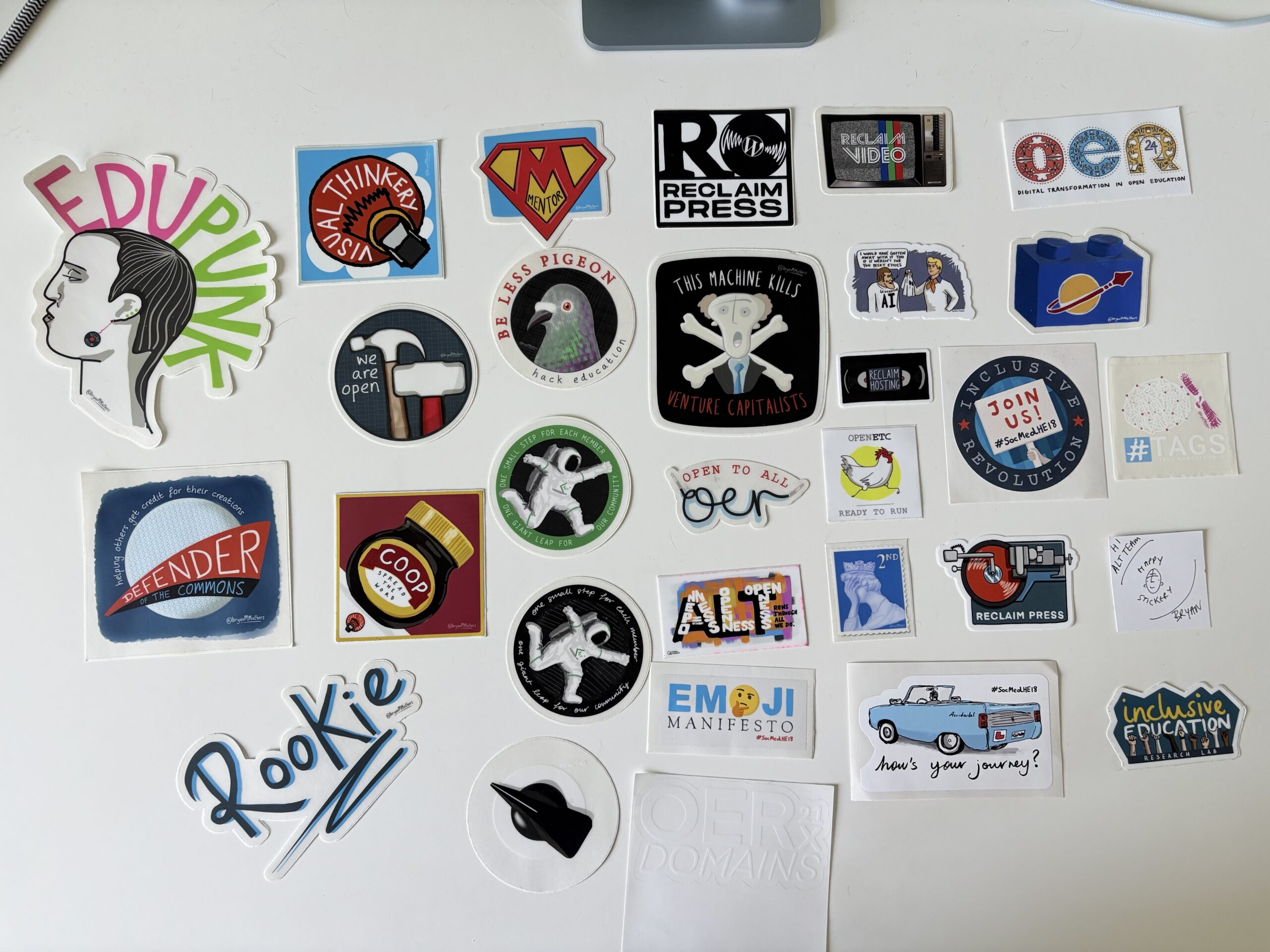
    All of our artwork is created with Bryan Mathers via a Visual Thinkery process. Our community map was one of the first things we developed, and it was born out of a desire to show the communities and conversations that we already knew about and to allow others to (literally) put themselves on the map.

    That’s a very powerful message to send. We say: put yourself on the map, and we will help others find you, join in and contribute. We want to map where the conversations about practice are really happening, no matter how informal or niche your interest. In a sector in which everyone is under pressure, short of funding and faced with mounting challenges, let’s connect you with the people who are in the same boat. We are not gatekeepers, we are map makers.

    We reflect our community in our research and case studies

    We also take a deeper diver into how learning technology and digital tools can be designed and deployed to support vocational learners most impacted by the ‘digital divide’. We explore what key advice can we give to those beginning or continuing an innovation journey in VocTech.

    Our Insights Report shares fresh research and case studies that show what makes for truly successful co-creation between vocational educators and digital design project teams. We unpack how we can create effective learning solutions working in partnership with vocational learners to help narrow the ‘digital divide’ for those most in need of workplace skills development. Basically, we find practical examples that show what is the difference between what really works and what doesn’t deliver.  

    We learn from others

    One of the phrases we think a lot about is ‘by the sector, for the sector’. I am always curious about what people mean when they say it. How much do you know about ‘the sector’ to begin with? How do you take part? How do you contribute? And what are you asking in return?

    We work with a community that suffers greatly from the ever-changing policy and funding changes starting at top-level government policy, to sector bodies and then filtering down to the local level and to individual institutions. Excellent programmes are launched, and then disappear again 3 years later. Or funding is cut for frameworks and skills training that had been invested in for years.

    From the outset, our work with AmplifyFE was designed to learn from that. We wanted to find the data that shows how much the constant changes impact on professional development and innovation. Since 2020 we have collected and analysed this data annually, and published the results in our sector audit.

    It’s a fantastic piece of work that really shines a spotlight on the scale of change that Further and Vocational Education has to weather. We learn from that, and we aim to change that.

    We use our funding to stay free and open

    Thanks to the funding from the Ufi VocTech Trust and the partnership work between the trust and ALT, we benefit from three decades of expertise in how to run an independent community of practice and we can stay free and open to all practitioners to join.

    We are able to amplify the voices from networks across the sector via regular events, blog posts and podcasts as well as the long term work we do via our annual audit and research.

    And that brings me to the biggest lesson I learnt over the past three years:

    We are here to stay

    Building trust is key to our success. Our team (the fabulous Emma, Lynne, Chloe as well as Lou and also others) includes only people who really understand the sectors we serve, who have worked in Further and Vocational Education and often they still do. We are transparent about our aims and also what we won’t do (i.e. commercialise our community) .

    Active communities of practice that grow are gold dust. We know from our sector audit how many communities disappear each year, either because no one is active or because of funding or policy changes. Or sometimes simply because a certain social network is taken over by madness. Remember the sector forums that suddenly closed? Or the demonstrator programme that stopped? Or the skills training that was cut? Well, we do, too. And that is why we are here to stay, actively supporting our community and amplifying what is happening across sectors as an independent network of network.

    You are welcome to join us.

    Enjoyed this post? Get my free monthly newsletter directly to your inbox.