Category: CPD

  • Rest and Resilience. CPD for Uncertain Times

    Rest and Resilience. CPD for Uncertain Times

    Earlier this month I joined forces with Lou Mycroft for an AmplifyFE webinar hosted by ALT. The theme we have picked is rest & resilience, inspired by both Lou’s work on radical rest and my work relating to building healthy hybrid leadership capabilities for uncertain times.

    Working with Lou is easy as breathing, because Lou is such a prolific facilitator. It’s always a joy to work with someone who is THIS good at making collaboration easy, who makes everyone feel welcome and who has a gift for explaining complex concepts in such a way that you can relate very easily. It was such a joy!

    Lou’s one of the people behind an innovative Instagram Magazine called Fusion, and inspired by our session I’ve submitted an article, which will hopefully be published in the summer.

    The recording of the session is now available to watch and you can also access the slides with links to the resources we discuss:

  • Blogging about keeping a blog (or revisiting the Neon Flaneuse).

    Blogging about keeping a blog (or revisiting the Neon Flaneuse).

    It the end of the UK tax year, and I have spent most of this week on end of year paperwork. Fortunately, this blog post is not about that. Instead, I am returning to my favourite topic: blogging about blogging, or more precisely, blogging about keeping a blog. (The two are tangentially related, as my quarterly Director’s Report for my own business has a section about talks and events in it, which I was trying to complete when I noticed that, to my horror, I had yet to start the 2026 section of my archive page. So I fixed that as quickly as I could. Phew.)

    I’ve previously written about why I think keeping an archive of my activities is so very helpful, not just for report writing, or compiling my newsletter, but in the longer term, to help me set goals, find strategies and reflect on my career journey. I’ve been working on a post about professional journalling, which I am hoping to publish next week as a follow up to this one, but this one isn’t really about writing, but more about having a domain, a home on the web, that I’ve kept and that I have added to for nearly twenty years. It really helps put things in perspective.

    It also helps me sift and focus on what matters and what I am happy to leave where it is. For my purposes I don’t just want to have a record of everything I do or rely on automated processes or bookmarks. Instead I find great utility in the process of finding, evaluating and sifting the information. It’s like panning for gold. You sift through the water and find flecks of gold, gold dust that is then added to the vault and over time it compresses into bars (maybe that is overstretching the metaphor, plus my metal work memories remind me that gold bars are cast not compressed). You get my drift.

    Often I learn things or see things I didn’t at the time of an event I spoke at or an article I wrote, and the process of finding the details, adding them manually to a page on my blog and then seeing the list grow each year is valuable to me (even though many of the links to things may break over time). What I gleam from the process increases my strategic and executive capabilities greatly and yet when I describe the process it sounds rather quaint. As if I haven’t discovered tools or services that could do all of this for me. I guess my sense is that I need to be doing it, to engage in the practice of sifting, recording and reflecting, otherwise there is no value in it for me.

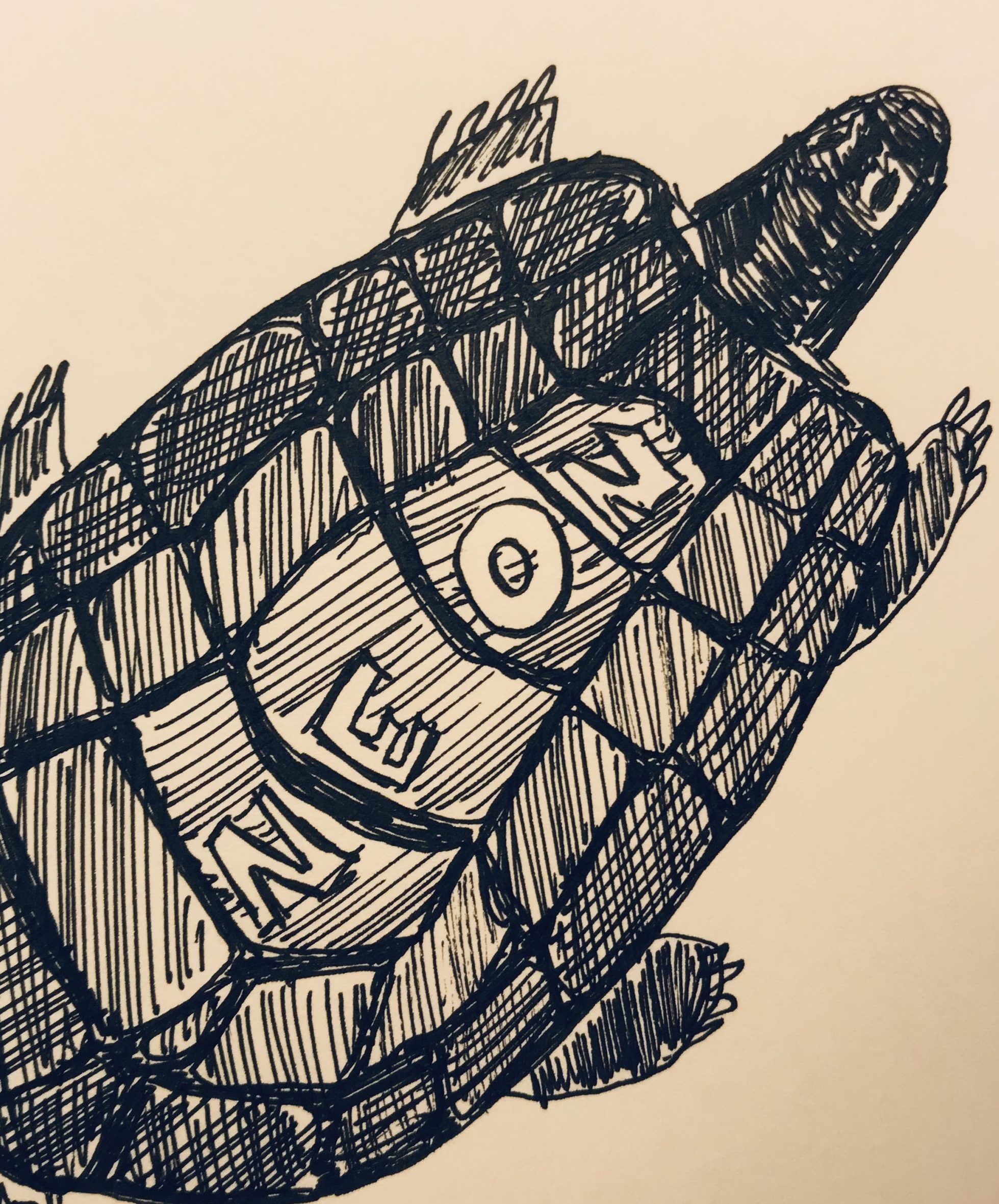
    There is a children’s book I am very fond of, it’s called Momo and it was written by Michael Ende (who also wrote The Neverending Story), in which a tortoise saves a girl from ‘grey men’ trying to take over the world with machines, and it’s the slow, meandering pace of the tortoise that renders them inconsequential (and thus invisible) to the ever rushing crowds around them. It feels like a very timely story to revisit. The process of keeping a blog, of adding to my own archive, is, metaphorically speaking, my version of the meandering pace of the tortoise, that which keeps me safe from the destructive rush of digital productivity and gives me time and space to think and imagine. Maybe it is time to revisit the Neon Flaneuse.

  • Open EdTech Advocacy: From Experiment to Enterprise Service

    Open EdTech Advocacy: From Experiment to Enterprise Service

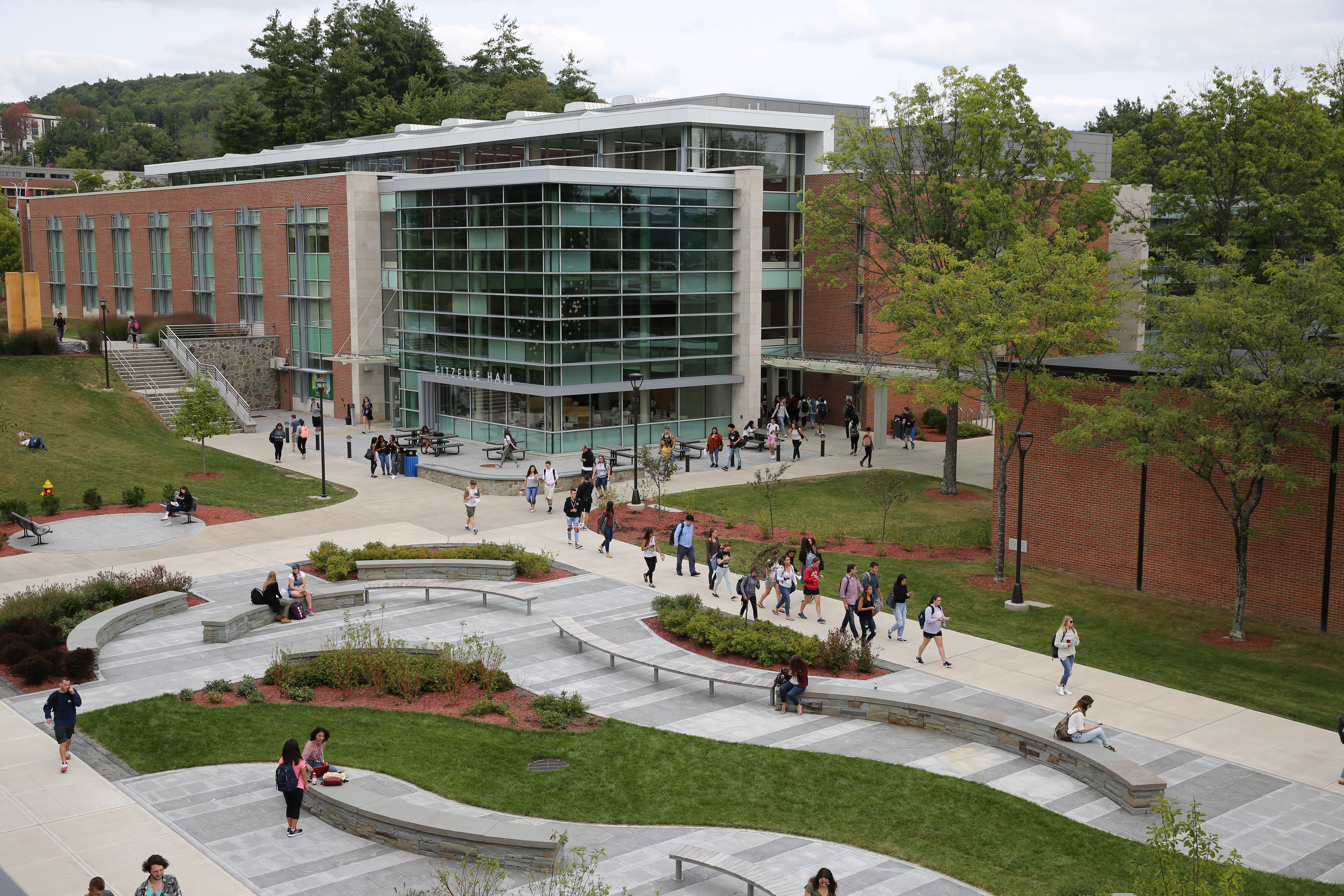
    It’s been a joy to work on a new case study for Reclaim, this time featuring Ed Beck and his work on the SUNY Oneonta OpenLab. The case study is out now, and openly available, so you can have a read for yourself:

    https://blog.reclaimhosting.com/case-study-suny-oneonta-openlab

    In this case study “Ed Beck shares insights into what it takes to move an open-source software solution from experiment to enterprise service. He also explores how to win the support of colleagues and secure the funding needed to build, scale, and future-proof such projects from the outset.”

    It’s always interesting to hear Jim Groom’s interviews with pioneering practitioners such as Ed, and this conversation was no different: there was enough material to produce several case studies. Which is why we’re recording another interview with Ed, which is due to air very soon on Reclaim TV, this time taking a deeper dive into some of the themes that came out of the original conversation: namely how to win the support of colleagues and secure the funding needed to build, scale, and future-proof open source projects from the outset.

    During the recent Open Education Week, I was reminded again and again how much scope there is to scale use of Open Source technologies and Open EdTech, and just how much advocacy and practical support is needed to continue to educate and empower edtech professionals to make that happen. With any luck, I’m hoping to talk more about this and similar projects at the upcoming ILTA Annual Conference in Dublin in June.

    Watch the stream over at Reclaim TV on 20 March at 5pm GMT, or catch the recording later on archive.reclaim.tv or Reclaim’s YouTube channel!

  • YES! That’s what I am looking forward to in 2026

    YES! That’s what I am looking forward to in 2026

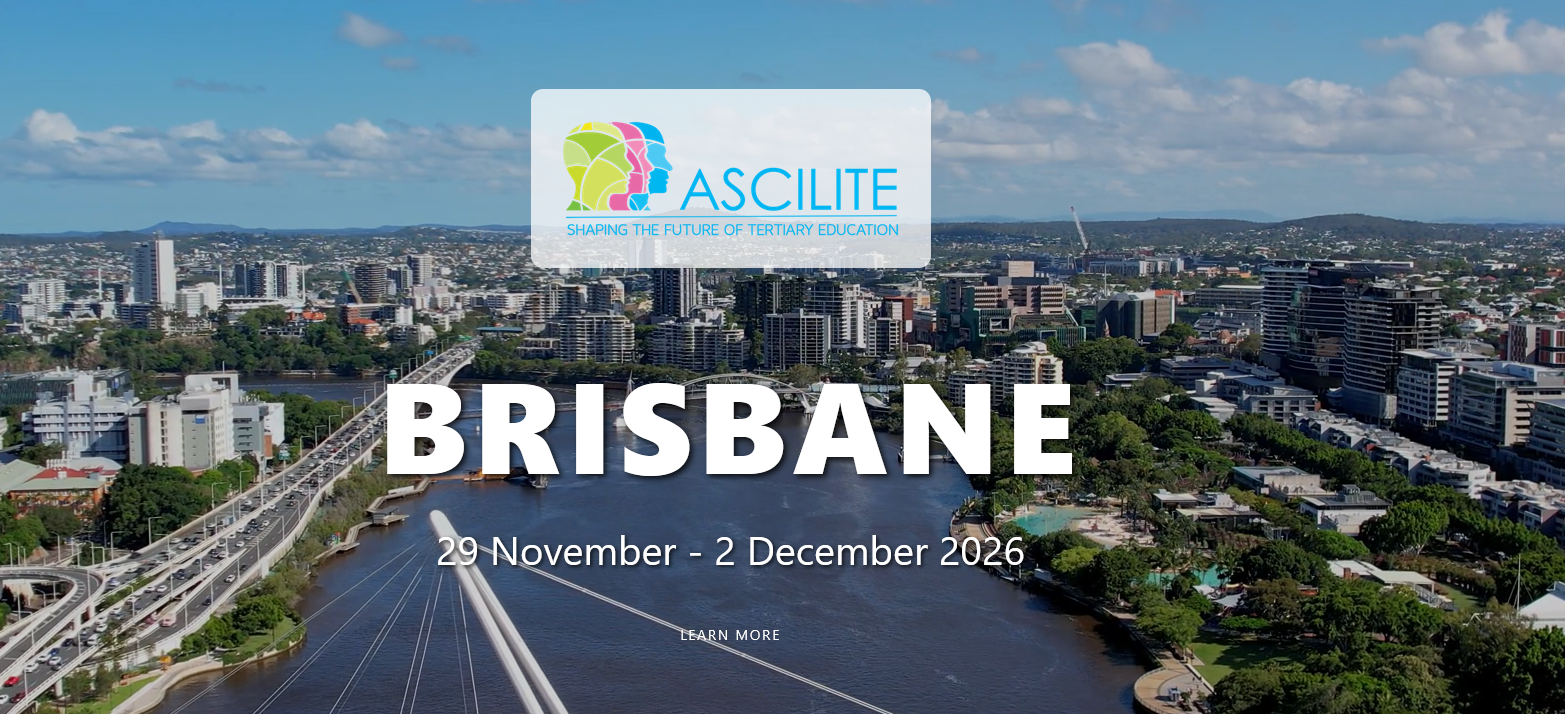
    It’s been a while since I got a keynote invite that had me checking flight schedules. For many good reasons, nowadays I give most of my keynotes from my home office. So it was extra exciting to see the announcement for the 2026 Annual Conference organised by ASCILITE come out last week!

    Although I worked closely with colleagues in Australia and New Zealand during my time at ALT, this is one event I never made it to in person, and to be invited to keynote this year means a lot to me. The theme of the conference is “The Future is Connection: Collaboration, Creativity and Compassion in a Digital Society” and that’s right up my street.

    So all being well, at the end of this year I’ll be making my way to Brisbane for a week of conferencing with colleagues whom I have known and worked alongside with for over a decade, but many of whom I’ve never met in person.

    Registration and the Call for Proposals will come out soon, and sponsorship opportunities are already available, so reach out to the excellent organising committee if you’d like to get involved!

    Closer to home

    I’m also really looking forward to ILTA’s 25th Anniversary Conference which is taking place in early June in Dublin, and which looks very sharp indeed in terms of both the themes and the folk involved. If you haven’t yet seen Eamon Costello’s conference intro video, or connected with the fantastic duo of conference co-chairs, Rob Lowney and Kate Molloy, then you are missing out.

    The Call for Proposals is closing soon, 1 March, and I know I am working on my submission 🙂

    I’ve also volunteered to be a member of the OER26 Conference Committee, also scheduled to take place in June, and I am looking forward to being involved with this, my probably favourite open education event of the past decade.

    Global open (reclaimed)

    Much sooner on my calendar is Open Education Week 2026, which has been a firm fixture in my year for a long time, and which keeps getting better every year (in no small part thanks to the masterful efforts of Alan Levine and his OE Global colleagues who make putting together a week-long (or year-long!) global event across every timezone available EASY! Hats off, friends, for walking the walk and bringing us all together.

    Like in the past two years I’m excited to contribute to this event with colleagues at Reclaim, another team that makes open educational technology look easy, and who tirelessly produce and share useful open resources on one of my favourite blogs on the web (disclaimer: I get to contribute posts there, too, and will indeed shortly publish our plans for Open Education Week, so look out for that!).

    As I blogged earlier this year, I am making a concerted effort to find more ways to travel and connect with folk in person, and my trip to Scotland in January really inspired and energised me, giving me more motivation to make plans for the next six months.

    If you are heading to any of these events, get in touch and let’s get together for a catch up and a coffee.

  • Start the year with a DONE list

    Start the year with a DONE list

    January is usually a time for planning for the year ahead. Whether at work or at home, there’s a whole year of goals yet to achieve stretched out in front of us, and I find that can be a little bit overwhelming. Whilst I am a fan of planning ahead, with so much to do, and only a finite amount of time and energy to do it with, I find I need an antidote to the madness of January’s resolutions and good intentions. In short, I am looking for a source of fresh inspiration and motivation.

    I first came across the concept of a “Done List”, in this article by Oliver Burkeman: What if you’re already on top of things? . I’m a fan of his thinking on productivity, and this sense that often we start the day (or year) with a sense of what he calls productivity debt, which he describes as “this vague sense that I’m falling behind, and need to claw my way back up to some minimum standard of output. It’s as if I need to justify my existence, by staying “on top of things”, in order to stave off some ill-defined catastrophe that might otherwise come crashing down upon my head.”

    The other aspect of a “Done List”, a list of things already accomplished, which only grows as the days pass, is that it helps you notice what you achieve before moving on to the next thing. I came across this interesting article which goes more into it: Forget To-Do Lists. You Really Need a ‘Got Done’ List in Wired. So, for me, keeping a Done List has become a great strategy for bringing a little more joy into the start of the year, and also helps foster more reflective and creative thinking, and that in turn often helps me get the more important things done more easily.

    How to…

    If you’d like to give this a go for yourself, just use whichever tool you usually use for making a to do list, whether that’s a notepad, a digital document or dedicated app.

    Some productivity apps automatically disappear a completed task, which is helpful when you have a lot of different priorities to juggle, but it also means that you don’t get to see everything that’s been ticked off the list already. So in order to try this approach, you’ll need to make sure that everything already accomplished remains on the list and legible, instead of getting struck through or hidden away. Instead of having a list that looks something like this: Things I have accomplished!, you are looking to create a list more like this:

    Things I have accomplished!

    1. Started a DONE list
    2. Made a folder in which I keep positive feedback
    3. Filed CPD certificates
    4. Made a list of how I volunteer as a reviewer, mentor or conference committee member

    You can start with things you have done today, things completed this week or even keep a running list of things that are DONE throughout the year. In the podcast episode about this tool I share more examples of how I have used the tool, why I find it valuable and how it inspires my leadership practice.

    Listen on Apple Podcasts

    If imposter syndrome or low confidence insert themselves and you worry that you may not have anything worth adding to your list, then try this strategy: instead of thinking about what might qualify as good enough to add to the list, add everything you have done today or this week. This list is just for you, after all, and no one else needs to see what you add.

    Once you start listing activities, just keep going and make a list as long as you can, adding everyday things you have done. Even things that don’t feel like an accomplishment take energy and time to do, and thus they can be added to the list.

  • Digital Productivity, Revisited.

    Digital Productivity, Revisited.

    As part of a Masterclass webinar hosted by the Digital Learning Institute, I am returning to my work on digital productivity. Specifically, digital productivity for leaders in the AI-enabled workplace.

    It’s an interesting time to think about this topic. The conversation about AI tools and platforms is all about increasing productivity, doing more, faster… with less. But from a leadership perspective, I feel its less about practical productivity hacks and more about exercising judgment. Knowing when to encourage the use of digital tools, and when to step away from screens and focus on the conversation in the room. Or what information it’s OK to share and what needs to remain confidential. Emerging leaders who feel under pressure to perform are particularly at risk of inadvertently sharing private and confidential information in order to find help for writing reports, manage an HR situation or give a presentation.

    Part of my research for the book I am writing on is about identifying how leaders develop that kind of judgement, and the requisite critical digital and AI literacies to apply it effectively. Thus the first part of the talk is all about revisiting digital literacy, for leaders, and for staff and for students in the Higher Education context.

    Hybrid working has introduced an interesting variable into the workplace for many early career professionals as they experience onboarding and training largely online. Often, there’s no one around to ask questions, so who else do they turn to when they don’t know the answer but AI?

    The second part of the talk zooms in on one specific area of digital literacies, namely those skills that relate to digital wellbeing. I am talking about a whole range of skills, capabilities and habits here, from practical strategies for avoiding screen fatigue and digital overwhelm, to building longer term habits that support mental and social health.

    From a leadership perspective, these are difficult skills to model, as most managers and leaders are under great pressure to perform. In their effort to meet expectations, modelling a sustainable work/life balance or giving importance to social interaction with colleagues falls away. So despite that fact that many organisations have clear policies for health and wellbeing, the gap between policy and practice widens thanks to the rapid pace of digital productivity.

    I have included many free resources for participants to explore and take away, one of which, the Data Detox Kit, is especially helpful in the context of AI and our wellbeing, as well as caring for the planet. Managing resources sustainably is another task leaders have to approach in a wider context, and given how resource intense AI platforms are in contrast to standard digital technologies this will become a bigger concern in the next few years.

    The final part of the talk is all about finding inspiration, to work smart instead of harder, and to look beyond technology for solutions. This is probably the part of the talk which is a departure from the wider discourse at the moment. The dominating narrative is all about using AI more, and adopting it more widely, to imagine a better future with AI. My talk offers starting points for alternative futures, and showcases the work of pioneers who are doing just that.

    I suppose the reality will be somewhere in the middle, a mix of old and new, and I am excited to add some different perspectives into the mix.