This week I am kicking off blogging with a BIG thank you to all my coaching clients and fellow coaches for an amazing year!
I am really proud to have completed all components of my first milestone credential as a professional coach – thanks to Katie Linder’s inspiring training programme and all the coaches I have met and connected with through this supportive network over the past two years.
As I wait to complete the formal credentialing process it’s interesting to look back to when I started coach training in January 2022. At that stage I wasn’t expected that two years later coaching and mentoring would become such an important part of my professional practice. It’s been a fantastic fit for me from the start, and throughout the training process I have learnt so much about leadership and professional development.
Until October all of my coaching and coach training had to be accommodated alongside a very full on job, and I am grateful to have hit the milestone of having worked with 25+ clients in the past year! Mostly individuals, and also a few teams, have been part of my work and I am grateful to everyone who’s connected with me about coaching.
It’s been a huge privilege to share your journeys and a whole lot of fun to put curiosity at the heart of exploring work, life and everything in between. This year I have worked with academics, edtech professionals, leaders and their teams, founders and entrepreneurs – and I am already looking forward to what 2024 has in store for us!
Share your feedback or a testimonial
Do you have feedback about coaching with me or a testimonial I could share with future clients? Get in touch, share your feedback on social media or complete the form below. I’d love to hear from you.
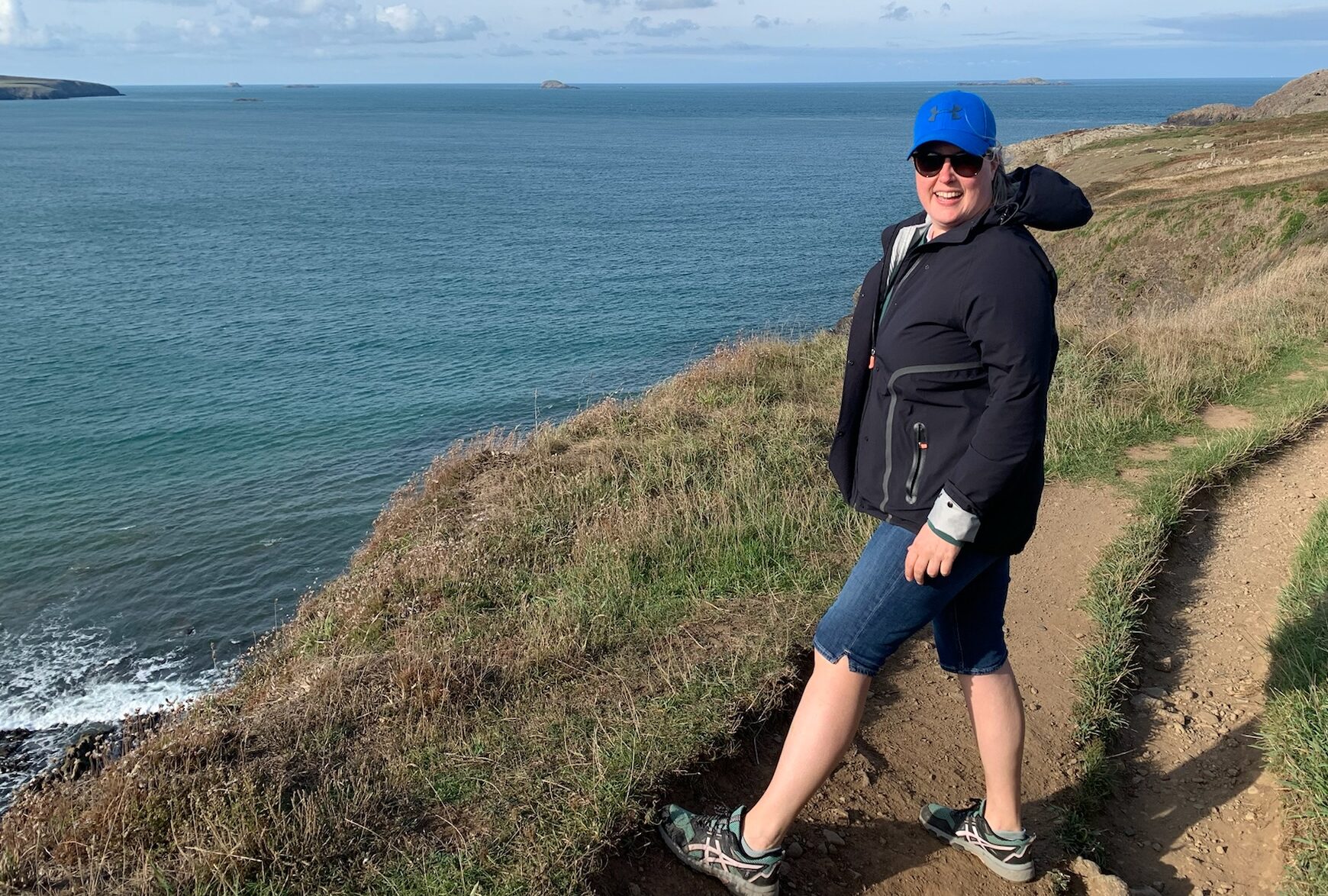
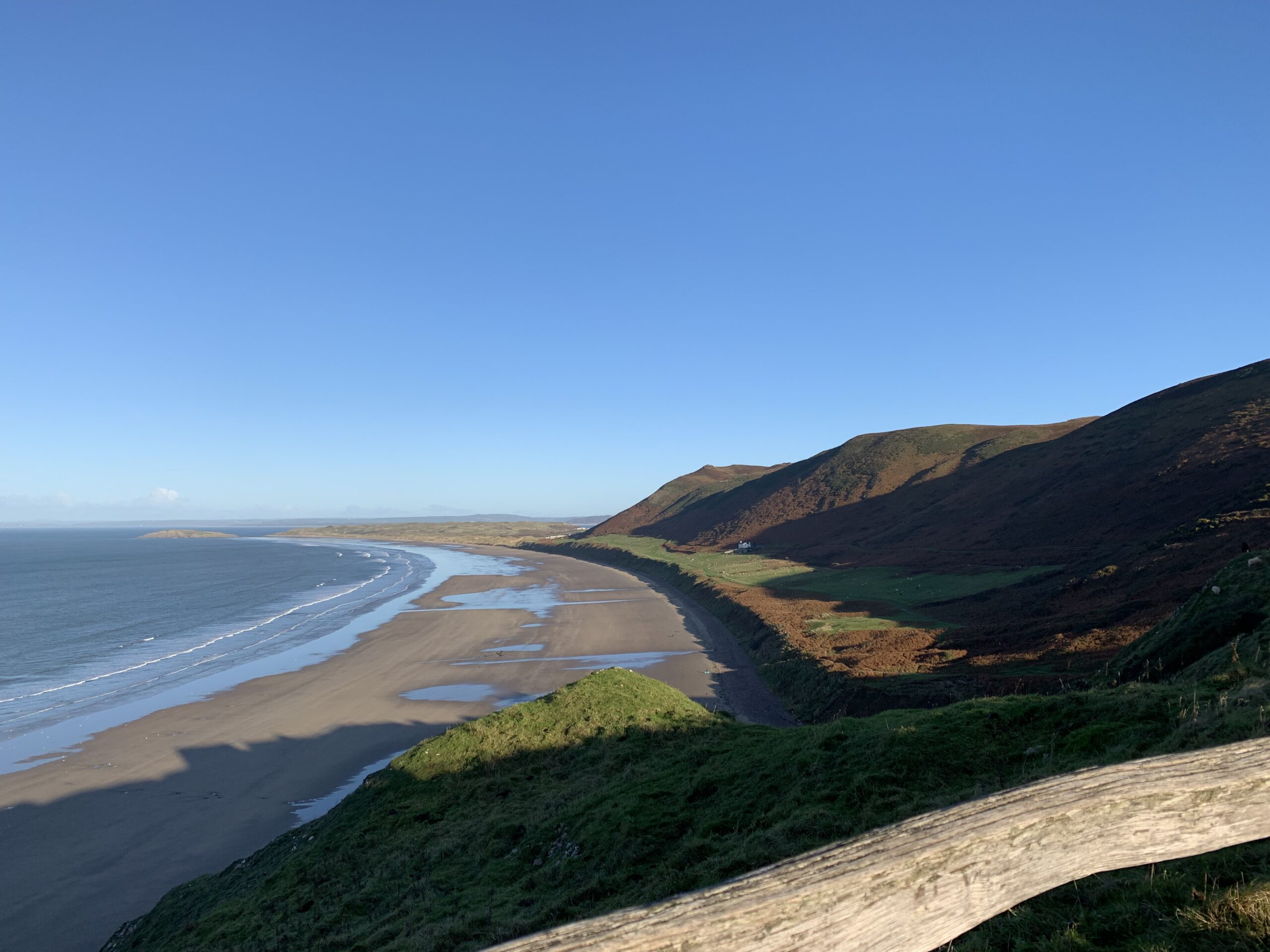
… and come walk with me. How about a day along the windswept West Wales Coastal Path? The title image for this post is taken at the tip of the St David’s peninsula around this time of year. Let’s have a day buffeted by autumn winds surrounded by colourful heather, looking out to the endless horizon. I would love to have a day like that today.
In reality, although that part of the Coastal Path is only just over two hours from my desk, I am much more likely to take a walk along the Taff Trail with the dogs today. Not quite as dramatic when it comes to scenery, but my daily miles are a wonderful daily escape, a practice for my body and mind that benefits my wellbeing as well as my productivity.
Walking is a big part of my life. It’s a necessity when you have two big dogs that want to cover 3-5 miles a day. It’s a hobby, as I walk, jog and run my way to greater physical fitness. It’s also where I like to think, reflect and have important conversations. Over the past ten years, it’s definitely become a kind of superpower that gets me through tough days.
I like walking on my own, with the dogs, with someone else, sometimes with headphones in, sometimes in my head, alone with my thoughts. During my postgrad years I developed an academic interest in walking, and some of my PhD thesis was based on ethnographic walking and a phenomenological exploration of place and landscape, so it’s fair to say that I’ve read quite a lot a about walking as a practice, as a method of enquiry, as a way of life.
It’s always inspiring to read of great explorations or long walks, spanning a whole country for example. My own walking has stayed at a much more quotidian scale. I don’t really care whether I’m taking turns in my local park, walking through bustling city streets or trudging along the Coastal Path. What is important to me, and what makes it work, is that I get to reflect and process whatever is on my mind that day. If I have the company of a coach or a friend (or most commonly my partner), I have the added benefit of someone else’s perspective and the principle remains the same.
When I worked with my mentor Margaret we used to meet up every few months for a longer session, and we always tried to make it a walk. Between these meetings all our work happened online, via email or a phone call, but whenever I really needed to think something through, figure out a new vision for the next three years or confront a difficult situation in my role as CEO, we would walk together and talk it through.
Parenting books often suggest that the best way to have conversations with teenagers is not to sit around a table, facing each other, but to create a less confrontational atmosphere when you are side by side, driving in a car or walking somewhere for example.
In a work context, particularly if you work virtually, there’re many situations in which you face each other, or a whole screen or room full of people. You face each other, stare at your own reflection, at someone’s bad hair day and so forth. It’s not often conducive to focusing on thinking and reflecting. Screens are distracting.
Stepping away from the screen can feel hard. Technology is sticky, capturing our attention, and removing yourself from its constant nudges is a key reason why taking a walk is helpful. Walking is an embodied experience, you are moving through the world, experiencing it with your senses. All of which is helpful for getting a fresh perspective and to gain clarity.
Of course, it’s not often possible to head out for a whole day on the Coastal Path. More often, a walk around the local area has to suffice, and in my experience it works just as effectively. With a bit of forethought you can even gain some of the benefits of a walk indoors. Whenever I don’t have the time to actually go outdoors, and I have a call I really need to focus on, I put my headphones in, put the screen to sleep and pace up and down in my office. Sometimes with my eyes closed, sometimes looking down at the floor or nowhere in particular. I am still moving, focusing, and not distracted by screens. It does take some practice and discipline to make this work, and it’s much easier to give yourself the benefit of actually going for a walk, but on days when you have 10 back to back meetings it may be the only option.
I am really looking forward to exploring how to step away from the screen in my upcoming course on hybrid working. I am not sure if many people realise that walking can be a hybrid working superpower… but we’ll have fun finding out. Incidentally, I designed the course to be podcast based, focusing on audio rather than video content, so that folk who would like to walk along with me could do so as they work through the course. It’s free, so why not register 🙂
Some of my coaching clients, for whom I also offer walking sessions, really enjoy having a session talking on the phone whilst exploring their local park and pathways. And sometimes, when we are able to meet in person, we get to walk and talk together. Those are always the most exciting days for me.
I haven’t done any coaching on the Coastal Path as yet, but I have had many, many excellent conversations whilst exploring that beautiful part of the world. So.. if you are ever in South Wales or if you have a path near you that would make for a good place to think, get in touch.
Enjoyed this post? Get my free monthly newsletter directly to your inbox.
Yep, this is another post about houseplants… or rather things we can learn from plants. I’ve previously published leadership lessons from office plants and in the same spirit this post is all about houseplant inspired tips for managing a period of change or transition.
It’s inspired by my own experience of moving between jobs this month and my adventures in caring for a growing collecting of plants in my home and home office. It’s the first time in a long while that I am changing jobs, but the last few years have brought so much uncertainty with them that I feel I have quite a lot of practice of coping with the unexpected. What the last few years have also highlighted for me is how important it is for us to have strategies for periods of transition – and like many I found solace and inspiration in bringing a bit of green indoors.
So in the spirit of open practice, here are my personal reflections and practical tips. You can also listen related episode of my podcast on Apple Podcasts.
Allowing time to be less productive
One of the things I have struggled with a lot in recent months is just how much there is I don’t know or can’t control, both when it comes to changing jobs and also in relation to my plant collection. Although I am looking forward to the changes ahead, it’s still disconcerting not to know what the next day, week or month will bring, how it will feel, if what’s ahead is fun or frightening. While I have plenty of practice in dealing with uncertainty both professionally and personally, the emotional toll of not know is still there.
Hence there is a lot of need to get comfortable with accepting what I can’t control and to sit with my feelings, comfortable with being uncomfortable. Spending time with plants is one way of making that space and time to acknowledge to myself (and where appropriate to others) what I am feeling. I might go for a walk or sit quietly somewhere, or lie on the sofa cuddling my dog. The particulars don’t really matter. What does matter is that in that extra time I need I am not being as productive as usual. I am not achieving or working in the way I usually do. It’s a season of change, and just like my plants aren’t always growing new leaves or in bloom, I am adjusting and trying to enjoy this period for what it is.
Reflecting to gain perspective
Reflecting is a key part of my professional practice. I like reflecting in conversation, by writing in my journal, or just thinking about things. That said, at the moment I am finding it difficult to focus. I sit in front of a blank page and I can’t find the words to start. There seems to be too much to reflect on to know where to start, or indeed everything I can think of doesn’t seem worth mentioning.
Fortunately, I have a coach whom I get to lean on in times when my own capacity to gain perspective is low, but I also found some prompts to help me reflect. What I do is to start on a fresh page, and write down 3-5 questions that I then answer in turn. Here are some examples of the kind of questions I ask myself:
What was hard today?
How would you like tomorrow to be different?
What do you wish you had done or said differently?
Why are you feeling the way you do?
What has changed in the past week/month?
What are you looking forward to next?
What would you wish would go away?
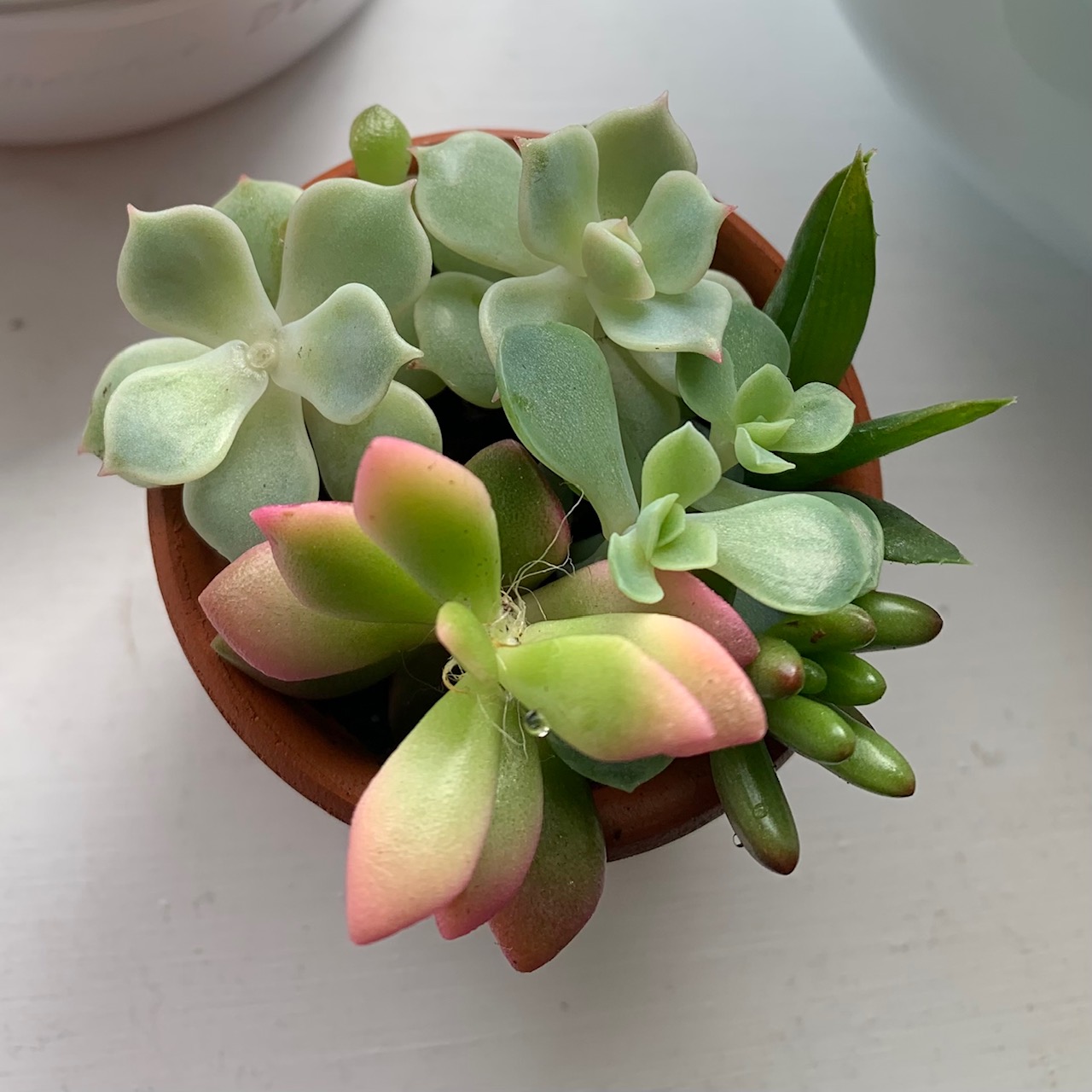
I have some very small succulents at the moment, and they are so interesting to watch. Day to day they don’t really change, and sometimes I give them to much water or too little, and some of them don’t like it, but with patience, they do change and grow and you can also really see those changes over a period of time. Similarly, in my journal, I can usually only spot the patterns when I look back at what I wrote 3 months or even a few years ago. It serves to remind me that my current perspective is always limited by the here and now.
Focus on what stays constant
Even in times of transition many things remain the same and it can help to focus on these. For me, it’s easiest to find constants in my home, my daily routine and my own skills and capacity. Here are some examples:
Home: I like finding my favourite comfy spots to read and have tea. Particularly during a stressful day, I enjoy looking out of the window and observing the outside world. I also have a great fondness for plants, and I have about 10-15 houseplants in my office. Plants change at a much slower rate, as they grow and develop. I enjoy observing them closely and soak up some of their patience and calm along the way.
Daily routine: tea in the morning, walking the dogs, even answering emails can be comforting routines. I really enjoy routines and habits, even though my week is not planned out in every respect. I like having flexibility to decide when I want to exercise or do chores, but doing familiar things is still comforting.
Skills and competencies: one of the things I find most comforting about change is that I can continue to rely on my own skills and competencies even when the context in which I apply them changes. For instance, I love planning and organising things. I enjoy being creative and producing content. My work rate is extremely high, and I get a lot done. All of these aspects remain the same, and I try to lean into those strengths.
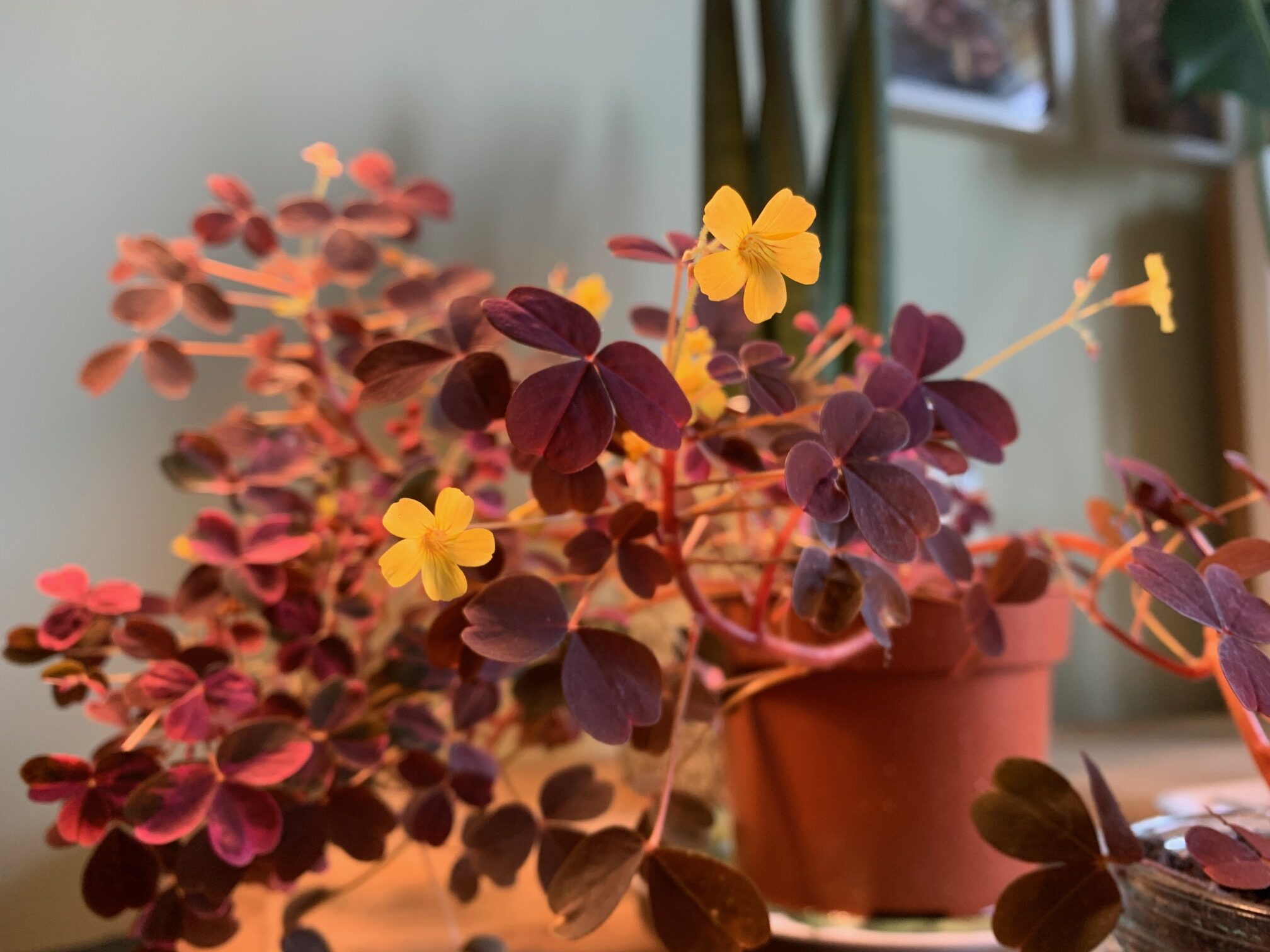
This plant, an Oxalis, arrived at my office from a local plant fair very recently. It usually grows near water, like a brook or stream, and is used to having some sun, but not too much, and to be kept moist and not dry out. So far, I am happy to say, I haven’t managed to kill it, but there’s always a high probability of failure with a new plant I am still learning about. I don’t know yet how the plant will adapt to my office, or what it might need. Context is everything, and with a change in environment there’s always a risk of failure. Like with plants, people, too, need conditions to thrive, and they provide a constant reminder of that.
There are other strategies that work for me at the moment, including making time to practice gratitude, taking breaks, planning for a holiday and re-inventing some of my weekly routines. In short, everything I do when moving at ‘plant pace’ (slow, intentional, balanced, looking after my needs) feel good and are helpful in this period of transition.
There are also some things that aren’t working for me:
Can’t rush settling in
One of the aspects about change that frustrates me is that you can’t rush it. Things take time to adjust, and other people and processes need time to catch up. Most importantly, I need time to adjust. And yet, my mind would like it to be sometime in the future when everything feels settled and the new routines have become familiar.
Feeling unsettled is hard and most of the time actually making a plan happen takes a lot longer than conceiving of it in the first place. Although I can comprehend that things simply take time to change, and that I need time to adjust and process everything I still find it frustrating at times.
Digital difficulties
The other part of transitions that I find difficult is in how many different places information needs to be updated. From social media sites to email footers, to life admin and address books, it feels like a mammoth task to even change my email address. That is one aspect of changing roles that I really don’t enjoy as it’s simply tedious to go through and unsubscribe, update or delete everything.
I am going to check back in on this in a few months, partly to report back on progress, and also to get a feel for how my perspective is shifting as the transition continues.
Enjoyed this post? Get my free monthly newsletter directly to your inbox.
I’m really excited to have Season 3 of the Leading Virtual Teams Podcast finally underway. It’s a new season in every sense… and that is why I am kicking off with ‘new pencil case’ moments in episode 1:
This episode celebrates the start of September, and the new season or start of term for many of us. I have recently tried out a new gratitude journal share ideas for how to find bright spots in a busy time of year. I also give you a preview of what’s in store for season 3 and the upcoming run of the Leading Virtual Teams course in October.
Today the second episode of this season gets released and this one is all about coaching.
The questions I get asked most often by new clients or those considering giving coaching a go, are… ‘What is a coaching session like?’, ‘What should I expect from the first session?’, ‘How should I prepare?’ and also ‘How can I make the most of it?’.
In this episode, I bring together answers and examples to give you a sense of coaching with me, to explain what’s involved and what to expect.
Listen to the podcast
Each episode includes tools, resources and strategies for different aspects of hybrid working, and links to blog posts and further reading. On this page, you can find links to the all episodes and further resources in the show notes.
The podcast is available on different podcast platforms and I hope you enjoy the show. As always, share your ideas and feedback in the comments, or on social media. If you have a specific questions or comment, contact me . I look forward to hearing from you.
This academic year I am looking forward to working with many new clients, most of whom are new to coaching. The questions I get asked most often by new clients or those considering giving coaching a go, are… ‘What is a coaching session like?’, ‘What should I expect from the first session?’, ‘How should I prepare?’ and also ‘How can I make the most of it?’.
In this post, I have brought together answers and examples to give you a sense of coaching with me, to explain what’s involved and what to expect. This way, you can hopefully find at least a starting point and we can discuss other questions you have when we meet.
When is coaching a good fit?
The question most of my new clients ask to begin with, is whether coaching is right for them. Most often, we discuss this in our initial conversation, which gives them a chance to meet me, discuss what brings them to coaching and what they are hoping to achieve as well as how I can help. Coaching can bring many benefits, and it’s a really powerful tool for self discovery, productivity, professional development and much more, but it isn’t the right fit for everyone or every situation.
Coaching might be a good fit if you are:
Looking for a safe or creative space to focus on an important decision or period of change;
Feeling stuck and struggle with productivity or specific tasks;
Ready to plan for the next stage in your career or further ahead to the next 5 years;
Looking for someone to think (or draw) with to find solutions to problems.
Coaching offers a range of tools, resources and strategies in a creative, safe space that is focused on your needs. With a background in art and design, I build creativity into all aspects of my coaching practice. We might use sketch notes, visual conversations and other creative approaches as part of coaching sessions, and to help tackle any problems you bring to the session.
What to expect
If you are new to coaching, you might well ask how coaching is different from mentoring, therapy or hiring a consultant. Coaching certainly has aspects in common with all three, but is also distinct from them as a professional practice. In contrast to mentoring, which usually includes passing on context-specific know-how or experience, I coach clients from a range of disciplines or backgrounds. For example, I might coach a mid-career science researcher who is stepping up into a senior role even though I don’t have a background in science.
Similarly, coaching has commonalities with therapy in that it entails you getting know yourself better and engage in reflection. However, distinct from therapy, coaching is usually focused on the present or future plans, instead of looking back to understand how, for instance, childhood experiences have shaped you.
Coaching, particularly for groups and teams, can also be similar to having an expert act as an external consultant, advising your team, and indeed this is something I also do. However, as a coach, I work with teams and organisations to help them find solutions and ways forward, rather than presenting solutions to my clients.
My coaching approach is specifically designed for professionals working in the third sector, education and learning technology, with a focus on leadership and career development, as well as managing change and creative problem solving. I offer support tailored to you, creating a flexible and memorable coaching engagement that enables you to develop into the kind of leader you want to be in your community, team, project or organisation.
How to prepare
Choose a quiet and private space for your coaching session, and make sure you are comfortable and able to focus on the conversation. I usually use Zoom to facilitate our online coaching sessions, and I also offer to meet in person for a coaching day.
During a typical coaching session, we will be setting an agenda together, defining what the session will focus on and session objectives. We will use powerful questions to reflect and explore the topic, and I might recommend specific activities and resources to help you work towards your aim such as planning tools, milestones maps and tools to help you identify your values. I’ll make sure we regularly check in on session objectives and ensure you leave each session ready to take next steps.
Sometimes a video call is not the best environment to get us thinking, so for established clients I offer coaching sessions whilst we walk. Usually, this would be coaching via a phone call, but if you are based locally, we could also meet in person. Walking coaching sessions are particularly suited to think together about difficult situations or to reflect on a particular problem or idea.
Why I love coaching
I had wonderful mentors and coaches on my journey to becoming a CEO and in the 11 years in an executive leadership role in the non-profit sector. Coaching helped me through difficult periods of transition and supported me in taking difficult decisions under pressure. My own experience has helped me appreciate just how powerful coaching can be and how valuable it is for developing all aspects of your professional practice and values as an emerging leader or an established one.
What’s most rewarding for me about coaching is working with clients who are facing great challenges. I really enjoy working together to reflect, set new goals and find out what the next step might be. I am always curious to hear about where you want to go next and help you get there no matter whether that’s getting out of bed tomorrow morning or a new job.
One tool I have been trying out with clients is writing a personal mission or vision statement (in one sentence), which is harder than it sounds. I tried it out for myself, and it prompted interesting reflections for me. If you’d like to have a go yourself, start with your goal and values and try to express these in one sentence. Let me know how you get on 🙂
What qualifies me to be a coach?
I bring a lot of professional and leadership experience to coaching, and as a coach I adhere to the ethical and professional standards of the the International Coaching Federation (ICF). The ICF defines coaching as ‘partnering with clients in a thought-provoking and creative process that inspires them to maximise their personal and professional potential. The process of coaching often unlocks previously untapped sources of imagination, productivity and leadership’. With close to 100 hours of ICF standard coaching experience and having completed all mandatory training I am in the process of becoming an ICF Associate Certified Coach.
Enjoyed this post? Get my free monthly newsletter directly to your inbox.
I’ve put together three ideas to try out whether you are having a busy summer or taking a break. So if you are looking for some inspiration and ideas to recharge for the next academic year, have a go:
Tips for a week of complete rest
It’s taken me a long time to be able to step away from all types of work all together, and for me, having a complete week off is a big achievement.. as well as a reflection of how busy I have recently been. I took some practical steps to ensure that I had a complete break, and I wanted to share some tips that worked for me:
I completed a holiday handover, with my amazing colleagues and deputy, and then logged off all work systems completely on my last day at work;
No laptops came on holiday, and all computers at home where switched off when work ended;
I deleted all work-related apps from my phone or switched notifications off completely, included direct messaging, emails, and task management apps;
I logged out of/deleted all social media apps, like Twitter and LinkedIn, that I only use in a professional context;
calendar notifications were switched off or paused
A simply note to make a list of anything that I thought of, which were work related and which I wanted to pick up upon my return;
I intentionally packed books, audiobooks and other entertainment that would help me focus on things other than work.
Many of my clients are looking to make progress in their work or personal lives: to make a change, develop their career path or build personal habits. Many of us have goals like ‘progress in my career’ or ‘be happier’… but it can be hard to break down exactly what to do in order to achieve our aims and define what ‘success’ means to us. In this post I share practical steps to help you put your goals on paper and break them down into achievable chunks, including:
I am always on the look out for new tools or resources for coaching, and I want to share this one I came across in a blog post by Laura Vanderkam: It’s called a ‘List of 100 Dreams’. If this is a new concept, then head over to Laura’s blog to read more about the original exercise from Career coach Caroline Ceniza-Levine and how Laura has used this exercise as part of her work on productivity and time management. The ‘List of 100 Dreams’ is exactly that: a long list of things you wish to do, have or devote time to. In essence, it’s a very long bucket list.
I felt this was a lot of fun to try out, so if you are curious to learn more and try this for yourself, here’s how to get started.