Category: open practice

  • Permission to be unproductive

    Permission to be unproductive

    Today is a slow day. I am feeling uninspired and un-motived. My energy levels are low. In my years as a CEO I had plenty of days like that, but very rarely gave myself permission to be unproductive. CEOs, and people in positions of power in general, like to think of themselves as too busy to pause, as indispensable. Being busy is a badge of honour for others to take note of. And so, as a young leader, finding my own path, I followed that example, pushing through days like this and becoming very, very good at coping and at looking capable no matter what the day, week or year brought.

    It’s a great skill to have, and one that I rely on often, but no longer all the time. Because if there’s anything I’ve learnt since I took on that first senior leadership position in 2012, it’s that being too good at coping doesn’t benefit anyone. It doesn’t benefit the organisation as in the long term it becomes unsustainable, it doesn’t benefit those around you because they don’t learn the skills or gain the confidence to succeed without you and most importantly it doesn’t serve you.

    Giving yourself permission to be unproductive, in whatever shape or form, is a skill I am actively seeking to acquire. Since starting my own business and decreasing my level of responsibility from generating enough turnover to pay salaries for 10 to having to generate only enough income to meet my own aims, I have worked very hard at giving myself permission to work less. To take days off. To step away from the screen, from emails, calls and the pressure to be successful, and to be seen to succeed.

    I became a CEO at 32, and I worked so hard at being taken seriously, to establish myself as an effective leader in my field, that I never even considered working less. I lived and breathed and loved my work. My physical, mental and social health did not love the choices I was making and as the years went on, my body made me listen.

    This week I am coaching a staff cohort at the University of Oxford in healthy habits for hybrid working, and one of the topics we spent most time on is how to manage feelings of guilt, of anxiety and of worry about being perceived as hard-working, and as productive, especially on days of working from home. Even when there was an explicit or general understanding that breaks were encouraged and taking exercise or stepping away was seen as desirable, the pressure to perform and meet (one’s own or others’) expectations remained strong. So the question we explored was: “What would it take to make it OK?” How can we build the habits needed to make high performing hybrid work sustainable?

    I thought that the answer lies in the job I have, which is partly why I started my own venture. What I learnt since is that the kind of practices I now adopt to find balance would have been perfectly possible in my CEO role. I just couldn’t see it, and I needed to step outside of the confines of the role for that shift of perspective to happen.

    Sure, there are days when things are truly urgent, and when you do have to show up, push through and get the job done. But even in these times of permanent crisis, this is not the case each and every day. More often than not, nothing at all would happen if we didn’t show up for a meeting or delayed a deadline by a day or a week or even a month. There is always more work to be done, new deadlines to meet and more demands on our time than we can meet.

    I don’t want to seek the solution to this in increasing my productivity. I am productive enough. Instead I want to find reward and joy in not being productive on days like this, when my body tells me to take it easy.

    Choosing to do less

    At times throughout my career I have had periods, at times long ones, where being as productive as I wanted to be simply wasn’t possible. Whether due to ill health, care responsibilities or simply life happening, I’ve been through months and years of having to rethink what’s achievable. It was the hardest thing for me to change my thinking from looking forward to new challenges and delighting in being able to solve complex problems and to throw all my energy and ingenuity into the fray; to suddenly having to manage my energy very carefully. My reserves were low, and I had to learn the art of appreciating the “good enough” and of thinking “that will do” instead of following my inner perfectionist.

    Being in a situation when choice is taken away is always hard. What I am writing about here isn’t really about what to do in those kinds of contexts, when ill health or circumstances or crisis strike. In my experience there is some overlap however, between trying to make a choice to do less and having to do less out of necessity, and I like to think that I would have coped better in times of having less choice if I had been better at giving myself permission to do less all together. Choosing to do less, to be less frantically busy all the time, is both a privilege and a radical choice.

    Is this the time?

    It feels a bit precious to be writing about rest in times like these, when so many truly urgent issues are arising. Rest is radical, as Lou Mycroft so eloquently put, and this feels especially true in the face of global political and social changes, and the funding cuts in the not for profit and education sectors I work in. And yet it feels relevant, and important, to learn how to differentiate between the demands of a busy work life and the work that really needs doing. Becoming ever more digitally productive in measurable ways is not the answer. Giving yourself permission to be unproductive feels important and I know the difference between being selfish and practising self care.

    The indigo girl’s sing that “darkness has a hunger that’s insatiable” and those words feel particularly relevant at this time in history. The harder the Broligarchy works to enforce digital measures of productivity and oversight as the path to (their) success, the more we need to keep in mind that being productive ≠ profits.

    I was inspired by a recent post Kin Lane published, which reflects on what happens when we see people as resources. It’s rare to have someone with that wealth of leadership experience utilise their story-telling skills to help us think through the pitfalls of digital productivity, and I am grateful indeed for Kin’s voice. Likewise, I’ve found much inspiration in the Permission Slip with which Bryan gave himself, and all of us, permission to create something, regardless of what others think. I was lucky enough to take part in one of Bryan’s zine making workshops recently, and found it (surprisingly) powerful. Although I draw and create much, Bryan’s way of guiding us into the process helped me pen a small adventure (the humble pencil “HB” in an epic struggle against the AI “Intelli-Pen”) in a different voice. A voice I rather liked.

    The concept of the permission slip, a powerful tool for all sorts of contexts, I first came across in Elizabeth Gilbert’s ode to creativity in her book Big Magic, and it’s been inspiring my recent work on walking as a reflective practice, and finding your own “critical cadence“.

    Strategies that work for me

    This post isn’t meant to be a “how to” post, and I am wary of the toxic visions of “having it all” lives, when time away from work just turns into more work of curating the perfect family, home, body and so on. I don’t want to add to that, but if you are trying to tune in to when you need to stop and are wondering how to actually do that, so that you focus on something other than your inbox or notifications of unread messages, below I have shared some strategies that work for me as I unlearn my decade long habit of over-working.

    • Tune in to your body: moving my body is a short-cut to getting out of my head. In my case what works best is walking, yoga, running.
    • Focus on joy in small things: Calm is key for me, and the easiest way to slow down during the day for me is to focus on small things, and their little rituals. Making fresh coffee, arranging some flowers from the garden, making simple food from scratch. I find a lot of joy in small things, and I delight in the quotidian.
    • Fun flow state: I am lucky in that I am good at concentrating and I find it easy to work in a flow state. My issue is more with loosing track of time and my physical needs because I am too focused on work. Trying to work less made me miss that feeling, that fun flow state. It took a good while, but I found an activity recently that enables me to dip into a flow state and relax completely, whilst working creatively with my hands. I build tiny book nooks and models of flower shops made of wood, paper and wire. I don’t particularly treasure the models once they are finished, but it’s a wonderful hobby.
    • Do something you don’t need to track or measure: anything I can track or measure comes with inbuilt expectations of progress, and even where that’s not the case, I usually find myself imposing some of my own volition. In order to stop myself from setting expectations, I focus on activity I don’t track. Reading physical books, walking my dogs, writing letters. I have no idea how many letters I have sent in the past year for example, and that’s just fine. I write one whenever I feel like it.
    • Be explicit about giving yourself permission: I find it difficult to relax whilst I feel I should be working. My solution to that problem is to write it down. I keep a record of how many hours or days I take off, whether it’s for being unwell or just not doing paid work, and I track it over time. This way, I can be very explicit with myself (and others) about when I am not doing things.
  • Blogging #4life, now with added community.

    Blogging #4life, now with added community.

    The game is heating up in the blogosphere… so I better jump in and join the fun. Commenting (of course), and blogging. What’s happening is… a new community of practice all about blogging. Blogging in Higher Ed. Blogging for Educators. Blogging for life (#4life).

    Time to get remixing your badge and get ready to follow Jim Groom’s call to action:

    …it’s high time to let your blog flag fly. Dust off that archived site, or better yet start your very first one, and join Bloggers Anonymous to help kick that addiction to corporate social media. We’re hear to help, think of us as your blog sponsors in the original sense of that word: ongoing support and encouragement through un-monetized comments.

    Over on the Reclaim Blog you can find more info about what’s in store and how to get involved:

    Join in

    We have a dedicated channel set up in our Discord Community Space. This is a friendly social space where everyone is welcome and which is free to join. There’re also live events coming up, so keep an eye on our events calendar in the coming weeks.

    What to expect

    Let us know if you have any ideas for community activities, questions you’d like us to cover or support you’d find helpful. We are planning to:

    • share blogging tips and inspiration via the channel;
    • collate open resources and contribute our own;
    • organise monthly live sessions with guest presenters;
    • encourage everyone to share blog posts, what works for their blogging practice or what is stopping them from blogging.

    Thanks to the ever awesome Bryan Mathers and his fabulous remixer machine, there’s plenty of scope to join in and have a bit of fun, all the while preparing for that next post.

    And if you are looking for inspiration to get your blogging mojo back, have a look at a post I recently shared with handy tips for blogging that I like to use to keep my practice going.

  • Jolly Holidays on the Open Web

    Jolly Holidays on the Open Web

    It’s the time of year again… and as someone who works remotely with clients across different timezones, most of my ‘festive’ moments at work are unceremonious video calls that end abruptly as everyone rushes off to their next meeting. Meanwhile, across the various social media spaces I take part in, corporate messages of (apparent) goodwill mix uneasily with cheery commercial overload, making it hard to find the actual updates from actual people I care about. Jolly Holidays on the interwebs this isn’t!

    Fortunately we can breathe a little easier, as there is still real fun to be head online for those of us working in education and edtech, in the form of Reclaim’s Rewind 2024 series of free and open events on the radio, tv and social activities! I am really excited to be part of this, and to have a group of wonderful people to share the run up to the holidays with.

    Event logo

    It’s precious to me to take some time to celebrate community and have the opportunity to connect with colleagues, reflecting together on the highs (and lows!) of the year that’s been, and gather our strength and find some renewed inspiration before the new year starts.

    Kicking off the whole series was a team outing on Reclaim TV, sharing some of the best bits of 2024, the drama that shook the (edtech) world (hello, WordPress bros) and how the team have come out fighting the “good fight for indie edtech” on the other side. 

    Next up was what we called a “Case Study Bonanza”, featuring special guests from a number of schools that work closely with the team and the one and only Bryan Mathers:

    But… the best is yet to come! This week, there are the two biggest events coming up and I hope that you will join us, so here are all the details:

    Community Chat: Rewind 2024

    December 18th 
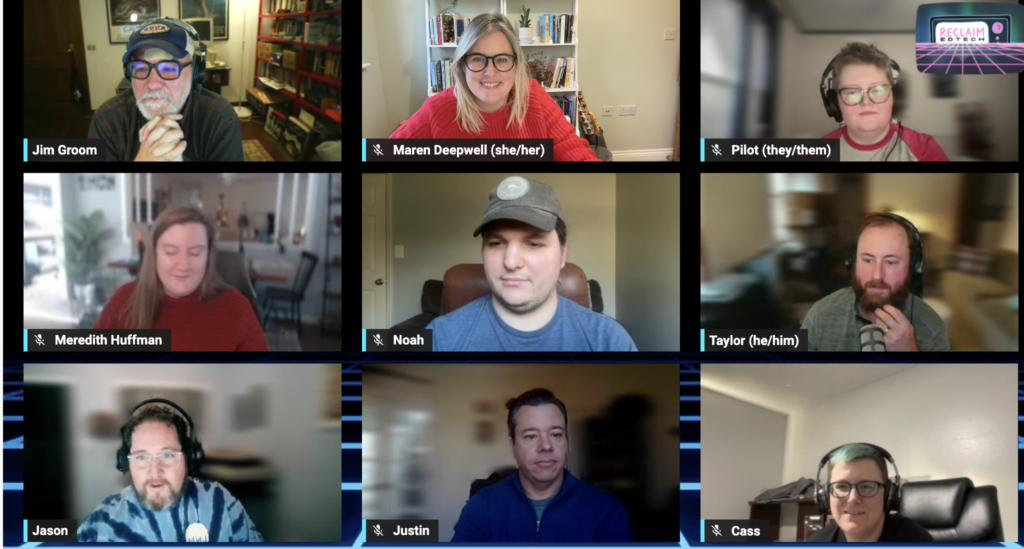
    For this final community chat of the year we are inviting ALL our special guests from 2024 to come together. You will hear updates of the exciting work happening across our community and have a chance to share your own highs and lows of 2024. This is our time to come together to say thank you and acknowledge and appreciate everyone who works in open edtech in Higher Education. 
    Event info

    Reclaim Rewind 2024: Live on DS106 Radio. It’s the HOLIDAY SPECIAL

    December 20th
    We are inviting you to join us for the one and only edtech radio holiday special, featuring guests from the legendary DS106 Radio Summer Camp. There is going to be story telling, holiday tunes and, if you are very lucky, even a bit of festive KaraOERke. The elves are working hard on that one. So listen in and play along as we ROCK the airwaves and ring in the holidays. 
    Event info

    There are also a couple of DS106 Radio hosts, myself included, who will be jumping on the airwaves to play music and chat, so follow the #ds106radio on Mastadon to find out what’s on, and tune in to DS106 Radio.

    It’s such a joy to be able to have some actual time together with folk without the clock ticking on yet another meeting, and to be able to dip in and out of the festive fun as I sit at my desk finishing off my work for the year.

    During the pandemic edtech folk became an educational emergency service, and everyone suddenly wanted to learn about how to use technology at scale, fast. Those days are fortunately behind us, and these days hype headlines about AI are more likely to pull focus. But for me, it’s definitely the human beings (not the technology) that made this year, and it’s all the unsung (edtech) heroes, grinding away at keeping the open web a possibility for future generations of students and educators, that I’ll be celebrating with this year!

    Wishing you, and yours, Jolly Holidays on the Open Web!

  • ‘Braided’ Blogging: Reflecting on collaboration

    ‘Braided’ Blogging: Reflecting on collaboration

    I’m always interested in new ways to keep blogging and recently I had the opportunity to try a new approach, which we might call ‘braided’ blogging. 

    This came about through a coaching conversation with Mark Corbett Wilson, whose blog, Talking with Machines, is definitely worth a visit. With a rich background in making art, storytelling and digital technologies, Mark is always up for trying new ways of collaborating on the open web and for this experiment we wrote a short blog post about collaboration and then remixed individual paragraphs into a new version, resulting in our individual contributions being woven or braided together. 

    At the start, this collaboration was asynchronous, each of us contributing via a Google doc, and the final process was completed in real time, with each of us editing the document in turns during a video call. 

    Reflecting on the process, here is what I came away with:

    To start with, I really enjoyed the playful aspect of this method, and the opportunity to try something new. I wasn’t really sure what to expect from the final version, and it opened my eyes to new perspectives on what we wrote in the original post. 

    Also, the collaboration shifted the emphasis from producing a finished post to blogging as a practice, the process in itself being valuable regardless of the eventual output. 

    What you don’t see in the finished text below is the conversation that happened between the lines. The collaboration in itself was both fun and creative, and gave us each the space to try something new and learn along the way. 

    A big thank you to Mark for letting me be the first collaborator to try this approach! I am really looking forward to seeing where you take it next. Read Mark’s post on Networked Narratives.

    Read the braided version 

    Learning and teaching are continuous and iterative. Reflection leads to insight and the repetition helps integrate your learning into memory. Applying your knowledge and experience to new situations is improvisation and leads to new discoveries.

    I try to keep a sense of playful experimentation in my work. It’s less important to get it right, let alone perfect, than it is for me to do it in the first place.

    I struggle with reducing ideas to simple linear text. I’m working out how hypertexts, graphing, microblogging, and mixed media posts can express and share my discoveries, learning and reflections. I use the internets, complexity and connectivist theories to inform my improvisations and grow my personal networks

    I trained as a sculptor before working in education. Similar to you, I started out making things before I turned to writing. 

    Whatever I do, a primary concern is with the quality of my work. Glassblowing and writing both have long traditions. How do we honor these traditions and continue to explore new possibilities while producing quality work as we transition from makers to writers?

    I think of everything I do in terms of practice. For me, it’s helpful to conceptualise what I do as a continuous process of learning, reflecting and sharing. 


    Cover photo by engin akyurt on Unsplash

  • How to get your blogging mojo back.

    How to get your blogging mojo back.

    In the best tradition of blogging about blogging, today’s post is all about getting started with or getting back into blogging. Recently I have had lots of conversations with folk who would like to blog more, but don’t. Or who feel they *should* be blogging more often, but they haven’t actually managed to do so.

    If that’s you and you are looking for ways to get your blogging mojo back, this post is for you. There’s no judgment here. Just some practical approaches you can try to get (back) to blogging regularly.

    But, first… ask yourself this question: do you want to HAVE A BLOG or do you WANT TO BLOG? These two things, to my mind at least, don’t necessarily mean the same thing. Lots of people, organisations and companies have blogs. Blogs that might function a bit like newsletters, or communicate community updates. A blog can be a really effective tool for communications and marketing, and as such, you might be obliged to blog as part of your job. That’s not the kind of blogging I am talking about in this post.

    This is not about having a blog, but about the practice of blogging itself. The process of getting whatever you want to say in a post and press publish. It’s about the joy of blogging, the sheer exuberance of having a space, a domain, to make your own.

    My husband-to-be and I often talk about blogging, and he has written many posts about blogging as an OER, blogging as an industry, blogging and academic identity and more. I strongly suggest you head over to his blog if that’s the inspiration you are looking for. Over here in this post, let’s focus on blogging as practice.

    Start small

    A blog post can be any format and any length. It doesn’t have to be 500 words with references. It doesn’t have to be any particular format. It can be one sentence, one image, whatever you want it to be. Your next post is not going to be a masterpiece, or the great novel you might dream of writing. Start small and give yourself a chance to succeed.

    Imagine what you would suggest to a student or a colleague who came to you for advice about how to get started with blogging. What would you suggest to them? What would you encourage them to do? What would be good enough?

    Apply those same standards to yourself and start small.

    Blogging is not a to do list

    Lots of colleagues I talk to have a list of things they wish they had blogged about but haven’t, which covers anything from conferences presentations to new pieces of work. They have an endless list of things they feel they ought to cover, and that can make the task of blogging daunting.

    Maybe it works for you to have a dozen unfinished posts sitting in your dashboard, ready to pick up again when your thinking has progressed and those thoughts have percolated sufficiently. If that’s part of your process, then stick with it.

    But if unfinished posts or lists of things you ought to blog about are a barrier to simply getting a post out there, I would suggest parking these for a time at least or deleting them all together.

    If you are looking for a topic, just tune in to your interests right here and now. What’s in your mind? What is interesting? What are you curious or excited about?

    Blogging as a habit

    I believe that blogging is a very rewarding habit to cultivate and given that I have blogged for two decades, it must be working for me. And it does. I get a lot out of the process, other than ‘having a blog’. Here is why I blog:

    • I’m excited about something I want to share
    • I need some space to think through or reflect on something
    • I want to document something for future use
    • I want to keep a record of things I have done
    • I want to journal (in a public way)
    • I want to have things to put into my newsletter
    • I want to share an image I love and talk about it
    • I want to celebrate something
    • I want to contribute to a conversation or discourse
    • I want to show my solidarity
    • I want to amplify the voices of others
    • I want to do something helpful

    All of these motivations ultimately mean that blogging makes me feel good. I write plenty of posts that no one reads and no one comments on, and it doesn’t make a difference to my process. Of course I want people to read what I blog about, but I don’t focus on that as I blog and its not my main motivation.

    I would, and often do, blog, where no one can read my thoughts.

    So might blogging do for you? What can you get out of the process? What do you want from it? Figuring that out is the key for blogging to become a regular habit. Just like anything else we try to do regularly, from exercise to reading, blogging has to serve us and reward us for engaging.

    Yes, AI-powered tools could blog for you, but why bother?

    As a blogger, many of the tools I regularly use now offer me, to put it politely, various levels of so called smart approaches to generating content more easily and quickly. From smart compose to full on writing posts for me. Sigh.

    Why bother? The point of blogging is to blog. Why would I outsource that to technology.

    Some (fun) ways to publish a post, quickly (with examples)

    Sometimes I lack inspiration for blogging, and I still want to do it. So I come up with easy ways to blog, quickly. This often helps me get out of my head and into a more creative frame of mind. It works wonders for taking stock in times of stress and often cheers me up as well.

    Here are some examples to help you find your own ways to have some fun, and publish a post, quickly.

    Right, let’s get blogging. Good luck!

    And because I blog every month… Subscribe to my newsletter and never miss a post 😉

    [newsletter_form type=”minimal”]
  • Small things. Celebrated.

    Small things. Celebrated.

    Every now and then I take a month and celebrate a small win every day. When I blogged about this a couple of years ago, the motivation came from a time of being overstretched, a period during which it felt like no matter how much I did I never achieved enough.

    This time round my motivation is different, and more aligned to my desire to practice gratitude and to make the most of a busy, but precious time in my life – when many things pull my focus in different directions both personally and professionally.

    Gratitude journalling is a practice that I like and I have tried previously, and yet it doesn’t feel like quite the right fit for what I want to achieve this month. This celebration of small things is more about slowing down and paying attention, to be more present.

    The list of small things I have celebrated so far

    Day 1: Make a fire and be warm all evening
    Day 2: Go for a 2 mile run
    Day 3: Get flu vaccination
    Day 4: Received a letter with the best stamp. Ever.
    Day 5: Went to the beach!
    Day 6: Plant care hour
    Day 7: –
    Day 8: Time out and a nice coffee at my local cafe
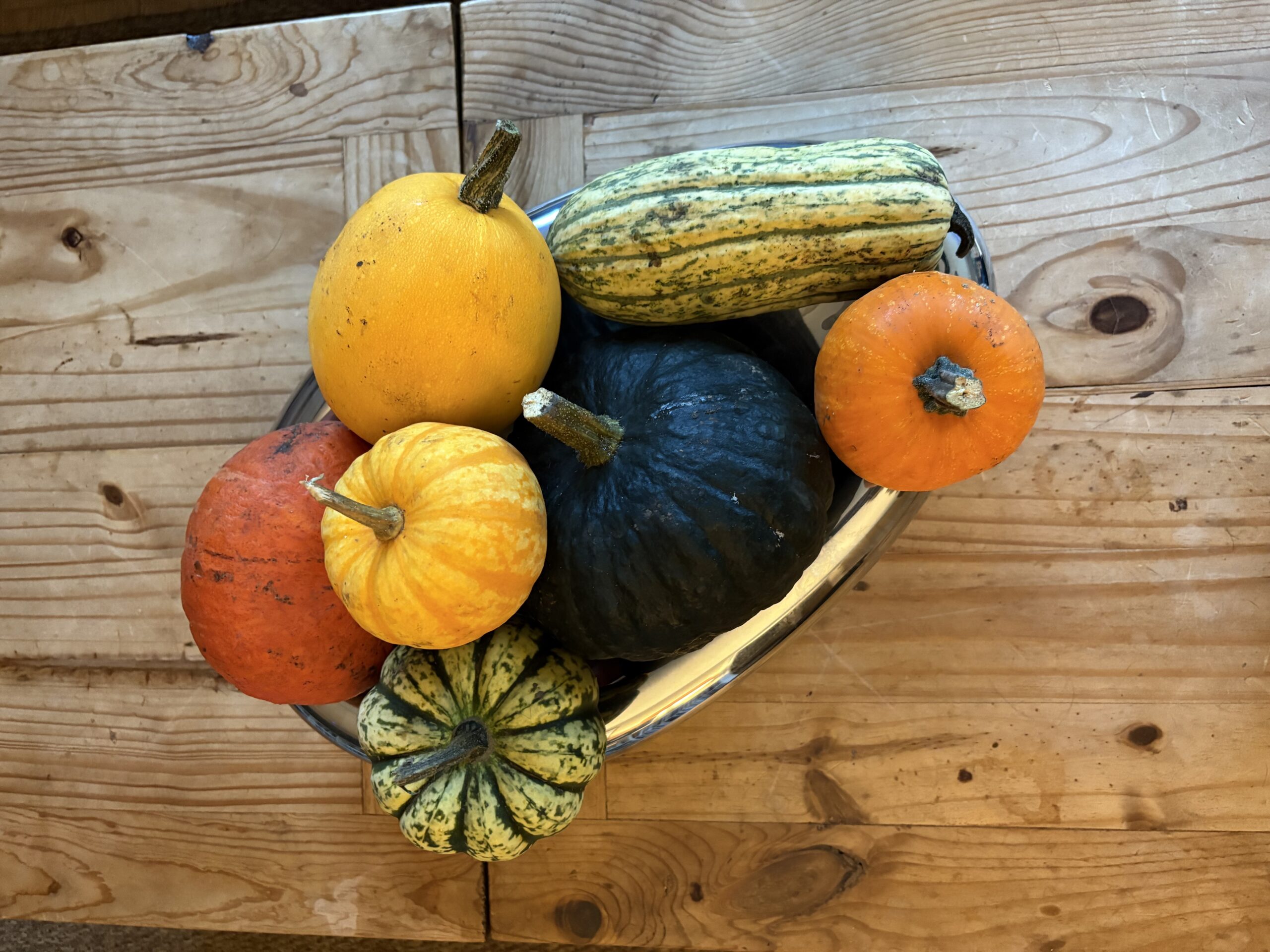
    Day 9: got a huge box of pumpkins and squash
    Day 10: Went to the Theatre
    Day 11: Completed the last run in a training phase
    Day 12: Decorated the house with a garland which was a gift
    Day 13: Tea in bed
    Day 14: Went for a run although I didn’t feel like it
    Day 15: Signed up for a charity run

    I’ll be adding more as the month continues. Definitely looking for the bright spots in these times.

    Day 16: Went to the beach
    Day 17: Listened to vinyl
    Day 18: Had a good walk with the dogs
    Day 19: Finished a work project
    Day 20: Got beautiful flowers
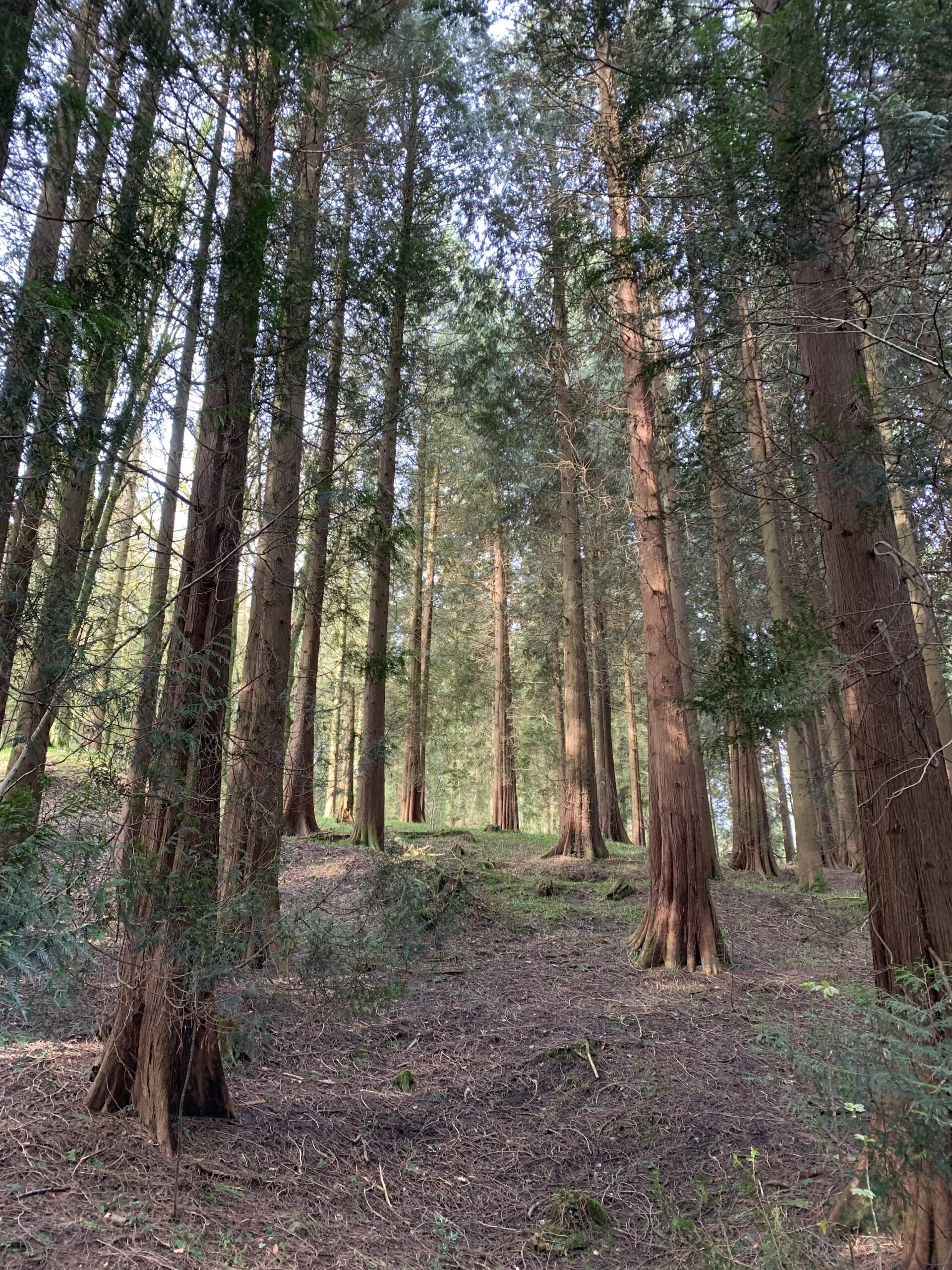
    Day 21: Went on an autumn ramble
    Day 22: Had a quiet, restful day

    Listen to the podcast episode

    Subscribe to my free monthly newsletter:

    [newsletter_form type=”minimal”]