Category: open practice

  • More than words (Part 1)

    More than words (Part 1)

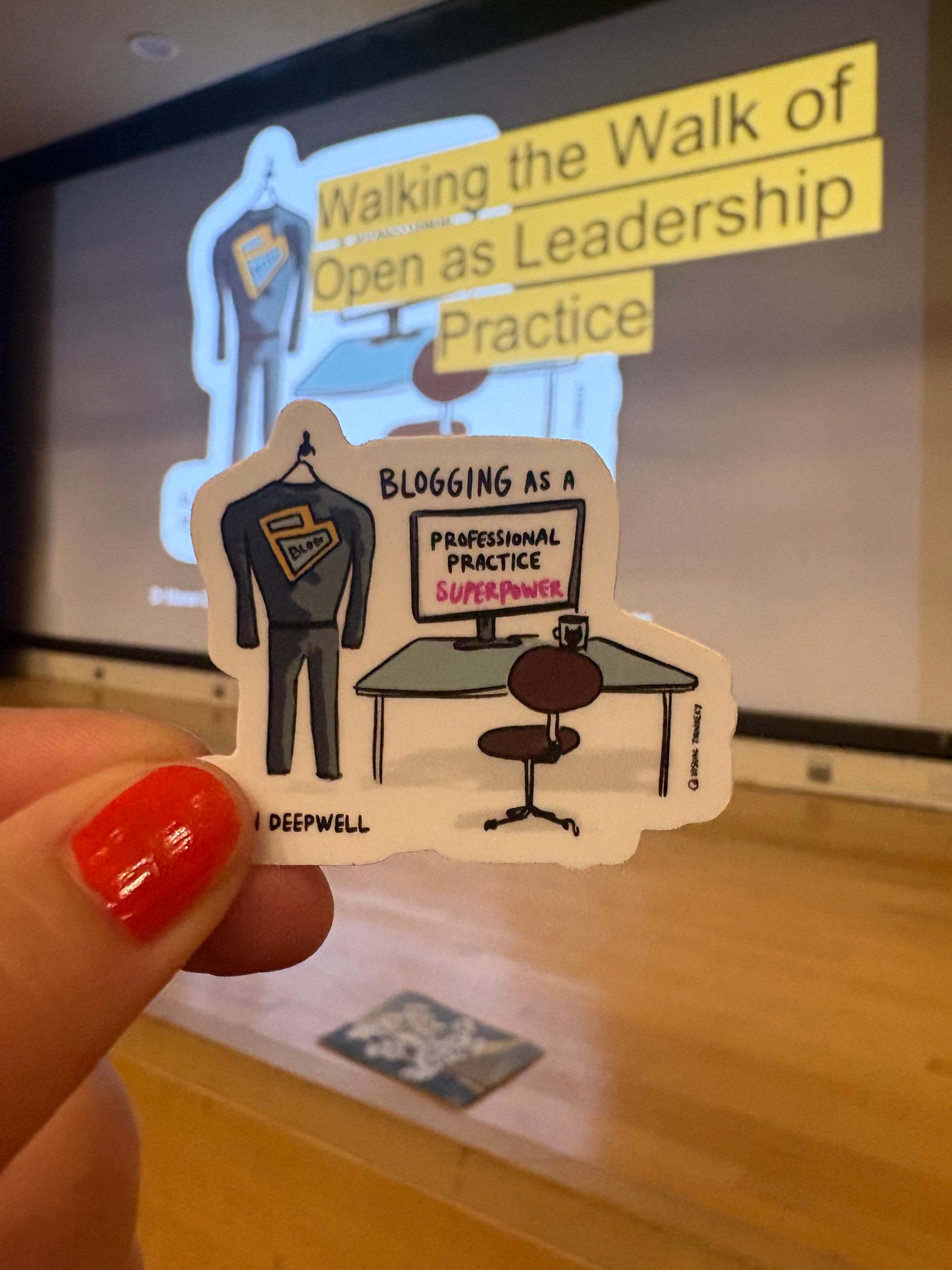
    A journal of professional practice can easily turn into a superpower at work.

    One of the things I know to be true is that there’s hardly ever a perfect moment when everything is done, your inbox is empty and the ocean of professional life is lies calm and still in front of you; giving you space and time to reset.

    The closest I ever got to the ideal blank slate day is the start of a new academic year, the season of new pencil cases and school starts. It’s my favourite time of year, and I love making plans for the year ahead… which usually turn out to be busy, ambitious and a lot to accomplish.

    I love the perspective it gives me, looking at the year ahead, and planning for all the things I’d like to do, at work and in my personal life. What I’d ideally like is moments of that “blank slate’ feeling or that start of term vibe throughout the year, prompting me to pause and reflect.

    For over two decades, I have used different forms of professional journalling to create just those moments for myself, and post is an invitation to try out some new approaches to this fundamental practice.

    If you’re not a fan of writing, read on, as I have included some approaches below that use voice recording, conversational reflection and drawing, too and I talk more about this on the podcast episode about this leadership superpower.

    Listen on Apple Podcasts

    Keep a journal your way

    Writing Journals

    There is no shortage of journalling inspiration out there: beautiful paper journals complete with prompts and templates, journalling techniques designed to help you reflect, develop gratitude or promote mindfulness and a plethora of apps designed to help you stick with the habits.

    I don’t think it matters how you journal, and any way that works for you is valid.

    Over the years I have come to value:

    • handwriting because it slows down my thinking and helps me focus;
    • being open and honest with myself, no matter what I end up writing and not giving into the temptation to self-edit;
    • changing formats to suit what’s on my mind, i.e. from completely private to sharing with specific colleagues to publishing openly.

    Voice Journals

    f you’re curious about using your voice for professional journalling, this activity is for you: use your phone or another device to make a voice recording (you don’t even need to transcribe or save the recording for it to be useful. It’s the recording practice that’s important).

    Dictation can help you practice articulating your thoughts to someone else as well as to yourself. It also improves self realisation in my case. For example, the other day I felt angry about something and when I said it out loud I realised how angry I really was. It helped me reflect and understand more fully how I felt. The feelings dissipated quickly, but the realisation stayed with me.

    Check out this blog post in which I have given further examples and ideas.

    Visual Journals

    I love the idea of visual journals, and for a couple of years I used little notebooks to make a simple black and white drawing every day. If doodling, sketching, or visually journalling about your days appeals to you, you might like to take a look at Bryan Mather’s approach using REFLECTO-GLYPHS 🙂 .
  • OER26: The Future is Open.

    OER26: The Future is Open.

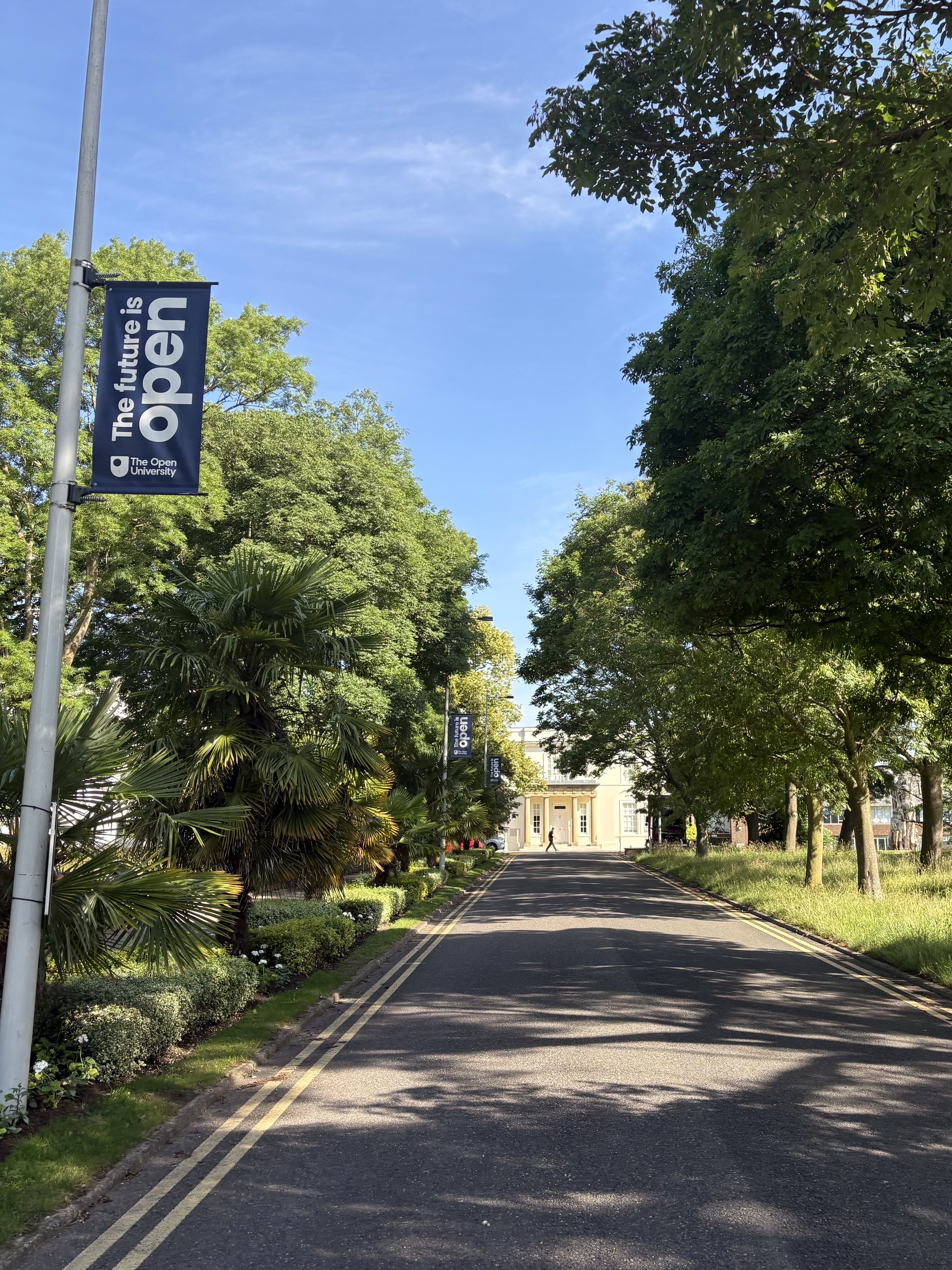
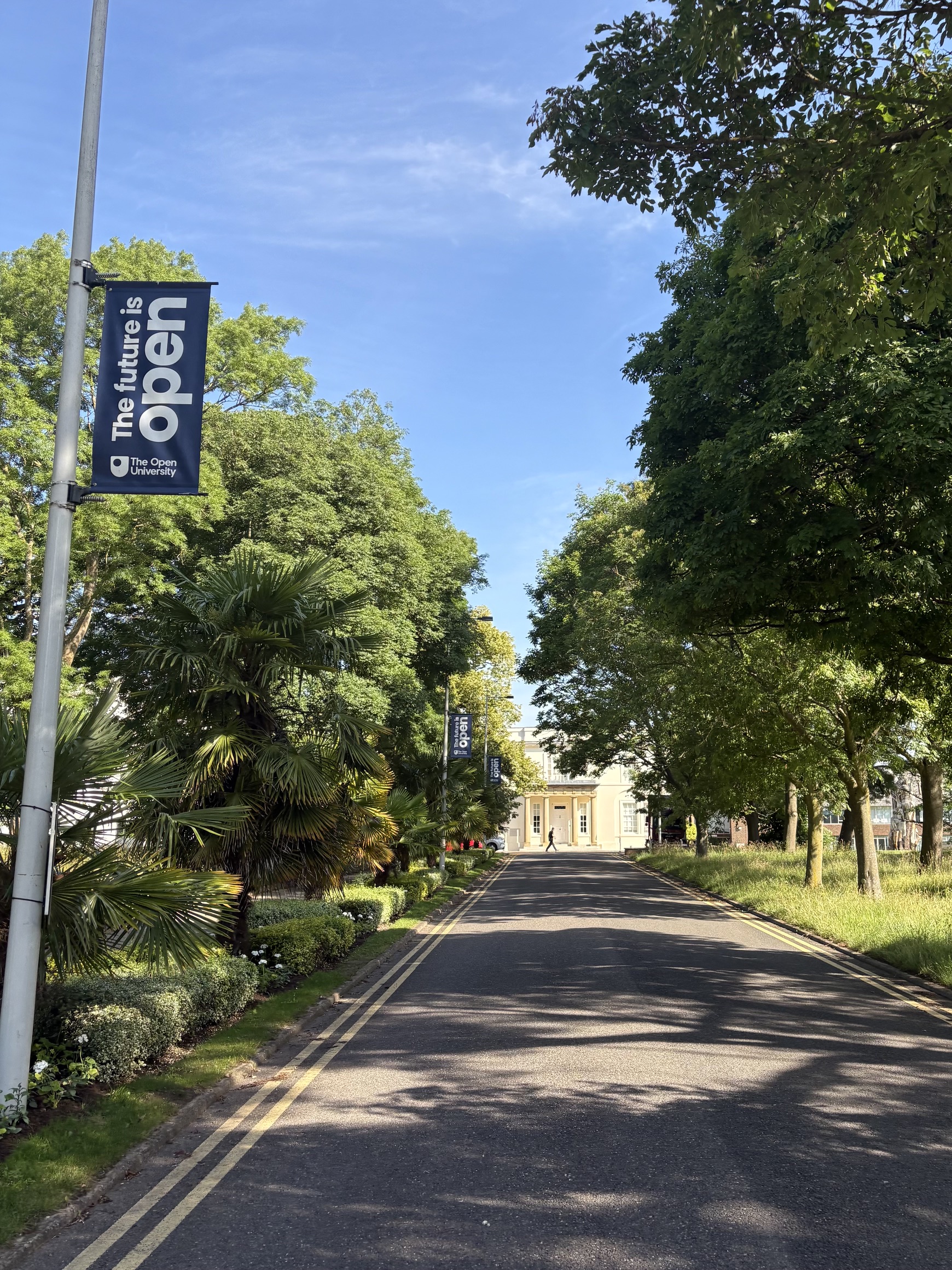
    In true OER-style the weather in Milton Keynes was super sunny. Walking across the campus of the Open University, with its green laws, shady trees and sun drenched buildings felt like joining a particularly educational summer holiday camp. Regular readers will know that the OER Conference holds a special place in my heart, and the beautiful weather and setting only added to a sense of joyful anticipation.

    I am deeply sensible of the privilege to be here, which is thanks to my work with Jim Groom and Reclaim Hosting, and delighted to come along with stickers and two talks (one for Reclaim and one for my next book). It’s a strong week for Open Education in Europe with Jim, keynoting across the channel at the OERCamp’s Future University Conference.

    Day 1

    (In some ways OER26 started the day before the conference proper, with an invitation to visit Bletchley Park and a social get together for the GO-GN network, which I attended. Rarely has a rooftop terrace in Milton Keynes looked as Mediterranean as it did in nearly 30 degrees Celsius that evening, and many hugs were exchanged as we toasted freshly minted Dr Leo Havemann.)

    Now, back to the actual conference day. After a warm welcome, the opening keynote was delivered by Prof. Eileen Scanlon, both deeply grounded in the subject and engagingly personal. It was amazing to hear someone with so many decades of experience speak on open and technology in education. We often bemoan the lack of historical context in current discourse, what we might term “predicting the future of education by press release” and the opening keynote provided an important counter narrative for just that.

    During the coffee break a fellow delegate and I got talking about how inspiring we both found it to see many Open University colleagues stay put for decades, resulting in a remarkable level of institutional knowledge and collaboration. At a time when having a long term career in a single job or even a single institution feels like it’s becoming more and more rare, that feels inspiring. “If people are staying here for decades they must be doing something right.”

    Speaking of people who seem to be doing more than something right, OER26 brought me a special moment of joy when meeting Robin DeRosa and her colleagues from the Open Education Network and also meeting colleagues from TRU. A packed room for my session on “From Experiment to Enterprise” was still blissfully cool, and I nearly ran out of Reclaim laptop stickers before the end 🙂

    Other highlights from Day 1 for me were:

    • Sustainability Words of Wisdom: Exploring the first year of a pan-university project curating effective sustainability practice examples at the Open University by Catriona Matthews, Paul Astles;
    • Open Educational Practices as Digital Public Goods: Promoting Resilience, Equity and Innovation in Higher Education Ecosystems by Javiera Atenas, Leo Havemann, Fabio Nascimbeni;
    • Celebrating 20 Years of OpenLearn with Andy Lane, Simon Ashby, Cathy Casserley and Glenda Cox.

    To end the day, I was fortunate to chair two research papers, including Dr Leo Havemann’s doctoral research on Valuing OEP: Community, Care and Scholarship. It was lovely to be able to congratulate a newly minted GO-GN PhD in person.

    Day 2

    After a heavy downpour the night before the sun returned for the second day. The keynote on OER, Sustainability, and AI in Open, Distance, and Digital Education (ODDE) delivered by Prof. Dr. Olaf Zawacki-Richter was fascinating (and on a side note, that was the second keynote this month delivered by someone based at the University of Oldenburg, the first being Prof. Felicitas Macgilchrist whom I saw keynote in Dublin at the start of this month. I wonder whether in these complex and uncertain time the precision and clarity of a German approach to academic rigour has become more attractive to conference conveners).

    Digital Sustainability was a big theme at the conference and the second keynote was very insightful on that topic. It was interesting to me how digital sustainability, in the widest sense, relates to the quality of OERs produced, both technically and pedagogically. Much of the research that informed the keynote originated at the OU, especially the Journal of Interactive Media in Education, or JIME. Which in turn celebrated a big milestone at OER26: Thirty Years of the Journal of Interactive Media in Education: Open Scholarship as Intellectual Practice.

    I chaired a great session by Lorna Campbell (we missed you, my friend!) and Joe Wilson later that morning: Exploring Institutional Barriers to Open Practice – a Scottish Case Study. We had a critical discussion around degrees of open, the context of AI and wider change and the impact on open infrastructure that increased bot traffic has.

    Other highlights for me were:

    • Rebuilding the Case for Open Education: Rethinking Advocacy Foundations in the U.S. by Nicole Allen
    • Developing an Undergraduate Certificate in Publishing and Editing by Kathy Essmiller, Aimee Parkison
    • From Fragmentation to Federation: Building a National OER Platform in Sweden by Jörg Pareigis, Axel Klinger

    I’ll blog more links to the resources in due course, and you can head to the OER website itself to explore more in the meantime.

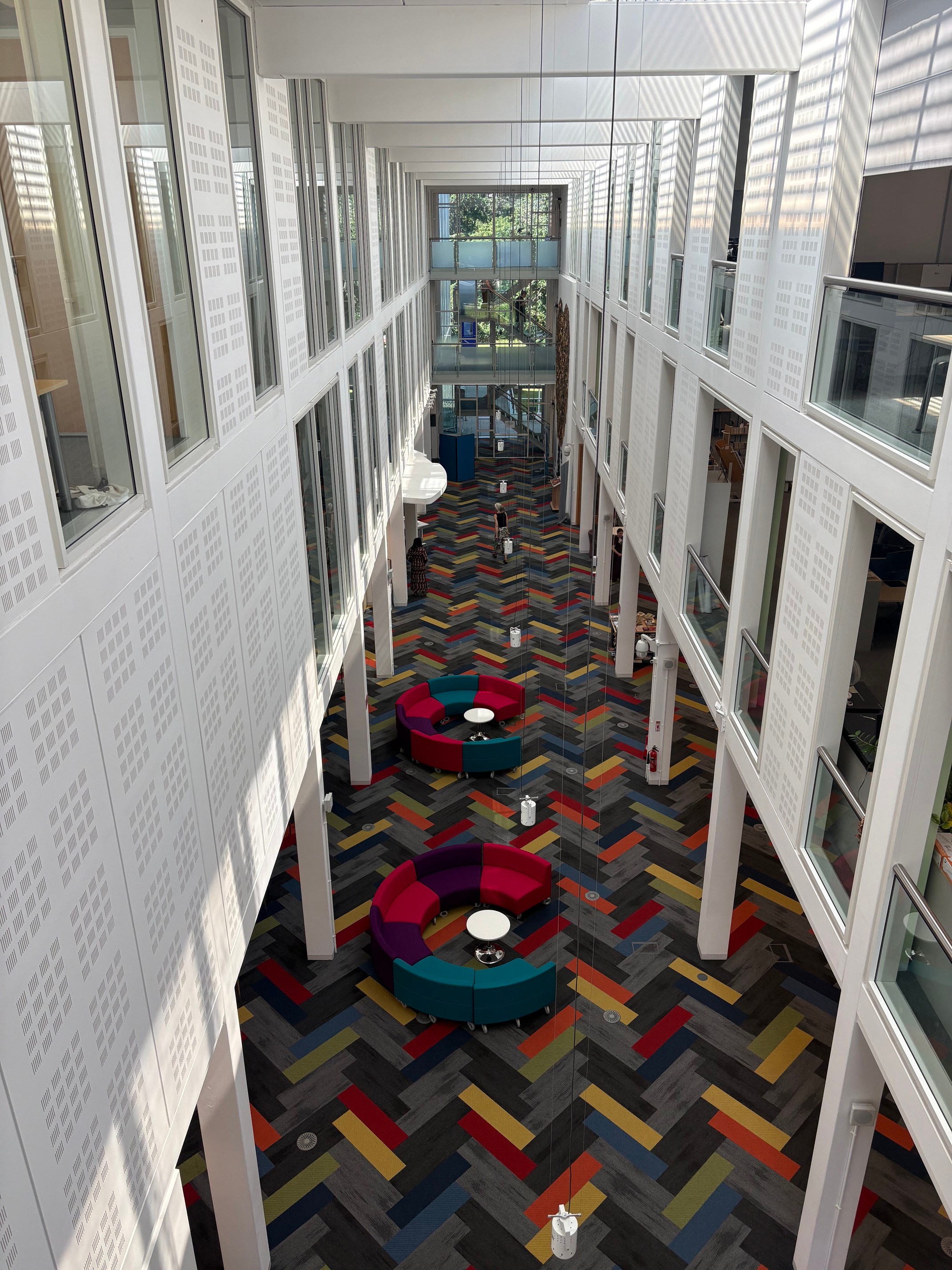
    As the heatwave continued and it got warmer and warmer throughout the event, the library’s informal and free deckchair lending scheme caught my eye. In the foyer were colourful deckchairs you could take outside to a shady spot. Ready to relax in the shade (the only ask is to return the deckchairs when finished). Hats off to the Open University library that hosted us for two days for such a fun and fab initiative!

    These sunny, hopeful days filled to the brim with Open Education goodness left me thoroughly inspired. The programme was both varied and challenging, focusing on some of the biggest questions in open education today. It made me think, reflect and discover lots of new ideas. OER26 also reminded me that even though the noise of the world might be louder than ever, the voices of Open Education are stronger, too, and set out new visions and approaches to make sense of AI, sustainability and change. Bravo!

    Big congrats to Beck and Rob, the Conference Co-Chairs, and the many volunteers and colleagues who played their part in making OER26 such a joy!

  • Helloooooo OER26

    Helloooooo OER26

    It’s that time once again: time to blog about this year’s OER Conference! This year I got started early, and submitted a guest post to the altc blog: Openness Reimagined… from How to Who.

    I missed last year’s event unfortunately, so I am doubly glad to be heading to Milton Keynes this year, and the programme looks amazing, kudos to the conference committee led by Dr. Robert Farrow and Dr Beck Pitt under the theme Openness Reimagined: Continuity, Change and Shared Vision and OER26 will also celebrate several anniversaries, including 20 years of OpenLearn and 30 years of the Journal of Interactive Media in Education.

    I volunteered as a member of the Conference Committee, taking part in the peer review process and planning sessions in the months running up to the event, which has only heightened my anticipation. And so, with a bag full of stickers I am heading to the Open University, proud to have two sessions in the programme.

    First up, I’m VERY excited to give a session about the case studies I have been working on with Reclaim Hosting. As I blogged on the Reclaim Blog:

    Reclaim has long been a supporter of this wonderful conference and in 2021 we even joined forces for OERxDomains21. We took part in 2023 in Scotland, and in 2024 in Ireland, and this year we are heading to the UK’s Open University for much open education goodness!

    Looking back at these conferences I have fond memories of my talk in 2024 together with Meredith Huffman, and all the fun we had hanging out with Alan Levine and Bryan Mathers, which led to the now legendary DS106 Radio Summer Camp. So what’s in store for this year, I hear you wonder:

    From Experiment to Enterprise: Open EdTech Case Studies

    Inspired by the conference theme “Open Practices and Pedagogical Innovation” our talk will showcase key points from several new Open EdTech case studies that show who and how institutions who are at the forefront of Open EdTech adoption develop, scale and deploy open source educational services.  As well as showcasing how open source technologies move from experiment to enterprise service, we will highlight just how important such work is for developing digital capabilities, for faculty and for students.

    I’m really proud of this piece of work and feeling privileged indeed that I’ll get to showcase this work which is very much a collaborative effort with Jim Groom, the whole Reclaim Team and of course the amazing educators and technologists that have kindly given their time and told their stories.

    At the recent ILTA Conference I talked about a different case study, and although it landed very well indeed and there was a lot of interest in how to build digital capabilities with Domain of One’s Own for example, I am looking forward to taking this project to a dedicated Open Education event, and take a deeper dive into the open aspects of the work.

    Session slides & resources

    Walking the walk…

    I also submitted an experimental session about the research for my second book, a session which is part podcast, part walk and a whole lot of storytelling. Although it’s a different part of my practice, it is conceptually aligned with the Reclaim case study, as it is also about open practice and how to use technology to navigate today’s uncertain and fast moving Higher Education landscape.

    If you’d like to take a closer look, check out the dedicated podcast episode below.

    OER26, I can’t wait!

  • My talk #EdTech26

    My talk #EdTech26

    Today was a fab first day of the #EdTech26 Conference, the Irish Learning Technology Association’s annual EdTech Conference, 3-4 June in Dublin, celebrating its 25th anniversary under the theme EdTech You: Digital Learning From How to Who – and what a wonderful day it was!

    I shall certainly have to blog more about the conference which I have long been a fan of and this year’s event has only strengthened my appreciation for such a wonderful community event.

    Explore my talk

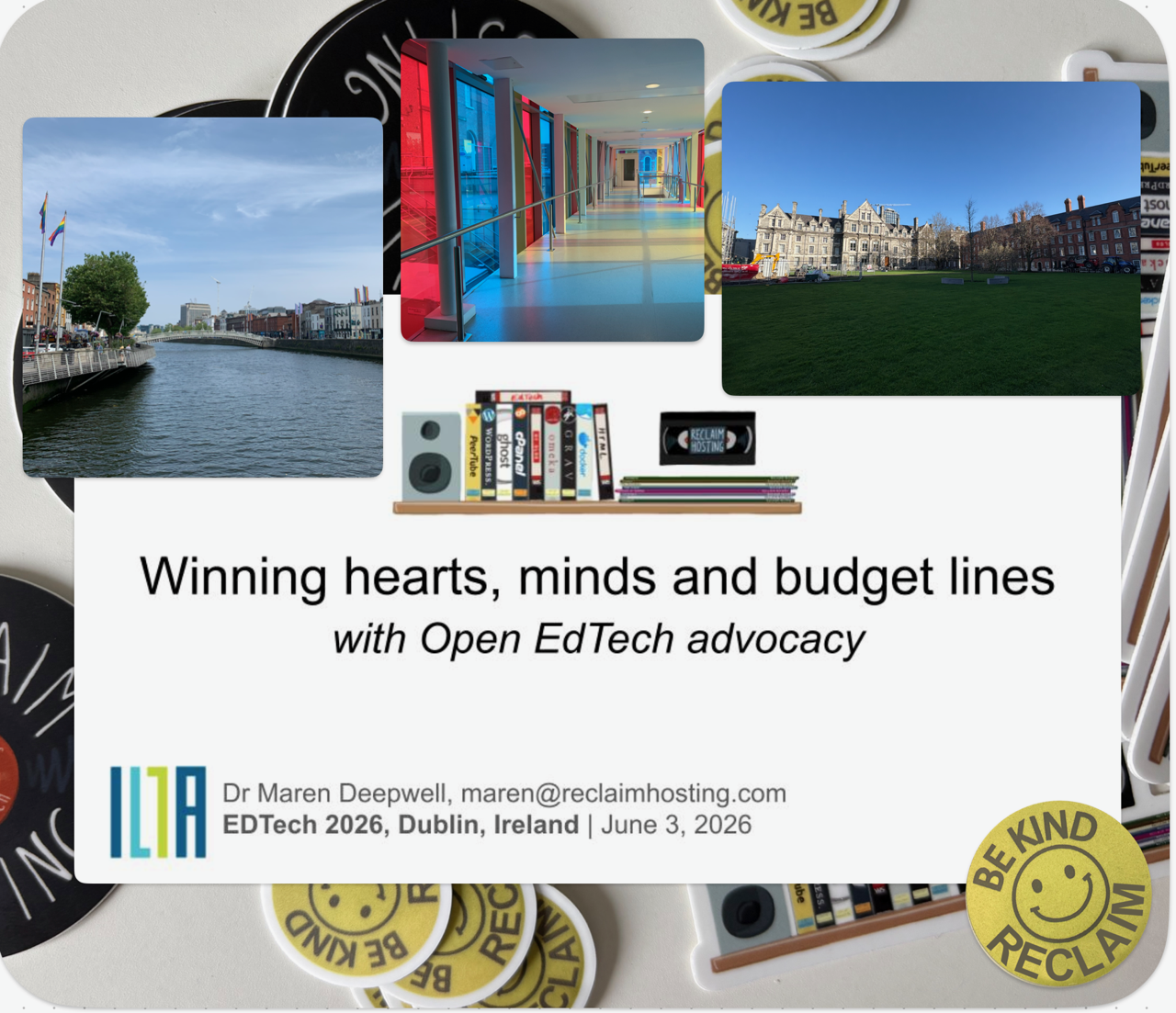
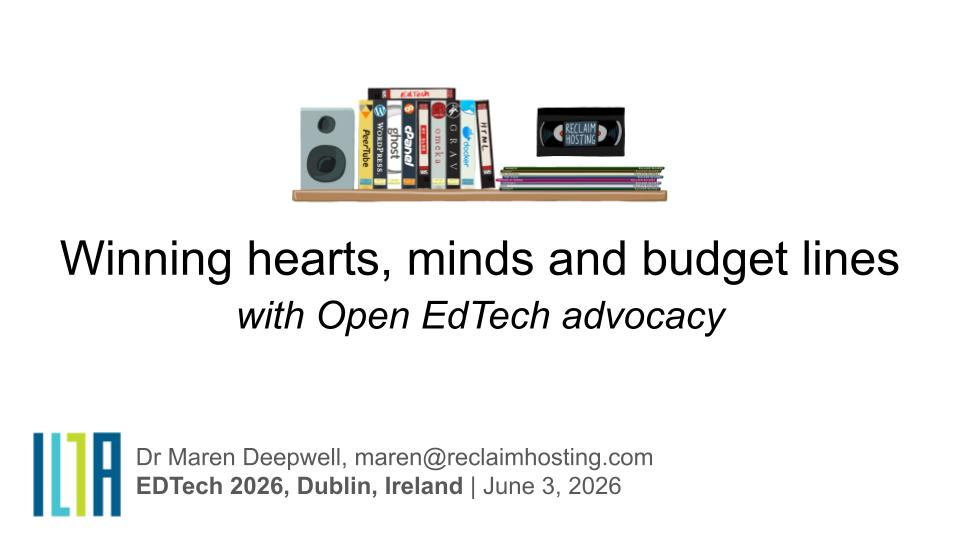
    I was happy indeed to contribute a short talk to the conference, so here’s the link to explore the slides and resources. Many thanks to Kate Molloy for chairing it so kindly and for making us all feel so very welcome!

    Presentation title slide

    Thank you to everyone who came along, asked questions and the biggest thank you to the wonderful folk and my colleagues at Reclaim who made the featured case studies such a joy to work on and share with the ILTA audience today!

  • Openness Reimagined… from How to Who

    Openness Reimagined… from How to Who

    Originally published on the altc blog, 22 May 2026.

    In June this year two conferences take place that celebrate important milestones in Open Education and Learning Technology: the Irish Learning Technology Association’s annual EdTech Conference, 3-4 June in Dublin, celebrates its 25th anniversary under the theme EdTech You: Digital Learning From How to Who. Just a few weeks later the OER26 Conference convenes at the Open University in Milton Keynes, to focus on Openness Reimagined: Continuity, Change and Shared Vision and celebrate several anniversaries, including 20 years of OpenLearn and 30 years of the Journal of Interactive Media in Education. 

    As a big fan of both conferences and their communities, between which there’s plenty of crossover, I am fortunate to attend both this year and a deeper dive into the themes of both events prompted me to reflect on the crossover between the themes, and how each of these events may act as a catalyst for action and for hopeful change across sectors. 

    The ILTA Co-Chairs, Dr Rob Lowney and Kate Molloy, and the organising committee, pose the following questions

    • “We invite you to join us in a conversation that asks: 
    • Who was, is and should be the people of your/our Edtech community? 
    • Who was, is or was missing from conversations about digital pedagogies ? 
    • Who are we designing for (or against) in EdTech, and who is missing?”

    For me, these questions relate closely to the wider context and the challenges it poses which are at the heart of OER26 led by Dr. Robert Farrow and Dr Beck Pitt: 

    “Openness has expanded participation, reshaped practice, and challenged assumptions about who education is for and how it should be delivered. Yet openness is not static. It evolves alongside the social, political, and technological conditions in which it operates. The rapid development of AI systems, platform-based infrastructures, shifting policy environments, new economic pressures, and renewed global debates about equity and justice are reshaping the terrain of open education.” 

    In both themes I see a call to (collective) action, a sense of urgency that care and connection should help determine the shape of things to come, rather than allowing technological imperatives to set the agenda. In addition, the milestones being celebrated reflect decades of valuable expertise and experience, of knowledge about the “how” of innovation in both open education and learning technology, and the invaluable work of (often volunteer) reviewers, contributors and collaborators. 

    Times may feel more uncertain than ever, and this is precisely why events like this, organised by member organisations in partnership with universities and volunteers, are so important: they open up space for reflection and discussion, galvanise action and help build new alliances and collaborations. 

    So here’s to you, OER26 and EdTech 2026! Like hundreds of fellow participants, I very much look forward to celebrating the milestones, swap stories and share inspiration come conference week!

  • Rest and Resilience. CPD for Uncertain Times

    Rest and Resilience. CPD for Uncertain Times

    Earlier this month I joined forces with Lou Mycroft for an AmplifyFE webinar hosted by ALT. The theme we have picked is rest & resilience, inspired by both Lou’s work on radical rest and my work relating to building healthy hybrid leadership capabilities for uncertain times.

    Working with Lou is easy as breathing, because Lou is such a prolific facilitator. It’s always a joy to work with someone who is THIS good at making collaboration easy, who makes everyone feel welcome and who has a gift for explaining complex concepts in such a way that you can relate very easily. It was such a joy!

    Lou’s one of the people behind an innovative Instagram Magazine called Fusion, and inspired by our session I’ve submitted an article, which will hopefully be published in the summer.

    The recording of the session is now available to watch and you can also access the slides with links to the resources we discuss: