Category: leadership

  • Twenty years of blogging… now on ReclaimPress

    Twenty years of blogging… now on ReclaimPress

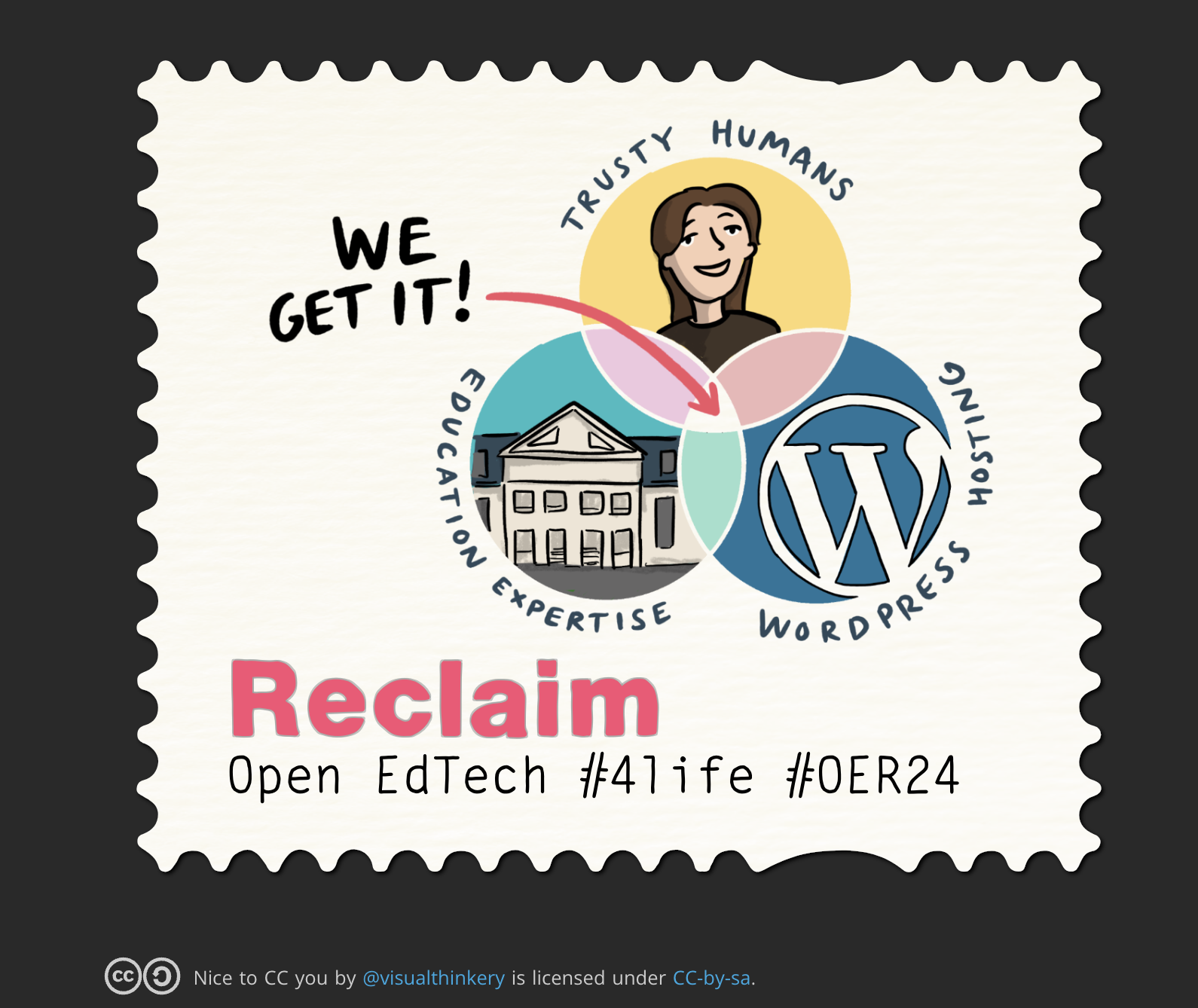
    I recently shared that as part of my work with Reclaim Hosting, I had the privilege to talk with Bryan Mathers and Meredith Huffman about the story behind ReclaimPress and as a result there’s a case study all about ReclaimPress on Reclaim the blog, that is definitely worth having a look at (I wrote it, so I might be a little biased, but hearing from Bryan and getting a healthy dose of his creative genius paired with Jim’s vision is always worth it!).

    ReclaimPress is running a beta program, and I was invited to take part in it, enabling me to test drive this newest offering. Now, full disclosure here, I have been a (very happy) customer of Reclaim Hosting’s Shared Hosting package since May 2016, when my WordPress site and domain moved over to what seemed to me the best independent hosting company around. Having met Jim for the first time at OER16 in April 2016, you can see that my first impression of Reclaim’s work up close and personal had a lasting effect… .

    In 2016 I had already been blogging for quite a few years, from my earliest days on Blogspot or Blogger (or what that service was called to begin with?), then on a Google site or three, and then on WordPress.com. Trawling through my archive, it looks like I started blogging prior to starting my PhD in 2004/5, from which point on my blogging took on a more serious form and from 2009-11 I wrote a blog dedicated to my postgraduate research, the archived copy of which still exists at https://cemeteryscapes.blogspot.com/ . Twenty years or so of blogging means that I have blogged for nearly half of my life (it’s my birthday this month, so the passage of time has been on my mind).

    Over the past decade however, from 2013 onwards, blogging has become a lot more important to me. On my archive page you can still see posts back that long https://marendeepwell.com/?page_id=45 and the drop down menu of posts on the sidebar goes back to 2010, and my blog currently has around 530 posts and 43 pages.

    All of this wasn’t really on my mind when I got the invite to join the beta program for ReclaimPress. I was simply excited to try something new, experience for myself a service that the team I work with on a free-lance basis had put in many months of effort developing and fine-tuning. I was excited to give it a spin and experience the faster service for myself alongside a small group who are also part of the beta program (you can sign up, too).

    And then, just as Taylor, who heads up ReclaimPress, checked in with me about moving the blog, the fear of the whole testing process suddenly hit home. My blog, which I mostly take for granted, and which, thanks to the super solid shared hosting experience I have had ever since 2016 I never really had to worry about, ever, suddenly became my most precious of domains.

    It never occurred to me that anything could go wrong, until things moved. Eeek. And that is despite the fact that Taylor did absolutely everything to walk me through the process step by step, checking in at every stage, and handholding me so that I basically just had to sit back and relax. Nothing was lost, everything looked great (and fast) at every step. And yet… it suddenly dawned on me that if this site is really quite so important to me, why haven’t I invested more to make sure it stays safe and sound and well maintained and backed up and so on…!?

    When Bryan, Meredith and I talked on Reclaim TV about Bryan’s experience, he mentioned that he had some sites that couldn’t go down, sites he wanted well looked after without having to navigate a fully blown enterprise level admin process like Reclaim Cloud. And I thought to myself, well, Bryan runs his business on the web, he does have sites that can never go down… totally understandable. I only have a blog, with a ‘select’ readership. It wouldn’t matter to me if it went down… OR WOULD IT?

    Turns out, when it comes to this precious blog, I am completely petrified of anything happening to it and now that it has moved to a new home I am very much relieved. It is testament to the excellent support and outstanding performance of the shared hosting that Reclaim provides that I didn’t run into any disasters over the past eight years. It ‘just’ worked, seamlessly, year on year. And whenever I did have a question about how to configure something, help was kindly and always on hand.

    I probably should have thought a little more about moving my blog before it happened, but I needn’t have worried. As you can see, normal service was never interrupted, and my site, and all of its history, lives on more happily than before on a service that can grow if my blogging ambitions get bigger. With a new book around the corner, and a couple of other projects in the pipeline, you never know quite how big those dreams will get. It’s reassuring to me that ReclaimPress can offer my blog a forever home. Full stop.

    What I have learnt along the way is that I need to take better care of this precious domain, my home on the web, and that I need to make sure not to rely on the infrastructure and help from the good, the excellent, folk at Reclaim Hosting alone. I will need to invest some time and some resources into making sure that I have everything in place to start my next decade of blogging in the best possible shape, and that this space continues to thrive in an ever more fragmented, contested and hopefully federated online space in future. Here’s to the next twenty years of blogging. Now (and hopefully forever more) on ReclaimPress.

    Subscribe to my monthly newsletter and never miss a post!

    [newsletter_form type=”minimal”]

    Featured image: Photo by Bernard Hermant on Unsplash
  • WiAL Webinar: My Leadership Journey

    WiAL Webinar: My Leadership Journey

    The ASCILITE’s Women in Academic Leadership Initiative aims to provide mentoring opportunities for academics and brings together its members via a community approach to support each other to progress in academia. Thanks to a recent invitation to speak at an upcoming WiAL webinar, I have started to think about my journey as a leader and what I could usefully share with this group of inspiring and aspiring academic leaders.

    My story, like so many of us who work at the intersection of education, technology and more, is not a straight line from degree to equally distributed career arc. My academic background in art and anthropology is not a natural stepping stone into non-profit leadership or project management even though to me it all makes sense (at least in retrospect). So when I share with people that I spent my PhD research in a cemetery and somehow less than ten years later I was the CEO of an edtech organisation there are definitely some curious glances.

    To bring some kind of order to the messy madness I have decided to present a couple of snapshots, rather than try to present a coherent narrative. From the beginnings of my undergraduate studies in the 90s, to my PhD years and even much of my early career a lot of my (paid) work involved bookshops, cafes, cinemas and market research. In short, any job that you could do as a young, foreign worker in the UK whilst still attending lectures sufficiently to pass my studies.

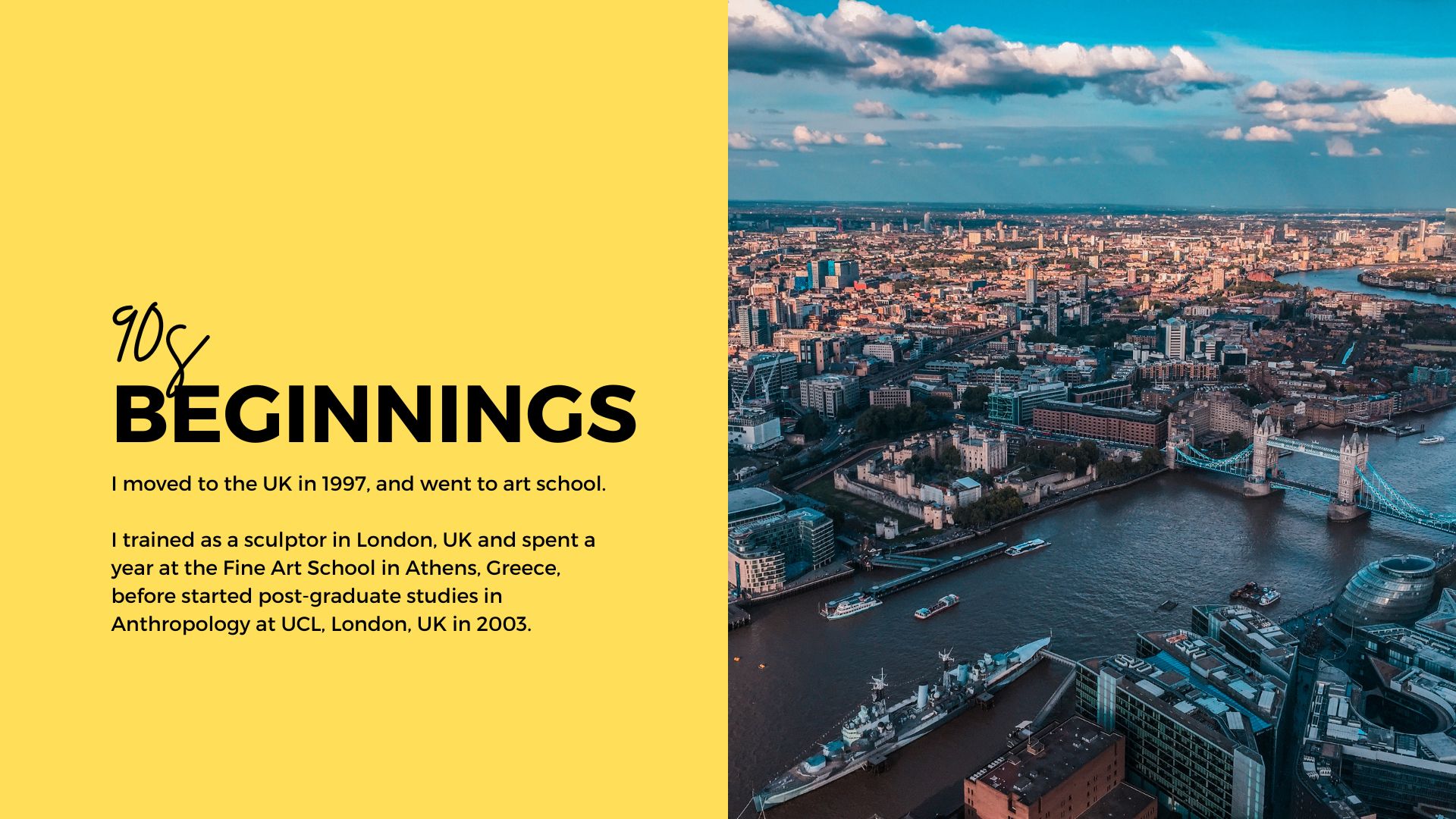
    Slide with the text: 90s Beginnings 
I moved to the UK in 1997, and went to art school. 

I trained as a sculptor in London, UK and spent a year at the Fine Art School in Athens, Greece, before started post-graduate studies in Anthropology at UCL, London, UK in 2003.

    When I think about what is important to me in my leadership practice, I think about my values and how what I do and the approach I use align with and reflect those values. Alongside my values, there is what motivates and drives me. Leadership roles can often feel quite lonely and isolated, and the more senior you are the more others look to you for encouragement and vision. Which brings me to the third aspect: developing my own voice.

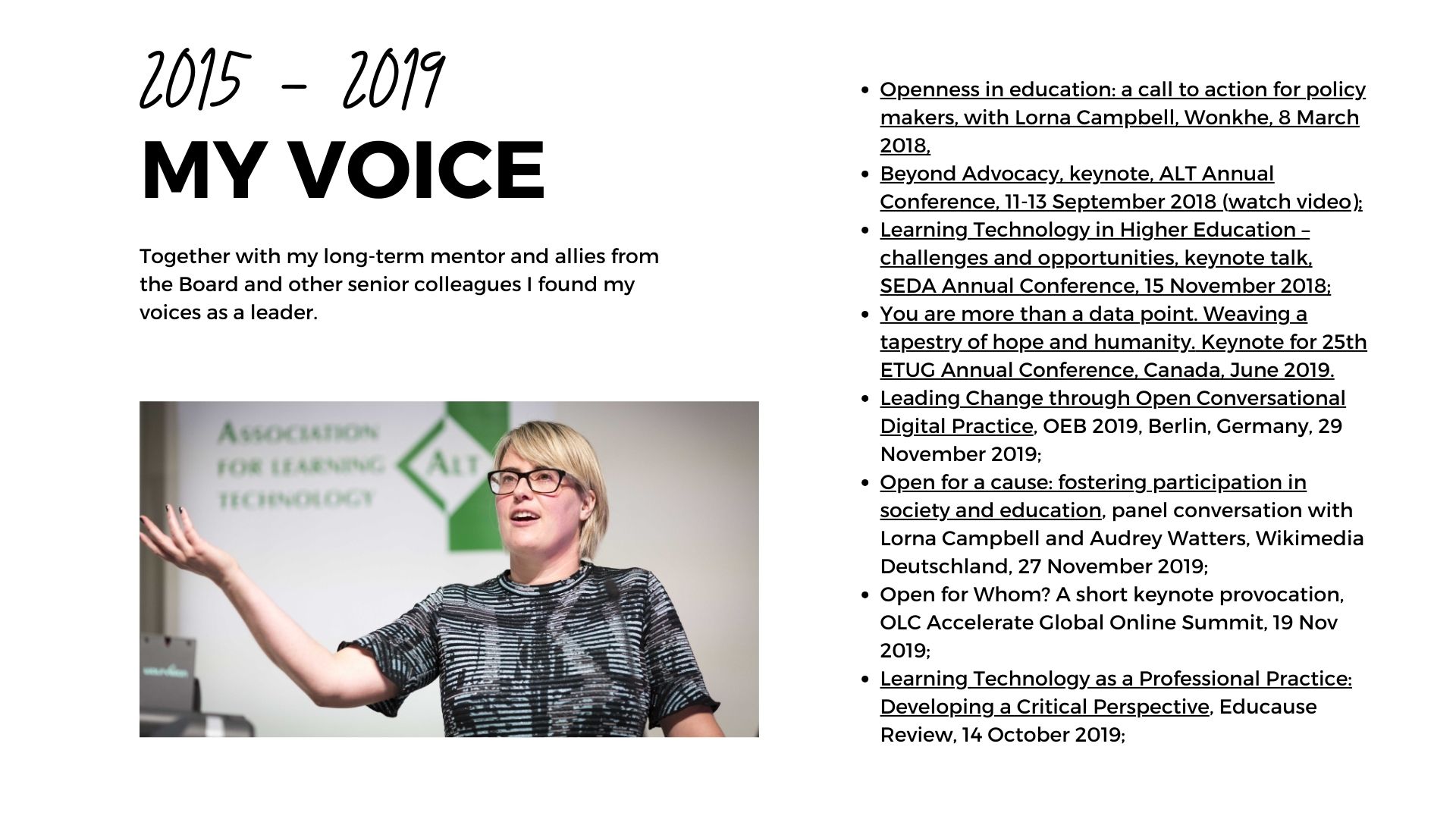
    For me, that process didn’t happen in isolation. I had invaluable support from my long-term mentor as well as allies from the Board I was working with and other senior colleagues external to the organisation. They helped me build confidence, not just capability, and encouraged me to find things I am passionate about. They also helped me step into larger stages, to develop my presence for giving keynotes and writing opinion pieces.

    Slide with the text: 2015 - 2019 My Voice. Together with my long term mentor and allies from the board and other senior colleagues I found my voice as a leader.

    Looking back at that list of keynotes and articles brings back a lot of good memories for me. In those years prior to the pandemic my perspective had begun to expand, and I started to enjoy being part of a wider dialogue. I had found a good balance between having experience and still being new enough in my sector to see opportunity for change. I was excited to be doing what I was doing, and I made connections with people who really opened up my mind to new (to me) ways of thinking, writing and working.

    These relationships provided a very valuable network of support and inspiration when the pandemic hit and I entered my first years of permanent crisis as a leader. All risk registers were RED, all of the time. Everyone I knew and worked with was constantly fire fighting. The world had been turned upside down, and education with it.

    My voice as a leader during those years of crisis had to become one of clarity and decision. We had to get through it, and eventually, we did. Relationships were both strong in solidarity and fraught by lack of sleep, energy, rest and hope. Like many, the pandemic prompted me to re-evaluate things and having reached a point of organisational recovery I was proud of, my energy was spent and I decided to embark on a period of transition to a new chapter in my career.

    2023 was focused on that process of transition, of letting go for a lot of relationships I had built over a period of 15 years, and starting to lay the foundation for my next chapter and a new way of working. What I discovered during that period is that being a leader is part of who I am rather than something I do, or a job title. It’s stayed with me, even though the only person I manage is myself and I run my own little enterprise rather than an organisation for thousands of members.

    At this stage in my career I feel I have less to prove and more power. Now I am looking to leverage my expertise and experience to achieve the kind of work life balance that works best for me, to be creative and have fun and to follow where my curiosity may lead me.

    Slide screenshot with the words: Next? What I've discovered this year is that being a leader is part of who I am rather than something I do, or a job title. At this stage in my career I feel I have less to prove and more power. Now I am looking to leverage my expertise and experience to achieve the kind of work life balance that works best for me, to be creative and have fun and to follow where my curiosity may lead me.
  • Open leadership in practice: Unsung hero skills

    Open leadership in practice: Unsung hero skills

    Recently, I have done much work in leadership development. Both in the workplace and when I coach clients, I come across emerging and established leaders who have developed strengths and skills gradually over time, whether through informal learning or through practice or also outside of work. Especially where skills have come easily, grown over a period of time or when we have learnt something just for fun, these are often overlooked in favour of those skills we find hard to acquire or that are formally accredited by others. These strengths and skills often serve us well, but don’t get recognised. I am curious how we identify and appreciate such strengths or skills, and how we can move from seeing them as something we can simply do, to something we’re good at.

    Recognising and celebrating our ‘unsung hero’ skills is a powerful habit to cultivate in order to build confidence and develop as a leader. For example, when I coach leaders I always listen out for how they well they recognise their own strengths. Knowing your own strengths (and weaknesses) helps enormously with everything from effective delegation to seeking expert input. For instance, we might explore a narrative in which someone has applied their considerable skills to a problem, analysed the issues, found a solution and prepared to present this at a meeting – only to miss the chance to speak because something else comes up. Often this individual will end up with a sense of failure because they didn’t achieve the outcome they desired. All the good stuff that happened along the way fades into the background, and the most recent, negative interaction stays at the forefront of their mind. Sounds familiar?

    On my own journey as a leader I have certainly had experiences like this, and in my haste to keep up with the pace and to move from one milestone to the next I can easily forget to take a moment to appreciate what I have accomplished or learned along the way (regardless of whether I did get to speak at the meeting or whether others even saw my effort). Cultivating a habit of recognising and even celebrating the skills and strengths that help me accomplish my goals especially when constructive feedback, recognition and positive reinforcement are lacking, helps me value my own work.

    Yoga, one of my unsung hero skills

    One of my unsung hero skills is yoga. It’s probably been seven or eight years since I started practicing yoga, and it’s not a skill I ever really think about as something I am good at. I am neither as flexible nor as strong as I’d like to be, and even after years of practice, my down dog pose has me bending my knees and my heels have never yet touched the ground (thank you, hamstrings!).

    Still, when I take a moment to think about it, I quickly realise that I value my yoga practice deeply, and the benefits it brings for my physical and mental health. It’s also incredibly helpful to get out of my head and away from the screen, shifting my focus away from the digital realm and on my body and my breath.

    How did I develop this skill?

    I have been fortunate to have found teachers who I find both inspiring and practical, I have enough yoga stuff at home to make my practice as comfortable or as challenging as I want and I also have excellent online video classes. Each mode of engaging brings me something different:

    Home-practice: I started yoga with one to one lessons with a new teacher, who was developing her way of teaching as I learnt. I loved it and I benefited enormously from the attention of someone who got to know me and my body very well. I also got to explore a whole range of poses that take up too much space, set up or wobbling to be practical in a busy class. I love putting on music and setting myself up for a good session at home, knowing that I can spread out and wobble as much as I wish, repeating poses that feel good and make me happy. I love setting my own pace of practice and I enjoy the creativity of following the flow of movement according to what feels good.

    Online classes: It’s been only in the past year that I found an online/video class platform that I enjoy (Apple Fitness) and up to this point my only good experiences of online yoga was with teachers I personally knew. Unfortunately my current schedule is pretty unpredictable and changes from week to week, which is fun but makes attending a class regularly a challenge. And that is where the online classes are a great help. I tend to not push myself as much in terms of speed and strength when I practice on my own, and these classes help me build stamina and strength. I know enough about what I can and can’t do to modify when I need to rather than attempt to follow each and every pose the instructor show.

    Taught classes: My favourite way to practice by far is to attend a class, and I am very fortunate to have found several teachers that I love, which has made a big difference to me when I moved cities. My current teacher, Osk, who runs classes at Physio Space here in Cardiff, is not only a wonderful teacher, but also has a real gift for holding space. Her holistic approach to yoga provides just the right balance between being mindful and challenging. In her classes my form has improved just as much as my enjoyment of the practice.

    I’ve never sat down and thought about how I developed yoga as a practice, and even now that I have written it down, it very much feels like something that happened on the side or along the way as many of these kinds of strengths and skills often do. It’s also a skill that isn’t directly related to my work, so it feels less… I am not sure what the right term is.

    There are plenty of skills, my own unsung hero skills, that I would never put on a resume or list on a profile simply because I either take it for granted that this is something ‘everyone knows’ or a strength that is hard to quantify.

    Listen to the podcast :

    Identify your unsung hero skills

    What is important to reflect on here is that leadership is a holistic, embodied practice. Being a leader doesn’t just happen through formally recognised work skills or on good days, and by extension the skills and strengths we utilise aren’t limited to those that we earn degrees for or that are hardest to gain. The unsung heroes in our skills and strengths often make a bigger difference to our journey.

    If you’d like to identify some of your own unsung hero strengths or skills, here are some prompts to get you started:

    • What activities do you enjoy?
    • What skills or strengths do you use for these activities?
    • What would a friend or colleague say you are good at?
    • What skills did you enjoy learning?
    • What comes easily to you?

    Use these for reflection, journalling or in a conversation to get you thinking about what in your toolkit might deserve more recognition.

    Image credit: Photo by Markus Spiske on Unsplash

    Enjoyed this post? Subscribe to my free monthly newsletter:

    [newsletter_form type=”minimal”]
  • Behind the scenes of Digital Leadership

    Behind the scenes of Digital Leadership

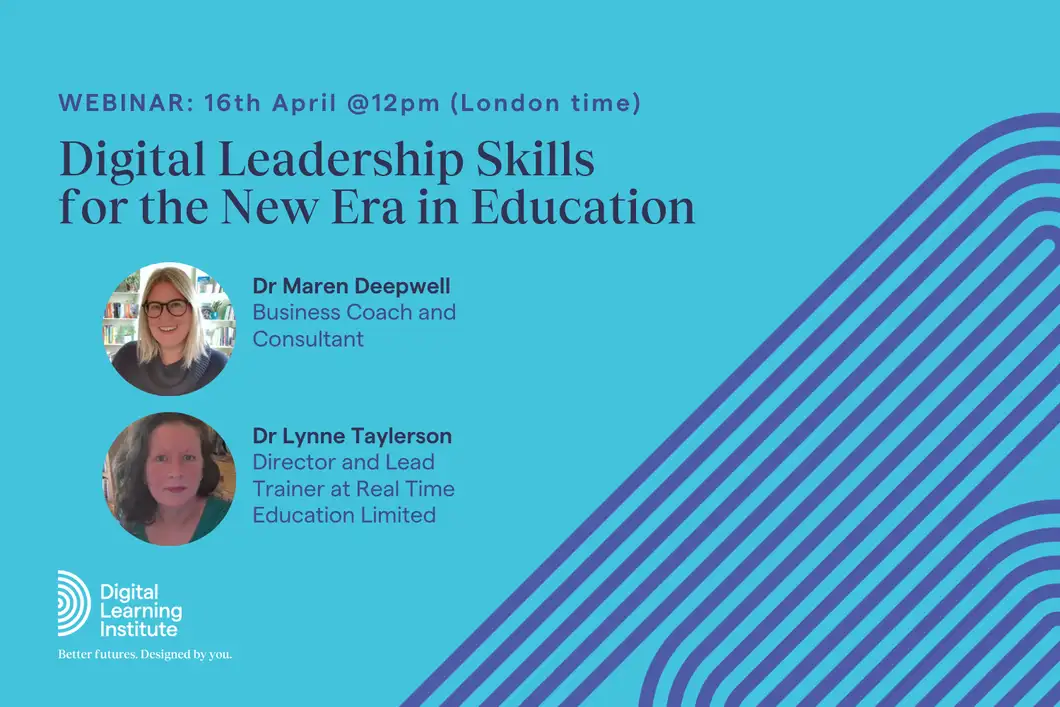
    ‘Digital Skills for Emerging Leaders’ is a new micro-credential course from the Digital Learning Institute that I am working on together with the amazing Lynne Taylerson. It’s a super project to be involved in, and it’s extra special for me as I get a change to collaborate with Lynne outside of our other favourite project: AmplifyFE.

    Usually we work on this kind of project at a distance, using the kind of digital skills we talk about in the course to collaborate and communicate. That said, there are also some precious hours of working together in person in the mix and so Lynne and I recently spent a day together recording videos and fine-tuning the course:

    It was so fun to be able to do this together, a rarity for this kind of project, at least in my experience, and I am sure that will be reflected in the quality of the final product as well.

    Join us for a masterclass webinar

    As part of the project we are running a masterclass webinar: Digital Leadership Skills for the New Era in Education. It’s free to attend and open to all, on 16 April 2024 at midday (GMT).

    What to expect:

    • Explore digital skills for emerging and established leaders working in education and training
    • How is leadership changing in hybrid institutions or on a virtual campus?
    • Ideas to take away: ask our experts for top tips and answers to your questions.
    • Learn about authentic leadership in digital education

    Look out for further updates on the micro-credential, which should be launching soon.

    Keep in touch with what I am up to and subscribe to my monthly newsletter:

    [newsletter_form type=”minimal”]
  • Six months of gold dust.

    Six months of gold dust.

    Today feels like a milestone day. The clock’s have changed here in the UK, it’s the last day of the first quarter of the year… spring is underway (if still a lot wetter than I’d like) and I am freshly returned from an inspiring week in Cork at the OER24 Conference. It’s also been six months now since I started working in my new ventures, over a year since my departure from ALT was announced… and I feel like I have landed in a new place.

    From now on, I will still share updates on how I am doing, but maybe not as frequently. Things will continue to evolve no doubt, and that is both exciting and expected as I build this chapter of my life. I have a sense of having begun, to have arrived, here, in the new place. Tomorrow is Monday, and my plan for the day is to spend a lot of time thinking, planning and plotting, fitting in a run and a dog walk, as well as some much needed tidying of my domains, both domestic and digital.

    So to wrap up this season’s podcasting and to celebrate this milestone, I have recorded a special episode, sharing some of the highlights of the past six months and also some things I am especially looking forward to. Happy listening 🙂

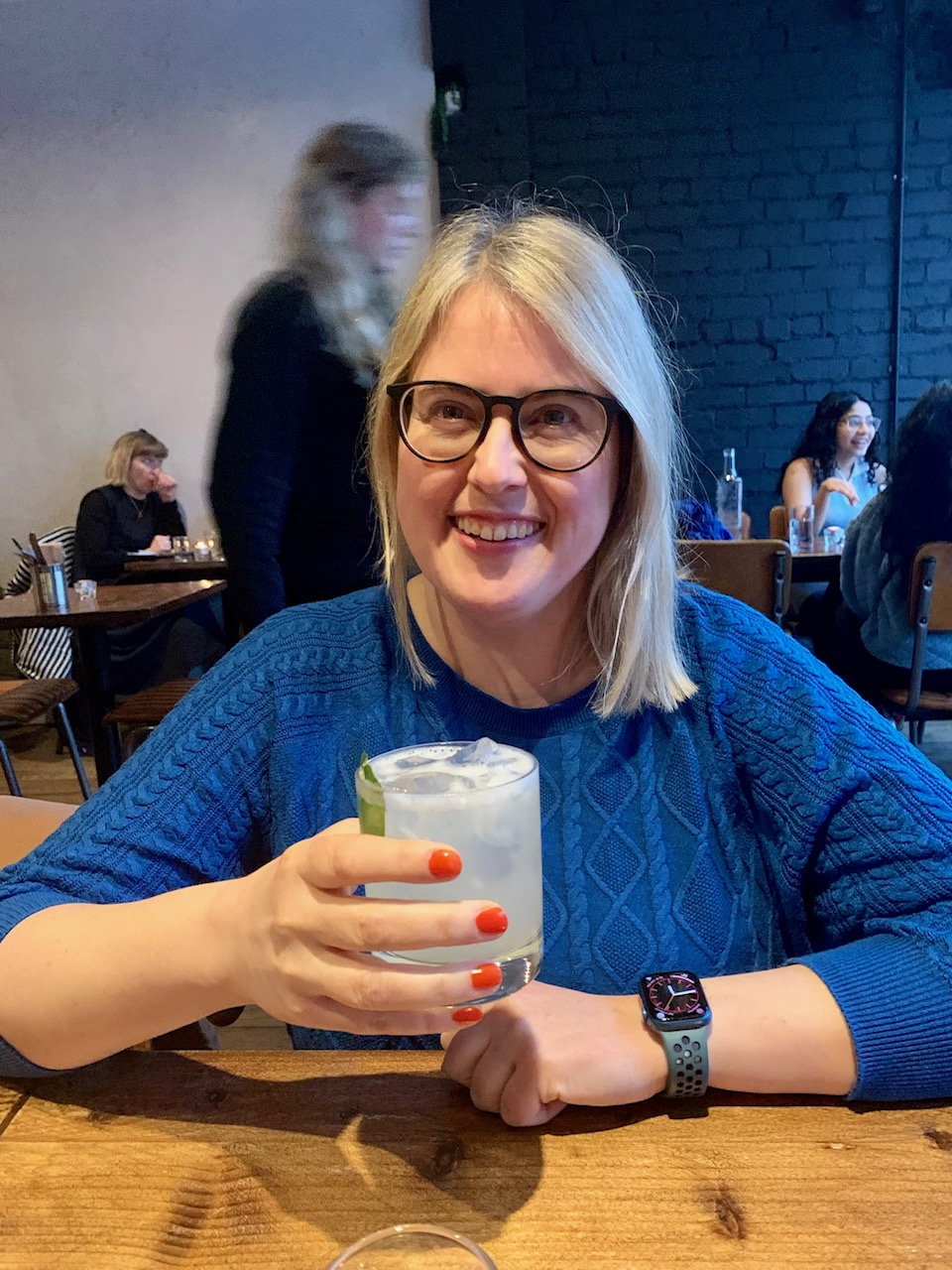
    Maren holding a glass in a blue jumper with a restaurant in the background, celebrating.

    Six months in blog posts and podcasts

    The story in blog posts:

    Podcast episodes about my fresh start:

    Listen to Leading Virtual Teams on: Apple Podcasts, Google Podcasts and Spotify.

    Enjoyed this post? Get my free monthly newsletter directly to your inbox.

    [newsletter_form type=”minimal”]
  • OER24: Blogging is the way… open is the way

    OER24: Blogging is the way… open is the way

    I am still in Cork, Ireland, as I write this post, feeling both tired and elated after a wonderful week at the OER24 Conference. My first time attending the conference as a delegate was a great experience, and I thoroughly enjoyed it!

    The Co-Chairs, Dr Gearóid Ó Súilleabháin and Dr Tom Farrelly from the host institution Munster Technological University (MTU). led a fantastic effort together with ALT’s team headed up by Kerry Pinny, and the Conference Committee and MTU teams did everything to make the event such as success. Big kudos to all involved!

    In the best tradition of the conference, you can explore:

    as well as a host of slides, resources and images posted with the hashtag #OER24.

    My OER24 highlights

    Together with my colleague Meredith (Fierro) Huffman from Reclaim Hosting I did a short talk on Reclaiming #Edtech4life in Open Education. I blogged a preview of this a few weeks before the event, and Meredith blogged our talk complete with slides and a link to the full video version we recorded together with Jim Groom on her blog.

    We had the best fun with this talk and it prompted los of questions and inspiring conversations, which is always the best bit of being able to hang out at conferences in person.

    Drawing of playing cards in front of a blue background featuring the authors

    Another short presentation, this one together with Martin Weller, was another highlight for me. Entitled “The sound of Open Practice in social media wilderness” this talk focused on open practice in the form of radio and podcasts, and you can access our slides and a podcast version of the talk complete with re-mixed Visual Thinkery, thanks to Bryan Mather’s Fabulous Remixer Machine.

    During Open Education Week earlier this month and in the run up to OER24 I got to take part in a number of virtual conversations (blog summary) and one of the best parts of this week that I was able to connect (and hug!) with so many colleagues in person, many for the first time since before 2020. That weeks like this are once more possible made my heart swell.

    There were also many absent friends, who weren’t able to join the gathering, and this is where being in a conference full of people not afraid to jump onto the airwaves or the interweb and start an impromptu live broadcast of hallway chats really helps! One of the voices we missed amongst the chorus at OER24 was Jim Groom, who still managed to permeate many conversations and moments of people shouting “4life” from the back seats.

    Jim published a wonderful blog post celebrating our visual anthology of Reclaim’s first decade with a tribute to That Mathers Aesthetic! … Needless to say that that aesthetic shone through the whole event, not least in the funny and stunning artwork Bryan created for it.

    I hope my first time taking part as a delegate won’t be my last, as this year’s OER Conference has confirmed for me what I long knew to be true: this is my favourite conference, and it has been for a decade.

    It’s small enough to allow for a sense of community and conversations, it’s big enough to always attract new voices and viewpoints, it’s special enough to inspire each year’s hosts to go yet another extra mile… and it’s important enough for an Association like ALT to put it’s weight behind it, year after year.

    Most importantly, it’s loved enough to bring out the very best in everyone who takes part.

    P.P.S. (A personal post script)

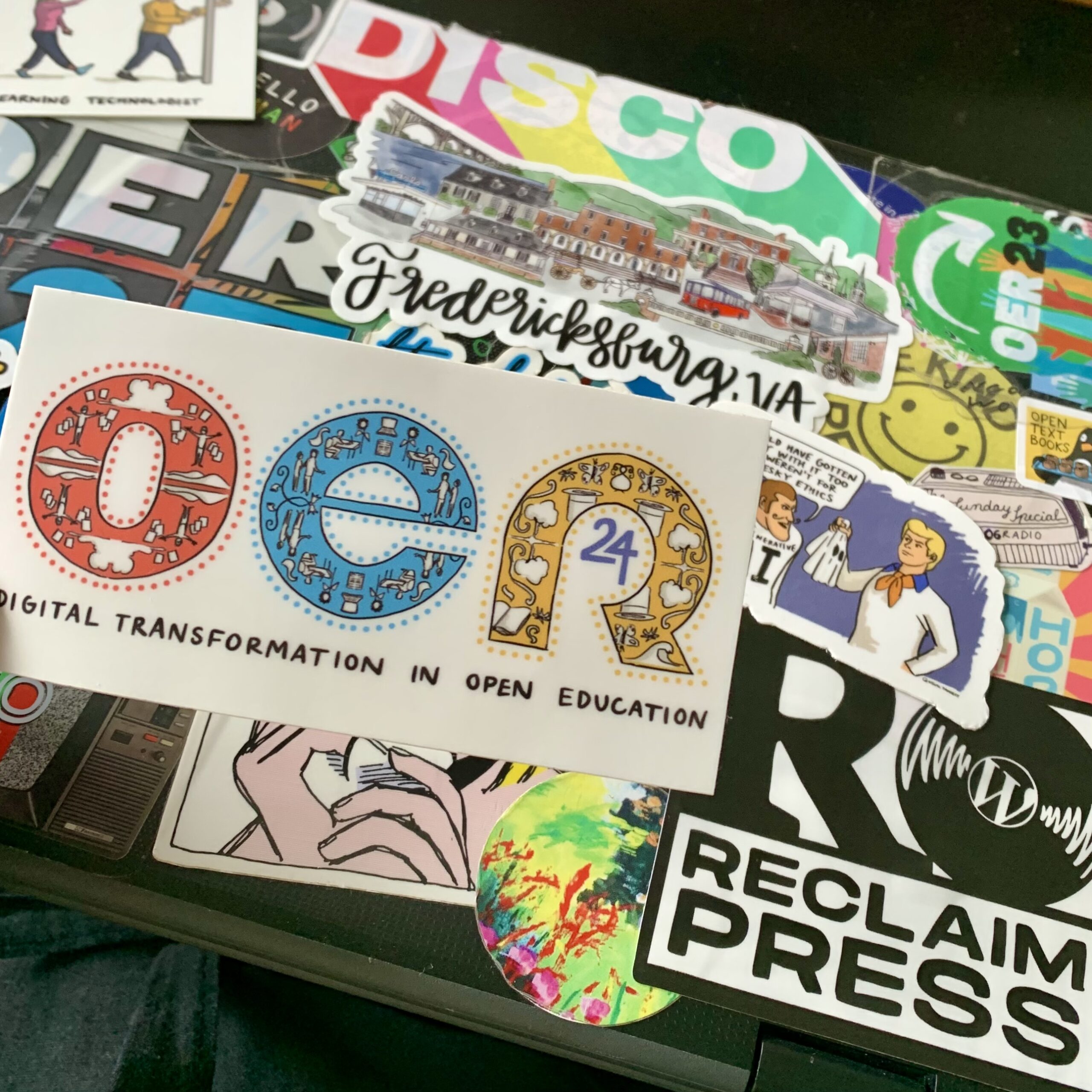
    I leave Cork with much inspiration, a bag filled with small tokens of joy and friendship (thank you!) and a whole collection of stickers, as well as references, resources, ideas and a phone full of photos of smiling, hugging people.

    In these (post) pandemic times I feel that opportunities for saying thank you, for recognising contributions and for celebrating big milestones are all too fleeting, few and far between. We are quick to move on to the next thing, to focus on the biggest challenges ahead. All the keynotes at OER24 reminded us of the bigger picture, the power of open to help us meet the moment, as Catherine Cronin and Laura Czerniewicz expressed this so beautifully.

    So in the spirit of taking a moment to celebrate, I also leave with the memory of Rajiv Jhangiani helping us mark Martin Weller’s 30 years in edtech and his long service in both the conference and the wider community and it was a privilege to be able to experience that together with so many with whom Martin has worked and shared friendships with. Thank you OER24.

    Enjoyed this post? Subscribe to my free monthly newsletter:

    [newsletter_form type=”minimal”]