Tag: #altc

  • Leading a virtual team: mental wellbeing for virtual teams

    Leading a virtual team: mental wellbeing for virtual teams

    It’s Mental Health Awareness Week and here in the UK restrictions are lifting and things are getting a lit bit easier and from next week, the slow return to offices and campuses is entering a new phase. Whilst the weather is still a bit mixed we are slowly moving into a brighter time of year. In this month’s post, we are checking in with mental wellbeing for virtual teams.

    We are NOT going back

    Over the past year, many of the organisations and individuals we work with have mostly been working remotely, deserting their usual busy workplaces, sometimes willingly and sometimes with regret. Now we are seeing the reversal of this shift and whilst it’s not happening as suddenly or as completely as the ‘great pivot online’, it is happening.

    There are a lot of interesting discussions just now about how to return: some employers are conducting pilots and research, others have already consulted staff and taken their decisions… and other again are hoping to return to the routines they knew before March 2020. A great deal depends on context and the culture of the organisation, but it is fair to say that we expect more blended, flexible and all together online working arrangements to be one result of this pandemic.

    In our case, we moved online a few years ago and the strategic reasons for our move continue to be valid, more so now than before. Hence, for the second time in as many years, we avoid the practical upheaval that comes with shifting work around. Like many others, we worked from home when all this started, and we will still be working from home when… when the pandemic has loosened its grip.

    Mental wellbeing is still at risk

    I don’t underestimate how much we gain from being a distributed organisation in terms of strategy, operations and resilience. The gains are huge, especially for a team of 6 working for an independent charity. We made the right choices a few years ago and over the past year, especially last year, that has made a big difference to our organisation and us as a team.

    So whilst we don’t have yet another workplace transition coming up, the last year has still put a huge train on everyone’s mental health and wellbeing. Even with some experience and a good home-working set up, working through pandemic times has been extremely challenging and I am mindful that now there are a whole new set of worries to take into considerations as family life, schooling, social activities and work are all changing again.

    This Workplace Mental Health and Wellbeing Checklist is a good starting point for any workplace to monitor the progress of their mental health support for staff. Although I am aware of what we do, I still found it helpful to complete the checklist and to reflect on how we meet our duty of care, how to communicate what we do to staff and what I personally can do to help in my capacity as CEO.

    I am glad to say that we are already actively doing things across the board that the checklist suggests, which I felt was reassuring. Effectively managing staff’s mental health and wellbeing concerns is, I find, quite hard when you never see each other face to face. It’s definitely possible, but depending on the individual, it may take some ingenuity to find ways to achieve the best outcomes, and plenty of busy managers will probably give up well before then.

    Mental Health tips for virtual teams

    Over the past few years, we found ways that works for us:

    • Create time and space to talk: For many people working from home seems to be a never ending marathon of back to back meetings in Teams or Zoom. That’s a tough context in which to create time or space to talk about mental health. I’ve often blogged before about different ways of working, around a document, whilst walking, offering time to reflect and write together… and you really need to find pockets of time and space that suit your team(s) in order to get meaningful conversations.
      In addition to our weekly group meet ups, we have one to one catch ups and we don’t schedule meetings back to back for the whole week. We have informal and formal spaces which are always there, for meet ups, chat and conversations.
    • Read the signals: For some, what works for everyone else isn’t a good fit. That applies to in person management just the same, but I feel working virtually increases the danger of missing obvious signals. If you have just come from one meeting and the other person has done something different, it’s easy to talk at cross purposes. So if you are talking about personal stuff, asking about wellbeing or mental health, you need to be prepared to look out for subtle signals, including tone of voice or chat, body language and even emoji.
      We don’t record our informal chats, so that there is a space in which to chat that is safe and personal. We can use that space to talk about things that may be difficult to talk about in more formal settings.
      We also don’t have to have catch ups in the same format each week. Sometimes we go for a walk. Sometimes we have phone calls. Sometimes we have cameras off. We don’t always feel the same, so our working practice isn’t always the same either.
    • Talk about mental health: in our small team, we check in on how we are doing every week, we have social times set aside, we talk about it with our HR professionals, at appraisals, and we have organised coaching, therapy and other support.
      Our Team Days are a big part of the way in which we touch base with each other. They give us time and space for personal conversations, to talk about our wellbeing and life outside of work. One of those days is coming up later this month and I am really, really looking forward to hanging out with my colleagues.
      Yes, it will be virtual team day, but it’s not all online, ‘real’ things will be shipped by post for use on the day and this year we even have a guest coming along to help us create what has become a bit of a tradition in our team: an alternative team portrait. It’s a great way to talk about how we are as a team, what working remotely feels like and how we feel about where we are at.

    All previous Virtual Team blog posts and podcasts are available here.

  • April ’21 (WE DID IT AGAIN)

    April ’21 (WE DID IT AGAIN)

    In personal news

    Lots happened in April and I am glad to start this month’s post on a personal note, as I was able to get my first vaccine early in the month:

    This was a big moment for me and I am deeply grateful to the NHS here in Wales for a super professional and easy process – an old Toys’R’Us never seemed so desirable a destination before. As life here starts to slowly move from complete still stand into a gentle stride forwards, I am enjoying discovering more about this beautiful city, where I have lived since early 2020, but which for obvious reasons I haven’t been able to see much of as yet.

    Recommended edtech reading

    Also early in April, a long awaited book was published, making the much needed case for active blended learning and packed with practical and thoughtful chapters on engaging students, developing assessment methods and supporting staff. I was delighted to contribute to the peer review process and I wrote the foreword for the book – recommended read for all in edtech.

    Leading a virtual team

    This month’s post on leading a virtual team focused on policies for working from home, including possible new legislation protecting workers rights to ‘unplug’:

    I also really enjoyed discovering a new (to me) idea for socialising as a virtual team: meet Randomised Coffee Trials! There is a whole science project in this research on conversational leadership which I had fun digging into.

    OERxDomains21

    In addition to writing and blogging and representing ALT at a number of events, I also had the pleasure of taking part in the OERxDomain21 conference this month. I have already blogged about all the firsts we celebrated at this event and it’s been a huge highlight for me to lead my team through this special event. It was extra special to have a session in the programme, talking about open practice on the radio during the pandemic. And this is the highlight I want to close this month’s post with – watch and enjoy reflecting with us as a taste of what was a wonderful event, which marked a whole year of pandemic radio… and hope on the airwaves.

    More from this month:

  • Leading a virtual team: do my ‘workers’ have the right to disconnect?

    Leading a virtual team: do my ‘workers’ have the right to disconnect?

    “Ministers urged to give UK home-workers a ‘right to disconnect’ is a headline that grabs my attention as the CEO of a virtually-run organisation. I regularly keep up with new legislation regarding home-working, such as the increase from £18 to £26 for Expenses and benefits for homeworking and the ICO’s guidance for working from home. But currently we don’t have legislation that covers a right to disconnect.

    Polling commissioned from Opinium found that two-thirds of those currently working remotely supported the policy and wanted the UK to follow the lead of countries such as Ireland in helping workers who are struggling with keeping their personal and professional lives separate.

    https://www.theguardian.com/society/2021/apr/13/ministers-urged-to-give-uk-home-workers-a-right-to-disconnect

    It’s not surprising that many people are starting to feel that they are ‘living at work’ and that employers can (sometimes unwittingly) take advantage. In France workers getting ‘right to disconnect’ from emails out of hours made headlines in 2016 and other countries in Europe have similar rules.

    In my context, in the lead up to a large, international conference things couldn’t be busier. We work across a number of time zones, deadlines are putting pressure on my team every day… we are really up against it (and I have never looked forward to an event more).

    That said, our team transitioned to working from home in a strategically planned way, and we have built the culture that encourages employees to disconnect into the way we work from the ground up.

    We don’t send emails at weekends.

    We schedule things around working hours and out of work committments including caring responsibilities.

    We pay our staff the tax-free monthly ‘home-working allowance’ to help towards costs.

    We build the expectation, right from day 1, as part of our induction process, that taking breaks (screen breaks, lunch breaks, tea breaks etc) is the way we do things. We are not too busy to have lunch.

    We share resources on wellbeing as a home-worker. And we share our experiences. We blog, in the open, to share how we do, what we struggle with, and what we need to do better in order to improve home/work balance.

    We are also a small employer, an independent charity, and we take responsibility for setting the right example, and prioritising the wellbeing of employees. During these days of lockdown, this hasn’t been easy, and there are a lot of challenges to overcome, but there are many steps employers can take without waiting for legislation giving employees the right to disconnect.

    If you are in a position to improve the culture in your workplace, and set a more balanced example for everyone, do it today.

    Cover Photo by Kelly Sikkema on Unsplash

  • My March ’21 in 10 Tweets

    March has been full of adventure and as we near the end of the month lockdown rules here in Wales have been relaxed and I look forward to slightly more options to venture away from home… safely. Cause of (cautious) celebration. So this is my March in ten tweets:

    FemEdTech Curation and International Women’s Day 2021

    It was my privilege to reflect on my fourth year of volunteering as a guest curator for 2 weeks for @FemEdTech. If you haven’t come across it before, I encourage you to:

    The last time I curated the account was just over a year ago, in February 2020. In this post, I wrote about my experience, and the humanity I found in our hashtag, our network. Things had changed enormously since May 2018 when I first volunteered, and also March 2019, my second time as a guest curator.

    Each year, I used my time as a guest curator to reflect on how much our community had developed and grown and it is no different this year – and yet everything is different.

    My curation slot also coincided with this year’s International Women’s Day and it was fantastic to connect with so many of the colleagues in the network.

    Dog Days of a different kind

    At the start of the month this young lady arrived in my life and this is my first experience of bringing up a puppy. That’s been a completely different kind of adventure, and a welcome one for sure (although not sleeping much to begin with didn’t make work or any other part of life any easier!). Thankfully, she’d settled in beautifully and with the help of a very good dog trainer we are making a LOT of progress (#CEOdogInTheMaking).

    Podcasts and articles published this month

    It’s been a super busy month recording podcasts and writing articles, and I had a lot of really interesting conversations which I am grateful for!

    New beginnings… and an anniversary

    I have been blogging more about leading a virtual team this month:

    What’s best?

    Getting ‘back to the office’?

    Staying with working from home?

    Who decides and what should we base this decision on?

    Having led my team from being office based to working from home with in person elements to working entirely from home for 12+ months with no in person contact, I’ve had a lot of experience with the different options.

    https://marendeepwell.com/?p=2947

    It’s been timely to reflect more on our team, as we have been welcoming new colleagues this month, including another PhD researcher, which means that more than half of the team I lead is currently undertaking research. I am really proud to have such an actively learning organisation!

    The last weekend of this year brought a very special moment as Anne-Marie and Tannis and I marked one year of broadcasting our Sunday Specials on ds106radio. It’s been quite a year… !

    Quick links

  • Leading a virtual team: blended is BEST

    Leading a virtual team: blended is BEST

    We’ve previously written about how important a blended approach is to leading a virtual team (in this post from 2019 about delivering in person events as a virtual team and in this podcast) but the past year has changed that conversation on a global scale.

    What’s best?

    Getting ‘back to the office’?

    Staying with working from home?

    Who decides and what should we base this decision on?

    Having led my team from being office based to working from home with in person elements to working entirely from home for 12+ months with no in person contact, I’ve had a lot of experience with the different options.

    This article, which I discovered thanks to Matt Lingard, explores a lot of interesting options that organisations are now thinking through when designing their approach in (what’s hopefully one day to be) a post-pandemic workplace:

    After months of working remotely, we have all learned that most tasks are accomplished and most meetings go just fine without the office.

    But that, the authors warn, doesn’t mean companies should suddenly abandon their workplaces. Going to the office, they argue, has never been just about work. And technology won’t make socializing less dependent on direct interpersonal contact anytime soon. In this article they describe the important social functions of an office: It’s where people build trust through personal interaction, learn the nuances of their job, and build and maintain organizational culture. And it’s through random in-person encounters between people from different functions and cultures that many of the most innovative business ideas are born. The authors conclude by showing how design, technology, and management practices can be used to make tomorrow’s offices more effective as social, learning, and innovation spaces.

    https://hbr.org/2021/03/designing-the-hybrid-office

    We need a ‘Social anchor’

    One function of in person contact that is explored in the article is that of social interaction (outside of formal meetings) to foster relationships, social bonds and cooperation – the ‘office as a social anchor’. In person interaction, it argues, helps built commitment and support for each other and the organisation. One of the examples cited is the ‘The WELL (Whole Earth ’Lectronic Link), which started in 1985, is one of the oldest virtual communities in existence’. 35 years later, we have A LOT MORE technology and connectivity to help us establish and grow our virtual teams and communities – but what many of the teams and organisations who only moved online in 2020 don’t have, are the shared experiences of meeting up, sharing life events, supporting each other longer term.

    Even in our team, having worked mostly remotely for 3-4 years now, sharing those events over time, has had a big impact already. It takes times for enough birthdays, weddings, births and so forth to happen in order to share them and for that shared experience to strengthen team and organisational culture and belonging.

    Sharing ‘how things are done’

    In my experience the onboarding or induction process, is one of the biggest challenges of leading a virtual team and I agree with the authors who write:

    Classically, this on-the-job learning takes place through apprenticeship. New employees learn the correct and proper way to behave—“how things are done around here”—from directly observing those around them, especially their mentors.

    Technology can certainly be used to facilitate this sort of learning, but without question an office makes the process a lot easier.

    We are currently in the midst of one such induction process, and we have developed a number of approaches to help us provide as many opportunities as possible for the kind of learning that’s described in the article. For example:

    • As a team, we each spend time working synchronously with a new member of staff, enabling them to observe how we use tools and systems and explore what we do day to day;
    • We provide a comprehensive induction checklist, with links to processes and procedures, which we work through together;
    • We start the induction process before the first day, to ensure that a new colleague knows what to expect and how to prepare, including undertaking a home-working review and assessment;
    • I provide a lot of the induction focusing on the ‘why’ and bigger picture context of what we do, rather than the ‘how’.

    Creating the collaborative spark

    Without exception, what I hear the most about working form home as well as virtual conferences, is that everyone missed those watercooler moments and hallway chats above all else. The authors identify these types of interaction potential for ‘unstructured collaboration’. This, without exception, takes THE most time, effort and imagination to make happen, and initially I spent A LOT of my management time experimenting with different approaches to make this happen in my team, including setting up a ‘watercooler chat’, having unstructured ‘show & tell’ elements in weekly team meetings and so forth.

    Over the past year, I’ve come to the conclusion that all of these efforts contribute something, but by far the most effective is to lead by example. Even as a senior leader, you have to make the effort to have open conversations, exploring ideas and questions, sharing thinking in progress, so that you create not only space but also time for the kind of unstructured collaboration you want to happen.

    It’s a skill that a few of the senior leaders I work with cultivate – and you can see the difference immediately. The result is less presentation, more collaboration – fewer meetings where no one speaks up and everyone has their cameras turned off and more hangouts in which everyone contributes and ideas spark.

    You can learn to cultivate that kind of approach to leading virtual teams, and it takes a high level of focus on your own skills in communicating and collaborating online. You need to put yourself intentionally in a position in which you would naturally be in an office – sitting at your desk with work in progress, staring out of the window whilst thinking about a difficult problem.

    Blended is best.

    I have started planning to see my team in person again. The first of our joint away days may still be 6+ months away, but we are preparing for increasing the in person element of our ‘blend’ again after a long period of not meeting up. Both social and work interaction is planned for 2022 and that thought in itself provides welcome structure and motivation through these months of continued pandemic life. In the interim, we have puppy pics, snack boxes, t-shirts, feedback by post and… online karaoke and radio to keep that blended spirit alive.

  • That was February… with max funk

    This Sunday’s Sunday Special has a special International Women’s Day theme – and we started the show by playing an awesome tune by last week’s guest Chahira Nouira and her band the Max Funk Institute 🙂

    Plants!

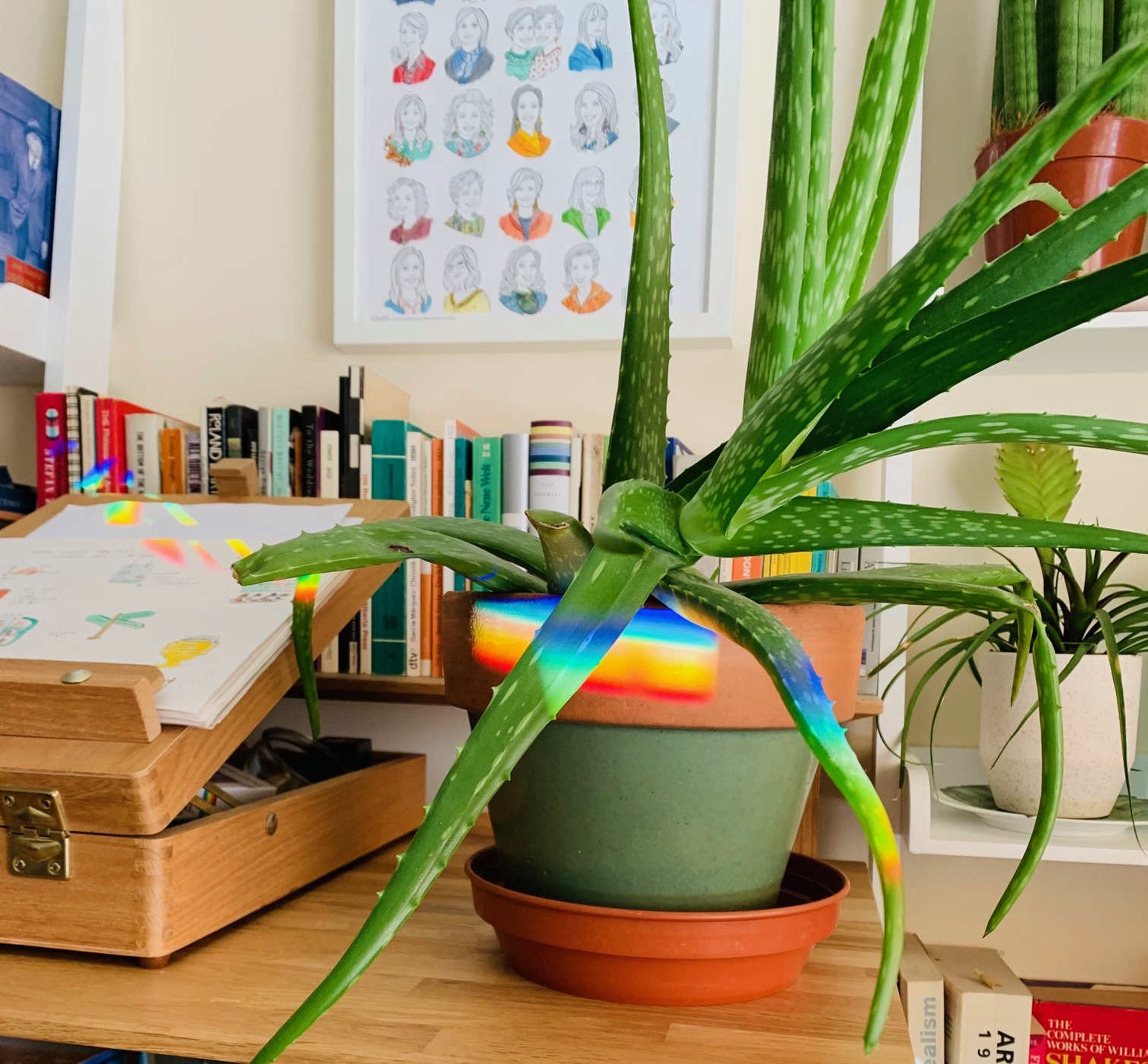
    One of my strategies for getting through lockdown/pandemic burnout is to have a lot of green in my workspace. This month I blogged about looking after my plants every Friday morning makes me think about.

    Strategy Days.. pandemic style

    This month I also really needed to get some headspace in order to think about strategy at work… so I started by organising a solo strategy away day for myself:

    On the day, I have a session with a wonderful coach I sometimes see, who works for a small, independent HR provider, based in Sheffield. Working with agencies that serve solely small charities like ours really helps find support that is both excellent value for money and affordable (even in cash strapped times) .

    Weather permitting, we will be speaking on the phone whilst going for a walk in our respective local areas and step outside of the usual desk/home office environment.

    If it’s raining, I might decamp to the garage or at least the living room, to make sure I have a change of scene.

    https://marendeepwell.com/?p=2909

    and I also did some visual thinkery as part of the process:

    I find it helpful to start with a blank page and the first thing I drew was a little flag, planted at the start of the year. It marks the launch of ALT’s (then) new strategy for 2020-25 (…best laid plans etc).

    From there, it was a story of firsts… the first pivot online… our first ever fully online OER conference… the first time that we ran an event with 1,000+ registered participants, and the first ever time that we had to fully refund hundreds of paying delegates AND the first time those participants donated nearly £10,000 to help cover the losses we were making.

    https://marendeepwell.com/?p=2912

    It was really, really useful to write the post and do the drawing as part of my thinking process.

    Virtual Team leadership

    It was great to make time this month to blog about leading a virtual team as well – and never has there been so much to think about leading a virtual organisation than 1 year into lockdown.

    This month I have been reading a number of really interesting posts about life/work balance and pandemic burnout:

    … I took real inspiration from Ben and the next day we implemented these new signatures across our team. Internally, the feedback was really positive as many of our staff have different working patterns including caring for family, home-schooling and so forth. Externally also, I received some spontaneous positive feedback from contacts I wrote to.

    As a CEO, it’s part of my responsibility to model the kind of behaviours Ben blogged about and make that part of our culture as a virtual team: respecting different working patterns, not to work all hours, but only productive hours – particularly in these times of pandemic.

    https://marendeepwell.com/?p=2929

    And at the very end of the month… a new puppy, Posey, arrived, on four cute, big paws and with absolutely no need to sleep after 5am. Life has never been less boring and it feels a bit like I have reached peak lockdown 🙂