Three years ago this week, we closed the door on our last physical office space and moved to becoming a distributed team. Since then, we have chronicled the journey we have been on as an organisation and as a staff team in regular blogposts, podcasts and conference papers, starting with this post from February 2018. A year on, in January 2019, I reflected on how the move changed things in this blog post and we also recorded a podcast. Last year, we wrote about how things were developing and we continue to collate resources that chart our journey as a virtual team.

This January, we celebrate our three year anniversary as home-workers, running the leading professional body for Learning Technology as a virtual organisation and successfully charting a way through the ups and downs that the last three years have brought for us as a team.
Over the past year, many other organisations and teams have had to rapidly adopt a way of working, that our organisation chose for strategic reasons and made a transition which we had time to prepare for. Trustees of ALT took the decision to move ALT’s operations away from a long-standing hosting agreement with a university to a more independent model, to ensure that ALT’s strategic aims and values are underpinned by an effective, agile base of operations providing more direct support for Members across the UK.
As we now know, this decision turned out to be a good one, both for ALT’s continued growth and success and also our ability to weather the global crisis we are currently facing. We have been walking the walk of using technology effectively for learning, management and governance day in day out.
Jane Frankel, who manages ALT’s charity finances, is one of our longest serving members of staff and a colleague who made the transition from physical office to virtual team with us.
Reflecting on how things have changed over the past three years, what’s been your experience of transitioning to being a full-time home-worker in the ALT staff team?
“Having been self-employed for many years and frequently worked from home, the transition to home working wasn’t difficult. My commute was certainly shorter! However, transferring several years of documents to electronic format and adapting to a home based team with less frequent face to face time was challenging. I miss my colleagues! Although we do meet online and communicate constantly, it’s still hard to get used to not having a face to speak with in person. Getting used to managing family and being home for kids when they’re back from school is definitely a plus. ALT has also made a point of ensuring everyone has flexibility in their work schedules to take time for themselves, which is extremely valuable.”
ALT became an independent employer at the same time as transitioning to working from home, and our Events Manager, Emma-Jane Brazier, joined our team on the first Monday as a virtual team, on 5 February 2018. Since then, we have been fortunate to have Emma-Jane’s expertise for two periods of maternity leave that Jane Southgate has been on, and Emma-Jane has thus been through two rounds of a fully virtual recruitment and onboarding process.
Emma-Jane, what’s your experience of working with ALT as part of a virtual team?
“I had never worked virtually before. Coming from a teaching background (prior to Covid) I was very much used to dealing with 100s if not 1000s of people a day. I thought it would be lonely but actually at times I could do with some more alone time! ALT has fostered a close knit, highly communicative and effective team. We talk with each other throughout the day, have regular catch ups and work collaboratively ALL the time. I really enjoy this and cherish it as I know from speaking with friends who have recently had to pivot to online working that this working environment is not always present. Having the physical team meeting days and events (in normal times) brings welcome opportunities to catch up with people and I hope for the team that they are able to return as soon as is safe.”
Before ALT made the transition to working from home for everyone, several members of staff were already home-based, enabling us as a team to work more closely with Members across the UK. Martin Hawksey, who served as ALT’s Chief Innovation, Community and Technology Officer until recently, was based in Scotland in the years leading up to the organisation closing its office in 2018.
Thinking back to a time when some of us were working from home full-time and some of the team were office-based, what has our move to being a fully virtual team brought with it for you, Martin, and what would you say are the upsides of everyone working as a distributed team for a small, agile charity like ALT?
“For organisations one of the big advantages is there is greater parity for staff. Before ALT became an entirely distributed team we were using a hybrid of office and home based staff, which meant that communications between the team were different depending on where you were based sometimes requiring additional measures to ensure the exchange of information and awareness of what was going on. With a fully distributed team effort is still required for formal and informal interactions, but everyone is in the same boat. Another big advantage for distributed organisations is when recruiting staff you are less restricted by geography allowing you to access a bigger pool of talent.”
In 2019, which now seems like a long time ago, our team found its virtual stride having successfully delivered two years of ALT’s full portfolio of activities, from large, international conferences and our peer-review journal to membership services across the UK.
We capitalised on the advantages of working as a distributed team and found solutions to the problems we encountered. Importantly, we didn’t completely stop meeting in person, retaining a blended approach that included team days for which we met in person (the team portrait from our 2019 team day in Birmingham gives you an idea of the ways in which we used to work together).

Being a virtual team, changed our organisation for the better and we reflected on this here.
We were lucky to recruit two new members to our team in 2019, with Fiona Jones joining us in June, followed in September by Debbie Baff.
Fiona leads on administration across all of ALT’s activities and is the person Members have most day to day contact with on the phone, via email and on social media. Fiona joined our team having had previous experience of working from home and a background in educational technology.
Fiona, why did you choose to work from home and what is your experience of being part of the ALT staff team?
“Having previously had experience of working at home before I joined ALT, I was very familiar with the concept, and really enjoy the flexibility that homeworking brings. Having extra time in the mornings and evenings with no commute is so beneficial, especially in these winter months when you can get out for an early walk in the sunshine. I also love being able to wear slippers for the whole working day! Creating your own comfortable environment is a huge factor for working efficiently.
When I joined ALT in 2019, it was so refreshing to join an organisation that does working from home so well. I love being part of the ALT Team, and we all do our best to try and provide alternative virtual versions of what we each miss from an office environment. I love being able to still celebrate colleagues’ birthdays and important events virtually, even though we are spread over hundreds of miles. Day to day, it’s also always nice to know that someone is always on the end of a chat message to help with a query, or to jump onto a video call with a cup of tea!”
As more and more of ALT’s Members have had to adapt to working from home since March 2020, often alongside home-schooling as well, we have been providing regular support in the form of webinars, drop in sessions and resources. Our Membership and Professional Development Manager, Debbie Baff, has been the member of staff who has led and supported many of these sessions, experiencing what ALT’s Members are contending with at work and at home.
Debbie, you started working with ALT and from home only months before the pandemic. Since your first day on the job at ALT’s Annual Conference 2019 in Edinburgh, how have things changed for you and how is working from home as part of our team for you?
“My first day on the job at ALT was spent at the annual conference up in Edinburgh, little did we know then that it would be our last face to face event for quite some time. That seems such a long time ago now. For me, I have to admit coming to work for ALT has been life changing. In my last job I had a 3 hour round trip commute down the M4 to work and back. That was so very tiring and quite frankly a real pain and let’s not go there about not being able to park when you eventually get there ! Being able to avoid all of that commuting hassle is just so much more productive and makes much more sense to me. Although I have had other experiences over the years of working from home before, it was a whole new experience of working for an organisation where everyone works from home. I remember wondering how that would work in practice before I started. I didn’t need to worry mind you as I think ALT has really got it right in terms of recreating a sense of belonging and fostering online social presence within the team. We are constantly in touch with each other either through messaging apps, email or video calls, we have regular meetups and as we are such a small team we are actually very well connected. These things don’t happen by magic though and have been very carefully thought out and planned for, in my experience you have to be a lot more deliberate in your communications when working at a distance to avoid misunderstandings and ALT works very hard at this.
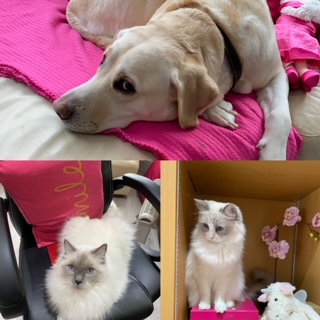

Working from home during the pandemic has meant another level of readjustment though. I went from being at home all by myself with just the dog and two fluffy cats for company to a house full overnight. My husband was on furlough for a while which meant he was at home, and I have two teenagers so I have the whole homeschooling thing going on. Competing for wifi and bandwidth has become a daily occurrence, as has having to make lunch for other people during my lunch break rather than just grabbing what I want ! (Sadly I was hoping that having other people at home might have meant that I had a surprise cup of tea brought to my home office occasionally but I am however still waiting for that ! HINT HINT teenagers”
As the chief executive, my working practice has changed much since starting to work from home. I am deeply grateful that ALT’s Board of Trustees had the vision and foresight to steer the Association in this direction. I am very proud of the impact we have had over the past few years since the transition.
That said, it’s taken me a while to adapt to leading a team and an organisation from home and I continue to discover new ways of working, of finding balance between the demands of a very busy diary and needing space to think about the bigger, strategic picture. I now know more about the pets, kids and plants of my co-workers, Board members and colleagues across the world, and that has made my job more enjoyable and interesting.
As we, as a team, look ahead to what 2021 may bring and as we enter a more experienced and mature phase as a virtual team, we want to share some of the worst bits and some of the highlights that three years of working as a distributed team have held for us.
We invite you to reflect with us, share your own and hope that you will find something useful and inspiring in our continued journey as a virtual team.
The worst bits… there have to be some
- The most difficult part of working from home for me, is having to provide virtual support in a crisis. When someone is having a really bad day or something unexpected happens, there’s only so much I can do via phone and video calls.
- I end up doing more than my usual share of domestic chores as a home-worker.
- I miss hugging colleagues when they need one!
- Being not as active. Little walks to a bus stop, or tram, walking around an office all add up during a week so you have to make sure you don’t stay sedentary (to keep off the lbs! Must say I’m no expert at this)
- Funnily enough one of the things I do miss from my looooong drive on the M4 every day is that decompression time and being able to listen to podcasts guilt free. For some reason I am also really bad about forcing myself to get outside and go for a walk, something I know is really important to do and something I am working on. I also miss being in an office when the banter is going on – I do love a good giggle. Although we do still have our fair share of funny memes across the ether which does help. Also in terms of the impact of the pandemic obviously there are the issues that has brought too although I have been lucky enough to be able to make some small changes to my working hours which means I can start earlier and finish earlier and that has definitely made a difference in terms of the bandwidth issue and also for a bit of headspace before the home schooling starts.
And the highlights… of which we have many!
- I really don’t miss my 1+ hour long commute and I love the time I have regained for things other than sitting on delayed trains.
- When I have caring responsibilities for my eldery parents, these are easier to fit into my working day from home than they were in an office.
- No commute!! This is a big one as I didn’t realise how tiring it was. It also meant I could get rid of my car which is better for the environment. Also I think being able to work from home allows you to keep on top of household chores. E.g during my lunch I can quickly put a load of washing on or wash the breakfast dishes
- The best bits, well that is a hard question, there are actually so many great things about working from home. It has definitely given me some life balance back and I love how it takes me 30 seconds to get to work in the mornings. I am really lucky in that I have a dedicated home office and don’t have to clear everything off the kitchen table at the end of the day. That would make things so much harder to manage. I love our little team, everyone is very thoughtful and so kind and even though we are based all around the UK somehow that distance really doesn’t seem to matter.
Written by Maren Deepwell with contributions from Emma-Jane Brazier, Debbie Baff, Jane Frankel, Fiona Jones and Martin Hawksey.
This post has been re-posted from the ALT website.