Category: stories

  • A love letter to #DS106radio emergency broadcasting

    A love letter to #DS106radio emergency broadcasting

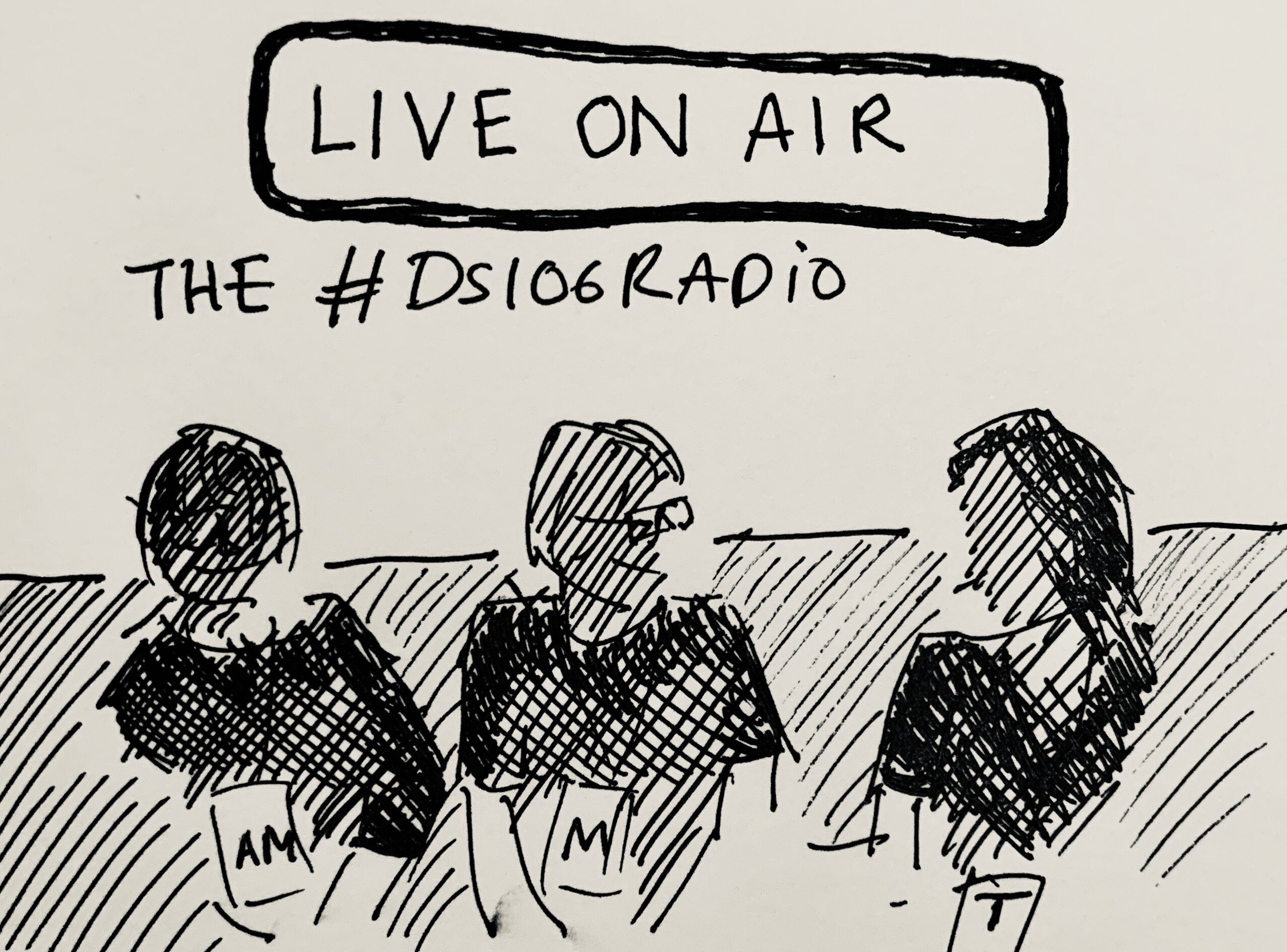
    Tomorrow’s the big #ds106 #ds106radio marathong and I can’t wait for 24 hours of broadcasting on my favourite radio station.

    I came late to this great endeavour and only really got into DS106 Radio in 2020, when my friends Tannis and Anne-Marie and I started broadcasting every Sunday throughout lockdown from Canada and the UK respectively. If you’d like to get a flavour for what we got up to, then head over to this post from July 2020 or hear us chat about it in this video Hope on the Airwaves from the OERxDomains21 Conference in April 2021.

    I got a lot from this and many other ’emergency’ broadcasts on DS106 since March 2020. I listened hungrily to voices of distant friends and colleagues, who were sharing their own trials and tribulations along with a varied and inventive playlist of tunes both old and new.

    Last year was a year of loss for many and one of the things the broadcasts have given me a renewed appreciation for, is how each individual in their particular is contending with a whole lot. The pandemic might have stopped many activities across the globe, but it certainly didn’t feel like a break for anyone working in EdTech.

    Anne-Marie and Tannis got me through some of the roughest patches of a very difficult year and we found some respite from the demands of being an adult woman in pandemic times through our collaborative playlists.

    Ladies, thank you for the laughs and tears and love. See you on the airwaves.

  • Drawing 2020 – a bit of strategic ‘visual thinkery’

    Earlier this year, I blogged about that I feel I am starting a ‘new job’ as things have changed so much over the past year… so this week on Friday I am having a strategy away day, pandemic style.

    CEOs often get asked what success will look like in 3, 12 and 36 months. Asking yourself that question is a useful way to get your own thoughts in order and prioritising short, medium and long term goals.

    Often, the kind of success measures or KPIs you’d include range from internal to the organisation to external stakeholder groups, from local to national to international. That’s the kind of thing an Impact Report is made for and that is important – but not helpful for me just now.

    I am looking to re-imagine, to re-assess and to start from a blank page. Cue a bit of drawing and colouring…

    Putting pen (and brush) to paper

    I find it helpful to start with a blank page and the first thing I drew was a little flag, planted at the start of the year. It marks the launch of ALT’s (then) new strategy for 2020-25 (…best laid plans etc).

    From there, it was a story of firsts… the first pivot online… our first ever fully online OER conference… the first time that we ran an event with 1,000+ registered participants, and the first ever time that we had to fully refund hundreds of paying delegates AND the first time those participants donated nearly £10,000 to help cover the losses we were making.

    The first time that we drew up an emergency budget and plan just two months after setting the first ones… the first time we made an emergency strategy and held an emergency Board meeting.

    In June we held our first ever fully online AGM with in-house voting. And in July, ‘business as usual’ included open calls for volunteers, editors, committee members – all for activities which were changing continuously.

    Our first ever online Summer Summit took place in August, the first ever fully online awards short-listing process in September and the start of term saw us provide a second wave of support webinars, resources and care for an increasingly exhausted membership, preparing for an academic year that would be like… no one knew.

    In November we launched our first ever CMALT Accelerator workshops and in December the Winter Conference saw our first ever online Awards Ceremony and first ever Community Award to every Learning Technologist.

    By the end of the year, we had also published 49 new research papers, double the average number and the first time that we reached such a high number of publications.

    A year of firsts – pandemic style.

    Doing this drawing, sitting and thinking, letting my pen guide my thoughts, is incredibly helpful. It allows me to see beyond the KPIs and budget columns – and these don’t feel terribly meaningful anyway in a global pandemic context.

    What does feel meaningful to me is the picture I have in my head of the past year. A picture of an agile, learning organisation where everyone contributed to us achieving a lot of successful firsts.

    I also see thousands of professionals whom we have supported through the ups and downs of 2020… from sharing open resources and offering full scholarships to running support webinars and providing much needed CPD.

    I like the idea of last year being a year of firsts and as well as all the bad stuff, there are a lot of positives to take with us.

    The next blank piece of paper is going to be for 2021. A year of… ?

    What success for ALT looked like… in 2020
  • Still broadcasting on #ds106radio

    It’s the middle of July… and ever since March every Sunday evening three of us, Tannis, Anne-Marie & me, have been meeting up on Radio DS106 http://ds106rad.io/listen/ .

    This little online radio venture started as a crisis support for each other and our listeners. We met up once a week to share lock down tales and even though the immediate crisis has started to relax somewhat in our day to day lives I value the connection and shared Sunday evenings even more now than I did a few months ago.

    It’s a pleasure to meet up and see how everyone is getting on… and shared some tunes along the way (have a look at this playlist of summertime tunes – complete with the Pixies, Cure and Kinks 😉 ).

    It’s great to have a window into how others are doing getting back into the swing of some kind of everyday normality outside of work and my immediate high street. It’s reassuring to see how long it takes for others, not just me, to adjust again.

    We are now talking of first trips… days away from home… new pets… things that a few months ago we didn’t have any hope of doing. And that is a great win for all of us, taking our first careful (and masked) steps back into a more social life.

    I am super grateful to my friends, Anne-Marie and Tannis, for making it all possible and keeping it going. It’s been simply amazing and I look forward to it each week.

    See you on the airwaves and we hope you stay safe & well x

  • Letter making and reflection

    I have been watching a documentary series recently on the art of design, and one episode about Jonathan Hoefler: Typeface Design in particular captured my imagination. It’s an amazing glimpse into a professional and creative practice that combines material and digital elements effortlessly. Anything from maps in museum collections to books and wooden blocks to visualisation tools and digital pens is part of the process of creating a new typeface, which then is used both in the virtual and physical world. I love watching the series partly because I get to see some of the most beautiful work spaces, kitted out with everything you can possibly imagine and also because the production values of the series are high. It’s a glossy glimpse into the cult of contemporary design. It’s also a refreshing change of perspective coming from a context in which we revisit the tension between digital and more traditional ways of working all the time.

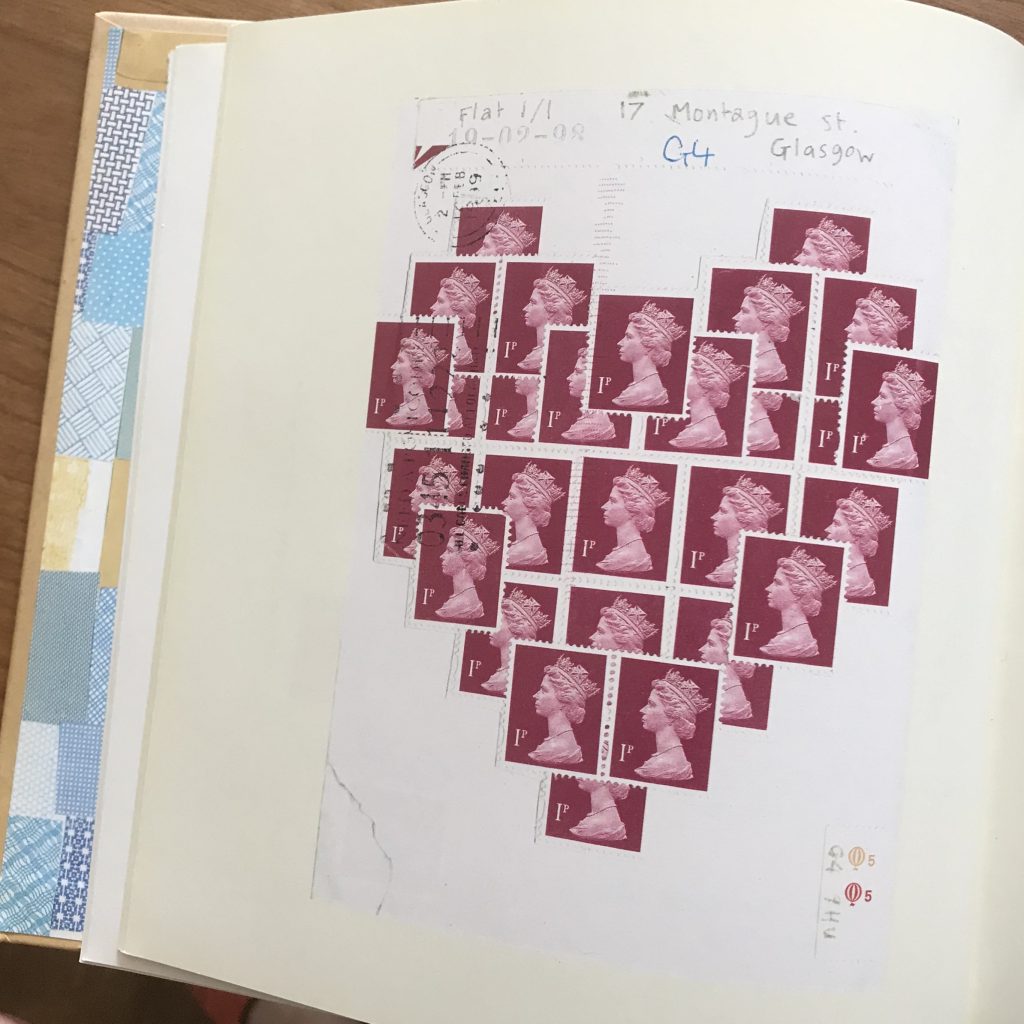
    From the book “Envelopes” by Harriett Russel

    Learning more about typeface design fits in well with two discoveries I recently made: first, a charity shop book find, a volume called Envelopes. This book documents a project, a postal art project, of letters sent via the Royal Mail with extraordinary envelopes. Some of the envelopes are more cryptic than others, and all of them were delivered by the postal service.

    Another recent discovery, and an absolute joy, has been a blog of weekly letters written between two women called ROG & SHINCH A CREATIVE SPACE FOR TWO. I really love the project, which is described as “an exploration of writing, conversation, collaboration and curation” and I have enjoyed exploring the archive of now over a year’s worth of weekly letters.

    The letters share glimpses of daily life, work, seasons and events, thoughts and ideas explored, shared and reflected on. It makes for amazing reading and it also speaks eloquently of the value of conversation and reflection – of making a connection across geographical distance, of setting aside time and space for writing and sharing.

    I’ve written before about my love of letters, postcards and stationary, and setting aside time for writing… and this project has been a wonderful discovery that has inspired me anew to think more about the role writing, conversations and blogging have for me. Significance that is both personal and professional and a reflection of how distributed many of the people who are important to me have been since childhood, from school-sponsored pen pals that grew into long term friendships, to family relationships maintained over great distances to working in a distributed team resulting in a huge volume of letters, voicemails, video calls, emails, blog posts, postcards, parcels… that has steadily grown over the decades.

    The complete mix of different media of communication practice is one of the things I relate to from the documentary series. When I first started writing letters as a child some of the options I have now, such as recording voice messages or sending a DM were not available to me. But even though there is more choice now, what is of primary importance is not the way I write, communicate or reflect but when, how and with whom.

    I am inspired by the work of the creative people who have designed the typeface which renders these words. I am inspired by artists who create envelopes as an art form celebrating the journeys words go on between people. I am inspired by the sharing of conversations such as these two women who write letters to each other. These sources of inspiration form part of the space that my words are part of, where my voice finds room to sound. They remind me that it is important to practice communicating, reflecting, articulating my experience of the world. To keep making letters and to share, contribute, value my thoughts, my voice.

  • Unsettled… a very personal blog post

    On Friday, on my afternoon off, I went to my local library to use their Android device to apply for permission to settle in the UK.

    Ironically, I live in West Oxfordshire, David Cameron’s former constituency, and whilst that means that I am often surrounded by people in 4x4s viewing ‘affordable’ new homes starting at £580k, it is the kind of place that postcards of the Cotswolds often feature: yellow stone cottages with roses growing over front porches, rolling hillside, imposing country estates and so forth. It’s the kind of place many people dream of living in when they think about living in the UK.

    Everyone at the library was extremely helpful and as I stood in front of a plain wall holding a flashing phone in front of my face to scan my features and prove my identity, it suddenly hit me. The enormity of what I have been avoiding for years: having to apply for permission to settle in a country that I moved to in 1997 and that I since have lived and worked in. Brexit. Gulp.

    I moved to the UK when I was 17 because I am a huge Anglophile and I was looking to build a life in the places I dreamt of, I read books and listened to songs about. First in London and later in Oxford I got to know the country, the people and the culture and I love much of it. From joining a cricket club to raising money for British charities, supporting my local co-op and even researching London’s cemeteries for my PhD I have always felt at home here. At work I even represent a voice for the UK or UK education policy at times, I have been part of “UK trade and investment” missions and for over a decade I have been introduced countless times as “Maren Deepwell, from the UK”.

    Whilst I have passed every language and cultural test you need to pass in order to apply for British citizenship and a couple of times came quite close to applying to become a British citizen, the cost involved and time without a passport was always a barrier and as a German and EU citizen I never really saw the need. It would have, in my mind, simply meant to swap being a German EU citizen with being a British EU citizen, and so the years passed whilst I paid British tax and national insurance, got a British mortgage and pension and married a British citizen. It never occurred to me that there would come a time when being a British citizen would no longer mean being an EU citizen and now I am glad I didn’t apply – I would have never willingly swapped being an EU citizen for being British.

    Growing up as I did after World War II in Germany, the European project has always been a foundation of my identity. Whilst I can see that a structure like the EU brings with it many difficulties, the cultural, social and personal significance of being European for me is huge. Being born in a country which has Germany’s history helps to instil in you a respect for the past, a deep commitment to tolerance, community and cooperation no matter what.

    I have a deep connection to British history and culture, read enough poetry and listened to enough music, to value the ideas and ideals embodied in this beautiful and unique part of the world. I know it’s not perfect, but it’s been my home for 22 years no matter what.

    After signing every petition and voting in every election I was eligible to, whilst working hard to be a productive member of society, I now wait with a multitude of others, for the outcome of my application. I reflect again on how significant Brexit is, how much it puts into question so many aspects of my life and livelihood that I have had guaranteed as European citizen since I was born. The British Government is evaluating whether it wishes to grant me permission to remain and settle in my home – and that leads me in turn to consider my position, leaves me in a deeply unsettled place.

    I don’t often publish this kind of post but this time I will. This is my domain, and I want to make my voice heard.

  • #OpenBlog19: The library of the future is…

    I have been really enjoying following #OpenBlog19 posts over the past week or more and if you haven’t come across it before now, start by reading David’s original post or browse the hashtag and discover the inspiring contributions to date.

    When I went to the Google doc, one topic really jumped out at me and so in this post I’m going to write about what I’d like the library of the future to be like. I’ve spent today walking through libraries of the past, so this post is inspired by the material traces of our histories.

    The library of the future is… #OpenBlog19

    The library of the future is a physical place, with many entrances and floor and wings to explore. It houses collections of books and manuscripts, tablets, carvings, materials, things, artwork, cultural artefacts and many indices. The library of the future is for human beings and about human beings, our history, our knowledge, our ideas and dreams and hopes.

    The library of the future is a place where you can find what you are looking for. A place in which to discover the unexpected. A refuge in which you can retreat from the world and find peace and quiet and contemplation. The library of the future is somewhere you can loose hours, days or whole years to following the red thread of inspiration.

    The library of the future is free and open to all.

    The library of the future is not dominated by digital data. The library of the future is not focused on making information useful. It does not require you to have a specific purpose or know what you are looking for. The library of the future rewards curiosity, accommodates procrastination and safeguards daydreaming.

    The library of the future keeps growing and being added to. It’s bigger than it looks from the outside, expanding into the space that only librarians can safely guide us through.

    The library of the future contains things we want to remember and things we try to forget. Recollections of wars won and loves lost. It contains everything ever published and posted, all the journals, newspapers, blogs, vlogs. sites and domains. The library of the future is our archive.

    The library of the future is a place of debate, disagreement and dialogue. An institution of reflection and critical literacy. A way of distributing knowledge and the power that comes with that. The library of the future will have a branch near you.

    The library of the future is a common good and owned by all.

    The library of the future is recruiting… apply now. There are many vacancies.