Category: stories

  • My #EdTechRations outtakes

    My #EdTechRations outtakes

    I recently wrote a post about contributing to a new book edited by David Hopkins called Emergency Rations #EdTechRations .

    Not everything I wrote made it into the final version and I wrote quite a bit about how I work in addition to describing the things I can’t do without. So below is my contribution with additional comments and images that shows what it looks like as work in progress.

    When I wrote the intro I thought about what makes certain things indispensable to me and why.

    As is becoming increasingly common, my place of work can vary a lot from day to day and mostly I work on the go, between meetings or on the way to give presentations. I don’t often meet the people I work with  in person. Instead we communicate virtually. Still, I have to be able to collaborate effectively, so most of the technology I can’t do without helps me to keep in touch and to work together.

    I try to find a balance between being contactable and getting space to think and get things done. So while I do have a smart watch, phone or laptop with me most of the time, I often switch all notifications off or enable flight mode.

    Chromebook & Google Apps for Education

    For about two years now a basic Toshiba Chromebook has been my constant companion. Bought initially to provide short term support during large events I have ended up using it for everything.

    As a piece of kit it certainly has its limitations, but for me, there are significant advantages: to start with it is cheap, robust and data is not stored on the device so I cannot lose it. It starts up quickly, it is easy to use and provided you either learn or know how to use the apps it runs it delivers a great user experience. I have learnt some short cuts that really make a difference and the support documentation online is constantly growing. I am very partial to the mobile devices I have running iOS because I prefer the user interface, but on the laptop ChromeOS does a good job and is constantly improving.

    Having limitations in what I software I can use has also had two other benefits: first, it has made my work more collaborative as practically everything I work on is shared. Secondly. It has forced me to take a simpler approach to complex tasks. I like the elegant simplicity I have become accustomed to.
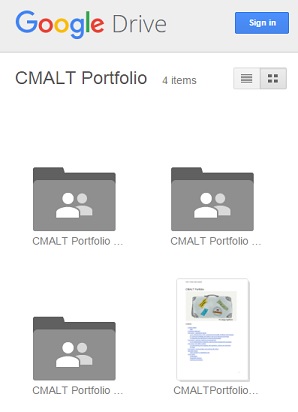
    I use as many different operating systems as possible because I like to keep in touch with what iOS/MacOS, Android and Windows feel like. Google Apps for Education help me switch between different devices and operating systems (nearly) seamlessly. Becoming more expert at using and administrating GAFE has had the welcome additional benefit of enabling me to support colleagues across the organisation better. I have also found it a useful tool for supporting professional development, such as building a shared, open CMALT portfolio .

    I have written quite a bit in this blog about CMALT (you can see a list of previous posts here). One of the things I wish I had was a better way of recording evidence of professional development on the go. I have tried all sorts of apps and forms, but haven’t found anything that really fits the bill.

    Headset, mobile data storage, power packs

    Other bits and pieces that I usually have somewhere in my bag are a headset or headphones, a variety of options for data storage big and small and also at least one power pack to charge up mobile devices. I am not very good at carrying around the right kind of adapters for various things, so I rely on being able to plug in my Chromebook and everything else has to survive the day without top up. I am not choosy about which particular make I have as too often these small items get borrowed by co-presenters or colleagues and end up to need replacing.

    Reading some of the other contributions to the book I was inspired by how much others think about the kinds of technology I described above. My shopping list has grown considerably since. These are often small essentials that can make a big difference.

    The other things I reflected on was the non-digital items I have included. Obviously educational technology doesn’t have to be digital, but most of the time that’s what we seem to end up talking about. I am still glad I included things like pen, paper and shoes… .

    Pen & paper

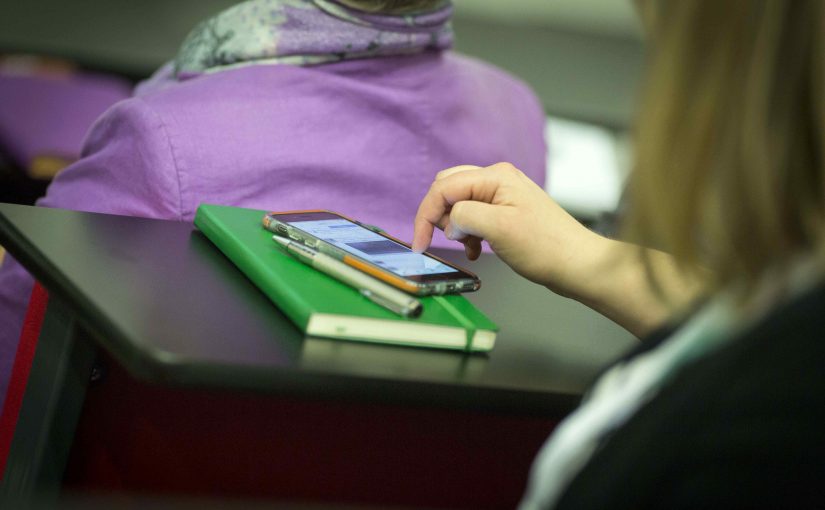
    However much I use my watch, phone or laptop, I use pen and paper every day and it is something I could not do without. It doesn’t matter what kind of digital technology I have at my disposal there are always times when putting pen to paper is my first choice. Drawing, sketching, writing – there’s no substitute for me. I have a green Moleskine notebook that I take everywhere and solutions to some of the most complex things I do at work start life as a scribbly drawing on the pages of that notebook marked clearly by the uneven movement of the train.

    Business cards, flyers or other printed materials

    I  work with many people who are skeptical about Learning Technology or indeed technology in general. No matter what the context is there is always someone who prefers to have paper in their hand. So in that instance all of the digital technology I carry around can be useless and I have to have some form of paper back up. Business cards or printed postcards or flyers can be useful here. They are also a good alternative for when the technology or connectivity let me down. And you never know who you might meet on a train.

    Shoes…

    However much I work virtually, walking places is a major part of my working life. Sometimes it is simply between one room and another within a conference venue, on other days it is through a new city. My watch or phone might be measuring the distance or help me navigate along my route, but clocking up the miles is hardest on my feet. Shoes that are still comfortable 12 hours into my day and get me as fast as possible from A to B are essential. Shoes can say a lot about a person. They are part of making a first impression, everyone sees them when you stand on stage or at the front of a lecture theater. Just like stickers on a laptop or pin badges on lapels shoes can make a statement about who you are and where you are going.

    Did I miss anything? Some apps maybe, stickers, pin badges like my CMALT badge for example… 😉 and I think there may be a whole section to be written on umbrellas – a technology four thousand years old that I cannot do without.
  • The Future of Education in the House of Stairs…

    The Future of Education in the House of Stairs…

    I am looking forward to participating in the OEB Midsummit in June. Speakers have been invited to provide a quote about the future of education and you can read what others have written already on the event’s website (click on a speaker’s name to see their quote).

    Whilst I was thinking about what I might say, I read through what the others have written and one quote from Audrey Watters is “I’m afraid that the future of education will be built by people who read dystopian science fiction novels and liked the “innovations”.” That made me think about books I have recently been reading by William Sleator. I am only familiar with his young adult novels and one book in particular has stuck in my mind for the past 20 years or so: it’s called House of Stairs and was published in 1974.

    When I read it as a young adult I was most interested in the individual characters, five 16-year old orphans, trapped in a seemingly endless space that is filled with white stairs. The stairs become their world, the landscape in which they negotiate each other and themselves. As their struggle to survive intensifies their relationships do, too. At the end of the book [spoiler alert…] they are rescued. Yet despite the relative safety they find themselves in, their experience alters their behaviour and lives irrevocably. Some resist, others comply, and all pay a high price. It is not a happy ending and the vision of a dystopian future where even the most basic of rights and choices are beyond the characters’ control stayed with me.

    Reading it again recently I thought less about the individuals, although the story is still gripping, and more about those in charge. Those who watch over their experiment as it comes to its gruesome conclusion. The powers that be (political or economic) have needs that this experiment must meet and the fate of the young protagonists is only incidental, it is revealed, to the wider effort. They have no agency, no say over their fate or future.

    To be able to think, analyse and reflect is empowering. Having agency, having the power to determine the shape of things to come, seems to me to be a purpose of education. In the House of Stairs only extreme resistance offers the chance to exercise your own will, to have any form of agency.

    I just hope that the people Audrey Watters is talking about don’t have the same bedtime reading as me.

  • 1, 2, 3, 4… 5 years as CEO: a new series of posts begins here

    photo 2Part of my focus in this blog is on sharing my approach to leadership as an open practice. This is my fifth year as chief executive of ALT, the Association for Learning Technology (if you want to find out more about ALT, visit the website) and over the next few months I will be writing a series of posts – each one reflecting on one particular aspect on my experience and work.

    I’ve been wanting to do this for some time and indeed I do write on this more frequently in a less open forum. But my fifth year in this role seems like a good time to do this and to use this series of posts not just as a tool for reflection but also to provide some insights for others. When I applied for this role in 2012 I would have liked to read something like this and I hope it might be of use to you.

    There is a lot I could write about and I have been thinking for a while on what topics might be best suited for these posts. For now, these are the themes I have settled on:

    • being a woman makes a difference;
    • I am where the buck stops. That can be a lonely place;
    • change is a good;
    • learning new things all the time is a must;
    • what motivates me.

    So, that’s what’s coming up. I haven’t written it yet, but this post is a bit of a road map for where I want to get to with this series of posts. Thanks for reading and look out for post number one, coming soon.


  • #ilta2016: Two #edtech days in Dublin

    Law Society, conference venue

    Last week I took part in EdTech2016, the annual conference organised by the Irish Learning Technology Association. It’s definitely worth visiting the conference platform for a wealth of resources and presentations and reading some of the Twitter conversation #ilta2016  or viewing the TAGS Explorer archive. While I was invited to attend the event on behalf of ALT (and you can access the slides from the talk I gave jointly with Martin Hawksey on Slideshare) it was also a great opportunity for some CPD for me and this is what this blog post is about.

    Over the two days the programme had a lot to offer, including sessions about the 12 Apps of Christmas 2015 from the Dublin Institute of Technology, Mapping Digital Technology Teaching Practices from Glasgow Caledonian University and building a MOOC on a budget from an institutional consortium.

    #ilta2016

    Alongside a lively social programme and the annual Jennifer Burke Award there were three stand-out keynote speakers: Mike Feerick opened the second day, Rhona Sharpe closed the first and the opening keynote was given by Audrey Waters (again, more info about all of them is available on the conference site).

    What I was particularly interested in is thinking about what the future may hold, what forces may shape Learning Technology over the next decade or two and to get a sense of what major developments will determine the shape of things to come. In that respect you could hardly have chosen a keynote line up better suited. However, after mulling over the three thought-provoking presentations that were delivered I feel they have left me with more questions and less certainty. And that is not because innovation is so disruptive or the geo-political climate uncertain. Instead,  I think the questions that arose from the presentations for me were all about inevitability. What’s inevitable and why and who makes it so? To be more specific, here are three questions that help sum up what I am thinking of:

    Dublin, day 2
    Dublin, day 2

    First, how do we conceptualise learners? As customers, as users, as people? Is the dominance of one of these perspectives inevitable? Why? What difference does it make when we think about others or ourselves in that way? How would we want to be thought about?
    Second, why do we feel technological development and the proliferation of new technologies is inevitable? Who are the capitalists, engineers and marketeers that make it so?
    Third, who do we think of as being in control of the future of educational technology? Many narratives I read or hear seem to be about making the most of what opportunities we can grasp, coping with limited choices or under difficult conditions – succeeding in the face of adversity. But if not us, then who is empowered to shape the future?

    For me these questions are worth thinking about, worth taking time to reflect on.

    But… if I had to find answers based solely on the two days I spent in Dublin, that would be simple: I am grateful to experience the kindness and openness that can be built in such a community of practitioners and researchers. Their connections hold great value and power. It’s that which should shape our future in (learning) technology.

  • You are #neverweird – thanks for a wonderful listen @feliciaday

    imageHaving finished reading/listening to a new memoir by Felicia Day – You are never weird on the Internet (almost) – I wanted to note my thanks. So here goes:

    I’ve never met you, Felicia Day, but I am grateful to you for adding your voice to the story of the Internet, of gaming, of women working in tech-focused industries and for sharing your story of incredible achievement against many odds.
    It’s inspiring to read how hard making things happen can be and how the generosity and engagement of your community has made things possible. It’s important I think to tell stories about living, working and playing with technology both good and bad.

    If you haven’t read it, you might enjoy it. I certainly did. The only draw back is that it will probably be a decade or two until the sequel is published…