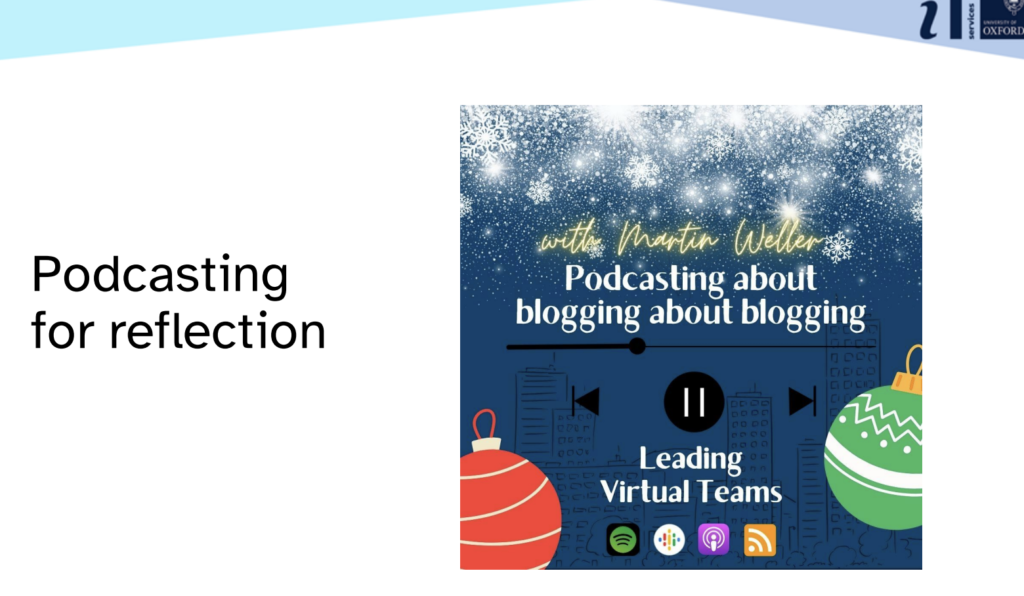
This week I am giving a short talk about podcasting at the University of Oxford. The talk is called 5 ways to get started with podcasting, and explores 5 ways to develop your own professional practice in podcasting and explore ways of connecting with audiences beyond social media.
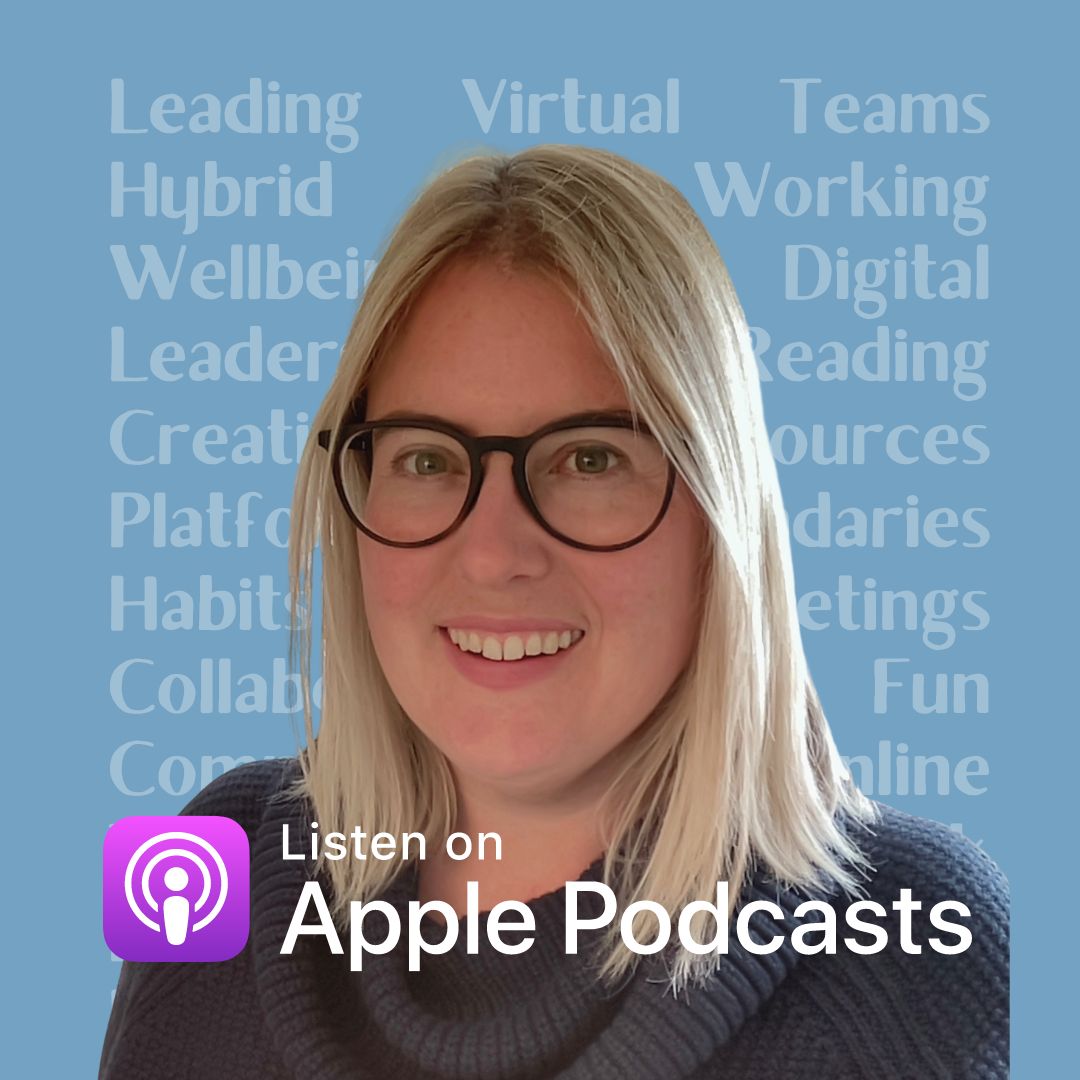
It’s been 18 months since I first launched my podcast, and this academic year I have stepped up the pace with a new episode every week. 65 episodes later… I still enjoy the process of making the podcast and it’s been very, very useful for my professional practice. It’s also a (for me still relatively) new way to sharing my work and I have tried to find the right tone in this medium, tried to find my podcast voice.
In this post, I bring together things I have learnt along the way, and also ideas for what I’d like to try out next:
Getting started: Looking back at the first year on the podcast, the pattern of putting out episodes is erratic. Sometimes I published 5 episodes a month, other times it was only one. They all come out on different days, and the format and duration vary, from below 10 minutes to above 40. Season 1, which doesn’t have episode numbers, has 10 episodes. Season 2 has 21 and currently Season 3 is at 30+. It’s a bit of a mess… However, what matters to me is that I did it. I continued to record and release episodes, trying out different topics and formats, with guests and without. I now feel that I have a podcast, and I have made it part of my professional practice.
Choosing what to talk about: Just looking at the titles of various episodes gives you a clear indication that there are a whole range of topics I talk about. Here are some examples from across the three seasons:
25 hacks to make hybrid work 1% more comfortable
A party without a cake is just a meeting…
Career transition reflection – 3 months in
Some episodes are focused on coaching, and include more factual/how-to content whilst others are about leadership in hybrid workplaces and others again are updates on my work, celebrating milestones, reflective practice, radio… . The list goes on. What’s useful for me is that the podcast has become a reflection of my practice and leadership. That’s what I am interested in exploring, and it’s been helpful to acknowledge that as I find my voice.
Listening to other people’s podcasts provided all sorts of inspiration and I tried out different things with various episodes to feel out what might work for me. Importantly, it needs to be a topic I am interested in, and it needs to be useful to me. My podcast is a passion project, not something I get paid to do. It’s an element of my open practice and as such it’s useful to others (I hope) but it’s primary user is me.
An audience of one? In the early days of the podcast, it certainly was (an audience of one). I remember how excited I got when someone who could not be family & friends listened! It still makes me happy to hear that someone found an episode interesting or useful and yet I haven’t put a lot of effort into promoting the podcast. The platforms on which the podcast is registered offer all sorts of tools and resources to help you build your marketing campaign and expand your audience, which I must admit I have largely ignored up to now.
It’s an intentional choice on my part to keep the podcast a space to play and experiment with. Just like my blog, I want the podcast to be part of my domain, a page in my sketchbook if you like. I don’t want to monetise it even if I could. I am not interested in it becoming the next big podcast on hybrid working even if that opportunity arose. I want it to sit in the margins. A working, thinking space instead of a polished production.
With an organically growing audience, episodes now attract 30-50 listens on average.
Experiments in podcasting: Since I started the podcast, I have experimented with various projects: I used the podcast to record audio versions of key sections of my book Leading Virtual Teams; I have run two CPD courses using my podcast as the main platform to deliver course content and I have used the podcast to share career transition updates as I started my free-lance venture. It’s certainly been a bit of a mixed bag of approaches and that has resulted in me learning a lot along the way.
I appreciate that it may be frustrating to folks who are looking for regular episodes week in week out on a similar range of topics, and with a similar take on the format and I am sorry if experimenting with various aspects of the show makes it less enjoyable or less useful at times. For me, these experiments have been incredibly useful and rewarding, giving me space to try out ideas and new approaches on the journey to finding my podcast voice.
Things I learnt along the way:
Getting comfortable with recording conversations and structuring content
Recording intros and outros
Writing show notes and providing links to resources
Transcripts and automatic transcription
Registering a podcast on different platforms
The power of replay: Whilst many people dislike listening to their own voice, and I am not a huge fan of mine either, I do listen back to my own podcast episodes. I find it incredibly useful to replay my thoughts to help me refine my reflections and also to review how my thinking has changed. Just as listening back to a recording of me coaching with my coach trainer helps me identify ways in which I can improve as a coach and also identify what I am doing well and why it works; listening back to podcast episodes is extremely helpful for my professional development.
It’s also a bit nostalgic, particularly in the more personal/reflective episodes. Here I am, celebrating milestones and sharing tips for this and that whilst around me domestic chaos or work problems reign. There are episodes when I clearly had a cold and episodes when I can hear my dog Posey in the background wagging her tail or chewing on something noisy.
A note on the technology: I don’t have much know-how to share when it comes to podcasting tools and platforms. I have a wonderful mic that I can’t connect to my current computer, I use a browser-based, free tool to record my episodes which is just about to go out of service… and I live in a noisy environment where proper recording quality is harder to achieve than I’d like. In short, my set up is makeshift. When I sit down at my desk in the morning between meetings to record an episode, I am afraid there are no ambitions to have a recording set up beyond headphones.
I am fortunate to know many people in the Open Education community with brilliant podcasts and radio shows, many of whom have professional experience in this industry, much better placed to advise on anything technical and I salute them. I learn much from their example, even if that is not always evident in the audio quality of what I produce… .
Where next? I am very excited about continuing my podcasting adventures and I have ideas I want to try out come summer, and a break in my ‘regular’ schedule. I also need to learn how to record my episodes on a new platform, and I am definitely working on getting the good mic connected. Most of all, and regardless of any practical considerations, I am determined not to loose this space for open practice that I have opened up for myself. It’s another experiment in open leadership that has become important to me, and that in itself is a huge reward.
It’s not all about podcasting… there’s a newsletter you can subscribe to as well… (that’s another blog post).
At the start of the year, I shared my intention to find more joy in music and radio. Music is a great way to brighten up busy days, especially at this time of year. The days are long and grey, the sun is only slowly making a return to early mornings and evening after work. I don’t know about you, but I can use every bright spot I can find just now.
Now, plenty of us listen to the radio or to music as we work, so I don’t think you’ll be surprised to hear that I, too, love a few tunes to cheer up my Monday mornings. In my case, I have a couple of different ways to enjoy music at my desk:
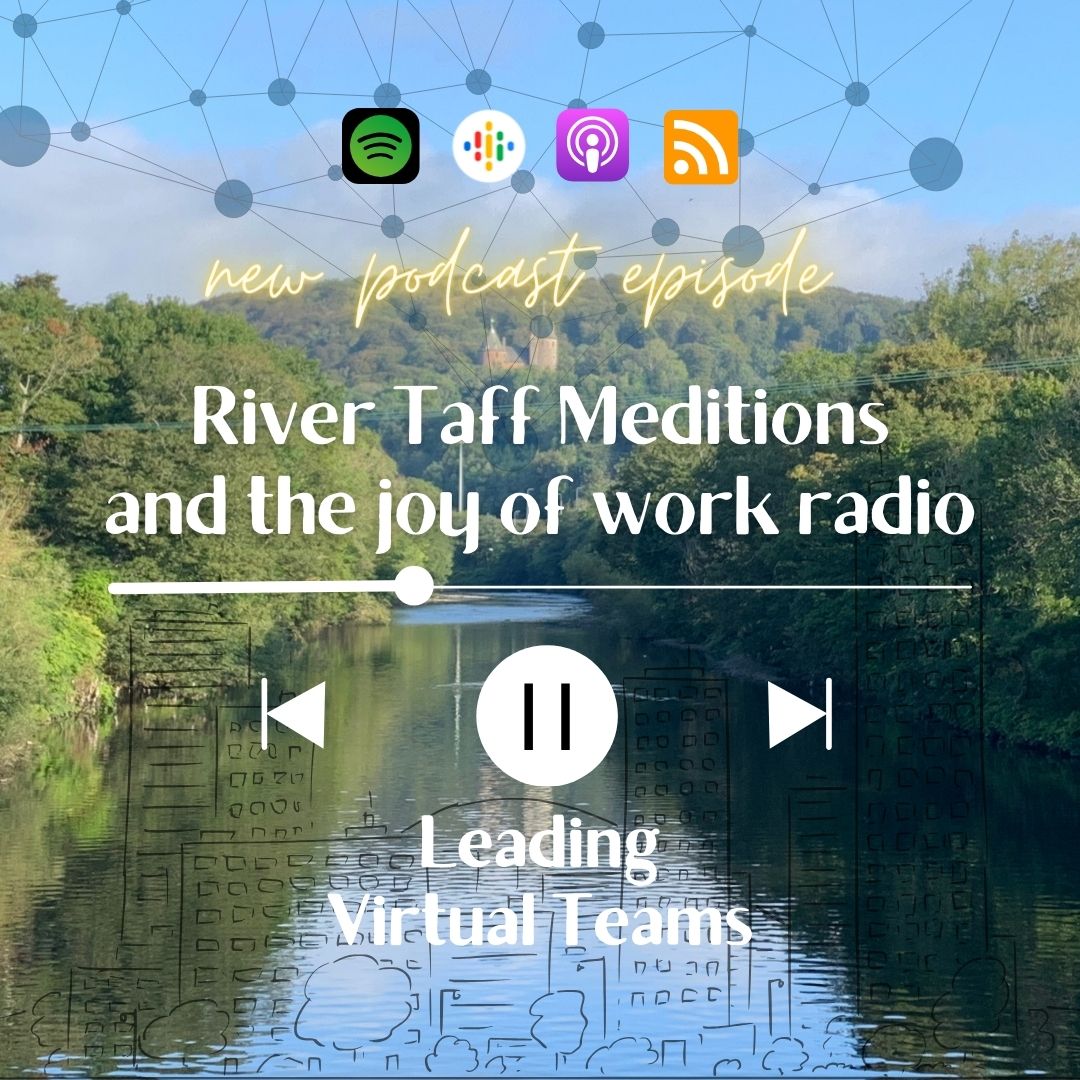
There’s background beats and meditation music to start with. Whether I listen to Lou Reed’s Hudson River Meditations, the sounds of rain against a window or lo-fi background beats, a calm soundtrack is usually part of my daily routine. My dog Posey settles down in her basket next to my desk as soon as she hears the low music start to flow through my office. She knows that this is the signal that I am going to be lost in spreadsheets or working on a new course design for a few hours.
Then there’s listening to albums and playlists. I usually prefer to listen to vinyl on my record player, which is about 4 feet from my seat. There’re some practical advantages to listen to records rather than digital music: I need to get up every so often to flip the record, which is good for my body. Also, the play time of the record is limited, rather than endless as it would be on a digital platform, prompting a break from work to decide what next to play. I might walk downstairs to get another record and make some tea. It’s a healthy disruption.
I do also listen to digital music, usually playlists, and that can be an excellent way to find the right soundtrack for a particular time of the week. Fridays for example I often listen to beach/holiday themed playlists.
Commercial radio is rarely my choice of listening, mostly because I find the disruptions of talking annoying, but I do love indie internet radio.
Talking of radio, I am a big fan of working radio, playing and sharing tunes with colleagues, and I am very lucky that the folk I work with at Reclaim are into this, too. Cue a lot of afternoons of random tunes on our in-house radio station. To me, it’s a fabulous way to connect with folk across timezones. Especially if you are all distributed across the globe, radio can be a powerful way to connect.
For this blog post there is a special podcast with tunes that you can listen to on Spotify. Alternatively, I have listed the songs in the show notes for the episode so that you can listen along on the platform of your choice. Enjoy!
Maren: Hi Martin! Been a while since we last blogged about leading virtual teams and hybrid working. So… I have lots of questions to get us started: tell us a bit about what your current work set up is like, and what you are particularly interested in when it comes to all things virtual/hybrid working.
Also, I am curious to hear how you think things have changed since the dark days of lockdown working. I have been doing some research into the data around home-working and evolving policies here in the UK (for example this 2023 report and the flexible working bill and this WIRED article provides a helpful insight into what’s not being tackled). What’s your take on the evolving picture of hybrid working?
Martin: Hi Maren, thanks for having me back! For just over the last year I’ve been working for a UK based Google Partner. We have offices in Manchester, Edinburgh and Utrecht, but the focus is very much on remote working. Even in a post pandemic world I see many businesses still trying to find the right fit around hybrid culture. One of the key challenges I see is how to replicate the benefits of being co-located when employees are hundreds of miles apart. For now let’s put these benefits in the broad bucket of ‘watercooler moments’, ad-hoc opportunities for social interaction as well as work discussions. Seemingly effortless and tricky to measure the benefit. It’s something I remember us talking a lot about and I know you’ve shared a number of approaches and strategies which can help. Where I work a recent internal ‘pulse’ survey has highlighted a desire for increased opportunities to work collaboratively. The business is exploring various approaches, including one of the skeuomorphic virtual office spaces, Kumospace. This pilot highlighted there could be real benefits in restructuring the way teams work, a virtual focal point with awareness mechanisms like location, icons, and camera status making it easier to immediately speak to someone if they are available. The challenge was the price point. It was interesting to read the surveys you highlighted which include data on the overall economic benefit of hybrid working. Whilst we had many anecdotal examples of conversations that unblocked issues or identified business opportunities it is hard to put a value on them. The other challenge was there was low engagement across the business in the pilot space. So while we could see benefits for our team, but possible to justify for the business. Does this example resonate with what you’ve seen? Do you get a sense that organisations are still trying to work out how to make hybrid working work?
Maren: It’s clear that businesses are still on a learning curve when it comes to hybrid working long-term. In the media, there is a lot of debate on whether or not there’ll be a big return to the office, but I think recruitment and retention without a flexible offering will be so challenging, that organisations won’t have a choice. There are a lot of parallels between the use of technology in education and training, and the use of technology in the workplace. Similar to how student expectations have shifted when it comes to digital, so have employee expectations, too. Organisations who don’t offer flexibility or effective hybrid working won’t be able to recruit or retain the diverse talent they need without entrenching structural inequalities further, for example disadvantage employees with care responsibilities. A few years ago we talked about the effort it takes to create and sustain employee engagement online, and your experience with the skeuomorphic virtual office space really chimes with me. Anecdotally it feels like ‘everyone’ wants more connection and collaboration, but at the same time they’d like that sense of connectedness to be maintained by others, so that they can dip in and out as they wish. Even something as simple as internal chat channels require a lot of effort to maintain. If you are using something like Slack or Mattermost to coordinate customer support tickets, then every support ticket becomes a reason to engage (and the value proposition is clear). However if you are in a water cooler or social space there is usually no external prompt to engage and someone usually has to take responsibility for kick-starting engagement by posting something. What are your thoughts on this?
Martin: The term ‘effort’ resonates with me. Internally in our department we’ve switched to using an all day Google Meet with breakouts for individual teams. In a recent conversation with a colleague about using this space effectively we talked about how it takes effort to join the virtual office, similar to the effort it would take to get to a physical office. I would also agree it requires someone taking responsibility for the use of virtual spaces. I would go even further and say it requires leadership. Similar to having an office manager it needs someone to take responsibility for monitoring and supporting the online office. Something I remember us discussing previously was effort in terms of cognitive load. Part of this is the brain doing overtime trying to analyze micro movements in facial expressions. Looking towards the future I think this could get a lot easier with the next generation video conferencing hardware. I recently had the pleasure to have a short demonstration of Google’s Starline immersive conferencing solution. This combines technology that can scan a face in 3D, and present this to the viewer maintaining a depth of field without the need of special glasses or headsets. The result is incredibly impressive. It was only a brief experience so I can’t talk to the long term effects. Two things I did learn was that maintaining a realistic 1:1 scale was important, so it’s unlikely we’ll see this technology on smaller screens. The other detail was for this solution they are focusing on capturing and displaying detail in the face. For example, when the person on the call held up an apple there was a strong 3D effect, but I could see some fragmentation in the detail between the apple and the person’s fingers. Still lots of unknowns with this type of technology including whether it will ever be affordable for the masses, but interesting times!
Maren: It’s really interesting to look out how technology might shape things in the future and what sort of skills and capabilities folk may need to develop to effectively deploy more advanced solutions. One thing I have been thinking about a lot recently, and also a topic I covered in the hybrid working course I ran recently, is increasing productivity whilst stepping away from the screen. There are a lot of reasons why we are glued to our screens, but the longer I work in a hybrid or fully remote setting the more I realise that I need to design my days to be a lot less desk based in order to be at my most productive. From getting more movement in and giving my eyes a break, to finding new ways to connect and communicate without staring at a screen I am interested in how we can mix things up a little more.
Listen to the full conversation in the podcast 🙂
Enjoyed this post? Get my free monthly newsletter directly to your inbox.
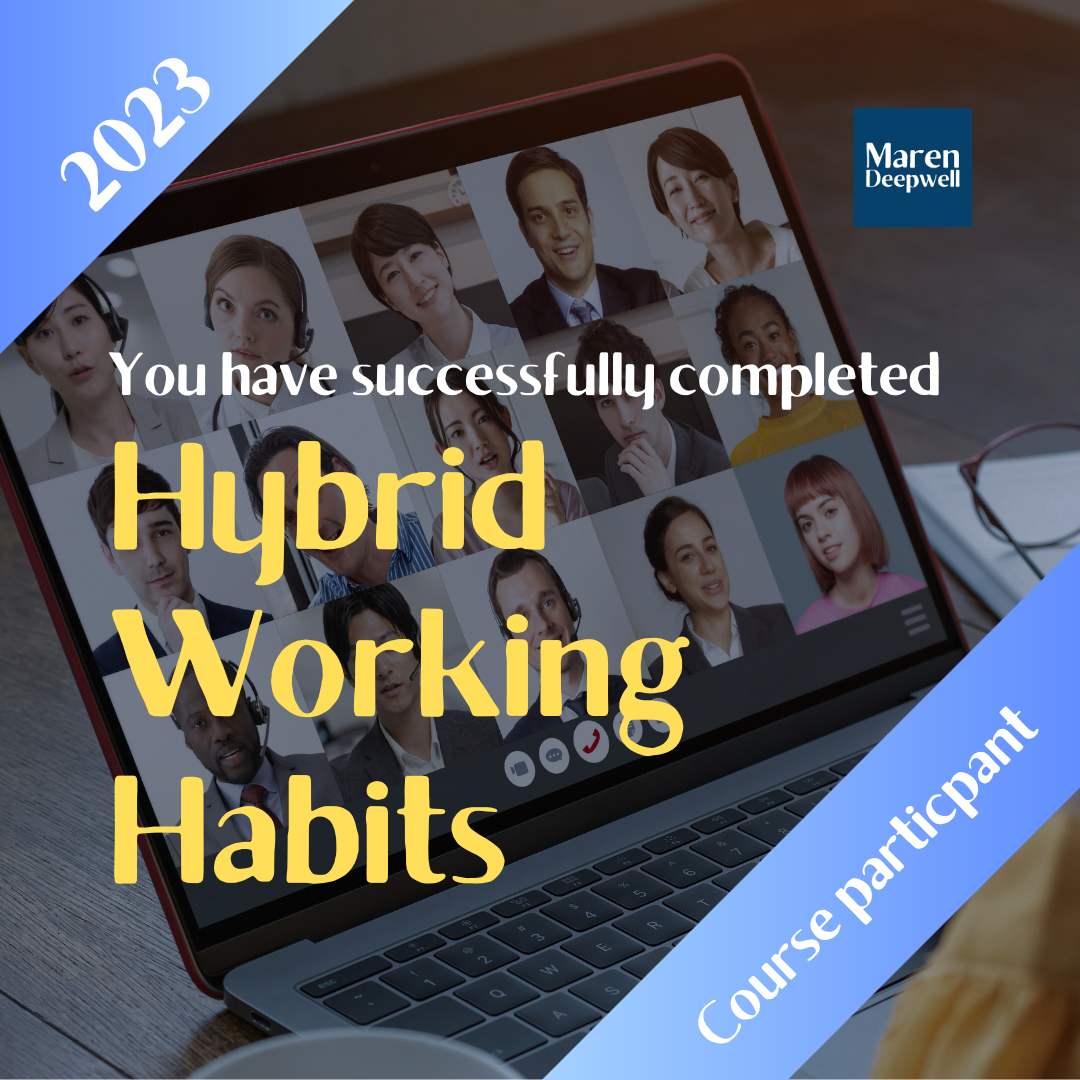
Over the past four weeks I have run a free and open course all about hybrid working. This week, we are wrapping up the course for 2023, and I’d like to take the opportunity to have a BIG thank you to everyone who took part, and contributed!
I love the format of the course, which is podcast cased with new topics released every week, as it allows folk to follow the course at their own pace, and offers the option to take part synchronously, too.
Inspiration for future courses
Quite a few people who registered for this run of the course expressed an interest in the weekly sessions to drop in. With between 30-50 participants taking part in the course each week, one of the challenges for me is to find a time that works across different time zones. For future runs of the course I’d probably come up with a better timetable to give more people the chance to connect and learn together.
Another element of the course that I am keen to develop is how new topics are released. Many people taking part have a lot of other commitments to juggle, and might find it easier if all the resources and topics were available from the start. I am going to have a think and see how that might work… 🙂
What worked well?
It’s been great to see the course attract lots of listens and interaction. Although I do encourage people to register for free, only about half of the people participating in the course do. Others prefer to simply subscribe to the podcast to listen along and explore at their own pace.
The topics for the course resonated well with participants, especially those designed to help manage digital overwhelm and setting life/work boundaries. Plus, I really enjoyed recording these as well, which is an added bonus!
Course catch up
The course resources and podcasts are now freely available and you can explore topics at your own pace. The easiest way to do that is to listen to the course podcast:
The course is podcast based and new episodes released weekly on Fridays. The podcast is called Leading Virtual Teams and you can find it on: Anchor, Apple Podcasts, Google Podcasts and Spotify.
If you’d rather see everything at a glance, the Course information page provides a handy guide to the course and links to all previous topics:
Yep, this is another post about houseplants… or rather things we can learn from plants. I’ve previously published leadership lessons from office plants and in the same spirit this post is all about houseplant inspired tips for managing a period of change or transition.
It’s inspired by my own experience of moving between jobs this month and my adventures in caring for a growing collecting of plants in my home and home office. It’s the first time in a long while that I am changing jobs, but the last few years have brought so much uncertainty with them that I feel I have quite a lot of practice of coping with the unexpected. What the last few years have also highlighted for me is how important it is for us to have strategies for periods of transition – and like many I found solace and inspiration in bringing a bit of green indoors.
So in the spirit of open practice, here are my personal reflections and practical tips. You can also listen related episode of my podcast on Apple Podcasts.
Allowing time to be less productive
One of the things I have struggled with a lot in recent months is just how much there is I don’t know or can’t control, both when it comes to changing jobs and also in relation to my plant collection. Although I am looking forward to the changes ahead, it’s still disconcerting not to know what the next day, week or month will bring, how it will feel, if what’s ahead is fun or frightening. While I have plenty of practice in dealing with uncertainty both professionally and personally, the emotional toll of not know is still there.
Hence there is a lot of need to get comfortable with accepting what I can’t control and to sit with my feelings, comfortable with being uncomfortable. Spending time with plants is one way of making that space and time to acknowledge to myself (and where appropriate to others) what I am feeling. I might go for a walk or sit quietly somewhere, or lie on the sofa cuddling my dog. The particulars don’t really matter. What does matter is that in that extra time I need I am not being as productive as usual. I am not achieving or working in the way I usually do. It’s a season of change, and just like my plants aren’t always growing new leaves or in bloom, I am adjusting and trying to enjoy this period for what it is.
Reflecting to gain perspective
Reflecting is a key part of my professional practice. I like reflecting in conversation, by writing in my journal, or just thinking about things. That said, at the moment I am finding it difficult to focus. I sit in front of a blank page and I can’t find the words to start. There seems to be too much to reflect on to know where to start, or indeed everything I can think of doesn’t seem worth mentioning.
Fortunately, I have a coach whom I get to lean on in times when my own capacity to gain perspective is low, but I also found some prompts to help me reflect. What I do is to start on a fresh page, and write down 3-5 questions that I then answer in turn. Here are some examples of the kind of questions I ask myself:
What was hard today?
How would you like tomorrow to be different?
What do you wish you had done or said differently?
Why are you feeling the way you do?
What has changed in the past week/month?
What are you looking forward to next?
What would you wish would go away?
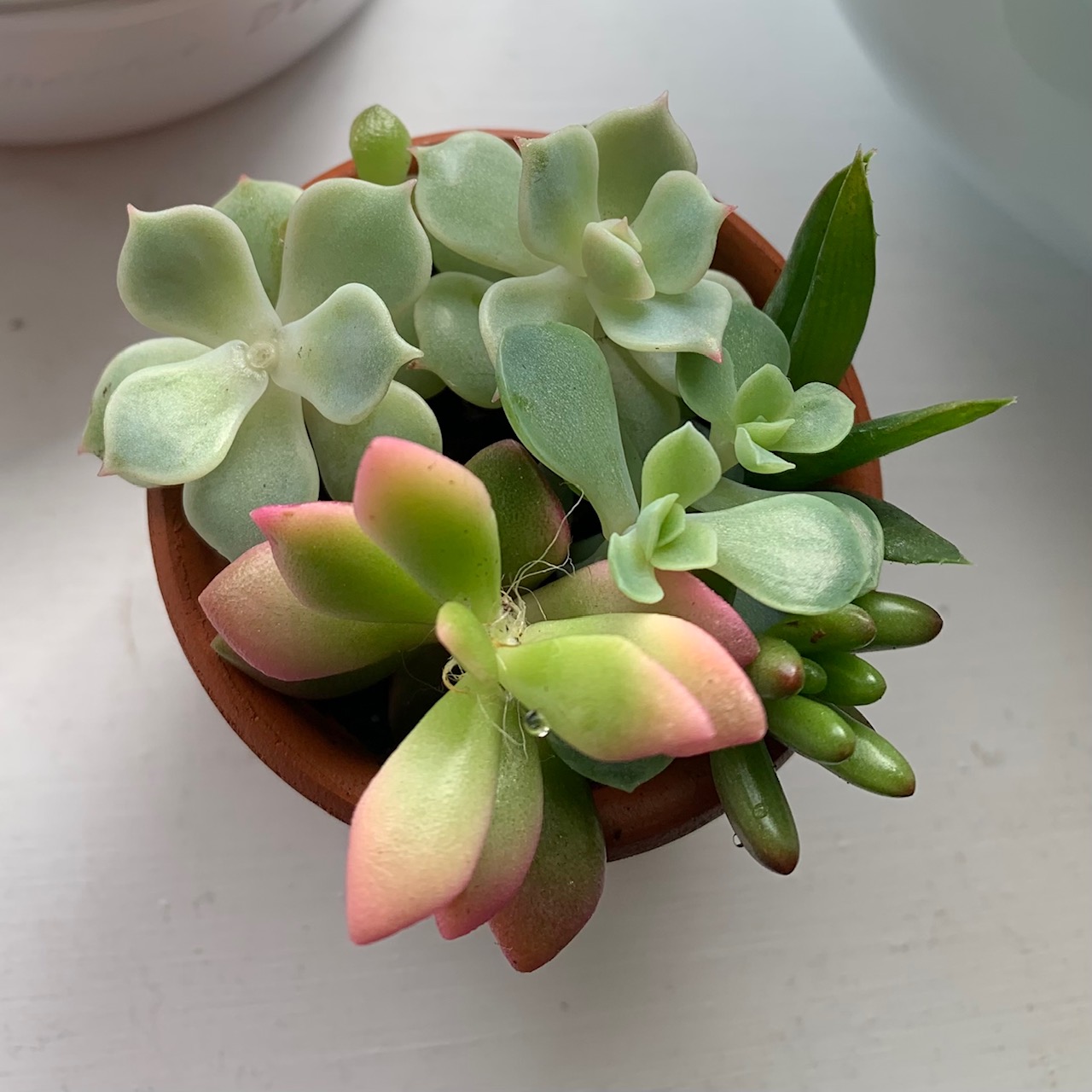
I have some very small succulents at the moment, and they are so interesting to watch. Day to day they don’t really change, and sometimes I give them to much water or too little, and some of them don’t like it, but with patience, they do change and grow and you can also really see those changes over a period of time. Similarly, in my journal, I can usually only spot the patterns when I look back at what I wrote 3 months or even a few years ago. It serves to remind me that my current perspective is always limited by the here and now.
Focus on what stays constant
Even in times of transition many things remain the same and it can help to focus on these. For me, it’s easiest to find constants in my home, my daily routine and my own skills and capacity. Here are some examples:
Home: I like finding my favourite comfy spots to read and have tea. Particularly during a stressful day, I enjoy looking out of the window and observing the outside world. I also have a great fondness for plants, and I have about 10-15 houseplants in my office. Plants change at a much slower rate, as they grow and develop. I enjoy observing them closely and soak up some of their patience and calm along the way.
Daily routine: tea in the morning, walking the dogs, even answering emails can be comforting routines. I really enjoy routines and habits, even though my week is not planned out in every respect. I like having flexibility to decide when I want to exercise or do chores, but doing familiar things is still comforting.
Skills and competencies: one of the things I find most comforting about change is that I can continue to rely on my own skills and competencies even when the context in which I apply them changes. For instance, I love planning and organising things. I enjoy being creative and producing content. My work rate is extremely high, and I get a lot done. All of these aspects remain the same, and I try to lean into those strengths.
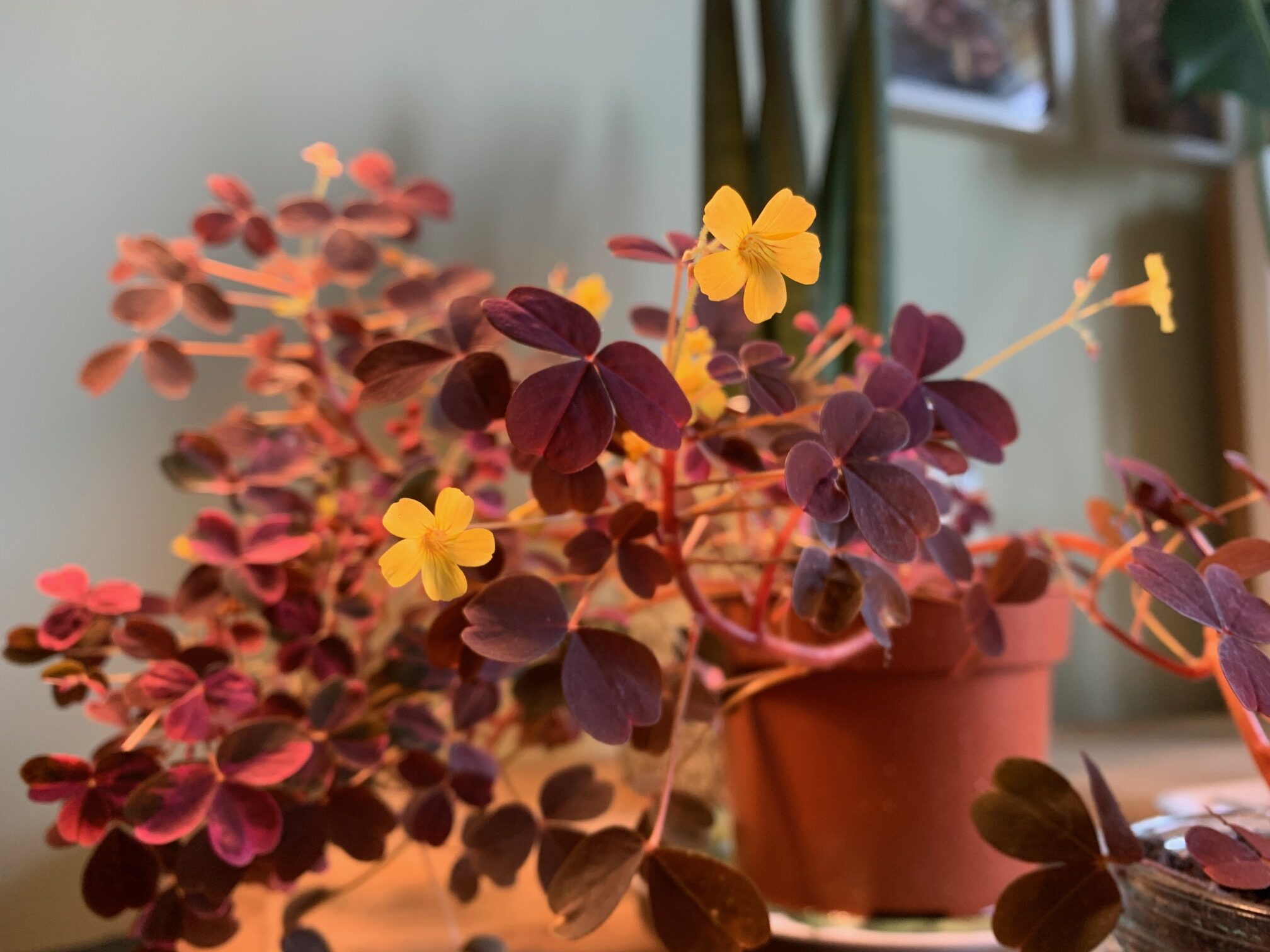
This plant, an Oxalis, arrived at my office from a local plant fair very recently. It usually grows near water, like a brook or stream, and is used to having some sun, but not too much, and to be kept moist and not dry out. So far, I am happy to say, I haven’t managed to kill it, but there’s always a high probability of failure with a new plant I am still learning about. I don’t know yet how the plant will adapt to my office, or what it might need. Context is everything, and with a change in environment there’s always a risk of failure. Like with plants, people, too, need conditions to thrive, and they provide a constant reminder of that.
There are other strategies that work for me at the moment, including making time to practice gratitude, taking breaks, planning for a holiday and re-inventing some of my weekly routines. In short, everything I do when moving at ‘plant pace’ (slow, intentional, balanced, looking after my needs) feel good and are helpful in this period of transition.
There are also some things that aren’t working for me:
Can’t rush settling in
One of the aspects about change that frustrates me is that you can’t rush it. Things take time to adjust, and other people and processes need time to catch up. Most importantly, I need time to adjust. And yet, my mind would like it to be sometime in the future when everything feels settled and the new routines have become familiar.
Feeling unsettled is hard and most of the time actually making a plan happen takes a lot longer than conceiving of it in the first place. Although I can comprehend that things simply take time to change, and that I need time to adjust and process everything I still find it frustrating at times.
Digital difficulties
The other part of transitions that I find difficult is in how many different places information needs to be updated. From social media sites to email footers, to life admin and address books, it feels like a mammoth task to even change my email address. That is one aspect of changing roles that I really don’t enjoy as it’s simply tedious to go through and unsubscribe, update or delete everything.
I am going to check back in on this in a few months, partly to report back on progress, and also to get a feel for how my perspective is shifting as the transition continues.
Enjoyed this post? Get my free monthly newsletter directly to your inbox.