Category: open practice

  • #femedtech #OER18 #OER17… because equality matters for all of us

    #femedtech #OER18 #OER17… because equality matters for all of us

    If you have been following the reporting on the gender pay gap in the UK, then this has been a sobering week indeed. You can search for the reports from different employers here. I have had a look through many of the education providers and sector bodies that I work with and the scale of the ‘gaps’ highlighted in some of the reports is staggering. Not a surprise, given my day to day experience of the sector, but still – staggering.

    As a chief executive I have reflected much during this week on how we can change things across the system. There are so many aspects to the problem that there is definitely no shortage of things we should tackle and there is much to do in relation to the professionalisation of Learning Technology.

    But on a more personal note this has also reminded me of how important it is that we continue to work towards achieving greater equality – in all its forms. So with a large international conference on openness in education just around the corner I hope that there’ll be much to learn and discuss from different, global perspectives. I also want to help give a voice to this conversation together with colleagues, and make sure that we consider equality in the context of openness.

    Powerfully, Catherine Cronin spoke of criticality, equality and social justice at OER17 in London last year. In the closing plenary we were asked to respond to a call to action… #Iwill #OER17 and many participants in the room and on social media joined in, making their voices heard and sharing their aspirations, making a commitment to taking action. I think it’s time to renew our vows to take action #OER18.

  • Researching alternative ways of measuring impact in Learning Technology

    Researching alternative ways of measuring impact in Learning Technology

    Last year I worked on finding a sustainable new home for the Open Access journal Research in Learning Technology. As part of my work for ALT, this was the third transition I have worked on since 2008 and during this period I have contributed to the thinking around Open Access publishing in Learning Technology, often through ALT’s contribution to initiatives such as the 2012/3 ‘Gold Open Access Project‘. This year I will be working with a new group set up by ALT to steer the future development of the journal:

    A new Strategic Journal Working Group to help steer the development of the journal now being published by ALT in partnership with Open Academia has been established and we are grateful that representatives from other scholarly bodies who are publishing in a similar model, have agreed to join the group to share best practice and support each other. The group is chaired by Prof Neil Morris, who also chairs the Editorial Board, and we are delighted to welcome colleagues from ascilite, ILTA and the OLC alongside our Editors.

    As well as learning from each other, the group is going to be examining alternative ways of measuring impact (alternative to the established impact factor, which the journal has not been awarded to date). This is an area I am particularly interested in for three reasons:

    Knowledge exchange happens elsewhere
    Firstly, much of the most cutting edge research and practice in Learning Technology is not published in formal journals. Even the most responsive Open Access peer-review system can’t necessarily keep pace with the quickly changing technology landscape we work in and so less formal ways of knowledge exchange on blogs, on social media or in project reports is often more important and useful.

    Different media
    Secondly, a lot of the most interesting ideas may be shared as videos, drawings, data visualisations and so on, in short, they may not easily fit into the traditional formats measures like an impact factor were designed for. What we cite and where we link to can be harder to track. As we use new technologies to communicate and share information the way in which we cite/link to sources needs to adapt.

    Crossing boundaries
    Another aspect of what makes measuring impact interesting in Learning Technology is the way we cross boundaries of disciplines in research, policy and practice. Coming from a discipline like Anthropology, which has a hugely broad frame of reference depending on what you specialise in, it still seems challenging to what extent the work of Learning Technologists crosses boundaries.

    So, keeping all this in mind, here is where I am in my work to research alternative ways of measuring impact…

    I started with a a blog post DOAJ LAUNCHES THE DOAJ BEST PRACTICE GUIDE which I came across as Research in Learning Technology was recently awarded the DOAJ best practice seal. It’s a useful new guide that provides a lot of helpful information to publishers, authors and policy makers interested in Open Access publishing. One of the resources it referred me to was a tool for authors called ThinkCheckSubmit. Whilst not specifically talking about how the impact of the journal is measured, it does ask authors to check the publisher’s information for example how the journal is indexed or whether the publisher is a member of OASPA or COPE.

    Also in a blog post, this time on the altmetric website, I discovered that “the next-generation of Altmetric donut is here!“. If you are new to altmetrics, here is how they explain what it’s all about:

    Altmetrics are metrics and qualitative data that are complementary to traditional, citation-based metrics. They can include (but are not limited to) peer reviews on Faculty of 1000, citations on Wikipedia and in public policy documents, discussions on research blogs, mainstream media coverage, bookmarks on reference managers like Mendeley, and mentions on social networks such as Twitter.

    Sourced from the Web, altmetrics can tell you a lot about how often journal articles and other scholarly outputs like datasets are discussed and used around the world. For that reason, altmetrics have been incorporated into researchers’ websites, institutional repositories, journal websites, and more.

    Whilst I have been familiar with altmetrics for some time, I hadn’t actually come across the history in much detail and I found it really helpful to visit http://altmetrics.org/manifesto/ and read up on some of the older posts. It gave a me a better insight into the thinking that informed the development of the tools and policies involved. It also reminded me of the 2014/5 HEFCE publication called “The Metric Tide” which includes an executive summary, literature review and correlation analysis. As part of the recommendations the report featured, it states:

    These recommendations are underpinned by the notion of ‘responsible metrics’ as a way of framing appropriate uses of quantitative indicators in the governance, management and assessment of research. Responsible metrics can be understood in terms of the following dimensions:

    • Robustness: basing metrics on the best possible data in terms of accuracy and scope
    • Humility: recognising that quantitative evaluation should support – but not supplant – qualitative, expert assessment
    • Transparency: keeping data collection and analytical processes open and transparent, so that those being evaluated can test and verify the results
    • Diversity: accounting for variation by field, and using a range of indicators to reflect and support a plurality of research and researcher career paths across the system
    • Reflexivity: recognising and anticipating the systemic and potential effects of indicators, and updating them in response.

    The recommendations outlined in the report apply mostly to HEIs, funders and government bodies. There are some however that are directly aimed at publishers. These are:

    Publishers should reduce emphasis on journal impact factors as a promotional tool, and only use them in the context of a variety of journal-based metrics that provide a richer view of performance. As suggested by DORA, this broader indicator set could include 5-year impact factor, EigenFactor, SCImago, editorial and publication times. Publishers, with the aid of Committee on Publication Ethics (COPE), should encourage responsible authorship practices and the provision of more detailed information about the specific contributions of each author. Publishers should also make available a range of article-level metrics to encourage a shift toward assessment based on the academic quality of an article rather than JIFs. (Publishers)

    Publishers should mandate ORCID iDs and ISNIs and funder grant references for article submission, and retain this metadata throughout the publication lifecycle. This will facilitate exchange of information on research activity, and help deliver data and metrics at minimal burden to researchers and administrators. (Publishers and data providers)

    Interestingly there are a number of recommendations for HEFCE and future REF exercises, that as far as I can tell seem to have not necessarily been picked up given the recent closure of HEFCE. Still, it is useful to revisit this report and its recommendations within the wider context of thinking about alternative ways of measuring impact.

    I also came across an ebook that is new to me, published by altmetrics and Scholastica, entitled “The Evolution of Impact Indicators”.  The whole publications looks extremely useful and has a lot of references that are relevant to my work, but the chapter that I am particularly interested in is called “Beyond the Impact Factor”. It discusses a number of alternatives to the impact factor including the EigenFactor and the H-Index. The H-index is probably the one I am most familiar with, but it’s also useful to remind myself of how this is tracked:

    Google Scholar: Google Scholar provides the h index for authors who have created a profile.

    Publish or Perish: Publish or Perish is a software program that retrieves and analyzes academic citations from Google Scholar and provides the h index among other metrics. Publish or Perish is handy for obtaining the h index for authors who do not have a Google Scholar profile.

    Scopus: Scopus provides a Citation Tracker feature that allows for generation of a Citation Overview chart to generate a h index for publications and citations from 1970 to current. The feature also allows for removal of self-citations from the overall citation counts.

    Web of Science: Web of Science allows for generation of the h index for publications and citations from 1970 to current using the “Create Citation Report” feature.

    Now that I have started to refresh my memory of some recent developments, my next step will be to take this back to my desk, do some work on the journal itself and compare notes with my colleagues from the other publishers.

    Read more:
  • Openness: a practical value #OER18

    Openness: a practical value #OER18

    In a few weeks, many colleagues from across the world will convene in Bristol for the OER18 Conference and from an active conference committee, and a inspiring line up of keynote speakers to a full programme of sessions about the politics and practice of openness in education there is so much to look forward to. I have been following the blog posts published on the conference site, thinking along with the debate about how open practice is being embedded in institutions, how advocates are winning over policy makers and funders and how our perspective on OER is changing. Inspiring stuff – and many difficult questions facing us, too.

    Yesterday I was talking to a group of UK policy makers and one of the things I spoke about is how openness is a practical value to me. It’s not a lofty concept or a hopeful, idealistic vision, it’s a practical measure to be implemented, a yardstick against which new proposals can be evaluated.

    From Open Access publishing to open licences, from shared content to open governance, it’s not a value that is easy to put into practice at any time. In her #OER18 post, Lorna Campbell reflects on this when she writes:

    To my mind, the success of the OER Conference has always been founded on its willingness to examine and renegotiate what “OER” means, and this is one of the themes I’ll be exploring in my keynote.  And by that, I don’t mean defining the specific attributes of what constitutes an Open Educational Resource, I mean critically reflecting on what openness means in relation to education at different points in time and from different perspectives, because as Catherine Cronin reminds us in Open Education, Open Questions, “openness is a constantly negotiated space”. Open education looks very different to each and every one of us, and our perspective will depend entirely on where we are standing and the privilege of our vantage point.  And of course it is inevitable that our perspective will change as our roles and careers develop over time.

    Outside of the OER community, most audiences that I speak to seem to think that openness means not generating revenue. It means taking a risk to give away something of one’s competitive advantage. It is for those who are privileged, those who can afford to spend time, to dedicate resources to something besides their core business. And so the work of advocates, individuals and organisations, is crucial to making business cases, to convincing governments and providers of the practical advantages, the bottom line, the success that can be achieved if a particular open model or platform is adopted. Open textbooks, for example.

    And yet despite the many signs of progress, there are many instances of what was once open, for example a repository, a course or a platform, turning into something else once it becomes valuable. That’s when economic imperatives take over openness as a value and turn it into a marketing strategy.

    For me, that is one of the reasons why it’s difficult to demonstrate that doing, being, leading ‘open’ is a practical value you can turn into success without betraying the principles involved. Openness has draw backs, just as every other approach, and sometimes these are difficult to negotiate. Which is why it is so powerful when you see people do just that. And that is what I am looking forward to learning about at OER18. How we can make openness work for all, warts and all.

    So if you are there in person, joining in on Twitter, watching the live stream or coming along to Virtually Connecting, blog, lurk or otherwise take part – as one of the organisers I hope you’ll find the welcome and the inspiration you are looking for.

  • Open Education Week #femedtech

    Open Education Week #femedtech

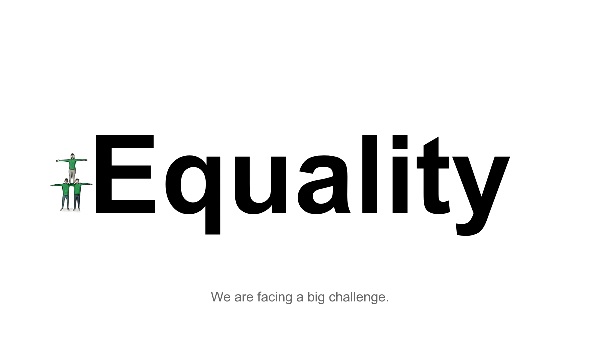
    Next week is Open Education Week and in preparation to giving a keynote at the launch of a new ALT Members Group in Northern Ireland on International Women’s Day on 8 March, I have been revisiting my talk on equality and open practice that I gave last year.  The talk specifically discussed the potential of Member Groups in creating greater openness and promote equality.

    Talk cover image "Equality"

    Over the past year, I have seen, supported and been inspired by a pletora of work being done all across sectors to promote equality, for example the Feminist Internet project, Kelsey Merkley’s @UncommonWomen campaign and the continued growth of the #femedtech community to mention only a few.

    With this year’s OER conference just over a month away (if you haven’t yet had a look at the programme, you should…), it feels even more important to champion open practice for the cause of equality – open practice that empowers diversity and inclusion such as we saw discussed during #engageMOOC on Twitter recently. Open practice that fosters criticality and builds confidence, that helps better reflect the work that is being done for which there are no awards, such as the lessons we learn from managing change or failure.

  • Trying out new online courses: GDPR and online engagement

    I have been trying out new online courses, starting with a Futurelearn course ‘Understanding the General Data Protection Regulation‘ which many colleagues are also taking part in. I am a Data Controller and responsible for my organisation’s compliance with the GDPR framework when it comes into force, and this course forms part of our way to becoming compliant.

    I have been taking part in the course mostly by reading and absorbing the material rather than discussing/exchanging ideas with other participants – I have plenty of debate around these issues in other contexts.

    The course is clearly structured, easy to follow and has plenty of references and articles to follow up on specific issues further. I found the video component of the course, which is usually more engaging for me, less interesting in this case. I found I prefer to read the more detailed articles and lists.

    After one more week of GDPR, I am really looking forward to starting a completely different kind of course, the upcoming ‘Engagement in a Time of Polarization‘ run on edX led by Delia Deckard and Bonnie Stewart. The course is described as follows:

    How can we work together in a society where our communications channels have become so polarized? Can we engage in active, effective collaboration in a media ecosystem designed to make money from driving us apart?

    This two-week course convenes a conversation on participatory engagement models, and on building understanding and relationships even within the very real limits of contemporary social media. The course will enact the same participatory ideas it explores, and will feature input from leading voices in media literacies, disinformation, and polarization. Participants can engage on their own time and in real time, and if they wish, can build towards action in their local communities.

    The focus of this course closely relates to some of the work I do day to day, in particular around enabling engagement in online communities at scale, supporting effective open, online governance and reflecting on the skills required to participate.

    It’s also a topic I am interested in for my own practice, and I am looking forward to learning more about how debate gets polarized and how we interact online.

  • Welcome 2018

    Welcome 2018

    Before the year gets properly underway, I’ve had a bit of a tidy on this site:

    As it’s the start of a new year, I’ve also been reading about and following some of the advice provided in Mozilla’s helpful data detox kit.

    I’m looking forward to a year of sharing practice and reflections as a Learning Technologist in a leadership role.

    A good New Year 2018 to you!