Category: leadership

  • Home-worker… care-work… self-care.

    Home-worker… care-work… self-care.

    Last year I wrote a post about how working from home can lead to doing a lot of housework. I reflected on how working from home made me feel like I had been landed with all the domestic and care work and I explored ways in which I reclaimed a better balance.

    A year on, and several big life changes later, seemingly everyone is now working from home and finding any kind of balance is an even bigger priority.

    Working from home in these turbulent times poses some unique challenges for sure, but many of the issues I encounter are already familiar, they have just been amplified by what’s happened.

    Home-work/life balance

    A year ago, avoiding doing too much or unnecessary housework seemed like a big challenge and the strategies I used were simple: setting aside time to do chores rather than doing them as I see them, learning to ignore things that aren’t urgent, reminding myself of sticking to my working hours… . Just now, I need these strategies more than ever, because everything that’s happening in the world of educational technology seems urgent and there is an emergency all of the time.

    Sticking to my working hours, not trying to do more than I am able to handle… making my work space as good as it can be. Sounds easy but all of these are hard to actually stick to.

    I have bought myself some new plants, bringing a bit of the outside world to my work space and I am adjusting my set up to suit the different seasons. I have moved my desk closer to the radiator for example… 🙂

    I was permanently home-based before this year, but even as a permanent home-worker I need to find ways to be effective as a CEO as my circumstances change and adapt to what is happening in the world around me. This year, this means being consistent about unplugging myself from work.

    When it comes to technology sticking to working hours is even more key for me, because there is never a time when the emails and notifications stop. So I stop them. I have a dedicated screen on my phone for work related apps, so I don’t see them when I am not working. I switch off push notifications. I don’t have work emails on my phone and if I do want to log in I need to manually type in a very long complicated password. For me, that is an effective deterrent.

    Whilst I haven’t found a way to set an out of office for DMs, I effectively provide one for myself, in that I copy and forward DMs that come in via various platforms when I am not working to my work account.

    Care/life balance

    A few years ago I was a carer for my mother, who has cancer. Fortunately my mum is well just now, but for a number of years juggling being a carer and working as well as having a life was a difficult balancing act.

    This year, there is a large volume of different kind of caring needed, and I find myself struggling in spite of my good intentions.

    I am really heartened by the absolutely amazing things so many people in educational technology have been doing day in, day out. I see you, I support you, I salute you.

    In my own way at work and beyond work I have done what I can to contribute to those efforts and I am grateful to be part of communities that make such a positive difference to so many in a very difficult time indeed.

    I care. And there is a limited amount of time, energy and brainpower with which I can act on and express that care.

    So I need to prioritise and take a step back from being online and present every day, every week. This is an instance where I won’t permit the blurring of my work life and my life outside of work further.

    I had a week off work last week and a week largely off social media. And that made for a good, healthy change. There is a crisis. But sometimes it just has to wait and be contained within its boundaries.

    Home-work/self-care balance

    I read an interesting article this morning which explored how people who live in Nordic countries mentally prepare for the literally darkest times of the year and there is one paragraph of the article in particular that resonated with me:

    Surrounded by Norwegian positivity, Leibowitz soon found her own mindset shifting; she learned to love long walks with a headlamp to guide her path. And rather than yearning for sunlight, she came to appreciate the “soft, peaceful” appearance of the city in the darkness. “When it was snowing, I would always try to go out and enjoy the fresh snowfall.”

    And that got me thinking about what the equivalent of a fresh snowfall will be for me as a home-worker this winter, as I continue to work through this crisis in the colder, darker months and return to localised lock downs here in Wales, which will restrict all aspects of my life.

    Here are my initial ideas:

    • make a point of having at least 1 walking meeting outside each week, talking on the phone;
    • learn how to look after my office plants better and learn more about them;
    • protect my boundaries between work and care work and me time, to guard against burn out;
    • try lots of different herbal teas;
    • avoid scheduling meetings so that I can still get out for 1-2 long walks in daylight each week;
    • give myself permission to have a duvet day when I really need it.

  • My CEO Report, September 2020

    My CEO Report, September 2020

    Dear Members

    Since my last report to you in June, much has happened in our community and the Association. From senior leaders to new recruits, everyone in Learning Technology has been working flat out to prepare for the start of the new academic year and continuing to cope with the impact of the pandemic. 

    Whilst it is gratifying to see the importance of the profession coming to the forefront in many organisations across sectors, the challenges we continue to face are enormous and the stakes are high for staff and learners alike. 

    Even without the usual preparations for our Annual Conference, we have had an exceptionally busy few months supporting Members, sharing expertise and providing input to policy makers. 

    Here is a quick summary of key developments:

    • ALT’s Annual General Meeting on 24 June 2020 was well attended and Members met ALT’s new Chair, Professor Helen O’Sullivan, Pro-Vice-Chancellor (Education), Keele University and President, David White, Head of Digital Learning at the University of the Arts London. Members welcomed ALT’s Annual Report and audited accounts, which you can also view on the Charity Commission website
    • ALT has supported Members launch the Open Covid Pledge for Research in Education which has gathered support from over 150 signatories, including UCU, Creative Commons and a growing number of institutions and researchers. I urge you to sign the pledge and support it if you can;
    • ALT is also providing input to UUK’s Task & Finish Group in Transnational Education as well as Jisc’s Learning and Teaching Reimagined initiative, for which the next workshop hosted by ALT is on 16 September;
    • ALT’s first Summer Summit meanwhile attracted 281 Learning Technology professionals from 24 countries, providing access to resources and new research which will soon be  available to all Members and the wider community. 

    To support Members through the start of the new term, we have a full programme of events and activities planned for autumn, including: 

    We are seeking input from Members to ALT’s response to the Sir Michael Barber Review of Learning and Teaching Online, and if you would like to contribute, please email me ceo@alt.ac.uk .

    Looking a few months ahead, we will be holding our usual Online Winter Conference, which this year will celebrate the Learning Technologist of the Year Awards. By popular request we are establishing a very special community award for all Learning Technologists, so save the date. On Thursday, 17 December everyone is invited to collect their award at our virtual awards ceremony!

    Dr Maren Deepwell
    Chief Executive
    ceo@alt.ac.uk

    This post was re-posted from the #ALTC Blog, see https://altc.alt.ac.uk/blog/2020/09/chief-executive-officer-report-september-2020/

  • Equitable home-working: things I wish I had known 3 years ago

    Equitable home-working: things I wish I had known 3 years ago

    In 2017 I spent nearly a year putting together a plan for transitioning ALT, the organisation I lead, from being office based (since 1993) to operating as a geographically distributed team. Executing the plan took another year… . Along the way to becoming not only a virtual team but also the employer of a (small) workforce that would be permanently home-based, I found out the answers to questions such as…

    • why do you need a physical address and how long does it take to sort out a PO Box that works (nearly a year…)?
    • what kind of policies do you need for GDPR for homeworkers?
    • how much does the equipment for homeworking cost?
    • what skills do homeworkers need?
    • which home-working policies actually work for permanent home-workers?
    • what’s the difference when everyone is home-based?
    • how long does the initial enthusiasm last?

    I had time to make a plan… rather than having to make the transition to homeworking with no notice as many CEOs are having to this year. Making a planned transition to becoming a distributed organisation meant that I had time to put in place a consultation process that involved the Board that governs ALT, all employees, HR professionals, lawyers, auditors and unions. The end result was a smooth transition with nearly all employees on board making the change successfully – and many of us now have a couple of years of working from home full-time under our belt.

    I now share that expertise with others who are on the same path, and continue to write a monthly blog series on leading virtual teams with Martin Hawksey. Talking about how to make a success of becoming a virtual team as made me reflect on what I wish I had known about three years ago… and I have come up with a few:

    A dedicated workspace is a must (for us).

    When I re-wrote our existing flexible working policy into a new home-working policy, one of the key questions we considered was the difference between being home-based and working remotely. We already had policies that covered things like working whilst travelling, occasional team days and so forth, so the question was whether to require employees to be permanently home-based rather than giving choice as to where they would be based, like a shared remote working space, a cafe or similar. We considered the nature of the work we do, the frequency with which we would require staff to be online working synchronously, implications of handling personal and financial information and what support we could offer to establish a functioning, long-term workspace at home. On balance, the conclusion we came to is to require employees to work from home on a permanent basis, with flexible working for when travel or similar is required.

    We developed a dedicated home-working risk assessment and annual review process, based on more traditional display-screen equipment guidance and our internal processes. And we offered equipment, a monthly home-working allowance and individual support for everyone.

    As part of the recruitment process, we set clear expectations about a dedicated work space at home and provide a self-assessment for prospective employees to reflect on the reality of working from home permanently with the support we can provide. In an ideal world, I’d love to be able to support individuals working in whatever environment suits them best and offer complete flexibility, but given that we don’t have the resources to do that being transparent and clear from the outset really helps set expectations and share responsibility for making working from home as equitable as we can.

    There are barriers (for everyone).

    Reading many of the headlines that are currently in the news about the difficulties of working from home resonates with me. Domestic abuse. Childcare. Shared homes. Limited space. Lack of equipment. Poor connectivity. Zoom backgrounds. Interruptions. Even if your domestic circumstances permit it in theory, working from home in the long term is different from doing it for a limited period or few days a week.

    I can readily understand and rejoice with those who are enjoying no more commuting. Having to travel regularly when in fact you could do your work as well or better from home is a huge burden on personal and family life as well as having a practical impact. The pandemic has shown that in many cases, work could continue from home and commuting could be drastically reduced. There are consequences for the individual, the organisation and not least all the economies that depend on regular commuters, and there are big upsides.

    If the last few years of leading a team of home-workers has taught me anything it is that there are barriers to home-working for everyone at some point. For example a house move, a change in personal circumstances (welcome to home-working whilst getting divorced!), illness, changes in physical or mental health and work-focused changes such as joining a distributed organisation, taking on a new role, parental leave and so forth.

    I really underestimated how much these factors could impact upon working from home over time and how quickly the ability to work from home becomes impacted on when you are not able to leave home and come to work physically. Supporting staff through a myriad of different situations has given me a new found respect for everyone who makes working from home work for them in the long term.

    Homeworking is (more) personal.

    Ever since I was 17 I had a job of one sort or another, many of which came with uniforms or (formal) dress codes. Getting ready for work was a thing. It still is even though like many I distinctly ‘dress down’ in comparison to what many other CEOs who work in a more traditional setting might wear.

    But regardless of what I am wearing, I still get ready for work, I still mentally switch from being ‘at home’ to ‘working’ as I climb up the stairs to my study. I need a bit of distance between home life and work even if working from home becomes ever more personal.

    Over time, I’ve become more comfortable with creating a version of my home, a part which I am comfortable to share with complete strangers – which many of my meetings are with. In return, I get glimpses of unfamiliar kitchens and bedrooms, toddlers and cats.

    It’s a tough situation when it’s hot or when you are having a bad day. It is a real challenge when things go south and you find yourself amidst a crisis. And we all have been having a lot of crisis recently.

    My vision of working from home had more do with freedom and flexibility and less with keeping safe in a pandemic – but regardless of circumstance, there are days when professionalism and detachment are needed as well as compassion and care. Others will probably have similar experiences to draw on, times when there was someone in distress on the other end of that Zoom call, times when they needed you to fight their corner or defend them or negotiate. When I deal with things that are tough I sometimes wish I wasn’t at home, all up close and personal with whatever disaster has struck.

    There are days when I feel vulnerable as a home-worker in ways that make me miss working in a dedicated work environment, a place I could leave at the end of the day to retreat home to relative safety. When I could leave work at work more easily.

    After three years, I love working from home. I feel privileged to be able to make it work. That said, the longer I work from home the more I realise equitable home-working is still quite a way off.

  • Kindness, mental health and radio full of rainbows

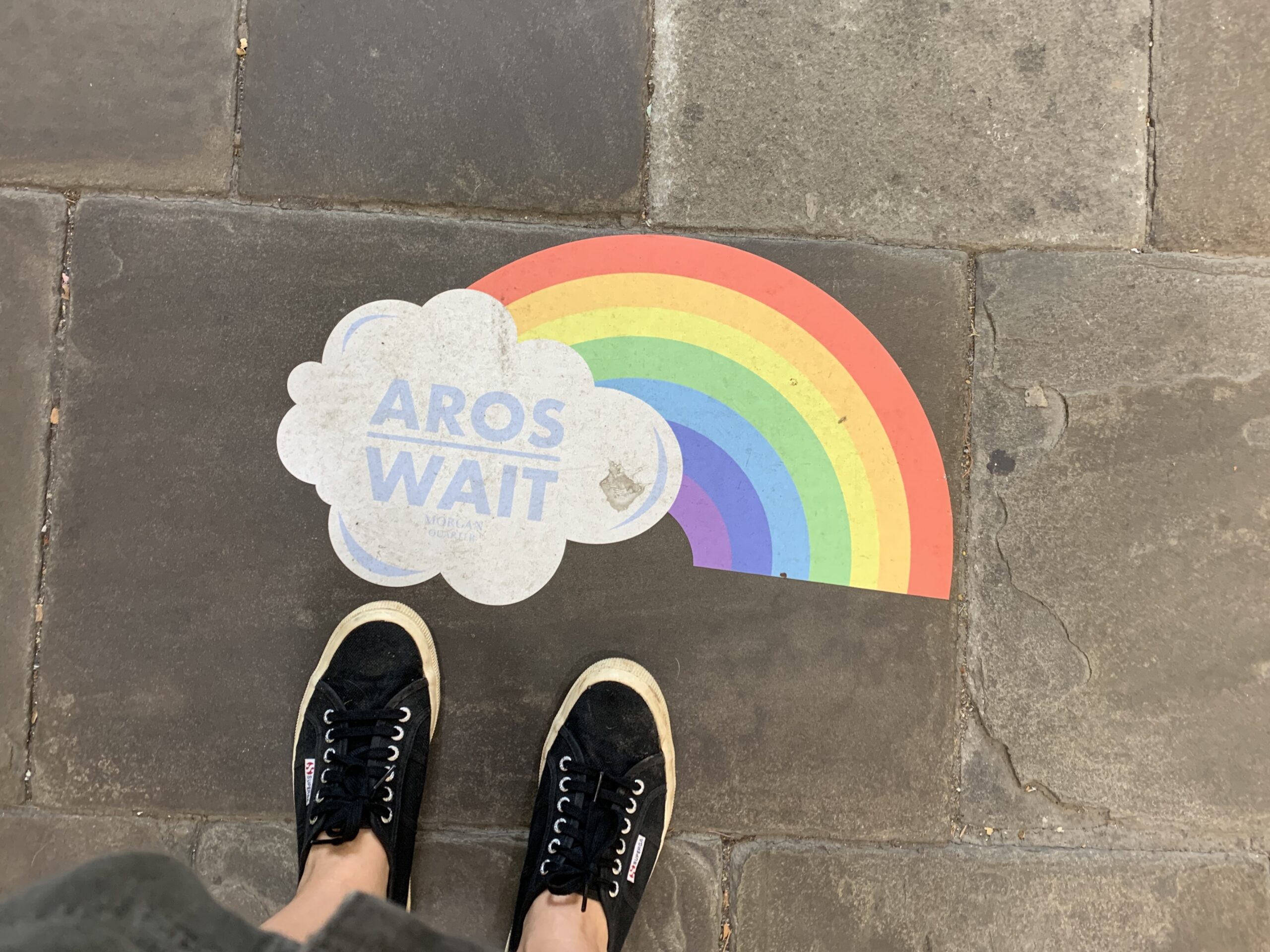
    It’s Mental Health Awareness Week and currently every day feels like it should have its own campaign and come complete with support resources. Head to the dedicated website to find help, advice and support or get involved and show some kindness to those in need.

    When I hear people talk about how well they are coping with ‘the new normal’ I can only hope that they mean being able to have effective online meetings. Because this… period of time… is not normal in any way and neither at work nor in my personal life is there a single person who is not affected or whose mental health is not suffering.

    Fortunately, I have people in my life, some professionals and some family and friends, who are there to support me through tough times – but that doesn’t mean that I don’t struggle. I do. I have to ask for help all the time and I find it just as hard as the next person. As a leader, as a competent person, as someone who many people think of “being always OK and having it sorted” I try and make that as visible as I can. It’s important to set an example to show that it is OK to need support, to not have all the answers.

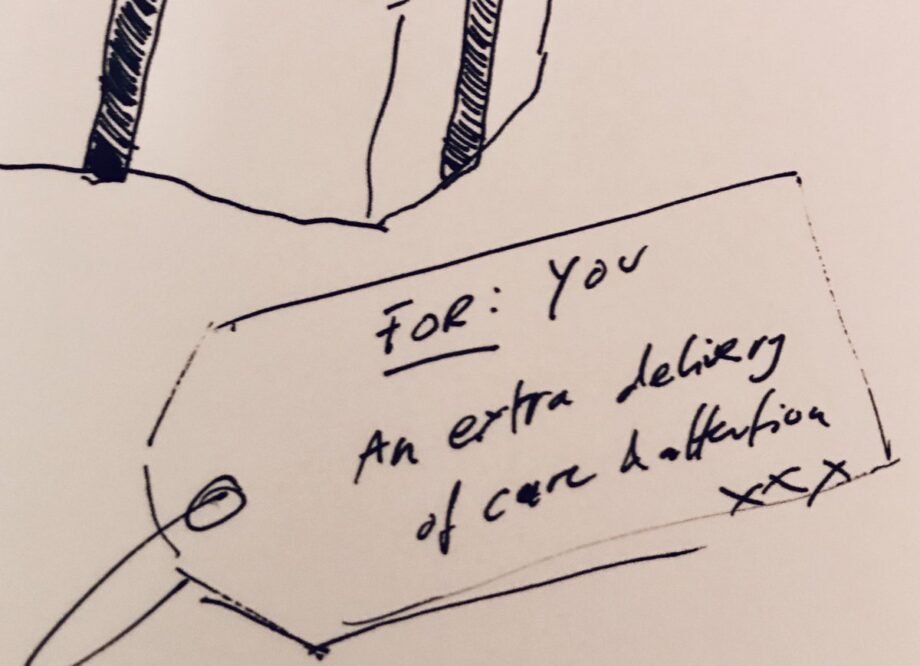
    An extra delivery of care & affection xxx (CC-BY Maren Deepwell)

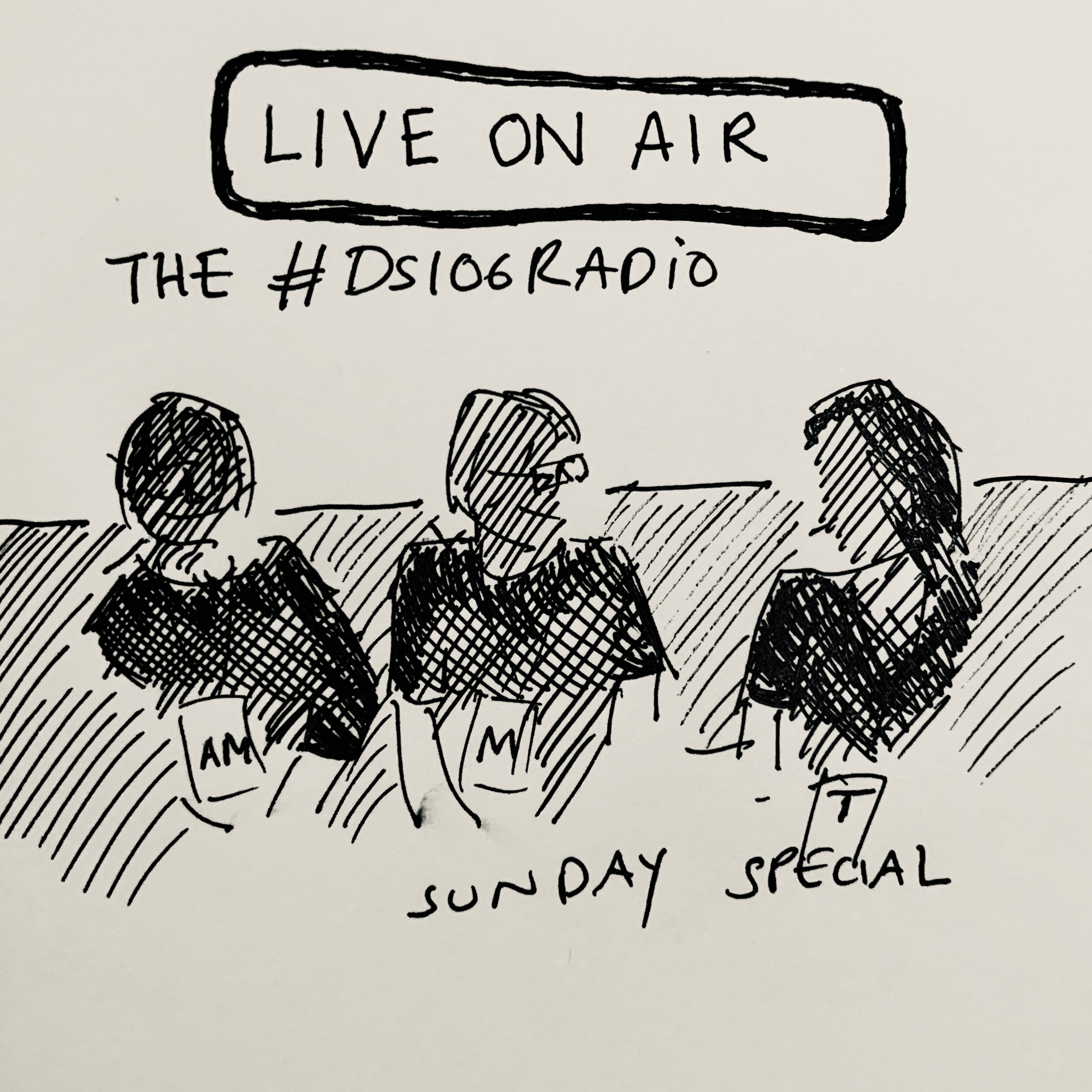
    Spending time with friends and spreading some kindness was also the theme on our Sunday Special Radio Show on DS106Radio this week. You can catch up on the recording here https://ammienoot.com/podcast/ . We played a show of only requests from listeners who got on touch via Twitter, requests for family, for friends, for lovers and lost ones.

    I’ll let these tweets tell you the story:

  • Thinking about how to virtually say thank you

    I work with volunteers on a day to day basis and with a small, dedicated team of people. Saying thank you and showing appreciation is something that is important to me personally and professionally, both on an individual basis and in my capacity as a leader and on behalf of my organisation.

    Saying thank you and expressing how much value the contribution of an individual or a group of people has is really hard to do online, where you can’t really hear the applause, feel the hugs or even shake hands. It’s one instance when emoji really don’t convey anything near the meaning that they should.

    Also, there is a lot that you can’t really convey online when it comes to physical tokens of thanks.

    For example, sending someone a small gift or a sticker only works with some people, whilst others might find the token disappointing.

    Also, saying thank you online can’t be done as easily by a group of people – there is less scope for spontaneity or personal contributions…

    BUT

    All that will have to change, because I have many people to thank and it will all have to happen online.

    So I am going to get my thinking cap on and ask for advice and input.

  • Radical Openness #OLCIdeate – and radical uncertainty

    Recently I contributed to a conversation around radical openness as part of the OLC’s Ideate online events, together with Robin DeRosa, Gerry Hanley, Leigh Graves Wolf and Rajiv Jhangiani. I was very glad to be invited and really enjoyed taking part.

    The session, described as a ‘community salon’ was described in the programme as an “opportunity for a group of thought leaders to engage participants in rich discussions around a broad topic intersecting with their scholarship and outreach. This salon brings together champions of open education and pedagogy sharing perspectives and guiding activities around the topic of radical openness, with a special focus on the ways that we can open doors for learners that are often hidden or closed to their success. Come with your ideas, challenges, and questions on the topic of openness, and take part in building new knowledge around open practices that will sustain us through and past these challenging times.”

    Leigh Graves Wolf set out a really helpful structure for the session, guiding us through a series of prompts and questions, including:

    • “in what ways are you open/radically open?”
    • “What are some Open Educational Practice behaviors that you promote/enact/admire?”
    • “What are some Open Educational practices that you promote/enact/admire?”

    And it resulted in a rich discussion and engagement, collated into shared documents (I encourage you to visit the OLC website to explore more).

    Eventually the conversation turned to current events, to how everyone is coping (or not) with the challenges of the pandemic, working from home, childcare, supporting students, teaching, Zoom… and so on. These topics, which have become so familiar to all in a short space of time.

    The more casual part of the conversation brought to light a different side of openness, which makes us all more vulnerable than sharing a teaching resource or a textbook. But it also made me think of ways in which, over time, our ideas of what might be radical openness may change. Here are some of my reflections:

    Radical… power structures

    At this stage of the great pirouette online, much of what is being done is still determined by power structures within institutions and communities or even countries, that rely on the decision making power of face to face institutions and processes, such as university governing bodies, finance committees, audits, quality reviews and so forth. Most of what is happening is not what was planned, but it is too new still for a lot of annual processes or less regular process to have happened yet and many of those processes are not open in either behaviour or practice. It’ll be interesting to see if we can challenge the openness of such structures more radically or whether the opposite will be true.

    Radical… change and culture

    In the first year of moving everything and everyone online we can draw on what we built up in person. There is a certain amount of common experience, of organisational culture, of shared memories, that act a bit like glue when it comes to getting through a crisis. But over time, as new people join the venture who don’t have that shared background, you open your behaviours and practice up to more radical change and transformation and that can be hard for everyone involved. Hard for those who are joining and hard for those who are already there. It’s difficult to build a shared sense of identity, aims or values without in person interaction at any level. One’s instinct is to close down options to change, to potentially loose what is being held on.

    Radical… uncertainty

    In the absence of much that we can rely on, it is difficult to imagine beyond the radical uncertainty we face. What do you do, whom do you ask, what is your plan when no one knows what, when or how things will change.

    Open behaviours and practice are hard to embrace when you are facing that kind of perspective. In that sense, any amount of openness we can put into practice is radical.

    One of the things we discussed in the session was how to support learners, and we were mostly focusing on traditional learners in a higher ed context here. But it was clear from the conversation and the comments from the audience, that we were all feeling more like learners again in a sense, just without the study guide to refer to.