Category: CPD

  • A peek inside my monthly newsletter

    A peek inside my monthly newsletter

    I’ve previously blogged about how much I enjoy compiling my monthly newsletter, and how useful the process in itself is for me as it ensures I keep logging what I am up to, sharing updates and resources for those who wish to keep in touch away from social media.

    So if you are wondering what is actually inside and how do you get it.. then this post is for you. Here’s a peek inside this month’s edition:

    Hi there! 

    This week a new digital skills micro-credential for emerging leaders I developed together with Dr Lynne Taylerson for the Digital Learning Institute is launching, and I am really excited to see this project to its conclusion. 

    It’s been very rewarding to build on the research I did for my book on leading virtual teams and focus specifically on the skills we need in hybrid organisations. 

    Alongside this project, I am thrilled to welcome new coaching clients on board for the summer as I expand my blended coaching practice to include coaching by post and walk’n’coach sessions. Later this month I am also running the highly successful Digital Wellbeing: Healthy Habits for Hybrid Working course again with the amazing team at the University of Oxford and speaking at the ASCILITE’s Women in Academic Leadership Initiative webinar about my journey as a leader. 

    All in all, there’s a lot to look forward to… 🙂 

    Catch up on recent talks and events:
    Reclaiming our Socials… and how you can too! – workshop with Amanda Schmidt and Taylor Jadin, SUNY Digital Learning Conference; 17 April 2024;
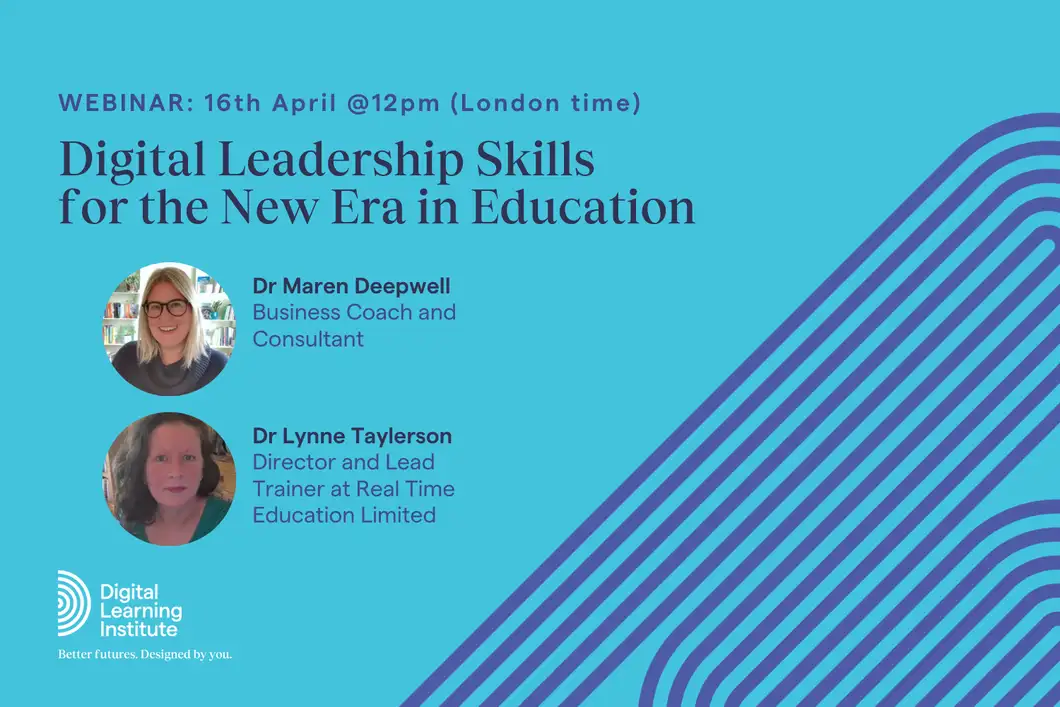
    Digital Leadership Skills for the New Era in Education, co-presenting with Dr Lynne TaylersonDigital Learning Institute, 16 April 2024;

    There’s also a quick summary of recent blog posts, podcast episodes and coaching updates.

    Keen to get my monthly newsletter? Subscribing is free:

    [newsletter_form type=”minimal”]
  • Hybrid Working & our senses: Part 2

    Hybrid Working & our senses: Part 2

    In this series I explore what happens to our senses when we work in a hybrid or fully remote setting for long periods. How does our embodied experience of work change as we spend more time in front of screens, alone in our studies or on kitchen chairs? And also, how does our perception of work shift as our senses of sight, smell, touch, taste and hearing adjust to hybrid working?

    The short course in digital wellbeing I run for the University of Oxford explores some of these issues and it’s helped me appreciate even more how important these aspects of hybrid and remote working really are. In the course we only have limited time to dive into each of these, so this series of blog posts builds on some of my thinking from the course design, and expands these further. If you’re new to this series, you might find it helpful to first read Part 1 focused on our sense of sight, Zoom fatigue and healthy habits for stepping away from our screens.

    There are also accompanying podcast episodes, starting with this episode:

    In this post, part 2, I want to turn my attention to hybrid working, digital noise & overwhelm.

    Our sense of hearing and hybrid working

    Similar to our sense of sight, our sense of hearing works hard when we work online more often: from wearing headphones for long hours to listening to the radio or music in order to block out unwanted noise, quietude and silence are rare during a busy working day. There’s lot of medical research into the risks of wearing earphones or earbuds over prolonged periods, but I know too little about this to include specific studies here. From what I have read it seems clear that one should avoid prolonged use and take regular listening breaks, set limits on volume and monitor exposure to loud noise.

    The prolonged use is specifically problematic when you are in video calls all day long, as we rely on our sense of hearing to fill in the gaps when video connectivity is poor, and we often use it to multitask during meetings, listening whilst checking emails or working on documents. In the first post in this series I talked about the impact of staring at screens without breaks and there is a parallel with our use of earbuds or headphones here, too. Most headphones and mobile devices now monitor routinely for noise  and environmental sound levels and alert you when you are exposed to excessive noise. Wearing noise cancelling headphones or earplugs can help as can moving to a quieter area to work. However, I am not sure how much choice we have in our exposure to sound.

    The auditory equivalent of Zoom Fatigue is called Listener fatigue (also known as listening fatigue or ear fatigue) and this is a phenomenon that occurs after prolonged exposure to an auditory stimulus. Symptoms include tiredness, discomfort, pain, and loss of sensitivity. Listener fatigue is not a clinically recognized state, but is a term used by many professionals.

    Personally, I hadn’t come across the term before now, but I certainly have experienced the symptoms described above.

    Even outside of meetings, audio notifications can be a source of distraction or stress. The constant pinging of chat messages, new alerts or reminders can feel relentless, and it takes some effort to adjust things so that the technology works for you, rather than against you.  Personally, I go in for switching off all notifications and my mobile is always on silent, as I prefer to engage with things when I choose to, rather than to have things pull me in as new messages or mentions arrive, but whatever strategy you use to manage, check in to ensure that it serves you, rather than you changing your ways in order to accommodate the behaviour of the tools you use.

    Healthy habit: daily quiet time

    If you are looking to improve your digital wellness with daily quiet, here are some tips to get started:

    • Finding your quiet time: There is usually a time of day or a point in the week when you crave a quiet moment the most. For me, that’s usually Thursday afternoon. For many people a couple of back to back meetings or a busy day in contact with others prompts a desire for a quiet moment. Find a time and protect 10-15 minutes. Schedule a meeting or a break. 
    • Finding quiet: Depending on where you are, this might involve going outside, going into a different room, or even using earplugs. Finding quiet places can be a challenge if you live or work in a busy environment. Wherever you go, make sure you are safe and undisturbed. 
    • Support in silence: If you prefer, use a meditation app or sound recording at a low level to tune into quiet moments. 
    • Notice the return of noise: When you return from your quiet time into a noisy environment, notice the impact that has on you. 
    • Make it a habit: how about setting a reminder to schedule a moment of quietude each day? Or you might prefer to pair your daily quiet time with something you already do, such as walking the dog, doing the dishes or exercise. Add a short, intentional moment of silence and stillness to an existing habit makes it easier to stick to. 

    Share your habit: make this habit stick by sharing that you are having a quiet moment. If you use direct messages or chat at work, post a quick update like “Just stepping away for a quiet moment” or “Back online in 10 minutes. Taking a break”. 

    Image credit: Photo by Michael Dziedzic on Unsplash

    Don’t miss future posts on this topic. Subscribe to my free monthly newsletter!

    [newsletter_form type=”minimal”]
  • Reclaiming our socials: SUNY Digital Learning Conference 2024

    Reclaiming our socials: SUNY Digital Learning Conference 2024

    Last year’s experiment in the fediverse, Mission Mastodon, helped me onto a new path to reclaim my social media presence. At the time, I was contemplating what best to do in the face of the demise of Twitter and the fragmentation of my networks. Add a career transition into the mix, and a couple of new professional communities, too, and you will understand why I spent more time than before trying to find a way of connecting and sharing that works for me.

    This week I am joining my Reclaim colleagues Amanda Schmidt and Taylor Jadin for a workshop focused on precisely these issues at the 2024 SUNY Digital Learning Conference. The format of the session is very interactive, and should leave plenty of time for discussion with delegates. I am really curious to learn what approaches other’s find helpful when navigating the social media landscape of today.

    The theme of the conference this year is Educating for Digital Citizenship and I am super excited to be taking part and learn more about all the topics on the agenda. I am particularly looking forward to the featured speakers: Data, Discrimination, and Democracy: A Conversation with Chris Gilliard and Kathleen Fitzpatrick on Open Matters.

    Drawing of coloured screens with the words Reclaim Networks

    Our workshop at a glance

    • Title: Reclaiming our Socials… and how you can too!
    • Subtitle: Reclaim Hosting’s journey to demonstrate digital agency
    • Track: Digital Activism
    • Format: Presentation
    • Presenters: Amanda Schmidt, Maren Deepwell & Taylor Jadin, Reclaim Hosting

    Abstract: Given the fall from grace we’ve seen various social media platforms experience recently— from Twitter’s transition to X, to Substack’s implosion— now is the time to think critically about how to be informed, and autonomous, digital citizens.

    We’re seeing more and more social media users finding themselves immersed in platforms they’ve spent many hours cultivating community and content on, only to feel the rug pulled out from under them when that platform does or supports something that doesn’t align with those users’ values.

    At Reclaim Hosting, we’ve always been more comfortable working in spaces that are as open as possible so that we have as much control over our content and communications as possible. Our socials, however, were always stuck with the big-box providers. With the rise of the fediverse, we’re taking our autonomy back. Join us as we discuss the Reclaim Hosting team’s transition to Mastodon, a self-hostable, decentralized social networking platform, and Ghost, an open source blogging platform.

    We’ll discuss our perspectives on the current state of social media affairs, walk participants through our open setup, and demonstrate how to reclaim your socials!

  • Behind the scenes of Digital Leadership

    Behind the scenes of Digital Leadership

    ‘Digital Skills for Emerging Leaders’ is a new micro-credential course from the Digital Learning Institute that I am working on together with the amazing Lynne Taylerson. It’s a super project to be involved in, and it’s extra special for me as I get a change to collaborate with Lynne outside of our other favourite project: AmplifyFE.

    Usually we work on this kind of project at a distance, using the kind of digital skills we talk about in the course to collaborate and communicate. That said, there are also some precious hours of working together in person in the mix and so Lynne and I recently spent a day together recording videos and fine-tuning the course:

    It was so fun to be able to do this together, a rarity for this kind of project, at least in my experience, and I am sure that will be reflected in the quality of the final product as well.

    Join us for a masterclass webinar

    As part of the project we are running a masterclass webinar: Digital Leadership Skills for the New Era in Education. It’s free to attend and open to all, on 16 April 2024 at midday (GMT).

    What to expect:

    • Explore digital skills for emerging and established leaders working in education and training
    • How is leadership changing in hybrid institutions or on a virtual campus?
    • Ideas to take away: ask our experts for top tips and answers to your questions.
    • Learn about authentic leadership in digital education

    Look out for further updates on the micro-credential, which should be launching soon.

    Keep in touch with what I am up to and subscribe to my monthly newsletter:

    [newsletter_form type=”minimal”]
  • A milestone moment on my coaching journey

    A milestone moment on my coaching journey

    This month I am celebrating a big milestone moment on my coaching journey. After two years of training and 100+ hours of coaching with over 20 clients I am set to formally complete the ACC credential of the International Coaching Federation (ICF).

    Thanks to Katie Linder’s Higher Ed Coach Training, I have now completed all mandatory training to become an ICF Associate Certified Coach. Completing the training and gaining the requisite experience in formal coaching hours means that my clients can be confident that my coaching adheres to the ethical and professional standards of the the International Coaching Federation. And, to help with clarity, the International Coaching Federation defines coaching as “partnering with clients in a thought-provoking and creative process that inspires them to maximise their personal and professional potential. The process of coaching often unlocks previously untapped sources of imagination, productivity and leadership”.

    Before I started the coaching training process I already had experience in mentoring and coaching on an informal basis, and I continue to be active in mentoring, for example as part of the 1MM programme for young adults, but the training process really helped me understand the professional dimension of coaching as a practice.

    Learning a new skill and developing in an emerging professional practice was a challenge. The training programme I chose to join is US-based, and thus a lot of my training happened in the evenings especially at weekends, and for months at a time, every Saturday or Sunday evening would be spent together with a cohort of inspiring new coaches with whom I built great relationships. Katie’s approach to coach training provided just the right mix of support, aspiration and stretch goals and I especially appreciated the focus on coaching in Higher Ed.

    Being new at something was a valuable experience for me. When you are practicing coaching, making mistakes and reflecting on your practice together you are in a vulnerable position and it took quite some time for me to develop confidence in my own judgement when it comes to coaching.

    What I love about coaching is that moment when it opens up a new insight or leads to a decision or an action. Sometimes it takes a long time to get to a moment like this, and being part of that journey is a privilege. No matter how long or short a coaching engagement, I always feel that the journey is rewarding.

    Initially I was focused on using coaching approaches within an executive role, and at the moment I use coaching in most of the work I do in different ways. It’s a valuable skills to have in all sorts of contexts, and it makes me better at being in a leadership role.

    I coach individuals and teams, within Higher Ed and outside of education, and I am on a journey to finding my niche, which in coaching terms means that you are trying to find what or who is the best fit for a coaching relationship, a match where it feels easy and productive and where you can make the biggest difference. Thus gaining experience coaching in different contexts and with a range of clients is especially valuable to me at this stage, as I am trying to learn about where my strengths as a coach lie.

    Coaching is a fantastic tool that I hope more people, particularly those of us who are juggling a lot whilst also achieving a lot, will make use of. That’s why I’ll continue to offer 10% of my coaching sessions on a pro bono basis.

    I am very grateful to all of my teachers, training colleagues, fellow coaches and most of all my clients for an amazing two years of developing as a coach. Thank you!

    Here’s to the next hundred hours of coaching together!

    Thank you

    Enjoyed this post? Subscribe to my free monthly newsletter:

    [newsletter_form type=”minimal”]
  • Digital Wellbeing and Hybrid Working

    Digital Wellbeing and Hybrid Working

    This month I am running a short course on Digital Wellbeing and Hybrid Working. Working with the wonderful team at the University of Oxford IT Learning Centre is a rewarding experience, and with the support of Emma Procter-Legg, their Digital Skills Service Manager, the whole process has been seamless from start to finish 🙂

    It’s been a welcome creative challenge to translate insights from leading virtual teams and hybrid working into the context of digital wellbeing, and in particular into a course format. Now that the course dates are coming closer, here is a bit of a preview of what the course is all about, and my hopes for what participants will get out of it.

    About the course

    Hybrid working offers a lot of advantages, enabling us to work more flexibly than before. When it comes to digital wellbeing however, hybrid working can pose challenges, too: for some, the increased use of digital technologies for communication and collaboration become oppressive, for others, physical and mental wellbeing suffer due to long hours spent staring at the screen. Over two sessions we will analyse and audit what works well and what you’d like to change about how you work and the impact this has on your digital, physical and mental wellbeing. Using practical tools and interactive activities the sessions will support you in reflecting on your current practice and identifying what actions to take next in your digital wellbeing journey.

    Objectives

    • Reflect on how your current habits are impacting on your digital wellbeing
    • Identify your hybrid working skills strengths and areas for development
    • Understand the long term impact of hybrid working on digital wellbeing
    • Develop a sense of how to foster digital wellbeing

    For more information, visit the course page.

    Digital wellbeing + hybrid working in a course format

    One of the questions I considered when designing the course is where the biggest challenges lie when it comes to digital wellbeing and hybrid working. Digital wellbeing is a big term that encompasses much, and our relationship with technology becomes even more nuanced when you add hybrid working into the mix.

    This is definitely not a ‘one size fits all’ teaching scenario, and an inquiry based approach seemed best suited to address the topic. Thus the course features a number of resources and tools to help participants analyse and reflect on what aspects of hybrid working most impact on their digital wellbeing and why.

    Given that this is only one of the courses the IT Learning Centre offers and that many of the other courses are skills focused, I decided to reference rather than repeat digital skills training and to offer points within the course at which digital skills strengths and areas for development could be identified. This, I hope, will provide a jumping off point for future professional development.

    In the meantime, the course also considers habits and behaviours, the broader context of one’s role and responsibilities as well as home-working context. Looking at each of these in the context of digital wellbeing will enable participants to gain a more holistic understanding of digital wellbeing.

    Silent Disco anyone?

    One of the things that is hard to convey in a webinar or a talk is the need to stop what you are doing and look at things with fresh eyes. It’s easy to say something like ‘take regular screen breaks’, but in my work I rarely meet anyone who actually takes breaks frequently enough and doesn’t end of staring at their phone, scrolling through social media or YouTube on their break. 

    The course design thus features an activity designed to disrupt the usual order of business of a course like this, an activity that invites participants to do something different: a silent disco one day and a bit of origami the next.

    There’re good reasons for why I chose these activities, and there are alternative options for everyone based in a shared office, but ultimately it’s a question of whether the participants are prepared to step outside their comfort zone for a bit, and away from their desk or screen if they can. If it works as I hope, it’ll offer participants a chance to step outside of the usual rhythm of their day and that may open up more room for change.

    I am really excited to run the course and very grateful for the opportunity to develop something new for students and staff who are interested in improving their digital wellbeing. Fingers crossed it’ll be a valuable experience for those involved 🙂

    Enjoyed this post? Subscribe to my free monthly newsletter:

    [newsletter_form type=”minimal”]

    Image credit: Photo by Sigmund on Unsplash