Author: Maren Deepwell

  • Fully fledged coach, ACC

    Fully fledged coach, ACC

    This week I passed my final exam and earned my ACC credential from the International Coaching Federation! It’s taken me two and a half years to achieve this milestone, so there’s much to celebrate.

    Coach Training complete, for now

    I’ve reflected previously on my coach training journey and I remain very impressed with the overall process (even though the final proctored exam made my edtech heart bleed). Initially I was focused on using coaching approaches within an executive role, and at the moment I use coaching in most of the work I do in different ways. It’s a valuable skills to have in all sorts of contexts, and it makes me better at being in a leadership role.

    Coaching is very much an evolving practice and so I am looking forward to being active member of the professional community, to continue learning with and from my peers and to explore new ways of coaching.

    What’s next

    As I start this new chapter in my coaching practice, what I do and how I support my client is evolving, too. Alongside coaching individual clients I have started to coach more groups and teams, particularly leadership teams of hybrid organisations and groups keen to increase wellbeing at work. There’s an exciting new project in the works that I am hoping to share more on soon.

    For individual clients the start of the summer season will see walk’n’coach sessions as part of my formal offering, starting with my established clients (with whom I already have built a rapport and a sense of trust). Usually, this would be coaching via a phone call, or, geography permitting, we might also meet in person. 

    That is alongside my existing video coaching and email check-ins, and I am also adding coaching moments by post, offering occasional letters and printed resources to help connect more deeply.

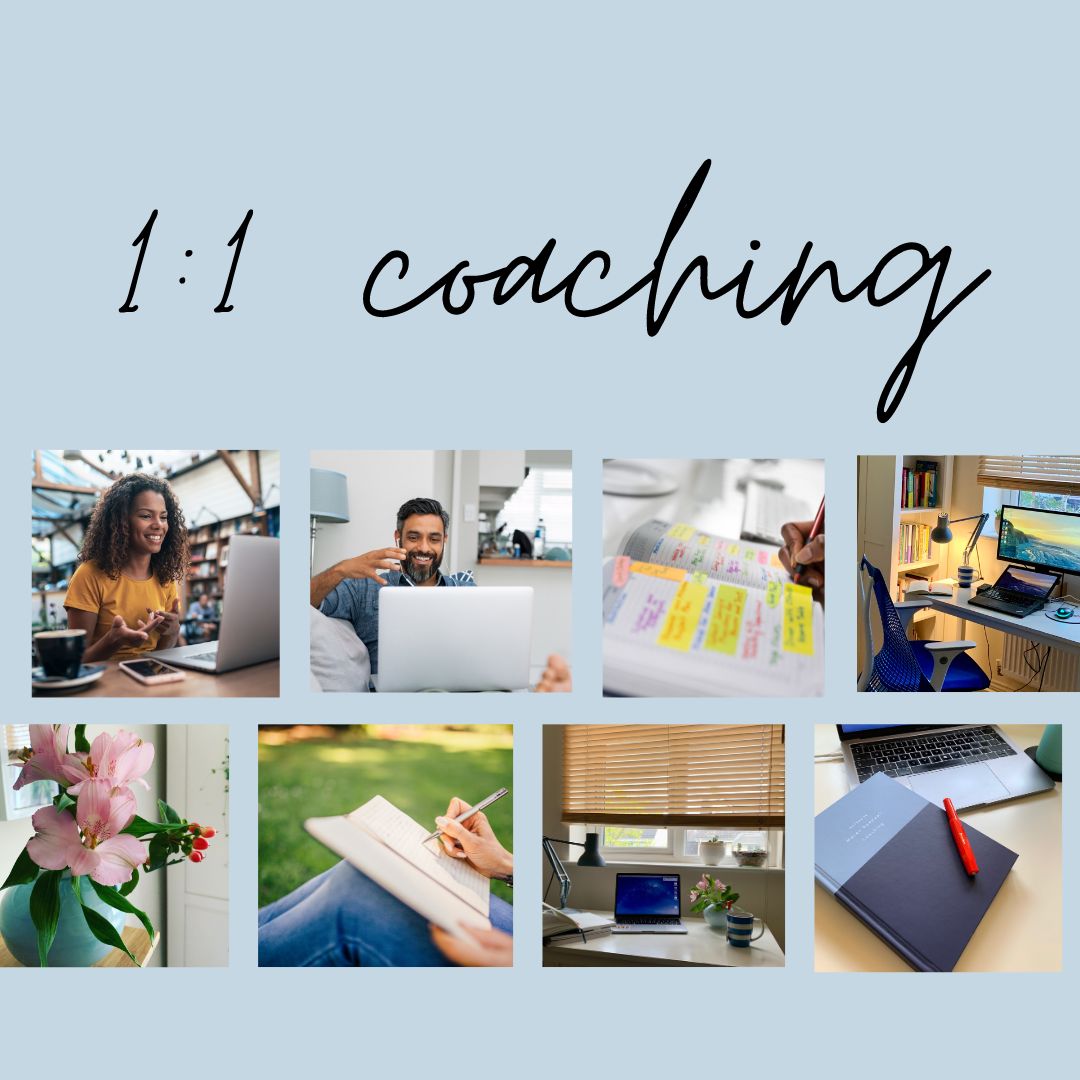
    Blended Coaching promo image

    Keep in touch, subscribe to my free monthly newsletter:

    [newsletter_form type=”minimal”]
  • Non-fiction writing: May 2024

    Non-fiction writing: May 2024

    Usually I publish a post about things I am reading every month, but this time, I wanted to share an update on things I am writing instead. Some of you may have already spotted that one of the menu items on my blog has changed from ‘book’ to ‘books‘; together with this blog post it’s the first sign of things to come as there is indeed a new book in the works.

    YAY!

    New book – coming 2025

    This new book will continue my work on hybrid working from Leading Virtual Teams which was published in 2022. It will also expand on that and have a much greater focus on long term hybrid working, how it impacts our senses and wellbeing. There’s so much to explore, and drafting the chapter outlines has got me very excited about the research and interviews ahead.

    One of the key relationships I am interested in exploring is between human beings and technology, and the radical shifts in the balance of power in the workplace (as in the classroom) with the advent of AI and surveillance technologies.

    This new book won’t be a solo project, but a wider collaboration with case studies and interviews with leaders and experts. If you are interested in contributing, look out for an open call for contributions in the coming months. For now, I am happy to say that I have found a co-author and editor, who will come on board over the summer and bring considerable research prowess, publishing experience and excellent tea making skills to the project. We plan to conduct chapter reviews walking through the summer woods.

    It’s important to me that the process of creating the book reflects the values and themes that we will focus on in each chapter, taking things at a pace that allows for careful reflection and work/life balance. Needless to say, the content of the book will be 100% written by humans (well, maybe 99% human, 1% canine).

    I look forward to sharing more about this project as it develops and will share updates on the blog and the podcast in the coming year.

    Subscribe to my newsletter to be the first to learn more.

    [newsletter_form type=”minimal”]
  • WiAL Webinar: My Leadership Journey

    WiAL Webinar: My Leadership Journey

    The ASCILITE’s Women in Academic Leadership Initiative aims to provide mentoring opportunities for academics and brings together its members via a community approach to support each other to progress in academia. Thanks to a recent invitation to speak at an upcoming WiAL webinar, I have started to think about my journey as a leader and what I could usefully share with this group of inspiring and aspiring academic leaders.

    My story, like so many of us who work at the intersection of education, technology and more, is not a straight line from degree to equally distributed career arc. My academic background in art and anthropology is not a natural stepping stone into non-profit leadership or project management even though to me it all makes sense (at least in retrospect). So when I share with people that I spent my PhD research in a cemetery and somehow less than ten years later I was the CEO of an edtech organisation there are definitely some curious glances.

    To bring some kind of order to the messy madness I have decided to present a couple of snapshots, rather than try to present a coherent narrative. From the beginnings of my undergraduate studies in the 90s, to my PhD years and even much of my early career a lot of my (paid) work involved bookshops, cafes, cinemas and market research. In short, any job that you could do as a young, foreign worker in the UK whilst still attending lectures sufficiently to pass my studies.

    Slide with the text: 90s Beginnings 
I moved to the UK in 1997, and went to art school. 

I trained as a sculptor in London, UK and spent a year at the Fine Art School in Athens, Greece, before started post-graduate studies in Anthropology at UCL, London, UK in 2003.

    When I think about what is important to me in my leadership practice, I think about my values and how what I do and the approach I use align with and reflect those values. Alongside my values, there is what motivates and drives me. Leadership roles can often feel quite lonely and isolated, and the more senior you are the more others look to you for encouragement and vision. Which brings me to the third aspect: developing my own voice.

    For me, that process didn’t happen in isolation. I had invaluable support from my long-term mentor as well as allies from the Board I was working with and other senior colleagues external to the organisation. They helped me build confidence, not just capability, and encouraged me to find things I am passionate about. They also helped me step into larger stages, to develop my presence for giving keynotes and writing opinion pieces.

    Slide with the text: 2015 - 2019 My Voice. Together with my long term mentor and allies from the board and other senior colleagues I found my voice as a leader.

    Looking back at that list of keynotes and articles brings back a lot of good memories for me. In those years prior to the pandemic my perspective had begun to expand, and I started to enjoy being part of a wider dialogue. I had found a good balance between having experience and still being new enough in my sector to see opportunity for change. I was excited to be doing what I was doing, and I made connections with people who really opened up my mind to new (to me) ways of thinking, writing and working.

    These relationships provided a very valuable network of support and inspiration when the pandemic hit and I entered my first years of permanent crisis as a leader. All risk registers were RED, all of the time. Everyone I knew and worked with was constantly fire fighting. The world had been turned upside down, and education with it.

    My voice as a leader during those years of crisis had to become one of clarity and decision. We had to get through it, and eventually, we did. Relationships were both strong in solidarity and fraught by lack of sleep, energy, rest and hope. Like many, the pandemic prompted me to re-evaluate things and having reached a point of organisational recovery I was proud of, my energy was spent and I decided to embark on a period of transition to a new chapter in my career.

    2023 was focused on that process of transition, of letting go for a lot of relationships I had built over a period of 15 years, and starting to lay the foundation for my next chapter and a new way of working. What I discovered during that period is that being a leader is part of who I am rather than something I do, or a job title. It’s stayed with me, even though the only person I manage is myself and I run my own little enterprise rather than an organisation for thousands of members.

    At this stage in my career I feel I have less to prove and more power. Now I am looking to leverage my expertise and experience to achieve the kind of work life balance that works best for me, to be creative and have fun and to follow where my curiosity may lead me.

    Slide screenshot with the words: Next? What I've discovered this year is that being a leader is part of who I am rather than something I do, or a job title. At this stage in my career I feel I have less to prove and more power. Now I am looking to leverage my expertise and experience to achieve the kind of work life balance that works best for me, to be creative and have fun and to follow where my curiosity may lead me.
  • From Record Store to ReclaimPress.

    From Record Store to ReclaimPress.

    I feel very lucky to continue my work with the awesome team at Reclaim into summer, and this month I have bagged myself one of the best pieces of work going: a conversation with Bryan Mathers all about that unique vinyl aesthetic and the brand new venture that is ReclaimPress.

    Over the last 10-12 years I have had the privilege of collaborating on many projects with Bryan, and I deeply appreciate his listening skills, his creativity and his grit. He recently ran the London Marathon and showed once again that once you put your mind to something, a lot indeed can be achieved.

    Every one of our conversations helps me reflect and leaves me inspired. So, yes, when there’s an opportunity to talk about how Reclaim’s aesthetic has developed from the early days of record stores and vinyl covers to the newly minted ReclaimPress, I jumped at the chance.

    I’ve already blogged about it on the Reclaim Blog, but I didn’t want to miss the chance to also shout here about our upcoming Reclaim TV session:

    Join us on Friday, May 17th at 3pm GMT / 10am ET for a very special conversation, a peek behind the scenes of the creative process behind the stunning visuals… and a chance to join the beta programme for ReclaimPress, too. Watch the stream over at Reclaim TV, or catch the recording later on archive.reclaim.tv or our YouTube channel as we go from passion project to web empire… . See you there!

  • Open leadership in practice: Unsung hero skills

    Open leadership in practice: Unsung hero skills

    Recently, I have done much work in leadership development. Both in the workplace and when I coach clients, I come across emerging and established leaders who have developed strengths and skills gradually over time, whether through informal learning or through practice or also outside of work. Especially where skills have come easily, grown over a period of time or when we have learnt something just for fun, these are often overlooked in favour of those skills we find hard to acquire or that are formally accredited by others. These strengths and skills often serve us well, but don’t get recognised. I am curious how we identify and appreciate such strengths or skills, and how we can move from seeing them as something we can simply do, to something we’re good at.

    Recognising and celebrating our ‘unsung hero’ skills is a powerful habit to cultivate in order to build confidence and develop as a leader. For example, when I coach leaders I always listen out for how they well they recognise their own strengths. Knowing your own strengths (and weaknesses) helps enormously with everything from effective delegation to seeking expert input. For instance, we might explore a narrative in which someone has applied their considerable skills to a problem, analysed the issues, found a solution and prepared to present this at a meeting – only to miss the chance to speak because something else comes up. Often this individual will end up with a sense of failure because they didn’t achieve the outcome they desired. All the good stuff that happened along the way fades into the background, and the most recent, negative interaction stays at the forefront of their mind. Sounds familiar?

    On my own journey as a leader I have certainly had experiences like this, and in my haste to keep up with the pace and to move from one milestone to the next I can easily forget to take a moment to appreciate what I have accomplished or learned along the way (regardless of whether I did get to speak at the meeting or whether others even saw my effort). Cultivating a habit of recognising and even celebrating the skills and strengths that help me accomplish my goals especially when constructive feedback, recognition and positive reinforcement are lacking, helps me value my own work.

    Yoga, one of my unsung hero skills

    One of my unsung hero skills is yoga. It’s probably been seven or eight years since I started practicing yoga, and it’s not a skill I ever really think about as something I am good at. I am neither as flexible nor as strong as I’d like to be, and even after years of practice, my down dog pose has me bending my knees and my heels have never yet touched the ground (thank you, hamstrings!).

    Still, when I take a moment to think about it, I quickly realise that I value my yoga practice deeply, and the benefits it brings for my physical and mental health. It’s also incredibly helpful to get out of my head and away from the screen, shifting my focus away from the digital realm and on my body and my breath.

    How did I develop this skill?

    I have been fortunate to have found teachers who I find both inspiring and practical, I have enough yoga stuff at home to make my practice as comfortable or as challenging as I want and I also have excellent online video classes. Each mode of engaging brings me something different:

    Home-practice: I started yoga with one to one lessons with a new teacher, who was developing her way of teaching as I learnt. I loved it and I benefited enormously from the attention of someone who got to know me and my body very well. I also got to explore a whole range of poses that take up too much space, set up or wobbling to be practical in a busy class. I love putting on music and setting myself up for a good session at home, knowing that I can spread out and wobble as much as I wish, repeating poses that feel good and make me happy. I love setting my own pace of practice and I enjoy the creativity of following the flow of movement according to what feels good.

    Online classes: It’s been only in the past year that I found an online/video class platform that I enjoy (Apple Fitness) and up to this point my only good experiences of online yoga was with teachers I personally knew. Unfortunately my current schedule is pretty unpredictable and changes from week to week, which is fun but makes attending a class regularly a challenge. And that is where the online classes are a great help. I tend to not push myself as much in terms of speed and strength when I practice on my own, and these classes help me build stamina and strength. I know enough about what I can and can’t do to modify when I need to rather than attempt to follow each and every pose the instructor show.

    Taught classes: My favourite way to practice by far is to attend a class, and I am very fortunate to have found several teachers that I love, which has made a big difference to me when I moved cities. My current teacher, Osk, who runs classes at Physio Space here in Cardiff, is not only a wonderful teacher, but also has a real gift for holding space. Her holistic approach to yoga provides just the right balance between being mindful and challenging. In her classes my form has improved just as much as my enjoyment of the practice.

    I’ve never sat down and thought about how I developed yoga as a practice, and even now that I have written it down, it very much feels like something that happened on the side or along the way as many of these kinds of strengths and skills often do. It’s also a skill that isn’t directly related to my work, so it feels less… I am not sure what the right term is.

    There are plenty of skills, my own unsung hero skills, that I would never put on a resume or list on a profile simply because I either take it for granted that this is something ‘everyone knows’ or a strength that is hard to quantify.

    Listen to the podcast :

    Identify your unsung hero skills

    What is important to reflect on here is that leadership is a holistic, embodied practice. Being a leader doesn’t just happen through formally recognised work skills or on good days, and by extension the skills and strengths we utilise aren’t limited to those that we earn degrees for or that are hardest to gain. The unsung heroes in our skills and strengths often make a bigger difference to our journey.

    If you’d like to identify some of your own unsung hero strengths or skills, here are some prompts to get you started:

    • What activities do you enjoy?
    • What skills or strengths do you use for these activities?
    • What would a friend or colleague say you are good at?
    • What skills did you enjoy learning?
    • What comes easily to you?

    Use these for reflection, journalling or in a conversation to get you thinking about what in your toolkit might deserve more recognition.

    Image credit: Photo by Markus Spiske on Unsplash

    Enjoyed this post? Subscribe to my free monthly newsletter:

    [newsletter_form type=”minimal”]
  • A peek inside my monthly newsletter

    A peek inside my monthly newsletter

    I’ve previously blogged about how much I enjoy compiling my monthly newsletter, and how useful the process in itself is for me as it ensures I keep logging what I am up to, sharing updates and resources for those who wish to keep in touch away from social media.

    So if you are wondering what is actually inside and how do you get it.. then this post is for you. Here’s a peek inside this month’s edition:

    Hi there! 

    This week a new digital skills micro-credential for emerging leaders I developed together with Dr Lynne Taylerson for the Digital Learning Institute is launching, and I am really excited to see this project to its conclusion. 

    It’s been very rewarding to build on the research I did for my book on leading virtual teams and focus specifically on the skills we need in hybrid organisations. 

    Alongside this project, I am thrilled to welcome new coaching clients on board for the summer as I expand my blended coaching practice to include coaching by post and walk’n’coach sessions. Later this month I am also running the highly successful Digital Wellbeing: Healthy Habits for Hybrid Working course again with the amazing team at the University of Oxford and speaking at the ASCILITE’s Women in Academic Leadership Initiative webinar about my journey as a leader. 

    All in all, there’s a lot to look forward to… 🙂 

    Catch up on recent talks and events:
    Reclaiming our Socials… and how you can too! – workshop with Amanda Schmidt and Taylor Jadin, SUNY Digital Learning Conference; 17 April 2024;
    Digital Leadership Skills for the New Era in Education, co-presenting with Dr Lynne TaylersonDigital Learning Institute, 16 April 2024;

    There’s also a quick summary of recent blog posts, podcast episodes and coaching updates.

    Keen to get my monthly newsletter? Subscribing is free:

    [newsletter_form type=”minimal”]