Author: Maren Deepwell

  • … we did it again.

    … we did it again.

    A few years ago the OERxDomains21 Conference, a conference of firsts in 2021, fired up the world of online conferencing against the dark backdrop of the pandemic. It was an amazing event, and, as I wrote at the time:

    …it’s been a career highlight for me, to lead my team on a rollercoaster ride which ended in an event we are all proud of. WE WILL DO IT AGAIN.

    I wrote that in April 2021 and as it turns out, WE DID IT AGAIN. This week in fact as another event, another conference of firsts, rocked the radio: DS106RadioSummerCamp.

    When I pitched the idea to Jim and the team at Reclaim, I tried to go all in:

    Imagine summer camp, on the radio, connecting with friends old and new as you tell stories around the campfire, reflecting on the year that’s been and learning a whole lot along the way. 

    At the time, I had no idea whether it would be possible for us to pull this off at all and indeed whether anyone would turn up in the middle of August for a week of radio on DS106Radio… and how we would somehow pull this all together into a coherent schedule for folk to follow.

    Making it open

    One of the things we all agreed one from the outset is that the event would be completely free and open to all, and that all the resources would similarly open and easy to access, download and share again. We get open and we do open, and to round it off you ALSO have broadcasts and documentation of how it works behind the scenes from how to create the podcast recordings to how to host your very own radio station. Reclaim rocks open!

    Making it more inclusive and accessible

    The other thing we wanted to make happen was to make the event more accessible. Radio has some limitations from the outset, and so we started to experiment with recordings and transcripts as a way to help folk access the event in different formats and across time zones. Thanks to a phenomenal response to our open call, we had a lot of speakers and guest DJs join us on air over the course of the week.

    Making it fun

    My favourite thing about the Summer Camp was that is was FUN. Having fun on the internet, with friends, it was amazing. The schedule looked incredible once it all came together… and the reality lived up to the hype. There were so many creative sessions making the most of the medium. Kudos to everyone who gave this a go! We salute you.

    Making it golden

    It’s no coincidence that both of these events were made possible with the incredible team at Reclaim. There is so much gold dust sprinkled around in this space where experimenting is the order of the day and curiosity is prized so highly! That’s what makes it possible to make events like this happen… and to give us the golden moments that we remember in years to come.

    We did it again.

  • What’s the hybrid answer to the ‘post work pint’?

    What’s the hybrid answer to the ‘post work pint’?

    I recently came across a new report from the Work Foundation, a Lancaster University thinktank, and the International Alliance for Responsible Drinking, exploring the decline of after work drinks or socialising at the pub, which at least here in the UK was pretty common until very recently.

    The report, Working together: Maximising the opportunities of a multigenerational workforce, (Atay, A. and Williams, E. (2024). Work Foundation at Lancaster University), explores a number of factors that are shifting workplace culture including generational differences across the workforce, more flexible working and new technologies. It proposes that:

    The rise in multigenerational workplaces will inevitably place new demands on employers – particularly
    when it comes to proactively implementing policies to meet the needs of different generations
    throughout their working lives and to foster a more inclusive workplace culture more widely. Those
    employers who do so will be better placed to recruit and retain staff and develop more productive,
    happy and healthy workforces.

    Focused broadly on the principles for creating inclusive multigenerational workplaces, and highlighting tools for establishing for instance menopause policies and guidance on inclusive social events the recommendations place a strong emphasis on training Line Managers. So that made me wonder… what would alternatives to after work drinks in a hybrid team would look like in practice?

    In The Guardian’s article about this new report, the answer is somewhat jokingly:

    Do say: “Please find attached a Teams link for the quarterly department social: a 45-minute gong-led mindfulness session, followed by a mapo tofu cookalong. BYO kombucha!”

    Don’t say: “See you down the Ferret and Final Written Warning in five; I plan to get absolutely rat-arsed.”

    When coaching and training line managers and leaders who are responsible for hybrid teams I come across the gap between policy and practice often. Even in organisations where (often well intentioned) policies are in place, the practice of creating the kind of inclusive work culture that the report rightly advocates for can be very challenging when on top of social, cultural and generational differences you add hybrid working to the mix. What feels like a welcome invitation to interact to some may come across as burn out inducing digital overload to others.

    Fresh ideas for inclusive socials

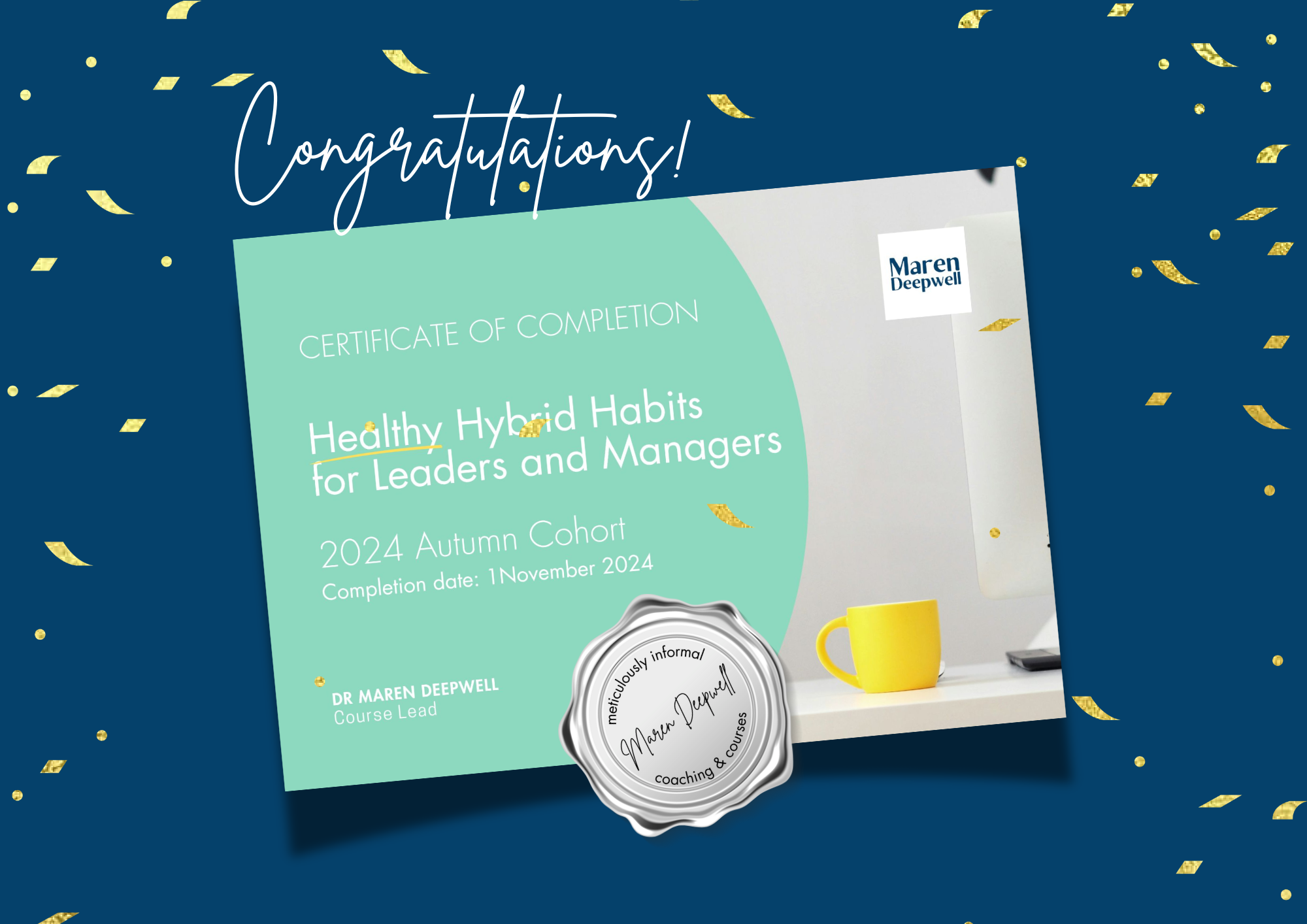
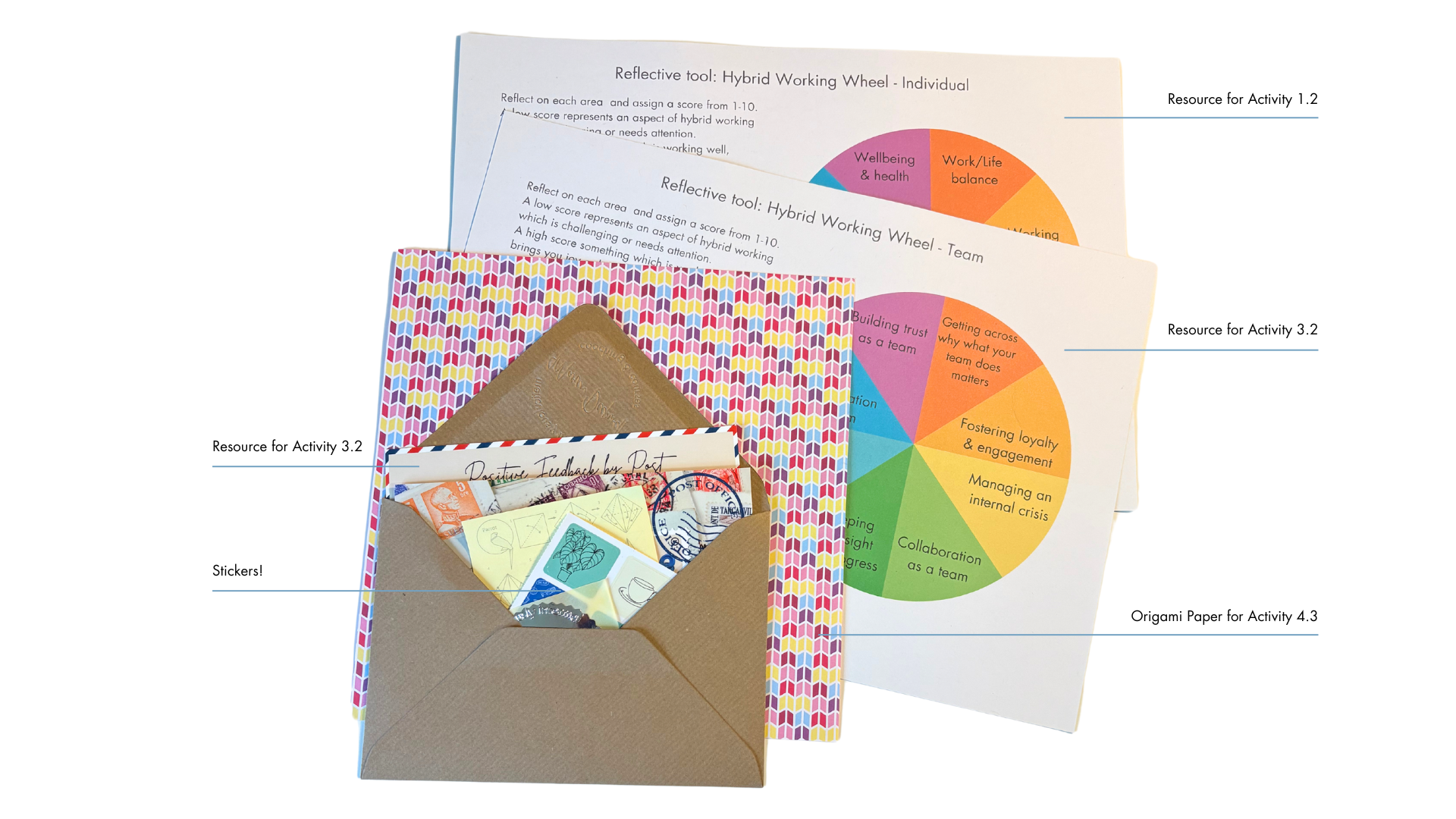
    So how can managers and leaders find the right balance to foster social events and interaction in hybrid teams? I have been working on this for a while as this is one of the topics covered in my upcoming course, Healthy Hybrid Habits for Managers and Leaders. Below I share some key principles to keep in mind and example activities to try out:

    Work within your context: employees often like things about their work that is very context dependent, such as a favourite local bakery, the canal path they cycle to work on or the building they work in. For hybrid teams, adding home-based elements into the mix, can expand the list to favourite house-plants, pets that become home-working buddies, going for a run at lunchtime or doing yoga in the morning and so on. Look out for things that team members like and consider how social activities could be aligned.

    Not every activity has to suit everyone: organising team socials often ends up in a long list of boxes that need to be ticked as the search of the one activity that will engage everyone continues. Of course it’s fundamental to ensure that social activities are inclusive and accessible to all. That said, not every activity has to suit everyone. If you have a monthly book club, a weekly coffee morning and a lunchtime running group then the breadth of activities on offer as a whole will help more people engage with each other.

    Little and often: most employees want to spend less time focusing on work, and finding balance between fostering social interaction and not requiring people to stay late or meet up outside of their usual work hours is key. Even with a lot of notice an away day or even weekend can be challenging to accommodate. Little and often works better than long activities once or twice a year. That’s where technology can help: from Music Mondays (everyone picks a tune or listens together to the radio for an hour) to GIF-offs (chat channel GIF sharing around a theme), there is no end to the kind of fun you can have in 5-10 minutes when you are all online. Sprinkle some inspiration on your working day and let folk take turns coming up with a mini activity.

    Get outside: it’s hard to create fun social interaction when everyone is sitting at their desk. One meeting on Teams quickly blends into the next, and the chances are that everyone gets distracted by notifications or just keeps working on emails. Getting outside makes for a much more memorable moment as a team – and it doesn’t require everyone to be together. Choose a time and date and pick a theme, then encourage folk to post pictures in an established channel, i.e. find something blue, an unusual plant, a neighbourhood view or something tall. After 20-30 min of chat and sharing pics, the activity ends and the shared images can be collated into a collage to share back to the team ‘our team walk finding something blue’.

    Listen, don’t broadcast: line managers or team leaders often feel responsible for everyone having a good time, and end up saying things like ‘isn’t this fun’ or ‘is everyone having a good time?!’. Nothing is less fun that someone stating that you are having FUN, so why not listen instead. Whether you are sitting in a cafe or taking a walk, using open questions such as ‘So what’s new with you?’ or ‘How are things?’ can help open up a conversation. Make time to listen and be prepared to be curious instead of in control.

    Get notified when registration for my new course opens and keep up to date with my news:

    [newsletter_form type=”minimal”]

    Image credit: Photo by Roman Kraft on Unsplash

  • Preview: DS106Radio Summer Camp

    Preview: DS106Radio Summer Camp

    I am super excited that we are now not even two weeks away from THE most highly anticipated event of the summer. Forget Paris, it’s all happening on the airwaves this August (and it definitely won’t be raining during summer camp on the radio!). Camp Leader in Chief, Jim Groom, has been blogging about what’s in store… featuring some very cool remixed artwork from Bryan Mathers (who I recently got chatting with on my podcast) – and so I want to jump in and share a preview of what’s in store come August 12th.

    So… what’s a radio conference?!” you might ask. Here’s the concept unpacked:

    DS106 Radio Summer Camp is designed to free you from your screen and enjoy your summer whilst listening to inspiring stories around our virtual campfire. 

    You will have an interactive online programme which shows the full schedule for each day, starting Monday, August 12th and ending on Friday, August 16th. For each session you will be able to click on the link to the live stream from the radio. You can listen to the shows live or catch the recordings (and transcripts, too!) and there’ll be links to resources and references in the programme description for each session. To listen, all you need is a web browser.

    “So what’s on the schedule?”.

    This is the schedule for the camp as it stands at the moment, but keep in mind that some sessions may still move around as we co-ordinate with speakers and DJs from across different time zones.

    Register for free and join us at camp

    To take part, simply register and look out for the joining instructions the week before the event. During camp week, tune in to DS106 Radio and enjoy. 

  • Summer: a very special (guest) season

    Summer: a very special (guest) season

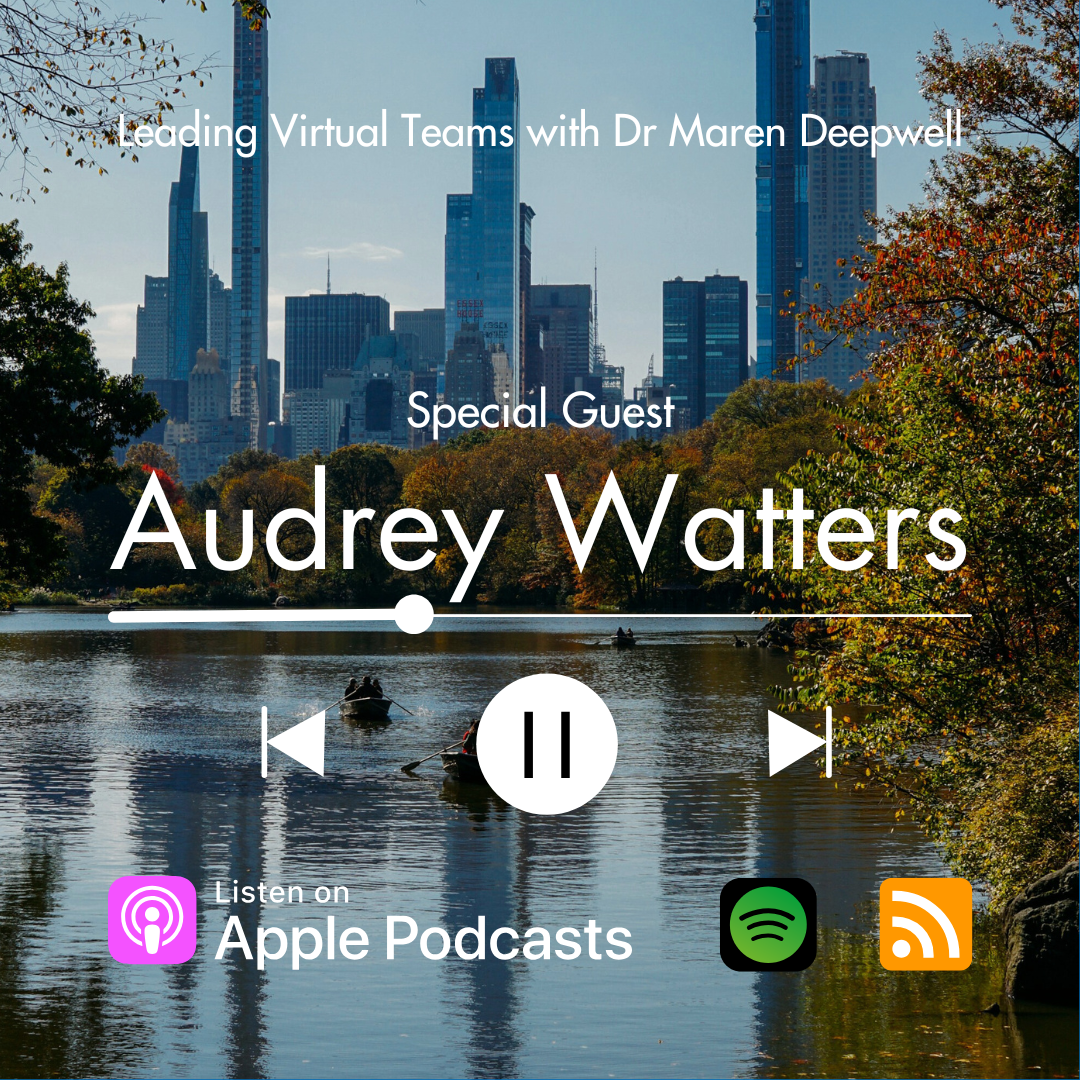
    This season on Leading Virtual Teams I am interviewing a whole host of special guests!

    These interviews are part of the research for my new book, which will continue my work on hybrid working from Leading Virtual Teams (2022). It will also expand on that and have a much greater focus on long term hybrid working, how it impacts our senses and wellbeing. There’s so much to explore, and drafting the chapter outlines has got me very excited about the research and interviews ahead. One of the key relationships I am interested in exploring is between human beings and technology, and the radical shifts in the balance of power in the workplace (as in the classroom) with the advent of AI and surveillance technologies.

    Special guest Joyce Seitzinger joined me recently to talk about hybrid working, work/life balance and custom emoji. Joyce is based at the Royal Children’s Hospital in Melbourne (previously RMIT Online) and has a wealth of experience when it comes to leading virtual teams. We had a lot of fun as we swapped stories of leading distributed and remote teams, the joy of spending more time outside and cycling to the office (which in Australia sounded a lot more appealing to me than here in Wales, where this summer seems to be endlessly wet and grey..).

    Listen to the interview with Joyce and look out for the next instalment of this season on Friday with special guests as the one and only Bryan Mathers comes on air to talk what he would take on a desert island (clue: it’s not digital) and staying creatively productive whilst working from home with your cat for company.

    This new book isn’t a solo project, but a wider collaboration with case studies and interviews with leaders and experts. Do get in touch with me if you’d like to join us for an episode and contribute to the book.

    Recent episodes

    Don’t miss our on new episodes. Subscribe to my free monthly newsletter!

    [newsletter_form type=”minimal”]
  • Coaching moments from career transition and crisis support to supporting long term change.

    Coaching moments from career transition and crisis support to supporting long term change.

    I often get asked about my own experience of having a coach by my coaching clients, especially as in the UK coaching is still a (largely unregulated and) relatively new profession. A lot of my coach training and credentialing process was designed to enhance the professionalism of coaching as a practice with lots of different applications, and I love hearing about what the contexts in which other coaches work: from health, fitness and nutrition coaching to student and career coaching to family and divorce coaching and so on. If you want to get from where you are to reach a new place, be that in your personal health, relationships, career or life generally, chances are that there is a coach out there to support you along the way.

    The question most of my new clients ask to begin with, is whether coaching is right for them. Coaching can bring many benefits, and it’s a really powerful tool for self discovery, productivity, professional development and much more, but it isn’t the right fit for everyone or every situation. Over the past 15 years I have found coaching an invaluable support in a number of situations and I wanted to share some examples which may be useful if you are considering getting a coach yourself. In general, I would say that coaching might be a good fit if you are:

    • Looking for a safe or creative space to focus on an important decision or period of change;
    • Feeling stuck and struggle with productivity or specific tasks;
    • Ready to plan for the next stage in your career or further ahead to the next 5 years;
    • Looking for someone to think (or draw) with to find solutions to problems.

    Coaching through a new leadership role

    I first came to coaching and mentoring when I started my first leadership role, and from the outset, the support of an external professional became helpful to me. Managing a team of people and being responsible to many stakeholders made it hard to share a lot of what was on my mind openly, and I found coaching conversations really helped me clarify my thinking.

    Having someone mirror back to me what I was articulating provided a reality check when I needed it most, and helped me recognise my own needs alongside other priorities.

    Coaching on tap for crisis moments

    Once I had built a good relationship with my coach, we fell into a rhythm of meeting less frequently. However, I was able to schedule sessions and get in touch as and when I needed to and that gave me confidence and reassuring as a young leader. It was invaluable to be able to have support on tap for when I really needed it, in moments of crisis, and not having to confide in someone new.

    Over a period of years I appreciated how much my coach was able to help to reflect and chart my own progress by referring back to previous conversations, which helped to hold me accountable to the goals I had set myself no matter how long it took to achieve them.

    Coaching to mastermind a big career change

    Planning a big change can be a lonely task, especially if you don’t have many people to talk about your plans with. I found it difficult to draw on my usual support network when I set out to plan a big career change, partly because I didn’t want to unsettle colleagues and partly because making a change always has a element of figuring out why the current situation no longer suits. What I really needed at that time was someone I could trust completely, who was not connected to my current institution or role.

    I wanted someone to think alongside with, someone to share my hopes and fears with and someone who would not judge or advise, but hold space. The space that my coach created was crucial for me to develop a new vision for the next chapter.

    If you are thinking of embarking on a coaching relationship, remember to double check the coach’s credentials and experience, and look out for someone who is a really good fit for you.

    Subscribe to my free newsletter

    [newsletter_form type=”minimal”]
  • Let’s Walk’n’Blog…

    Let’s Walk’n’Blog…

    Hi, welcome to this blog post which I am not typing but dictating.

    It is now mid-morning and I have plans to be getting on with before I have to be at my desk. So I wanted to try and write this blog post as I’m doing things… I’m making some coffee just now and I’ve just come back from walking the dogs. So it is a good time to blog but not a good time to sit at my desk. Hence the dictation.

    Recently I had a really interesting conversation with one of my coaching clients around the benefits of not always sitting down to reflect or to write, avoiding being faced with a blank piece of paper or a blinking cursor on an empty screen. Instead, we talked about ways to use technology like dictation software for example to try and give yourself some flexibility. Inspired by this conversation, I went back through a couple of blog posts I have written about how to reflect, and I came across one about using dictation for reflection. From there, it was a small jump to try and use it to write a blog post, too.

    Now, just as I was recording this, the doorbell rang, and it was a delivery. One of the joys of living and working in a community around many people who still work in an office, is that I get to be the local delivery depot for all deliveries in the neighbourhood. And it’s so practical to be able to just pause, walk to the door, deal with things and then being able to come back to this without having to run up and down, start typing again, start a new document and so on.

    Using voice recording also gives me a chance to write a different kind of blog post with a different kind of voice, one where I’m sipping coffee, thinking about things, having a bit more room to explore, which is lovely. Now, the joy of being able to record voice notes and turn them into blog posts is transcription software. Recently I’ve started to use a different software package, whisper transcription, which is easy to get and great, particularly when you’re a Mac user. And I’ve been using this for my podcasts, but also to make some of my audio resources more accessible. I’ve been finding it a real joy to be able to have a very easy and quick transcription that I get to keep rather than something that a platform that I use makes and then they keep it. It’s been fascinating to produce and then use transcripts of podcast episodes and interviews.

    The other thing I really like about using voice recording instead of typing on a keyboard is that I can take my blog activity on walks and get out more. At the moment for me it’s summer, although you wouldn’t know it by looking out of the window. It’s grey and dreary and it’s just about to start raining. But this morning, when I would normally spend time sitting at my desk, I really felt like going out with the dogs to have a nice walk to start the day.

    I’m going to spend plenty of time later sitting at my desk and staring at a screen. Being able to make a quick voice recording on my phone and then being able to have the transcription of that which I can turn into a blog post is a nice way of giving myself an opportunity to kind of reflect as I walk and talk. I felt inspired as I was walking and I often have my best thoughts in the morning. I had some ideas about the new course I’m working on, specifically the design of the course. And I thought, oh, I really need to write this down when I get back to my desk.This is a really good idea! I was thinking about the ] course design, which is a blended design in a number of different ways, it’s both online and a physical thing. It’s asynchronous and synchronous and so on. And as I was rehearsing in my mind what I was going to say to introduce the course in a short video, I thought, oh, great, I can just record myself now with my phone, make a quick voice memo and record the thoughts that are on my mind. I can note them down now. When I come home, I can just pop them into the transcription software and voila! I’ve got my notes from my inspired dog walk ready to go for when I want to sit down and get back to working on that video.

    For me, recording my ideas as I walk feels like a really lovely seasonal way to create more flexibility in my day, particularly as at the moment my meeting time is blissfully low. So now that I’ve got a bit of breathing room in the summer for the first time in many years, it’s just so joyful to be able to have 10 meetings a week rather than 80 meetings a week. And it’s also a relief not having to have every single meeting be a revenue generation must have rand instead have scope for exploratory conversations to see where things are going.

    So, yeah, I think his is probably all I want to cover in this post and I’m very curious to see how long this post turns out to be. Usually when I sit down to write a blog post, I know what I’m looking for in terms of length, and I very rarely write very long blog posts. Sometimes I get into the rhythm and I’ll write something longer, but most of my blog posts are fairly short. And so it’s interesting to see how that will differ in this format. I shall write a little post script to see how many words this blog post ended up being [this post is 996 words].