Be warned. This is a blog post about strategy… which is not the most exciting of topics (usually). I was trying to find a good title for this post and all the ideas I had sounded awful:
What a difference good governance makes…
The privilege of being a CEO
The power of really listening
Making stuff happen…
Anyway. If you are still reading this then I am grateful asI really want to share some work I have been involved in over the past 9 months that has inspired me and reminded me that when you put your mind to it, you can really make a lot happen.
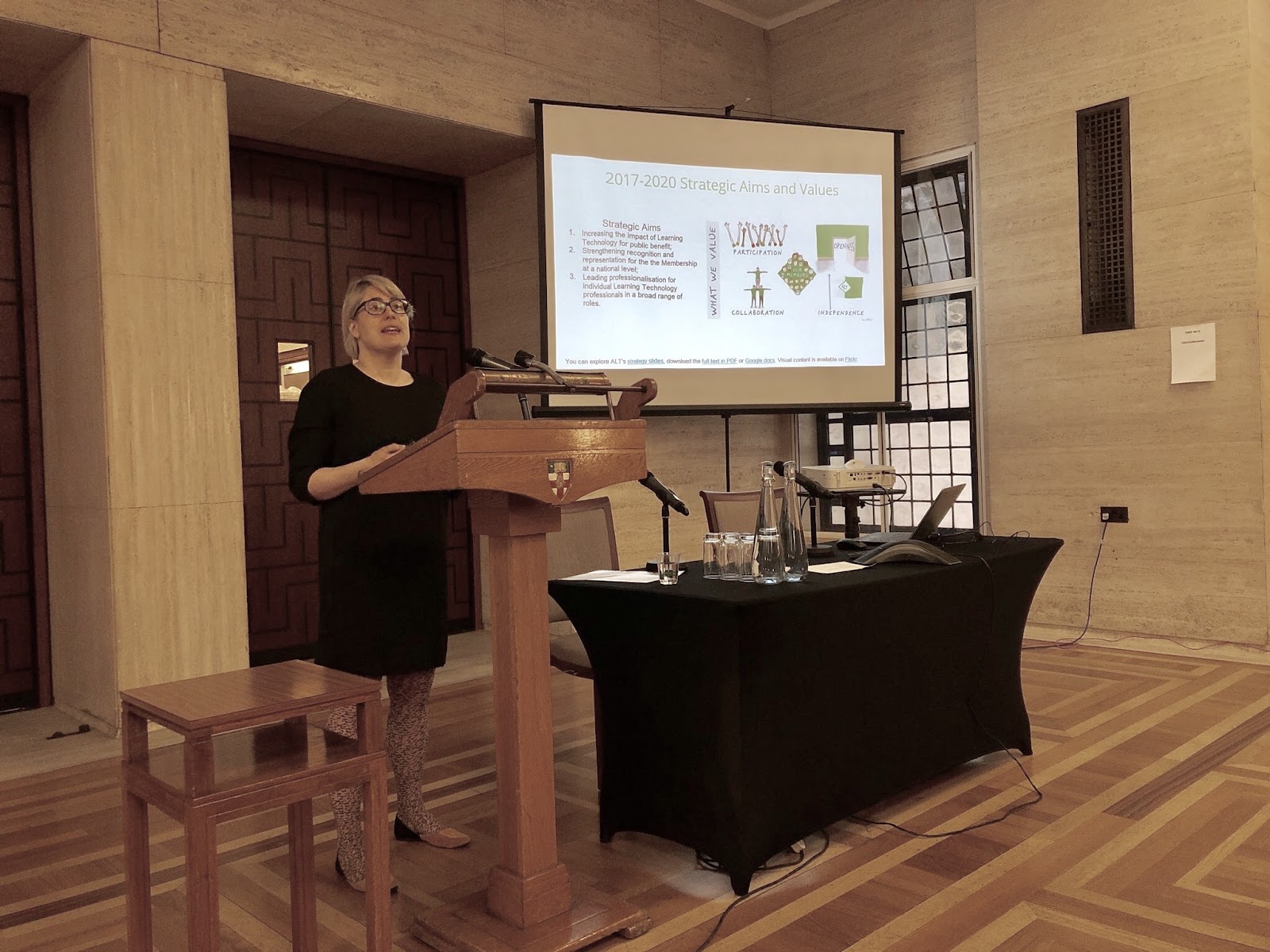
I am writing this during a week when much is already going on in the world, in the UK, in education and in Learning Technology. Come Thursday, when ALT launches its new strategy to its membership, there will be something else to add to the list. And this one matters much to me, and to the Members we work for and represent, as it will set the direction for the next five years.
There are a few things that I used to be doubtful about when it came to strategies such as: does anyone ever read them?! Does anyone, including staff or Trustees, know what they say?? Does anyone care? How does a suggestion made actually shape the things that appear in the final, committee approved version? Most of the time, the answers to these questions are not encouraging. But I am not feeling cynical today and I want to share some of the things that I feel set ALT’s next strategy apart from many I have come across previously and also what makes the process of arriving at the strategy so valuable and effective.
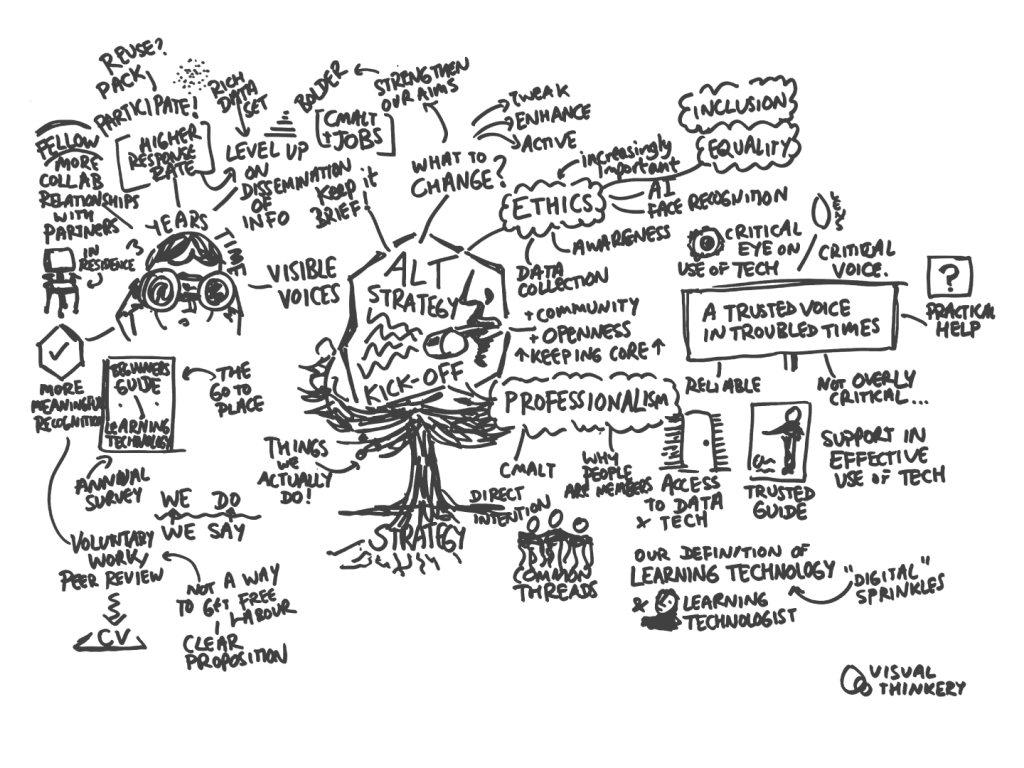
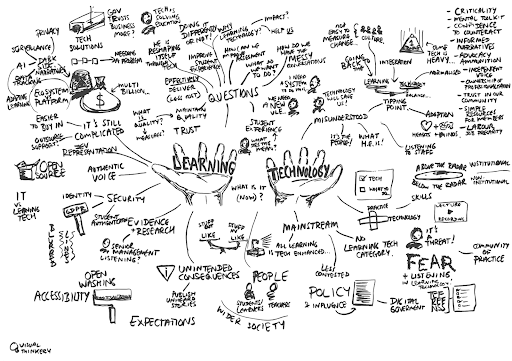
Strategic Conversation captured by Bryan Mathers
What’s involved in making our strategy? 9 months of listening.
Phase 2:external consultation (July – January) This phase included:
Strategy suggestion box
Quarterly updates to Members
Assembly meetings every month
Online Winter Conference with dedicated strategy sessions
Annual Survey – data from which is published openly each year
Phase 3: Board of Trustees strategy work(July – January) This phase included:
Fortnightly progress updates
Board of Trustees meetings
Visual Thinkery sessions
Strategy progress and impact report
Consultation plan & outline
Draft strategy & planning
Phase 4:Staff Team strategy work (July – February) This phase included:
Staff Team meetings every month
Individual input from each member of the team
Strategy thinking session for senior staff
Review Priorities year 1-5 based in input from Members
What shapes our strategic priorities? Members having their say!
One of the things we look at in the final phase of writing the strategy is where input for specific aims has come from, which this year includes: several suggestions received throughout a 6 month period through an online suggestion box, which are directly included in this year’s strategic priorities. Also, we get feedback through events, which included a strategy session at the Annual Conference in September and the Online Winter Conference in December as well as monthly meetings of the Members Assembly. In addition, some of the priorities we identified during strategy days, the formal consultation and the Annual Survey as well as a specific consultation around ALT’s CMALT framework.
Whilst most of the input comes from Members already involved in ALT, much of the consultation process is open to everyone with an interest in Learning Technology and it’s been really valuable for me personally to think along with people who don’t know much about ALT, who don’t know what we have already done, where we have come from since 1993. Having worked for the same organisation for over 10 years, it’s useful to have the opportunity to look at what we do, how we talk about it and what we could do better through fresh eyes. One of the ways in which we do that is through Visual Thinkery.
Strategy… by Bryan Mathers
Conversational leadership: one way of reminding myself of what I don’t know…
Creating this strategy is a collaborative process and many people have input, many voices shape the thinking that goes into it. Yet in my position as CEO there is a certain amount of leadership that I need to bring to the process for everyone involved from Trustees to Members to staff, a kind of overall vision that frames the work that is going on. I used to be more rigid in my approach to providing that kind of leadership, but over the years I have come to find that it results in a poorer output, a less ambitious, less relevant strategy. So how do you lead a conversation without knowing what you don’t know? I found working with Bryan Mathers one way of achieving that, my favourite way to having a genuine conversation, an authentic consultation that gives everyone, myself included, permission to really think.
And the result?! Well, you will have to keep your eyes peeled at the end of this week to find out what the future holds in store #altc (and it may NOT all be green).
I, for one, am deeply grateful that nine months of work, that so many have contributed their time, energy and effort to, have resulted in a shared vision and shared values that I believe in, that inspire me and that will make a positive difference to Learning Technology professionals in the UK and further afield. Thank you for making this the best strategy I have been part of (yet).
This year has started with two very different keynotes: the first in January I wrote for an event on scaling up Learning Technology which was chaired by Dr Michael Flavin, and the second, a joint keynote with my colleague Martin Hawksey, was written for a one day workshop organised for the Data Human Interaction Plus network.
If you’d like to have a look at the slides and references for the two talks, you can access them here:
From empowered professional practice to empowerment in the age of surveillance: opportunities for human data interaction – joint keynote with Martin Hawksey for the Human-Data Interaction Network Plus
Some common themes emerged for me from contributing to these two events:
More tech-critical voices This year I feel I am hearing more voices that are critical towards use of technology in education and more broadly our relationship to technology as a society and as individuals. More people are questioning where the boundaries of technology and the tech industry should be, who should enforce them and how. I hear suggestions of limiting our use of technology or at least to stop proceeding unquestioningly with scaling up what we do. There are more questions being asked about ethics, policies and equality – questions that are becoming more specific and informed, not simply articulating a general, vague concern.
More wholesale digital adoption At the sometime there is a growing number of institutions who are ‘doing digital’ across the board. The examples I come across most often are focused on systems or platforms more administrative in nature or common software packages and productivity tools. But the transformation can still be powerful and there is often a drive to up-skill and develop the workforce and the learner population at the same time. This is very much about digital skills and literacy not often about the more expert design, implementation or support of Learning Technology more specifically but this often gets conflated in the way the process is described. Whilst on the whole a very positive move, there are two challenges that I often see come up next: first, as the tools change iteratively the process of training users has to continue and fostering a culture which normalises that is hard to do. Hence there is a lot of messiness in how people use technology long term, little patches, work arounds, small idiosyncrasies which accumulate over time. Everyone has legacy systems, spreadsheets, databases and so on they don’t know what to do with. The other challenge is to find enough resources (of every kind) to continue to do Learning Technology beyond the core systems you have scaled up and to invest in the expertise you need to do that in the long run rather than to outsource innovation to private sector companies and loose that capacity.
Negativity, pace and productivity Whilst I still meet with a lot of genuine enthusiasm for technology a lot of narratives I have come across during the start of the year are driven by negativity, primarily about the wider context. Political, social and economic factors shape our perception of technology. The pace of innovation continues to be a factor also: should we try to keep pace, and why? Will technological change keep accelerating and how does this impact upon the world we live in? Meanwhile I feel productivity has snuck into our ways of thinking about research and practice. Playful approaches, mindfulness, even time specifically set aside for ‘moon shoots’ is really all about doing ever more with less. Always contactable and on the go whilst in reality there are too many meetings in which nothing happens at all.
Resistance and hope, articulated Against this rather bleak backdrop however, power is rising. Expertise is multiplying, action being taken and there is a drive to resist surveillance capitalism and to find alternatives that can provide hope whilst still offering functioning business models are cropping up more and more frequently. It’s always a privilege to be invited to contribute to events as a speaker and if the first two talks of 2020 are anything to go by the resulting discussions will be extremely interesting this year.
Welcome to this month’s post (cross-posted here) in which we, that is Martin Hawksey (@mhawksey) and Maren Deepwell (@marendeepwell), openly share our approach to leading a virtual team. If this is your first time visiting this post series or you’d like to review what we’ve posted in 2019 Maren has a Virtual Teams summary page.
This month we are talking about Slack, scheduling team meetings, and how our use of technology and different tools affect the rhythm of our work as a virtual team.
January
Maren: It’s the start of a new year, a new decade, and January is not usually the most inspiring month for me at work. But this month is different, partly because there are some exciting things afoot at work (a new strategy is in the works, new visual thinkery being produced and new data to analyse…) but primarily because thanks to inspiration from our recent podcast guest Olaf Hubel (listen to the episode here) my experiment to create a better rhythm to our working as a virtual team is a real success and already making a huge difference. Result! In essence we haven’t really changed what we do or how we work together, but since the start of the year we have started to schedule specific activities at a new regular slot: for example, Mondays now start with an informal ‘watercooler’ catch up in late morning, giving us all the chance to say hello, catch up on the weekend and spend some time together not focusing on work. One to one catch ups for individuals (which is 5 for me) are now all on Tuesdays, and again, having a regular day for these and the same day for everyone has saved me A LOT of time and also seems to make it easier and more efficient for everyone to plan for those meetings. On Wednesday we have our full team meeting, which has moved from Tuesday to Wednesday, and I feel this is working really well also – giving us all a chance to catch up with each other and what’s happening across the organisation. And, last but not least, we have found a regular slot on the last Thursday of each month for our team sprints that we started last year – focusing on actively working together online synchronously. Small tweaks overall, but that bit of extra regular scheduling has made a huge difference and everything feels (to me at least) like it’s happening in a better rhythm now. It’s as if our virtual team now has a more regular heartbeat. What are your thoughts?
Martin: I think all our team have also benefited from this tweak to our weekly calendar. Having a regular slot for catch-ups means I know when I have to prepare all my questions by and also better judge if something can wait or if I need to contact you at another time by different means. Initially I thought a Wednesday team meeting would mean that at the start of the week I would have to wait longer to find out where others are at with their work, but as it turns out, I think it works better because it encourages touching base with other team members more frequently. [An interesting point, dear reader, is after Maren drafted the start of this month’s post we had a chance to briefly discuss it in our one-to-one where I was able to say I thought the change was very positive however a small observation was that the Monday watercooler chat, which was scheduled for 10:30am, felt like after we all said hello first thing Monday put us in a limbo period where, for me anyway, I had to save small talk until we hung out together later. On mentioning this to Maren we immediately updated the timeslot to 9.30am – a nice reminder of why these shared posts are useful.] I thought it was interesting when we discussed this that you said you didn’t know why I just didn’t change this in our calendar. Reflecting on this I relate it to you being the conductor in our little quintet virtual team ensemble and it not really being my place to set the rhythm. Hopefully with this suggested timing change rhythm is just being finely tuned. As part of our continual tuning January also marks our annual home working check-in. This is where we all individually review our homeworking setups, share tips and also put in any requests for hardware/software. The most popular request has been for monitors, either more or bigger (our team clearly know my soft spot). You’ve shared the changes to our team calendar, is there anything else you’d like to share from another year as a homeworker?
Maren: Looking back at my own assessment, this is now the third time I am reviewing my set up and reflecting on it. For various reasons I have made a lot of tweaks to my equipment over the last six months and so this time round my focus was more on the way my days and weeks function, like for example walking to the post office in order to get fresh air, even if I could use the local post box instead. Similarly, I made notes on things like finding the right balance between working hard and taking regular breaks, building in reminders to move, to pause, to prioritise my well being alongside my work. So I guess alongside the regular schedule of meetings, catch ups and sprints, I have also found a rhythm to my own home working. I feel more comfortable, more settled in this mode of working and I have learnt to explain it to people more readily and clearly than I could at the start. I have always found it hard to hear people talking about our team as “the office” of ALT. Whilst I know what they mean, I really dislike that short-hand for referring to staff. To me, it’s absolutely important to acknowledge, even implicitly, that we are talking about colleagues, or specific individuals, who do the work that is essential to the running of the organisation. I prefer talking about a distributed team much! It moves the perspective away from a faceless admin resource to consciously talking about people and collaboration and all that implies. It might seem like a very minor point and one that most people might not even be aware of at all, but to me, having seen the changes in the organisation over the past decade, it makes a big difference.
Martin: Not being a faceless admin resource is very beneficial, plus it feeds my ego and aspiration to be famous. It a small point but I think that we have a policy of personally signing off emails from our shared inbox accounts, like enquiries@alt.ac.uk or helpdesk@alt.ac.uk, and when referring to other members of our team by name rather than department also helps us strengthen our connection with our community. As well as having shared inboxes addresses we all also have personal email accounts with our names. The exception is finance@alt.ac.uk but there are various practical reasons this is the case. We did experiment with role based emails addresses particularly when we’ve previously recruited agency staff to fill positions, but given we now are an independent employer there is more stability in our team and less need for staff handovers. In case readers are interested in how we administer our shared inboxes we use a Google Group configuration that enables us to assign messages to appropriate members of the team and also keep a record of the communication. I feel Google Groups mostly works for us and at this time don’t feel we need a more advanced ticketing system. My main grumble is that messages with the same subject line end up in the same thread making it hard to track when an enquiry has been completed. Our tweak has been to make sure when we contact individuals from one of our shared inboxes we include a person unique reference in the subject line. Email isn’t the only communication channel we administer and our social accounts are another way of contacting us. You also recently shared an interesting post from David Hopkins on how Slack has ruined the workplace:
Did you have any particular takeaways from this post in relation to our team?
Maren: it was useful to read the post about Slack and how chat tools like this are adopted for long term use. I’ve also been thinking about the differences between various communication methods (text/icon based, voice, video) and came across this post on telephone calls. It isn’t work focused, but it makes useful points about the different nuances that each kind of communication brings with it. The slack post relates closely to what I was talking about above, about the rhythm of collaboration. Similar to what you describe about how we manage and administer external communication channels, the way in which we use our internal ones has changed over the last 2 years. Some, like our collaborative team meeting notes doc, have a clear purpose and use cycle. Others, like our new Monday morning water cooler chat, are still finding their long term shape. It changes over time and as different people bring their individual skills, personalities and expectations to it. There are questions I think about such as: if you’ve been away or on holiday, do you need to catch up on the team chat? Does everyone know enough about what should be put into an email to keep a record of the communication and what can be ‘chat only’. Why would I happily have guests in a team meeting but not in our team chat? Who gets the most chats during the day? Is the member of staff I am chatting with making casual conversation, is this a ‘serious’ matter, is it just venting…?! Everyone brings their own expectations to the communication channels we use but in my experience they are not necessarily the same – the decision not to chat and talk on the phone or hangout is similarly individual – it could be a bad hair day that makes someone prefer to chat rather than be on video… . And there’s also emoji, a topic we have talked about quite a lot in the past two years. What are your thoughts on all this?
Martin: That’s a lot of very useful questions and I don’t think I’ll be able to cover them all in this month’s post, I have however discovered my emoji mojo and I’ve been particularly enjoying the Windows key + . to bring up the emoji picker. In terms of focus, particularly during video calls, I’ve found the minor tweak of placing my webcam on one of my side screens helps me maintain focus and not get distracted during calls … all part of developing your skills as a remote worker:
As a special contribution to this month’s post we include this tweet from our colleague Debbie Baff – sharing a very fun moment in the daily life of our virtual team:
This post is re-posted from the #ALTC Blog. You can find the original post here.
Dear Members
Since we updated you in October, work on the next strategy for ALT has continued apace. We are now in the final weeks of the consultation process and here are the key points for you to be aware of.
Make your voice heard
If you haven’t already done so, we invite you to complete this year’s Annual Survey https://go.alt.ac.uk/ALTSurvey2019. We will use the results of this survey to inform the work of ALT for the coming strategy period, what we prioritise and how we put our shared values into practice. We strongly encourage you to complete the survey in your own right, even if you work for a member organisation. Representatives of member organisations are welcome to complete the survey once on an individual basis and also on behalf of their organisation. While this Annual Survey is primarily aimed at ALT Members it is open to anyone to complete.
Review what we have achieved
We have now published ALT’s Impact Report 2017-20. Access the full report as a PDF or Google doc and visit the report homepage. Introducing the report, Sheila MacNeill, Chair of ALT, said:
“As you will see, the Association has grown in size and influence, serving our Members in all parts of the UK. Close my heart is our commitment to being an open organisation which reaches from our governance and leadership to marketing and communications. Our commitment to openness reflects the need for greater criticality and transparency when it comes to using technology for learning, teaching and assessment. Our Membership includes practitioners, researchers and policy makers from all sectors and together with my fellow Trustees I want to thank everyone involved for helping take ALT from strength to strength.”
Sketchnotes created by Bryan Mathers.
Highlights from the strategy consultation
Since the start of the consultation period in June, we have heard from Members via the Strategy Suggestion Box (which continues to be open for contributions until 12 January 2020), in early September the formal consultation with Members and the wider community was launched at the ALT Assembly meeting at the Annual Conference and the Annual General Meeting. Since then, the monthly meetings of the ALT Assembly have continued the consultation process, and staff as well as the Board of Trustees had productive strategy days in November. In December, at this year’s Online Winter Conference, Members took part in a strategy discussion around the Ethics in Learning Technology, facilitated by ALT’s chief executive Maren Deepwell and Professor John Traxler from the University of Wolverhampton. The questions we discussed included:
Why do professional bodies have ethical codes or frameworks? What are the benefits?
What are typical examples illustrating the breadth of formality, detail and principles?
What is so specific about learning, technology and learning technology?
Is it just about research ethics?
Members strongly supported establishing a broad ethical framework for Learning Technology professionals and suggested ideas of how this could be put into practice. You can view a recording of the webinar.
The shape of things to come
Thanks to the many contributions we have received, it seems clear that ALT’s current aims and values continue to be in line with Members needs. In recognition of this we are looking to refine and strengthen our vision to reflect the challenges ahead and the changing context we work in. Whilst the strategic objectives will only be finalised once we have analysed the results of the survey, we want to share a taste of what is to come with this update to ALT’s definition of Learning Technology:
How we define Learning Technology
We define Learning Technology as the broad range of communication, information and related technologies that are used to support learning, teaching and assessment. We recognise the wider context of Learning Technology policy, theory and history as fundamental to its ethical, equitable and fair use.
For now, thank you to everyone who has already provided input, participated in the consultation events and sent us suggestions.
We encourage you to take part in the final phase of the consultation until 12 January 2020 and make your voice heard! The new strategy will launch in February 2020.
Authors: Sheila MacNeill (Chair) and Maren Deepwell (Chief Executive)
Welcome to this month’s special podcast (cross-posted here) in which we, that is Martin Hawksey (@mhawksey) and Maren Deepwell (@marendeepwell), openly share our approach to leading a virtual team. If this is your first time visiting this post series or you’d like to review what we’ve posted in 2019 Maren has a Virtual Teams summary page.
This time we are joined by our special guest, Olaf Hubel G Suite Developer Relations Team Leader at Google. Together we talk about what it takes to lead a virtual team, collaboration and team communication.
This month: podcast with special guest Olaf Hubel (Google)
Martin: So Maren what were your main takeaways from our podcast with Olaf Hubel?
Maren: I really enjoyed talking to Olaf and I got a lot of food for thought from our conversation. One topic we discussed was how important interaction is for virtual teams and Olaf described the different approaches he uses to manage that both formally as part of team meetings and informally through things like water cooler hangouts and chat. We have a water cooler chat channel for our team and recently there were some real stand out moments for me, such as the morning when we all met a new puppy of one of our colleagues or when I was mid transit whilst travelling and the chat was suddenly all about domestic chores with a lovely pic that made me smile 🙂 Leading a virtual team requires us to be more intentional when it comes to informal interactions like that. We can’t rely on serendipity (and I’d argue you shouldn’t for co-located teams either). Providing tools is only part of the equation. We also need to put in place & maintain the necessary structures and that is something I feel we’ve learnt a lot about in the past two years. We’ve moved from experimenting with different formats and strategies to a more regular rhythm of working together. Hearing Olaf talk about focusing on team interaction as both valid and important really chimed with me. What about you? Are there any talking points that stood out for you?
Martin: It was striking to me the number of similarities in the way that our team operates to Olaf’s team. This is perhaps not surprising as given ALT uses a number of tools that have been developed by Google. There were some small things I had never considered before until Olaf highlighted them like by default your webcam is on when you join a Google Hangouts Meet to encourage you to use video. As ALT has a number of video conferencing tools at our disposal with some to default to video off it’s interesting to reflect on the behaviours it encourages. Like you I found it interesting to hear about how some of the informal interactions were sometimes orchestrated. Besides the water cooler chat, ideas like the Monday morning social where Olaf’s team hangout just to share non-work related things like things they got up to at the weekend seemed like nice opportunities to build social connections. It was also interesting to hear how Olaf organised some of the formal interactions, in particular, dedicating a day for scheduled catch-ups with team members. As someone with a touch of OCD I could see how having a regular timetabled slot each week could be useful. The final thing I’ll mention was Olaf’s reference to Google’s Project Oxygen where “Google set out to determine what makes a manager great at Google”. We didn’t go into much detail about Project Oxygen but subsequently I know we’ve both explored the re:Work website which “Google and others to help share and push forward the practice and research of data-driven HR”. What’s your take on re:Work and Project Oxygen?
Maren: it made for interesting reading for me! One key point it got me thinking about was scale. The more people are involved and the more levels of management you have the harder it becomes to get a sense of what good practice should look like and what is happening on the ground. Project Oxygen, for me, is an expression of meeting those challenges and providing output that can be scaled up to the size of a global corporation. The 10 behaviours of good management identified in the report all read like common sense, but putting that into practice consistently remains a challenge. The example you picked up on, scheduling catch ups for everyone at the same time each week, is particularly relevant to me. I already have weekly catch ups planned, but the process of scheduling them in itself is very time intensive. Each week or month I need to repeat the process. Taking inspiration from Olaf, I’m going to try the approach he shared, and by sending out one repeat calendar invite per person and in this manner I’ve now scheduled weekly catch ups with everyone for the whole year. For me, that’s a big win. Yet, beyond the efficiency, the regular schedule should also help to create a better rhythm for us as a team, with specific days each week for different meetings, both informal and formal. It should help everyone structure their time and that is particularly relevant for you and I, as we always struggle to carve our sufficient head space for strategic planning. Structure is so important for us as a virtual team and it can be hard work to create and maintain that when each week the calendar looks completely different. I LOVE planning support, structures, evaluation processes and so on and it is so attractive to look at the reporting and tools being shared on the re:Work site and try them out in our context. That said, I also know first hand that much of what makes work life tick day to day is hard to capture in quantitative data sets. Olaf emphasised the importance and value of spending time, communicating, building relationships and that I really chimed with me. It’s a constant regardless of whether you share a desk or whether you are an ocean apart.
Martin: Another aspect of relying on quantitative data, particularly when what is being measured leads to reward is Campbell’s Law, that is “the more any quantitative social indicator is used for social decision-making, the more subject it will be to corruption pressures and the more apt it will be to distort and corrupt the social processes it is intended to monitor”. Looking at the Google Manager Feedback Survey, which is based around 13 quantitative and two qualitative questions I could see it being an easy to fall into the trap of managing to the survey. Perhaps this in itself is not necessarily a bad thing because as you mentioned these questions are designed to measure behaviours that appear to be common sense and personally I value a manager who ‘assigns stretch opportunities to help me develop in my career’, ‘communicates clear goals’, ‘gives me actionable feedback on a regular basis’ and so on. Saying all of this Olaf doesn’t seem like the type of person who teaches to the test. I hadn’t actually appreciated the size of Google as an employer. When we spoke to Olaf I mentioned ‘ten of thousands’ of employees. As of Q3 2019 Wikipedia lists Google as employing 114,096, which is a scale I find hard to get my head around. With that scale it’s perhaps not surprising that the re:Work site includes a section dedicated to ‘People Analytics’, something not really needed when you employ 6 people … I would guess, or do you see it differently?
Maren: We are definitely on the same page here. For me, it comes back to values. From the outset our journey to become a virtual team has been informed by our values, and over the past two years we have learnt much about how to put those values into practice at different levels and we’ve blogged about it along the way: from an employer perspective we’ve talked about formal policies, financial support and flexible working; reflecting on our organisation we’ve discussed priorities like support for staff, professional development and our technical infrastructure; as senior staff we’ve shared the challenges of managing a crisis as a virtual team, delivering large events and our team culture; and as individuals we have thought much about the personal dimension of being a home-worker, from mental-health and well being to work/life balance and physical work spaces. Talking to Olaf brought into perspective that we are no longer in the process of ‘setting up’ a virtual organisation but that we are actually running a highly successful distributed team (and thanks to our recently published Impact Report 2017-2020, we have the GIFs to prove it ;). When becoming a virtual team was still nothing more than a spreadsheet, we talked about how leading a transition like this would be a unique opportunity for us and it has been an extremely rewarding one. Hard work for sure, but rewarding nonetheless. That said, I feel that now that the set up period and transition has been successfully concluded, working in this manner is just as interesting and keeps bringing up new things to learn, think about and share. From your perspective, would you agree that we are in a new chapter and is there anything ahead that you are particularly curious about?
Martin: I agree there is a maturity in our organisations approach to being a distributed team and as well as policy and procedure our team seem confident in our approach. Speaking to Olaf has been incredibly beneficial and I hadn’t anticipated how useful it was to speak to someone in a similar position and reflecting on the discussion afterwards. It was good to hear from Olaf and discover that there are a number of areas where our working practices are similar, which feels like validation of our approach, but also to learn about some of their working practices which we don’t already do but have started implementing. In 2020 I think it would be useful to find other people to speak to and share both the conversation and reflection so if you’d like to join us in a future podcast and share your experience of leading a Virtual Team please get in touch with us.
Now, an ‘I love me’ wall is something Jim Groom introduced me to, ‘basically a space dedicated to all the stuff you’ve done..’. And I’ve come to embrace that concept wholeheartedly in my work space at home. Home working has never looked so stimulating and that’s a major plus on days when the heating is broken, the cat has been sick on the carpet and the doorbell rings with yet another delivery for next door.
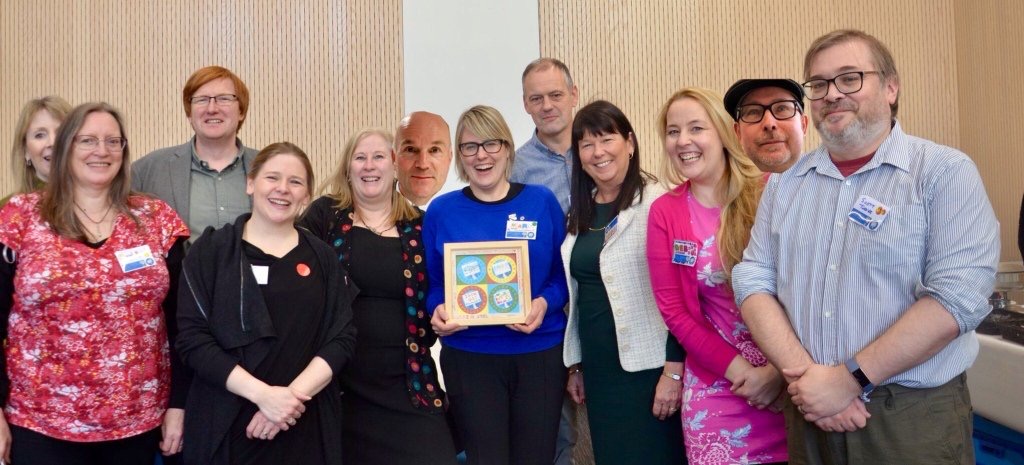
In that spirit, this is the ‘I love me wall’ of the past year, celebrating the stuff I’ve done, been part of, am proud of and am inspired by…
Photo by Sandra Huskinson (@FieryRed1)
One of the absolute highlights of my year was giving a keynote at the Social Media for Learning in Higher Education Conference in January, which led to conversations and collaborations that last for the whole year including this excellent webinar Academic online identity and social media .
I really enjoyed working on this ‘keynote in three hashtags’… it was a great way to start the year, thinking about how social media often comes with a general sense of the superficial, showing just the best side of myself, trying not to avoid being vulnerable for social media can be a toxic space for many, particularly for women, for people of colour, for anyone whom the trolls choose to single out. The talk focuses on three questions:
How is social media changing professional practice?
How does social media support openness in education?
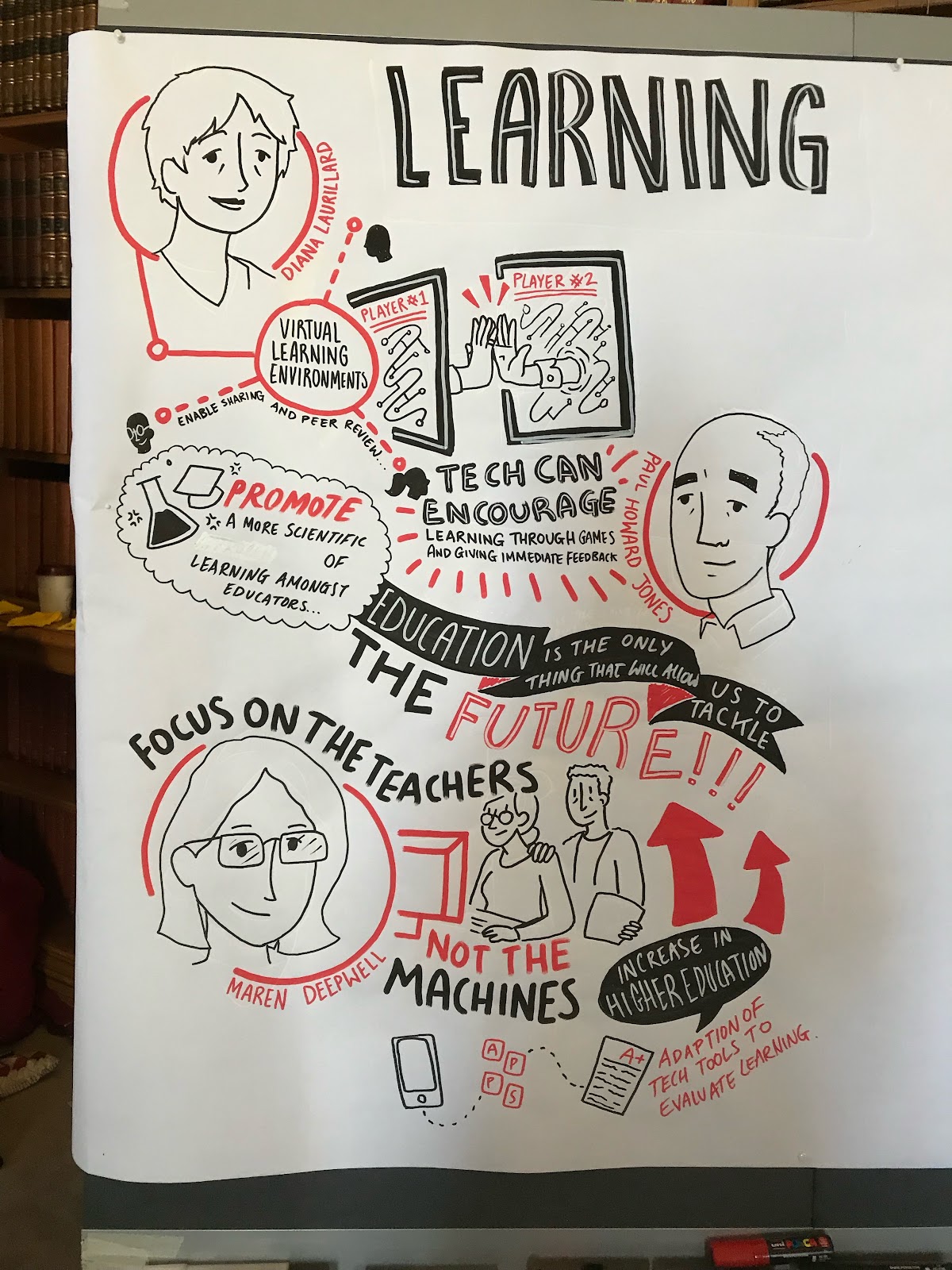
A completely different kind of conversation started a month later, when I took part in a panel discussion at the Royal Society in London on Human Transformation Remembering and Learning alongside Diana Laurillard and Diana made a point that really resonated with me: Diana reminded us of the enormous scale of the demand for education (at all levels) worldwide. Diana reflected on how many hundreds of thousands of teachers will be needed to provide education and training as more and more learners in the global South in particular gain access to education and come online.
Keynoting at the RIDE Conference. Image: Sarah Sherman
It was the interplay between learning and technology, how they effect each other to change our understanding and our practice, that is of particular interest. One of the areas of high priority I discussed is measuring learning, an interest in assessment and in a wide range of methods to quantify, track and chart all aspects of the learner experience. There is always a promise that with enough data and dashboards we can gain insights, leverage the power of learning analytics to understand more about how what we do impacts on progress, skills development and learning outcomes. It is up to us to develop our own capabilities in order to be able to understand fully how the more complex systems we use work, what determines when a ‘red flag’ goes up and how we should interpret and act on the information we gain in this manner. One of the last points I mad in this part of the talk picks up on a section of the 2018 Horizon Report, which describes rethinking the role of educators not as a solvable or even a difficult challenge, but a wicked one, as ‘complex to define, much less address’. This is why I think the work that my organisation does is so important, charting the changing role of professionals across sectors. This particular was a really valuable opportunity for me to explore this further with experts in distance education.
April had many highlights and a particularly special moment for me was to be joining #PressEdConf19 for a session that explored a conversational post format can be used to support reflective practice (read more here). The idea for the session came from an ongoing blog project in which Martin Hawksey (@mhawksey) and I write a monthly series of blog posts to openly share our approach to leadership. You can catch up on earlier posts and podcasts on this blog.
It was a great experience to present at a Twitter only conference. I took part in quite a few virtual conferences this year, as a speaker and a participant and it is extremely useful to have those experiencing when you are have a role in organising events yourself.
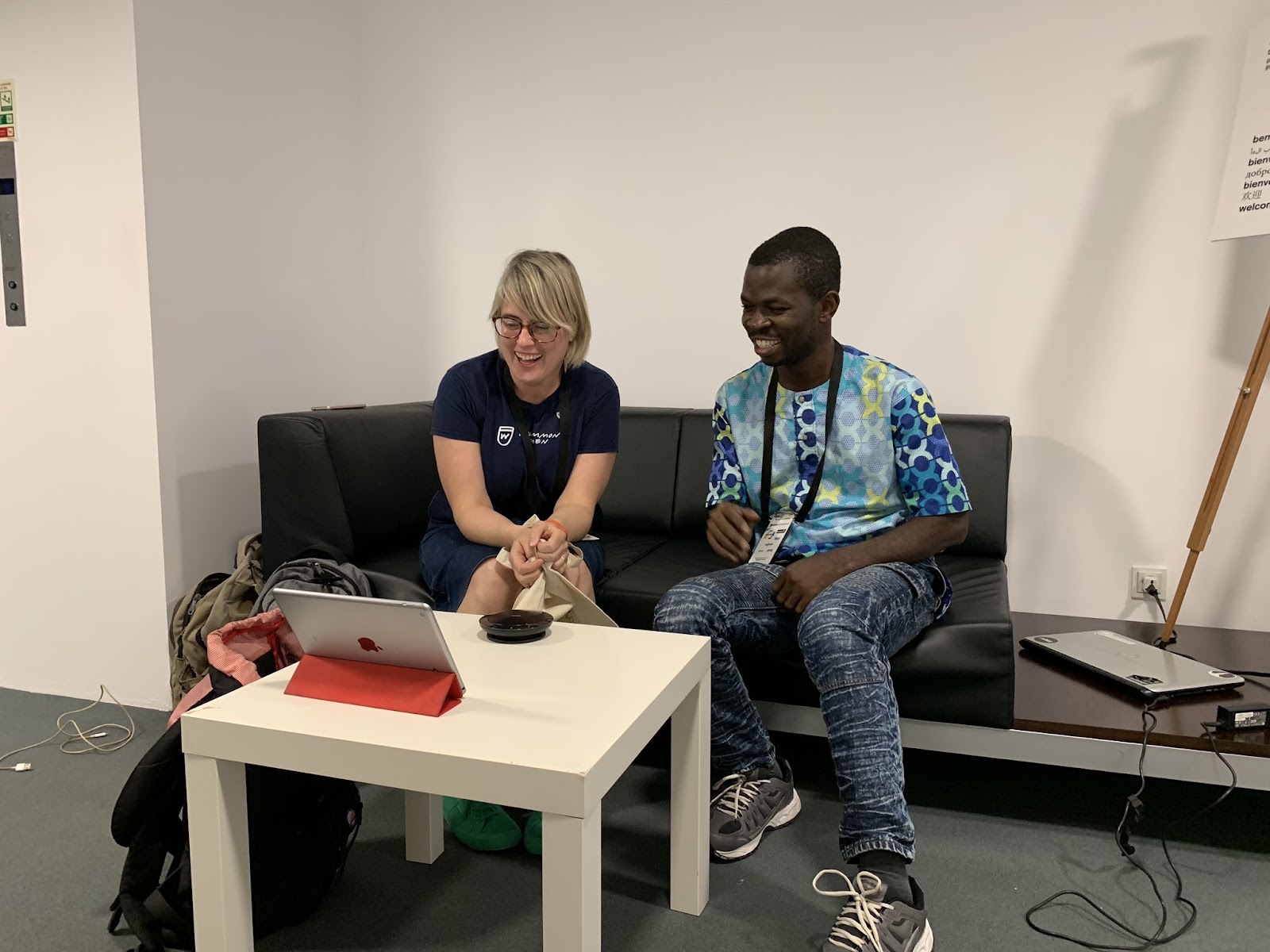
May brought both online and in person interaction with the Creative Commons community as I was able to attend the CC Global Summit for the first time and it was a fantastic experience. I have long been involved in the Creative Commons community and various activities but this was my first visit to the event which is at the heart of it all and I was met with real warmth and welcoming acceptance. The creative and joyful atmosphere of the conference, from the handmade designs on the badges to the samba music playing throughout the museum conference venue conveyed a sense of celebration and joy at this meeting of so many in the Commons but also motivated to pull up your sleeves, get stuck in and do plenty of work (and there was A LOT to be done). Here I wrote about my experience in 10 tweets.
Photo: Clint Lalonde
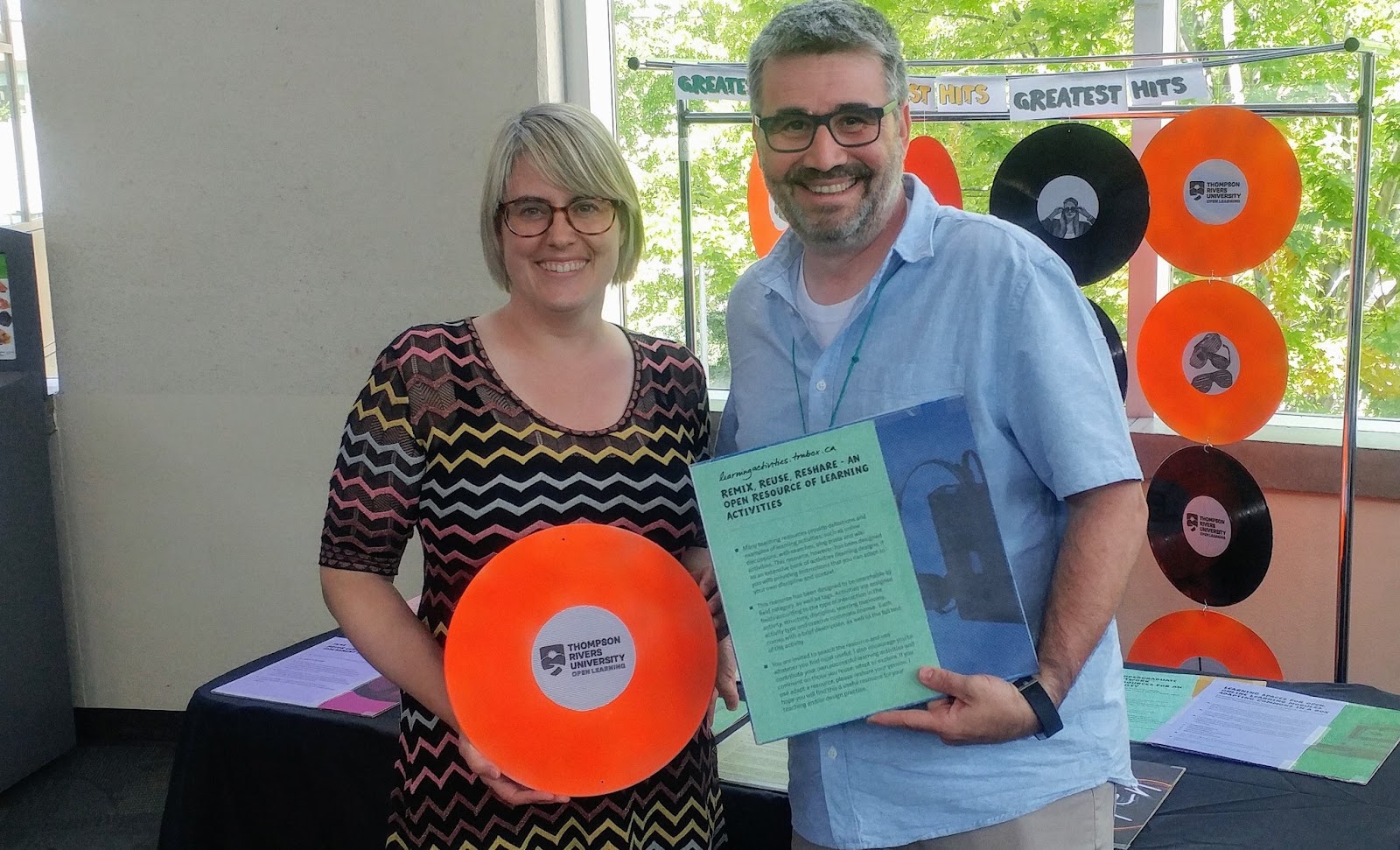
In June I had the pleasure of participating in the ETUG conference in Kamloops, Canada. It was a real privilege for me to be there, to have been invited to contribute a keynote ‘You are more than a data point. Weaving a tapestry of hope and humanity’ to ETUG’s 25th Anniversary Conference, and also to have the honour of taking part in National Indigenous Peoples Day. I learnt a lot from my time in Kamloops and I wrote a couple of posts reflecting on the experience and the keynote I contributed:
“I felt very much at home at the ETUG conference because just like the ALT community it is all about collaboration, reflection and sharing of best practice. After 25 years of working together (celebrated with a great donut birthday cake) this community has come to hold dear very much the same values as I do, recognising the power of sharing practice and research and working together to make change happen for students and staff alike.
And you could tell that this event was very much organised with heart. Little touches everywhere made participants and speakers feel welcome from the start and created a space in which the moving narrative from Elder Mike on National Indigenous Peoples Day found an equally receptive audience as the newest members of the community sharing research findings or #femedtech conversations about equality and women in #edtech.”
This talk was one of the most satisfying pieces of work I did this year and it brought together some different elements of my thinking that I subsequently published as a rewritten article in Educause Review.
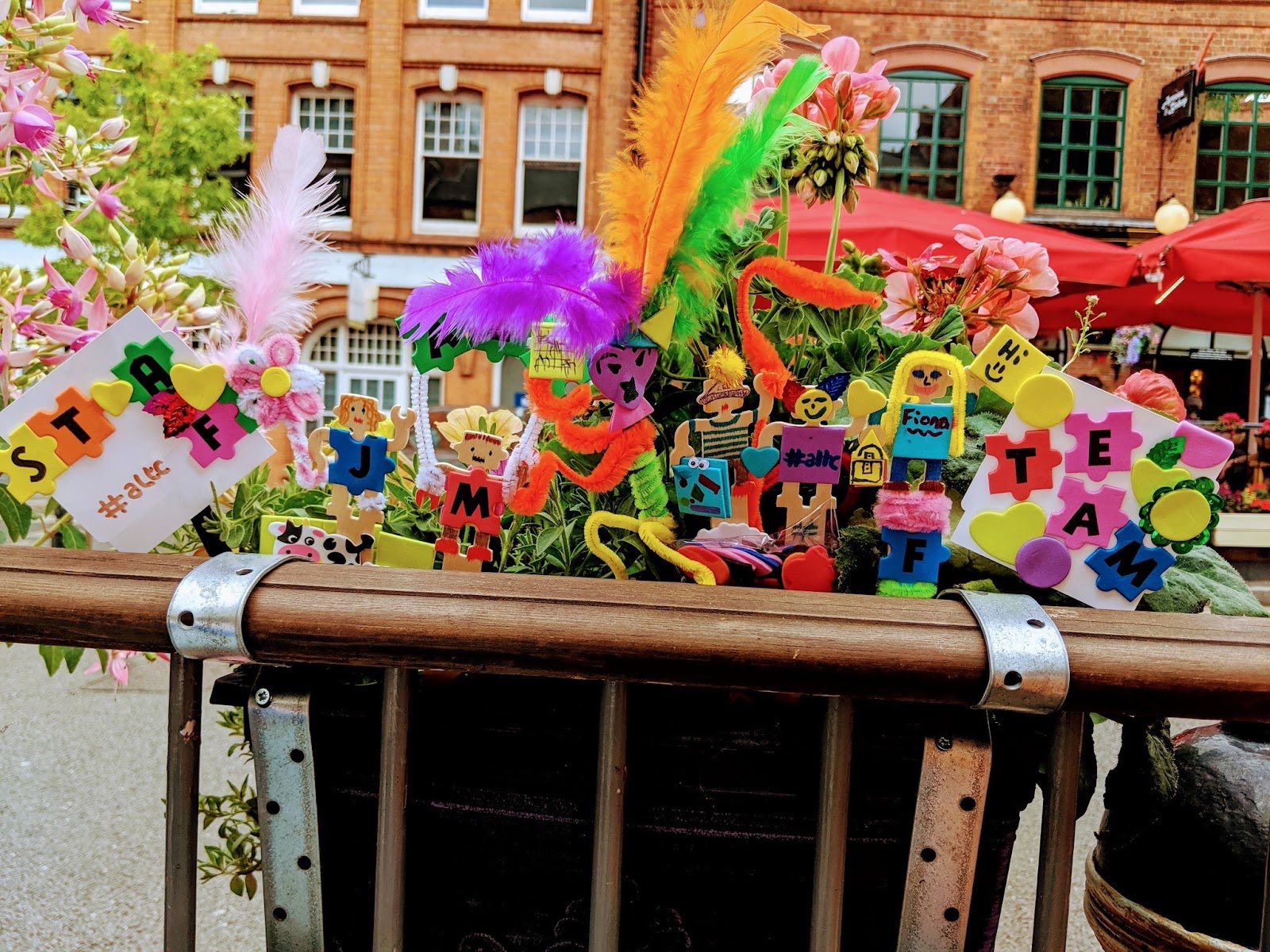
#altc staff team portrait
As you may know, we are a virtual team and everyone works from home (even during a heatwave). This way, we can better work with Members throughout the UK. Being a virtual team has many upsides but one downside is that I don’t get to see my colleagues very often. When we do get together, as we did in July, we sometimes create a team portrait (alternatives to photos as we are mostly a bit camera shy) and this is one of my all time favourites. I enjoy planning our team days and I put a lot of effort into the preparations, just like I would for an event. Writing about the Annual Conference Martin Weller called our approach ‘meticulously informal’ and that captures not just the way we run events but also the way we work together precisely.
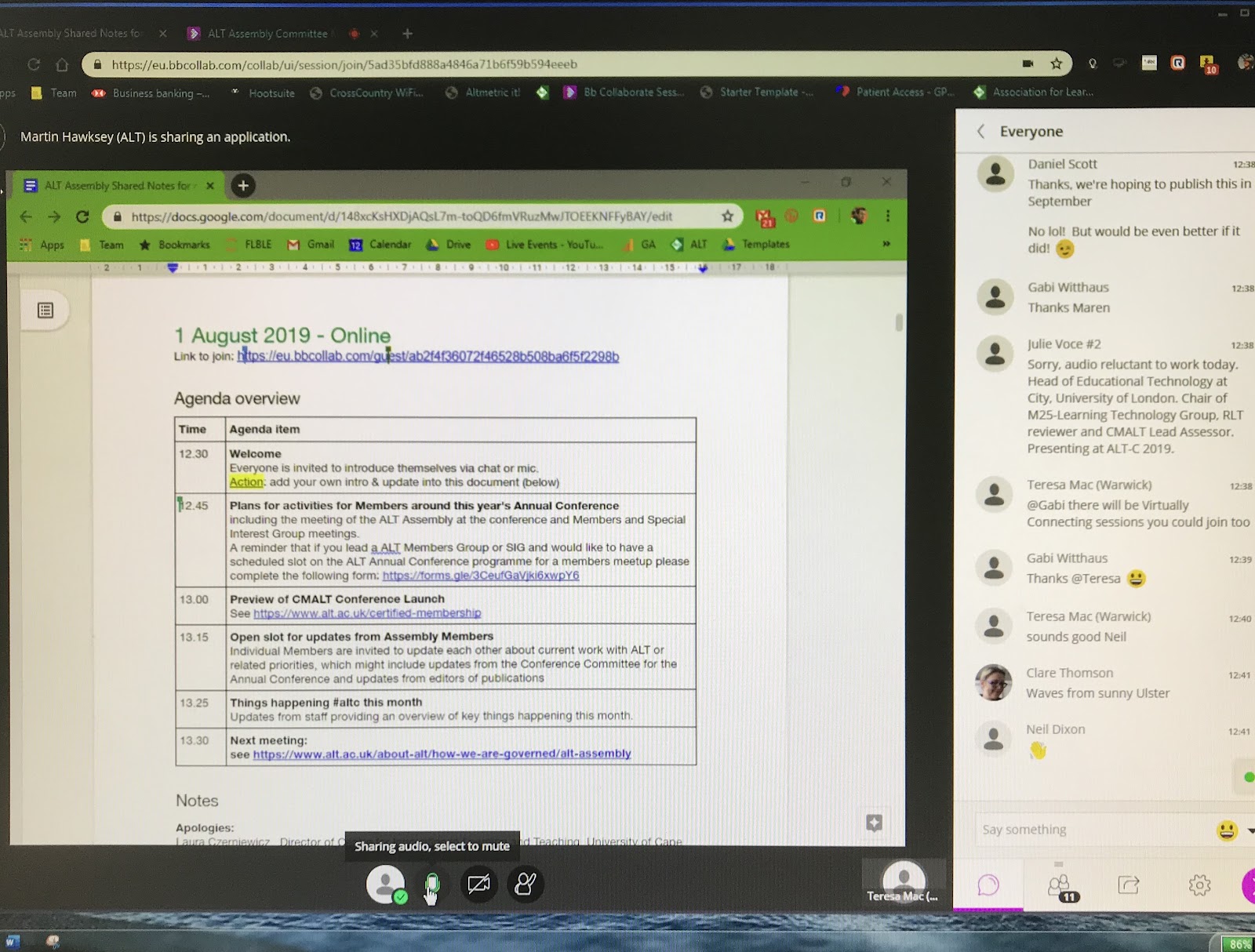
In early August, when the weather was hot and most people were on their summer holiday, I went to our monthly online Members Assembly meeting. Most of these meetings are virtual and the reason why I took a screenshot was that I found it so inspiring that despite the heat, holidays and probably a heavy workload, the room was full of volunteers, engaging, taking action. That’s the secret sauce of building sustainable communities of practice: share power, have a purpose, provide consistent, robust structures and put the time in. Even in August, during a heatwave.
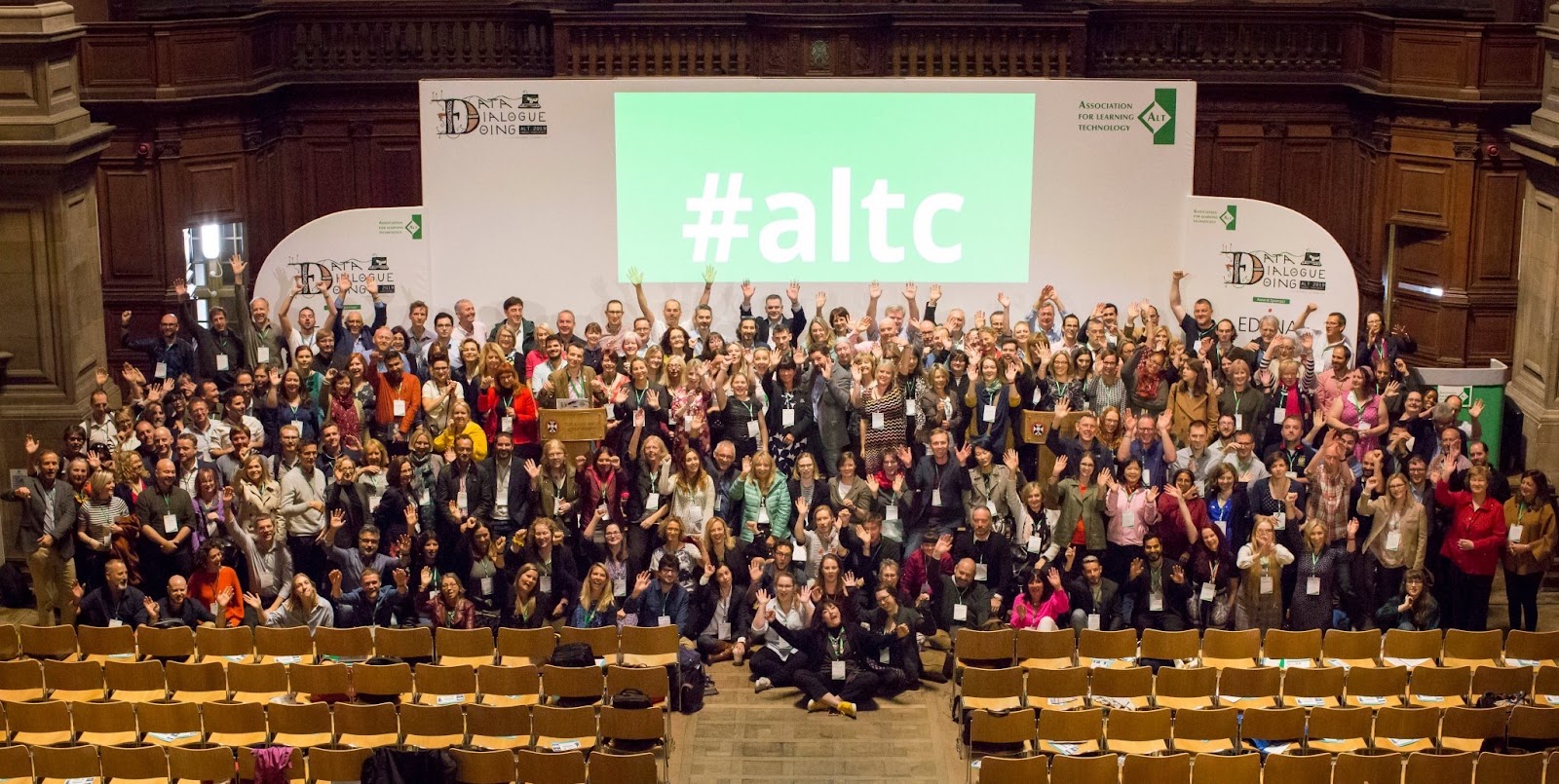
Picture by Chris Bull for Association for Learning Technology on Flickr
This community portrait taken at the ALT Annual Conference is the first of it’s kind for us. The moment of that photo means a lot to me. It captures a few hundred participants. I keep it on my desktop to remind me each day that we serve ten times as many Members. It helps illustrate the scale of the core community I represent, it makes something that is largely a virtual network more tangible. Over the past ten years I have probably met more than half of our Members in person or connected with them directly online. Each voice matters. My job is to listen and to make them heard.
This is a photo I took of the Extinction Rebellion Protest in Westminster on a day I had a meeting with senior Edtech policy officials. We sat inside the building discussing essentially how to make change happen whilst outside, on improvised barricades, thousands were singing songs of fear and hope.
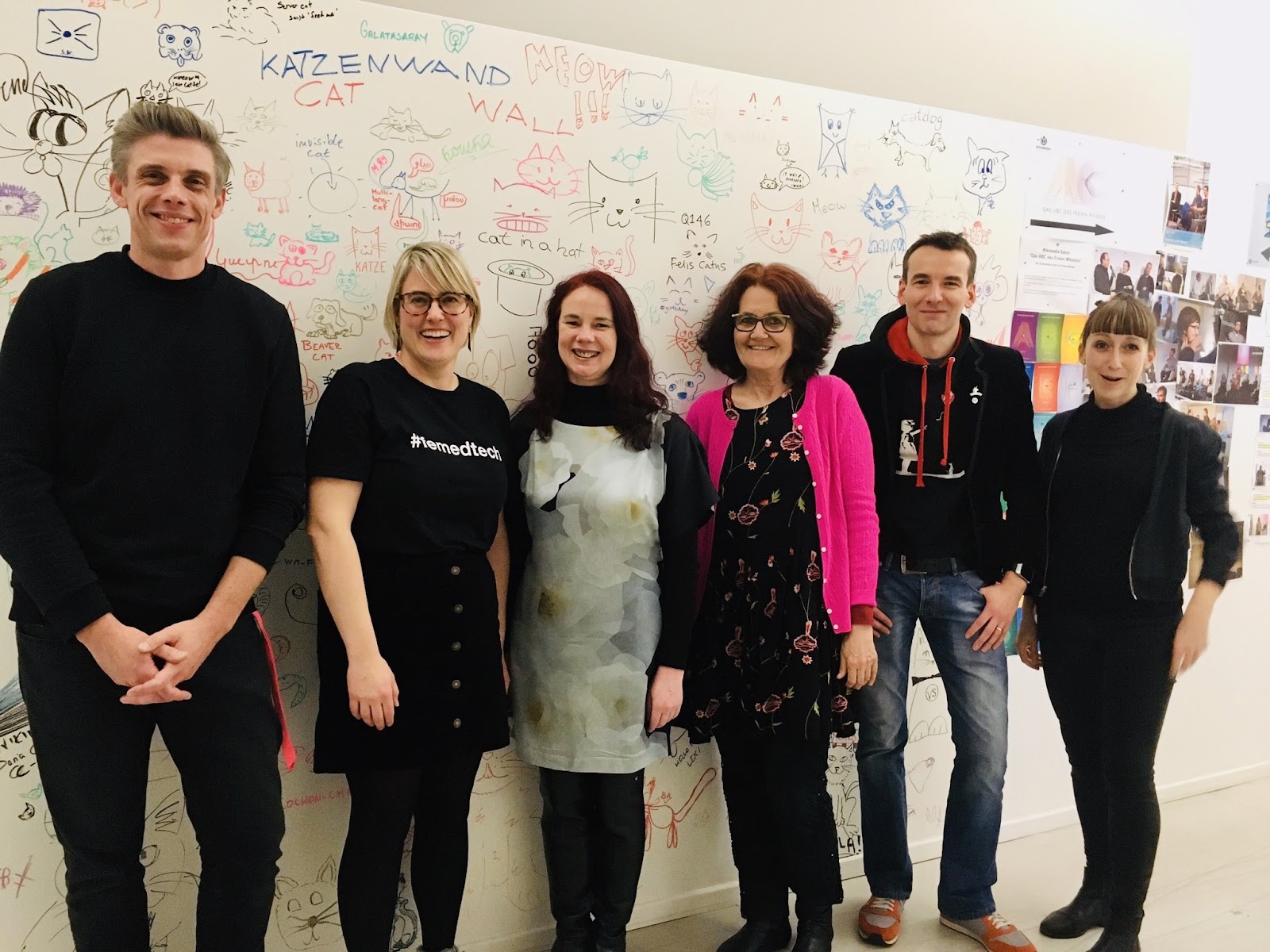
From left to right: Christian Friedrich, Maren Deepwell, Lorna Campbell, Laura Czerniewicz, Martin Hawksey, Christina Rupprecht (at the cat wall, Wikimedia Deutschland offices), Source: Tweet
Working in partnership with Wikimedia Germany I was involved in organising an event in late November, an evening of discussion and debate on education, open participation and democracy and critical reflections. It was a very special collaboration and part of our work for the OER20 coming up in April next year.
There is one more big item to add to the ‘wall’ for this year, and that’s ALT’s Impact Report 2017-20 which was published yesterday. Because, of course, the whole ‘wall’ is green… the tapestry through which bright threads of my year are woven spells #altc.
It is a huge privilege to be a CEO and it most definitely is hard work as well. Being in a leadership position brings into focus all elements of who I am and that is reflected in the way I think and work. Borrowing from my ETUG talk to close my reflections on 2019:
…”That brings us back to my own story, my own perspective and professional journey as a Learning Technologist, an Anthropologist, an Artist, Star Trek fan, a carer and a woman. Some of you may be familiar with the OER Conferences that we organise and with the wonderful work of Kate Bowles who gave one of the keynotes at OER19 this year entitled ‘A quilt of stars: time, work and open pedagogy’. Kate and many other speakers and participants created a strong narrative of hope, a thread of open practice that stitches us together, a tapestry, a patchwork, a weaving together. In her blog post about the conference, Kate described her reflections as “a scrap of practice that makes sense through the labour of others who take time to read it, think about it, share it, ask questions of it, extend it” and I feel her words eloquently highlight all the invisible work, the unbilled effort, that is so often crucial to making change happen, from grassroots activism to academic practice.
And this message of hope and kindness very much inspired my year. It reminds me that … we are all more than the data we create and our professional practice is more than can be tracked in time spent, papers marked or support tickets answered. Our practice becomes fully realised when we adopt a more mature and reflective, a more critical perspective that is informed by our stories and recognises the importance of the labour of others. Communities such as ALT are key to us collaborating and communicating in order to create a future for Learning Technology that is more open and equitable for all, to weave that tapestry of hope and humanity.”