In my last post, I reflected on the benefits of a monthly newsletter as a tool for reflection and monitoring progress. For example, I shared how looking at my blog posts for the month gives me a chance to think about aspects of my work I have enjoyed and want to do more of, things I’d prefer to spend less time on, what I want to focus on in the coming month and what is going on the back burner or stopping all together.
This kind of approach, focusing on what to stop/start or do more/less of is generally helpful, but I find it particularly effective when I review what I have been working on and can use specific examples. Now, in my CEO role, my team and I have started to use Asana last year to support collaboration and reporting across the organisation. I found it extremely useful from the start, but transferring all of my personal to do lists and productivity habits into a new platform has taken some time. As I became more confident in the platform, I found new ways to manage my workload and to review my own progress.
One example of this, is that I have started to use Asana more for my weekly work planning, and I wanted to share some tips about how I do that:
1. Reporting
The reporting menu in Asana comes with a “My first dashboard” set up, and I have used this to set up a personal view of tasks by going into each one of the charts and adding a filter that selects only me as an assignee of the tasks being reported on. This way, I can see all of my tasks at a glance.
It’s the first time in my career that I can analyse my workload at this level of detail, and it’s fascinating to compare my own sense of how things are going and what I am spending time on with what the dashboard view captures. It’s a useful exercise for me to consider what’s not being captured and why.
Most of the time, I find leadership related activities are absent from the reporting. Although I have both shared and private plans that capture most of what I do “think about staffing problem” or “ruminate on difficult email response” type tasks are not always easy to quantify.
2. Unscheduled tasks
One of the key priorities for us as a team in order to make the most of Asana, is to ensure ALL tasks we add have a deadline and are assigned to someone. I get a lot of tasks assigned to me, and using the reporting feature helps me identify the proportion of tasks that are currently without a due date and thus falling off my radar.
I love the discipline and accountability a tool like Asana brings with it, particularly as it helps you capture what you are doing wrong (planning work without giving it a deadline or a lead) as well as what you are doing right. It’s fascinating for me to reflect on why this is happening in certain areas of the work we are doing, as it often points to a lack of communication or clarity elsewhere, which in turn helps me understand what I communicate effectively and what I need to do better to get across.
3. My Tasks
In Asana the Board view of My Tasks is starting to feel more helpful to me. I have set up a “To do this week” section, which I add tasks to at the start of my week. That helps me get a sense of whether my workload is reasonable or not.
I have also set up a CPD section for myself, in which I dump all CPD related stuff. I then have a recurring monthly task that reminds me to review this section. I intend to use this section as a short-cut to complete my CPD list during my next appraisal.
It’s long been my practice to regularly record what I am up to, and I update my personal archive with links to talks and podcasts and resources that I have contributed to or published elsewhere.
I find it useful to have a list that covers most of what I do for reflection, the annual appraisal process and professional development. It’s also a great short-cut for compiling my monthly newsletter, which in itself provides an opportunity to reflect on my practice.
Using my monthly newsletter for reflection
It’s useful to get into the habit of taking a monthly look back at what I have done, and review what I have worked on and published. Usually I have a lot of different things on the go at the same time, and it’s easy to forget something that’s happened all together.
Looking at my blog posts for the month gives me a chance to think about aspects of my work I have enjoyed and want to do more of, things I’d prefer to spend less time on, what I want to focus on in the coming month and what is going on the back burner or stopping all together.
This kind of approach, focusing on what to stop/start or do more/less of is generally helpful, but I find it particularly effective when I review what I have been working on and can use specific examples: for instance, in the past month I blogged a lot about two topics specifically related to my coaching practice, but posted five or six posts that are more reflective on a diverse range of topics.
It’s been useful to push myself to blog regularly, as it’s one of my intentions for the year to blog more regularly and strengthen my own voice on a range of topics, and that’s resulted in me writing more off the cuff reflective posts. Blog posts about coaching generally take more time to research, draft and edit and usually include links to resources or tools that I want to share, which means that I don’t produce them as frequently.
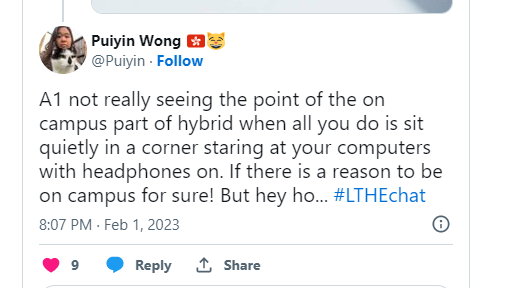
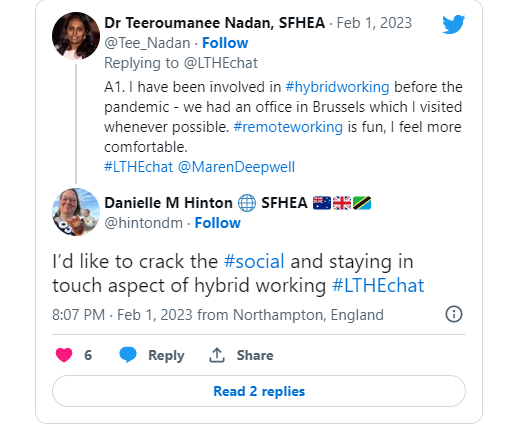
Another insight I gained from looking at my recent activity was an appreciation of work I have done with others, such as the LTHE chat a few days ago. In practice, much of my collaborations happened tightly packed in between meetings and deadlines and often I don’t get a lot of time to full appreciate these moments until afterwards.
Last year, I struggled to make time to blog regularly, and that’s a final benefit of compiling my monthly newsletter: it helps keep me accountable to myself 🙂
Here is a look at my February newsletter
Welcome to the February edition of my monthly newsletter. I hope you had a good start to the year so far. I for one am glad that the days are getting a little longer again and that there is more daylight for after work dog walks. January has been a productive month, and hopefully there is something in this month’s updates, blog posts and podcasts that is helpful or inspiring to you.
My own domain is where I blog about all things that interest me, recent projects, coaching resources, books I have read and what inspires my professional practice. Recent blog posts:
I am really excited to share a glimpse at my next project: How to… Lead Virtual Teams – a course in ten podcasts. The course is free to join and open to all. It is designed for emerging and established leaders and managers working in a hybrid or fully virtual setting. The course offers you opportunities to listen, reflect and explore. If you are curious about what’s in store, read the preview blog post How to… Lead Virtual Teams. and look out for a new podcast episode coming out soon.
Each week I share ideas and strategies for creative and fun approaches to help you succeed and lead in the hybrid workplace. Recent podcast episodes:
Image of a team leader doing a team review with his team virtually. (Source: iStock)
I am really looking forward to returning as a guest to the wonderful #LTHEchat for a conversation all about hybrid working. I’m curious to hear different perspectives and see where this conversation leads us. Below is a re-post of the original post on the #LTHEchat site:
For #LTHEChat 254 we are going to shift our focus from learning to work. We will explore ways in which learning and teaching practices can inspire a more sustainable and equitable hybrid workplace.
Digital technologies enable remote and hybrid working in new and more connected ways, but it is by no means a new practice. Many industries have depended on home working over the centuries. In the UK we are at the beginning of a new era of widespread homeworking, prompting urgent questions about the rights of hybrid workers, working conditions, and how new working practices may increase inequality. Some workers may now have more flexibility working from home, but the pressures of competing demands such as caring for children or other family members whilst earning an income remain constant. Other issues such as the increasing digital surveillance of employees and privacy concerns around hybrid working practices further highlight the need for a careful and considered approach to setting out policies for the future of working remotely.
One indicator of the changes in how we work is new laws and policies that seek to formally express how the relationship between employers and their digitally connected and increasingly distributed workforce is changing. For example, in the UK we have not yet seen an introduction of a code that would give employees a legal right to disconnect, whilst other countries, including France (2016), Italy (2017), Spain (2018), and Portugal (2021) have introduced such policies over the past five years and others including Ireland are working towards doing so.
We invite you to share your experiences of hybrid working and critically reflect on some of the downsides alongside the positives. What do we gain when we move beyond simply translating office-based practices and envisage a truly hybrid way of working? How can we help create welcoming and warm hybrid places to work that help sustain well-being and work/life balance? How can we empower ourselves and others in making hybrid working an equitable and engaging reality that benefits the organisation and the individual alike?
We are at a watershed moment for remote working in the sense that we have an opportunity to set out a vision for what is ahead that is informed by lessons from the past, as well as, the shift in perspective that the pandemic has brought about.
In 2017, I set out to find creative and fun ways to work and build meaningful relationships in the virtual workplace. The resulting Open Access book, Leading Virtual Teams, brings together case studies and practical advice to build on. This LTHEchat #254 offers an opportunity for a conversation about current practices and how things are changing.
Join us to share your own inspiration, questions, and prompts for reflection. From recruitment and induction to establishing effective and sustainable ways of working in the hybrid workplace we will explore the highs and lows of what it means to work in hybrid organisations in the long term.
I’ve recently embarked on a small podcast adventure, with the aim to explore at least 10 new shows this month. I’m curious to learn more about podcasting, and broaden my horizons, and I am also keen to expand the types of podcasts I am listening to, all the while looking out for ideas and resources that I could use or share with colleagues and clients.
It’s been fun so far, to listen to something completely different as I walk the dogs or do incline intervals on the treadmill. If you are looking for inspiration and are curious to find out more, this post is for you.
What criteria did I apply to select these?
I chose podcasts that I had never listened to before, and started with the most popular ones. I vaguely tried to choose episodes/topics that seemed relevant to my current interests, but also added some that were completely unknown to me.
Podcasts, ideas and resources
The first group of podcasts I listened to are by or about the work of Brené Brown.
Dr. Brené Brown is a research professor at the University of Houston, where she holds the Huffington Foundation Endowed Chair at the Graduate College of Social Work. Brené is also a visiting professor in management at the University of Texas at Austin McCombs School of Business.
She has spent the past two decades studying courage, vulnerability, shame, and empathy. She is the author of six #1 New York Times best sellers and is the host of two award-winning Spotify podcasts, Unlocking Us and Dare to Lead.
https://brenebrown.com/media-kit/
I keep coming across the Dare to Lead podcast, most recently a couple of episodes about adopting a digital mindset, which I was curious about as it related to my interest in leading virtual teams. However, up to recently I hadn’t made the time to really explore the podcast itself.
What I found particularly helpful is that you can search all of her podcasts by topic, so you can focus on a particular topic like work culture, leadership or midlife, and easily access related resources and references. There is also a handy guide for everyone who is just discovering Brené Brown, so if you are new to her work, head straight there.
Related podcasts
I also explored a couple of podcasts new to me that explore this topic from different perspectives:
A conversation about Trust from Brené Brown’s Dare to Lead
This is an episode from May 2021 of the Podcast series Write your OWN story, by Rebecca Fleetwood Hession, founder of the Badass Women’s Council, which is focused on Brené Brown‘s concept of BRAVING from the book Dare to Lead. Looking at what it means to set boundaries, how to lead with reliability and integrity from a business perspective provided an interesting contrast to my usual education/academic viewpoint.
Brené Brown: What to Say to Get What You Need
Dated March 2022, this episode of We Can Do Hard Things, with hosts Glennon Doyle, Abby Wambach and Amanda Doyle features Brené Brown as a guest and dives into a wide-ranging discussion about connection, fear, navigating personal and professional relationships and the book/TV series Atlas of the Heart.
All the podcasts introduced me to new ideas for things to read, listen to and watch – so I headed to the library and got ordering.
Today is my first day back at work since 22nd December, and in between I had a complete break. It took quite some doing, but I actually managed to step back from all responsibilities in that period, including those outside my role as CEO, those related to family and friends, volunteering, CPD, goals I set myself and so forth.
Prior to the end of December, I had over-extended my energy. Usually, I am very good at judging my capacity to do things, both at work and in my life in general. My capacity to get things done is considerable, and I have a lot of experience of pushing through tiredness, managing overload and finding ways to maintain balance even when things are extremely stressful. But at the end of last year, I felt that I had come to the limit of my capacity to stretch, and I pushed myself far outside of my comfort for extended periods.
Looking back at that now, from the comfort that weeks of winding down and good sleep, I am glad that I took action to step back from things, delegated, shared, stopped and switched off.
It isn’t always easy to get the right kind of break when you find work stimulating, when you have a lot of interests, when you are high achieving, love your job and enjoy juggling a lot of things on a daily basis. Thriving on busy-ness and finding inspiration when a deadline looms can feel great. But – the past couple of years have been challenging enough to tip the balance.
For me, taking a break required switching off from all work-related communication channels completely, to log off and close down apps and to clear my schedule.
It took over a week for me to actually wind down properly, and I spent the week being as busy or as lazy as I wanted to be, doing festive things with family and friends, going on long walks with the dogs, reading and playing a lot of Pokémon.
After a week or so, I started to relax.
I slept a lot, rested more, found energy to do some exercise, head to the coast… and find joy in things. Energy started to return, as did my sense of compassion, fun and interest in engaging with people once again.
It feels great to return to work knowing that I did really get a break, and not whilst keeping half an eye on things. Sometimes, you really need to take a step back.
It’s been over a decade since I became a CEO in 2012, and one of the things I have learnt is how important it is to prioritise your own wellbeing at times, particularly as there will always be something else that demands attention.
So here’s to having a break, the break I really needed, and to returning to work with energy and a renewed commitment not to push to hard.
It’s Winter Solstice today and over the past few years this has become the date on which I write my review of the year. For me, these reflections are a helpful way to wind down from work and move to focus on things away from screens, to get outdoors, walk the dogs and enjoy the luxury of not having a schedule.
Posey, who is asleep in her basket next to me, has been my work companion for much of this year, adjusting to days spent in a room filled with exciting things that *could* be chewed, but that, thanks to the wisdom and patience that being nearly two brings with it, are still mostly intact.
Attentive and highly intelligent, she has learnt our schedule off by heart, and knows exactly when video calls end, when we go and make tea (and go outside while we wait for the kettle to boil), and when, best of all, it’s time to head out for our big daily walk in the woods, along the canal or at the river.
When I look back at what I wrote this time last year, I can’t quite grasp how much has changed and how much has been achieved in the past twelve months. It’s mind boggling. In a good way.
At the same time, it’s been a mixed year for me personally. Great happiness and joy at home were overshadowed by a serious injury that required trips to the hospital for me, as well as much family upheaval and emergencies.
This is why it is especially important to me not to move on from this year without making space to celebrate the milestones of the past year, and to express my gratitude for inspiring and supportive colleagues, collaborators and friends.
No. 1 ALT is thriving at (nearly) 30
This is the first time since 2019, that we look back at a year during which we accomplished what we set out to do! Having spent much of the intervening period in crisis response mode, it’s a huge achievement for our Association to meet the strategic and operational goals we set for the year and, importantly, make real progress on the road to financial recovery post-pandemic.
This year was a year of firsts for us, from the first new hybrid format conferences to the first comprehensive governance review, new partnerships and projects, a new events programme and CMALT course development. I am hugely proud of all we have achieved this year (and the Impact Report that shares our highlights), and especially thankful for all the hard work our staff have contributed, led by our COO, Kerry.
We have also started long-term projects to overhaul some of our infrastructure, policies and practices, making them fit for the needs of a growing and diverse community as we prepare to celebrate our 30th anniversary. ALT was founded in February 1993, and it continues to be my absolute privilege to be part of the work we do as CEO.
No. 2 Leading Virtual Teams
When we closed our office doors in February 2018, we embarked on a new chapter in the organisation’s history, establishing new ways of working. We wanted to not only talk the talk, but walk the walk and… achieve more of our strategic aims with a distributed workforce and lower overheads.
I have led the organisation throughout this journey, weathering the ups and downs of operational transformation, and managing the crisis that hit us along the way. It’s been a huge learning curve for all of us, and we have shared what we learnt along the way in blog posts and webinars.
In this spirit of sharing knowledge, we came together earlier this month to celebrate the book launch of Leading Virtual Teams, with ALT’s Chair, Prof Helen O’Sullivan. You can now access the recording of us in conversation, sharing insights into ALT’s journey to becoming a virtual organisation and the story of how this book came to be and download your free digital copy.
Writing a book has long been a dream of mine, and I am thrilled with the kind comments and feedback I received. Thank you!
No. 3 A year of #femEdTech curation
Since February, each month for me started with #FemEdTech, first stepping back into the role of curator myself and also working together with other volunteers to set up a sustainable workflow that would enable others to get involved once again.
It was amazing to see individuals giving time and energy once more, to reinvigorate our corner of a social media platform which turned increasingly toxic as the year progressed. Maybe, in future our conversations may move elsewhere, but for this year, our network came back together around the #FemEdTech hashtag. And what a year we had.
Much of the focus of my work is in Higher Education, but this year, FE, Further Education, took centre stage. Working in partnership with Ufi VocTech Trust, ALT established AmplifyFE. Amplify is a ‘network of networks’ which launched in October 2020 and already connects over 2000 professionals in Further Education and Vocational Education, providing a strong networking community for them to share, collaborate and learn.
I love working in this space, and salute the inspiring colleagues that are part of our efforts. In my first year as CEO I was invited to join the Ministerial working group that published the influential FELTAG report, through which I met many long time colleagues and friends (including Bryan Mathers! A story which I re-told in The True Story of how a Westminster meeting led to… penguins, True Stories of Openness).
Many of us who are passionate about FE share a sense of frustration as unhelpful policy changes and drastic funding cuts continue to threaten this important sector. What happens to professional practice when these changes occur doesn’t often make the headlines, and part of the work we do as AmplifyFE is to chart exactly that: The 2022 community of practice audit covers over 260 communities of practice and provides a full new dataset and key findings, charting important changes to the sector landscape, including which communities have stopped or started their activities. When we launched the AmplifyFE Communities of Practice Sector Audit at the Week of VocTech, hosted by Ufi VocTech Trust, on the 14 November 2022, we had a fantastic response and this project continues to create insightful (and openly available) data that can be used by providers and policy makers as well as individual practitioners.
Thanks to support from our partners, we were able to share our work on a bigger, international stage: Levelling up Learning by Connecting Communities in Vocation Education and Training, a session I presented together with Emma Procter-Legg, at the OEB Global Conference in, Berlin, Germany, on 24 November was a huge milestone for us!
No. 5 The return of travel
That brings us to the return of travel.. or ‘meetings with legs’ and the singular pleasure of connecting with colleagues in person once again. I appreciated meeting my staff again for the first time after too long, to see Trustees and volunteers in person and, most importantly for ALT, to celebrate the return of hybrid events. OER22 was Co-Chaired by the Global OER Graduate Network, and was the first hybrid edition of this much-loved event and a stellar moment of community for us. A highlight for me was a special talk by Dr María Soledad Ramírez Montoya, UNESCO-ICDE Chair and part of the Open Educational Movement for Latin America, Tecnologico de Monterrey. Maria shared the work of the R4C-IRG Interdisciplinary Research Group: Scaling Complex Thinking for All at the Institute for the Future of Education.
My first trip of the year that involved an actual plane (for the first time since 2019) was an inspiring Assessment Hackathon, hosted at the Dublin City University on 25 May. This was closely followed by the run up to ALT’s Annual Conference in Manchester. It was a pleasure to see the conference convene successfully in a hybrid format for the first time. The event ended just minutes before the UK’s national period of mourning was announced, which meant that our community wasn’t able to share output from the event as widely. That doesn’t mean however that there isn’t a wealth of inspiration and resources to share, and I encourage you to explore the recordings from the conference sessions and the voices of the conference we have collated.
No. 6 Looking beyond COVID-19
The return of travel and the experience of hybrid events, reconnecting in person, gave me a sense of hope and looking beyond the pandemic even when the impact of the past few years could still be felt. The publication of Digital Learning in Higher Education – COVID-19 and beyond; which we celebrated with a launch webinar was a milestone on this journey.
I am grateful that I had the opportunity to co-author a chapter (Further non-teaching perspectives on aspects of the higher education sector impacted by COVID-19) with Matt Smith, Interim Head of Primary Education, University of Wolverhampton. It’s been inspiring to see this kind of initiative up close, and to be able to contribute some of the findings from ALT’s Annual Survey to this volume and also in this report on how the profession is changing.
No. 7 Open Voices
It’s been a year that prompted a lot of thinking about openness for me. Early on I was invited to contribute to OEG Voices 028: Looking into 2022 a wonderful podcast hosted by Alan Levine, which came out in February. Alan is a wonderful inspiration for so much of the work in open education, and I always value our conversations and the opportunity to collaborate with and learn from the OE Global community. Both OER22 and then later MYFest, the “Mid-Year Festival” (MYFest) which offered a “recharge and renewal experience” organised by Equity Unbound, offered opportunities to learn and listen which I valued very much. One practice I learnt more about is Intentionally Equitable Hospitality, and it prompted me to reflect more on the spaces with which we engage and how we can critically reflect and act in this context.
Towards the later part of the year I took part in OERCamp22 – zugehOERt 092 auf dem OERcamp: From Open Learning to Open Working, a conference podcast hosted by the one and only Chahira Nouira. Although we tried hard to make it happen, Chahira and I didn’t quite get to quite meet in person this year yet the warmth of the conversation made up for it!
No. 8 Hybrid working adventures
Since the start of the year I had DS106 in my life. As well as more impromptu radio jams with friends, I completed the first season of Remote Working Radio, monthly on DS106Radio. The radio show has since moved to become a podcast, but throughout the year the radio has been a place of joy and collaboration, story telling and listening.
A related project, with the amazing folk at Reclaim EdTech, was to work with Lauren Hanks on Hacks for Hybrid Working, a 4 week flex course in November. It was interesting to learn more about the format of flex courses, which are run regularly each month in the Reclaim EdTech community (check out the events calendar). I have experience of different formats of courses, but I hadn’t come across one yet that uses this format, combination of Discord, blog posts, videos and interactive sessions. With a blend of synchronous and asynchronous element, I love that these course fit around busy schedules, and are available to offer expertise and support when needed.
A highlight of the four weeks was definitely a hybrid working radio show on DS106 radio, for which we were joined by Jim Groom. Chatting hybrid working hacks for an hour was definitely too short! It was also stimulating for me to step into a different role professionally, and getting to focus on the design and delivery of a course. It’s been a few years since I last did that and it was useful to flex those muscles once again.
I also joined the ds106.social server and you can connect with me @marendeepwell[@]social.ds106.us. I do not post the same things across different platforms, so at the moment it’s a mix of reflections/comments on blog posts, pictures and re-sharing what I come across in the fediverse.
No. 9 Becoming a accredited coach
In January I officially started my coach training in order to become an accredited coach, an ICF Associate Certified Coach, via Katie Linder’s Higher Ed Coach Training. With a year of training and practice under my belt, I have started to develop my approach designed for professionals working in the third sector, education and learning technology, with a focus on leadership and career development, managing change and creative problem solving.
Being a CEO is a very rewarding role, which takes up a lot of my focus day to day. Over time, I have learnt that I am more effective in my role if it’s not my only priority. I like to keep learning and keep some hands on practice alongside my executive role. So for most of the past ten years, I have worked as on a free-lance basis alongside my role as a CEO, devoting a day a week to other projects.
I do some coaching with organisations and teams as part of my work for ALT, specifically supporting digital transformation and strategic development. Training to become a certified coach has given me the opportunity to offer some 1-to-1 coaching alongside my day job.
I am looking forward to completing the next part of my formal training in 2023 and become an ICF Associate Certified Coach.
No. 10 A thank you to blogging
My blog has a regular readership in the hundreds, so not particularly huge, and I mostly blog for myself. Sometimes to curate resources to refer to, sometimes to share practical tips, but largely it’s a space for me to think about what I am interested in and share parts of that.
In 2020 I really struggled for what to say. Work kept going, but my professional practice was so dominated by the crisis response, that I found it hard to articulate anything. Since then, I have published a lot on different platforms, but most of it is very much directed at the work I do, focused on projects like my book or specific events.
More recently, with the Twitter/Mastodon conversation in full swing, I came to the conclusion that I need to blog more. To hear my own voice represented here. I started blogging more than 20 years ago and I am grateful that I can continue that practice here, on my own domain.
So my intention for 2023 is to blog more, continue to reflect, learn and listen… .