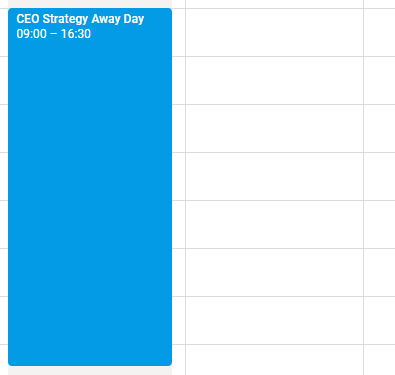
Earlier this year, I blogged about that I feel I am starting a ‘new job’ as things have changed so much over the past year… so this week on Friday I am having a strategy away day, pandemic style.
CEOs often get asked what success will look like in 3, 12 and 36 months. Asking yourself that question is a useful way to get your own thoughts in order and prioritising short, medium and long term goals.
Often, the kind of success measures or KPIs you’d include range from internal to the organisation to external stakeholder groups, from local to national to international. That’s the kind of thing an Impact Report is made for and that is important – but not helpful for me just now.
I am looking to re-imagine, to re-assess and to start from a blank page. Cue a bit of drawing and colouring…
Putting pen (and brush) to paper
I find it helpful to start with a blank page and the first thing I drew was a little flag, planted at the start of the year. It marks the launch of ALT’s (then) new strategy for 2020-25 (…best laid plans etc).
From there, it was a story of firsts… the first pivot online… our first ever fully online OER conference… the first time that we ran an event with 1,000+ registered participants, and the first ever time that we had to fully refund hundreds of paying delegates AND the first time those participants donated nearly £10,000 to help cover the losses we were making.
The first time that we drew up an emergency budget and plan just two months after setting the first ones… the first time we made an emergency strategy and held an emergency Board meeting.
In June we held our first ever fully online AGM with in-house voting. And in July, ‘business as usual’ included open calls for volunteers, editors, committee members – all for activities which were changing continuously.
Our first ever online Summer Summit took place in August, the first ever fully online awards short-listing process in September and the start of term saw us provide a second wave of support webinars, resources and care for an increasingly exhausted membership, preparing for an academic year that would be like… no one knew.
In November we launched our first ever CMALT Accelerator workshops and in December the Winter Conference saw our first ever online Awards Ceremony and first ever Community Award to every Learning Technologist.
By the end of the year, we had also published 49 new research papers, double the average number and the first time that we reached such a high number of publications.
A year of firsts – pandemic style.
Doing this drawing, sitting and thinking, letting my pen guide my thoughts, is incredibly helpful. It allows me to see beyond the KPIs and budget columns – and these don’t feel terribly meaningful anyway in a global pandemic context.
What does feel meaningful to me is the picture I have in my head of the past year. A picture of an agile, learning organisation where everyone contributed to us achieving a lot of successful firsts.
I also see thousands of professionals whom we have supported through the ups and downs of 2020… from sharing open resources and offering full scholarships to running support webinars and providing much needed CPD.
I like the idea of last year being a year of firsts and as well as all the bad stuff, there are a lot of positives to take with us.
The next blank piece of paper is going to be for 2021. A year of… ?
Next Friday, I am having a Strategy Away Day – pandemic style. In past years, when I need time to really focus on strategy, I was often able to take an afternoon or a whole day and spend it with some members of my Board, colleagues or external contacts, having conversations over coffee or whilst walking in a park.
My first mentor Margaret and I often spent hours walking through whichever city we met in, plotting and planning the future – and I came away having mapped out my plans and ideas for the year ahead.
Ideas like closing our office and moving online first came up during one such conversation many years ago… and how we are into our fourth year as a virtual team with no looking back.
But in these strange times… and confined to my home and immediate surrounds, how can I have an away day? Well.. here is what I am thinking:
Things are very hectic just now, but as a CEO, there is nothing more urgent or important on my priority list than to have a clear vision, a strong focus of what’s ahead. So I have clearer the day in my diary.
That in itself feels like a win, as I haven’t had much time like this over the past year.
On the day, I have a session with a wonderful coach I sometimes see, who works for a small, independent HR provider, based in Sheffield. Working with agencies that serve solely small charities like ours really helps find support that is both excellent value for money and affordable (even in cash strapped times) .
Weather permitting, we will be speaking on the phone whilst going for a walk in our respective local areas and step outside of the usual desk/home office environment.
If it’s raining, I might decamp to the garage or at least the living room, to make sure I have a change of scene.
Catering is another factor I am planning ahead for: my weekly online shop is going to contain some unusual items as I return to buying provisions I would have had whilst travelling, including maybe a smoothie or a pre-packed coffee. Every little thing I can do to create some headspace is going to contribute to the success of my day.
I am also planning to work on a pitch, mostly to myself, but also to focus my thinking ahead of a day’s meeting with the Board the week after. I’d like to look back at some of the plans I made previously, and how they have changed.
I recently attended a monthly meeting of UK Association CEOs discussing ‘what will success look like in 2021’ and this gave me inspiration to try and ask myself that question in a new way.
In 2015, I wrote about about how I had hopes for ALT to reach 1,500 Members… now we have 3,500. Things have changed and there is so much scope for the work that we do to grow.
One of my strategies for getting through lockdown/pandemic burnout is to have a lot of green in my workspace. I can see at least six plants from where I sit each day.
Some of them are good at cleaning the air, some grow in intricate pattern and some grow in interesting shapes. Having discovered that I love succulents, I went about finding a local supplier and thanks to the wonderful Blasus Succulent Emporium, which is situated in a small independent shop collective here in Cardiff, I am now fully stocked 🙂
(Blasus is the Welsh word for something scrumptious, delicious or… succulent)
Crassula Estagnol
I know very little about plants and have killed many in my time, so in order to succeed with my new office buddies, I looked up specific care instructions and I try my best to follow them.
Cheeseplant
As a result, things are flourishing! That said, not every plant is doing so great, regardless of how carefully I try to look after them. Some are in shock due to the change in environment from a cool shipping container with freezing temperatures outside whilst others are struggling to find the right spot which has the appropriate amount of light, shade, warmth and cool.
What looks like dying chives is actually a rather special Albuca Spiralis, a plant that is meant to grow in spirals… it’s now in it’s fourth spot to try and find a sunny enough home in these dark days.
Similarly, my first and most stripy plant companion is struggling to grow happily. She is doing better now, in a bigger pot, but still not altogether in a happy place.
Transitions are tough. When things change, we react in different ways and the start of this year has brought with it a fair share of transitions and uncertainty. Unlike my office plants, the elements of my working life don’t come with such clear care instructions or indeed any labels that tell me what conditions they would flourish in. It’s a mixture of experience, trial and error… and hoping for the best.
Like with caring for plants, care and patience is much needed, and in these bleak times it can be hard to remember that. Somehow caring for the plants in my work space reminds me of that and I find new joy and inspiration in their efforts to grow – which translates into my working life.
In a meeting with other UK-based CEOs this week, someone said that there is just such uncertainty, that it makes no sense to base decisions about the future on our experiences of the past 10 months. We all agreed that the uncertainty was extremely tiring and that not knowing in itself was the worst aspect of being a leader in these uncertain times… cue pandemic burnout (which, to me at least, feels like a relatively fortunate type of burnout to suffer from in comparison with what others have to suffer). Yet, in my context, it still presents real and difficult challenges. Challenges that my green office buddies help me overcome.
Tomorrow is Friday, and it’s become a routine for me to start each Friday by looking after all the plants. I go round with an old deep plate and start a watering routine, giving everyone a drink. Sometimes one gets a new, bigger, pot. Some weeks there are dead leaves to remove or feed is needed.
Care. Time. Patience. Consistency. And with time, most will flourish. Definitely not a new insight, but it feels worthwhile to remind myself when sitting in the nth meeting of the day, answering endless emails and trying to balance all the different demands that leading an organisation through these times places upon me. Having plants for company somehow makes it all better, a little easier, a bit more… fun 🙂
It’s finally January 31st – and I am still standing. Things continue to be bleak, and whilst I am lucky that COVID hasn’t killed me and neither has boredom… work continues to feel like it’s busier than ever!
In cheering news
So… it’s time to celebrate the positives of this month, starting with the best musical moment of the month:
My colleague Debs singing ‘Downtown‘ by Petula Clark on Thursday night at a virtual karaoke leaving do was super life affirming and joyous! The tune has been in my head ever since and it was SO MUCH FUN! Thanks to Jim Groom’s inimitable hosting, this was one online staff celebration with heart!
Jim’s work inspired another highlight of my month, sharing the opening of Reclaim Arcade on Twitter and beyond, lighting up social media in HUGE VHS TAPES and neon. I am so much looking forward to visiting the arcade in Fredericksburg, Virginia on day!
Congratulations to Jim and the whole crew on a wonderful new venture 🙂
Also… I have BLOGGED!
Including this one, I have already written 9 (nine!) blog posts this year.
I wrote some ‘getting back into work’ at the start of the month including this post on feeling like I have a whole new job.
Also, some posts on virtual teams and leadership, a highlight of which has been this post Celebrating 3 years as a virtual team – an #altc perspective: a joint post by the whole ALT staff team written as we celebrate our three year anniversary as home-workers, running the leading professional body for Learning Technology as a virtual organisation and successfully charting a way through the ups and downs that the last three years have brought for us as a team.
Three years ago this week, we closed the door on our last physical office space and moved to becoming a distributed team. Since then, we have chronicled the journey we have been on as an organisation and as a staff team in regular blogposts, podcasts and conference papers, starting with this post from February 2018. A year on, in January 2019, I reflected on how the move changed things in this blog post and we also recorded a podcast. Last year, we wrote about how things were developing and we continue to collate resources that chart our journey as a virtual team.
This January, we celebrate our three year anniversary as home-workers, running the leading professional body for Learning Technology as a virtual organisation and successfully charting a way through the ups and downs that the last three years have brought for us as a team.
Over the past year, many other organisations and teams have had to rapidly adopt a way of working, that our organisation chose for strategic reasons and made a transition which we had time to prepare for. Trustees of ALT took the decision to move ALT’s operations away from a long-standing hosting agreement with a university to a more independent model, to ensure that ALT’s strategic aims and values are underpinned by an effective, agile base of operations providing more direct support for Members across the UK.
As we now know, this decision turned out to be a good one, both for ALT’s continued growth and success and also our ability to weather the global crisis we are currently facing. We have been walking the walk of using technology effectively for learning, management and governance day in day out.
Jane Frankel, who manages ALT’s charity finances, is one of our longest serving members of staff and a colleague who made the transition from physical office to virtual team with us.
Reflecting on how things have changed over the past three years, what’s been your experience of transitioning to being a full-time home-worker in the ALT staff team?
“Having been self-employed for many years and frequently worked from home, the transition to home working wasn’t difficult. My commute was certainly shorter! However, transferring several years of documents to electronic format and adapting to a home based team with less frequent face to face time was challenging. I miss my colleagues! Although we do meet online and communicate constantly, it’s still hard to get used to not having a face to speak with in person. Getting used to managing family and being home for kids when they’re back from school is definitely a plus. ALT has also made a point of ensuring everyone has flexibility in their work schedules to take time for themselves, which is extremely valuable.”
ALT became an independent employer at the same time as transitioning to working from home, and our Events Manager, Emma-Jane Brazier, joined our team on the first Monday as a virtual team, on 5 February 2018. Since then, we have been fortunate to have Emma-Jane’s expertise for two periods of maternity leave that Jane Southgate has been on, and Emma-Jane has thus been through two rounds of a fully virtual recruitment and onboarding process.
Emma-Jane, what’s your experience of working with ALT as part of a virtual team?
“I had never worked virtually before. Coming from a teaching background (prior to Covid) I was very much used to dealing with 100s if not 1000s of people a day. I thought it would be lonely but actually at times I could do with some more alone time! ALT has fostered a close knit, highly communicative and effective team. We talk with each other throughout the day, have regular catch ups and work collaboratively ALL the time. I really enjoy this and cherish it as I know from speaking with friends who have recently had to pivot to online working that this working environment is not always present. Having the physical team meeting days and events (in normal times) brings welcome opportunities to catch up with people and I hope for the team that they are able to return as soon as is safe.”
Before ALT made the transition to working from home for everyone, several members of staff were already home-based, enabling us as a team to work more closely with Members across the UK. Martin Hawksey, who served as ALT’s Chief Innovation, Community and Technology Officer until recently, was based in Scotland in the years leading up to the organisation closing its office in 2018.
Thinking back to a time when some of us were working from home full-time and some of the team were office-based, what has our move to being a fully virtual team brought with it for you, Martin, and what would you say are the upsides of everyone working as a distributed team for a small, agile charity like ALT?
“For organisations one of the big advantages is there is greater parity for staff. Before ALT became an entirely distributed team we were using a hybrid of office and home based staff, which meant that communications between the team were different depending on where you were based sometimes requiring additional measures to ensure the exchange of information and awareness of what was going on. With a fully distributed team effort is still required for formal and informal interactions, but everyone is in the same boat. Another big advantage for distributed organisations is when recruiting staff you are less restricted by geography allowing you to access a bigger pool of talent.”
In 2019, which now seems like a long time ago, our team found its virtual stride having successfully delivered two years of ALT’s full portfolio of activities, from large, international conferences and our peer-review journal to membership services across the UK.
We capitalised on the advantages of working as a distributed team and found solutions to the problems we encountered. Importantly, we didn’t completely stop meeting in person, retaining a blended approach that included team days for which we met in person (the team portrait from our 2019 team day in Birmingham gives you an idea of the ways in which we used to work together).
Being a virtual team, changed our organisation for the better and we reflected on this here.
We were lucky to recruit two new members to our team in 2019, with Fiona Jones joining us in June, followed in September by Debbie Baff.
Fiona leads on administration across all of ALT’s activities and is the person Members have most day to day contact with on the phone, via email and on social media. Fiona joined our team having had previous experience of working from home and a background in educational technology.
Fiona, why did you choose to work from home and what is your experience of being part of the ALT staff team?
“Having previously had experience of working at home before I joined ALT, I was very familiar with the concept, and really enjoy the flexibility that homeworking brings. Having extra time in the mornings and evenings with no commute is so beneficial, especially in these winter months when you can get out for an early walk in the sunshine. I also love being able to wear slippers for the whole working day! Creating your own comfortable environment is a huge factor for working efficiently.
When I joined ALT in 2019, it was so refreshing to join an organisation that does working from home so well. I love being part of the ALT Team, and we all do our best to try and provide alternative virtual versions of what we each miss from an office environment. I love being able to still celebrate colleagues’ birthdays and important events virtually, even though we are spread over hundreds of miles. Day to day, it’s also always nice to know that someone is always on the end of a chat message to help with a query, or to jump onto a video call with a cup of tea!”
As more and more of ALT’s Members have had to adapt to working from home since March 2020, often alongside home-schooling as well, we have been providing regular support in the form of webinars, drop in sessions and resources. Our Membership and Professional Development Manager, Debbie Baff, has been the member of staff who has led and supported many of these sessions, experiencing what ALT’s Members are contending with at work and at home.
Debbie, you started working with ALT and from home only months before the pandemic. Since your first day on the job at ALT’s Annual Conference 2019 in Edinburgh, how have things changed for you and how is working from home as part of our team for you?
“My first day on the job at ALT was spent at the annual conference up in Edinburgh, little did we know then that it would be our last face to face event for quite some time. That seems such a long time ago now. For me, I have to admit coming to work for ALT has been life changing. In my last job I had a 3 hour round trip commute down the M4 to work and back. That was so very tiring and quite frankly a real pain and let’s not go there about not being able to park when you eventually get there ! Being able to avoid all of that commuting hassle is just so much more productive and makes much more sense to me. Although I have had other experiences over the years of working from home before, it was a whole new experience of working for an organisation where everyone works from home. I remember wondering how that would work in practice before I started. I didn’t need to worry mind you as I think ALT has really got it right in terms of recreating a sense of belonging and fostering online social presence within the team. We are constantly in touch with each other either through messaging apps, email or video calls, we have regular meetups and as we are such a small team we are actually very well connected. These things don’t happen by magic though and have been very carefully thought out and planned for, in my experience you have to be a lot more deliberate in your communications when working at a distance to avoid misunderstandings and ALT works very hard at this.
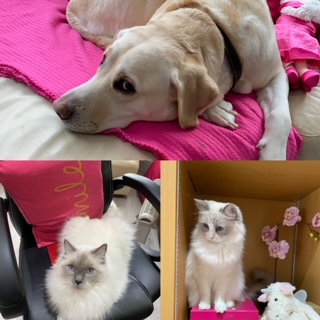
Working from home during the pandemic has meant another level of readjustment though. I went from being at home all by myself with just the dog and two fluffy cats for company to a house full overnight. My husband was on furlough for a while which meant he was at home, and I have two teenagers so I have the whole homeschooling thing going on. Competing for wifi and bandwidth has become a daily occurrence, as has having to make lunch for other people during my lunch break rather than just grabbing what I want ! (Sadly I was hoping that having other people at home might have meant that I had a surprise cup of tea brought to my home office occasionally but I am however still waiting for that ! HINT HINT teenagers”
As the chief executive, my working practice has changed much since starting to work from home. I am deeply grateful that ALT’s Board of Trustees had the vision and foresight to steer the Association in this direction. I am very proud of the impact we have had over the past few years since the transition.
That said, it’s taken me a while to adapt to leading a team and an organisation from home and I continue to discover new ways of working, of finding balance between the demands of a very busy diary and needing space to think about the bigger, strategic picture. I now know more about the pets, kids and plants of my co-workers, Board members and colleagues across the world, and that has made my job more enjoyable and interesting.
As we, as a team, look ahead to what 2021 may bring and as we enter a more experienced and mature phase as a virtual team, we want to share some of the worst bits and some of the highlights that three years of working as a distributed team have held for us.
We invite you to reflect with us, share your own and hope that you will find something useful and inspiring in our continued journey as a virtual team.
The worst bits… there have to be some
The most difficult part of working from home for me, is having to provide virtual support in a crisis. When someone is having a really bad day or something unexpected happens, there’s only so much I can do via phone and video calls.
I end up doing more than my usual share of domestic chores as a home-worker.
I miss hugging colleagues when they need one!
Being not as active. Little walks to a bus stop, or tram, walking around an office all add up during a week so you have to make sure you don’t stay sedentary (to keep off the lbs! Must say I’m no expert at this)
Funnily enough one of the things I do miss from my looooong drive on the M4 every day is that decompression time and being able to listen to podcasts guilt free. For some reason I am also really bad about forcing myself to get outside and go for a walk, something I know is really important to do and something I am working on. I also miss being in an office when the banter is going on – I do love a good giggle. Although we do still have our fair share of funny memes across the ether which does help. Also in terms of the impact of the pandemic obviously there are the issues that has brought too although I have been lucky enough to be able to make some small changes to my working hours which means I can start earlier and finish earlier and that has definitely made a difference in terms of the bandwidth issue and also for a bit of headspace before the home schooling starts.
And the highlights… of which we have many!
I really don’t miss my 1+ hour long commute and I love the time I have regained for things other than sitting on delayed trains.
When I have caring responsibilities for my eldery parents, these are easier to fit into my working day from home than they were in an office.
No commute!! This is a big one as I didn’t realise how tiring it was. It also meant I could get rid of my car which is better for the environment. Also I think being able to work from home allows you to keep on top of household chores. E.g during my lunch I can quickly put a load of washing on or wash the breakfast dishes
The best bits, well that is a hard question, there are actually so many great things about working from home. It has definitely given me some life balance back and I love how it takes me 30 seconds to get to work in the mornings. I am really lucky in that I have a dedicated home office and don’t have to clear everything off the kitchen table at the end of the day. That would make things so much harder to manage. I love our little team, everyone is very thoughtful and so kind and even though we are based all around the UK somehow that distance really doesn’t seem to matter.
Written by Maren Deepwell with contributions from Emma-Jane Brazier, Debbie Baff, Jane Frankel, Fiona Jones and Martin Hawksey.
This post has been re-posted from the ALT website.
This is the last of the conversational blog posts (cross-posted here) between Martin Hawksey (@mhawksey) and Maren Deepwell (@marendeepwell) and an opportunity to reflect on the past year. Our ALT Staff team will continue to blog about the journey as a virtual team and we look forward to what 2021 holds in store for us.
But for now, we want to recognise Martin’s contribution as over the past three years, over dozens of posts and blog posts and 65,000 words (!!!), we have been using this approach to create some space to think together about leading a virtual team – and continuing to do so in ‘unprecedented times’.
As many of our readers and listeners will already know, after many years of making a big impact as a senior member of staff, Martin will be leaving ALT in January 2021 to move onto new adventures as an intrepid edtech explorer.
Whilst the staff and Trustees of ALT are making preparations to say thank you (contribute to Martin’s virtual leaving card (read: spreadsheet) via this Google form), it also means that, sadly, this series of monthly posts is coming to an end.
So this month we are recording a special podcast episode, a reflective conversation about working from home, leading a virtual team… the ups and the downs… our best tips and tricks and also some of the highlights we have written about together over the past three years.
Maren: So, here we are, about to record our last podcast in this series, and there is SO MUCH I’d like to talk about. When we started writing these blog posts, I don’t think I ever imagined that we’d still be doing so three years and 65,000 words later! Quite apart from all the things I’ve learnt and discovered about leading a virtual team, our conversation itself has been a key part of my day to day work and of great value in itself. When we started blogging, just as ALT made its transition from having an office to operating as a distributed organisation, many people gave me funny looks. Not having a physical HQ seemed a bit suspect, I think, and now, in no small part due to the pandemic, it feels to me like everyone in our sector is working from home and not planning to return to their physical work places. Things have definitely changed and our posts reflect the journey we have been on with our team and our organisation. Thinking back to 2017/18, what tips and tricks do you wish we had known that we know now?
Martin: The end of 2017 and ALT’s new journey into becoming a distributed team seems a world away. Given one of my hats has always been technology it is interesting to think about what we implemented then and what we use now. Looking back to the solutions we implemented then and now not much has changed in terms of our offering. Whilst platforms and services have inevitably evolved in the interim the tech landscape remains very similar, what I would say has changed is how we as a team use our tools. For me it feels like there is greater maturity in the tools we use as in a better understanding of how things like shared documents, chat and video calls are used to support a distributed team. As an organisation I think we are also better at recognizing the required skills of homeworkers and incorporating this into both our recruitment process and team support. Given your role are there any standout things you would tell the 2017 version of yourself?
Maren: I guess to someone who is always several steps ahead when it comes to tech, it must feel like not much has changed 🙂 I agree with you that the way we use technology as a team has scaled up and developed very much over the past three years, both in terms of the skills and capacity individual staff have developed and also the enthusiasm for and familiarity with different platforms.
This time three years ago, the CEO in me was closely monitoring risk registers, just as I am doing now. The difference is that then the changes we were making were planned, strategic, intentional. Becoming a small, independent employer, moving to a virtual team, employing staff distributed across the UK. Just today, I said goodbye to the last piece of furniture I picked up from our office in Oxford this time three years ago. Goodbye, old office chair, hello, new home office chair. In hindsight, I would tell myself, hey, you are making all the right decisions (in 2017 not having an office seemed a lot less possible to many people). I would also tell myself that I was right to be cautious, as lots of things that aren’t a problem in the first 6 months can turn out to be a bit more difficult down the line. Also, working from home and caring for one’s own wellbeing takes more discipline than I had imagined.
Martin: In the beginning of this series I felt my focus was more on the practical, tangible problems, the ‘interfacing’ of a distributed team. I feel there is still an aspect of that but increasingly, and I think largely thanks to your perspective, I’ve come to have a better understanding of myself and how to support others who are working remotely. I can completely relate to the idea that wellbeing takes discipline and also how often there are very personal solutions like particular smells, sounds or light. I’ve also come to realise how important the process we have adopted, sharing our reflections in a conversational format, has been. When we started I could see how others could benefit from us sharing ALT’s transition to a distributed team, but I never anticipated it being such an important part in terms of creating an opportunity to regularly reflect and share how things were going. Have you had any unforeseen benefits of doing this series of posts?
Maren: Absolutely! Quite aside from learning how a lot about working from home and being part of a virtual team, our collaboration has taught me much about the value of collaboration, particularly in a leadership role. Having a conversation rather than just my own perspective, has enriched my perspective on the work we do, and how we do it. It’s also enabled me to develop my skills in collaborative, conversation writing and over the past few years I have been able to expand the group of people I work and blog with, including for example writing a series of posts with my former coach, Margaret, and also writing with other colleagues in the staff team. It’s been a very rewarding experience for me and enjoyable to boot! Here is an open invitation to you to drop back in and share with us your new adventures – you will always be welcome as a special guest contributor 🙂
Martin: I’m looking forward to continuing to follow ALT’s journey through the ‘virtual teams’ posts. Also thank you for the opportunity to be part of this first chapter. Your gentle encouragement throughout this endeavour has been particularly welcome, especially having a stimulus to reflect and discuss progress when the pressures of delivering ALT’s strategic objectives has sometimes meant less time has been available.