Author: Maren Deepwell

  • Home-worker… care-work… self-care.

    Home-worker… care-work… self-care.

    Last year I wrote a post about how working from home can lead to doing a lot of housework. I reflected on how working from home made me feel like I had been landed with all the domestic and care work and I explored ways in which I reclaimed a better balance.

    A year on, and several big life changes later, seemingly everyone is now working from home and finding any kind of balance is an even bigger priority.

    Working from home in these turbulent times poses some unique challenges for sure, but many of the issues I encounter are already familiar, they have just been amplified by what’s happened.

    Home-work/life balance

    A year ago, avoiding doing too much or unnecessary housework seemed like a big challenge and the strategies I used were simple: setting aside time to do chores rather than doing them as I see them, learning to ignore things that aren’t urgent, reminding myself of sticking to my working hours… . Just now, I need these strategies more than ever, because everything that’s happening in the world of educational technology seems urgent and there is an emergency all of the time.

    Sticking to my working hours, not trying to do more than I am able to handle… making my work space as good as it can be. Sounds easy but all of these are hard to actually stick to.

    I have bought myself some new plants, bringing a bit of the outside world to my work space and I am adjusting my set up to suit the different seasons. I have moved my desk closer to the radiator for example… 🙂

    I was permanently home-based before this year, but even as a permanent home-worker I need to find ways to be effective as a CEO as my circumstances change and adapt to what is happening in the world around me. This year, this means being consistent about unplugging myself from work.

    When it comes to technology sticking to working hours is even more key for me, because there is never a time when the emails and notifications stop. So I stop them. I have a dedicated screen on my phone for work related apps, so I don’t see them when I am not working. I switch off push notifications. I don’t have work emails on my phone and if I do want to log in I need to manually type in a very long complicated password. For me, that is an effective deterrent.

    Whilst I haven’t found a way to set an out of office for DMs, I effectively provide one for myself, in that I copy and forward DMs that come in via various platforms when I am not working to my work account.

    Care/life balance

    A few years ago I was a carer for my mother, who has cancer. Fortunately my mum is well just now, but for a number of years juggling being a carer and working as well as having a life was a difficult balancing act.

    This year, there is a large volume of different kind of caring needed, and I find myself struggling in spite of my good intentions.

    I am really heartened by the absolutely amazing things so many people in educational technology have been doing day in, day out. I see you, I support you, I salute you.

    In my own way at work and beyond work I have done what I can to contribute to those efforts and I am grateful to be part of communities that make such a positive difference to so many in a very difficult time indeed.

    I care. And there is a limited amount of time, energy and brainpower with which I can act on and express that care.

    So I need to prioritise and take a step back from being online and present every day, every week. This is an instance where I won’t permit the blurring of my work life and my life outside of work further.

    I had a week off work last week and a week largely off social media. And that made for a good, healthy change. There is a crisis. But sometimes it just has to wait and be contained within its boundaries.

    Home-work/self-care balance

    I read an interesting article this morning which explored how people who live in Nordic countries mentally prepare for the literally darkest times of the year and there is one paragraph of the article in particular that resonated with me:

    Surrounded by Norwegian positivity, Leibowitz soon found her own mindset shifting; she learned to love long walks with a headlamp to guide her path. And rather than yearning for sunlight, she came to appreciate the “soft, peaceful” appearance of the city in the darkness. “When it was snowing, I would always try to go out and enjoy the fresh snowfall.”

    And that got me thinking about what the equivalent of a fresh snowfall will be for me as a home-worker this winter, as I continue to work through this crisis in the colder, darker months and return to localised lock downs here in Wales, which will restrict all aspects of my life.

    Here are my initial ideas:

    • make a point of having at least 1 walking meeting outside each week, talking on the phone;
    • learn how to look after my office plants better and learn more about them;
    • protect my boundaries between work and care work and me time, to guard against burn out;
    • try lots of different herbal teas;
    • avoid scheduling meetings so that I can still get out for 1-2 long walks in daylight each week;
    • give myself permission to have a duvet day when I really need it.

  • My CEO Report, September 2020

    My CEO Report, September 2020

    Dear Members

    Since my last report to you in June, much has happened in our community and the Association. From senior leaders to new recruits, everyone in Learning Technology has been working flat out to prepare for the start of the new academic year and continuing to cope with the impact of the pandemic. 

    Whilst it is gratifying to see the importance of the profession coming to the forefront in many organisations across sectors, the challenges we continue to face are enormous and the stakes are high for staff and learners alike. 

    Even without the usual preparations for our Annual Conference, we have had an exceptionally busy few months supporting Members, sharing expertise and providing input to policy makers. 

    Here is a quick summary of key developments:

    • ALT’s Annual General Meeting on 24 June 2020 was well attended and Members met ALT’s new Chair, Professor Helen O’Sullivan, Pro-Vice-Chancellor (Education), Keele University and President, David White, Head of Digital Learning at the University of the Arts London. Members welcomed ALT’s Annual Report and audited accounts, which you can also view on the Charity Commission website
    • ALT has supported Members launch the Open Covid Pledge for Research in Education which has gathered support from over 150 signatories, including UCU, Creative Commons and a growing number of institutions and researchers. I urge you to sign the pledge and support it if you can;
    • ALT is also providing input to UUK’s Task & Finish Group in Transnational Education as well as Jisc’s Learning and Teaching Reimagined initiative, for which the next workshop hosted by ALT is on 16 September;
    • ALT’s first Summer Summit meanwhile attracted 281 Learning Technology professionals from 24 countries, providing access to resources and new research which will soon be  available to all Members and the wider community. 

    To support Members through the start of the new term, we have a full programme of events and activities planned for autumn, including: 

    We are seeking input from Members to ALT’s response to the Sir Michael Barber Review of Learning and Teaching Online, and if you would like to contribute, please email me ceo@alt.ac.uk .

    Looking a few months ahead, we will be holding our usual Online Winter Conference, which this year will celebrate the Learning Technologist of the Year Awards. By popular request we are establishing a very special community award for all Learning Technologists, so save the date. On Thursday, 17 December everyone is invited to collect their award at our virtual awards ceremony!

    Dr Maren Deepwell
    Chief Executive
    ceo@alt.ac.uk

    This post was re-posted from the #ALTC Blog, see https://altc.alt.ac.uk/blog/2020/09/chief-executive-officer-report-september-2020/

  • How we survived a pandemic: Part 4 – Virtual pizza nights and other distributed team social activities

    How we survived a pandemic: Part 4 – Virtual pizza nights and other distributed team social activities

    This is a conversational blog post (cross-posted here) between Martin Hawksey (@mhawksey) and Maren Deepwell (@marendeepwell). We are using this approach to create some space to think together in ‘unprecedented times’. 

    For regular readers this is a slight departure from our regular ‘Virtual Teams’ posts (you can read those on our Virtual Teams summary page) taking a broader view of work whilst midst global pandemic. 

    In this month’s post we share our reflections on socialising when you are a distributed team. We share our experiences of our first virtual pre-conference pizza night and look at some other social activities that remote teams might like to explore to maintain some sanity in the middle of a pandemic. 

    August… 

    Maren: August has always been a super busy and exciting month at ALT as we, normally, gear up for our Annual Conference. This year, we have been gearing up for our first ever fully virtual summit and I have been enjoying the mounting excitement both in our team and in our community. I have been amazed how many people are able to engage with the event despite how much they have going on both at work and at home. Pretty much everyone in Learning Technology is overworked, exhausted and coping with the challenges of living through a global pandemic. It’s been particularly special to see hundreds of participants from 22 countries signing up, making time and joining in. In our staff team, too, we have been finding ways to preparing for a large virtual event and its delivery from home, with most of us still home-based with more family than usual and very much still in various levels of lockdowns. I have blogged about my thoughts ahead of the event, that I miss meeting colleagues in person, but also some of the lighter upsides such as more shoetweet possibilities and no conference chicken. You normally travel with suitcases filled with laptops, cables and other tech… how has your summit run up been?

    Martin: Most of my preparation for the Summit has been similar to our other face-to-face conferences. Our event websites have always had a social aspect to them but we have looked at enhancing this with some extras. As my main role at face-to-face conferences is online delivery the project plan for the Summit was very familiar. The biggest change is probably swapping what equipment I can transport to what I have to hand and for the Summit mission control this meant I could benefit from lots of additional screen space. 

    ALT has a long history of delivering online only events and the ALT Winter Conference has been held entirely virtual every year since 2015. One of the challenges of online events, similar to remote teams, is creating those social networking opportunities. We’ve used the ‘virtual cafe’ model in all our online events, using a video conference space for participants to drop into. This model in itself has been improved over the years and now we provide a dedicated meeter and greeter to make sure there is always a friendly face. For our last couple of events Jim Groom and Co. and Reclaim Hosting have hosted virtual karaoke nights for us. These are always fun, but I was also struck by how the Summit karaoke night was also an opportunity for those informal conversations you often get at face-to-face events and because the live stream was still going there is a recording of that moment captured in Jim’s KaraOERoke Post-Mortem. I have to confess I’ve mixed feelings about there being a recording and deliberately not played it back to hear the dumb things I might have said, but a clear example of the network effect. I’m interested if there was anything at the Summit that gave you a sense of social connections?   

    Maren: I found the event really good for connecting with people, many of whom I haven’t been in touch with for months and also newcomers to ALT. I started blogging before the event, and that in itself sparked a lot of DM and Twitter conversations. I am fortunate that part of my job is to be at all the plenary sessions and welcome speakers, so I got a lot of conversations with wonderful speakers that way as well. Often I have been in touch with someone via email or calls for months before actually meeting them on the day, so that definitely helps. I also did a fair bit of #shoetweeting and that also sparked a lot of fun and connections, on a lighter tone than just summit chat. My favourite element of the conference social programme is hard to pick, but given my… er…. Reluctance when it comes to KaraOERke, I think it’s either the quiz or the online radio shows. Both really enabled me to play long or listen along with others, and in many cases meet new people either within the dedicated space or on Twitter. Within our team, we have a lot of backchannel chat during events and this year we even had a virtual pizza night via our watercooler chat and I loved that. Running this virtual event felt more like a shared experience for us a team this time round. Fortunately, the pizza wasn’t virtual! I think we have really grown into a collaborative team for online events over the past 2 years. What are your thoughts on this? 

    Martin: I really enjoyed turning one of our face-to-face team traditions into a ‘virtual pizza night’. Using text chat also felt less intrusive, meaning I could juggle personal commitments with engaging with the team. It was also nice to have this whilst one of the Summit social activities, ALT Members Radio, was going on as there was an opportunity to share a moment together and also enjoy some banging tunes. I feel these moments, along with some of our more informal team activities like remote birthday afternoon tea, are useful ways to support remote team health and wellbeing. I’m left wondering if and how other teams deal with this. Doing a quick search of tips and suggestions I’m struggling to find examples of things the ALT team doesn’t already do and it’s interesting to see the number of times some of the activities we do like ‘written feedback by post’, informal chat channels, virtual coffee breaks are referenced elsewhere. Like all guidance I think the key is not what the ‘experts’ tell you to do, but how these ideas are implemented. Personally this is where I think ALT and you as our CEO have been particularly good at navigating the line between formal and informal, not making people feel pressured into doing something they feel encroaches on their personal space or would make them feel uncomfortable. I’m interested to hear if there are any suggested remote team activities you’ve come across and thought ‘we are definitely not doing that’?

    Maren: You mean besides karaoke!? In my experience even the most basic activities can quickly become exclusive, eg activities that require you to have a shared cultural background or general knowledge, access to outside space, particularly foods or treats (dietary preferences are a big factor). I came across an activity as part of the unbounded (link) resources for online community building that involved telling a story related to one’s name and I immediately thought.. oh gosh, I wouldn’t know one! Meanwhile, in the past couple of months we have started to share responsibilities for chairing our weekly team meetings and I have been delighted with how much things have changed for the better as a consequence. Every member of staff takes turns. I especially like that everyone has invented team activities to start the day with… and each one, from animal corner to sharing recipes, and from sharing humble brags to movie recommendations has been successful and fun.  It’s been nice to see different personalities shape the tone of our meetings. It has also saved me a huge amount of time and effort most weeks, and given everyone more practical insight into what goes into chairing a successful meeting. A lot of folk have been socialising online more than I have this year and one thing I haven’t tried online is cocktails or a pub night. I don’t think our team is a party team, but at big events we have gone out together. I am not sure how I’d feel about that, but no doubt I’ll find out soon enough – how about you? 

    Martin: Outside of work I’ve been to a virtual social get together with old colleagues which we did instead of a traditional face-to-face meetup at the Edinburgh Festival. Not the same experience but it did mean one of our colleagues who moved to the US was able to join. With a smaller team with very diverse interests harder to find something we would all be interested in doing. Reading How Ars Technica’s tech-savvy staffers conduct happy hours in locked-down 2020 it was interesting to see the range of online social activities that are available including everything from poker, RPG to virtual ‘rec rooms’. It was the later Rec Room, which particularly caught my eye, “a free-to-play social-space app that includes a series of structured and free-form multiplayer games and activities”. Perhaps for the next ALT team social activity we could go bowling, play some table tennis or do a bit of paintballing 😉

  • Summit week (with heart) #altc #altcSummit

    Summit week (with heart) #altc #altcSummit

    It’s been a busy week at ALT HQ as we have been busy with the ALT Summer Summit and this weekend, a much-needed long weekend, has seen me mostly offline, but there is a radio show to do on a Sunday, and that’s led me to blog, too.

    I really liked this heart, that was put up on a farm fence close to the hill, and it seems like an excellent visual jumping off point for reflecting on a summit (with heart). So here are ten tweets from this week #altc #altcSummit:

    It was an awesome event, which gave me a sense of community and connecting, and a sense of hope that I am grateful for.

  • Virtual hugs and no conference chicken… #altc #altcSummit

    Virtual hugs and no conference chicken… #altc #altcSummit

    Next week is ALT’s first summer summit and the first time since 2009 that I don’t spend this weekend packing up clothes, shoes and EVERY cable and charger in my study and make a 5 day trip to Edinuburgh, Manchester, Nottingham or this year London.

    But just because I am not packing my suitcase doesn’t mean I am not preparing for what is promising to be a crazy and fun week!

    Shoes

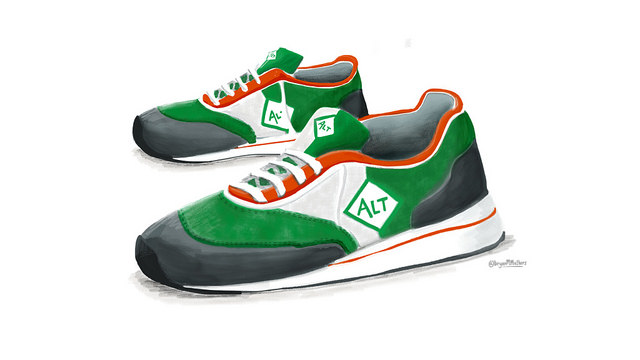
    Conferences are serious shoe business for some of us… and one of the real upsides of virtual events is that there is really no limit to the shoe tweeting you can do, combining all your shoes or trainers… after months of not having a real reason to dress up, I for one am looking forward to the opportunity to have a bit of fun and get back into conference dressing 🙂

    Pizza

    Having pizza the night before a big event has become something of a tradition in our staff team. I take the blame for that as it’s probably me suggesting it year after year… but it’s led us to have dinners in some very fun places over the years in different cities across the country!

    So this year, we are tuning in to ALT Summer Summit Radio Show
    at 7pm UK time on Tuesday, to join our very own online radio show in partnership with The Thursday Night Show, hosted by The Thursday Night Show and ALT Members.

    I have really fallen in love with online radio during the pandemic, so I am looking forward to hearing those sets and sharing some pizza with my colleagues, no doubt tweeting along a bit as well. The night before the storm that is the opening day of a big event… good company is key 🙂

    Not walking 10 miles a day

    One characteristic of my conference trips is that I end up walking many miles each day, depending on the venue. On a normal day, it’s up to 10 miles. One of the reasons why I always wear flat shoes to events.

    But this year it’s all virtual, so I have come up with a number of ways in which I am going to keep moving throughout next week: first up, standing up whenever I can, and I have a small standing desk for just that purpose. So I expect to gear up to the keynotes, panels and parallel sessions standing up at least.

    Also, being online for 10 hours a day is tiring, so mornings and evenings are going to need some walking. Fortunately most of the evening social events such as Monday’s LTHEchat or the ALT Quiz on Wednesday I will be able to participate in from my phone, so… a bit of fresh air and movement is definitely on the cards. Er… and my excuse to not inflict my singing voice on the good folk from Reclaim Hosting as we are lucky enough to have the KaraOERke master Jim Groom host the show on Wednesday night.

    Virtual hugs, but no chicken

    One of the things I miss most about running face to face events is meeting people (and hugs, too)!. It seems distant, like another era entirely, but I miss it anyway and so I am going to make an extra effort to connect with both old and new colleagues. I am going to drop by the Summit Cafe, take part in Social Bingo… I am going to tweet along #altc #altcSummit… I am going to post word into wordclouds… say hello to participants, speakers and sponsors… I am going to revel in my community.

    A community that has been through so much and kept going so long through this year… the year we all found out what a Learning Technology emergency looks like. An emergency which is now into months of duration and for which I can sense no kind of normal.

    But despite everything (and thank you, A-level results day, for adding another layer of complexity to the chaos) and maybe particularly because of everything, I am really excited. Tired, too, but also inspired that a few hundred participants from the UK, Ireland, Canada, America, Sweden, Germany, Australia, Mexico, Uruguay… and many other countries have signed up for this ride.

    I haven’t been to many virtual events that had real heart, but if OER20 is anything to go by, then this Summit should be a very special occasion indeed. It’s a milestone moment, championing everyone in Learning Technology, against a backdrop of bleakness and burnout.

    It may be that you only get a virtual hug this year… and the dancing will have to be in your own living room. But there won’t be cold conference chicken and coffee should be excellent.

    I am heartened by reading the blog posts and browsing through the programme that there is appetite for asking the hard questions, for sharing knowledge that will help meet the challenges of the next academic year… and that there is so much of our community at the heart of this Summit.

    If you want to say hello and exchange virtual hugs, ping me @marendeepwell.

    See you at the Summit #altc #altcSummit 🙂

  • Equitable home-working: things I wish I had known 3 years ago

    Equitable home-working: things I wish I had known 3 years ago

    In 2017 I spent nearly a year putting together a plan for transitioning ALT, the organisation I lead, from being office based (since 1993) to operating as a geographically distributed team. Executing the plan took another year… . Along the way to becoming not only a virtual team but also the employer of a (small) workforce that would be permanently home-based, I found out the answers to questions such as…

    • why do you need a physical address and how long does it take to sort out a PO Box that works (nearly a year…)?
    • what kind of policies do you need for GDPR for homeworkers?
    • how much does the equipment for homeworking cost?
    • what skills do homeworkers need?
    • which home-working policies actually work for permanent home-workers?
    • what’s the difference when everyone is home-based?
    • how long does the initial enthusiasm last?

    I had time to make a plan… rather than having to make the transition to homeworking with no notice as many CEOs are having to this year. Making a planned transition to becoming a distributed organisation meant that I had time to put in place a consultation process that involved the Board that governs ALT, all employees, HR professionals, lawyers, auditors and unions. The end result was a smooth transition with nearly all employees on board making the change successfully – and many of us now have a couple of years of working from home full-time under our belt.

    I now share that expertise with others who are on the same path, and continue to write a monthly blog series on leading virtual teams with Martin Hawksey. Talking about how to make a success of becoming a virtual team as made me reflect on what I wish I had known about three years ago… and I have come up with a few:

    A dedicated workspace is a must (for us).

    When I re-wrote our existing flexible working policy into a new home-working policy, one of the key questions we considered was the difference between being home-based and working remotely. We already had policies that covered things like working whilst travelling, occasional team days and so forth, so the question was whether to require employees to be permanently home-based rather than giving choice as to where they would be based, like a shared remote working space, a cafe or similar. We considered the nature of the work we do, the frequency with which we would require staff to be online working synchronously, implications of handling personal and financial information and what support we could offer to establish a functioning, long-term workspace at home. On balance, the conclusion we came to is to require employees to work from home on a permanent basis, with flexible working for when travel or similar is required.

    We developed a dedicated home-working risk assessment and annual review process, based on more traditional display-screen equipment guidance and our internal processes. And we offered equipment, a monthly home-working allowance and individual support for everyone.

    As part of the recruitment process, we set clear expectations about a dedicated work space at home and provide a self-assessment for prospective employees to reflect on the reality of working from home permanently with the support we can provide. In an ideal world, I’d love to be able to support individuals working in whatever environment suits them best and offer complete flexibility, but given that we don’t have the resources to do that being transparent and clear from the outset really helps set expectations and share responsibility for making working from home as equitable as we can.

    There are barriers (for everyone).

    Reading many of the headlines that are currently in the news about the difficulties of working from home resonates with me. Domestic abuse. Childcare. Shared homes. Limited space. Lack of equipment. Poor connectivity. Zoom backgrounds. Interruptions. Even if your domestic circumstances permit it in theory, working from home in the long term is different from doing it for a limited period or few days a week.

    I can readily understand and rejoice with those who are enjoying no more commuting. Having to travel regularly when in fact you could do your work as well or better from home is a huge burden on personal and family life as well as having a practical impact. The pandemic has shown that in many cases, work could continue from home and commuting could be drastically reduced. There are consequences for the individual, the organisation and not least all the economies that depend on regular commuters, and there are big upsides.

    If the last few years of leading a team of home-workers has taught me anything it is that there are barriers to home-working for everyone at some point. For example a house move, a change in personal circumstances (welcome to home-working whilst getting divorced!), illness, changes in physical or mental health and work-focused changes such as joining a distributed organisation, taking on a new role, parental leave and so forth.

    I really underestimated how much these factors could impact upon working from home over time and how quickly the ability to work from home becomes impacted on when you are not able to leave home and come to work physically. Supporting staff through a myriad of different situations has given me a new found respect for everyone who makes working from home work for them in the long term.

    Homeworking is (more) personal.

    Ever since I was 17 I had a job of one sort or another, many of which came with uniforms or (formal) dress codes. Getting ready for work was a thing. It still is even though like many I distinctly ‘dress down’ in comparison to what many other CEOs who work in a more traditional setting might wear.

    But regardless of what I am wearing, I still get ready for work, I still mentally switch from being ‘at home’ to ‘working’ as I climb up the stairs to my study. I need a bit of distance between home life and work even if working from home becomes ever more personal.

    Over time, I’ve become more comfortable with creating a version of my home, a part which I am comfortable to share with complete strangers – which many of my meetings are with. In return, I get glimpses of unfamiliar kitchens and bedrooms, toddlers and cats.

    It’s a tough situation when it’s hot or when you are having a bad day. It is a real challenge when things go south and you find yourself amidst a crisis. And we all have been having a lot of crisis recently.

    My vision of working from home had more do with freedom and flexibility and less with keeping safe in a pandemic – but regardless of circumstance, there are days when professionalism and detachment are needed as well as compassion and care. Others will probably have similar experiences to draw on, times when there was someone in distress on the other end of that Zoom call, times when they needed you to fight their corner or defend them or negotiate. When I deal with things that are tough I sometimes wish I wasn’t at home, all up close and personal with whatever disaster has struck.

    There are days when I feel vulnerable as a home-worker in ways that make me miss working in a dedicated work environment, a place I could leave at the end of the day to retreat home to relative safety. When I could leave work at work more easily.

    After three years, I love working from home. I feel privileged to be able to make it work. That said, the longer I work from home the more I realise equitable home-working is still quite a way off.