Author: Maren Deepwell

  • Non-fiction reading for March

    Non-fiction reading for March

    Newsletters have become more important to my regular reading, and alongside those of Audrey Watters’ Second Breakfast (on technology and fitness) and Helen Beetham’s Imperfect Offerings (on education, technology and AI), I find John Naughton’s Memex a very valuable source of inspiration and further reading.

    One of the links I followed from Memex was Cory Doctorow’s McLuhan lecture on enshittification. It makes for very interesting and insightful reading, analysing our relationship with tech platforms and how their evolving priorities impact on our lives.

    Other articles I read this month:

    One of the books I read recently is Lol Tolhurst’s Goth – A History. Lots of anecdotes and archive pictures from the late 70s and early 80s made this a treasure trove for fans of The Cure and their contemporaries. It reads more like a memoir than a history to me, but I found plenty of things I enjoyed.

    On my radar for this month

    Work’s been so busy at the moment that I have been mainlining fiction in recent weeks, and I am grateful indeed to have a great local library system here in Cardiff, so that I can borrow old Discworld novels to my hearts content.

    Non-fiction reading 2024

    Creativity and culture

    • Art Matters by Neil Gaiman and Chris Riddell
    • Big Magic by Elizabeth Gilbert

    Hybrid working and leadership

    • Flow: The Psychology of Optimal Experience by Mihaly Csikszentmihalyi
    • Rooms of Their Own (Where Great Writers Write), Improbable Libraries and Shedworking, all three by Alex Johnson
    • Working Identity: Unconventional Strategies for Reinventing Your Career by Herminia Ibarra

    Coaching and reflective inquiry

    • The Big Book of Beautiful Questions by Warren Berger
    • Coach the Person not the Problem by Marcia Reynolds

    Enjoyed this post? Subscribe to my free monthly newsletter:

    [newsletter_form type=”minimal”]
  • Reclaiming #Edtech4life in Open Education (at OER24)

    Reclaiming #Edtech4life in Open Education (at OER24)

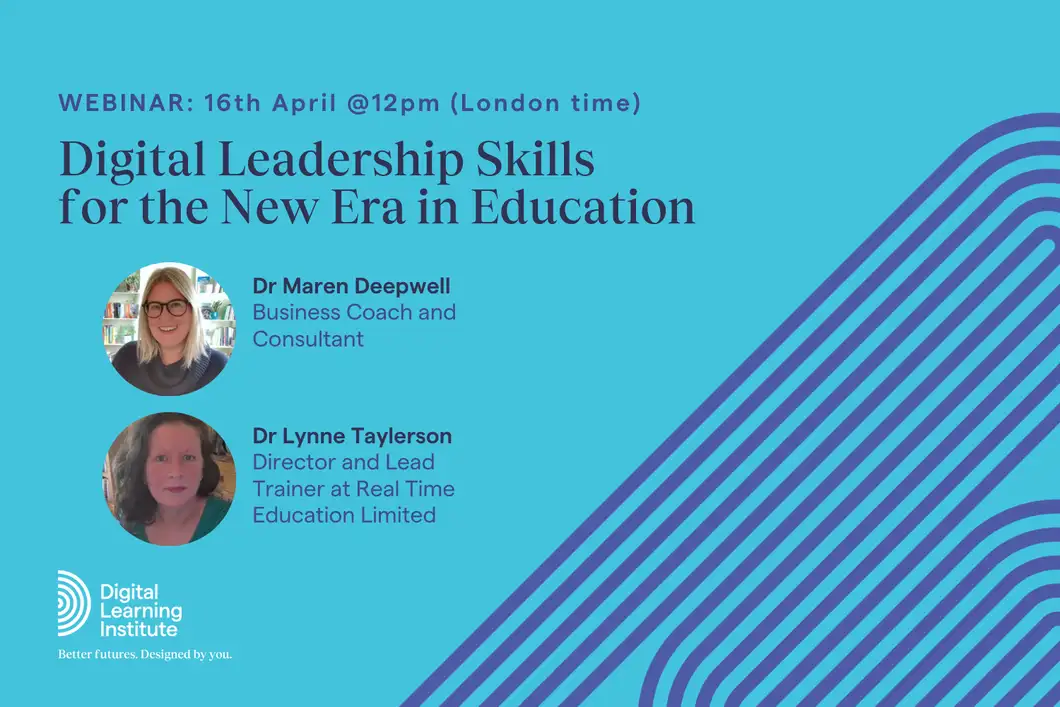
    In a month today, I’ll be at the OER Conference in Cork, and I am really looking forward to it! I am huge fan of this event, and encourage you to have a look at the programme and register if you haven’t yet done so and are planning to come.

    This year I am co-presenting two short sessions, starting with Reclaiming #Edtech4life in Open Education which is a joint venture with Meredith (Fierro) Huffman and Jim Groom. Here’s what we are planning to speak about:

    How do you make innovation work when the day job as an (edtech) educator gets ever busier? Where do you find not only solutions to practical problems but someone who speaks your language? When your day job is largely edtech focused and your focus is in practice, not policy or research, it can be challenging to find communities of practice that advocate for open – open in the sense of software and licensing, but also open in the sense that the community is welcoming, open to new ideas, and open to change. 

    Over the past 10 years our organisation has built a growing community of practice on the back of our day to day business activities. Yes, we are a small commercial company, but we bring a lot of expertise of working in Higher Ed to the table and we walk the walk of open education. 

    In this presentation we’ll share practical approaches inspired by communities like Equity Unbound and the ALT Open Education Special Interest Group  to connect with educators and edtechs from across the US and internationally sharing practice via community chats, micro courses, live streams and radio shows. We’ll share lessons learnt from running a hub for professional development every day of the year, a place in which open educators can engage in anything from trouble-shooting wordpress installations to tinkering with next generation tools. We offer a safe space to explore with peers, to play, to fail and make new connections along the way.   

    Resources and references

    Road to OER24

    Last week Meredith and I did a community stream all about our prep for the conference as well as sharing lots of the love we have for the event, memories from previous years and giving a bit of a preview of what we hope to speak about.

    You can watch the recording below, and join us on the road to OER24! See you there 🙂

    Enjoyed this post? Subscribe to my free monthly newsletter:

    [newsletter_form type=”minimal”]

  • A milestone moment on my coaching journey

    A milestone moment on my coaching journey

    This month I am celebrating a big milestone moment on my coaching journey. After two years of training and 100+ hours of coaching with over 20 clients I am set to formally complete the ACC credential of the International Coaching Federation (ICF).

    Thanks to Katie Linder’s Higher Ed Coach Training, I have now completed all mandatory training to become an ICF Associate Certified Coach. Completing the training and gaining the requisite experience in formal coaching hours means that my clients can be confident that my coaching adheres to the ethical and professional standards of the the International Coaching Federation. And, to help with clarity, the International Coaching Federation defines coaching as “partnering with clients in a thought-provoking and creative process that inspires them to maximise their personal and professional potential. The process of coaching often unlocks previously untapped sources of imagination, productivity and leadership”.

    Before I started the coaching training process I already had experience in mentoring and coaching on an informal basis, and I continue to be active in mentoring, for example as part of the 1MM programme for young adults, but the training process really helped me understand the professional dimension of coaching as a practice.

    Learning a new skill and developing in an emerging professional practice was a challenge. The training programme I chose to join is US-based, and thus a lot of my training happened in the evenings especially at weekends, and for months at a time, every Saturday or Sunday evening would be spent together with a cohort of inspiring new coaches with whom I built great relationships. Katie’s approach to coach training provided just the right mix of support, aspiration and stretch goals and I especially appreciated the focus on coaching in Higher Ed.

    Being new at something was a valuable experience for me. When you are practicing coaching, making mistakes and reflecting on your practice together you are in a vulnerable position and it took quite some time for me to develop confidence in my own judgement when it comes to coaching.

    What I love about coaching is that moment when it opens up a new insight or leads to a decision or an action. Sometimes it takes a long time to get to a moment like this, and being part of that journey is a privilege. No matter how long or short a coaching engagement, I always feel that the journey is rewarding.

    Initially I was focused on using coaching approaches within an executive role, and at the moment I use coaching in most of the work I do in different ways. It’s a valuable skills to have in all sorts of contexts, and it makes me better at being in a leadership role.

    I coach individuals and teams, within Higher Ed and outside of education, and I am on a journey to finding my niche, which in coaching terms means that you are trying to find what or who is the best fit for a coaching relationship, a match where it feels easy and productive and where you can make the biggest difference. Thus gaining experience coaching in different contexts and with a range of clients is especially valuable to me at this stage, as I am trying to learn about where my strengths as a coach lie.

    Coaching is a fantastic tool that I hope more people, particularly those of us who are juggling a lot whilst also achieving a lot, will make use of. That’s why I’ll continue to offer 10% of my coaching sessions on a pro bono basis.

    I am very grateful to all of my teachers, training colleagues, fellow coaches and most of all my clients for an amazing two years of developing as a coach. Thank you!

    Here’s to the next hundred hours of coaching together!

    Thank you

    Enjoyed this post? Subscribe to my free monthly newsletter:

    [newsletter_form type=”minimal”]
  • Digital Wellbeing and Hybrid Working

    Digital Wellbeing and Hybrid Working

    This month I am running a short course on Digital Wellbeing and Hybrid Working. Working with the wonderful team at the University of Oxford IT Learning Centre is a rewarding experience, and with the support of Emma Procter-Legg, their Digital Skills Service Manager, the whole process has been seamless from start to finish 🙂

    It’s been a welcome creative challenge to translate insights from leading virtual teams and hybrid working into the context of digital wellbeing, and in particular into a course format. Now that the course dates are coming closer, here is a bit of a preview of what the course is all about, and my hopes for what participants will get out of it.

    About the course

    Hybrid working offers a lot of advantages, enabling us to work more flexibly than before. When it comes to digital wellbeing however, hybrid working can pose challenges, too: for some, the increased use of digital technologies for communication and collaboration become oppressive, for others, physical and mental wellbeing suffer due to long hours spent staring at the screen. Over two sessions we will analyse and audit what works well and what you’d like to change about how you work and the impact this has on your digital, physical and mental wellbeing. Using practical tools and interactive activities the sessions will support you in reflecting on your current practice and identifying what actions to take next in your digital wellbeing journey.

    Objectives

    • Reflect on how your current habits are impacting on your digital wellbeing
    • Identify your hybrid working skills strengths and areas for development
    • Understand the long term impact of hybrid working on digital wellbeing
    • Develop a sense of how to foster digital wellbeing

    For more information, visit the course page.

    Digital wellbeing + hybrid working in a course format

    One of the questions I considered when designing the course is where the biggest challenges lie when it comes to digital wellbeing and hybrid working. Digital wellbeing is a big term that encompasses much, and our relationship with technology becomes even more nuanced when you add hybrid working into the mix.

    This is definitely not a ‘one size fits all’ teaching scenario, and an inquiry based approach seemed best suited to address the topic. Thus the course features a number of resources and tools to help participants analyse and reflect on what aspects of hybrid working most impact on their digital wellbeing and why.

    Given that this is only one of the courses the IT Learning Centre offers and that many of the other courses are skills focused, I decided to reference rather than repeat digital skills training and to offer points within the course at which digital skills strengths and areas for development could be identified. This, I hope, will provide a jumping off point for future professional development.

    In the meantime, the course also considers habits and behaviours, the broader context of one’s role and responsibilities as well as home-working context. Looking at each of these in the context of digital wellbeing will enable participants to gain a more holistic understanding of digital wellbeing.

    Silent Disco anyone?

    One of the things that is hard to convey in a webinar or a talk is the need to stop what you are doing and look at things with fresh eyes. It’s easy to say something like ‘take regular screen breaks’, but in my work I rarely meet anyone who actually takes breaks frequently enough and doesn’t end of staring at their phone, scrolling through social media or YouTube on their break. 

    The course design thus features an activity designed to disrupt the usual order of business of a course like this, an activity that invites participants to do something different: a silent disco one day and a bit of origami the next.

    There’re good reasons for why I chose these activities, and there are alternative options for everyone based in a shared office, but ultimately it’s a question of whether the participants are prepared to step outside their comfort zone for a bit, and away from their desk or screen if they can. If it works as I hope, it’ll offer participants a chance to step outside of the usual rhythm of their day and that may open up more room for change.

    I am really excited to run the course and very grateful for the opportunity to develop something new for students and staff who are interested in improving their digital wellbeing. Fingers crossed it’ll be a valuable experience for those involved 🙂

    Enjoyed this post? Subscribe to my free monthly newsletter:

    [newsletter_form type=”minimal”]

    Image credit: Photo by Sigmund on Unsplash

  • 4 months into re-inventing Mondays

    4 months into re-inventing Mondays

    Time has flown by. It feels like only a moment ago that I was blogging about being 3 months into my career transition… and here we are, having passed the four month mark. Looking back at my previous posts on this topic has inspired me to share some updates about how things are going, how much my efforts to re-invent Mondays are bearing fruit and how free-lance life is treating me. In case you missed them, here are quick links to previous posts on this topic:

    Are you ready? Let’s jump in.

    Settling into uncertainty

    Not knowing what the following day, week or month would hold filled me with uncertainty during the first month of free-lance life. Although I had felt well prepared for not knowing what the day would bring, after all, life as a CEO was never predictable, I really felt it in those first few weeks. I remember recording a podcast in those early weeks, talking about my empty calendar, my empty inbox, the sense that it was really just me, sitting at my desk, alone, making it up as I went along.

    Fast forward to now, and I am glad to say that I have begun to settle into uncertainty. The past few months have had many ups and downs and brought much time for reflection, and I realise now that I need the uncertainty just now. I don’t want to know what the next day or week will look like. The not knowing gives me space to experience and try out different ways of working and allows me to figure out what I enjoy and what I’d prefer not to do again.

    A folder of things I have said no to

    My mix of pro bono and paid work definitely keeps me busy, and I am probably overcommitting my time in the interest of trying out new things. I am mentoring at a local high school, offering pro bono coaching, writing articles and going to events alongside consultancy contracts, course design, leadership development and workshops.

    I am on the hunt for what brings me joy, and what sparks my curiosity, and along the way I have plenty of experiences that teach me where I don’t feel I can contribute. Some things just aren’t a good fit, regardless of how lucrative they may be. Hence I have set up a new folder called literally ‘Things I have said no to’.

    So far, it’s not very full, but the list is growing steadily, and I hope to use it in the long term to help learn what really matters to me, what fills my cup, and what I *could* have said yes to for money. It is a privileged position to be in for sure, but it is also a way of exercising responsibility. I can’t do everything, and I need to focus my energy where it matters.

    Habits that work for me, and some that don’t

    In some of the previous posts I have talked a lot about my work/life balance and that continues to be a big theme for me. Recently I worked on a course about digital wellbeing, and trying out the exercises I designed prompted me to focus on what habits I have that foster wellbeing and help manage my relationship with technology. Given how nuanced my relationship with technology is this is a complex topic, but one worth thinking about. Here are some insights into what I feel works well and also some things that maybe don’t:

    Over the past four months, I have become A LOT BETTER at taking breaks. Breaks to step away from the screen, breaks from wearing headphones, from notifications, from social media, from email and from technology all together. This has all sorts of beneficial consequences. Take today. I had a pretty intense meeting, which demanded a lot of my attention and focus. Coming at the end of an already pretty busy morning of focused work, I ended the call with a headache. I felt tired, irritated. I got up, went downstairs, and had a drink of water. Stress headaches like that used to be quite a usual feature of my working life. Old me would have had a quick break, and then got back to work, trying to focus enough to ignore how my head felt. And it probably would have worked, but at the end of the day I would have felt spent, exhausted. Instead of returning to my desk, I took half an hour to do something different. I did a small DIY chore that had been on my to do list for ages, taking all my attention to sand and paint a small hole in the wall. Even after ten minutes my headache was gone, and I felt much better. I did go back to work after a while, feeling refreshed and ready to concentrate again. For me, that’s a win.

    One area of my life where technology has become more prevalent is fitness. I usually find half an hour in the morning to exercise, stretch or meditate. I watch the video class on the screen in my office, where I have enough space to spread a yoga mat or follow the routines. My neighbours, I hope, aren’t watching my efforts at jumping jacks… . The fitness app I use works with my smart watch, and enables me to match exercise choices to my mood and energy levels. Some days I want to sweat, some days I just want to sit. For a variety of reasons, morning meetings have become rare for me just now, and this morning I stood in the sun in my office in tree pose, happy to soak in early spring sunshine and energy. Another win!

    A habit that doesn’t work so well for me all the time is my CEO brain. It’s super helpful for running my free-lance business (and soon, a properly registered new company… more of that next month), and it’s equally valuable for leadership training and coaching and lots of other things. It’s helpful when I can help out, take responsibility as needed, and it can make working with me easy. I am so used to not breaking things, that I have become a very steady pair of hands. Unfortunately those steady hands are attached to a mind and heart that all too easily assume responsibility and care, too. I catch myself solving a problem or thinking about a strategy that my clients haven’t asked for. They may be paying me to design a workshop or a course, meanwhile I have revamped their professional development offering in my head. Coaching is a good antidote for CEO brain, as it’s trained me to place trust in the other person, to trust that they know or can find their path, or the solution to the problems facing them. And of course they do. They are creative and capable and amazing at doing what they do. As my own free-lance venture grows, I hope that I can utilise my CEO brain in good ways, without taking on responsibility beyond what is appropriate.

    On my wish-list

    At the start of embarking on this adventure my wish-list ran something like: make enough money to pay the bills, find more joy and balance. Along the way I unexpectedly acquired a record player for my study (yay!) and a lot more fun people to work with than I had imagined in those first few quiet weeks. Over the past few months my list has expanded and now includes: a sit/stand desk, more art for my work-space and a wall I can write and scribble on.

    The thing that isn’t on my wish list anymore is more joy. That’s definitely happening and I am grateful every day for this adventure and all the amazing people I get to work with every week.

    Listen

    Podcast episodes about my fresh start:

    Listen to Leading Virtual Teams on: Apple PodcastsGoogle Podcasts and Spotify.

    Enjoyed this post? Get my free monthly newsletter directly to your inbox.

    [newsletter_form type=”minimal”]
  • River Taff Meditations… and the joy of working radio

    River Taff Meditations… and the joy of working radio

    At the start of the year, I shared my intention to find more joy in music and radio. Music is a great way to brighten up busy days, especially at this time of year. The days are long and grey, the sun is only slowly making a return to early mornings and evening after work. I don’t know about you, but I can use every bright spot I can find just now.

    Now, plenty of us listen to the radio or to music as we work, so I don’t think you’ll be surprised to hear that I, too, love a few tunes to cheer up my Monday mornings. In my case, I have a couple of different ways to enjoy music at my desk:

    There’s background beats and meditation music to start with. Whether I listen to Lou Reed’s Hudson River Meditations, the sounds of rain against a window or lo-fi background beats, a calm soundtrack is usually part of my daily routine. My dog Posey settles down in her basket next to my desk as soon as she hears the low music start to flow through my office. She knows that this is the signal that I am going to be lost in spreadsheets or working on a new course design for a few hours.

    Then there’s listening to albums and playlists. I usually prefer to listen to vinyl on my record player, which is about 4 feet from my seat. There’re some practical advantages to listen to records rather than digital music: I need to get up every so often to flip the record, which is good for my body. Also, the play time of the record is limited, rather than endless as it would be on a digital platform, prompting a break from work to decide what next to play. I might walk downstairs to get another record and make some tea. It’s a healthy disruption.

    I do also listen to digital music, usually playlists, and that can be an excellent way to find the right soundtrack for a particular time of the week. Fridays for example I often listen to beach/holiday themed playlists.

    Commercial radio is rarely my choice of listening, mostly because I find the disruptions of talking annoying, but I do love indie internet radio.

    Talking of radio, I am a big fan of working radio, playing and sharing tunes with colleagues, and I am very lucky that the folk I work with at Reclaim are into this, too. Cue a lot of afternoons of random tunes on our in-house radio station. To me, it’s a fabulous way to connect with folk across timezones. Especially if you are all distributed across the globe, radio can be a powerful way to connect.

    For this blog post there is a special podcast with tunes that you can listen to on Spotify. Alternatively, I have listed the songs in the show notes for the episode so that you can listen along on the platform of your choice. Enjoy!

    Enjoyed this post? Subscribe to my newsletter 🙂

    [newsletter_form type=”minimal”]