Author: Maren Deepwell

  • Looking forward to: Education after the algorithm

    Looking forward to: Education after the algorithm

    Next week, I will take part in Education after the algorithm: Co-designing critical and creative futures, 20-21 February 2025. It’s a rare treat to be able to attend an event in person, and I am looking forward to travelling to Dublin, Ireland.

    The event is a symposium for thinking otherwise about critical AI and post-AI pedagogies of higher education as part of the Erasmus+ Hacking Innovative Pedagogies: Digital Learning Rewilded (opens in a new tab) project.

    Critical Cadence: Reclaiming the Pace of Digital Productivity

    Since 2020 we have seen a great acceleration in the adoption of blended learning worldwide. In parallel to these changes in Higher Education, employers have witnessed an evolution of flexible and hybrid working practices. This shift in both learning and working requires us to think beyond current strategies for digital transformation, especially in the context of a growing student population with changing needs in a fast moving, competitive job market impacted by automation and AI. It’s time to reclaim the pace of digital productivity.

    Both in education and at work the frantic pace of productivity is determined by the speed of digital tools. Notifications, comments, emails and other content arrive ever more quickly and demand instant attention. In the advent of AI powered learning and working, the pace of digital content creation is ever increasing.

    This kind of ‘digital noise’ can easily lead to digital overwhelm and as a result our senses suffer. From Zoom and listener fatigue to lack of movement, our bodies, our embodied selves and our senses are feeling the impact of our increased reliance on digital productivity.

    This session will explore strategies for changing the cadence of our digital lives to be a little more… human. To proceed at a pace of thinking, of working and learning, that is more conducive to reflection and to criticality. In essence, to find one’s own ‘Critical Cadence’.

    My talk as a walk

    I’ve created an audio resource to listen to whilst moving through a landscape, by for example walking. In this recording I expand on strategies and practical ideas to use movement in contemplative pedagogies and outdoor learning, and to notice how the pace of thinking and doing changes in motion.

    I’d love to hear from you, so get in touch and explore more of my work on walking.

  • From inauguration day to origami.

    From inauguration day to origami.

    This week a cohort of 16 leaders and managers wraps up the current run of my Healthy Hybrid Habits course. As this is the second time I have run this course in this format, I’d like to take this opportunity to reflect on and celebrate what’s been achieved.

    Whilst I regularly facilitate similar workshops or courses on similar topics for institutional cohorts, I designed this course in a coaching format, offering weekly group coaching sessions alongside the asynchronous content. There’s a mix of audio recordings to listen to, resources and tools to try out and further reading and I sent out a course letter by post, too.

    The informal design of the course means that individuals can engage in a dialogue and a 1-to-1 coaching session with me, and because of that I cap the cohort size at a maximum of 20. Over the course of the four weeks, we get to know each other a little and share perspectives on leading organisations and teams in different sectors and different size organisations.

    Timing is everything

    Running a course starting 20 January 2025 had its drawbacks. When I set the dates, back in autumn 2024, I didn’t yet know what the start of the new year would bring with it in terms of global events. However, as I had a full cohort booked onto the course I didn’t want to change the start date at short notice, and thus the start of the course coincided with political and social events that… well, that made it even more urgent (and yet even more difficult) to prioritise a balanced relationship with work, technology and being online.

    Digital Productivity Double Speak

    One of the things I have noticed in the past couple of years is that very similar language is used to describe things like digital wellbeing and digital productivity even when referring to the opposite. I have blogged about this before, but it’s worth revisiting:

    1. In the wider context of digital health it can mean using technology, applications, websites or online services to help us manage our health and wellbeing.
    2. In the workplace, and specifically in an increasingly hybrid workplace, we often use the term digital wellbeing or digital wellness to describe how the use of digital technologies impacts our physical, mental or emotional health and wellbeing, for example screen fatigue or stress caused by digital overwhelm and constantly being connected.

    My work, and the course, is very much about the second definition and not the first. But much of the discourse around being “healthy” and “online” is about the first: Use an app to be more mindful, track your sleep, measure how stressed you are and so on. Of course, the skills required to use technology to manage health and wellbeing are important, but they are not in and of themselves sufficient.

    Many of the activity in the course are designed to encourage you to step away from digital technology and focus on developing awareness, of noticing and focusing on your embodied self, people and relationships (even if these are mediated by technology).

    The AI “solution” to digital overwhelm

    I conceived of much of the course content before all major work platforms and tools came with AI functionality baked in, but it doesn’t surprise me that one of the solutions to too much information and digital overwhelm is… summaries. Summaries of emails, summaries of reports, of work meetings, presentations and brainstorming sessions. Summaries of the books you don’t have time to read during lunch or on your commute because you are too busy staring at a screen.

    It’ll be interesting to see how the design of the course changes over time, if it does. I am thinking about how to best update its content where needed, but also to retain its core message of how deepening our awareness of and skills for managing people and projects can help create playful, positive interactions for a more meaningful working life.

    Congratulations are in order!

    I am really grateful for the inspiring conversations and playful interactions we shared over the past month, and congratulations are certainly in order. It takes a lot of energy to step away from a busy workload and focus on what a better work/life balance, a more balanced relationship with technology and digital productivity could look like.

    If you’d like to join us for the next run later this year, get in touch or join the waitlist.

  • (Blogging) Challenge accepted.

    (Blogging) Challenge accepted.

    I’m really enjoying being part of the recently launched Blogging Community of Practice, AKA Bloggers Anonymous. As well as working with the Reclaim team behind the scenes, I love being part of a group of bloggers, and it’s been fun to see more posts appearing in my timeline.

    This one from Brian Lamb caught my eye. It reminded me of just how HARD it can be to keep blogging when you are in a senior leadership role, representing an institution (more on that soon)… and at the same time it introduced me to this little blogging challenge: you answer the questions below, and then tag/ping others to take up the mantle.

    I am pinging Debbie and Pilot to invite them to take part, and here are my answers:

    Why did you start blogging in the first place?

    I believe that blogging is a very rewarding habit to cultivate and given that I have blogged for two decades, it must be working for me. And it does. I get a lot out of the process, other than ‘having a blog’. Here is why I blog:

    • I’m excited about something I want to share
    • I need some space to think through or reflect on something
    • I want to document something for future use
    • I want to keep a record of things I have done
    • I want to journal (in a public way)
    • I want to have things to put into my newsletter
    • I want to share an image I love and talk about it
    • I want to celebrate something
    • I want to contribute to a conversation or discourse
    • I want to show my solidarity
    • I want to amplify the voices of others
    • I want to do something helpful

    All of these motivations ultimately mean that blogging makes me feel good. I write plenty of posts that no one reads and no one comments on, and it doesn’t make a difference to my process. Of course I want people to read what I blog about, but I don’t focus on that as I blog and its not my main motivation.

    I would, and often do, blog, where no one can read my thoughts.

    What platform are you using to manage your blog and why do you use it?

    I recently started to review my tech stack, and here is what I wrote about my blog:

    My primary domain, https://marendeepwell.com/ , is where my WordPress blog lives, and it’s been safely and happily looked after by Reclaim Hosting for over a decade. I am a big fan of this independent hosting company for many reasons, including their excellent service, personable support and fair pricing.

    I have been a Shared Hosting client for a long time and was also converted to Reclaim Cloud as my needs grew. I also have several domains which I manage here. My blog and domain on Reclaim include my newsletter and mapping of my domain to my Google Workspace email account.

    Have you blogged on other platforms before?

    Yes! Blogger (or its predecessors) was my first one, and I still have several of them. I also “blog” privately in docs and sites, and I have tried out Ghost, Substack and so on.

    How do you write your posts?

    Practice, practice, practice. I keep blogging and that helps the words flow. Sometimes I feel super inspired, other times its more about documenting a piece of work, spreading the word about an event or sharing a piece of work.

    Some days I spend a lot of time thinking about my post, other times it’s more quick. It’s much more about the process, not the output for me.

    When do you feel most inspired to write?

    Early in the morning.

    Do you normally publish immediately after writing, or do you let it simmer a bit?

    Usually I press publish as soon as I am ready (and then I proof read it again).

    What’s your favorite post on your blog?

    Last year, I had three: Post that I enjoyed writing the most: The joy of not working. Post with my favourite cover image: Christmas Jumper Day. A story. Post that made me smile: … we did it again.

    Any future plans for the blog?

    Keep blogging #4life (and… fix/figure out newsletter properly).

  • Blogging #4life, now with added community.

    Blogging #4life, now with added community.

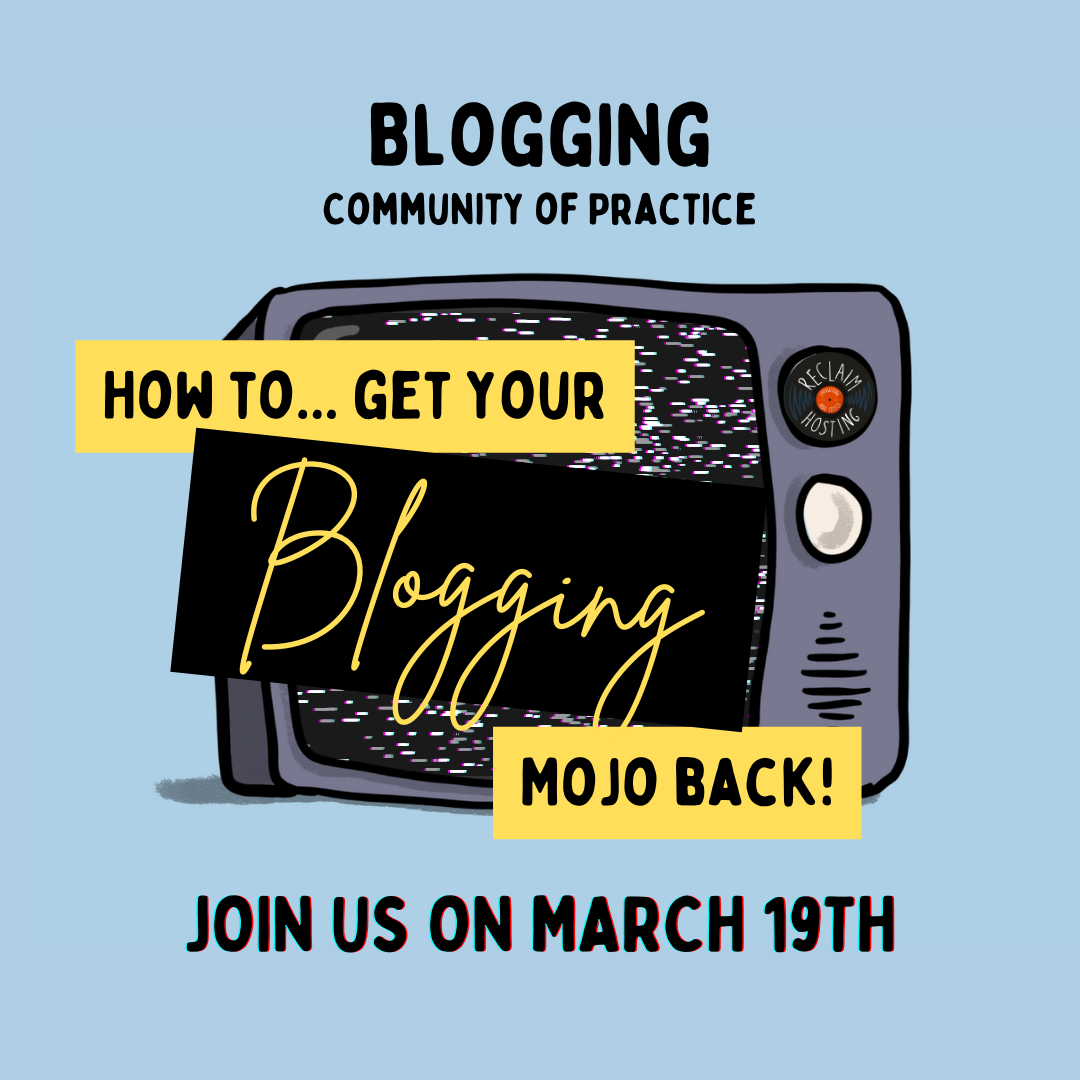
    The game is heating up in the blogosphere… so I better jump in and join the fun. Commenting (of course), and blogging. What’s happening is… a new community of practice all about blogging. Blogging in Higher Ed. Blogging for Educators. Blogging for life (#4life).

    Time to get remixing your badge and get ready to follow Jim Groom’s call to action:

    …it’s high time to let your blog flag fly. Dust off that archived site, or better yet start your very first one, and join Bloggers Anonymous to help kick that addiction to corporate social media. We’re hear to help, think of us as your blog sponsors in the original sense of that word: ongoing support and encouragement through un-monetized comments.

    Over on the Reclaim Blog you can find more info about what’s in store and how to get involved:

    Join in

    We have a dedicated channel set up in our Discord Community Space. This is a friendly social space where everyone is welcome and which is free to join. There’re also live events coming up, so keep an eye on our events calendar in the coming weeks.

    What to expect

    Let us know if you have any ideas for community activities, questions you’d like us to cover or support you’d find helpful. We are planning to:

    • share blogging tips and inspiration via the channel;
    • collate open resources and contribute our own;
    • organise monthly live sessions with guest presenters;
    • encourage everyone to share blog posts, what works for their blogging practice or what is stopping them from blogging.

    Thanks to the ever awesome Bryan Mathers and his fabulous remixer machine, there’s plenty of scope to join in and have a bit of fun, all the while preparing for that next post.

    And if you are looking for inspiration to get your blogging mojo back, have a look at a post I recently shared with handy tips for blogging that I like to use to keep my practice going.

  • Reviewing my tech stack III: Openness in Practice

    Reviewing my tech stack III: Openness in Practice

    As promised, here’s an update on how things are going when it comes to using technology. If you have missed the first two posts, have a look at me taking stock of the tools and platforms I currently use:

    One of the things I have taken as read so far is all things open, and what values inform my considerations when it comes to technology. When I think about work, it’s important to me that what matters to me shapes what I do and how I work.

    What matters to me?

    I love running my own business that reflects my values and generates a living, too. Having worked in the not for profit sector and with small businesses all my life, I have learnt how to harness the power of one to make a difference. That said, it’s hard to articulate sometimes how that works in practice, specifically in my work context, how do I put my values into action. Here are some examples that came to mind:

    • my books and publications are open access and free to all, including this blog, where I have been publishing my thinking for nearly 20 years;
    • professional, ethical practice is key to my coaching and my courses. That is why I am an ACC-level certified coach and a member of the International Coaching Federation and I continue to develop my practice and critical thinking around coaching and leadership;
    • I offer 10% pro bono places for both my 1:1 coaching and courses, enabling folk to get the coaching they need or try it for the first time, absolutely free;
    • My work is hybrid by design with digital wellbeing in mind, and I offer blended, hybrid and full online coaching and courses.

    So, my technology choices should ideally align with my values around openness, ethical practice, good value for money, digital wellbeing and meticulous informality, which sums up my approach as a whole.

    Video Conferencing

    Now, my current tool, Zoom, doesn’t align well with most of these principles, but it does have the upside of being a familiar platform for many. That in itself helps me during coaches and courses as it enables my clients to focus on the work we are doing rather than the platform that facilitates it. That is valuable.

    Current platform: Zoom

    Cost: £15.59 per month
    Pro: Personal meeting room, easy scheduling, familiar to most, no log-in required, reliable recordings
    Cons: AI integration is on the increase, concerns about business model/data privacy, expensive

    My current contenders for alternative tools are: Google Meet (easy for me, but not always a good option for folk because of log-in issues), and Whereby.

    Alternative option 1: Google Meet

    I’m very familiar with Google Meet and I have used it for years in previous roles.

    Cost: included in my Google Workspace subscription and includes a free option, too
    Pro: Integration with my calendar, easy scheduling, very robust, reliable recordings
    Cons: AI integration is on the increase (but I have more control over it as a Workspace admin), sign in from other orgs/or no Google account can be glitchy

    My sense is that trying this option with individual clients and personal meetings would be low risk, and could help establish whether this could scale up for me.

    Alternative option 2: Whereby

    I’m also quite familiar with Whereby and I have used it for years in across various organisations.

    Cost: $8.99/month or $89.99 annually for the professional option
    Pro: Personal meeting room, custom branding/background, no log-in required, reliable recordings
    Cons: none that I can find as yet.

    This feels like a really good alternative to Zoom for my purposes, and has in practice proven to be very reliable and easy to access for all. I also like the fact that this is a smaller platform dedicated to this purpose, rather than a complete workspace solution.

    There are of course other options I considered, including Streamyard, but for my specific context these two options feel like the best fit.


    Image: Photo by Carl Heyerdahl on Unsplash

  • Reviewing my tech stack II: Socials

    Reviewing my tech stack II: Socials

    I recently embarked on reviewing my tech stack (read the first part) and as soon as I published the post, I realised the socials weren’t really covered and yet form a big part of my communications tech stack. So in this post, part II if you like, I’m going to focus on my social tech stack.

    Now, I won’t be mentioning Twitter as I haven’t been active on there for a few years now, ever since I deleted my account. That won’t change. Enough said.

    Professional social channels – Share, like, follow

    I have some cross-over between personal and professional channels, but I try to avoid it wherever possible. It helps me stay offline more and helps folk reach me for work stuff via channels I am responsive to.

    BlueSky

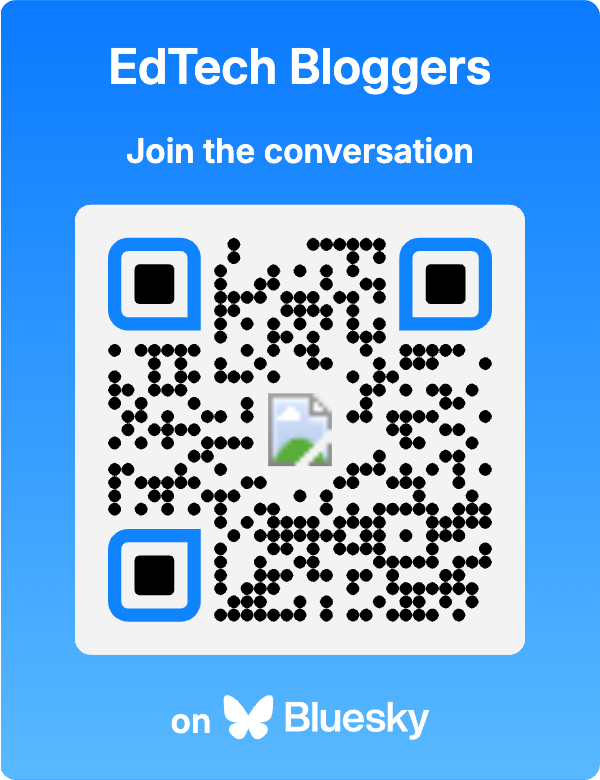
    At the moment, BlueSky is my favourite social network, and probably where I interact the most with folk. Thanks to a lot of stirling work from folk in the education and edtech spaces creating lots of starter packs, I found finding folk I want to follow (apologies for the unintentional tongue twister) really easy. I love the vibe and the interactions, and I post a lot of updates there. Account: @marendeepwell.bsky.social

    Instagram

    A lot of my work ends up being quite visual, and I love sharing it via images. Instagram is a platform I started using more over the past few years, and I find it really helpful to connect with coaching folk. Account: @marendeepwell

    I should mention that I actively NEVER browse Instagram, and don’t use most of its features. I don’t produce video for it, and I don’t use or watch reels. My mute button is always on, so for me this is a quiet, static platform. I am not sure if it’s the luddite in me or simply my age, but I don’t crave more video in my life, hence Instagram stays mostly images and I don’t use TikTok. I did try it, and deleted it again after a day, which reflect my personal preferences as to how I like to engage with my online world.

    LinkedIn

    I have a love/hate relationship with LinkedIn, and its user experience baffles me. I really dislike its automated emails, have switched off pretty much all notifications, and struggle with the general tone of much of the discourse, but it IS extremely useful to me and the largest network I have on any social network nowadays. Account

    Mastodon

    I use Mastodon mainly for keeping in touch and connecting with edtech/open ed folk, and I really appreciate the federated space it offers. Having learnt at least a little about what it takes to run these servers and keep them alive, I especially appreciate Mastodon, but the downside is that its activity level (at least for me, and in the way I can engage) is quite limited. Account: @marendeepwell

    Threads

    Threads is probably my least active federated social media app, and I don’t particularly enjoy using it. Many folk I interact with on Instagram don’t seem active on here. No strong feelings, but I don’t use it much. Next.

    Podcast and Newsletter – Share, like, subscribe

    In part I, I mentioned the podcast and newsletter already, but I wanted to revisit them here as a way to keep in touch and connect with folk.

    Personal social channels – Family & friends

    These are really only used for people I actually know in person.

    Messaging Apps: Threema, WhatsApp, DMs

    Confession time: I am not a big fan of group DM chats. I join none unless I really need to and I am currently in less than 3. Unlike many people I don’t live in WhatsApp. I delete messages and conversations regularly and I switch off whatever I can in terms of notifications, live status and so forth.

    Also, I text in full sentences. With punctuation. And I am an old fashioned emoji user 🙂 . I don’t type with more than 2 fingers on my phone, mostly just one 😉

    I have a few friends with whom I use specific apps/methods of communication that keep us in regular contact and I deeply value. But mostly it’s just sending letters by post.

    Facebook

    Would prefer to leave. But can’t easily do so. But considering it. Sporadic usage. Sometimes useful.

    Instagram

    My personal account is private and very small (around 50 folk). It’s where I share pictures of my dog Posey, pizza and my day to day home life. It’s the most unedited of my social media accounts. For better or for worse.


    Image: Photo by Carl Heyerdahl on Unsplash