Author: Maren Deepwell

  • My #FemEdTech Years and what’s next

    My #FemEdTech Years and what’s next

    It’s International Women’s Day this week, and this has coincided with the closure of the original femedtech account on Twitter. Looking back at my engagement over a number of years made me pause and reflect on how I can now continue championing equality and how this shows up in my work.

    Leadership

    One of the things I gained during my years as a CEO was a bigger perspective, and a focus on the systems and structures that shape the way we work as individuals and organisations. I focused on promoting equity and equality not just in my own organisation, but in the sector I worked in, and used my voice to amplify issues such as the gender pay gap, lack of career progression opportunities and awareness of diversity, inclusion and equity in a wider context.

    All those things continue to inform my work, and if anything I am now more able to be part of grass roots activities that focus on positive change as social and political shifts increase pressure.

    I have hope, I have my voice and I continue to work away in my sphere of influence to affect the change I want to see. Although the world in general, and my small world specifically, have moved on a lot since the beginning of the #femedtech activities, the values that are at the heart of the project, for me at least, remain true. To me, it continues to be a powerful reminder, equality matters for everyone.

    Ethical and open practice

    One of the things I became very interested in over the past fifteen years is how to have an ethical, open approach to practice in leadership roles. I used this topic as a focus when I gained my Senior CMALT accreditation, and I continue to focus on this in my professional development as a coach.

    Working with leaders from across different sectors has helped me realise how much we all have in common when it comes to the struggles of being an open leader and as a coach I help my clients see those shifts in perspective that enable them to move forward with their work in an authentic and meaningful way.

    Pro bono work and volunteering

    Even though I now run my own micro business instead of having a more dependable “day job” I continue to do work on a pro bono basis, offering for example free coaching packages and places on my courses, and I continue to volunteer as for example a mentor for school students and emerging leaders at the start of their career.

    To celebrate International Women’s Day on March 8th, and I am busy writing letters to celebrate and thank all the inspirational women in my life! 

    This year’s theme is Accelerate Action, and I am offering three pro bono coaching packages to contribute something to this effort. So if you are looking to progress an action, take a decision or make change happen, then get in touch if you’d like to work with me. 

    As I am reading this I am wondering if such comparatively small actions can make a difference. I worry about whether I do enough and how I could do more. No, offering some free coaching to charity leaders or Higher Ed researchers won’t change the world, but it does make a difference. All of us do, in innumerable small ways. There’s hope in these small acts and for me that is the legacy of my femedtech years. Hope is a practice. And I am doing it.

    Looking back at my #FemEdTech Years

    For nearly a decade the #femedtech community has been a big part of my professional world. For many years I was one of the volunteers who curated the social media feed for a month a year, and helped with some of the work behind the scenes. It takes a lot of work to sustain a community and I deeply appreciate having had the opportunity to be an active part of this particular network, bringing together so many of my interests and value.

    Posts from my stints as a volunteer curator

    • 2023: Handing over lead curation
    • 2022 care and curation
    • 2021 still in pandemic times
    • 2020 during the early days of lockdown
    • 2019 my second time as a guest curator
    • 2018 when I first volunteered

    The connections I made during those years sustained much of the momentum during years of global crisis in 2020 and 2021, and all that has happened since then. In many ways this community was a frontrunner of the distributed, federated conversations we are now trying to sustain across networks. It showed just how much care it takes to weave together a (literal and figurative) quilt, to bring together voices that speak for equity and social justice and to amplify those values across the open web.

    I’d encourage to to explore (or revisit) what’s been published on the FemEdTech Open Space and be inspired by the thoughts shared there: reflecting on collective voices, claiming open education as a feminist space, a pedagogy of care and… the moment at which many of us were able to meet the FemEdTech Quilt in person for the first time. Head over to Flickr to see the photos from the event and read more about this wonderful project in the blog post.

    Thank you to each and every one who took part in all the inspiring and empowering #femedtech activities since 2016. It’s been a privilege to be part of the community.

    Listen to the podcast episode

  • Open Education Week 2025

    Open Education Week 2025

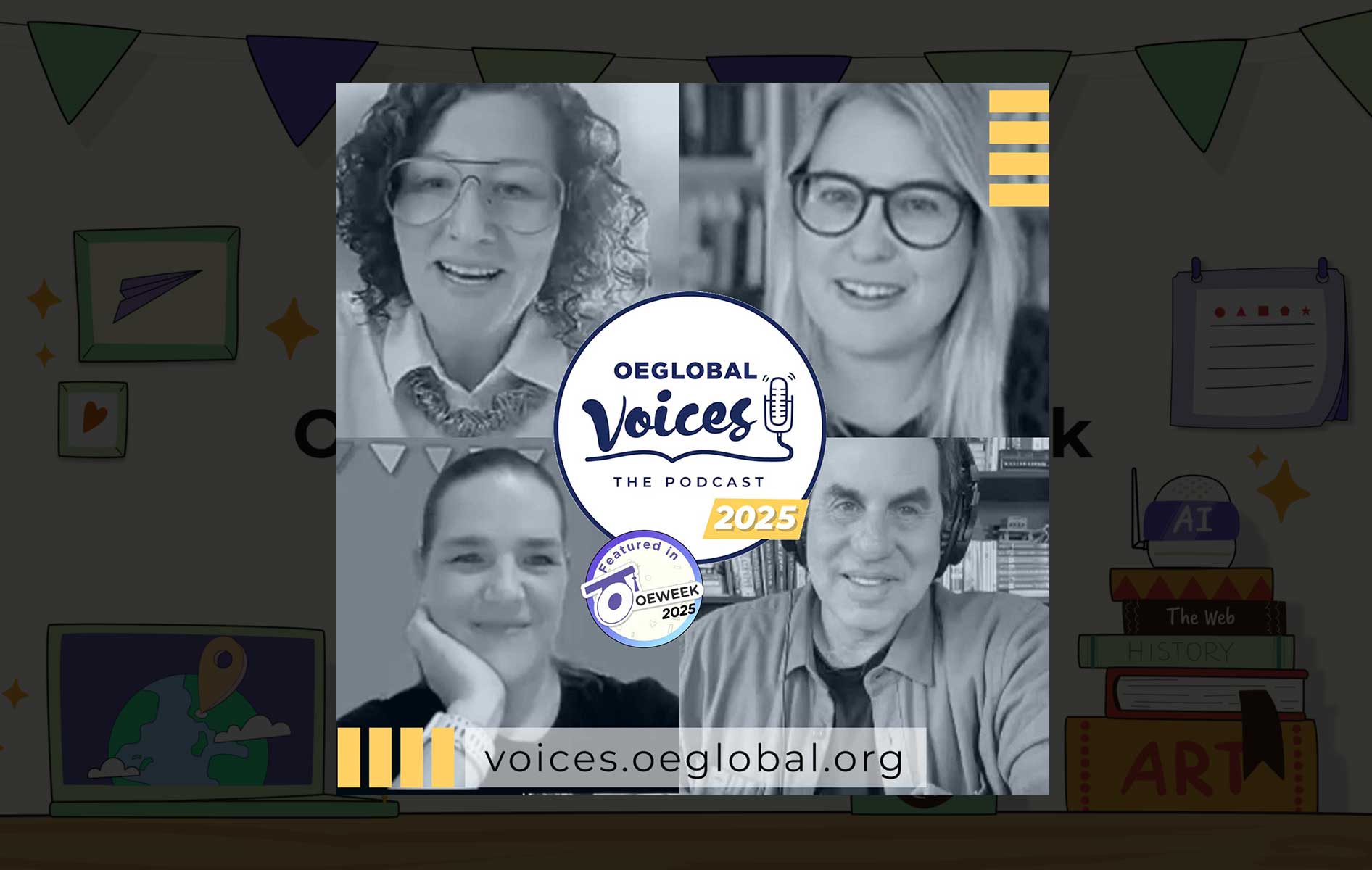
    I’m excited to be taking part in Open Education Week, a worldwide event celebrating all things open in education. I am involved in a week-long celebration of blogging on the open web hosted by Reclaim Hosting; and I am also joining Amanda Coolidge, Executive Director of BCcampus and Marcela Morales, Executive Director OEGlobal, on OE Global Voices on March 4th!

    Here are all the details, so join in:

    In the OEG Voices Podcast Studio with Amanda Coolidge, Marcela Morales, and Maren Deepwell

    4 March

    Along with our  OE Week Live webcasts, during Open Education Week we also run “live” recording sessions for new episodes of the OE Global Voices podcast. You can sign up to be there in the “studio” as we record, almost like hearing it first before it hits the web site as a published podcast.

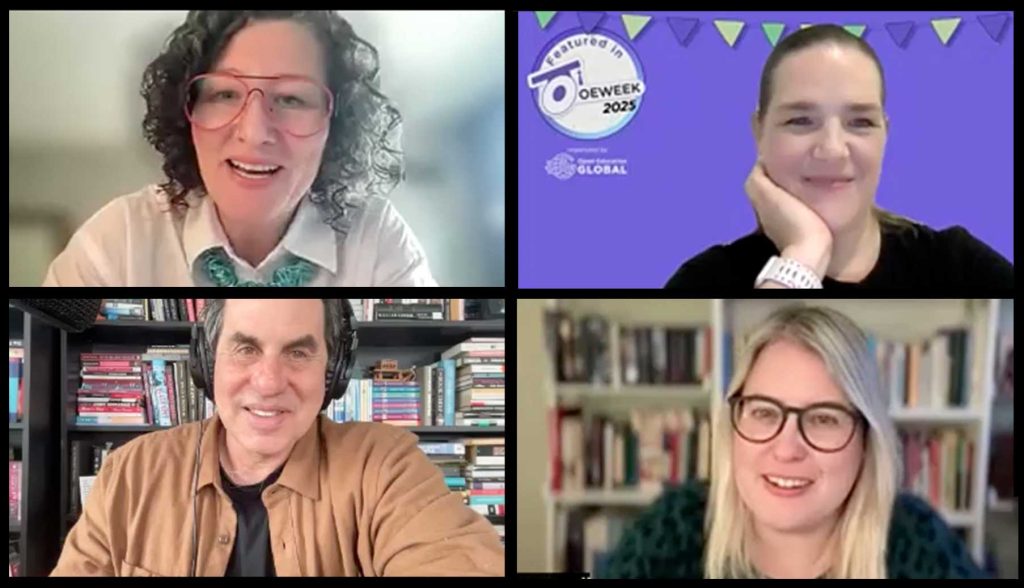
    Our  podcast studio is open for special conversation Tuesday March 4, 2025 when Alan Levine hosts an  open conversation with Amanda Coolidge, Executive Director of BCcampus, Marcela Morales, Executive Director OEGlobal, and  Maren Deepwell, Leadership Coach/Hybrid Working Consultant and former Executive Director of ALT-C.

    All three bring their experience in leading open education organizations and working online, and will reflect on how now in 2025 more than even before, the important of finding small things of joy in our practice. This topic emerged in an exchange following Alan’s visit to Maren’s podcast. Amanda had listened and sent appreciation for the episode in a message also saying something profound:

    It truly feels like this “rediscovering the joy in small things in our practice” is more important than ever in our contexts (globally and nationally) 

    The podcast will be recorded in Zoom (cameras never required) and we have seats in the studio is available for those interested who register to secure a seat. Hear the voices, ideas and perspectives of these three leaders. We aim for a lively and open conversation. You can be part of the action, or just to listen in by signing up to be in the studio. You can also wait until the podcast is published later at https://voices.oeglobal.org/.

    Blogging on the Open Web: Open Education Week

    March 3 – March

    During Open Education Week we are:

    • share blogging tips and inspiration via the Discord channel;
    • collate open resources and contribute our own;
    • encourage everyone to share blog posts, what works for their blogging practice or what is stopping them from blogging.

    Celebrating International Women’s Day!

    To round off the week, it’s International Women’s Day on March 8th, and I am busy writing letters to celebrate and thank all the inspirational women in my life! 

    This year’s theme is Accelerate Action, and I am offering three pro bono coaching packages to contribute something to this effort. So if you are looking to progress an action, take a decision or make change happen, then get in touch if you’d like to work with me. 

  • Permission to be unproductive

    Permission to be unproductive

    Today is a slow day. I am feeling uninspired and un-motived. My energy levels are low. In my years as a CEO I had plenty of days like that, but very rarely gave myself permission to be unproductive. CEOs, and people in positions of power in general, like to think of themselves as too busy to pause, as indispensable. Being busy is a badge of honour for others to take note of. And so, as a young leader, finding my own path, I followed that example, pushing through days like this and becoming very, very good at coping and at looking capable no matter what the day, week or year brought.

    It’s a great skill to have, and one that I rely on often, but no longer all the time. Because if there’s anything I’ve learnt since I took on that first senior leadership position in 2012, it’s that being too good at coping doesn’t benefit anyone. It doesn’t benefit the organisation as in the long term it becomes unsustainable, it doesn’t benefit those around you because they don’t learn the skills or gain the confidence to succeed without you and most importantly it doesn’t serve you.

    Giving yourself permission to be unproductive, in whatever shape or form, is a skill I am actively seeking to acquire. Since starting my own business and decreasing my level of responsibility from generating enough turnover to pay salaries for 10 to having to generate only enough income to meet my own aims, I have worked very hard at giving myself permission to work less. To take days off. To step away from the screen, from emails, calls and the pressure to be successful, and to be seen to succeed.

    I became a CEO at 32, and I worked so hard at being taken seriously, to establish myself as an effective leader in my field, that I never even considered working less. I lived and breathed and loved my work. My physical, mental and social health did not love the choices I was making and as the years went on, my body made me listen.

    This week I am coaching a staff cohort at the University of Oxford in healthy habits for hybrid working, and one of the topics we spent most time on is how to manage feelings of guilt, of anxiety and of worry about being perceived as hard-working, and as productive, especially on days of working from home. Even when there was an explicit or general understanding that breaks were encouraged and taking exercise or stepping away was seen as desirable, the pressure to perform and meet (one’s own or others’) expectations remained strong. So the question we explored was: “What would it take to make it OK?” How can we build the habits needed to make high performing hybrid work sustainable?

    I thought that the answer lies in the job I have, which is partly why I started my own venture. What I learnt since is that the kind of practices I now adopt to find balance would have been perfectly possible in my CEO role. I just couldn’t see it, and I needed to step outside of the confines of the role for that shift of perspective to happen.

    Sure, there are days when things are truly urgent, and when you do have to show up, push through and get the job done. But even in these times of permanent crisis, this is not the case each and every day. More often than not, nothing at all would happen if we didn’t show up for a meeting or delayed a deadline by a day or a week or even a month. There is always more work to be done, new deadlines to meet and more demands on our time than we can meet.

    I don’t want to seek the solution to this in increasing my productivity. I am productive enough. Instead I want to find reward and joy in not being productive on days like this, when my body tells me to take it easy.

    Choosing to do less

    At times throughout my career I have had periods, at times long ones, where being as productive as I wanted to be simply wasn’t possible. Whether due to ill health, care responsibilities or simply life happening, I’ve been through months and years of having to rethink what’s achievable. It was the hardest thing for me to change my thinking from looking forward to new challenges and delighting in being able to solve complex problems and to throw all my energy and ingenuity into the fray; to suddenly having to manage my energy very carefully. My reserves were low, and I had to learn the art of appreciating the “good enough” and of thinking “that will do” instead of following my inner perfectionist.

    Being in a situation when choice is taken away is always hard. What I am writing about here isn’t really about what to do in those kinds of contexts, when ill health or circumstances or crisis strike. In my experience there is some overlap however, between trying to make a choice to do less and having to do less out of necessity, and I like to think that I would have coped better in times of having less choice if I had been better at giving myself permission to do less all together. Choosing to do less, to be less frantically busy all the time, is both a privilege and a radical choice.

    Is this the time?

    It feels a bit precious to be writing about rest in times like these, when so many truly urgent issues are arising. Rest is radical, as Lou Mycroft so eloquently put, and this feels especially true in the face of global political and social changes, and the funding cuts in the not for profit and education sectors I work in. And yet it feels relevant, and important, to learn how to differentiate between the demands of a busy work life and the work that really needs doing. Becoming ever more digitally productive in measurable ways is not the answer. Giving yourself permission to be unproductive feels important and I know the difference between being selfish and practising self care.

    The indigo girl’s sing that “darkness has a hunger that’s insatiable” and those words feel particularly relevant at this time in history. The harder the Broligarchy works to enforce digital measures of productivity and oversight as the path to (their) success, the more we need to keep in mind that being productive ≠ profits.

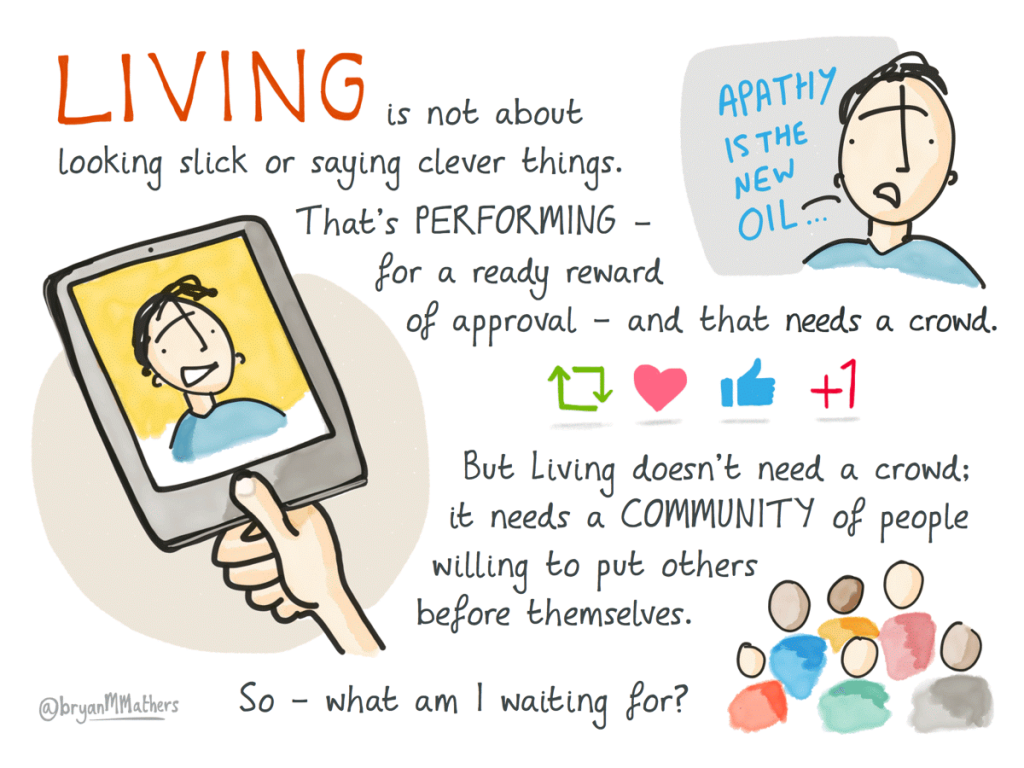
    I was inspired by a recent post Kin Lane published, which reflects on what happens when we see people as resources. It’s rare to have someone with that wealth of leadership experience utilise their story-telling skills to help us think through the pitfalls of digital productivity, and I am grateful indeed for Kin’s voice. Likewise, I’ve found much inspiration in the Permission Slip with which Bryan gave himself, and all of us, permission to create something, regardless of what others think. I was lucky enough to take part in one of Bryan’s zine making workshops recently, and found it (surprisingly) powerful. Although I draw and create much, Bryan’s way of guiding us into the process helped me pen a small adventure (the humble pencil “HB” in an epic struggle against the AI “Intelli-Pen”) in a different voice. A voice I rather liked.

    The concept of the permission slip, a powerful tool for all sorts of contexts, I first came across in Elizabeth Gilbert’s ode to creativity in her book Big Magic, and it’s been inspiring my recent work on walking as a reflective practice, and finding your own “critical cadence“.

    Strategies that work for me

    This post isn’t meant to be a “how to” post, and I am wary of the toxic visions of “having it all” lives, when time away from work just turns into more work of curating the perfect family, home, body and so on. I don’t want to add to that, but if you are trying to tune in to when you need to stop and are wondering how to actually do that, so that you focus on something other than your inbox or notifications of unread messages, below I have shared some strategies that work for me as I unlearn my decade long habit of over-working.

    • Tune in to your body: moving my body is a short-cut to getting out of my head. In my case what works best is walking, yoga, running.
    • Focus on joy in small things: Calm is key for me, and the easiest way to slow down during the day for me is to focus on small things, and their little rituals. Making fresh coffee, arranging some flowers from the garden, making simple food from scratch. I find a lot of joy in small things, and I delight in the quotidian.
    • Fun flow state: I am lucky in that I am good at concentrating and I find it easy to work in a flow state. My issue is more with loosing track of time and my physical needs because I am too focused on work. Trying to work less made me miss that feeling, that fun flow state. It took a good while, but I found an activity recently that enables me to dip into a flow state and relax completely, whilst working creatively with my hands. I build tiny book nooks and models of flower shops made of wood, paper and wire. I don’t particularly treasure the models once they are finished, but it’s a wonderful hobby.
    • Do something you don’t need to track or measure: anything I can track or measure comes with inbuilt expectations of progress, and even where that’s not the case, I usually find myself imposing some of my own volition. In order to stop myself from setting expectations, I focus on activity I don’t track. Reading physical books, walking my dogs, writing letters. I have no idea how many letters I have sent in the past year for example, and that’s just fine. I write one whenever I feel like it.
    • Be explicit about giving yourself permission: I find it difficult to relax whilst I feel I should be working. My solution to that problem is to write it down. I keep a record of how many hours or days I take off, whether it’s for being unwell or just not doing paid work, and I track it over time. This way, I can be very explicit with myself (and others) about when I am not doing things.

  • Celebrating my next coaching milestone

    Celebrating my next coaching milestone

    The professional development and ethical framework aspect of coaching is the main reason why I am an accredited coach via the International Coaching Federation, and since gaining my ACC credential last year, my practice has evolved.

    So when I recently passed my next milestone, namely completing 200 professional coaching hours, it prompted me to take a moment to take stock and publish this update, which picks up the story of the posts I previously published on my coaching practice.

    Blogging about work that is nearly always confidential is a challenge, and as a coach my role is support my client in celebrating their achievements, their progress. It is after all the client who does all the work of moving towards their goals. Being part of that journey, and it isn’t always a straight line of progress from A to B, is hugely rewarding. Working with established clients of periods of months or even years as I have now begun to do has opened up a new perspective on coaching relationship to me.

    Keeping my pro bono commitment

    When I first started my own business, I committed to offering 10% pro bono places for both my 1:1 coaching and courses, enabling emerging leaders to get the coaching they need or for anyone try it for the first time, absolutely free. Over the past year I have been able to keep and even slightly increased those pro bono hours, and I am committed to continuing to do so. I also publish my pricing for individual and organisations up front, so that there are no surprises.

    Exploring my coaching niche

    When I set out to become a coach, I had no idea who I would best like to work with, and in coach training, I pondered much about my so called “coaching niche”. Although I still struggle to narrow it down at times (because sometimes an unexpected client comes along, and they bring an interesting problem to the table), but here is how I usually describe my particular approach to executive coaching:

    My clients partner with me to develop their vision of what they want to change, where to go next or what they dream of achieving. I coach executive leaders, emerging leaders, reluctant leaders, and those that haven’t yet found their way into a senior role… and those who would never call themselves a ‘leader’.3

    What my clients all have in common is that they are prepared to be curious and open to exploring what’s next. They want to make a change, but maybe they are still figuring out what to do or how to get there: whether that’s a career change, growing an organisation, developing as a leader or achieving a milestone goal.

    Together we identify what needs to change and then work out a plan of how to get there. As the coach, I am the trusted thinking partner with whom my clients can think through challenges and roadblocks. Creativity is at the heart of meticulously informal leadership coaching and each coaching engagement is as unique as each individual client.

    Recent coaching CPD

    • Coaching Ethics: updating my understanding of coaching ethics, especially as I work more with groups of leaders and within institutions.
    • Workplace Wellbeing: it is really interesting to see what other coaches are doing in this space, especially on a larger scale across industry and Higher Education. Unsurprisingly AI plays a role, which I am skeptical about.
    • Team Coaching: this is a relatively new area of professional coaching practice for me, as I have started to coach teams and groups and run coaching based courses over the past year.

    Curious about coaching with me?

    Head over to my coaching page or find out what clients say about coaching with me. I always offer some free initial sessions to help us assess whether what I can offer is a good fit for you, so get in touch to arrange a free initial chat to see how I can support you as a coach.

    Subscribe to my monthly newsletter!

    [newsletter_form type=”minimal”]
  • Fun. In the Sun. In Dublin. OR Education after the algorithm

    Fun. In the Sun. In Dublin. OR Education after the algorithm

    Recently, I took part in Education after the algorithm: Co-designing critical and creative futures, 20-21 February 2025, in Dublin, Ireland. It was a fantastic event for for thinking otherwise about critical AI and post-AI pedagogies of higher education as part of the Erasmus+ Hacking Innovative Pedagogies: Digital Learning Rewilded (opens in a new tab) project.

    More about my talk is at the bottom of this post, but for now, I’d like to share some reflections from a fabulous few days, which left me feeling both uplifted and inspired. And that in itself is quite a tall order these days.

    I didn’t get to attend much of the online day due to still being on route to Dublin, so I doubly appreciated the opportunity to meet up with some conference participants informally in the evening and catch up on the days events. Many hugs were exchanged 🙂

    This was definitely one of those events at which the whole list of participants could have keynoted, and I found much inspiration in the GASTA, chaired by the one and only Tom Farrelly as only he can; the Invited Speaker Talks, which introduced me to new speakers and topics and offered so much new research (Rob Lowney’s thoughtful research into student digital literacies was a personal highlight); and the keynotes, which were rich and articulated some really complex thinking in new and beautiful ways.

    The most fun (for me) was had during the hours of zine making, first with Kate Molloy and Clare Thomson in Embedding Sustainability Literacies in Postdigital Learning Design and then with Bryan Mathers in Heroes & Villains Zine Workshop. It got me thinking and drawing and having fun whilst grappling with some weighty topics.

    And there was that meticulously informal touch of the conference organisation committee, represented on stage on the day by Eamon Costello, in word and song and heartfelt hugs. The conference badge design, including four activities on the back, was pure genius and I must admit that I had a lot of fun “re-wilding” my conference badge.

    The day flew by, and the next morning dawn bright and sunny over Dublin, gifting us a perfect, mild spring day for a bit of sightseeing before returning home.

    Thank you to everyone involved in making it happen. What a fabulous event that walked the walk, and gave me a taste of what can be achieved with a bit of intentionality, hard work and heart. It certainly gave me a little bit of hope for what’s ahead, and for education after the algorithm.

    My talk: Critical Cadence: Reclaiming the Pace of Digital Productivity

    I’ve created an audio resource to listen to whilst moving through a landscape, by for example walking. In this recording I expand on strategies and practical ideas to use movement in contemplative pedagogies and outdoor learning, and to notice how the pace of thinking and doing changes in motion.

    I’d love to hear from you, so get in touch and explore more of my work on walking.

  • Fresh blogging inspiration

    Fresh blogging inspiration

    It’s an exciting time for blogging as Reclaim’s newly established Blogging Community of Practice, AKA Bloggers Anonymous, is gathering momentum. If you are interested in learning more and maybe getting involved, check out the details at the bottom of this post.

    EdTech Bloggers ‘Starter Pack’

    One of the things I am feeling inspired by is seeing folk join a growing collection of edtech bloggers on Bluesky. I love finding out about others’ work, read more posts by folk I don’t usually follow (yet) and also find a sense of fellowship with other bloggers out there.

    Blogging about blogging

    Alongside this I am super grateful to Lorna Campbell for putting together this very useful post “For those about to blog”. I always appreciate reading Lorna’s posts, and this one is especially timely as it brings together some useful advice and resources for anyone looking for practical advice or straightforward inspiration for blogging.

    Lorna puts it so well:

    As the social media landscape has become increasingly toxic and fragmented, people are increasingly seeking other channels to share their ideas and practice, connect with their peers, and build community.  As a result, there’s been a welcome resurgence in blogging, newsletters and small-scale podcasting over the last year or so.  These forms of communication are less tied to specific social media platforms, giving creators more control over work and who they share it with.  At times like these it’s been really encouraging to see familiar communities and independent voices reemerging across the web.  So if you’re new to blogging, or if you need a boost to get started again, here’s some resources that might help.

    Definitely a recommended read!

    Join Reclaim’s Blogging Community of Practice

    There is a dedicated channel set up in Reclaim’s Discord Community Space. This is a friendly social space where everyone is welcome and which is free to join.

    Get started