Category: leadership

  • Book Mission Statement

    Book Mission Statement

    On a recent podcast episode I shared an update on my next book, which I have been working on for the past year or so, mainly conducting interviews and research. Now that writing has begun in earnest however, I am thinking more about why I am writing the book. Especially since it’s never been easier to simply provide a lot of data and have your book generated for you by AI.

    Cue this “mission statement” for the project:

    • Why another book? This book is about what happens at the intersection between human beings, technology and work, which is the space I am interested in. Whether fully remote, hybrid, or blended on campus and in offices, the way we work continues to evolve, and we negotiate the full spectrum of technology as we do so, from analogue to AI. This book brings together leadership perspectives in order to explore how we, as human beings, can shape the future of work.
    • Why now? Work is politicised and contested, from companies forcing employees to return to the office full-time claiming that collaboration “can’t be done online” to the threat of automation and AI taking over jobs. Add to that a cross-generational workforce with very different needs and expectations, and things get even more interesting. This book is designed for leaders and managers seeking to navigating these uncertain times.
    • Why a book? Because I love books, I love reading them and writing them and it feels like best format for getting to think about the things I am interested in, i.e. the right format (length, familiarity) to explore these ideas in appropriate depth. Also, you can print a book and I found it extremely helpful to have a printed format of my first book instead of only digital resources.
    • What about AI? I am intentionally not using AI in the creation process, but if you find it helpful to get you thinking and reflecting, then by all means go ahead and create an AI summary or an AI podcast. My choices reflect what process works for me and my reasons for writing the book in the first place. It also reflect the values I hold about the importance of human creativity and human labour. This book is my endeavour by choice, not because there weren’t easier or quicker ways out there.
    • Why open? This second book, like the first, will be openly licenced under Creative Commons. Most of the work the book is based on is already in the open domain, and I want my work to be as widely available as possible. You’ll be able to purchase a printed edition. I believe in open knowledge creation, and I hope this book will be a useful resource for emerging and established leaders across sectors.

    Listen to the podcast episode

    Subscribe to my monthly newsletter and never miss an episode again:

    [newsletter_form type=”minimal”]
  • Small Things. Changed.

    Small Things. Changed.

    At the start of this year, alongside planning for work and life, I set out some small changes for myself, intentions to do things a little differently in 2025. I wanted to try to make more ethical choices and also to support local businesses more, as well as finding more joy in small things. It was a bit of an experiment of how much I could change things for myself, and also how to build new habits to replace behaviours I wanted to stop.

    If social media is anything to go by, these kinds of changes take 30 seconds and look idyllic and idealised. So, using various coaching approaches, I wanted to find out how easy or hard these kind of changes are. Here is how I got on:

    Amazon abstinence

    Giving up ordering things on Amazon seemed the least achievable of my goals, and yet it has been very straight forward to make happen. I stopped ordering things in January, and although in the first month I found myself in situations in which I did revert back to ordering something (for example when the dog was will and I needed probiotic paste at the weekend) I haven’t found it difficult to give up since.

    One hairy issue has been audiobooks, and I am still in the process of moving from Audible to something else, currently I am trying out both our local library app, BorrowBox, which is amazing, and also Libro.fm, which I am just getting started with.

    The most difficult situation was a work trip for which I needed a specific adaptor and I wanted to get this in an electronic shop, which it turned out doesn’t stock them anymore (because everyone orders them on Amazon). Although I did eventually find the item I needed in a shop, it taught me to check ahead and compare pricing, instead of just assuming that the shop will have it in stock.

    The upside has been that I have reverted back to buying things from more specialised stores, which often have a much better selection, infinitely more customer service and more related products to discover. Which brings me to my second aim… .

    Shop local

    I love living in Cardiff, a small capital city which has a wonderful selection of independent local shops, cafes and businesses. I do most of my shopping locally already, and this year I have tried out a few new things to increase the ratio even more. I have joined a local book club which meets once a month in an arts centre which is near to a whole high street of small shops, so I can pick up things when I go to one of our meetings.

    I’ve also tried out a “wine passport”, a local initiative to discover new bars and restaurants, which enables you to try a glass of wine at participating local spots and comes with a handy guide to them. This turned out to be more successful than I had expected, and at least a few of the places we tried are now firmly on the radar for the next outing into town.

    Trying out things in person has really helped me shop local more often, and become a lot of fun along the way.

    Veg Box

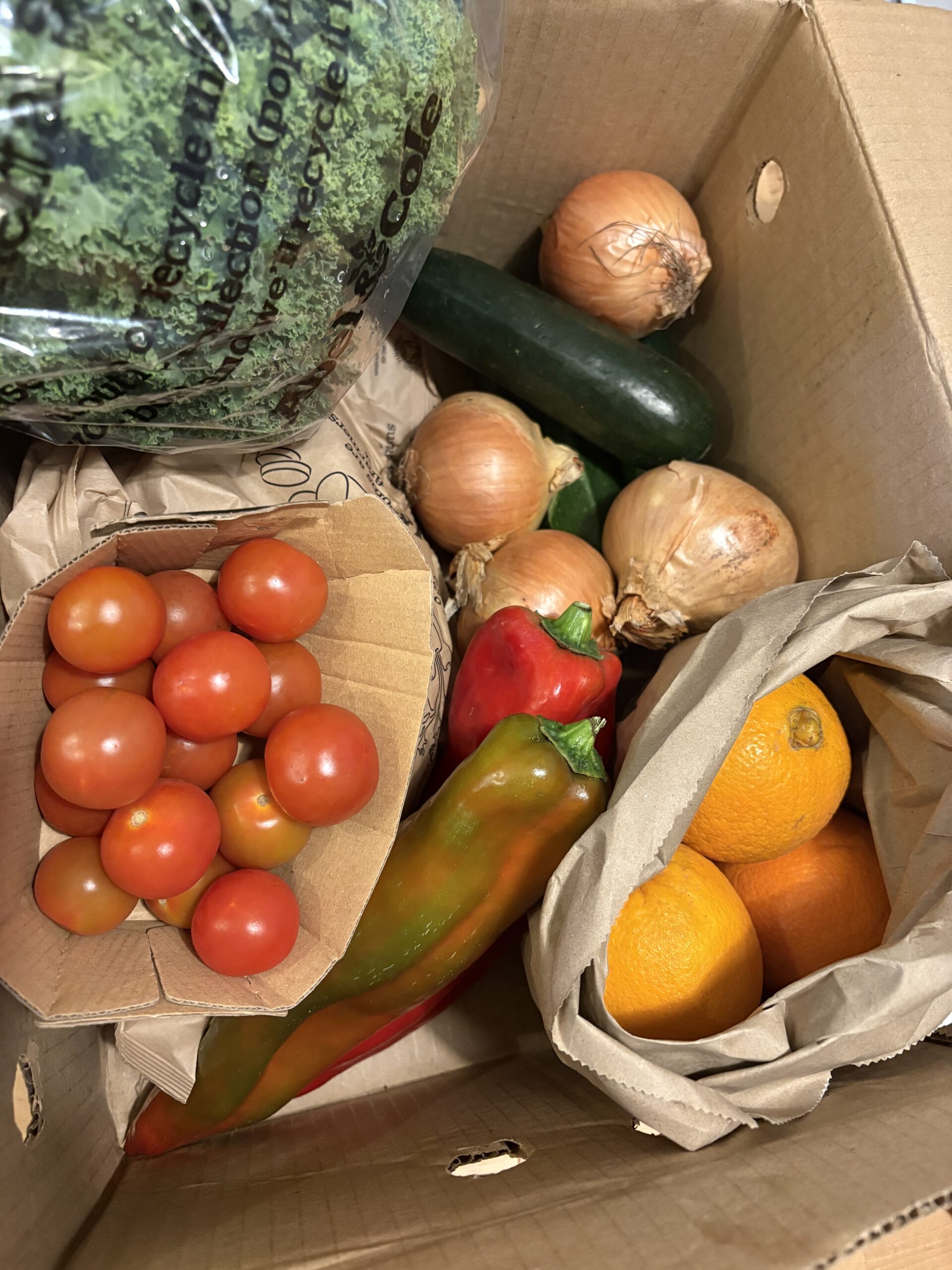
    One thing I have found however is that I don’t have time regularly enough to rely on fresh produce from shops or markets, particularly not during the week when things are busy. After some trial and error I found a veg box delivery service that fits well into my routine, and allows me to get fresh produce delivered regularly.

    The added benefit is that it makes me try new things, and eat more variety than I otherwise would, and there’s the option to order the occasional treat alongside the veggies as there is a whole selection to choose from. Packaging, all plastic free, goes back each week to be re-used and recycled, which is another bonus.

    Declutter

    In addition to buying less and more local, I have started to focus on decluttering, trying to bring some order to the remnants of pandemic years spent largely cooped up at home. This is the least well defined intention, because I don’t have a particular end in mind here. It’s more of an overall sense of trying to get individual spaces, like a bathroom or my desk, to be aligned with their purpose, rather than stacking and storing everything everywhere.

    Running my own business has made me more appreciative of local businesses supporting each other, and I am looking forward to continuing with these small changes in the coming months.

  • Listen to OEG Voices 082: Amanda Coolidge, Marcela Morales, and Maren Deepwell on “The Small Things”

    Listen to OEG Voices 082: Amanda Coolidge, Marcela Morales, and Maren Deepwell on “The Small Things”

    I was super excited to be part of this podcast conversation during Open Education Week and this post is an invitation for you to tune in and explore this rich dialogue. Thanks to Alan Levine and the wonderful team at OE Global, the page where the podcast is available features a thoughtful mix of commentary and context alongside resources and ways to get involved. So make sure to check out the complete podcast post with full links to resources (from which I have quoted below).

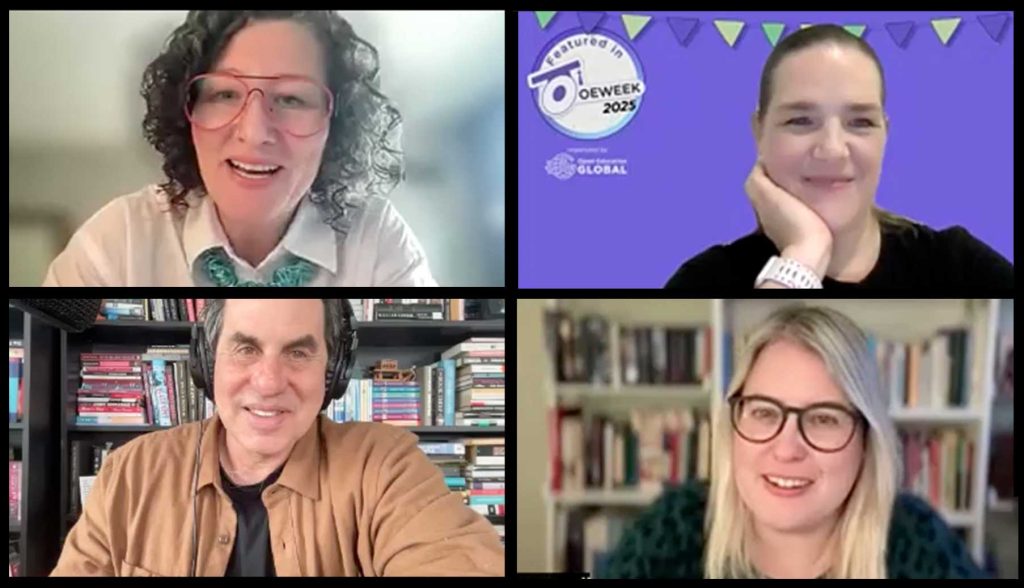
    In the OEGlobal Voices Podcast Studio with clockwise from top left, Amanda Coolidge (BCcampus), Marcela Morales (OE Global), Maren Deepwell (Maren Deepwell Coaching), and Alan Levine (OE Global). Not pictured, but listening in live were Shira Segal (MIT), Manisha Khetarpal (Maskwacis Cultural College), and Beck Pitt (The Open University).

    In This Episode

    FYI: For the sake of experimentation and the spirit of transparency, this set of show notes alone was generated by the AI “Underlord” in the Descript editor we use to produce OEGlobal Voices.

    In this episode of OE Global Voices, Alan Levine hosts a dynamic conversation during Open Education Week 2025 with Amanda Coolidge, Maren Deepwell, and Marcela Morales. They discuss leading open organizations, the importance of self-care, and finding joy in the small things amid the challenges of managing teams and building relationships. The conversation is filled with heartfelt insights, practical examples, and touching personal stories.

    • Introduction to OEWeek Podcast
    • Amanda’s Perspective on Leadership
    • Marcela’s Views on Team Dynamics
    • Maren’s Insights on Virtual Team Leading
    • Story Behind the Conversation
    • Connection Amid Critiques
    • Exploration of Relationship Building
    • AI and Thoughtful Leadership
    • Concluding Thoughts and Personal Joys
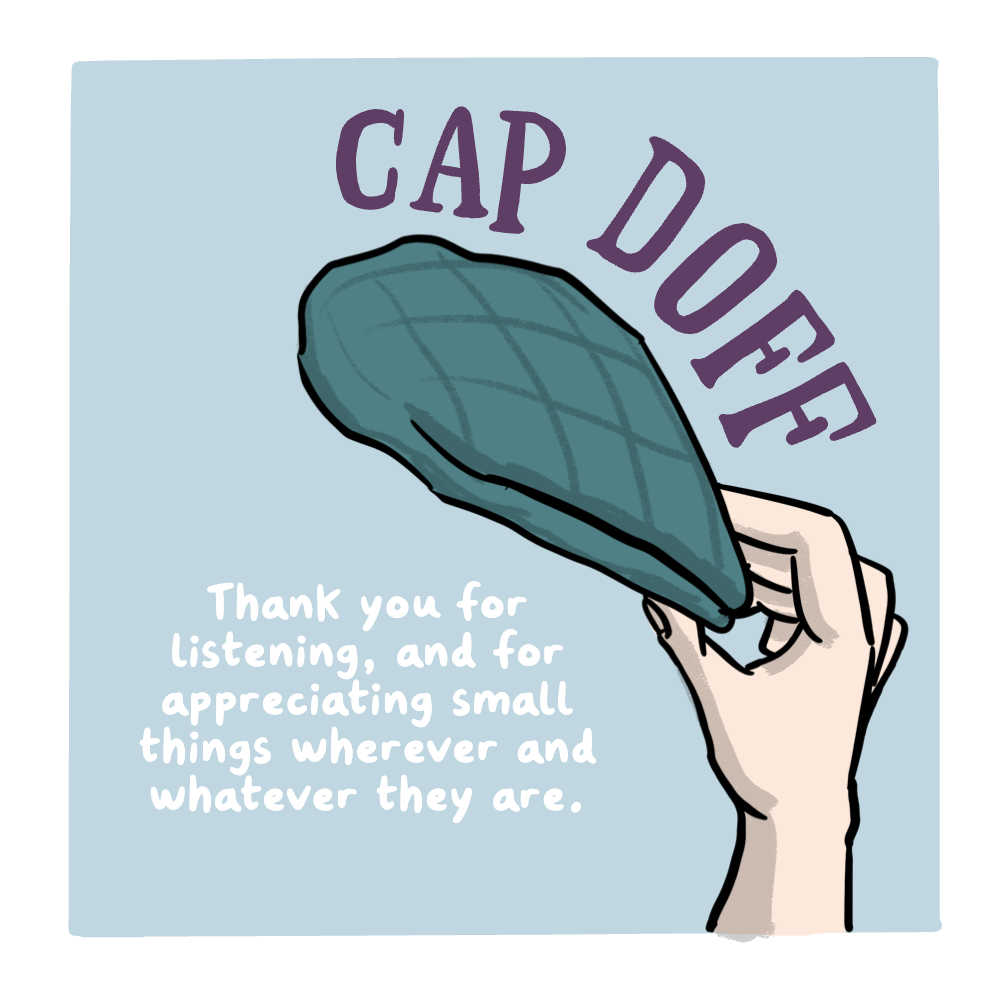
    Remixed image, with the caption Thank you for listening, and for appreciating small things wherever and whatever they are.
    Hat tip by @visualthinkery is licensed under CC-BY-SA. Remix by Maren Deepwell.

  • Fan #4life, friend #4life

    Fan #4life, friend #4life

    This blog post is a professional fan letter, a heartfelt hat tip to Bryan Mathers of Visual Thinkery fame. Over the past ten years his creative genius has provided me with so much inspiration that when I started looking for projects I could refer back to by searching my blog and my archive for work we have done together, there were too many examples to count.

    From playful remixes and conference campaigns to organisational strategies and international frameworks, I have been lucky to work with Bryan. We first met around a ministerial meeting table in Westminster when I was a brand new CEO, a rookie at influencing policy and finding my voice.

    As you can see from the photo that headlines this blog post, I still have my rookie sticker and badge. Reminding me regularly that being new at something, learning something new, is a powerful position to be in. It’s a privilege and the same can be said for many of the initiatives I have worked on with Bryan over the years and fortunately I continue to do so across Open Education and beyond.

    • Remix 'n' Match by @visualthinkery is licenced under CC-BY-SA.

    Over the years Bryan and I have become friends and I was grateful to meet up with him recently and swap ideas for new ventures that we are each working on. It reminded me how often over we’ve met up for conversations like this over the years, at conferences and in parks, after a busy session of Visual Thinkery or a quiet pint celebrating the end of an event. Bryan never gives me advice, but he so often says the right thing, and helps me see things differently. He’s been a source of encouragement and support as well as someone who has excellent judgement.

    Bryan describes listening as his superpower, and I would add kindness and patience to the list of these. Creative genius and artistic skill may be what makes everything he creates pop and sparkle, but it’s the deep humanity that creates the connections that have us send his conference stickers across oceans via post, and treasure zines and t-shirts for years afterwards.

    OERxDomains21 T-Shirt drying in the wind

    I have a Bryan drawer in my desk, where I keep all the treasures I have collected over the years, and every time I open it there is a little spark of connection, inspiration and joy.

    So here’s to you, Bryan!

    I’ll be a fan #4life.

  • Reframing Career, Success and Personal KPIs.

    Reframing Career, Success and Personal KPIs.

    A couple of things that have been percolating in my mind over the past couple of weeks have come together: the reflective post in which I shared a story of my career prompted me to think more about where I am heading and why; then I completed the review of my tech stack which made me focus on whether I have the right tools for the work I want to do and what that is… ; and thirdly I have been preparing for the next run of my hybrid working leadership course (incidentally, if you’d like to join us, register before 26 May), which includes a topic about how to find your own measures of success.

    My Directors Report

    I also should mention that I write my Directors Report for my business every 3-4 month, which is a good exercise in reflecting on and tracking progress, and also prompts me to articulate exactly what I have achieved and why that matters. Which is where the reframing idea comes in, because my report applies metrics of success at different levels.

    I started with the measures I was familiar with from my years as a CEO, with Key Performance Indicators, or KPIs, related to financial goals, operational requirements and risk management. I set out a business plan that I review each year, and each year I review, update and refine short, medium and long term goals. This way of thinking gets me to focus on the performance of my micro business, which is useful but not everything I am interested in.

    There is also a question of how well I perform and develop in my business, including the feedback I get from coaching or consultancy clients, the impact my mentoring and outreach work has, the research and publications I produce and the professional development I undertake. Many of the things I spend time on, such as attending events or writing a new book were not initially covered in my reporting, and yet they are important elements of what I view as success.

    Partly why I track these elements is to have a record of how my career choices contribute to my personal KPIs, and how I can evolve year on year.

    Before we go further, I just want to emphasise that I’m thinking about my career or my work as in professional practice. Over the course of my working life that has included paid work, funded work, unpaid work and everything in between. I don’t really conceptualise my work in terms of a main (day) job and side hustles, paid and unpaid work. However you think about these things, the approach can still work, you just need to adjust your mental picture accordingly.

    Reframing with metaphor

    I found it difficult to articulate all of this in the graphs or tables my report initially contained, and so I used a metaphor to help me reframe how I think about the different levels of success I aim to achieve and what they mean to me. What I came up with is a menu of drinks: a glass of water, a cup of coffee and a cocktail.

    A glass of water (nourishing success)

    The glass of water, big, cool and refreshing, is the biggest element. It contains within it everything fundamental that my work has to provide to keep me financially, socially, physically and mentally healthy. Contained in my glass of water for example, is money to pay the bills, to have a purpose and to have a reasonable work/life balance. Other things that I might include here is having a safe place to work and to have adequate benefits.

    A cup of coffee (energising success)

    Next up is an aromatic cup of coffee (or your preferred equivalent) that represents everything that gives me energy. Activities like attending events or collaborating with colleagues that spark my creativity, or projects that allow me to increase my impact and make a difference. In my case, I would include things like recording my podcast, blogging and writing in my coffee category, as all of these are energising elements of my practice, without being essential. I also find joy in the degree of flexibility I have, giving me time for walking the dog or going for a run during the day and that in turns allows me to work with greater productivity and drive the rest of the day.

    A cocktail (sprinkling gold dust success)

    For the cocktail (or mocktail!), I am thinking of a beautiful glass garnished with an umbrella and colourful fruit, a drink perfect for a moment of celebration! The cocktail embodies those special moments in my working life that make everything worth it. For me, I would include things like publishing a book, giving an exciting keynote, travelling somewhere new for an event, or having the chance to work with people I love and connect with. It’s moments that are sprinkled like gold dust over the years, giving everything an extra shine.

    Success Reframed and Personal KPIs

    I find it super helpful to think about what success means to me and how I can quantify it in this way, as it reminds me why things are important and what role they play in my life. If I get the things that nourish me and keep my life going in a very practical sense, things like saving for my pension or finding time to exercise, then that enables me to have more capacity to enjoy activities that I find energising.

    Similarly, if the only things that feel good are big highlights that are few and far between, i.e. if my metaphorical work diet consists only of cocktails and the occasional cup of coffee, but the foundation is all wrong, then my work becomes unsustainable in the long term and doesn’t serve me no matter how glitzy the high points may be.

    This kind of reframing also enables me to set out more specific personal measures for how what I do contributes to what I want to achieve long term, and to find balance between things that are fundamentally nourishing, energising and sparkly.

    My personal KPIs are not about how well my business performs or how much I achieve, but how well what I do works FOR ME. How well does how I work, what I do and so forth contribute to my life in terms of nourishing me, energising me and bringing my sparkly moments of joy and inspiration?

  • Having a Career

    Having a Career

    When I came across Kin Lane’s post Having a Career I felt inspired. His post prompted me to think about whether it’s worth having a career, and what that means, and if it matters. These words in particular chimed with me:

    However, now I see having a career is about me. It is about owning my own professional narrative as much as I possibly can. I consider a career adjacent to entrepreneurship or running your own business, but it is something that will span multiple businesses, and give you much more control over the work you do and the money you make. A career is about me. It isn’t some category on a college aptitude test. My career isn’t chosen for me. 

    Thanks to this inspiration, I’ve been trying to create a story about my career, and tried to make a drawing, too. That proved trickier than I had anticipated, because I started to plot my journey along a rough timeline that started in the mid 90s with summer jobs and somehow portrayed the next three decades as a linear progression. Which it wasn’t.

    Similar to Kin’s younger self, 17 year old me wanted no career. 17 year old me wanted to live a life which was authentically mine. I felt the world deeply as a young person, and it poured out of me in writing poetry, plays, novels, art, music and a lot of difficult behaviour. That I was academically able and got good grades made early adolescence easier, but eventually I outgrew my ability to fit into a regular school system. It must have been very difficult for my family and friends to make sense of my behaviour. It was very difficult to for me. I had no idea how to navigate life. Thanks for leaving school at an unconventional time, without sitting the traditional exams at 16 or at 18, I never ended up having career’s advice and made up my own instead.

    From that point on, my list of jobs started in earnest: I had every bar, cafe and restaurant job London’s service industry would offer a young immigrant with broken English. I graduated to working in bookshops, cinemas, shops, and eventually in bilingual marketing and market research. I had a job once that only paid me in tips (which took me months to realise. Once I did, I left with the whole tip jar after one very good Saturday night never to return).

    From 17 to 32 I mostly worked at whatever job I could to fund my education. Having left secondary school I discovered that there was a whole world of learning out there, and London, and later Athens, and even later Oxford, offered me every opportunity. Looking back it now seems implausible that I worked 40 hours and studied full-time as an undergraduate and later as a Masters stundet, but I loved it! Studying first design, then art and then anthropology allowed me to explore my curiousity and challenge my mind, spending days in the libraries and museums. I was lucky that I always managed to get scholarships to fund my fees (this being an era of education in which that was still possible).

    In 2004 life changed for 3 glorious years, thanks to a full AHRC PhD scholarship that enabled me to give up work. I recall the moment I found out exactly. I was on my way to work in a cafe in West London and picked up my post in the student hall where I had rented a room in for the summer. Gower Street was hot, noisy and there was no lift between my single room on the top floor (shared bathrooms) and the laundry room in the basement. I opened the letter on my way to the bus stop and right there and then, life changed. I resigned my job that day and that September I started to be a proper full-time student for the first time, with spare time to go to seminars and lectures in the evenings, and student bars, too, of course.

    It was during those years that I started working with more intention, finding jobs as a archive admin, then as a teaching assistant and as a Moodle admin at my university. As my funded years came to an end, job hunting to fund the final year of my PhD began again, and I found an admin role in a nearby university in Oxford. The deciding factor that convinced me to take the job was that I could walk to the office. Writing up my PhD in the Radcliffe Camera library sounds romantic, and it was certainly a lovely environment to work in, but it also came with a problem: I didn’t want to be an academic. My interest in my research topic had been genuine, but had been satisfied. It offered no clues as to what might be next, and so my admin summer job gradually turned into a manager role, which turned into a more senior manager role. As a side hustle I started to work as a researcher and consultant on projects. I was hungry to learn and quick to figure things out, which made me a good contractor. A few years later I decided to apply to become the CEO of the organisation I was working for, and for the next 12 years that (mostly part-time) role and my continued work as a consultant turned into a very fulfilling career.

    In my early years being a CEO I often struggled to explain to people how I had ended up in the role with a PhD in cemeteries, a degree in art, a penchant for making stuff and evidently little leadership experience. A young immigrant and a women to boot. No one had ever heard of me and my story didn’t really make sense. Working hard and being good at what I did eventually helped establish my place.

    Being a CEO of a small not-for-profit that employed fewer than 10 staff and often just 5, and turned over around half a million pounds a year (and sometimes much less) offered me the opportunity to learn a bit of everything, from finance and HR to governance and operations. It also offered me lots of opportunities to get involved in activities and communities, and to work for something that aligned with my values and that made a difference. I developed a much greater appreciation for the ethical dimension of work, of having a career. It let me experience what it’s like to have a (small) platform, and helped me develop my voice.

    As my interest in leadership and mentoring developed and I started to train as a coach and write my first book, a new chapter in my career story started. I began to re-invigorate my freelance work, which during the pandemic had dried up, and started a period of transition, letting go of one role and building a new one. I started to plan out more books I want to write, and began to sketch out a new vision for better work life balance and more independence once again.

    To many people the move didn’t make sense. It wasn’t a step up, a move to running a bigger organisation, building on what I had achieved in a smaller organisation. My pension provision agreed with them. Depending on my own little venture at this stage was (and is) risky. But it felt and still feels right to me.

    Making sense of the story so far sounds something like this in my own head:

    I started out looking for things that interested me and would challenge me. I gained some knowledge and skills, and found a lot of interesting things. So I put those capabilities to use and see what else I could do. Then I found that I could make a positive difference to others, and poured my energy into making that happen. Eventually, when I felt I needed more balance, and to spread my energy across more areas of my life, new interests led to new goals and a wish to fulfil some bigger dreams; like writing books and getting a dog and living near the sea.

    And so, I started to put together the building blocks for a small, independent business venture that would help me fulfil these and other dreams, whilst doing work that makes a positive difference in the world and aligns with my values. It makes perfect sense to me, even if on a day to day basis it remains equal parts imagination and profitable job.

    This summer it’ll be 28 years since a young Maren climbed the steps from the tube station up into the streets of London, carrying a duffel bag, a pillow and a role of The Cure posters (and an open ticket to fly home anytime, because my parents thankfully had more sense than I did).

    At the time I felt the urgency of life deeply. I thought time to be my true self would run out when I reached the (what I then thought) calm and boring reaches of adulthood, of middle age. I think my younger self would be relieved (if disbelieving) to learn that existential dread and big questions still float around my head every day, even though I have become a lot better at managing daily life. I like to imagine that 17 year old me would LOVE my dog Posey, and would appreciate that I have managed to publish my first book, and being on my way to the second.

    I am not sure what I thought “success” would look like when I was 17. Money or status has never driven me, even though I have always safeguarded my financial independence. Ethics and values are important to me, as is making a difference. The best I way I have to explain it is a metaphor:

    For years and years I’ve kept sketchbooks filled with writing, drawing, sketches, pictures and small mementos. The process of keeping the sketchbook is much more important than individual pages, and often I might find a little gem flicking through the pages years later. I still have a lot of my sketchbooks, and I treasure them. They are the best metaphor for how I imagine my career, and what makes it successful in my mind. Having a career, for me, is like a sketchbook. I fill pages and pages, and over the years these amount to a substantive amount of work, of me. Looking back, there are gems and there are duds, and it doesn’t really matter. What matters is that I follow my curiousity in order to create and contribute.