I’ll continue to share coaching resources, event updates and more, and hope you’ll continue reading and connecting with me in these ways.
Since I started the newsletter in 2023 it has grown in new and wonderful ways, and I am excited about it’s new chapter.
If you take no action, and you are currently subscribed via the original email list, you won’t be receiving news from me from now onwards and your subscription details will automatically be deleted.
It the end of the UK tax year, and I have spent most of this week on end of year paperwork. Fortunately, this blog post is not about that. Instead, I am returning to my favourite topic: blogging about blogging, or more precisely, blogging about keeping a blog. (The two are tangentially related, as my quarterly Director’s Report for my own business has a section about talks and events in it, which I was trying to complete when I noticed that, to my horror, I had yet to start the 2026 section of my archive page. So I fixed that as quickly as I could. Phew.)
I’ve previously written about why I think keeping an archive of my activities is so very helpful, not just for report writing, or compiling my newsletter, but in the longer term, to help me set goals, find strategies and reflect on my career journey. I’ve been working on a post about professional journalling, which I am hoping to publish next week as a follow up to this one, but this one isn’t really about writing, but more about having a domain, a home on the web, that I’ve kept and that I have added to for nearly twenty years. It really helps put things in perspective.
It also helps me sift and focus on what matters and what I am happy to leave where it is. For my purposes I don’t just want to have a record of everything I do or rely on automated processes or bookmarks. Instead I find great utility in the process of finding, evaluating and sifting the information. It’s like panning for gold. You sift through the water and find flecks of gold, gold dust that is then added to the vault and over time it compresses into bars (maybe that is overstretching the metaphor, plus my metal work memories remind me that gold bars are cast not compressed). You get my drift.
Often I learn things or see things I didn’t at the time of an event I spoke at or an article I wrote, and the process of finding the details, adding them manually to a page on my blog and then seeing the list grow each year is valuable to me (even though many of the links to things may break over time). What I gleam from the process increases my strategic and executive capabilities greatly and yet when I describe the process it sounds rather quaint. As if I haven’t discovered tools or services that could do all of this for me. I guess my sense is that I need to be doing it, to engage in the practice of sifting, recording and reflecting, otherwise there is no value in it for me.
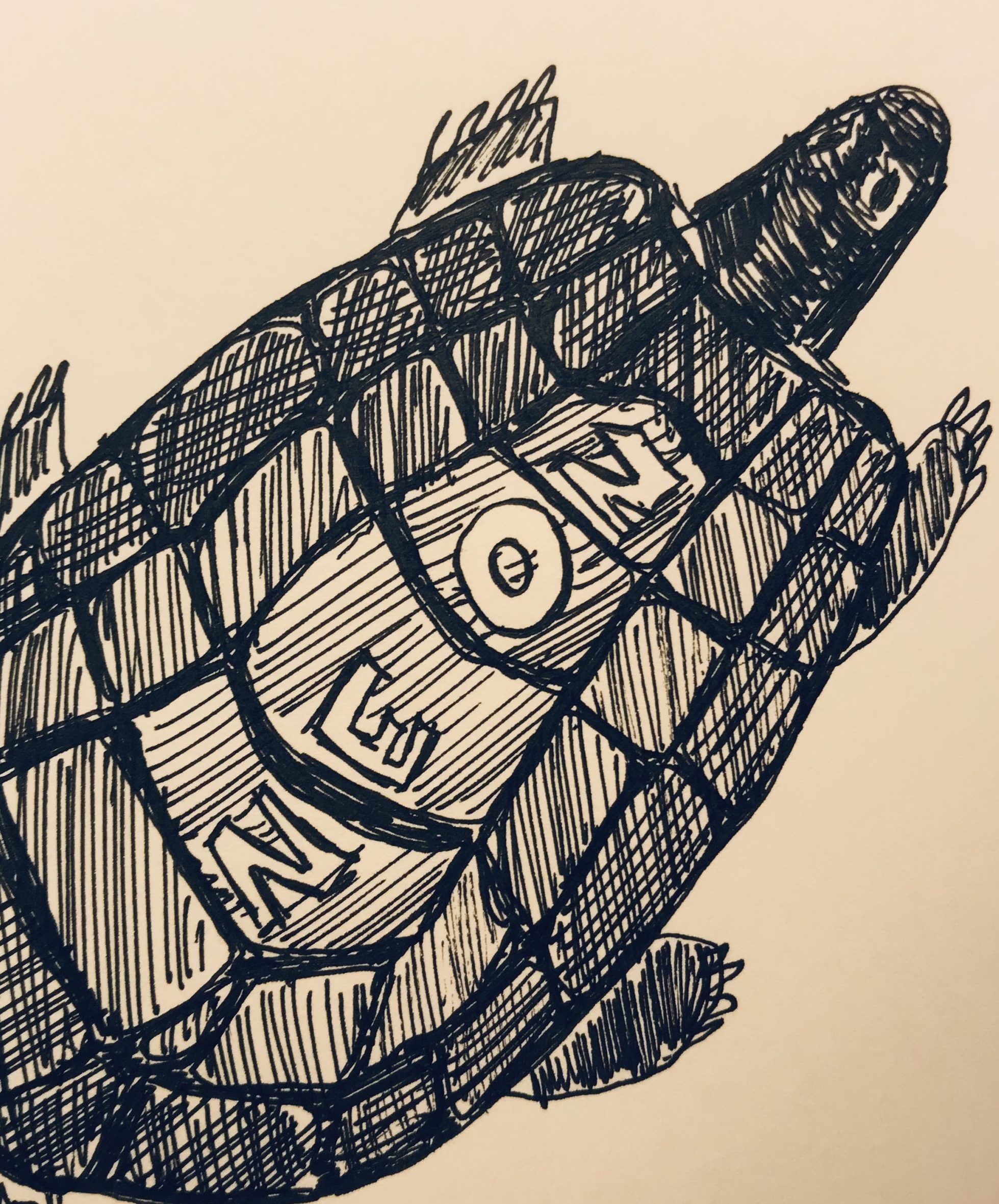
There is a children’s book I am very fond of, it’s called Momo and it was written by Michael Ende (who also wrote The Neverending Story), in which a tortoise saves a girl from ‘grey men’ trying to take over the world with machines, and it’s the slow, meandering pace of the tortoise that renders them inconsequential (and thus invisible) to the ever rushing crowds around them. It feels like a very timely story to revisit. The process of keeping a blog, of adding to my own archive, is, metaphorically speaking, my version of the meandering pace of the tortoise, that which keeps me safe from the destructive rush of digital productivity and gives me time and space to think and imagine. Maybe it is time to revisit the Neon Flaneuse.
It’s been a few years now since I started working in my own consultancy business full-time and being my own boss really suits me. Every Monday morning I am grateful to not have my week shaped by endless meetings or arbitrary schedules. Most Mondays, I start with blogging, reflecting, planning. Less pressure to be at my most productive and more scope to navigate uncertainty, develop my strengths and enjoy the variety of free-lance life.
Life has stopped feeling unmoored in the way it did when my CEO days were fresh in my mind, and the demands of running and representing an organisation and a wide community of members still rang in my ears. Instead, life has taken on a new rhythm and I have found it most rewarding to experience all the scary moments, the lulls and the joys in between.
Education + Technology. Still.
What I am very happy about is to have found ways to return to and to continue to work in education + technology in new ways. I’ve found I enjoy working in Open Education and technology in ways that I had no time for in my executive role, and now that I am able to get stuck in to course development, writing tech case study or organising events, I love it again. Not as an industry in which I need to influence policy makers, but in a space that is still rich with experimentation and full of warm communities that are making a positive difference for their users, be they learners, educators or volunteers.
I’ve also continued to be a peer assessor for CMALT, the professional accreditation scheme for Learning Technology professionals, and that in itself has been a rich and rewarding activity. It is always inspiring to see peer practice portfolio and it reminds me that I need to keep track of the technical skills I have and am developing. I often undersell my technical knowledge because I often work alongside the select few who have a lot more to offer in that department, which skewers my perspective.
Note to self: you know more than you think when it comes to open source technical skills.
Coaching Leader Superpower
It’s been a few years now since I started coaching and also mentoring, and I found the work deeply rewarding. It’s been a learning curve to identify my coaching niche, and the type of leaders I can offer the best support to, but I found it and I enjoy the practice of being a thinking partner and offering a safe space to reflect and strategise. I’ve also brought mentoring early career leaders into the mix, and that has kept my on my toes to say the least. I might have over a decade of executive level experience, but nothing brings me down to earth and thinking hard more than mentoring someone about to embark on the first chapter of their career.
Coaching and mentoring has also become a superpower for my own leadership approach. It’s been so very useful to learn more about how to lean back, stop solving problems and create space in which colleagues can develop and be supported if needed. What I found out since I stopped running an organisation is that I never really stopped running an organisation, I just switched allegiances and now run my own instead. The CEO in me is second nature, and it’s fun to flex those muscles every now and then.
Confidence in the face of Unknown Unknowns
Career transitions are a bit like magic. A slight of hand. On the one hand everyone around you expects you to know what you are doing and how to get there, whilst also taking a leap of faith into the unknown. Not many are comfortable with you not knowing what’s next. And there are usually a lot of personal and practical circumstances at play, that determine how much freedom and for how long you can grant yourself to experiment.
And you fail and get rejected countless times along the way. Everyone does. It’s a necessary part of the process.
The book I found most helpful in navigating my own Unknown Unknowns is called “Working Identities” and I have blogged about it before. What really stayed with me from the book was the idea that you can’t think your way out of a career transition, particularly a big one. You have to work through it. It’s a process, it’s a practice, not a thought experiment.
Just like everyone else my own winding path through this transition looked different from what I expected and continues to surprise me. Every time I think I have it figured out, I realise I don’t. Or that there is another bit that doesn’t quite fit. Eventually I realised that this is it. I am doing it, and the process is what I am meant to be engaging it. It’s not a fault or an error that I don’t know exactly what the next year looks like. It’s part of doing what I am doing, part of being my own boss (and being my own employee, too).
And so, every week I am grateful and inspired and empowered by the process, by being my own boss and discovering new and interesting things. I love that I get to keep learning and developing and discovering and I get to pay the bills, too. I get to live and work by my values, shaped by what’s important to me and I get to give something back, too.
Thanks to all my clients and collaborators, and everyone in my networks for making this such an enjoyable new chapter in the story of my career.
This week I have spent a lot of time on trains. Monday: Cardiff – Sheffield. Tuesday: Sheffield – Edinburgh. Wednesday: Edinburgh. Thursday: Edinburgh – Glasgow. Friday: Glasgow – Cardiff.
It’s been a joy to connect with colleagues and friends around the edges of a rewarding work trip and I made extra time to see more and connect with some of my favourite people who I haven’t seen in person for a long time. Work travel, when it’s not a weekly chore, turns out to be a lot more enjoyable when you can combine these different elements into one trip.
I used to travel a lot and was very used to working on the train, and this week reminded me of all the skills I don’t practice as frequently these days. Typing on my lap, tuning out the busy train, and getting things done before arriving at my destination for the day (although I must admit I am getting distracted as I am typing this, as outside the sun has come out momentarily and the beautiful and dramatic landscape of the Lake District is passing by my train window). It was good to be able to keep in touch with my work at Reclaim and complete some assessments whilst on the road.
Like the travel, in person meetings and facilitation was a really rewarding experience. It was a welcome contrast to much of my work online to connect, coach and communicate in person. The venues for work this week couldn’t have been more different: I visited the Edinburgh Futures Institute, and enjoyed use of a quiet study space to catch up on emails. It’s all tall ceilings, beautiful materials and unexpected views. It’s a lovely juxtaposition to the historic elements of the building and although it cost A LOT to build, it is clearly loved by the buzzing student population that has made a home here.
Outside view of a student space in the Edinburgh Futures Institute
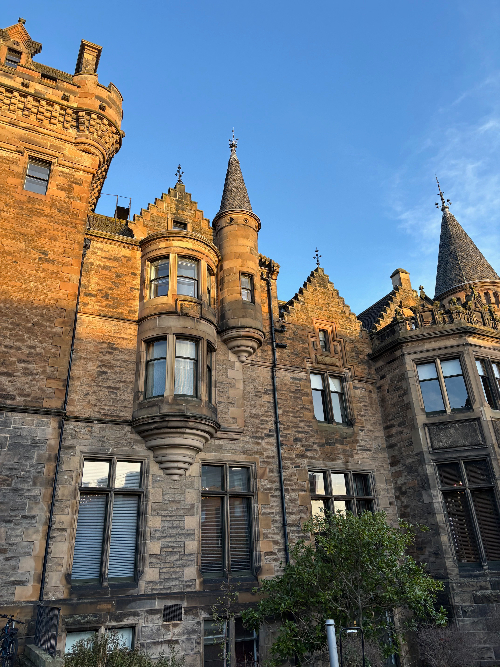
My main work day, a day of leadership coaching and facilitation, took place in the spectacular St Leonard’s Hall, situation just at the foot of Arthur’s Seat. I always relish the opportunity to facilitate strategy or away days and designing these is a lot of fun, as well as challenging. Working with the team here combines my interest in coaching and educational technology, so it is one of my favourite engagements of the year already.
Thank you to Melissa Highton and her team for having me back again 🙂
The historic facade of St Leonard’s Hall
It was lucky indeed that many of my former colleagues from my ALT days found time for a coffee or even dinner, and it was fabulous to see my long-time co-blogger Martin Hawksey and Simon Horrocks complete with the rather famous Bailey (he is even cuter in “pawson”) in Edinburgh, as well as Joe Wilson, Sheila MacNeill and Lorna Campbell in Glasgow.
It’s invigorating and feels important to swap tales of what it’s like to work in education and technology in 2026, and have a chance to talk about all the things that Zoom meetings just don’t seem to be suited for.
My trip began with a long-overdue visit to my first mentor, Margaret Bennett, with whom I worked for many years when I first became a CEO. We met in a cafe in Sheffield, in exactly the same spot as we first met in 2012. Margaret has been an enormous inspiration to me throughout my career, and her incredible support for me as a leader has certainly had a lot to do with me stepping into coaching and mentoring EdTech leaders and leadership teams on a professional basis.
Ending January on a high inspired by such varied professional and social interaction has encouraged me to plan more such trips for the coming year, and reminded me powerfully just how much I sometimes miss the energy of in person interaction. More blogging to come on that topic in the coming months, I am sure.
I hope your January has had some bright spots, too.
One of my fellow coaches, Helen, a wonderful executive coach for Headteachers, recently shared online that her word of the year for 2026 is ‘analogue’ and that was music to my ears. As regular readers know, I’m a big fan of all things analogue, and the post prompted me to re-read The Revenge of Analogue by David Sax. Although the book was published ten years ago, and some of the research it mentions has been superseded, it’s central argument holds fast and the industry case studies of how industries were revived not for nostalgic reasons, but for business reasons are even more relevant today.
As in my previous post about using a Done List as an antidote for that pervasive sense of always having to get even more done, I’m blending my long days of digital productivity and working online with analogue activities, to make space for strategic thinking, reflection and planning. One of the questions I get asked the most on training days however is just how to carve out the time and actually create some offline head space when the pace of digital productivity feels simply relentless?
One strategy I find very effective is to add an analogue work bag to your toolkit.
From analogue to analogue (work) bag
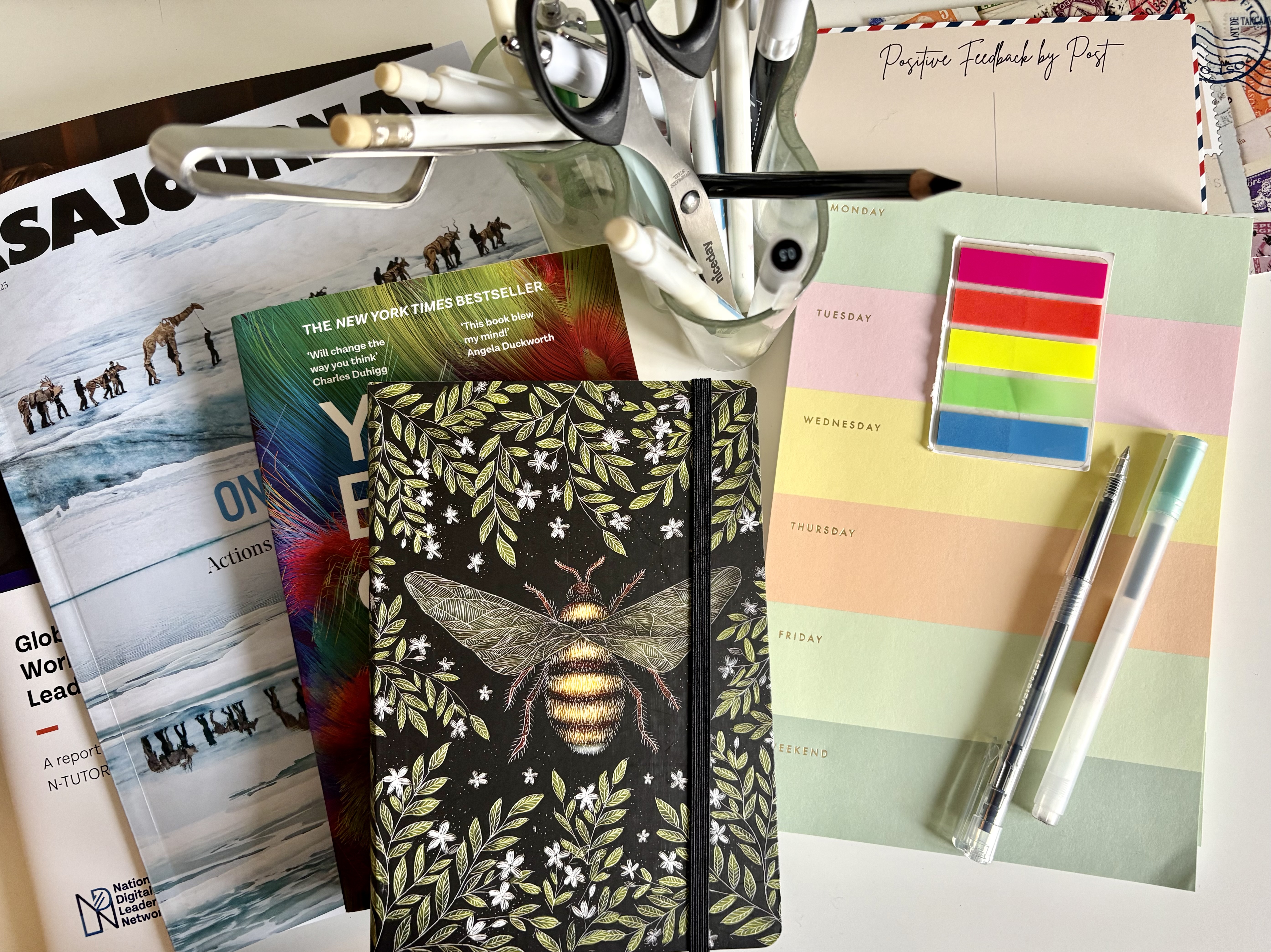
If you haven’t come across the term, a so called “analogue bag” is a bag or basket filled with everything needed to engage in analogue activities and stay offline (I came across an interesting article recently that explains this phenomenon further). In the context of being at home and avoiding loosing valuable hours of attention to (doom)scrolling, you might fill your bag or basket with things like craft supplies, knitting needles and yarn, pen and paper, a journal, books or puzzles. In short, whatever supplies you find engaging and stimulating to engage in analogue activities.
In order to translate this approach into a work context, all you need to do is to swap the contents of the bag or basket. Here is what that might look like:
pen and paper for making notes
post-it notes for reminders and planning
coloured pens/whiteboard markers if you have a bigger surface available
a planner or diary for longer-term perspectives
printed trade or research journals to catch up on what’s new
a book, such as a technical manual, non-fiction or a biography for inspiration
You’ll likely already have such things around your work space. The purpose of the bag (or basket, desk drawer, dedicated shelf or similar) is to make sure all of these are easily available to you, rather than lost in a forgotten drawer somewhere. Use the bag to offer inspiration and practical ways to get started with planning, reflecting, strategising or research as soon as you step away from the screen.
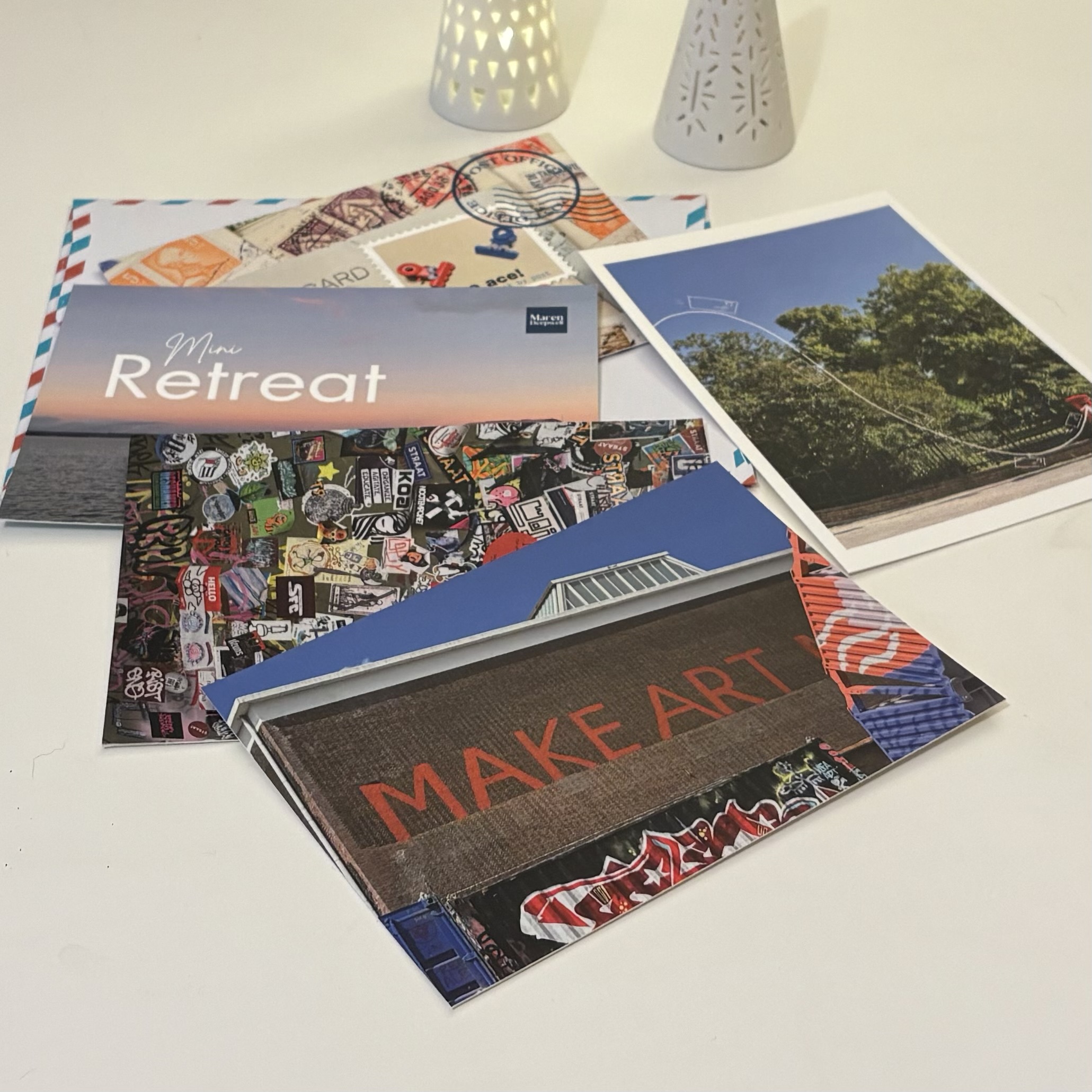
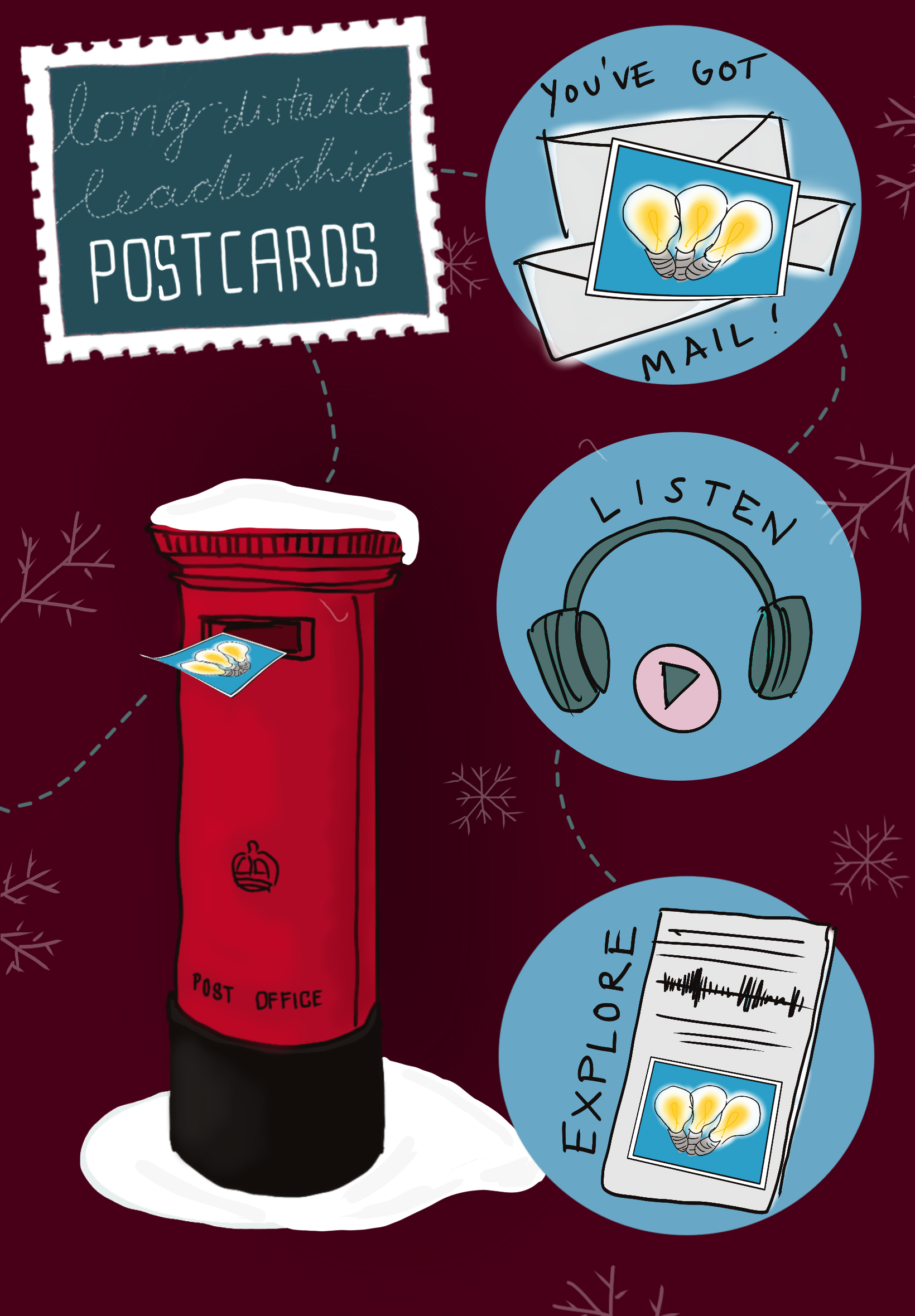
This month, as a little gift from me to you, you can join in with my leadership coaching subscription service, AKA Long Distance Leadership Postcards for free. I’ve made December free for all to access, and this month’s topic includes three free resources to explore.
Whether your 2025 has been busy and productive, or brought unexpected challenges, whether you are getting ready to rest or just about to set out in a new direction, I have designed this month’s coaching moment by mail to offer new inspiration and encouragement by focusing on your creativity, develop leadership capability or clear the decks with increased productivity.
Over the last 12 months we have explored 11 Long Distance Leadership Postcard topics around creativity, digital wellbeing, productivity and leadership development. To celebrate the end of the first run of Long Distance Leadership Postcards, you get to choose your own topic – or explore all three! Whatever you choose to do, enjoy and take care as we close out 2025.
Your guided tour
If you’d like to get a guided tour, tune in to the episode below in which I walk you through each resources and how they could be useful to you. Enjoy!
Coaching in 2026
I’ve loved coaching with you this year and I am already looking forward to the new year. If you are curious about coaching with me, get in touch. I have some space opening for spring and also new pro bono sessions available if you’d like to try and give coaching with me a go for free.
You can find out more about how I work and what my clients say about working with me on my coaching pages.
Sign up to my free monthly newsletter to get new resources straight to your inbox.