Category: leadership

  • Healthy Habits: from Analogue to AI

    Healthy Habits: from Analogue to AI

    Over the summer I have updated my coaching course for leaders and managers, ready for the next academic year. I designed the course originally just over 18 months ago, and three cohorts later I have learnt a lot about what participants find most valuable. I’ve also had a lot of experiences working with coaching clients who are tasked with introducing AI in their teams, or supporting colleagues who are now using productivity suites such as MS Teams or Google Workspace with AI-powered tools, something I hadn’t specifically addressed when I designed the course.

    I’m really looking forward to running the updated course, and to give you a sense of what’s in store, here’s a little preview of the updates I’ve made:

    AI and Hybrid Working

    Both AI and Hybrid Working change dynamics in the workplace. Colleagues see each other less, and communication is becoming more and more digital. Although many workplaces have seen at least a partial return to the office, often with 2-3 days on which everyone is on, the majority of meetings and activities is now blended, often supported by AI-powered tools.

    The pace of digital productivity is increasing, or at least it feels like we need to speed up, making it even more important than before to focus on building trust, communicating clearly and creating engagement. The skills to use new technologies are changing and I have included a new section about AI literacy to the course to reflect that, but the skills needed to be a good leader and manager such as keeping oversight of progress, continue to be at the heart of professional practice.

    Guided reflection

    One of the things that jumped out at me when I read through feedback from participants is how much they value prompts and tools to help them effectively reflect on their practice.

    Often, their day to day is so busy that even when they do make time to sit down and reflect, they find it hard to know where to start or how to make it useful. The course included a reflective exercise for each part, complete with prompts and practical tools, and I will include these in the live discussion session each week as well.

    Open resources

    The other piece of feedback that really stood out for me was how many participants wanted to take the resources we used in the course to work on with their teams. I had already openly licenced the resources, but this prompt made it easier for me to include even more of that in the updated version, enabling managers to translate what they work on in the course into their practice more easily.

    Join the next course run starting 20 October

    There’s also a group of participants signed up, but I have 10 places left for the next run of the course, starting 20th October 2025. The course will run over a period of 4 weeks, with an optional live session each week (which is also recorded to help everyone across the different timezones) and as before, all course content is available asynchronously to explore at your own pace.

    Course registration costs £149 (or £79 if you are one of my coaching clients).

  • Botanical adventures, analogue escape.

    Botanical adventures, analogue escape.

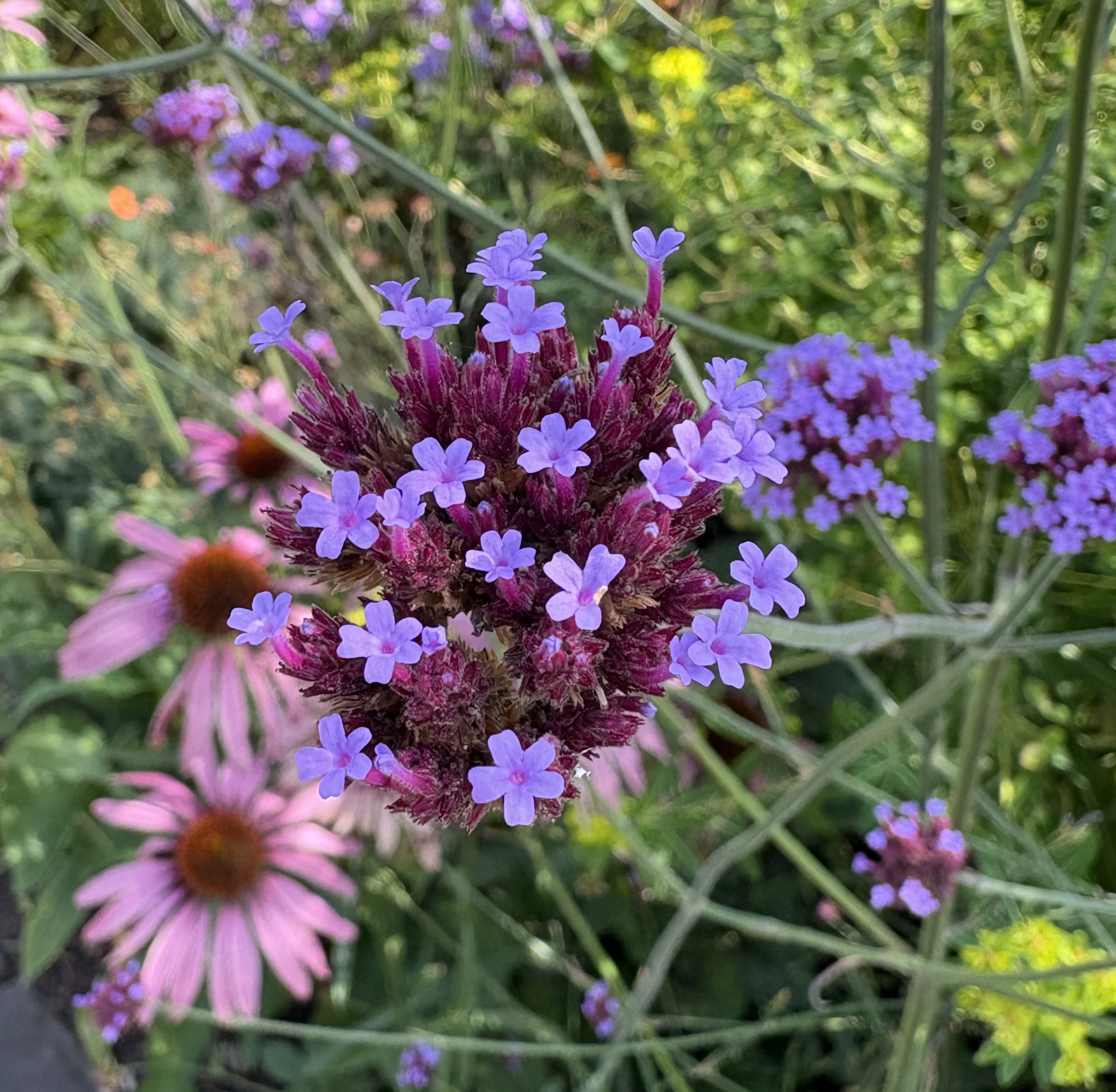
    This summer has come with lots of time outdoors, gardening, looking after plants and going to visit some nearby gardens, like the one featured in this blog post at Dyffryn gardens.

    I have been craving time away from the screen, and spending time outdoors, walking through the woods with the dogs and pottering about in the garden has been just what the doctor’s ordered. Somehow the louder the clamour of digital productivity becomes, the less I want to participate in this race to save time.

    Thanks to working across a whole range of institutions, each with their own infrastructure, I get A LOT of notifications from platforms, tools and services and I feel the tone of these interactions is becoming less helpful. From trying to adjust email notifications on LinkedIn (not fun), to worrying needlessly about important security alerts from my workspace account which turned out to be advertising, I am less than impressed with the current generation of digital tools. It doesn’t make me feel more productive, just requires more effort for me to sift through the mass of communication that comes my way in order to do what I need to accomplish.

    I’ve blogged before about moving through times of change at the pace of plants and of finding your own cadence, and I return again and again to this idea of pace and intentionality. To have space and time to think about why I am doing things, not just how to do them more quickly.

    Green house explore

    I feel like I’d like a badge that says “not prone to overwork” or something like “I’m quite productive enough”. Audrey Watters had a great bit about toxic productivity in a recent edition of her Second Breakfast newsletters (Measure for Measure, 18th August 2025), which I would urge you to read (and subscribe to, if you haven’t already).

    This summer my pace has adjusted, the cadence of my thoughts has shifted, and I’ve sat with the uncomfortable-ness of change and re-invention that comes with periods of change and transitions.

    Enjoyed this post? Get my free monthly newsletter directly to your inbox.

  • Digital Productivity, Revisited.

    Digital Productivity, Revisited.

    As part of a Masterclass webinar hosted by the Digital Learning Institute, I am returning to my work on digital productivity. Specifically, digital productivity for leaders in the AI-enabled workplace.

    It’s an interesting time to think about this topic. The conversation about AI tools and platforms is all about increasing productivity, doing more, faster… with less. But from a leadership perspective, I feel its less about practical productivity hacks and more about exercising judgment. Knowing when to encourage the use of digital tools, and when to step away from screens and focus on the conversation in the room. Or what information it’s OK to share and what needs to remain confidential. Emerging leaders who feel under pressure to perform are particularly at risk of inadvertently sharing private and confidential information in order to find help for writing reports, manage an HR situation or give a presentation.

    Part of my research for the book I am writing on is about identifying how leaders develop that kind of judgement, and the requisite critical digital and AI literacies to apply it effectively. Thus the first part of the talk is all about revisiting digital literacy, for leaders, and for staff and for students in the Higher Education context.

    Hybrid working has introduced an interesting variable into the workplace for many early career professionals as they experience onboarding and training largely online. Often, there’s no one around to ask questions, so who else do they turn to when they don’t know the answer but AI?

    The second part of the talk zooms in on one specific area of digital literacies, namely those skills that relate to digital wellbeing. I am talking about a whole range of skills, capabilities and habits here, from practical strategies for avoiding screen fatigue and digital overwhelm, to building longer term habits that support mental and social health.

    From a leadership perspective, these are difficult skills to model, as most managers and leaders are under great pressure to perform. In their effort to meet expectations, modelling a sustainable work/life balance or giving importance to social interaction with colleagues falls away. So despite that fact that many organisations have clear policies for health and wellbeing, the gap between policy and practice widens thanks to the rapid pace of digital productivity.

    I have included many free resources for participants to explore and take away, one of which, the Data Detox Kit, is especially helpful in the context of AI and our wellbeing, as well as caring for the planet. Managing resources sustainably is another task leaders have to approach in a wider context, and given how resource intense AI platforms are in contrast to standard digital technologies this will become a bigger concern in the next few years.

    The final part of the talk is all about finding inspiration, to work smart instead of harder, and to look beyond technology for solutions. This is probably the part of the talk which is a departure from the wider discourse at the moment. The dominating narrative is all about using AI more, and adopting it more widely, to imagine a better future with AI. My talk offers starting points for alternative futures, and showcases the work of pioneers who are doing just that.

    I suppose the reality will be somewhere in the middle, a mix of old and new, and I am excited to add some different perspectives into the mix.

  • Prolific pen pal

    Prolific pen pal

    Being a pen pal was something I got into as a child. In my family it was usual to send postcards from our camping holidays in Greece or Spain to family and friends in Germany. I made friends on these holidays, often from other countries, and as we exchanged tearful goodbyes at the end of each summer, addresses were swapped and letter writing commenced. I had a good pen pal in Luxembourg for a long time, and even went to visit her and her family. My first ever teenage crush and I wrote ardent letters from southern Germany, where I lived, to norther France, where he was from. And once I moved to the UK my mother became my most frequent correspondent, sending letters and parcels to my London student digs, whilst I sent my own reports from university back home.

    Over the years I have made quite a number of friends with whom I continue to send letters back and forth. Sometimes our postal conversations are sporadic, other times we write regularly. I have an actual address book in which I keep track of who lives where, and my collection of stationary, card, envelopes and stamps is thankfully always in need of restocking as I send letters almost every week.

    The picture at the top of this post shows the actual letters I wrote first thing this morning.

    I must admit that I also love the UK tradition of sending Christmas cards, and come December our hallway is full of cards and letters arriving daily.

    Of course, I also DM, email, video call and so forth with friends and family, but I’ve never lost my love for being a pen pal. The cadence of the conversation is different, the time it takes to handwrite a letter offering me time to think. Sometimes I don’t know what to say, or how to best offer love and comfort in difficult times. Loss of a parent, or a bad illness. Or a magical joyful moment like the arrival of a new baby.

    Choosing the card and envelope, or the postcard, and drawing something or scribbling in the margins… that’s all part of what makes being a pen pal so fun.

    Then there is the joy of receiving post in return. Of getting an unexpected envelope in the mail, in which there is a little glimpse of real connection. My friend sat at their kitchen table writing this with their hand, spelling out my address, thinking of me.

    Just as I think of them. As I write and send letters. Here’s to being a prolific pen pal #4life.

  • Finishing another year at Oxford

    Finishing another year at Oxford

    This week wraps up another year of teaching at the University of Oxford. Summer is here, and my work with the Digital Capabilities team takes a break over the summer, before Michaelmas Term starts again in autumn.

    For the first time since I started this year had more in person components, including two days of fully in person sessions with cohorts from across the university. Getting to work with such a diverse range of people in a unique institutional context whilst exploring all aspects of hybrid working is great fun.

    Last year, I was focused mostly on Digital Wellbeing in my reflection at the end of the academic year, and although this remains relevant there are now other dimensions of hybrid working that have come to the forefront:

    AI in the workplace: AI-enabled tools and platforms have spread widely and quickly in the workplace. With such a strong commercial motivation, every major tech player has quickly incorporated enhancements designed to improve digital productivity for the user, whilst collecting data and increasing prices for providers. Across the range of responses to the arrival of this type of technology, from enthusiastic early adopters to skeptically cautious users, I have yet to meet the professional who feels less busy, less time-poor or less stressed as a result of using AI. Instead what I have observed is that the pace of digital productivity, increased by time-saving AI applications in particular, is causing overwhelm, burnout and a frantic sense of having to keep up with the pace set by technology.

    Medium term consequences: Also emerging are the now medium term consequences of hybrid working at scale. With the pandemic moving further away and workplace practices and policies becoming more stable, we are able to observe what the impact of hybrid working at scale is for the first time. Even across just one institution, the picture is mixed: some groups have mostly gone back to the office, offering flexibility on certain days, whilst others have gone mostly remote, with a common anchor day to be present on campus. Some groups of staff love working from home, whilst many struggle with overwork and lack of work/life balance. A common complaint is that it now feels like one is “living at work” (instead of working from home) and the accompanying (perceived or actual) expectation of having to be available all of the time.

    Hybrid leadership capabilities: More and more institutions identify staff (and also student) hybrid working capabilities as a strategic priority, and quickly realise that leaders have little capabilities to effective manage and support staff in such a context. This is the area I am most interested in, and where my work is most focused at the moment.

    It’s been a joy to work with Emma Procter-Legg and her colleagues for another year, and I am excited to pick things back up for the start of the next academic year.

    A photo of a cup of coffee, with a unviersity sign and bikes in the background
  • Critical Digital Capabilities for Leaders in Hybrid Higher Education  

    Critical Digital Capabilities for Leaders in Hybrid Higher Education  

    I recently took part in a leadership development programme, Leadership in Higher Education and Artificial Intelligence: A New Paradigm. The programme was designed with an international cohort in mind, and it was great fun to work with leaders from across different countries and from a whole range of Higher Education institutions.

    Photo of the presentation and audience
    Snapshot of me during the presentation and the audience (Source: LinkedIn Post)

    My session was inspired by Global Trends Towards Flexible, Hybrid Working and its Impact for Digital Leadership in Higher Education, a report commissioned by the N-TUTORR National Digital Leadership Network, and which was just publisher earlier this year. It was a great opportunity to share some of the key recommendations that came out of this work and to begin to unpack how these may be implemented.

    This is a complex topic, and there was a lot packed into the talk, so I broke it down into three sections:

    • developing leadership capabilities in critical digital and date literacies, with a focus on frameworks that reflect changing practices in the AI-enabled workplace (or classroom);
    • enhancing leadership skills for hybrid working (and learning) in Higher Education, emphasising the central importance of building trust and balancing the overlap between professional and personal;
    • finding inspiration at a time when everyone is already overworked and under-resourced, opening up a perspective beyond the current hype cycle.

    Given that we ourselves were experiencing Oxford’s city centre in heatwave conditions, I can only applaud the delegation’s energy and interest in engaging with these topics on the final day of their busy programme’s week and before lunch, as well. We had lively discussions which only served to highlight to me how widely our experiences, practices and policies around hybrid working futures vary. And it gave me much food for thought about what else I would like to include in the research for the book I’m writing on.

    A big thank you also to the organisers for making me feel so welcome, and for bringing together a really interesting group of people! If you’d like to learn more, explore my session slides.