Category: hybridWorking

  • What happens to our senses in the hybrid workplace?

    What happens to our senses in the hybrid workplace?

    When I was a research student I came across David Abram’s The Spell of the Sensuous: Perception and Language in a More-than-Human World, an ecological philosophy book. At the time, I was deeply interested in phenomenology, and as part of my research in Anthropology I was learning much about how human beings relate to and experience the world. Specifically how we relate to the world through our senses as embodied beings.

    From the articles and blog posts on his website, it looks like David Abram’s thinking has evolved much since then, and he is now a visiting Senior Visiting Scholar in Ecology and Natural Philosophy at Harvard University. Lots of fascinting things to dig into if you’re interested in these topics. Meanwhile my interest in this topic has also evolved, from thinking about human beings and the material world and landscape to human beings in the workplace, specifically in the increasingly hybrid workplace.

    Which brings me to considering what happens to our senses when we work in a hybrid or fully remote setting for long periods. How does our embodied experience of work change as we spend more time in front of screens, alone in our studies or on kitchen chairs? And also, how does our perception of work shift as our senses of sight, smell, touch, taste and hearing adjust to hybrid working?

    I am curious to start exploring some aspects of this and how our embodied experience of hybrid working may influence of sense of wellbeing.

    Sight

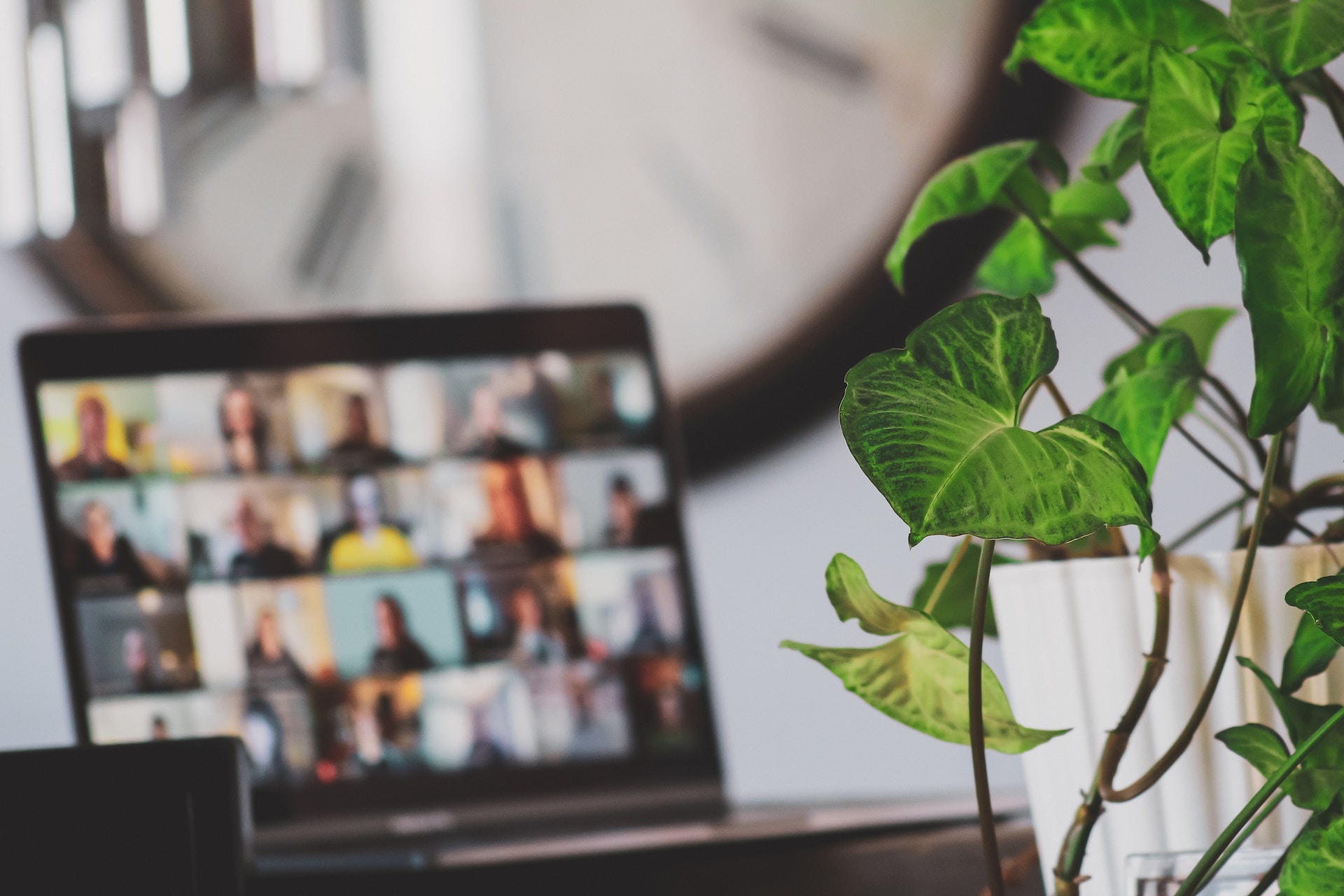
    The sense I read the most about in the context of hybrid working, digital wellness and technology is sight. Given the amount of time spent in front of screens, scrolling, staring and not blinking, implementing screen time limits or wearing blue-light-blocking glasses to alleviate eyestrain is becoming more common. Mobile phones now offer a different light mode closer to bedtime and monitor screen time in order to alert us when levels increase, and smart watches can remind you to move a little every hour. Other tips include taking a break from the screen, going outside to adjust to daylight, look into the distance or look at something green/natural to help your eyes relax and recover. The traditional 5-10 minutes of screen breaks every hour is part of every Display Screen Equipment safety training I have come across.

    Hybrid working typically provides fewer distractions and more reliance on online interaction for communication and collaboration, making it less likely that regular screen breaks are taken. Even when we step away from the screen, notifications and messages on mobile devices usually stay switched on, making it more likely that we end up with more screen time.

    Hybrid working has also led to more hybrid and online meetings. Depending on the role you work in, you probably find meeting free hours have become more rare and back-to-back video calls more common. Zoom fatigue impact us beyond our sense of sight alone, this article in Medial News Today summarises how “headaches, migraines, eye irritation and pain, blurred and double vision, excessive tearing and blinking are the most common and immediately visible physical symptoms of Zoom fatigue”.

    This week, how many times have you taken a 5-10 minute break every hour? For me, I would estimate I take a short break for each hour less than half of the time. On busy days maybe 10-20% of the time, but generally somewhere around 30-40% of the time.

    Healthy habit: step away from the screen

    If you are looking to improve your digital wellness by taking more regular screen breaks, here are some tips to get started:

    • What is your starting point? To begin with, reflect on how regularly you step away from the screen for a short break at the moment. If you are spending 8 hours a day in back-to-back video calls, then even one or two breaks a day might seem like a stretch. If you are already taking a break at lunch or making tea mid-morning, building in a few extra breaks might feel more achievable. Be honest with yourself about where you are starting from so that you can set yourself an achievable goal.
    • Easy does it. No matter where you are starting from, find the least busy time of your working day or week. It might be Friday afternoon or Monday evening. It might be the hour after lunch when there’re fewer meetings. Whenever it is, focus on that time first and plan in an extra break.
      You can use your calendar, phone reminders, post-it notes or whatever else will help you remember to take a break.
      Then, when the time comes, step away from your screen and do something that is not screen related for 5 minutes.
      I often go downstairs to get some water, water my plants or make a hot drink. If the weather is nice I might step outside. It doesn’t matter what you do.
      As you get up and start to move, notice how you feel. Are you stiff? Is there any part of you (or all parts…) that feel tense?
      Get back to work after 5-10 minutes.
    • Make it a habit: you might decide to set yourself a goal to take an extra break every day or a number of breaks a week to begin with. Observe any physical symptoms of taking regular breaks away from the screen or how your mood changes. If you have a busy day or a busy week and you end up forgetting to step away from the screen or you don’t have time, just get back to it when you can. The overall aim is to get into the habit of having breaks, and even one additional break is better than none.
    • Share your habit: one of the best ways to make this habit stick is to share and normalise stepping away from the screen. If you use direct messages or chat at work, post a quick update like “Just stepping away from the screen for a break” or “Back online in 10 minutes. Taking a screen break”. It’s a powerful way to promote digital wellbeing in any workplace, and if you happen to lead people or projects, your example can help others, too.

    In the next post in this series I’ll be focusing on a different aspect of embodied hybrid working and share a new healthy habit to try out.

    Enjoyed this post? Subscribe to my free monthly newsletter:

    [newsletter_form type=”minimal”]

    Image credit: Photo by Annie Spratt on Unsplash

  • Digital Wellbeing and Hybrid Working

    Digital Wellbeing and Hybrid Working

    This month I am running a short course on Digital Wellbeing and Hybrid Working. Working with the wonderful team at the University of Oxford IT Learning Centre is a rewarding experience, and with the support of Emma Procter-Legg, their Digital Skills Service Manager, the whole process has been seamless from start to finish 🙂

    It’s been a welcome creative challenge to translate insights from leading virtual teams and hybrid working into the context of digital wellbeing, and in particular into a course format. Now that the course dates are coming closer, here is a bit of a preview of what the course is all about, and my hopes for what participants will get out of it.

    About the course

    Hybrid working offers a lot of advantages, enabling us to work more flexibly than before. When it comes to digital wellbeing however, hybrid working can pose challenges, too: for some, the increased use of digital technologies for communication and collaboration become oppressive, for others, physical and mental wellbeing suffer due to long hours spent staring at the screen. Over two sessions we will analyse and audit what works well and what you’d like to change about how you work and the impact this has on your digital, physical and mental wellbeing. Using practical tools and interactive activities the sessions will support you in reflecting on your current practice and identifying what actions to take next in your digital wellbeing journey.

    Objectives

    • Reflect on how your current habits are impacting on your digital wellbeing
    • Identify your hybrid working skills strengths and areas for development
    • Understand the long term impact of hybrid working on digital wellbeing
    • Develop a sense of how to foster digital wellbeing

    For more information, visit the course page.

    Digital wellbeing + hybrid working in a course format

    One of the questions I considered when designing the course is where the biggest challenges lie when it comes to digital wellbeing and hybrid working. Digital wellbeing is a big term that encompasses much, and our relationship with technology becomes even more nuanced when you add hybrid working into the mix.

    This is definitely not a ‘one size fits all’ teaching scenario, and an inquiry based approach seemed best suited to address the topic. Thus the course features a number of resources and tools to help participants analyse and reflect on what aspects of hybrid working most impact on their digital wellbeing and why.

    Given that this is only one of the courses the IT Learning Centre offers and that many of the other courses are skills focused, I decided to reference rather than repeat digital skills training and to offer points within the course at which digital skills strengths and areas for development could be identified. This, I hope, will provide a jumping off point for future professional development.

    In the meantime, the course also considers habits and behaviours, the broader context of one’s role and responsibilities as well as home-working context. Looking at each of these in the context of digital wellbeing will enable participants to gain a more holistic understanding of digital wellbeing.

    Silent Disco anyone?

    One of the things that is hard to convey in a webinar or a talk is the need to stop what you are doing and look at things with fresh eyes. It’s easy to say something like ‘take regular screen breaks’, but in my work I rarely meet anyone who actually takes breaks frequently enough and doesn’t end of staring at their phone, scrolling through social media or YouTube on their break. 

    The course design thus features an activity designed to disrupt the usual order of business of a course like this, an activity that invites participants to do something different: a silent disco one day and a bit of origami the next.

    There’re good reasons for why I chose these activities, and there are alternative options for everyone based in a shared office, but ultimately it’s a question of whether the participants are prepared to step outside their comfort zone for a bit, and away from their desk or screen if they can. If it works as I hope, it’ll offer participants a chance to step outside of the usual rhythm of their day and that may open up more room for change.

    I am really excited to run the course and very grateful for the opportunity to develop something new for students and staff who are interested in improving their digital wellbeing. Fingers crossed it’ll be a valuable experience for those involved 🙂

    Enjoyed this post? Subscribe to my free monthly newsletter:

    [newsletter_form type=”minimal”]

    Image credit: Photo by Sigmund on Unsplash

  • 4 months into re-inventing Mondays

    4 months into re-inventing Mondays

    Time has flown by. It feels like only a moment ago that I was blogging about being 3 months into my career transition… and here we are, having passed the four month mark. Looking back at my previous posts on this topic has inspired me to share some updates about how things are going, how much my efforts to re-invent Mondays are bearing fruit and how free-lance life is treating me. In case you missed them, here are quick links to previous posts on this topic:

    Are you ready? Let’s jump in.

    Settling into uncertainty

    Not knowing what the following day, week or month would hold filled me with uncertainty during the first month of free-lance life. Although I had felt well prepared for not knowing what the day would bring, after all, life as a CEO was never predictable, I really felt it in those first few weeks. I remember recording a podcast in those early weeks, talking about my empty calendar, my empty inbox, the sense that it was really just me, sitting at my desk, alone, making it up as I went along.

    Fast forward to now, and I am glad to say that I have begun to settle into uncertainty. The past few months have had many ups and downs and brought much time for reflection, and I realise now that I need the uncertainty just now. I don’t want to know what the next day or week will look like. The not knowing gives me space to experience and try out different ways of working and allows me to figure out what I enjoy and what I’d prefer not to do again.

    A folder of things I have said no to

    My mix of pro bono and paid work definitely keeps me busy, and I am probably overcommitting my time in the interest of trying out new things. I am mentoring at a local high school, offering pro bono coaching, writing articles and going to events alongside consultancy contracts, course design, leadership development and workshops.

    I am on the hunt for what brings me joy, and what sparks my curiosity, and along the way I have plenty of experiences that teach me where I don’t feel I can contribute. Some things just aren’t a good fit, regardless of how lucrative they may be. Hence I have set up a new folder called literally ‘Things I have said no to’.

    So far, it’s not very full, but the list is growing steadily, and I hope to use it in the long term to help learn what really matters to me, what fills my cup, and what I *could* have said yes to for money. It is a privileged position to be in for sure, but it is also a way of exercising responsibility. I can’t do everything, and I need to focus my energy where it matters.

    Habits that work for me, and some that don’t

    In some of the previous posts I have talked a lot about my work/life balance and that continues to be a big theme for me. Recently I worked on a course about digital wellbeing, and trying out the exercises I designed prompted me to focus on what habits I have that foster wellbeing and help manage my relationship with technology. Given how nuanced my relationship with technology is this is a complex topic, but one worth thinking about. Here are some insights into what I feel works well and also some things that maybe don’t:

    Over the past four months, I have become A LOT BETTER at taking breaks. Breaks to step away from the screen, breaks from wearing headphones, from notifications, from social media, from email and from technology all together. This has all sorts of beneficial consequences. Take today. I had a pretty intense meeting, which demanded a lot of my attention and focus. Coming at the end of an already pretty busy morning of focused work, I ended the call with a headache. I felt tired, irritated. I got up, went downstairs, and had a drink of water. Stress headaches like that used to be quite a usual feature of my working life. Old me would have had a quick break, and then got back to work, trying to focus enough to ignore how my head felt. And it probably would have worked, but at the end of the day I would have felt spent, exhausted. Instead of returning to my desk, I took half an hour to do something different. I did a small DIY chore that had been on my to do list for ages, taking all my attention to sand and paint a small hole in the wall. Even after ten minutes my headache was gone, and I felt much better. I did go back to work after a while, feeling refreshed and ready to concentrate again. For me, that’s a win.

    One area of my life where technology has become more prevalent is fitness. I usually find half an hour in the morning to exercise, stretch or meditate. I watch the video class on the screen in my office, where I have enough space to spread a yoga mat or follow the routines. My neighbours, I hope, aren’t watching my efforts at jumping jacks… . The fitness app I use works with my smart watch, and enables me to match exercise choices to my mood and energy levels. Some days I want to sweat, some days I just want to sit. For a variety of reasons, morning meetings have become rare for me just now, and this morning I stood in the sun in my office in tree pose, happy to soak in early spring sunshine and energy. Another win!

    A habit that doesn’t work so well for me all the time is my CEO brain. It’s super helpful for running my free-lance business (and soon, a properly registered new company… more of that next month), and it’s equally valuable for leadership training and coaching and lots of other things. It’s helpful when I can help out, take responsibility as needed, and it can make working with me easy. I am so used to not breaking things, that I have become a very steady pair of hands. Unfortunately those steady hands are attached to a mind and heart that all too easily assume responsibility and care, too. I catch myself solving a problem or thinking about a strategy that my clients haven’t asked for. They may be paying me to design a workshop or a course, meanwhile I have revamped their professional development offering in my head. Coaching is a good antidote for CEO brain, as it’s trained me to place trust in the other person, to trust that they know or can find their path, or the solution to the problems facing them. And of course they do. They are creative and capable and amazing at doing what they do. As my own free-lance venture grows, I hope that I can utilise my CEO brain in good ways, without taking on responsibility beyond what is appropriate.

    On my wish-list

    At the start of embarking on this adventure my wish-list ran something like: make enough money to pay the bills, find more joy and balance. Along the way I unexpectedly acquired a record player for my study (yay!) and a lot more fun people to work with than I had imagined in those first few quiet weeks. Over the past few months my list has expanded and now includes: a sit/stand desk, more art for my work-space and a wall I can write and scribble on.

    The thing that isn’t on my wish list anymore is more joy. That’s definitely happening and I am grateful every day for this adventure and all the amazing people I get to work with every week.

    Listen

    Podcast episodes about my fresh start:

    Listen to Leading Virtual Teams on: Apple PodcastsGoogle Podcasts and Spotify.

    Enjoyed this post? Get my free monthly newsletter directly to your inbox.

    [newsletter_form type=”minimal”]
  • Preview: World of Learning Summit

    Preview: World of Learning Summit

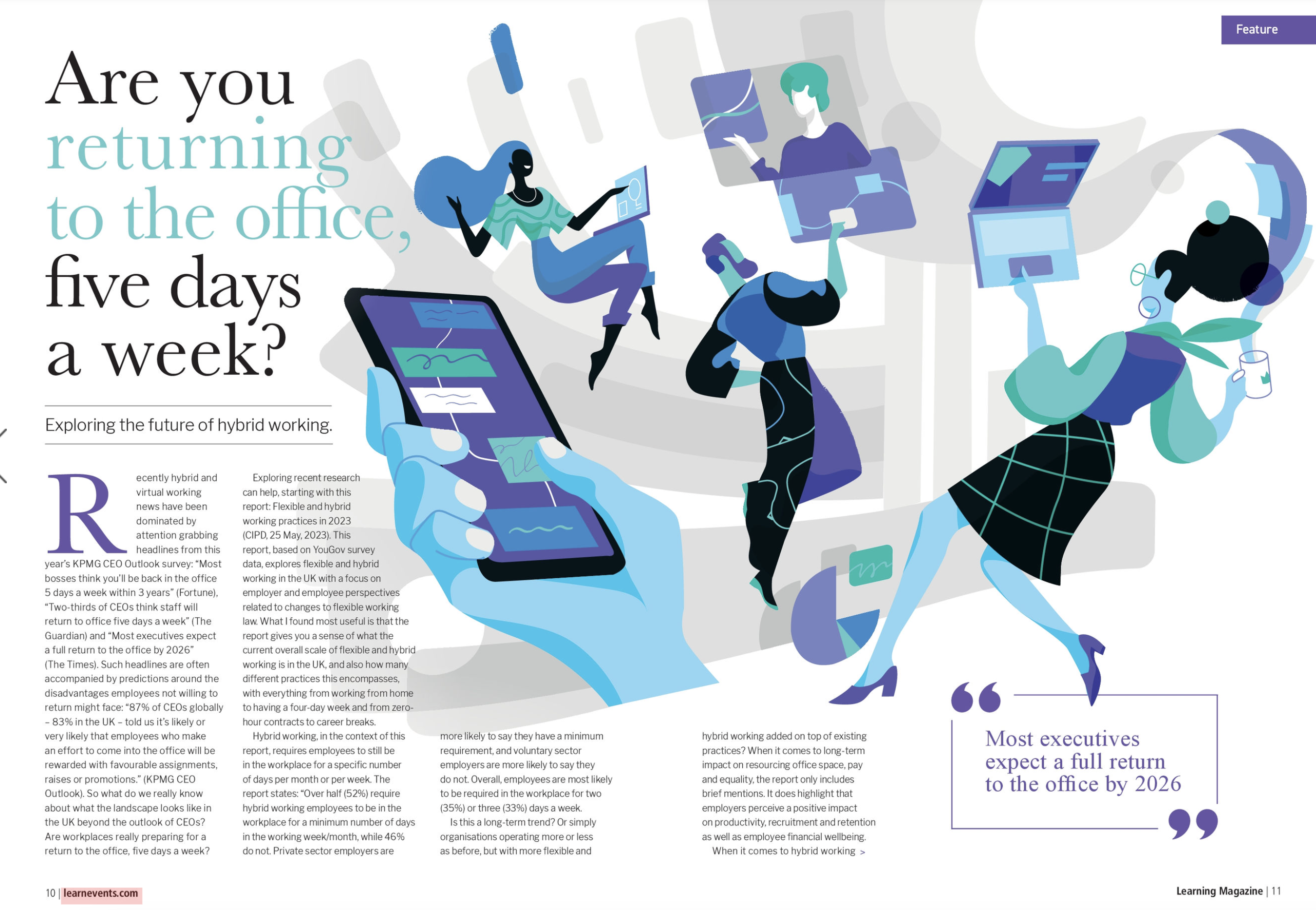
    I am really looking forward to speaking an next week’s World of Learning Summit. In preparation for the session and to offer an insight into what my session will be about, I contributed an article to the Learning Magazine: you can read the article freely online.

    Screenshot of the article with the caption: Are you returning to the office, five days a week?

    My session at the summit is on Wednesday, and focused on offering an interactive discussion forum for leaders. We’ll explore hybrid working recruitment and retention, new trends in hybrid working and also challenges that arise over time from recruitment to long term retention.

    Look out for the slides of the session, which I’ll be sharing via my linktree.

    Don’t miss a post. Subscribe to my free newsletter and get a summary of everything once a month to your inbox.

    [newsletter_form type=”minimal”]

  • The outlook is… meticulously informal

    The outlook is… meticulously informal

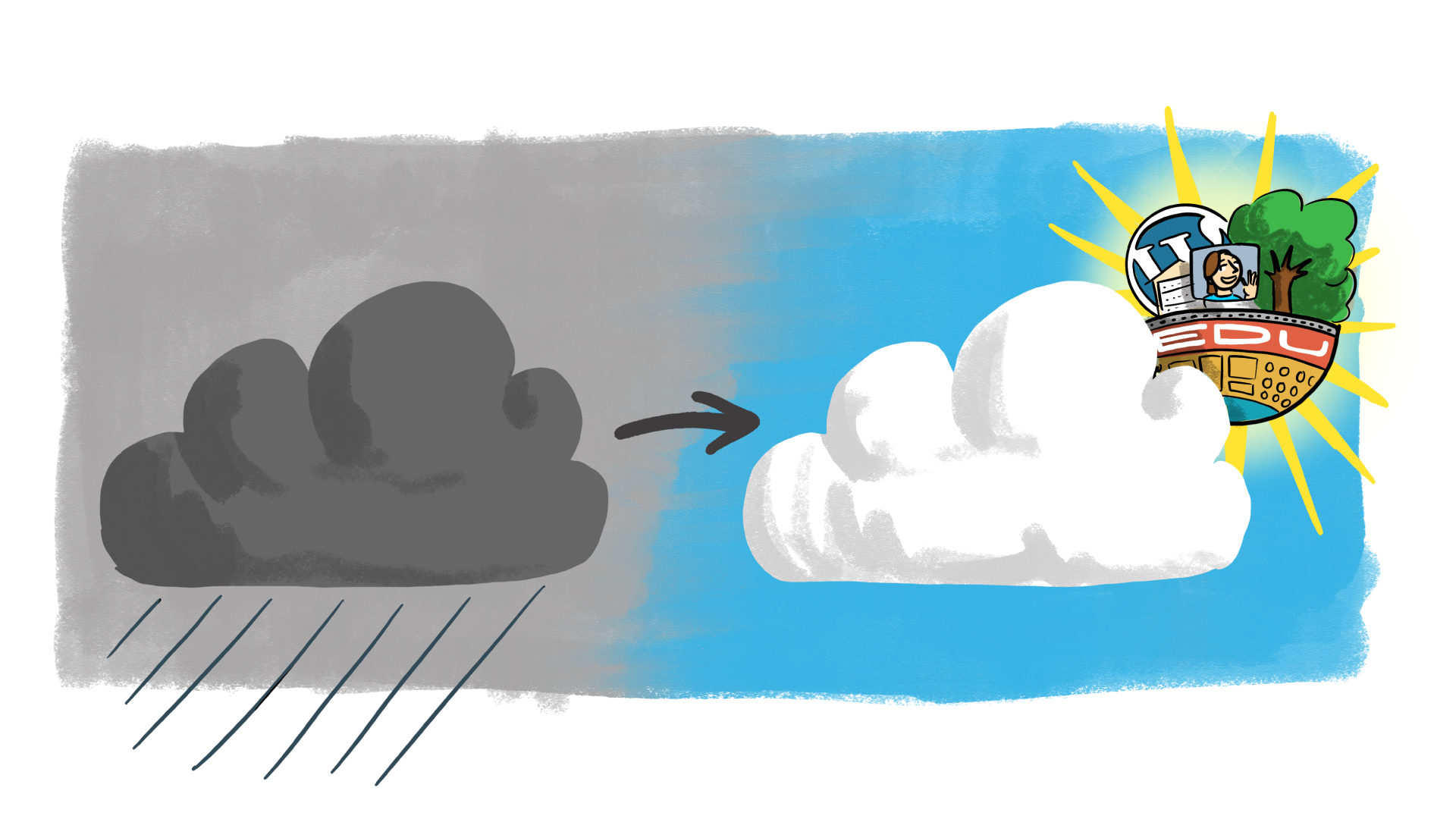
    The recent launch of ReclaimEDU has got me blogging… always a good sign. 

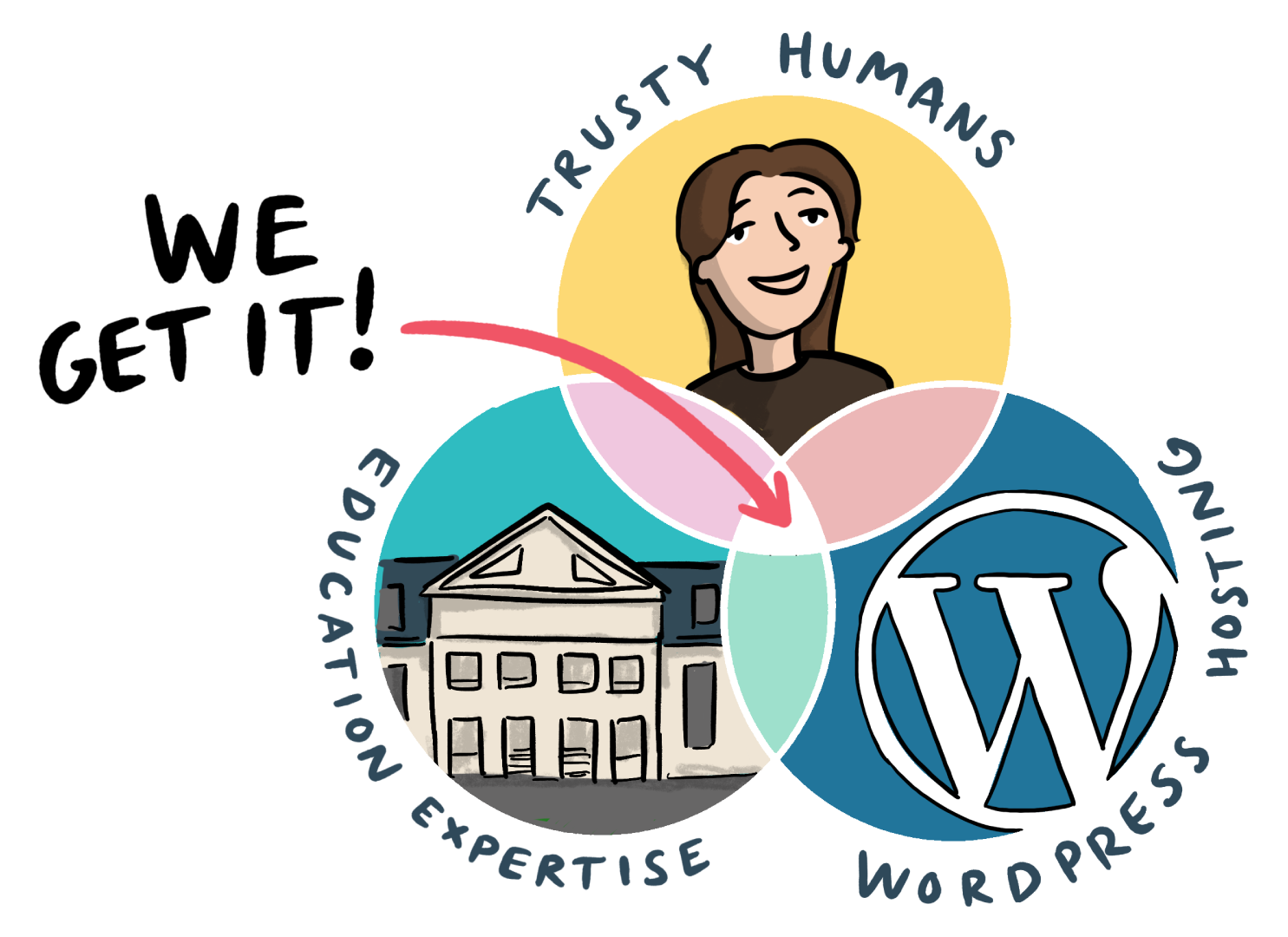
    Now, working with the team at Reclaim has many perks, one of which was to learn more about this new offering before it was even launched. Jim talked us through it in the way only he can, and although I am learning more about the technology that makes this all possible what really did grab my attention immediately was the artwork

    I love the work Bryan has created with Reclaim Hosting for nearly ten years now and this ReclaimEDU launch is a great example of why it is so powerful. You don’t really need the words to get the idea. ReclaimEDU feels like a long way down the road from the origins of Hippie Hosting more than a decade ago… but many things remain constant. And one of those is that it continues to be is meticulously informal. That’s the bit I am particularly interested in. 

    Meticulous informality is a phrase that Martin Weller coined in 2019, in relation to the ALT Annual Conference. In the years since, and as our professional relationship turned into a personal one, we have often come back to the concept in our conversations and found it helpful in describing something we both value about a certain way of working, particularly since a lot of our interactions are happening online nowadays.

    So what does it mean to be meticulously informal, and why do I think it matters? Let me try to explain what it means to me:

    In the context of event planning, for example, I would describe it as a result of planning ahead so well that on the day you can lean back and enjoy it, knowing that you have most eventualities covered and can deal with any impromptu things that come up. It also means treating the individuals whom you work with not as generic actors in the event (the keynote, a panel speaker) but take into account their context: someone coming from far away who’s not been in the country before, someone who’s never given a keynote before, someone who’s nervous… and so on. It’s also about being present. Walking the walk. And that takes a lot of emotional energy.

    I’ve been lucky enough to be at some events that really encapsulated that balance perfectly (yes, I am looking at you, wonderful OER Conference) and yet events aren’t the only place where meticulous informality matters. 

    When it comes to hybrid working, it really makes a difference, and it’s not something you can fake. When it comes to meticulous informality, people can tell whether you are going through the motions or truly making an effort. Effort is the operative word here as a meticulously informal workplace takes a lot of it. It’s no accident that one of the flex courses Reclaim’s Edtech team ran was all about hybrid working. I came on board to work on this course because we were interested in exploring all the different ways in which we can foster those interactions and habits that create a sense of meticulous informality in a team.

    Which brings us back to Reclaim Hosting itself, where this kind of thing is not only valued but also shaping force that is reflected in everything the company does. After all, how many hosting companies do you know who get their team to sit around a drawing pad with Bryan Mathers as a first step to launching a new service (a service, incidentally, that as far as I can tell is needed because clients want to put more and more high level sites onto infrastructure they trust working with people who get it – people who are meticulously informal not only when they answer support tickets or chat about blogging on Discord, but also when it comes to designing new flagship services). 

    We get it! More artwork from the ReclaimEDU page.

    Incidentally, Visual Thinkery, where the process is in many ways more important than the eventual (amazing!) output, is another example of meticulous informality at work. What makes it work in both cases is a mixture of incredibly hard work (and a good measure of genius), as well as that all important understanding of why the informal bit matters. When I saw the ‘We get it!’ image above that Bryan created with the team, I immediately thought ‘Yes! They do get it!’. Yes, they are really good at what they do and they work very, very hard to constantly improve the infrastructure and support, and they also treat you like a human being, they care, they get it. (And, as an afterthought, they are human beings, too, which nowadays probably isn’t a given when it comes to supporting you with your hosting.) 

    It matters to me that I get to work with people who share that sense of what I think of as meticulous informality. It matters because I am more than a metric. Being more than a metric, more than a data point was the focus of my keynote for the ETUG Conference in Kamloops, Canada, in 2019 and it’s been a theme I have come back to again and again since. I see meticulous informality as a way to create that all important space needed to relate to each other as human beings, be that at events or at work or hosting your domain, and not give in to technologically determined transactional behaviours.

  • Origami, walking and a lot of space to think

    Origami, walking and a lot of space to think

    It’s been great fun this week to head up to Edinburgh to facilitate an away day for a senior leadership team at the university, and I wanted to share a few snippets of what made the day really memorable for me. The focus for the day was all about hybrid working and leading people and projects in a continually changing context, managing the enduring impact of lockdown working alongside emerging policies and priorities. Here are some reflections:

    First of all, there’s the venue! The photo of this post shows the building where we spent our day with a beautiful view of Arthur’s Seat. It was great to have a venue which had such scenery on the doorstep, particularly as we could see the hill from the meeting room where we were based for the day. Lots of natural light and air always helps, I find. The venue was a good fit for some of the activities I had built into the day, designed to encourage everyone to step away from their screens and do some thinking together whilst getting some movement in.

    Slide from the presentation day showing a picture of the hill and sharing instructions for a walk and talk reflection.

    The walk and talk reflection after lunch was a really popular part of the day, giving everyone time and space to talk about things in a less formal setting than sitting around a meeting table. This activity also offered those who needed some quiet time to reflect on their own a way to do that between a busy morning of group working and the afternoon brainstorming session.

    Office origami

    One of the sessions on the agenda explored fresh ideas for fostering a sense of community and encouraging engagement in hybrid workplaces. For example, we discussed how working radio or shared playlists could work, even scope to have a silent disco… 🙂 . I loved that idea in particular. We also tried out office origami as a communal activity.

    Now, for most of the day we worked on hybrid working leadership skills, exploring areas like communication and collaboration as well as building trust and keeping oversight of progress. Most importantly we talked about fostering loyalty and engagement, considering how the experiences of new and established staff could differ and how the role of leaders changes over time as hybrid working becomes more established.

    What was really inspiring for me throughout the day was to see all the experience and expertise a team like this can bring to bear on the challenges of hybrid working. Working in learning technology builds a lot of capacity for the challenges ahead, especially as there are a lot of things we know about blended learning that can now be applied to hybrid working.

    Over the past year I have run my hybrid working leadership course, inspired by my book on leading virtual teams and coaching tools I have developed to support these offerings and it was great to see a lot of elements from these activities come together into one packed day of leadership development.

    I had quite a few requests from folk elsewhere who are interested in hosting a day like this at their institution or take part in an online version. If you’d like to be added to the waiting list for that, get in touch.

    Keep in touch with new events and the work I am doing by subscribing to my free monthly newsletter.

    [newsletter_form type=”minimal”]