Category: hybridWorking

  • The One Percent

    The One Percent

    What will it take to make your day 1% more… of what you need?

    Working life for is busy and keeping a grip on things takes a lot of energy and focus. So what do you do when you grip on so tightly that you can’t see beyond what’s in front of you?

    This post is inspired by some recent coaching sessions which prompted me to reflect on how you can make small, incremental changes when adopting a new healthy habit or tackling a big change may seem out of reach. What would make a real difference to my clients, either in the way they work or how to disconnect from work?

    Listen to the podcast episode

    Starting with very small increments, even just 1%, can lead to quick wins and solve niggling issues along the way. Whether you feel like trying out a playful or pragmatic approach, you can always find ways to make yourself 1% more comfortable, even on a bad day. And along the way, you might gain a little more awareness and distance from being lost in digital productivity curves.

    Getting started

    Here is a little inspiration to get you started. Make a small change, or maybe two, and see how things shift:

    Add a sprinkling of analogue…

    • a plant
    • a nice coaster
    • photos/pictures/art
    • a rock or shell from somewhere you like
    • record player
    • scented candle or a diffuser for aromatherapy oils
    • music
    • new flavour hot (or cold) drinks to try such as new herbal teas or coffees
    • a secret snack stash (healthy or not)
    • something tactile like a soft throw or a fidget toy

    Get 1% more comfortable…

    • a new mouse mat or a mouse you like
    • wrist rest/mouse rest
    • glare protector
    • foot rest (cushion or yoga bolster can work, too)
    • headphones that suit your ears
    • eye mist and glasses that help filter blue light
    • a water bottle
    • cleaning products for your workspace, i.e. eco wipes, disinfectant, screen cleaner
    • find a window sill or high shelf you can use as a place to have meetings with your laptop or a sit stand desk or desk shelf

    Step away from your screens

    • an alarm or similar that reminds you to take regular screen breaks
    • a physical reminder to go to a different room/downstairs/outside
    • cushioned slippers or shoes (particularly handy for standing desks)
    • a paper planner/diary you can use away from the screen to think/plan
    • a lunch date/appointment with someone away from your desk
    • plant care
    • play with your pet
  • The Power of (the right) Prompts (Part 2)

    The Power of (the right) Prompts (Part 2)

    In my last post I explored how a journal of professional practice can easily turn into a superpower at work. Whether you are writing by hand, typing away on your laptop, dictating into your phone or sketching with pen and paper, I am a BIG fan of journalling (and after over 30 years of journalling for both work and in my personal life, I have tried every which way to make it work).

    As a coach, I often work with clients who just need to find the right way to articulate their thoughts, and once they’ve unlocked that, they are good to go. You know it’s working when you are able to sustain a reflective journal when you need it, and over time it becomes a habit that turns into a superpower: for example, I find it helps me enormously with gaining perspective, making a big decision or finding my path forward that I can revisit the pages I wrote on my first day as a CEO or the day I got my PhD. I can also revisit times when things were tough, like during the pandemic.

    But… what if the thoughts don’t come?

    Some of my clients find that regardless of the approach they use, words don’t flow. It can be hard at times to know where to start or what to reflect on. Instead of finding clarity or deep reflection, you end up narrating days, or making lists of things to do. Or maybe you are just staring at a blank page, and your mind goes blank.

    If you find that a particular method doesn’t unlock things for you, I would suggest you leverage the power of prompts, or rather, the right prompt for you. Prompts are powerful and can be transformative to our thinking (which is why so called “powerful questions” are the foundational tool in coaching and coaching leadership).

    A few years ago I struggled to effectively reflect. Finding the right prompts for your context can be difficult, so I looked for inspiration in Warren Berger’s The Book of Beautiful Questions, Hermina Ibarra’s Working Identity and Elizabeth Gilbert’s Big Magic.

    I found three types of prompts that helped me and subsequently many of my clients through this kind of block: first, prompts that related to the physical self, next prompts that help identify tangible examples and last, prompts that helped us understand our reactions to situations.

    Example prompts and why they work

    Prompts that help you get out of your own head

    In much of the work I do I coach and train highly skilled professionals who spend a lot of time in their head. I can empathise, as it’s one of my favourite places to be as well. That said, being in one’s head isn’t always conduce to reflective journalling or finding clarity. Which is why when I am stuck, I find prompts that relate to my senses or focus on my physical self super helpful.

    Example prompts to try:

    • What physical signals do you perceive when you contemplate this decision?
    • How does it feel to be in this place [i.e. an office, a lecture hall, a stage]?
    • What activities give you energy?

    Prompts that help calm overwhelm

    Another common reason why reflection can feel hard is a sense of overwhelm. I often work with clients facing big decisions or very high workloads, or juggling A LOT. In situations like that, everything feels… too much, too difficult, too complicated. That’s when prompts that focus on specific examples can help.

    Example prompts to try:

    • Describe a recent positive interaction?
    • What has boosted your mood or encouraged you?
    • When did you find yourself enjoying an activity or experience?

    Prompts to think through reactions

    One of the things my clients tell me they value the most about coaching with me is to have a trusted thinking partner to think through difficult situations with. To talk about awkward or emotional encounters, and to reflect on how they reacted in the moment. This is a difficult thing to do on your own, as usually the focus is on how it feels. My role is to offer prompts that shift that perspective from how it feels to why, and to help us understand the reactions.

    Example prompts to try:

    • How did it feel?
    • How did those feelings manifest themselves?
    • How did you react?
    • What would you do differently in future?
    • What can you learn from the situation?

    I’m always curious about how the power of the right prompts unlocks reflection and opens up new perspectives. If you have different prompts you use in situations like this, I’d love to learn about them, so get in touch.

  • Finishing another year at Oxford

    Finishing another year at Oxford

    This week wraps up another year of teaching at the University of Oxford. Summer is here, and my work with the Digital Capabilities team takes a break over the summer, before Michaelmas Term starts again in autumn.

    For the first time since I started this year had more in person components, including two days of fully in person sessions with cohorts from across the university. Getting to work with such a diverse range of people in a unique institutional context whilst exploring all aspects of hybrid working is great fun.

    Last year, I was focused mostly on Digital Wellbeing in my reflection at the end of the academic year, and although this remains relevant there are now other dimensions of hybrid working that have come to the forefront:

    AI in the workplace: AI-enabled tools and platforms have spread widely and quickly in the workplace. With such a strong commercial motivation, every major tech player has quickly incorporated enhancements designed to improve digital productivity for the user, whilst collecting data and increasing prices for providers. Across the range of responses to the arrival of this type of technology, from enthusiastic early adopters to skeptically cautious users, I have yet to meet the professional who feels less busy, less time-poor or less stressed as a result of using AI. Instead what I have observed is that the pace of digital productivity, increased by time-saving AI applications in particular, is causing overwhelm, burnout and a frantic sense of having to keep up with the pace set by technology.

    Medium term consequences: Also emerging are the now medium term consequences of hybrid working at scale. With the pandemic moving further away and workplace practices and policies becoming more stable, we are able to observe what the impact of hybrid working at scale is for the first time. Even across just one institution, the picture is mixed: some groups have mostly gone back to the office, offering flexibility on certain days, whilst others have gone mostly remote, with a common anchor day to be present on campus. Some groups of staff love working from home, whilst many struggle with overwork and lack of work/life balance. A common complaint is that it now feels like one is “living at work” (instead of working from home) and the accompanying (perceived or actual) expectation of having to be available all of the time.

    Hybrid leadership capabilities: More and more institutions identify staff (and also student) hybrid working capabilities as a strategic priority, and quickly realise that leaders have little capabilities to effective manage and support staff in such a context. This is the area I am most interested in, and where my work is most focused at the moment.

    It’s been a joy to work with Emma Procter-Legg and her colleagues for another year, and I am excited to pick things back up for the start of the next academic year.

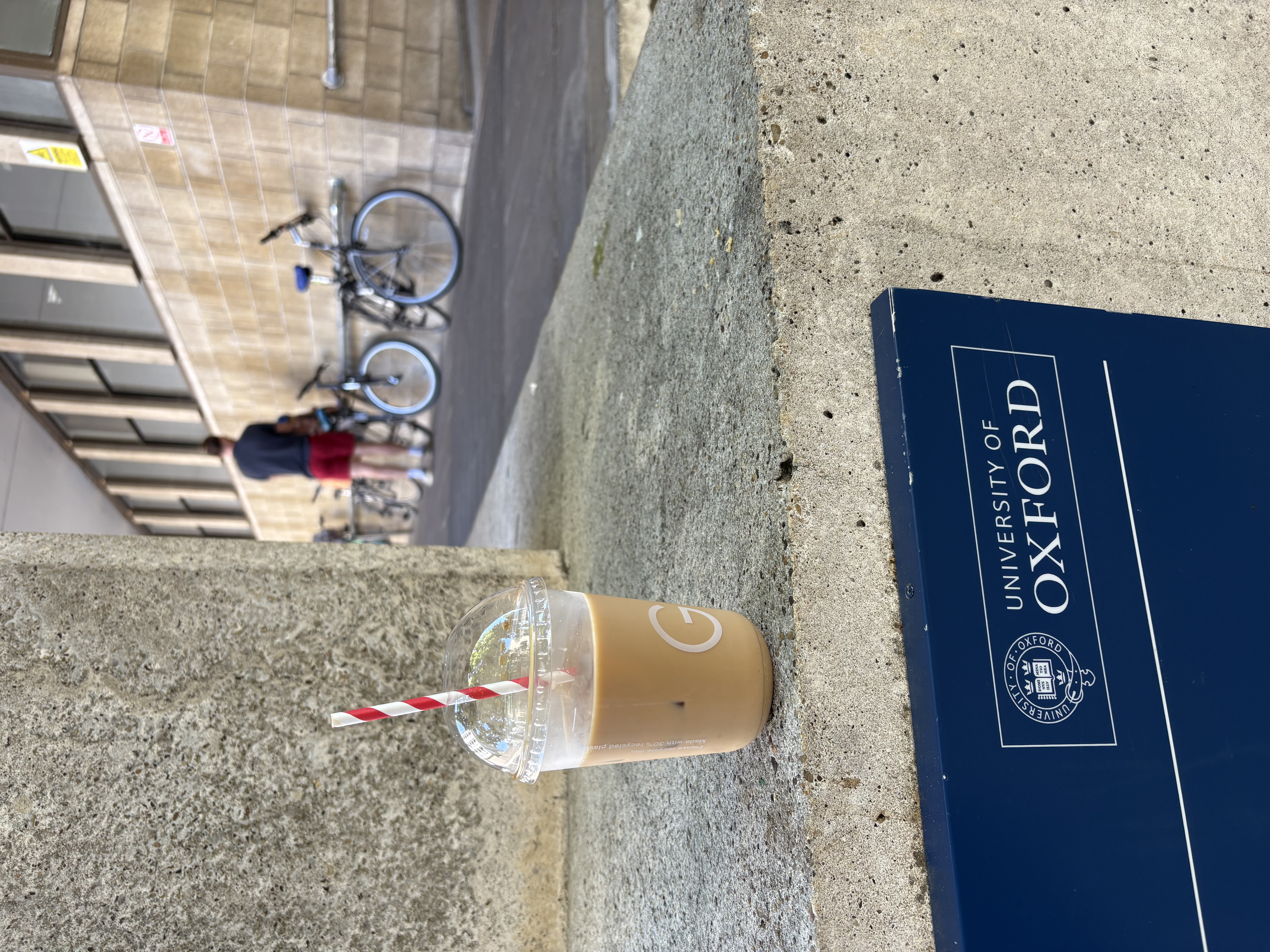
    A photo of a cup of coffee, with a unviersity sign and bikes in the background
  • Book Mission Statement

    Book Mission Statement

    On a recent podcast episode I shared an update on my next book, which I have been working on for the past year or so, mainly conducting interviews and research. Now that writing has begun in earnest however, I am thinking more about why I am writing the book. Especially since it’s never been easier to simply provide a lot of data and have your book generated for you by AI.

    Cue this “mission statement” for the project:

    • Why another book? This book is about what happens at the intersection between human beings, technology and work, which is the space I am interested in. Whether fully remote, hybrid, or blended on campus and in offices, the way we work continues to evolve, and we negotiate the full spectrum of technology as we do so, from analogue to AI. This book brings together leadership perspectives in order to explore how we, as human beings, can shape the future of work.
    • Why now? Work is politicised and contested, from companies forcing employees to return to the office full-time claiming that collaboration “can’t be done online” to the threat of automation and AI taking over jobs. Add to that a cross-generational workforce with very different needs and expectations, and things get even more interesting. This book is designed for leaders and managers seeking to navigating these uncertain times.
    • Why a book? Because I love books, I love reading them and writing them and it feels like best format for getting to think about the things I am interested in, i.e. the right format (length, familiarity) to explore these ideas in appropriate depth. Also, you can print a book and I found it extremely helpful to have a printed format of my first book instead of only digital resources.
    • What about AI? I am intentionally not using AI in the creation process, but if you find it helpful to get you thinking and reflecting, then by all means go ahead and create an AI summary or an AI podcast. My choices reflect what process works for me and my reasons for writing the book in the first place. It also reflect the values I hold about the importance of human creativity and human labour. This book is my endeavour by choice, not because there weren’t easier or quicker ways out there.
    • Why open? This second book, like the first, will be openly licenced under Creative Commons. Most of the work the book is based on is already in the open domain, and I want my work to be as widely available as possible. You’ll be able to purchase a printed edition. I believe in open knowledge creation, and I hope this book will be a useful resource for emerging and established leaders across sectors.

    Listen to the podcast episode

    Subscribe to my monthly newsletter and never miss an episode again:

    [newsletter_form type=”minimal”]
  • Preview: Global Trends Towards Flexible, Hybrid Working and its Impact for Digital Leadership in Higher Education

    Preview: Global Trends Towards Flexible, Hybrid Working and its Impact for Digital Leadership in Higher Education

    Next week sees the launch of new research into hybrid working, a new report commissioned by the National Digital Leadership Network in Ireland.

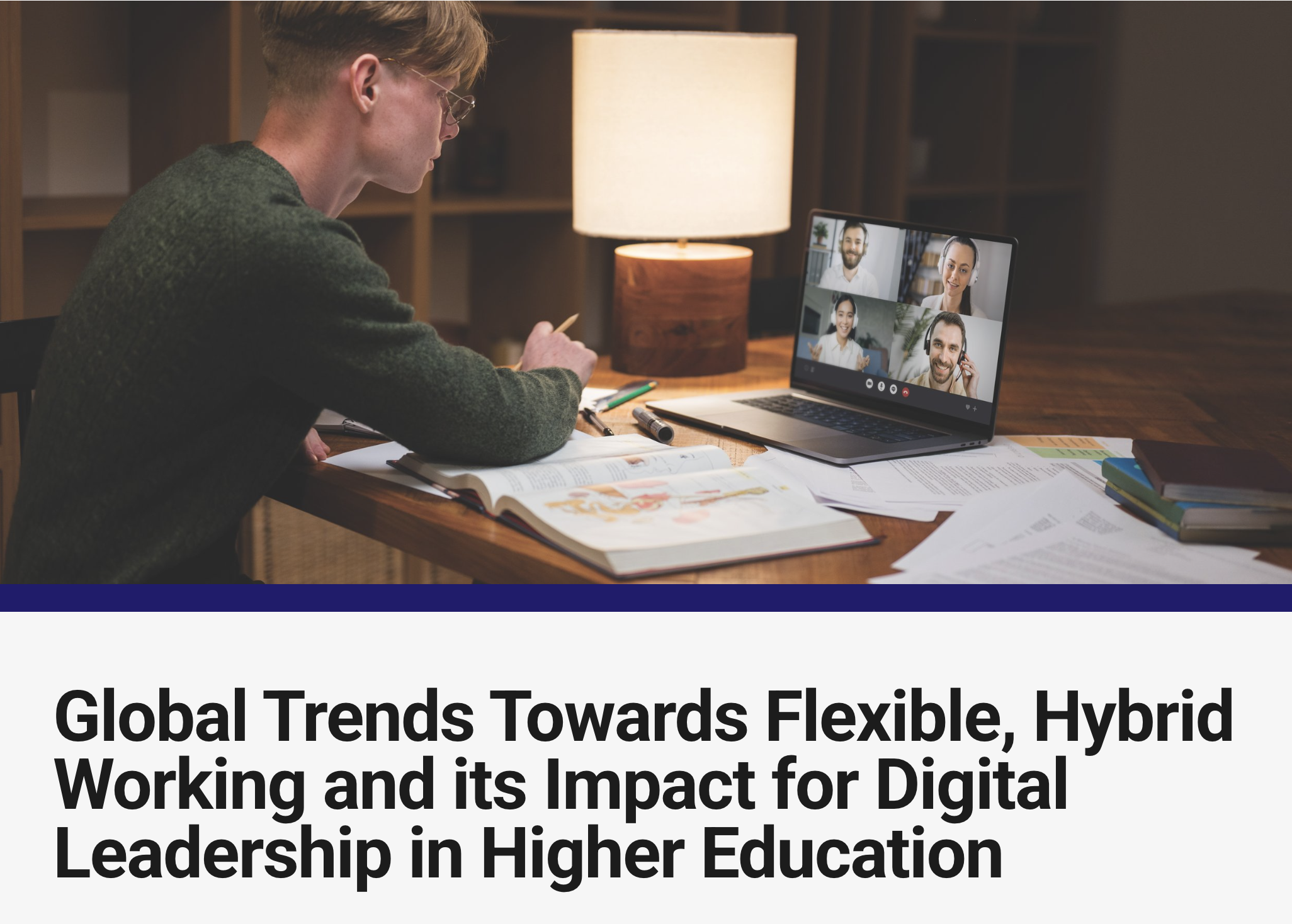
    Global Trends Towards Flexible, Hybrid Working and its Impact for Digital Leadership in Higher Education

    This strategic report will focus on the global trend towards flexible, hybrid working and its impact for Digital Leadership in Higher Education in Ireland and beyond. We examine the wider implications of hybrid learning and working for Higher Education and situate this current globalised trend in its historical context. We also explore best practice exam-ples drawn from industry and education sectors and highlight the role of effective Digital Leadership in meeting the challenges of changing needs of (lifelong) learner populations in a world impacted by environmental and technological factors and draw together strate-gic recommendations for leaders in Higher Education seeking to support student success from Higher Education into a fast moving, competitive job market that is under threat from automation and AI .

    Join the launch event on 2 April

    The National Digital Leadership Network (NDLN) will celebrate its official launch on Wednesday, April 2, 2025.

    Hosted by the Department of Technology Enhanced Learning (TEL) at Munster Technological University (MTU), this event will showcase the NDLN’s mission to advance digital leadership in higher education across Ireland.

  • From inauguration day to origami.

    From inauguration day to origami.

    This week a cohort of 16 leaders and managers wraps up the current run of my Healthy Hybrid Habits course. As this is the second time I have run this course in this format, I’d like to take this opportunity to reflect on and celebrate what’s been achieved.

    Whilst I regularly facilitate similar workshops or courses on similar topics for institutional cohorts, I designed this course in a coaching format, offering weekly group coaching sessions alongside the asynchronous content. There’s a mix of audio recordings to listen to, resources and tools to try out and further reading and I sent out a course letter by post, too.

    The informal design of the course means that individuals can engage in a dialogue and a 1-to-1 coaching session with me, and because of that I cap the cohort size at a maximum of 20. Over the course of the four weeks, we get to know each other a little and share perspectives on leading organisations and teams in different sectors and different size organisations.

    Timing is everything

    Running a course starting 20 January 2025 had its drawbacks. When I set the dates, back in autumn 2024, I didn’t yet know what the start of the new year would bring with it in terms of global events. However, as I had a full cohort booked onto the course I didn’t want to change the start date at short notice, and thus the start of the course coincided with political and social events that… well, that made it even more urgent (and yet even more difficult) to prioritise a balanced relationship with work, technology and being online.

    Digital Productivity Double Speak

    One of the things I have noticed in the past couple of years is that very similar language is used to describe things like digital wellbeing and digital productivity even when referring to the opposite. I have blogged about this before, but it’s worth revisiting:

    1. In the wider context of digital health it can mean using technology, applications, websites or online services to help us manage our health and wellbeing.
    2. In the workplace, and specifically in an increasingly hybrid workplace, we often use the term digital wellbeing or digital wellness to describe how the use of digital technologies impacts our physical, mental or emotional health and wellbeing, for example screen fatigue or stress caused by digital overwhelm and constantly being connected.

    My work, and the course, is very much about the second definition and not the first. But much of the discourse around being “healthy” and “online” is about the first: Use an app to be more mindful, track your sleep, measure how stressed you are and so on. Of course, the skills required to use technology to manage health and wellbeing are important, but they are not in and of themselves sufficient.

    Many of the activity in the course are designed to encourage you to step away from digital technology and focus on developing awareness, of noticing and focusing on your embodied self, people and relationships (even if these are mediated by technology).

    The AI “solution” to digital overwhelm

    I conceived of much of the course content before all major work platforms and tools came with AI functionality baked in, but it doesn’t surprise me that one of the solutions to too much information and digital overwhelm is… summaries. Summaries of emails, summaries of reports, of work meetings, presentations and brainstorming sessions. Summaries of the books you don’t have time to read during lunch or on your commute because you are too busy staring at a screen.

    It’ll be interesting to see how the design of the course changes over time, if it does. I am thinking about how to best update its content where needed, but also to retain its core message of how deepening our awareness of and skills for managing people and projects can help create playful, positive interactions for a more meaningful working life.

    Congratulations are in order!

    I am really grateful for the inspiring conversations and playful interactions we shared over the past month, and congratulations are certainly in order. It takes a lot of energy to step away from a busy workload and focus on what a better work/life balance, a more balanced relationship with technology and digital productivity could look like.

    If you’d like to join us for the next run later this year, get in touch or join the waitlist.