Category: Conferences

  • Big challenge ahead: talking about equality #iltaedtech17 #femedtech #oer17 #altc

    Big challenge ahead: talking about equality #iltaedtech17 #femedtech #oer17 #altc

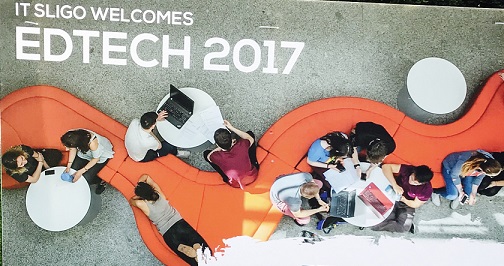
    This week I am looking forward to giving a short talk at the EdTech 2017 Conference, the annual conference organised by the Irish Learning Technology Association (ILTA). This year’s theme is TEL in an Age of Supercomplexity: Challenges, Opportunities and Strategies. 

    The event has what looks like a great programme. My own focus is on exploring how openness can be a tool for Learning Technology professionals to promote equality. I am going to look at three specific examples of this, starting with work that’s happening close to home in the ALT Member Community and in particular our local Member Groups – illustrating this with the visual thinkery created for ALT by Bryan Mathers. The other two examples I want to talk about are the emerging FemEdTech network and the voices still echoing from the OER17 conference. I’ve shared my slides below and I look forward to the conversations and feedback in response to my contribution – and a special thanks to Catherine Cronin who has already provided me with some very helpful comments!

    Below is the full transcript of my talk:

    Thank you for giving me the opportunity to share with you how individuals are taking action to promote equality in Learning Technology, equality in our profession and across sectors – equality for individuals and within institutions.

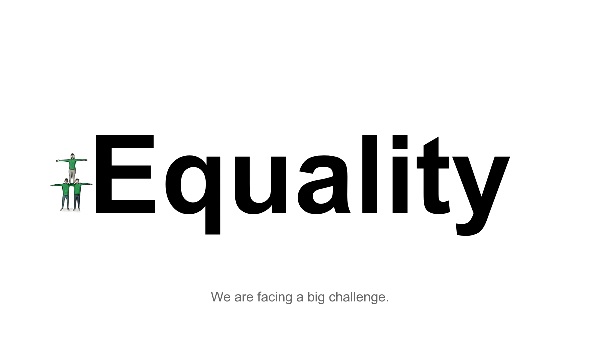
    Equality. We are facing a big challenge. Looking around this room everyone among us has witnessed inequality in some form. On a global scale policy and strategy are necessary to address some of the most fundamental challenges that stand in the way of greater equality for all – but what I’d like to explore is how taking action on a personal basis, taking action as part of our professional practice, can make a difference. Make a difference through openness – openness as in for example sharing OERs, using open licencing, through open governance and open practice at all levels.

    The first example is the work of ALT’s Member Groups, and also Special Interest Groups who share their practice and collaborate openly, all across the UK and beyond. Aligned to ALT’s aims the Learning Technology professionals who are active in these groups share the values we have set out as a community and sharing their experiences, both failures and success. These groups, by being inclusive and community-led, have contributed to making our membership more diverse and their work continues to contribute to strengthen equality in our profession.

    Now, the emerging femedtech network is a new initiative that is led by Learning Technology professionals who are taking personal action to promote equality and to do so through open practice, conversations and events. It’s an important effort to create a safe space that is also open and inclusive. We want to celebrate and extend the opportunities offered by education in/and/with technology – to women, and to all people who might otherwise be disadvantaged or excluded. If you haven’t already, I urge you to look at the work that this network is beginning to undertake.

    My last example are the voices still echo-ing from the OER17 conference convened earlier this year by Josie Fraser and Alek Tarkowski. Josie, Alek and the organising committee made a concerted effort this year to create a more diverse, inclusive programme with a distinctive all female keynote line up and a programme that inspired a lot of critical reflection and conversation long after the event – and indeed that conversation is still going on. Catherine Cronin, who was part of the closing plenary at the conference, later reflected that the themes of criticality, equality and social justice were at the heart of OER17. It was a powerful example of many individuals taking action together – through openness – and making a difference.

    Days like today give us that opportunity, to reflect on how we, as individuals, as a professional community, can take action to achieve greater equality through openness, to harness technology to do so – and then to go and make a difference.

  • Input welcome: promoting equality in Learning Technology through openness

    Input welcome: promoting equality in Learning Technology through openness

    I am working on a slide deck to give a short presentation at the upcoming EdTech2017 conference (1-2 June, Institute of Technology Sligo, Ireland)on promoting equality in Learning Technology through openness. The proposal I submitted already includes a number of examples, but the inspiring (and still growing!) list of blog posts following the OER17 conference has made me consider what else I might include. In particular, there are two aspects of my talk I am going to be researching further and if you have any suggestions or references any input is most welcome:

    • “Where are we now”… in terms of equality in Learning Technology. I am thinking both about the edtech sector in general and the way in which the use of technology for learning, teaching or assessment can help promote equality;
    • Reading and ideas for good practice. As this is a short talk I’d like to include a list of where to go next so that participants can follow up further.

    If you can contribute any references or other ideas, please leave a note in the comments or via Twitter to @marendeepwell . Thank you.


  • Time to be… open #OER17

    Time to be… open #OER17

    We’re getting ready for the OER17: The Politics of Open conference this week. As one of the organisers of the event my main focus has to be on making sure everything runs as well as it can – but it’s also an opportunity for me to spend a few days with a community who shape the future of open education around the globe. And this year the conference has a stellar line up across 2 days with sessions set to challenge the politics of openness from the personal to the national.

    Image of ALT laptop stickers
    Stickers featured in the workshop

    There already is a plethora of blog posts by practitioners reflecting on and setting out their thoughts, hopes and inspirations. It makes for inspiring reading and personally I can’t wait to see some of these conversations play out at the event. I might have to write a follow up blog post (with a particular focus on a workshop I will be running jointly with Bryan Mathers called ‘From Voice to Visual – the making of an open strategy’ ). For now, here is what I’ve got in mind for my own #OER17, beyond the running of it:

    First, I’ll be looking out for new opportunities for Learning Technology to scale up, support and strengthen Open Educational practice. Technology isn’t always the answer, but I often think it can do more for openness.

    Second, I’ll be making time to have conversations. This year I am prioritising people over the programme… so if you are at the event in person or joining into one of the streamed sessions (or my first venture into Virtually Connecting thanks to Maha Bali!) come and say hello.

    Third on my list for this week is to enjoy OER17. That might seem like an obvious one, but it’s worth remembering. Over the past 12 months I have seen volunteers and colleagues pull together an event that has grown in participation, influence and voice. It’s going to be an amazing opportunity for everyone to come together and hopefully translate into practice and policy what they experience this week – taking action for open education.

  • Equality, empowerment, accreditation and beyond. My fantasy conference proposals… #altc

    Equality, empowerment, accreditation and beyond. My fantasy conference proposals… #altc

    Every year around this time when I encourage my peers to submit proposals to the ALT Annual Conference, I reflect on the fact that as one of the organisers I can’t submit a proposal myself. And given that as a Learning Technologist this is one of the key events in my diary each year, I have often thought about what I would submit if I wasn’t affiliated with ALT. So here are some of my fantasy proposals, ideas in the making, that I won’t be submitting (again) this year. If you have your own ideas then your chance to submit your 250/500 word proposal is still open until 20th (or soon to be 27th) March. Take your chance & make your voice heard.

    Poster, Theme: Wildcard: Poster showing how peer accreditation for Learning Technologist works based on the CMALT framework, which is mapped to a number of other accreditation pathways including the UKPSF, the Jisc Digital Capabilities Framework and Blended Learning Essentials. CC licenced so that the model can be adopted by participants in their own contexts.

    Lightening Talk, Theme: Empowerment in learning Technology: Empowered #edtech governance. A fast paced, visual take on how to work collaboratively with decision makers to build new strategies, using work with cross-sector stake holders as examples. Would include a 1 page “recipe” handout to take away and try out in your own organisation.

    Presentation, Theme: Learning Spaces: this presentation would be led by three apprentices/interns whom I have worked with in the past year and they would take participants on a tour of their learning spaces, both physical and virtual. The tour guides would explain how spaces are used and lived in, why and for what purpose. We would reflect on issues like privacy and agency in different spaces and importantly what happens in the spaces and time periods between things, i.e. between institutions, between life stages, between qualifications. We’d question how Learning Technology can provide continuity for life long learning both online and in person.

    Panel, Theme: Empowerment in Learning Technology: Working in Learning technology one of the things I am passionate about is equality. Particularly for those working as open practitioners there are so many ways in which inequality and discrimination can impact on our ability to achieve our aims. This panel would bring together 5 exceptional practitioners to share their own strategies for empowered practice in Learning Technology and to reflect critically on how their approaches are challenged. We’d invite participants to contribute their own tips and tools in advance and during the discussion, ending up in a series of posts providing practical information that would be useful to both learners and professionals.

    Workshop, Theme: Wildcard: Learning Technology: top 10 complete failures. This is one of the sessions I’d like to go to but somehow it doesn’t seem to make it onto any conference programme. Presumably because no institution pays for their staff to go and share the details of how they lost money or worse when Learning Technology failed. And indeed because no one wishes to have this particular reference added to their CV. Still, other conferences now include specific sessions where we explore what happens when things go wrong. What happens when projects don’t deliver, students don’t use the tools or academics simply don’t co-operate. The list of forgotten, crumbling Learning Technologies is long. This workshop then would include the brave colleagues I have known and worked with over the years who would be prepared to share their perspectives so that we don’t have to make the same mistakes over and over again. Participants would be contributing their own stories. Ideally one or two policy makers and industry experts would be contributing, too.

    You probably have your own ideas as to what sessions you’d like to go and see at the conference. Submit them… .

  • The Future of Education in the House of Stairs…

    The Future of Education in the House of Stairs…

    I am looking forward to participating in the OEB Midsummit in June. Speakers have been invited to provide a quote about the future of education and you can read what others have written already on the event’s website (click on a speaker’s name to see their quote).

    Whilst I was thinking about what I might say, I read through what the others have written and one quote from Audrey Watters is “I’m afraid that the future of education will be built by people who read dystopian science fiction novels and liked the “innovations”.” That made me think about books I have recently been reading by William Sleator. I am only familiar with his young adult novels and one book in particular has stuck in my mind for the past 20 years or so: it’s called House of Stairs and was published in 1974.

    When I read it as a young adult I was most interested in the individual characters, five 16-year old orphans, trapped in a seemingly endless space that is filled with white stairs. The stairs become their world, the landscape in which they negotiate each other and themselves. As their struggle to survive intensifies their relationships do, too. At the end of the book [spoiler alert…] they are rescued. Yet despite the relative safety they find themselves in, their experience alters their behaviour and lives irrevocably. Some resist, others comply, and all pay a high price. It is not a happy ending and the vision of a dystopian future where even the most basic of rights and choices are beyond the characters’ control stayed with me.

    Reading it again recently I thought less about the individuals, although the story is still gripping, and more about those in charge. Those who watch over their experiment as it comes to its gruesome conclusion. The powers that be (political or economic) have needs that this experiment must meet and the fate of the young protagonists is only incidental, it is revealed, to the wider effort. They have no agency, no say over their fate or future.

    To be able to think, analyse and reflect is empowering. Having agency, having the power to determine the shape of things to come, seems to me to be a purpose of education. In the House of Stairs only extreme resistance offers the chance to exercise your own will, to have any form of agency.

    I just hope that the people Audrey Watters is talking about don’t have the same bedtime reading as me.

  • Group, Action, Technology, Learning, Empowerment, Future… FELTAG inside out

    FELTAG Revisited
    CC-BY-ND @BryanMMathers

    This talk is for the FELTAG 2016 conference taking place on 28 September 2016 in London. Having given plenty of talks about FELTAG in the past few years, I have been pondering what I really want to say to my audience in twenty minutes. Part of being the opening keynote is that you get to speak first and help set the tone for the day, but looking at the agenda of what’s to follow, it feels a bit like every case study and best practice example  imaginable will be well covered. In addition, I had a conversation recently with Bryan Mathers about Revisiting FELTAG, and the resulting visual thought which I have linked to in this post (and which was published here) , made me think about where we go from here – what does the future hold for FELTAG? I hope this talk will help us find the way.

    View of Westminster Abbey
    CC-BY @MarenDeepwell

    Westminster Abbey:  where it all began for me was in February 2013 when I was the new chief executive of ALT and was invited to represent our members as part of this group convened by Matthew Hancock, who was then  Minister of State for Skills and Enterprise in BIS. The picture shows a foggy morning view of Westminster Abbey as seen from the meeting room in BIS where we met. Subsequently I have been part of FELTAG’s cross-sector successor ETAG, the FELTAG Coalition, our own FELTAG SIG, FELTAG panels, responses, updates, its evolution and most recently I revisited FELTAG with Bryan Mathers. But in February 2013 there was only one thing about FELTAG that I was interested in: firstly I was trying to figure out the “G”, namely who the other members of the group were, their aims and vision. Many of them are in the audience today, but others are no longer directly involved. As a group we stopped convening formally as soon as our recommendations were finalised in late 2013. But once the original group had done its work came the time for action. The “A” that gives FELTAG its power.

    feltag-2
    FELTAG Report (2014) http://www.feltag.org.uk/

    Teachers: The original report included ambitious recommendations and  a vision that demanded a change in culture, in thinking. It was as radical as was possible at the time, but what followed in the Government response, progress updates and so forth was not, at least in my view. However, it is extremely complicated to try and operationalise change in a rapidly evolving technological, social and economic context and  even harder to devise robust drivers for change through funding and inspection mechanisms that hold so much sway across the sector. So trying to define in quantitative terms what progress should be made was in some ways a logical next step. The infamous 10% online learning quota requirement comes to mind here.  This particular recommendation about bringing the workforce up to speed was meant to recognise that teachers play a key role in the intelligent use of Learning Technology, not machines.

    feltag-3
    Source: Hack Education http://hackeducation.com/2015/08/10/digpedlab

    Technology: Yet while we may have thought a lot about teachers, about people generally, the technology quickly took centre stage. It was clear to all that there is a consistent disparity between different providers across the country, some struggling with providing basic infrastructure while others are investing heavily. At the same time various threats technology embodies became more pronounced as we read about the automation of jobs, the power of big data networks, the might of the technology companies. At times it seemed as if instead of finding ways to empower and support people in learning and teaching, Learning Technology could be a fast track to restructuring them out of the business of education all together.

    feltag-4

    Conflict: It think this quote from David Noble from his book Digital Diploma Mills captures the conflict at the heart of the FELTAG recommendations perfectly. It juxtaposes the potential of technology to scale up, reach out and increase output with the power of human agency in learning and teaching, and with the importance of the teacher, support staff, managers or governors. Further Education is passionate about its learners.

    Now I have thought about the first three letters (G, A and T), I want to turn my attention to the “L” in FELTAG. L stands for Learning. And for Learners (all of us). It’s at the heart of what FELTAG was and is about.

    feltag-5
    Source: YouTube Clips from ALT https://youtu.be/V_a9En4YgH8

    Learning Myths: One of the challenges we face in Learning Technology is knowing how to make the best use of it. It’s the “what works and what doesn’t work” dilemma that is hard to answer. However even if we take technology out of the equation, keeping up with what we know about learning and how we learn best can be challenging. Lia Commissar from the Wellcome Trust recently illustrated how high a percentage of UK teachers still believe in learning styles. The answer to her quiz questions as the one in the picture above is “not true”. Highly recommended viewing.

    feltag-6

    The business of learning: I suppose in many ways the crux of the matter is that as an industry Further Education is faced by challenges from many different directions. There is little continuity of strategy or support, competing demands from employers, government agencies and not least a growing base of learners at all stages of life. Fitting what is essentially a messy, individual human experience and life stage transition into a business-enterprise model using technology can often result in a drive to standardise interaction and provision, a wish for being able to predict what happens next, when and to whom. Cue the rise of learning and learner analytics.

    keynote-sheila-macneill-1
    Sheila MacNeill speaking at the OER15 conference. CC-BY-NC ALT

    Empowerment: If we compare the power the technology industry has and the pace of technological innovation to what we have, you might get the impression that we like using new gadgets and spend more time online than anywhere else, that we hear about the rapid pace of change, the rise of the machines, the arrival of artificial intelligence… but it can feel like we don’t have a lot of control over our destiny. But that is not true. At some level the forces we feel at work are all in the power of people like us, indeed some of them sat in the room I described earlier, on that damp February morning in 2013 with a view over Westminster Abbey. They were there at the invitation of a Government Minister and represented not only industry and education sectors, but policy, funding, media and other interests. The action I took as a member of the group was to take responsibility to empower those within my sphere of influence to meet the challenges Learning Technology poses head on, together and – importantly –  in the open. Sharing, collaborating and helping each other. As a professional body the Association I serve facilitates, represents and supports this growing community.

    feltag-8

    The future is always just beyond the horizon: This quote and the others I have used in this talk I came across while reading Audrey Watter’s excellent Hack Education blog. It’s full of thoughtful and thought-provoking thinking about the future. And it reminds me frequently that each time I read one of these predictions about the future of education(al technology) I am sad to think that people are going about their business, waiting for the FUTURE to arrive and never taking action to make their vision come to life in the here and now. I think for me FELTAG was about that. Coming together to make a stand. We wanted to draw a line in the sand beyond which the future was actually going to materialise, finally. Not just for some, but for everyone in Further Education.

    It has been over a century since Thomas Edison predicted the demise of books in schools and his predication has failed to come true. It’s also been over three years since that first meeting of the FELTAG group. We are now beyond FELTAG, we are finally living the future that’s always been just beyond the horizon and that’s a lot of responsibility for each of us.

    P.S. Take action. Join ALT.