Author: Maren Deepwell

  • Conferencing at the cutting edge

    Conferencing at the cutting edge

    Organising conferences is my guilty professional pleasure… . I fell into doing it at various times throughout my career and I thoroughly enjoy it. I like the preparations, the run up and the excitement of delivering an event, whether it’s for several hundred people in a hushed auditorium or a buzzy online crowd with run-away chatter and endless DMs.

    Last year I had an absolute blast working on the DS106 Summer Camp with Jim Groom and his team at Reclaim, and we had the MOST fun delivering a radio based conference. So when this year’s plans for Reclaim Open came along, I jumped at the chance to work together again to re-invent the conference yet again.

    What’s in store

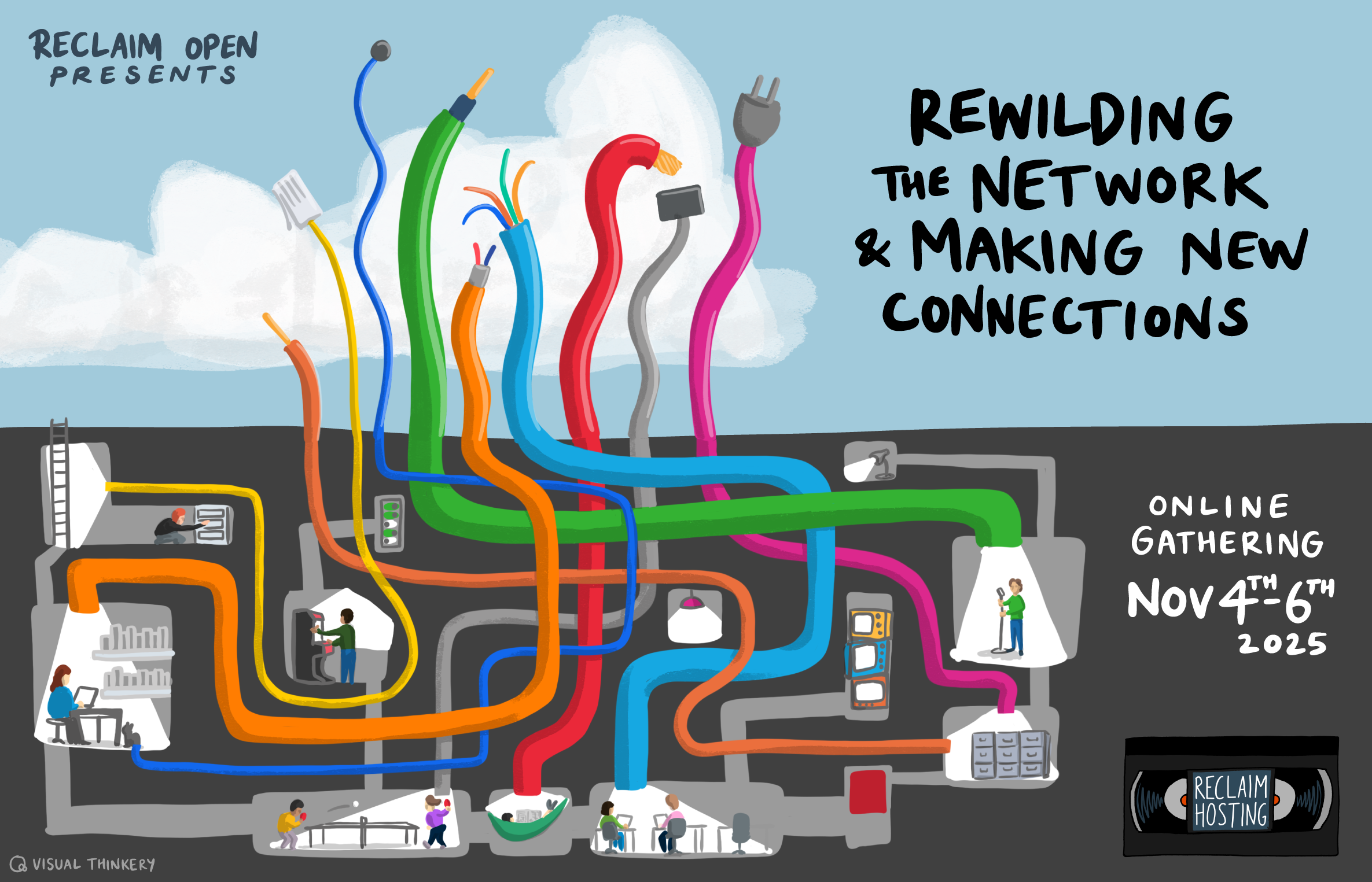
    Reclaim Open’s theme this year, brought to life by the one and only Bryan Mathers is Rewilding the Network – Making New Connections and the conference will take place fully online, so there’s no travel required 🙂

    The event covers three days, from 4-6th November, and registration is now open. Register to attend before September 1, 2025 and get a 33% ‘early bird’ discount, making the conference fee a very affordable $99.

    Make a submission and get involved

    For Reclaim Open, every proposal is also a blog post. We will publish all accepted submissions on the conference blog which will also be the conference schedule. Submissions are now open for the following session streams:

    Your Voice: how do educators and students find and amplify their voices on the open web? How do we make ourselves heard and what are the risks and opportunities in Higher Ed and beyond?

    Your World: Maybe it’s a blog or a domain of one’s own that is your home in the digital realm. Whether it’s all business or rather  hobbies, pets, creative projects, parenting or sports. Share what you care about  on the open web.

    The Tech: the technology that makes it all possible, from open source platforms like WordPress and Ghost, to open infrastructure hosted on ReclaimEDU, this theme is for sharing tech know-how and geeky pursuits.

    The Connections: What brings us together in a world of fragmented social networks and how do you stay connected and find new connections? From self-hosted socials to federated networks, we want to hear about how you make connections.

    The Wildcard: Share your inspiration and creativity. Wild is wonderful.

    There will be radio!

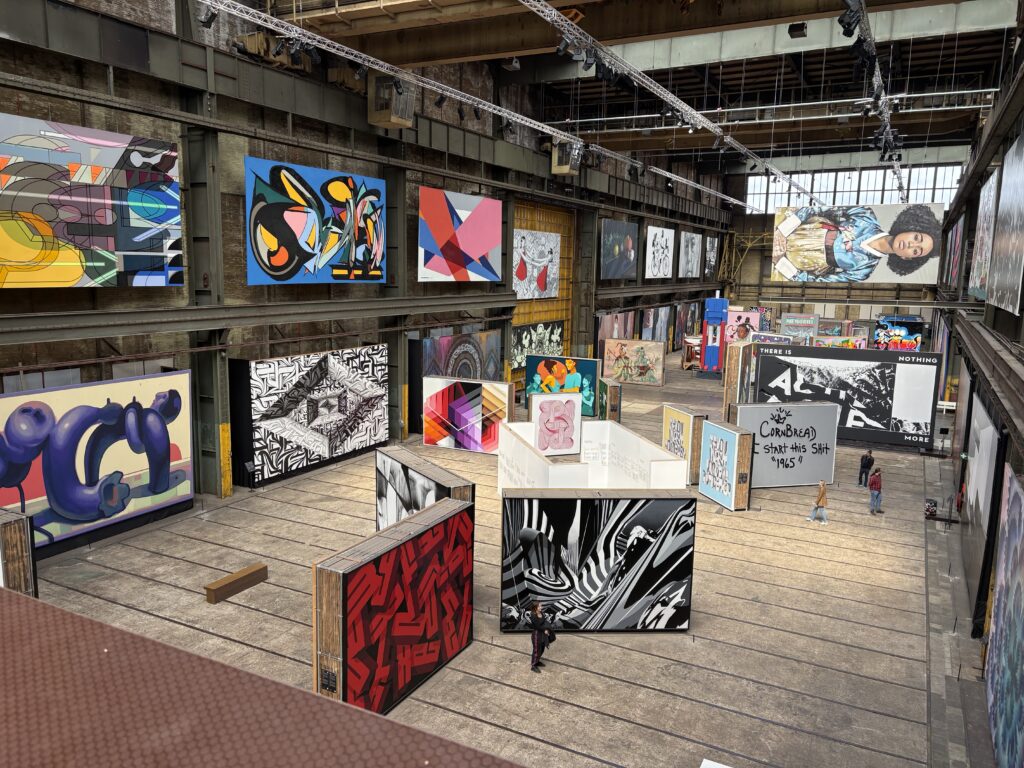
    One of the things I am most looking forward to is the Reclaim Open Blog-A-Thon, a wild mix of radio and blogging fun on the first day of the event. If you are curious what this is all about, read on:

    How it all began

    It all started at the beginning of this year when a few brave souls got together to found Bloggers Anonymous, Reclaim’s Community of Practice for Bloggers in Higher Ed. It started small, with a dedicated channel on Discord, and a monthly meeting. A few of us got to together to talk about blogging, and blog about blogging… and before we knew it the RSS feed that folk were adding their blogs to was pinging with the sound of fresh blog posts, hot off the press. If you’d like to find out more about this Community of Practice, check out the story so far over on the Reclaim Blog.

    So what’s the Blog-A-Thon?

    Now, the Blog-A-Thon is on November 4th, the first day of the conference, and the idea is that we’re going to take to our blogs to read, respond and connect. You’ll be able to find  and navigate between the posts via the conference schedule, and post your comments

    We’re also planning for some good old-fashioned radio coming to you live with bloggers chatting about blogging and playing the soundtrack to their stories.

    If that’s made you curious, head over to the conference site to learn more, and make your submission!

  • Prolific pen pal

    Prolific pen pal

    Being a pen pal was something I got into as a child. In my family it was usual to send postcards from our camping holidays in Greece or Spain to family and friends in Germany. I made friends on these holidays, often from other countries, and as we exchanged tearful goodbyes at the end of each summer, addresses were swapped and letter writing commenced. I had a good pen pal in Luxembourg for a long time, and even went to visit her and her family. My first ever teenage crush and I wrote ardent letters from southern Germany, where I lived, to norther France, where he was from. And once I moved to the UK my mother became my most frequent correspondent, sending letters and parcels to my London student digs, whilst I sent my own reports from university back home.

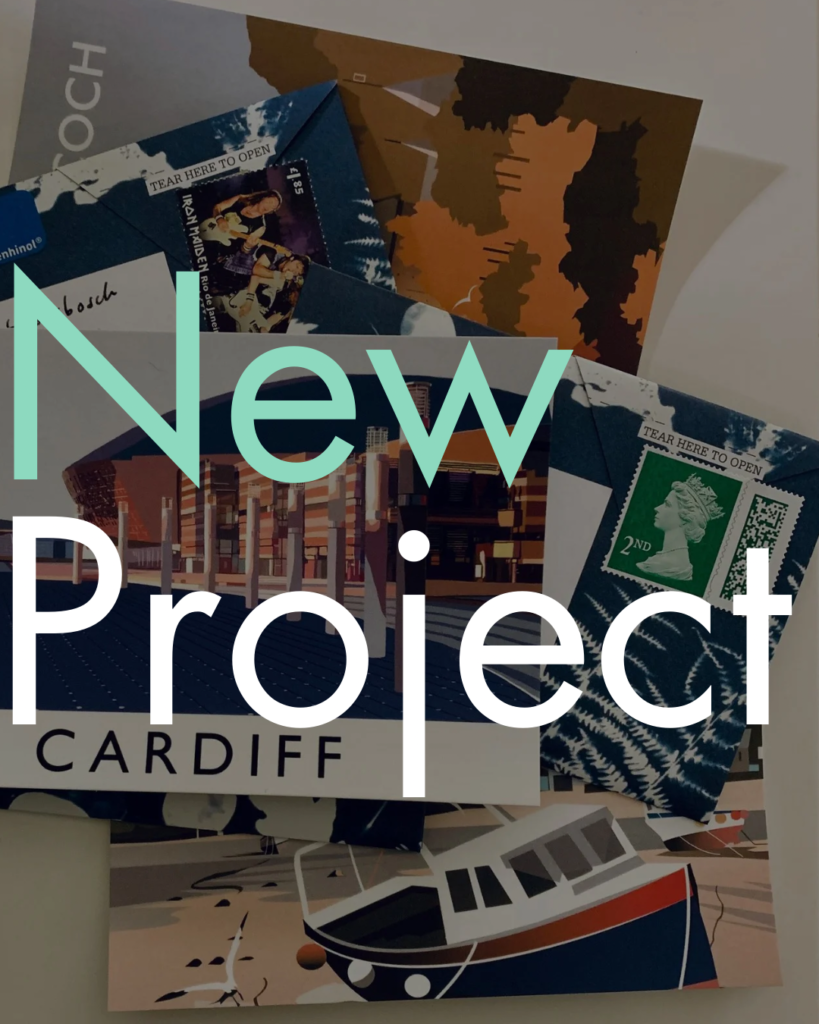
    Over the years I have made quite a number of friends with whom I continue to send letters back and forth. Sometimes our postal conversations are sporadic, other times we write regularly. I have an actual address book in which I keep track of who lives where, and my collection of stationary, card, envelopes and stamps is thankfully always in need of restocking as I send letters almost every week.

    The picture at the top of this post shows the actual letters I wrote first thing this morning.

    I must admit that I also love the UK tradition of sending Christmas cards, and come December our hallway is full of cards and letters arriving daily.

    Of course, I also DM, email, video call and so forth with friends and family, but I’ve never lost my love for being a pen pal. The cadence of the conversation is different, the time it takes to handwrite a letter offering me time to think. Sometimes I don’t know what to say, or how to best offer love and comfort in difficult times. Loss of a parent, or a bad illness. Or a magical joyful moment like the arrival of a new baby.

    Choosing the card and envelope, or the postcard, and drawing something or scribbling in the margins… that’s all part of what makes being a pen pal so fun.

    Then there is the joy of receiving post in return. Of getting an unexpected envelope in the mail, in which there is a little glimpse of real connection. My friend sat at their kitchen table writing this with their hand, spelling out my address, thinking of me.

    Just as I think of them. As I write and send letters. Here’s to being a prolific pen pal #4life.

  • Wake up and smell the roses

    Wake up and smell the roses

    Last night I dreamt about AI and roses, and in my dream I was blogging, so here I am, trying to capture the thoughts I had during the night. Thanks to Joe Murphy and Tom Witherspoon, whose inspiring chat at yesterday’s Blogging Community of Practice meeting truly inspired me, I am here pressing publish on a draft, saving the world one half baked idea at a time.

    What’s happening in the title of this blog post are mixed metaphors: there is one idiom “Stop and smell the roses” that means “to relax; to take time out of one’s busy schedule to enjoy or appreciate the beauty of life”, and one that says “wake up and smell the coffee” (or the bacon, at least here in the UK), which means “to become aware of the reality of a situation, especially when it’s different from what one believes or expects”. My title means something like… become more aware of the reality of the situation and appreciate the beauty of life. The reality of the situation being the proliferation of AI powered platforms and tools in parts of life where they are completely unnecessary – and the fact that AI can’t smell, or touch or feel and indeed has no senses at all as a disembodied tool.

    I recently read a fantastic book, The Power of Not Thinking by Simon Roberts, which very elegantly made the case for embodied knowledge, and how ethnographic approaches can be applied in the workplace. It’s a great read that I really enjoyed, and it reminded me of the research that informed my PhD in Anthropology nearly 20 years ago. One of the things that the book made clear is that the industries, and the companies, that lead innovation, are very interested indeed in embodied knowledge and see the value of such approaches whilst selling tools and services that promote the opposite (just as proponents of EdTech are known to send their own children to tech-free schools where mobile phones are banned and interacting with nature is encouraged instead). I am simplifying here, but I hope you get my meaning.

    Yet, this model of embodied thinking feels inspiring to me, as it helps me imagine ways in which to articulate alternatives to the dominant narrative I come across in many workplaces and in education, which feels like it’s moving in the opposite direction. A direction into a future with AI that I feel un-keen and un-curious about. I don’t wish for my day to day to be dominated by tools that speed up productivity or replace human activities (and more advanced applications in sciences or medical research are beyond my direct experience). Because, on some level, it feels like “it is everywhere and everyone is using it”, and everyone is “cheating” with it. Sigh.

    Focusing on embodied knowledge, embodied experiences of the world, helps me avoid a dichotomy that doesn’t serve me, with AI on one side and what I want to do on the other. It helps me articulate how and why there is value in things like being there, seeing the world from someone else’s point of view, from being present and embodied. In the case studies featured in the book the value is directly related to the business objectives of the clients the author and his colleagues work with, and he articulates this in a very practical way, rather than in academic jargon (which is hard to do when it comes to talking about things like phenomenology).

    Which brings us back to roses. Specifically the roses which are pictured at the top of this post. I am not a huge fan of roses, or indeed pink flowers in general, but I fell in love with these when I was walking through my local garden centre recently and I smelled their strong, fruity, summery scent.

    I stopped in my tracks and came closer to drink it in, and immediately decided that this would be the plant for me. They smell like summer, like desserts, like the best sunny day. They have a beautiful colour, from pink to apricot, and their petals are smooth and strong, keeping in all that delicious smell and sheltering the bees that come to visit.

    And so, most mornings, in the corner of the garden, I sit mid morning with tea or coffee, and I drink in the smell, and enjoy the beauty of these beautiful blooms. Literally waking up to smell the roses 😉

  • Finishing another year at Oxford

    Finishing another year at Oxford

    This week wraps up another year of teaching at the University of Oxford. Summer is here, and my work with the Digital Capabilities team takes a break over the summer, before Michaelmas Term starts again in autumn.

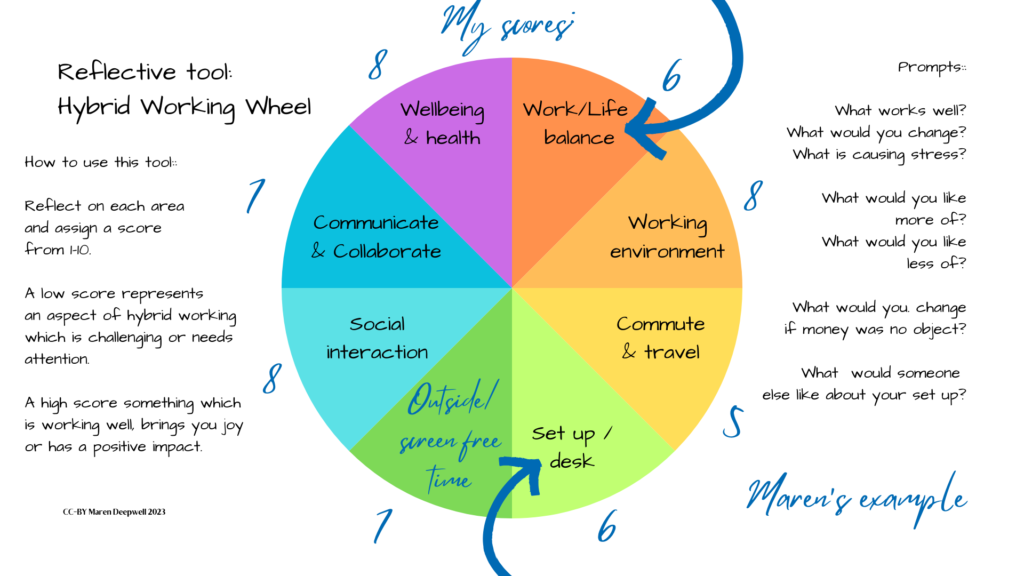
    For the first time since I started this year had more in person components, including two days of fully in person sessions with cohorts from across the university. Getting to work with such a diverse range of people in a unique institutional context whilst exploring all aspects of hybrid working is great fun.

    Last year, I was focused mostly on Digital Wellbeing in my reflection at the end of the academic year, and although this remains relevant there are now other dimensions of hybrid working that have come to the forefront:

    AI in the workplace: AI-enabled tools and platforms have spread widely and quickly in the workplace. With such a strong commercial motivation, every major tech player has quickly incorporated enhancements designed to improve digital productivity for the user, whilst collecting data and increasing prices for providers. Across the range of responses to the arrival of this type of technology, from enthusiastic early adopters to skeptically cautious users, I have yet to meet the professional who feels less busy, less time-poor or less stressed as a result of using AI. Instead what I have observed is that the pace of digital productivity, increased by time-saving AI applications in particular, is causing overwhelm, burnout and a frantic sense of having to keep up with the pace set by technology.

    Medium term consequences: Also emerging are the now medium term consequences of hybrid working at scale. With the pandemic moving further away and workplace practices and policies becoming more stable, we are able to observe what the impact of hybrid working at scale is for the first time. Even across just one institution, the picture is mixed: some groups have mostly gone back to the office, offering flexibility on certain days, whilst others have gone mostly remote, with a common anchor day to be present on campus. Some groups of staff love working from home, whilst many struggle with overwork and lack of work/life balance. A common complaint is that it now feels like one is “living at work” (instead of working from home) and the accompanying (perceived or actual) expectation of having to be available all of the time.

    Hybrid leadership capabilities: More and more institutions identify staff (and also student) hybrid working capabilities as a strategic priority, and quickly realise that leaders have little capabilities to effective manage and support staff in such a context. This is the area I am most interested in, and where my work is most focused at the moment.

    It’s been a joy to work with Emma Procter-Legg and her colleagues for another year, and I am excited to pick things back up for the start of the next academic year.

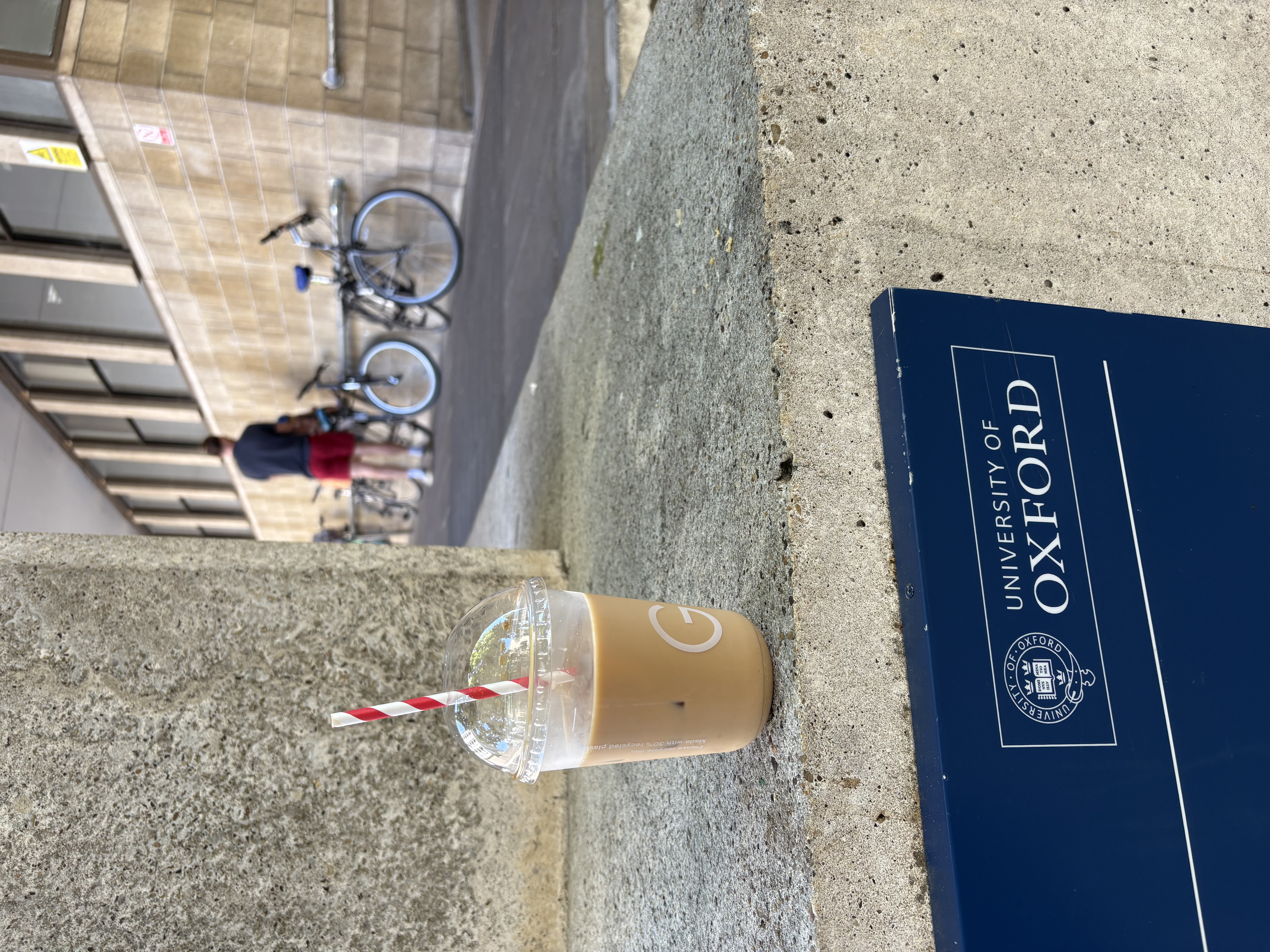
    A photo of a cup of coffee, with a unviersity sign and bikes in the background
  • Critical Digital Capabilities for Leaders in Hybrid Higher Education  

    Critical Digital Capabilities for Leaders in Hybrid Higher Education  

    I recently took part in a leadership development programme, Leadership in Higher Education and Artificial Intelligence: A New Paradigm. The programme was designed with an international cohort in mind, and it was great fun to work with leaders from across different countries and from a whole range of Higher Education institutions.

    Photo of the presentation and audience
    Snapshot of me during the presentation and the audience (Source: LinkedIn Post)

    My session was inspired by Global Trends Towards Flexible, Hybrid Working and its Impact for Digital Leadership in Higher Education, a report commissioned by the N-TUTORR National Digital Leadership Network, and which was just publisher earlier this year. It was a great opportunity to share some of the key recommendations that came out of this work and to begin to unpack how these may be implemented.

    This is a complex topic, and there was a lot packed into the talk, so I broke it down into three sections:

    • developing leadership capabilities in critical digital and date literacies, with a focus on frameworks that reflect changing practices in the AI-enabled workplace (or classroom);
    • enhancing leadership skills for hybrid working (and learning) in Higher Education, emphasising the central importance of building trust and balancing the overlap between professional and personal;
    • finding inspiration at a time when everyone is already overworked and under-resourced, opening up a perspective beyond the current hype cycle.

    Given that we ourselves were experiencing Oxford’s city centre in heatwave conditions, I can only applaud the delegation’s energy and interest in engaging with these topics on the final day of their busy programme’s week and before lunch, as well. We had lively discussions which only served to highlight to me how widely our experiences, practices and policies around hybrid working futures vary. And it gave me much food for thought about what else I would like to include in the research for the book I’m writing on.

    A big thank you also to the organisers for making me feel so welcome, and for bringing together a really interesting group of people! If you’d like to learn more, explore my session slides.

  • More gold dust.

    More gold dust.

    In sweltering heat the sun shone through the longest day of the year, and I used the mid year point of the year to reflect on the past six months. Here on my blog the posts and podcasts have been stacking up, whilst over on my work domain coaching, consultancy and courses have been in full swing.

    This post brings it all together, gathering all the gold dust ready for summer and the next six months.

    On the blog

    Over 30 blog posts so far this year, so blogging is going STRONG 🙂

    On the podcast

    I have published 23 podcast episodes so far this year with more special guests, including:

    Talks, articles & events

    Executive coaching and training

    A big thank you to all my coaching clients! I celebrated a milestone earlier this year when I passed 200 professional coaching hours, and I continue to be active in the UK Chapter of the International Coaching Federation. I also had a chance to continue my group coaching and training, including:

    Consultancy

    I’ve updated and exampled the list of projects completed which now has its own page and that has been both fun and really satisfying to accomplish.