Author: Maren Deepwell

  • Long time reader…

    Long time reader…

    I often talk about blogging, but this post is different. This is a thank you to two writers whom I have been following for a long while, and whose work continues to inspire me.

    Julia Harrison

    First up, is Julia Harrison, a North Carolina-based artist, anthropologist, and educator, whom I met when I was studying Anthropology at UCL.

    Julia’s work is all round awesome, and I am a regular reader of her blog, and a great admirer of her creations. From wooden paper bags and jewellery to awe-inspiring public art and furnishings, her domain is a treasure trove of inspiration. You can even join her for a virtual studio visit!

    What I appreciate the most, however, is Julia’s newsletter. It’s semi-regular, and whenever a new edition lands in my inbox I happily read the whole thing. I love the tone and voice, I am always interested to learn about what’s been happening and it balances a great mix of work/art and life.

    Nick Tabone

    Around the same time as I was at UCL, I also worked at Foyles, and London’s melting pot delivered a wonderful group of co-workers including Nick Tabone. Already full to the brim with book and music recommendations then, many of which I still have on my bookshelf and in my record collection today, Nick’s writing has evolved over the years as his life has taken him to become a writer, a sailor, a runner, and a skateboarder.

    I mostly follow his non-fiction, usually written from aboard ship, always compelling and beautiful. And there is a huge amount of poetry and fiction to explore as well, which I strongly recommend you do.

    One day, I hope that copies of Nick’s published books will sit alongside all the volumes he inspired me to read on the shelf next to my desk.

    May the blogging continue 🙂

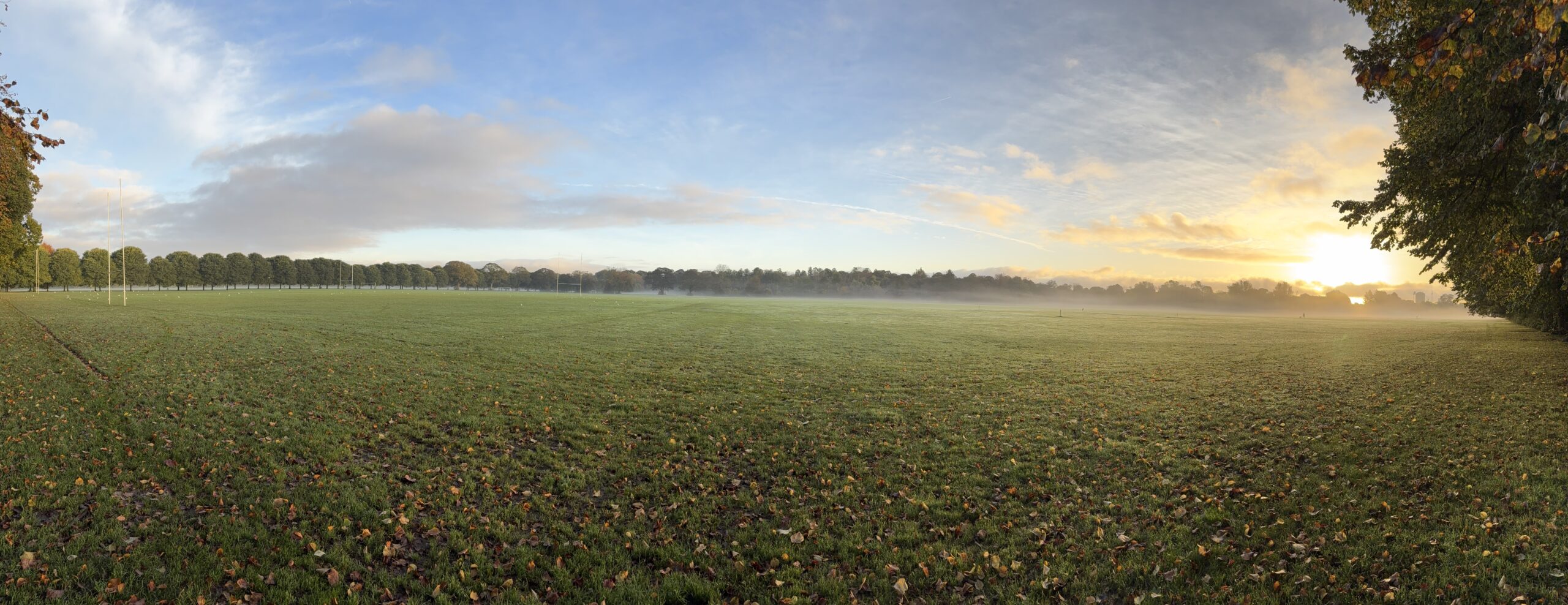
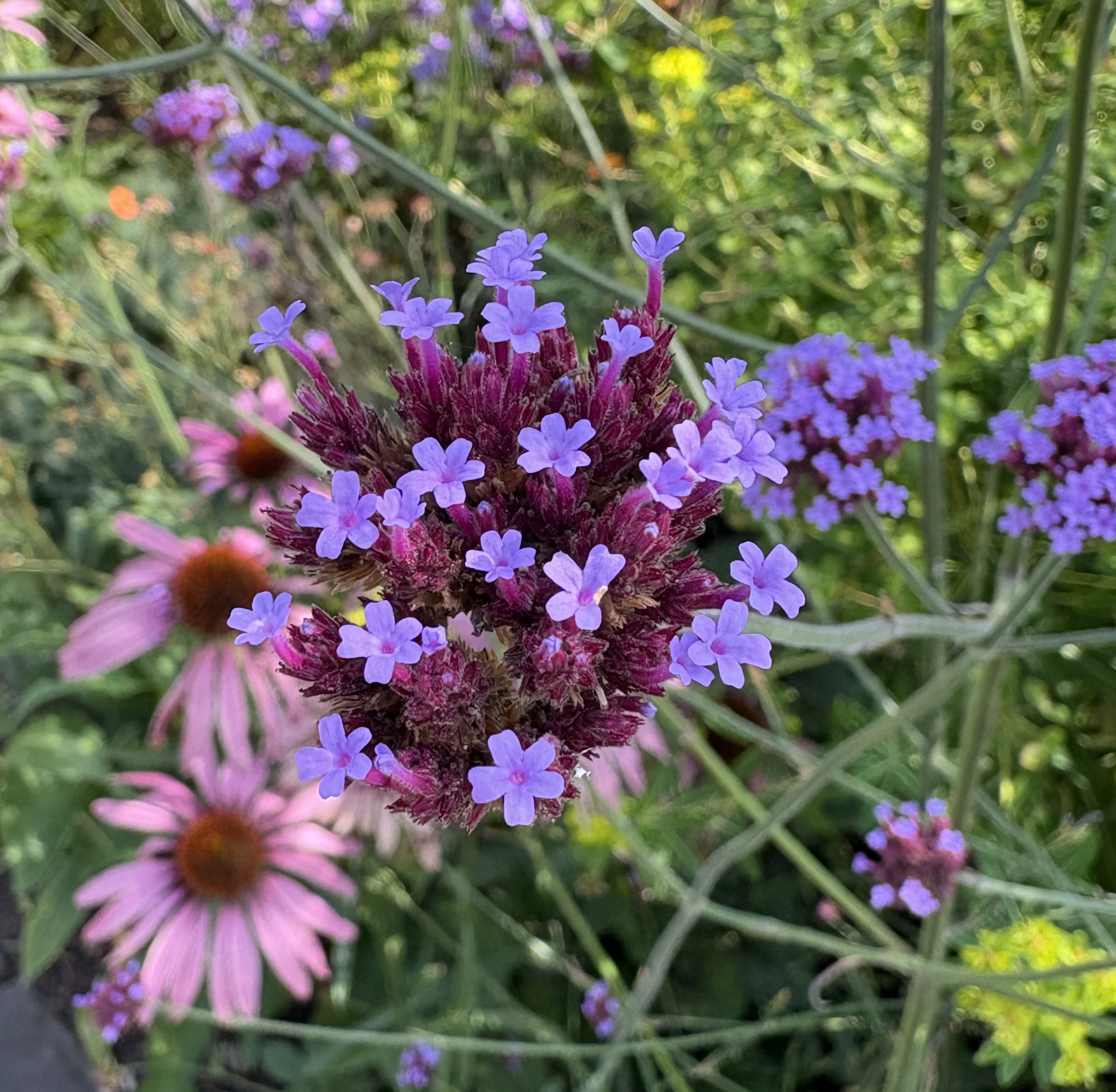
    Image:  Hat tip by Maren Deepwell is licenced CC-BY-SA 4.0

  • From OER25 to Reclaim Open 25

    From OER25 to Reclaim Open 25

    This year, sadly, is the first time in a long time that I’ll be missing out on the OER Conference. I have blogged (a lot) about this very special event before, including a literal love letter to the conference in 2023, and a postcard from OER24 in Cork last year.

    The line up for OER25 looks fabulous, headed up by two wonderful Co-Chairs, Louise Drumm and Sheila MacNeill, and tantalising keynotes Helen Beetham and Joe Wilson. I would have loved to go to London and join in the fun. Unfortunately some long-standing work commitments mean that I can’t travel… so instead I’ll be following the conference chat online.

    Travel being a little restricted doesn’t mean however that I’ll be missing out on all open educational technology conference fun this year, thanks to being involved in Reclaim Open, set to return in November!

    In the past I’ve not been able to attend Reclaim’s flagship conference in person, but this year it’s happening entirely on the web, on blogs and on the radio, so there’s no need to travel at all to take part.

    I love the retro theme, the look and feel that Bryan Mathers has created for the event, and I am excited about the blogging! It’s an awesome opportunity for the Blogging Community of Practice to get active in the event, too.

    For Reclaim Open, every proposal is a blog post and all accepted submissions on the conference blog which will also be the conference schedule. So, this week submissions are opening, so it’s time to get thinking and writing… and put in a proposal. 1… 2…. 3…. Blog!

  • Keynote: From Analogue to AI

    Keynote: From Analogue to AI

    Keynote invitations don’t come much more fun that the one I was excited to accept for this week: the Open University’s annual conference for its community of associate lecturers and other staff. When I first got the email, I knew I made to make it happen because these are the people I love to work with most!

    This conference, which attracts close to 500 participants and covers two days (in May and June respectively), is a rare opportunity for a very distributed workforce to come together around topic of common interest, which, inevitably, includes AI this year.

    My keynote takes a big picture approach at learning and working and everything in between, and also zooms in on deeply practical approaches to using technology, from analogue to AI. The full title of the talk is Reclaiming the Pace of Digital Productivity in the Age of AI and you can view the full slide deck .

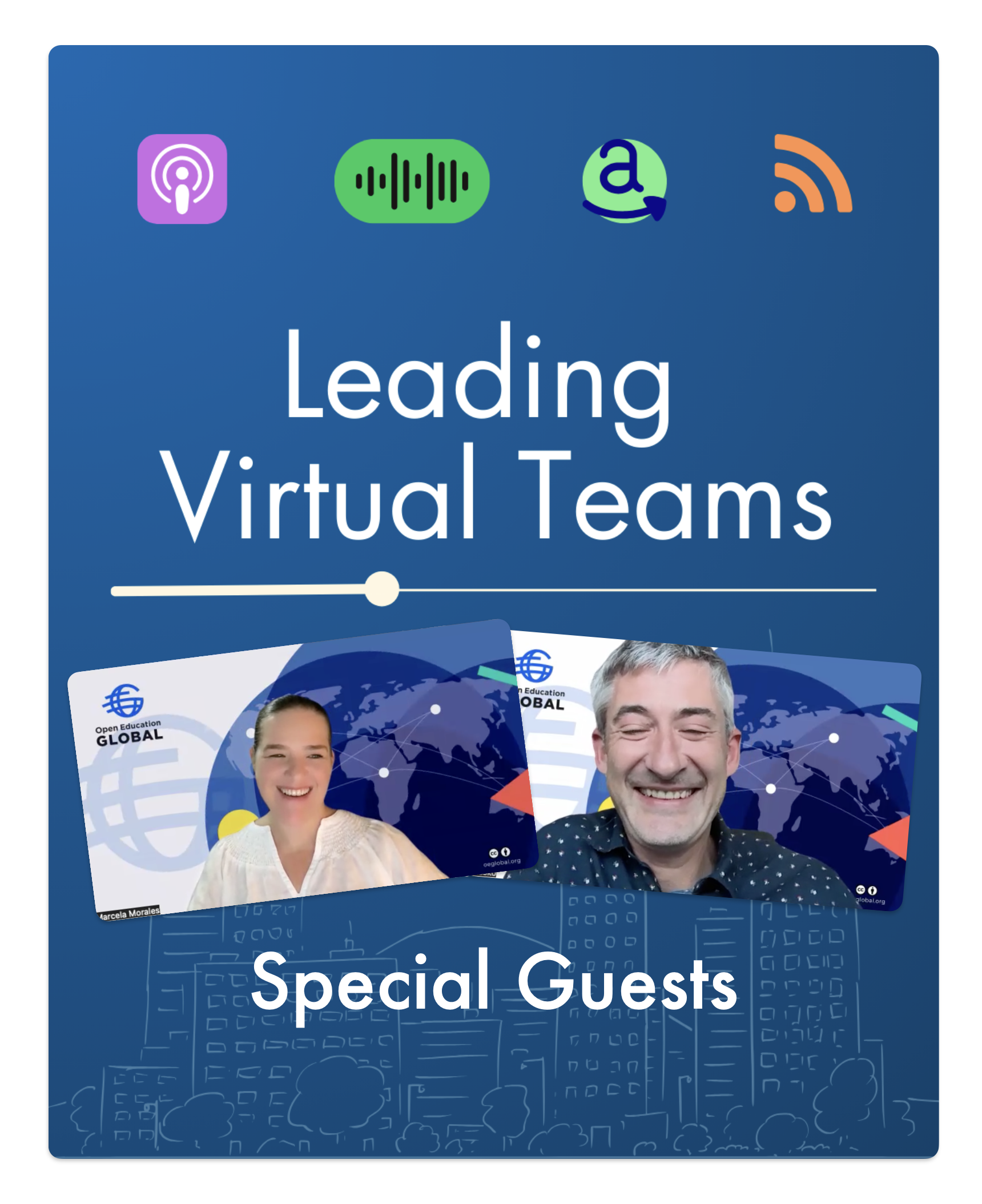
    It gives me an opportunity to sign-post the work of some recent special guests that have featured on my podcast, starting with the Digital and AI Literacies work by Angela Gunder, which really inspired me:

    These Dimensions of AI Literacies were remixed from the work of Doug Belshaw’s Essential Elements of Digital Literacies, whom I was fortunate to speak to recently as well:

    Between these two conversations you’ll get a real flavour of what my keynote is all about. Angela and Doug are really worth listening to – and I am grateful that I was able to speak to them about their work which in turned inspired me when I was writing the keynote.

    Lastly, looking ahead into the future of education, beyond AI even, I included some of the voices I discovered earlier this year when I was in Dublin, for Education after the algorithm: Co-designing critical and creative futures. The event was a symposium for thinking otherwise about critical AI and post-AI pedagogies of higher education as part of the Erasmus+ Hacking Innovative Pedagogies: Digital Learning Rewilded (opens in a new tab) project,c haired by Eamon Costello and featured a wonderful keynote by Helen Beetham.

    I talked about walking, both literally and metaphorically, in my session Critical Cadence, and I hope to be able to share some of the hope and inspiration I gathered at this event with the audience in my keynote, offering some energy and joy at the business end of a very busy academic year.

  • Read, Run, Write. Repeat.

    Read, Run, Write. Repeat.

    After a week away I have returned to my desk to write (freshly inspired thanks to the museums of Amsterdam). Progress on the book this month has been better, and I have found a new rhythm: read, run, write. Repeat.

    It helps me to read more to feed my creativity and find inspiration, and I am lucky that my recent haul of books from the library has been plentiful in both. The running gives me space and time to think about things, and although I rarely manage to actually record anything whilst I jog along river paths (I need the breath for running), by the time I return home I am usually ready to get writing.

    In my writing journal I keep a record of the days I write, and how long I have worked for. At the moment, I have started with 90 minutes, then step away. My concentration doesn’t last much long yet, as I am finding my way into the book. Flow is patchy, but there is a vague shape of things now. I am getting words down on the page.

    This month was the first in my new writing regime, and it feels good.

  • The Lost Podcast: Talking career (meaning) making with Kin Lane

    The Lost Podcast: Talking career (meaning) making with Kin Lane

    Inspired by Kin Lane’s post Having a Career I recently posted my own career story, and this blog post exchange inspired me so much that I reached out to Kin to record a conversation for the podcast. And so, two humans and two dogs assembled online to do just that. 

    We chatted for an hour, and the conversation was so thought provoking! In addition, meeting the one and only Poppy R Lane (follow her on Instagram) was especially fun (my own dog eyed the bike side car with envy… ;)). Unfortunately the tech gods weren’t smiling and I didn’t manage to capture the conversation audio, resulting in no podcast. Sigh. 

    Instead, I want to use this post to capture some of the things that came up (for me) during our conversation and also express how much it inspired my thinking. In an ideal world, the conversation would have happened in a NYC park, where I was supposed to be later this month, and instead we made do with the best virtual equivalent. Maybe this ‘lost podcast’ is a good metaphor for why some conversations have to happen in the here and now. Maybe there will be another version of the conversation we eventually record as a podcast. 

    Creating measure for what matters

    One of the things we talked about was finding new meanings for what matters when traditional metrics of career progress, financial or reputational reward, become less meaningful. In the context of reinventing yourself and your career path. We shared examples of manual jobs we had early on, and how there is no straight line, no template to predict the path from those origins via all the things that have been accomplished since, to where we are now. Each on our own journey to reinvent and I suppose reinvigorate our thinking at the intersection of technology and society.  I shared the example of beach/life balance (my measure for how often I can afford time off to go to the beach with the dogs), which I have come to use to check in with work/life balance and focusing on things outside of my computer screen. 

    Holding your own space on the web

    Kin is a prolific blogger, both on his own domains Kin Lane and the API Evangelist. As a writer and a storyteller he holds his own space on the web, and we reflected on how we would advise new or emerging bloggers. This was prompted by me being asked recently how and why I started to blog and how to get started now. I couldn’t really recall exactly how I got started initially, but it was during my time at art school, when I was experimenting with writing and sketching and sharing my work in any way I could. Given how much the web has evolved since then and what being present online necessarily brings with it, we came up with quite a few hesitations about starting now. From staying safe and dealing with inevitable unpleasantness to navigating the dynamics of social networks and the struggle to actually find someone to connect with. 

    And yet, Kin mentioned how important it is to hold your own space on the web, to have your own domain and to use it to articulate, to have a voice. 

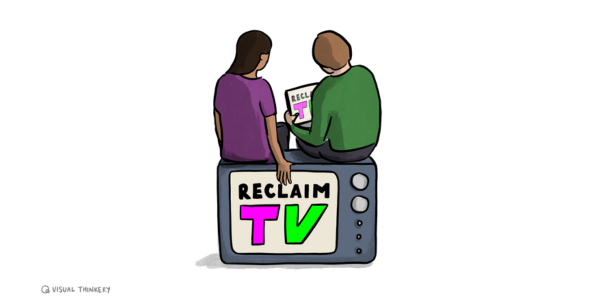
    If you haven’t come across it, watch Kin and Jim Groom chat about Blogging over on Reclaim TV.  

    It takes work. 

    One of the things that really resonates with me is Kin’s commitment to doing the work. The work of reading and writing, to try and see the world from different angles, and to educate yourself about different points of view. It’s a human activity, a necessity (to my mind at least), that you can’t outsource. It takes time and effort and energy. It’s a lot of work. And only you can do it. 

    I may have had a very different path, but that notion of doing the work, and seeing value in that, it means a lot to me, and it reflects how much I treasure being part of the world, and how much there is to enjoy in the everyday, in being a human being (with a dog;) . 

    Thank you, Kin and Poppy. 

  • Book Mission Statement

    Book Mission Statement

    On a recent podcast episode I shared an update on my next book, which I have been working on for the past year or so, mainly conducting interviews and research. Now that writing has begun in earnest however, I am thinking more about why I am writing the book. Especially since it’s never been easier to simply provide a lot of data and have your book generated for you by AI.

    Cue this “mission statement” for the project:

    • Why another book? This book is about what happens at the intersection between human beings, technology and work, which is the space I am interested in. Whether fully remote, hybrid, or blended on campus and in offices, the way we work continues to evolve, and we negotiate the full spectrum of technology as we do so, from analogue to AI. This book brings together leadership perspectives in order to explore how we, as human beings, can shape the future of work.
    • Why now? Work is politicised and contested, from companies forcing employees to return to the office full-time claiming that collaboration “can’t be done online” to the threat of automation and AI taking over jobs. Add to that a cross-generational workforce with very different needs and expectations, and things get even more interesting. This book is designed for leaders and managers seeking to navigating these uncertain times.
    • Why a book? Because I love books, I love reading them and writing them and it feels like best format for getting to think about the things I am interested in, i.e. the right format (length, familiarity) to explore these ideas in appropriate depth. Also, you can print a book and I found it extremely helpful to have a printed format of my first book instead of only digital resources.
    • What about AI? I am intentionally not using AI in the creation process, but if you find it helpful to get you thinking and reflecting, then by all means go ahead and create an AI summary or an AI podcast. My choices reflect what process works for me and my reasons for writing the book in the first place. It also reflect the values I hold about the importance of human creativity and human labour. This book is my endeavour by choice, not because there weren’t easier or quicker ways out there.
    • Why open? This second book, like the first, will be openly licenced under Creative Commons. Most of the work the book is based on is already in the open domain, and I want my work to be as widely available as possible. You’ll be able to purchase a printed edition. I believe in open knowledge creation, and I hope this book will be a useful resource for emerging and established leaders across sectors.

    Listen to the podcast episode

    Subscribe to my monthly newsletter and never miss an episode again:

    [newsletter_form type=”minimal”]