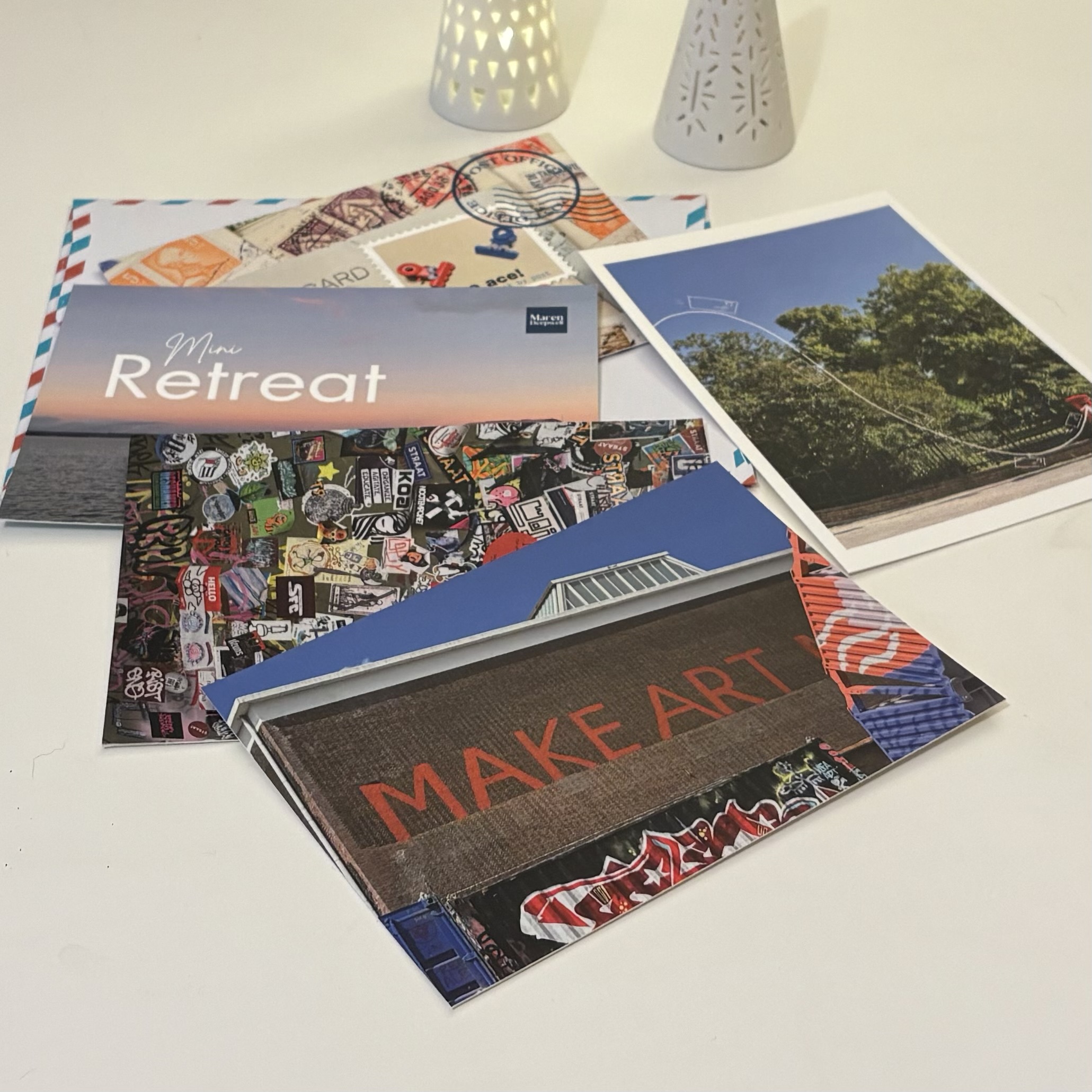
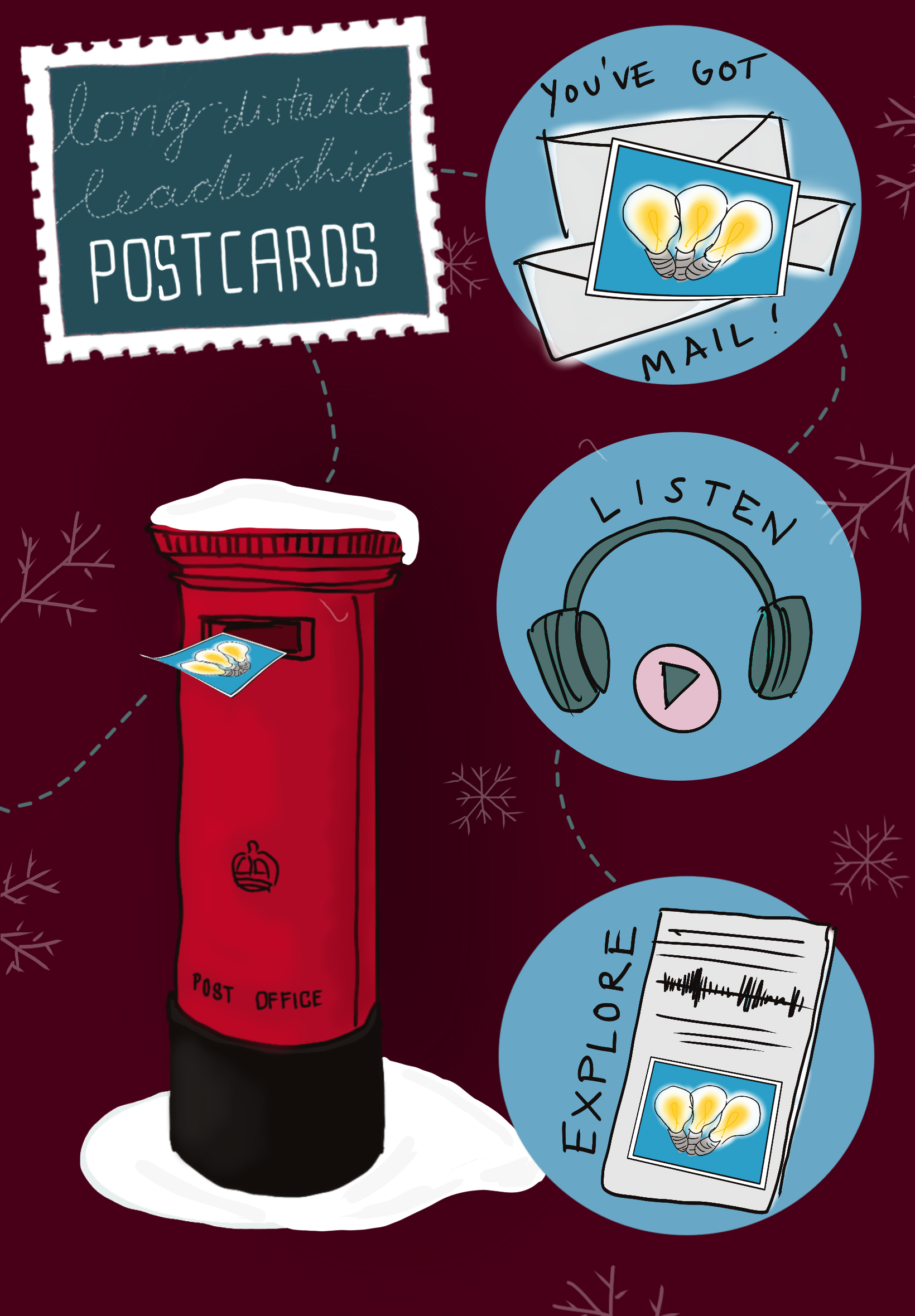
This month, as a little gift from me to you, you can join in with my leadership coaching subscription service, AKA Long Distance Leadership Postcards for free. I’ve made December free for all to access, and this month’s topic includes three free resources to explore.
Whether your 2025 has been busy and productive, or brought unexpected challenges, whether you are getting ready to rest or just about to set out in a new direction, I have designed this month’s coaching moment by mail to offer new inspiration and encouragement by focusing on your creativity, develop leadership capability or clear the decks with increased productivity.
Over the last 12 months we have explored 11 Long Distance Leadership Postcard topics around creativity, digital wellbeing, productivity and leadership development. To celebrate the end of the first run of Long Distance Leadership Postcards, you get to choose your own topic – or explore all three! Whatever you choose to do, enjoy and take care as we close out 2025.
Your guided tour
If you’d like to get a guided tour, tune in to the episode below in which I walk you through each resources and how they could be useful to you. Enjoy!
Coaching in 2026
I’ve loved coaching with you this year and I am already looking forward to the new year. If you are curious about coaching with me, get in touch. I have some space opening for spring and also new pro bono sessions available if you’d like to try and give coaching with me a go for free.
You can find out more about how I work and what my clients say about working with me on my coaching pages.
Sign up to my free monthly newsletter to get new resources straight to your inbox.
I can’t quite believe it’s been three years this month since I started my podcast, and a 130 episodes into the experiment, I feel it’s time to celebrate 🙂
I’ve documented my journey as a podcaster in regular posts over the years, and looking back at these now, I’ve been reflecting on what I love about the show and this platform specifically, and also how I’m hoping to develop the podcast over the next year.
Audio only
One of the things that has changed since I first started the podcast is the arrival of video podcasts as a more popular format. Alongside that AI-powered tools have made it easier than before to produce podcasts, transcripts, and related content. Some platforms, like Google, now require shows to be submitted in video format, even if it’s just a holding slide.
I’ve been experimenting with all sorts of things on the show, and for now, I’ve decided to keep to an audio only format. One of the reasons why I started the podcast is to enable my listeners to engage with my work whilst stepping away from the screen, and I want to continue to do that. The increased environmental impact of producing video content, especially using AI-tools, is another reason why I don’t really want to change.
Special guests
When I first started getting requests from agencies and individuals to come on the show I was quite excited and I tried a few episodes with special guests I hoped would be the right fit for the podcast. Over time however, I found that very few of the folk (and bots) who contact me are closely enough aligned to my approach to work as well as I’d like.
Whilst it’s more work for me to approach, invite and liaise with guests myself, it also helps me ensure that the conversations are really relevant to my work, and hopefully that results in a more coherent and authentic offering for my audience, too.
I am so grateful that over the past year or two more guests than ever have given up their time to come on the show and talk to me, and I am VERY excited about the line up for 2026 taking shape.
Work on the next book
Which brings us neatly to work on the next book, which many of the interviews I record for the show help inform. It’s a wonderful way to do research and supplies me with a huge volume of transcripts I can dig into as I progress with the project.
Send me your ideas and requests
I’ve recorded a celebration episode to mark the podcasts 3rd birthday, so enjoy the listen… AND get in touch to let me know what you’d like more of in 2026. If you have a topic request, would like to join me as a special guest or have any other comments or feedback, contact me . I look forward to hearing from you and thank you for listening 🙂
The podcast is available on different podcast platforms and I hope you enjoy the show.
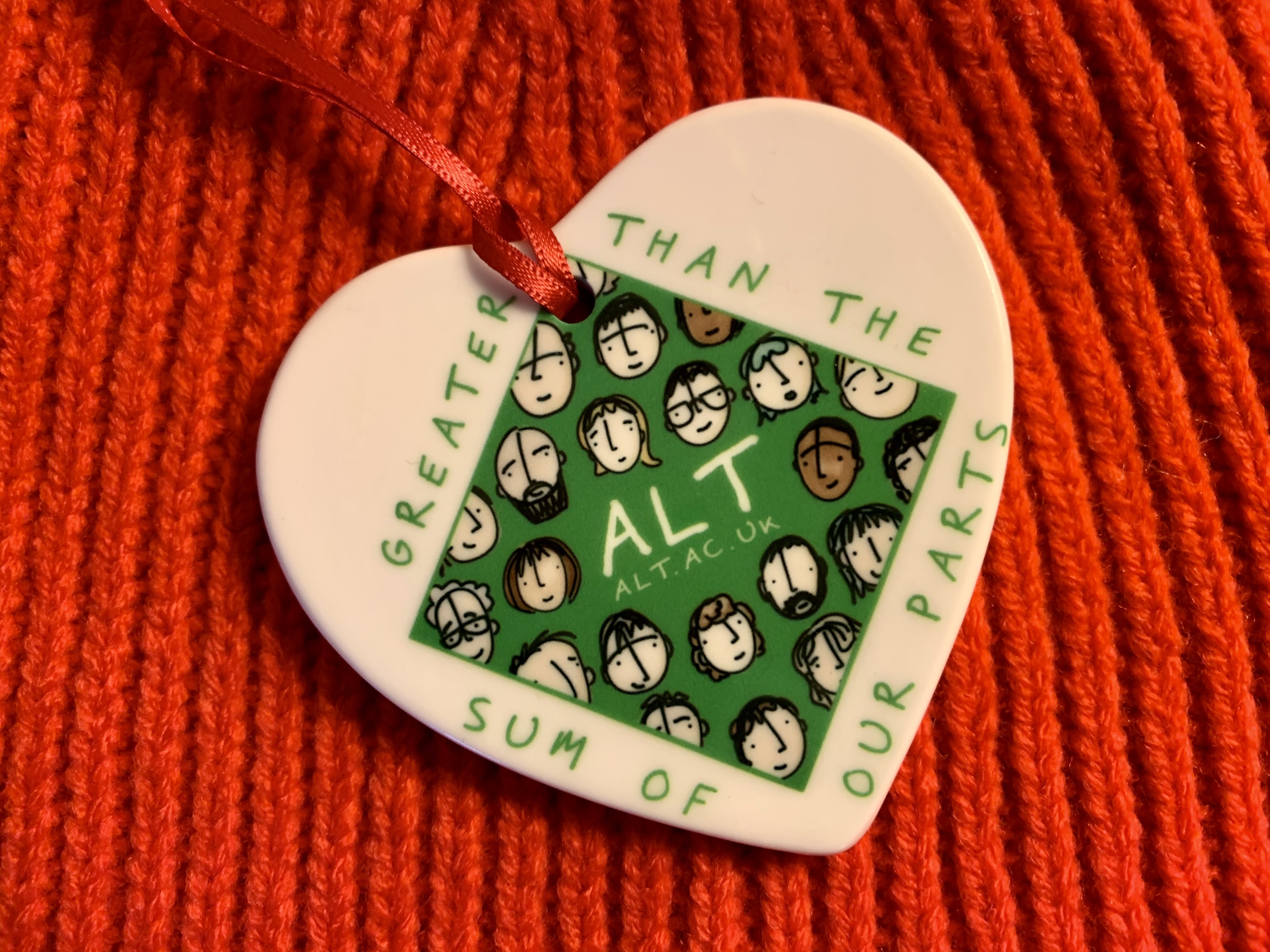
It’s not everyday that you get such an honour, to become an Honorary Life Member of the professional body you’ve belonged to for most of your career (read the ALT media release). It’s a huge privilege to join this illustrious group, to join peers whose work I admire and respect so much: Lorna Campbell and Josie Fraser, Frances Bell and Teresa MacKinnon, Julie Voce and Chris Jones, Linda Creanor and Seb Schmoller, Diana Laurillard and David Hawkridge.
Screenshot from the AGM Presentation on 19th November 2025.
ALT, the Association for Learning Technology, has been my professional home since I finished my PhD in 2008, and supports and empowers the community and networks I actively work with and in. Whilst working for ALT and serving as CEO, I maintained my own membership and successfully gained first Certified Membership (CMALT) and later Senior CMALT. I continue to act as an assessor for the scheme, and appreciate the opportunity to learn from peers going through the accreditation process.
Like many fellow leaders in Learning Technology, I have brought a grounding in other disciplines to my work in Learning Technology and Open Education. That is one of the things I enjoy the most about working in this sector, as it makes for a rich theoretical context and practice, too. I arrived in the sector at a time of great change and economic crisis, and ever since then big waves of innovation, political and social change have continued to rock institutions and practitioners alike. Learning Technologists have thrived through it all, and have a lot of expertise and insight to share with other sectors, I feel.
From serving on the FELTAG Ministerial Action Group, convened by the then Minister of State for Skills and Enterprise, Matthew Hancock and working with Diana Laurillard and Neil Morris on the hugely impactful Blended Learning Essentials courses; to laying the foundations for the AmplifyFE community of practice with Emma Procter-Legg and working on new pathways to accreditation and apprenticeships, my work in Learning Technology has been firmly anchored across sectors. FE, the sector in which I already felt welcome in at age 17, has always been a big focus for me, and ultimately led to my current work as a teacher, trainer and coach working with emerging and established leaders in education.
My work with ALT Member organisations both for ALT and on a free-lance basis, including many Higher Education providers, expanded beyond the UK, and one of my fondest memories from the past decade is working with colleagues at the Hong Kong Polytechnic University under the BOLT project, and awarding CMALT certificates to a whole cohort of their staff in 2018/19.
If there is one thing I have learnt by being part of this community it’s how much we have in common, across sectors and across international borders. In my work now in the UK, and with the team at Reclaim Hosting and Canadian and Irish colleagues in Open Education, I come across the same issues that ALT explored over the years. The technologies may change, and the context shifts, but at the heart of the work it’s still about empowering learners and educators in their use of technology, to be more ethical, equitable and sustainable.
So thank you, fellow ALT Members, for this nomination and the honour to be recognised by the peers that mean the most to me. I look forward to continuing to contribute to the important work we do and support ALT and our community.
It’s been nearly ten years since I started blogging about running 10k. Like many people I started running looking for balance at a very stressful time in my life, and ten years later I still run for mental health, to help manage stress and busy periods. I also love getting more outdoors and the headspace that comes with clocking up the miles.
From the first beginnings of my running journey, that’s always been a distance that I enjoyed training for. It’s long enough to be challenging but not so long that you get too many injuries. It takes (for me) just over an hour, but not three or four hours and thus even “long run Sundays” aren’t too disruptive. It’s a fairly social distance, too. Easy to do together.
Between 2017-2019 then I did A LOT of running, but after that pandemic life got in the way, and from 2020 onwards, I had many false starts getting back into it and finding my stride:
For literally years I started and stopped, never finding a path forward for more than a few weeks. There was a lot happening in life and other priorities kept popping up, as well as long term injuries that stopped most exercise in its tracks for 18 months or more.
Then a year ago, I set out on a new plan, scaling back my ambitions to what felt more achievable, and embarked on my year of 10k in 2025. I kept blogging about it, more to offer myself some encouragement than anything else:
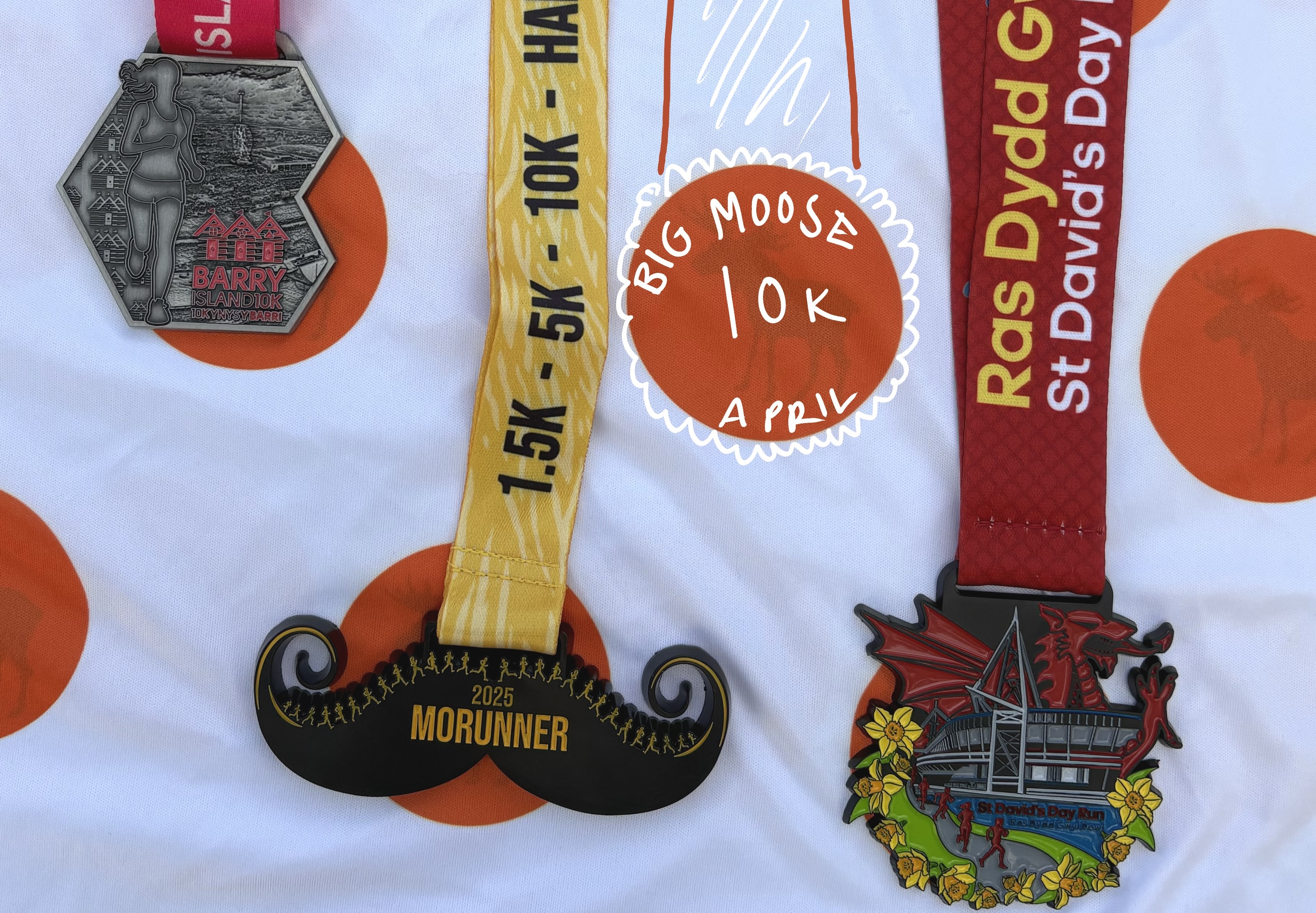
And now, as autumn rolls around once again, I am looking at the medals I’ve collected over the course of the year, and I can’t quite believe that it’s actually happened. I have been running for over a year, and along the way I kept to my 10k promise, completing four of the five races I had signed up for this year.
Yay me!
Together with my husband I motored through a year of training, a year which didn’t make consistent exercise easy, and one which threw enough curve balls to derail our efforts every couple of months. There was the day when it rained so hard we skipped a race and stayed at home, the month we got married and training went out of the window and the endless weeks of rainy weather that come with living in the green land of South Wales. My training chart thus never looks perfect, and my body had other plans than running for some of the year, too.
But.
I did it anyway. And I am so pleased that I’m back at it. Now, where’s that Half Marathon training plan…?
It’s been a lot of fun to be part of the team behind Reclaim Open last week. I love the buzz that comes with delivering an event months in the planning, especially when there’s so much innovation in the mix. In this post I share some reflections on the process behind the scenes, but first… you might ask why go a different path when it comes to online events? There are plenty of tried and test formats, platforms and services out there, so there’s no real need to re-invent the format yet again. Or is there?
Tailored format: A first amongst firsts
Reclaim Open has always been a creative, one of a kind conference, celebrating many firsts in its inspiring history. So it feels only fitting that this year’s format followed in the footsteps of firsts and broke new ground taking the conference online, onto a blog near you, to DS106Radio, to the game table, the quiz, the keynote panel and student showcase. It’s a privilege when you work in a community of digital educators that you *can* push things into a new direction and still take enough people with you to make it work.
Likewise, working in a small team with lots of competing priorities and limited resources always brings out the best in conference planning to my mind, because you focus on what you really, really want to do for and with your participants, rather that rehashing things just because you’ve done them before.
Jim and I have a running joke about conferencing firsts, and I feel it’s certainly time to sing it one more time: “We did it again.”
Blog-A-Thon
We started the event with twelve hours of blogging, with a post being published on the hour, every hour. It was fabulous, and offered space and time for conversations to develop, for connections to be made.
As with every format that you invent on the fly, there were some minor practical issues in the first hour or two, but after a little while everyone got into the stride of the Blog-A-Thon and the chat bloomed. It brought back memories of amazing conference formats like PressED, and TAGSExplorer Twitter-hashtag conversations, and reminded me precisely why it can be so much fun to work on the open web. Swapping rss feeds and blog roll links was in full swing by the time the first afternoon rolled around, and the community of practice group was very active alongside new faces and first time participants.
Digitals virtuosity
Switching between formats, moving from radio to website, and from webinar to game show takes A LOT of doing. It only works because the team behind the event has the highest level of digital skills, confidence and tech set up.
Briefing staff in whatever format you use to ensure speakers get the support they need and have a good experience is one of the most crucial things about online conference delivery in my experience, and it’s hard enough when your are using one platform to do everything. It becomes a lot more demanding when you switch between formats, managing dozens of speakers across time zones, from single individuals with slides to group plenaries that host 8 speakers simultaneously.
Big kudos to everyone involved for upping their game!
It takes heart
In this age of AI and digital abundance it’s easy to loose heart, to feel that one’s voice doesn’t really matter, especially if what you are interested in goes against the dominant narrative. It takes a lot of heart to make your voice heard above the noise, and one of my hopes for the conference was that it would deliver a much needed dose of inspiration and encouragement to everyone participating – and wow, it really did!
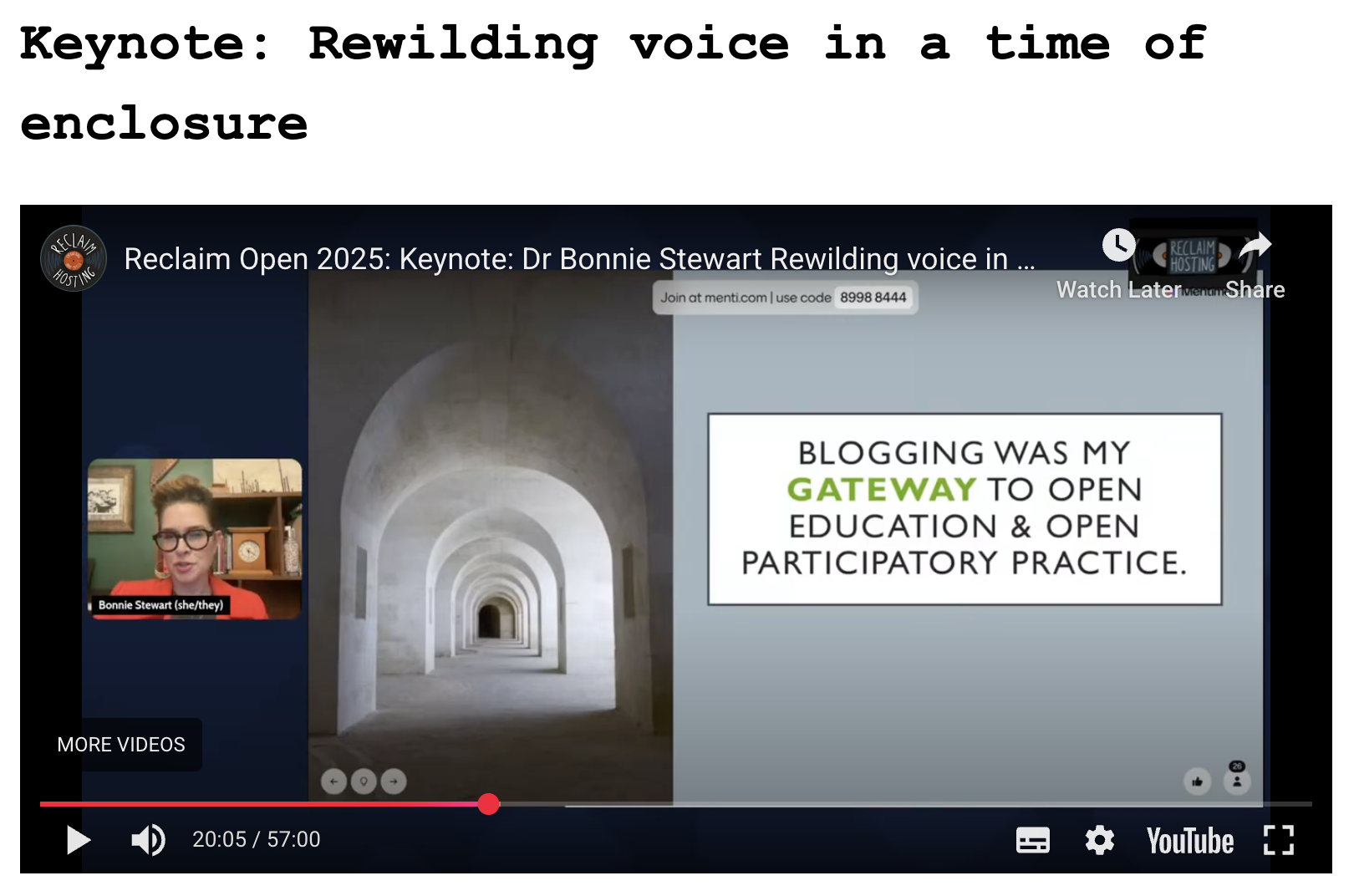
Bonnie Stewart’s keynote was simply awesome and helped open up that conversation during the event, and is definitely worth re-watching and is the student showcase that brought together four very different, innovative projects and opened up the keynote stage to emerging voices from the open web.
… and my session
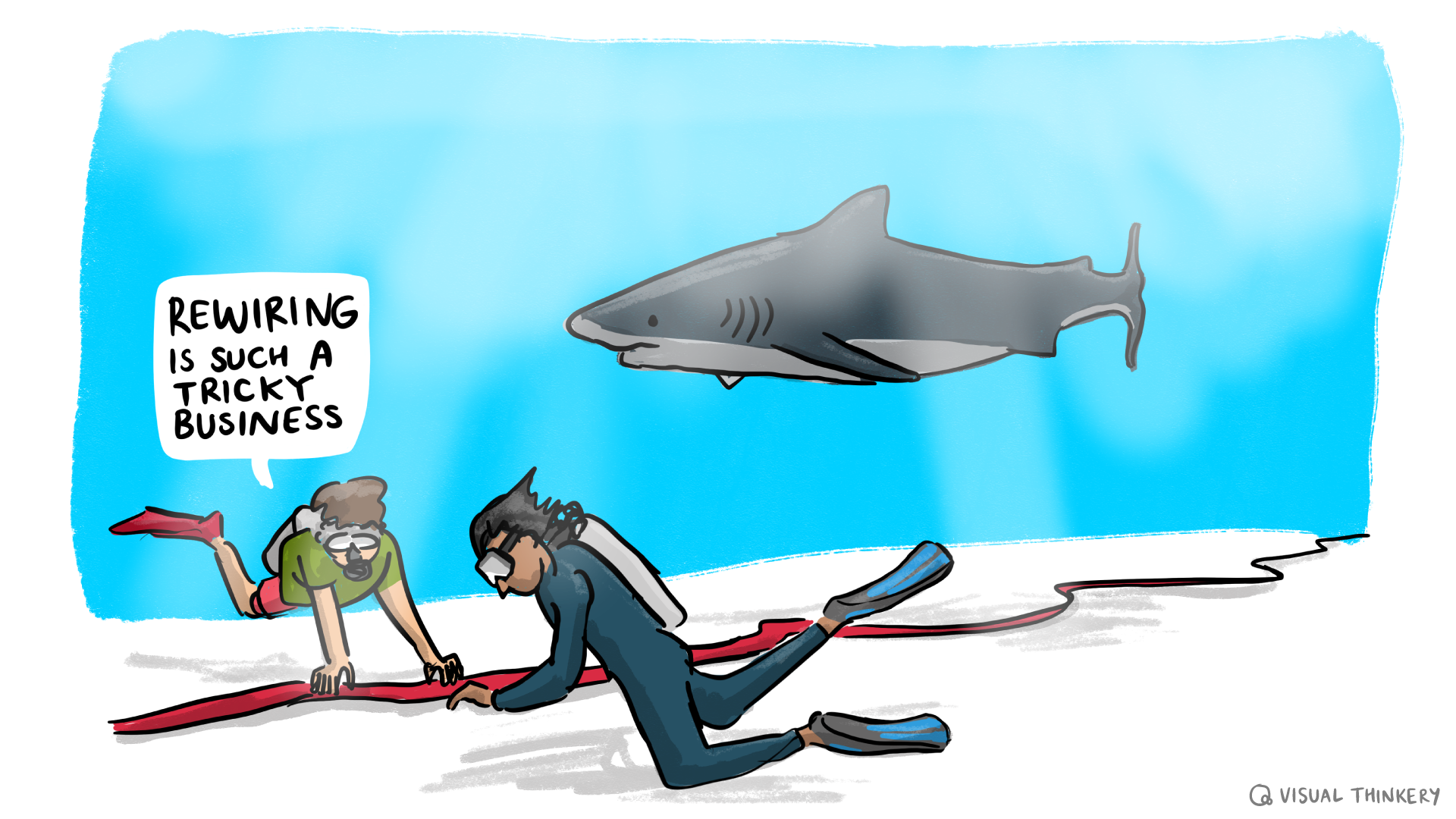
If you’d like to take a closer look at my own session, then listen to last week’s podcast episode in which I explain a bit about the back story and share highlights from my session. Thanks to Bryan Mathers for the awesome illustration:
I’m taking part in the Reclaim Open Conference this week, and my contribution is for the blog-a-thon. If you’ve landed on my blog for the first time, howdy! Welcome!
I’ve been blogging here since 2008 and I also send out a free monthly newsletter and host a podcast about hybrid working and leading in distributed organisations. I work as a consultant and coach with non-profits and small organisations, mainly in education and technology.
If you are a returning visitor, great to see you!
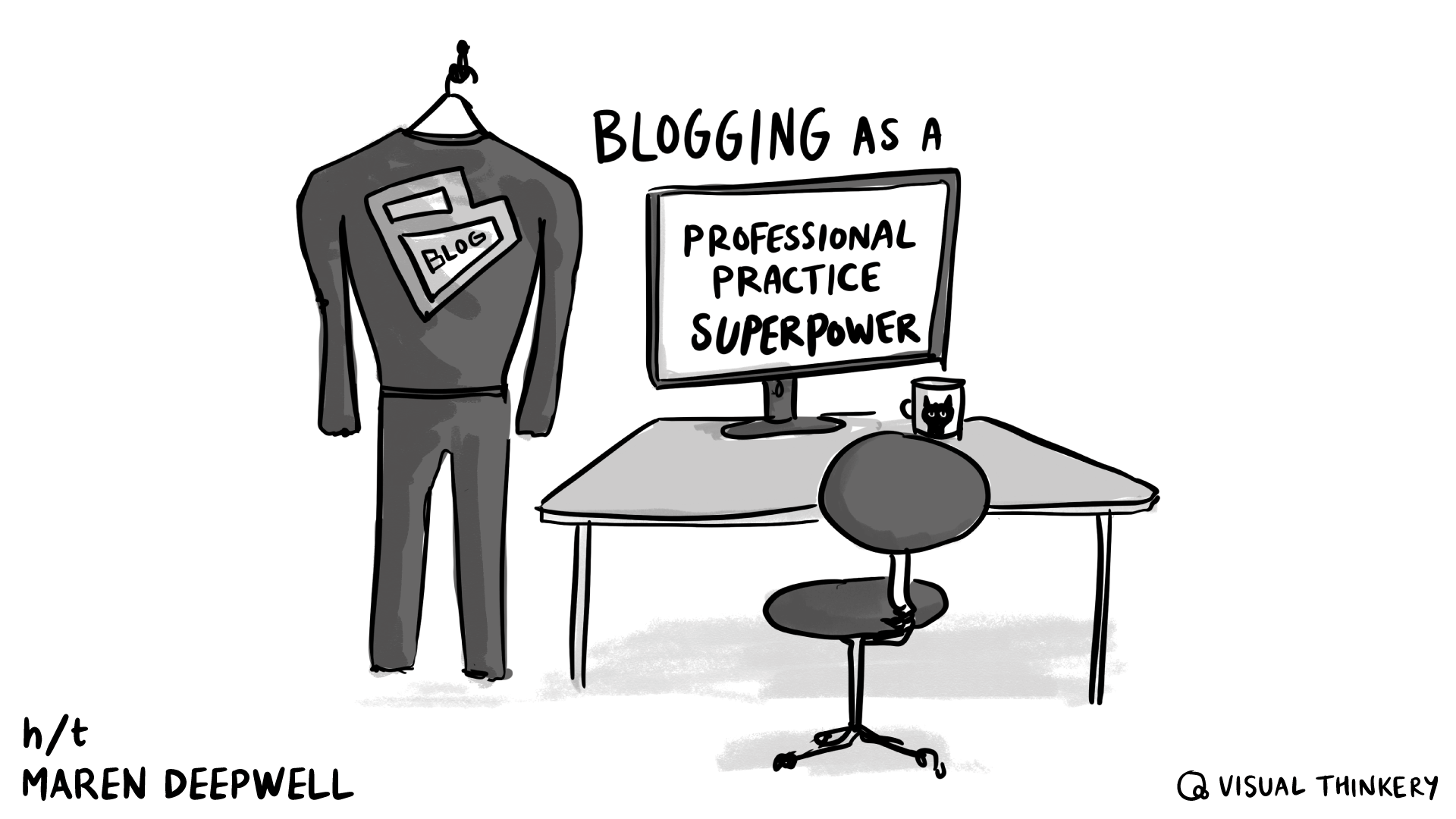
Here is my conference post in full, and a big THANK YOU to Bryan Mathers who captured the visual thought for the session and created this lovely image that now heads up the post!
Blogging as a professional practice superpower
A really common issue for leaders in Higher Ed and elsewhere is worrying about “is it just me who is struggling with this?”. When everyone works from home and all you see is a carefully curated or blurred background with a professional, well-groomed headshot framed by a flattering camera angle, it can be hard to get a sense of how others are coping day to day and easy to feel that you are the only one who is struggling.
I think this is where blogging can not only help, it can become a professional practice superpower.
Open practice in a leadership position is different from sharing things like new publications, or blogging about exciting projects. Many professionals in leadership roles maintain public profiles or a web presence like a blog. What I’m interested in is not necessarily about having a blog, but about the practice of blogging in itself.
The process of getting whatever you want to say in a post and press publish.
It’s about the joy of blogging, the sheer exuberance of having a space, a domain, to make your own. A vault or a personal archive as I’ve blogged about before.
It opens up a space to share the practice of leading, of managing people, not just the end results – and the reflective space it opens up can be incredibly powerful.
There are however some barriers to blogging, especially in a leadership role. When you are everyone’s boss, it’s not always easy to maintain an authentic space on the open web. So I use a couple of strategies to blog about my professional practice, specifically:
Choose a format that works: I vary how and where I blog, from my main WordPress site to voice recordings.
Modify how openly to share: from public, to semi-private to fully locked-down depending on topic.
Keep a list for the long term: I could use a tool to track projects, publications and other activities for me, but there’s great value for me in the act of processing what I have done and reflecting on it as I make and update the list.
To conclude, I also want to share one more strategy that I have found particularly useful over the years, which is to engage in conversational blogging, or co-leadership conversations. There are a range of conversational approaches that I have used to create the space needed to reflect together and blogging can be a great tool for that, too.
Thanks for reading my contribution to Reclaim Open 🙂