Contributing something #rhizo15 is part of my ongoing effort to become an open practitioner. This week’s topic, learning is a non-counting noun, made me reflect on how my own ideas of how we can count, measure or track aspects of learning developed.
Unlike most people who spent a lot of time in Higher Education my experience of studying and later infrequently teaching at university didn’t involve many written exams or a set curriculum. First Fine Art and then Anthropology were disciplines that afforded me enormous freedom. In the first case progress was charted by the sketchbooks filled, pictures taken, materials 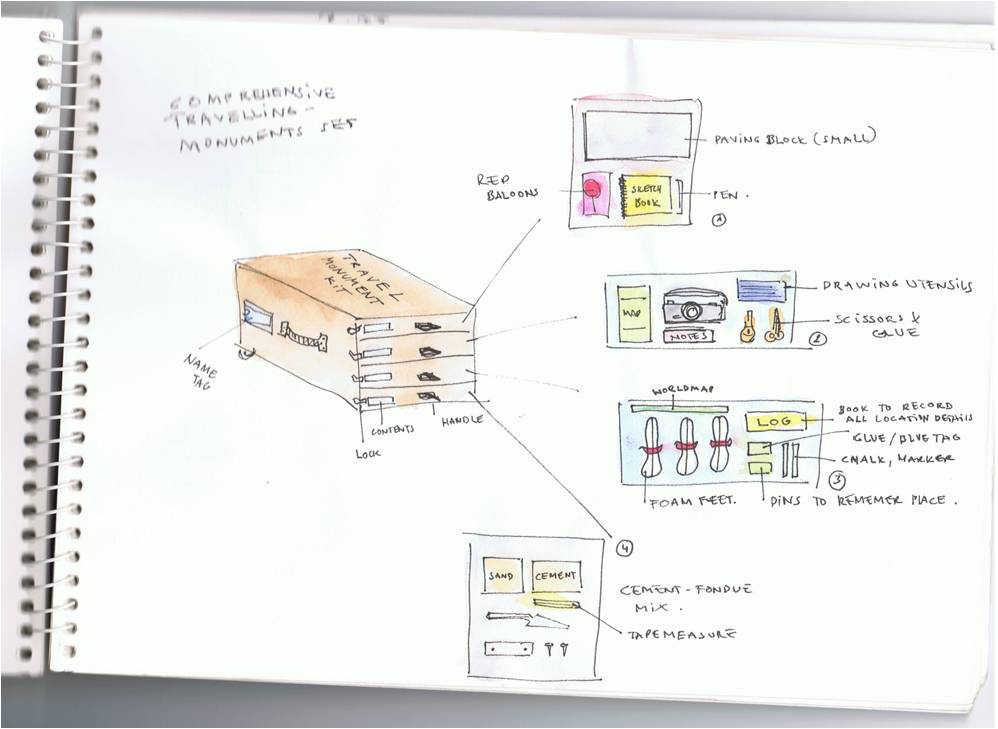 purchased and objects made. These units of measurement translated the ongoing process of thinking and making into external, visible signs of activity. There was no set path or goal instead we had open, critical discussions and at times the results of months of work was deemed to ‘work’, to be successful, to have meaning.
Anthropology meanwhile, while requiring more specific reading and skills, is such a conceptually broad discipline that it was impossible to find something interesting that wouldn’t be relevant. Here milestones came in the form of distances travelled, time spent ‘in the field’, interviews transcribed, maps made and diaries kept. Yet the ultimate aim of all the work was a particular quality of understanding, of knowing what it’s like to see the world through someone else’s eyes, of interiority.
‘True success’ as an Artist or Anthropologist depended on ongoing practice using tools that could be supplied, techniques that could be taught, but ultimately defied clear definition or indeed measurement. Instead of content, there was practice. Instead of grades awarded or exams passed, there was an ever growing debris of objects and information that together served as a physical record of the process of learning. The reason for why one artwork ‘worked’ while another one did not or how one of us achieved a real sense of their particular subjects in the field could never be more than guessed at, let alone measured.
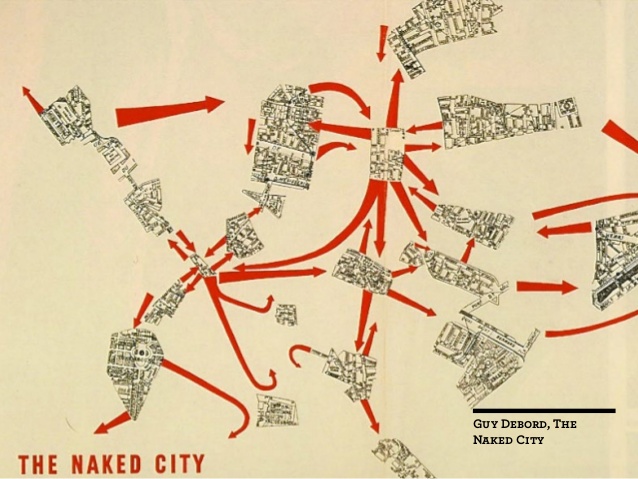 Not unlike the way in which members of the Situationist International movement used what they termed ‘drifting’ as a new way to explore and chart a city (Simon Sadler’s The Situationist City is always an interesting read), making maps of spaces according to a different set of priorities and experiences than geographic maps for example, learning (journeys) can be charted in different ways. One of the challenges we face is being flexible, creative and curious enough to be able to value aspects or ways of learning that don’t fit into an existing pattern we already know about. To map or count learning not only in ways we can already understand, but leave space for the things we don’t.
I originally wrote this post and then lost it – then I found it again. So here is the original version:
Situationists, Sherlock and secrets. Thoughts for #rhizo15, on learning as a non-counting noun.
For me, contributing #rhizo15 is part of an ongoing effort to become an open practitioner. This week’s topic has made me think about a lot of different things, including how my ideas about learning have developed and how some of the technologies I now work with could be applied to things which at first glance might not be easy to track or measure.
At university I became curious about Situationism. The Situationists I was interested in were a small group of people gathered around Andre Gide who in the 1920s tried to experience the world, in particular the city of Paris, in a new way – by what they termed drifting. Simply put instead of following a map or grid to navigate the city, they would walk on foot following no pre-determined pattern, instead allowing the currents of their own minds and experiences to determine their path and speed – drifting on the currents of their city. Some of the results of this kind of practice were maps, depicting a city from a different perspective. In short they produced data that allowed us a glimpse of their city, their experience of it. I imagine that Situationists today could use things like Google Glass to help record their experiences (even if it would presumably result in a lot of circular maps and very blurry video footage, alcohol being a key part of drifting).
With the tools we have today to collect data we could probably come up with ways to track, measure or count a lot about different kinds of learning, including making, seeing and experiencing things. But the concepts that we’d use to analyise the data we collect would need to be appropriately flexible and complex. Giving a machine criteria to evaluate data of a (learning) journey without an end or aim is an interesting challenge. What I enjoy most about learning is when I don’t know where it’ll lead me.
How this came about
My concept of learning is shaped by my time at university, first on a Fine Art, then Anthropology degree. In stark contrast to those studying sciences or languages, my art degree involved no exams, a very limited curriculum of required reading and two hours of being in a particular room at a particular time each week. Studying Anthropology did involve more lectures, seminars and reading, but by its very nature trying to study our own species has enormous scope with practically nothing I could find being off-topic.
In place of content, there was practice. Instead of written exams, there was discussion. What I learnt to value most is being self-motivated, curious and reflective. Skills that still shape what I do and how I learn.
Units of measurement
During the first few years at university my progress could be measured in units of sketchbooks filled, pictures taken, new methods of making stuff tried out and by the level of mess that my studio space contained. Thinking and making as reflective, critical practice involved leaving a path of debri, discarded leftovers and treasured glimpses of inspiration. What ended up in a clean, white space three times a year for critical evaluation by peers and tutors was only a small part of the whole.
Anthropology had its own ways of charting progress or success, most notably distances travelled, days, weeks or months spent ‘in the field’, interviews taped, maps made and diaries kept. As my focus was on material culture, it also included a lot of objects examined, made and catalogued.
Secrets of mysterious enlightenment
Both of the subjects I studied at university placed an emphasis on creating a mind-set, a practice, of becoming an Artist or an Anthropologist as a specific way of being in the world. Both were supported by classes, reading, tutors and other mechanisms designed to give you the best possible chance of achieving that aim. And yet, in my experience, both relied on something that couldn’t be counted or measured, but a quality that was priced more highly than anything else. Doing all the right things, reading all the right books, did not compare to achieving it. In Fine Art this was a sense of something working – or failing to work. In Anthropology it was an understanding of what it meant to be in someone else’s shoes, seeing the world through their eyes, of interiority.
These mysterious qualities, these moments of everything falling into place, was what all the process, the thinking, reading, reflecting, discussing or doing, led to. Most of the time, you couldn’t explain why it had or hadn’t happened or replicate it. What you took away, if you were lucky, was a method, the tools to help you achieve the same kind of process or understanding again in a different way.
Deduction and data
When I think about learning and curiosity, two people I keep coming back to are Sherlock Holmes, the detective of the original stories, and Commander Data, the android officer from Star Trek. As childhood heros of mine their stories have coloured my understanding of learning and asking questions. Both rely on observation and deduction and have superior sources of information. Holmes has his own reference works and London’s institutions while Data has the computer on the Enterprise as well as his own database. Both encounter much they cannot initially explain or understand. Both are students of human nature. Each is the ‘hero’ of their own story, their character defined by exceptional abilities and knowledge in contrast with a need for a friend, their struggle with being different.
To me, they serve as a useful mental metaphor. Their stories prompt me to ask questions, to be curious. They also remind me to value what I can’t explain and don’t understand or indeed what I cannot count.
 Having finished reading/listening to a new memoir by Felicia Day – You are never weird on the Internet (almost) – I wanted to note my thanks. So here goes: