I was invited to participate in an interesting event this week, “Embracing Technology Enhanced Learning”. Lots of very useful resources were shared on Twitter, so I’d encourage you to browse #IGHETech18 to pick up great resources.
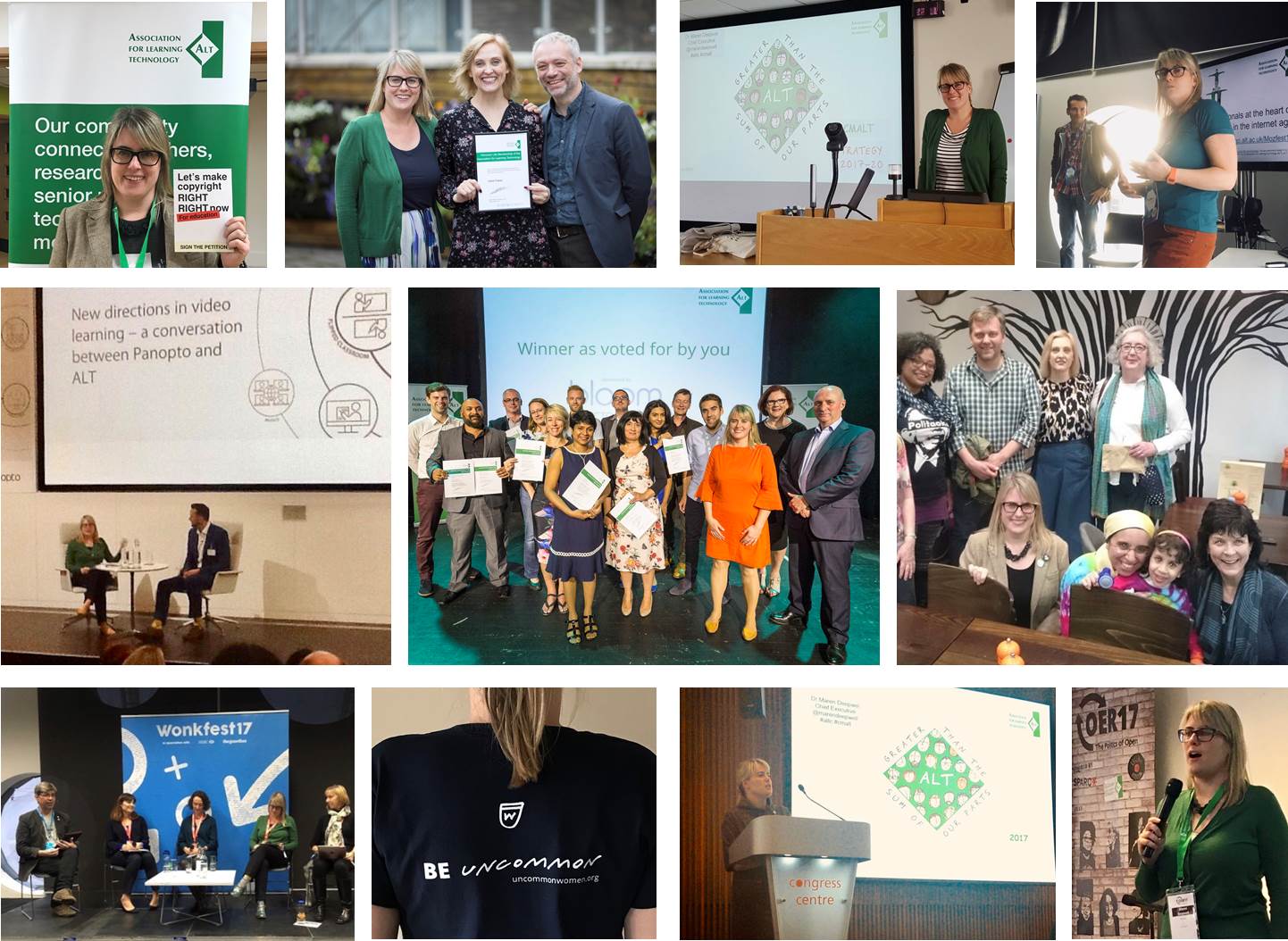
One of the highlights of the day for me was seeing and listen to colleagues whom I work with for ALT, but whom I don’t often get to see on a stage talking about what they do best!
We also joined into a brief periscope session as part of this week’s BYOD4L: AN OPEN LEARNING EVENT FOR STUDENTS & TEACHERS, check https://byod4learning.wordpress.com/ for full details and to catch up on what’s been happening.
The day really inspired me, but it has also left me with some questions: first, it’s reminded me of how unevenly we, as individuals and institutions, take up Learning Technology. There’s a general sense of scaling up, but it feels that there is always a wide distribution across a rather steep curve of adoption – from those who are reluctantly facing change to those who embrace new processes, tools and ways of thinking and empower each other in the process. That is why, I think, we return to talking about the potential, rather than the reality of technology for learning, teaching or assessment. How can we move on?
Also, Peter really struck a chord with me when he emphasised how the one concern that brings everyone together is for students and the desire to improve things for them. I agree with that and my experience working in any sector proves that time and time again. But how can we actually put that concern first when we are faced with ever more complex technologies? How can we ensure that we can understand, interrogate and shape machine-led processes sufficiently to put students’ benefits first?
Last, I was left with considering how we can increase the impact of all the work we are doing? There is such a wealth of experience, resources and insight that everything we are already doing seems insufficient to really leveraging its impact fully.
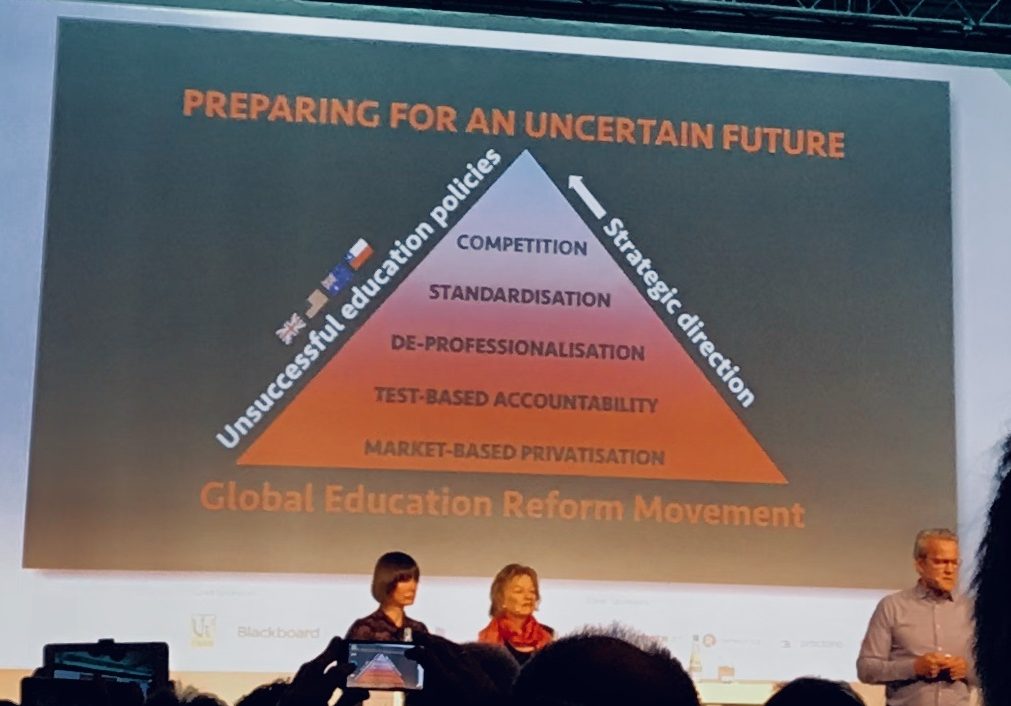
I have been working on some articles about effective education policy this week and that prompted me to look back at Pasi Sahlberg’s contribution (slides available here) to the Opening Plenary at last December’s OEB conference. It was an inspiring 20 min or so that combined hard hitting policy insight with a global perspective from the Finnish expert and culminated in a sing-a-long that makes the YouTube video worth watching!
In his talk there was a clear juxtaposition between making “successful education policies for the future we don’t know” (with examples from the UK, US and Australia amongst others) and “shaping the future we want by making successful policies that create equitable public education for all”. Some of the hallmarks of these kinds of policies are that they award trust-based responsibility, encourage professionalisation, reward risk taking and creativity and that they create cooperation. Not a lot to get right, but a stark contrast to the familiar examples of market driven competition we are seeing every day.
Sahlberg explained how we can get to education policy heaven by achieving the right balance between excellence and equity. Thinking about that made me go back to the call for action for openness in education ALT published late last year. It shows how we could take forward the kind of ‘heavenly’ policy making Sahlberg advocates in all education sectors in the UK in a very practical way.
With the OER18: Open to All conference only a few months away, there is a lot of work ahead to try and build on the successes of last year, the Year of Open, and make this kind of change happen on a national scale.
This time of year I come across a lot of statistics, from national to organisational or even personal. Most read articles, number of books read, fastest running times in the last year, furthest travelled, most often cited… and that is not even mentioning the academic insights or administrative dashboards that surround you in Learning Technology. No, there is no limit to how many quantifiable insights or measurable achievements work and life can be expressed as, particularly online.
Which is why, when I acquainted myself with my ‘digital shadow‘ recently and put it through a ‘digital detox plan’ I felt like the prompts I was getting online, even the well intentioned ones, led me in the wrong direction. From tracking activities to following feeds, this time of year is dominated by what feels like a race to improve, to do more, better… faster… stronger!
I am not one for new year resolutions, but I think this year I may break with this tradition and resolve not to be seduced by the dashboards, graphs, league tables and charts. This drive to increase, to ensure trends point upwards, is not necessarily where I want to be heading.
Instead of being prompted by the next badge I can earn if I take a few more steps or the citations I may gain if I publish one more article, I’m going to ask myself “why?” first.
If I don’t have a strong reason for doing something, I am going to save my energy for other things. Saying no is a healthy habit I do my best to cultivate and making sure I don’t commit to anything without a good reason should help with that.
I found myself using very few of the hints and tips that the data detox plan suggested. The shadows I cast online are more or less what I expected, manage and largely try to control already. Obsessively updating privacy settings, even the most laborious ones, is probably a good foundation for this kind of process and I am fortunate that I have been doing that for years. Unlike many other professionals I know, I don’t delete old posts from most networks, but I try and ‘clean’ what remains as far as I care to. I am sure I could do better in this respect, but at least I have thought about what I am not doing.
In order to avoid following my online shadow and the myriad of ways in which all kinds of measurements are trying to encourage me to improve, do more etc, my resolution is to take a step back, and start with why.
If I track something, does it serve my purpose?
Do I need to quantify what I am doing in order to achieve my aims?
Do I need to work harder (better, faster, stronger…) to achieve my aims?
Even if I can measure it, why am I?
In Anthropology there is an interesting discourse on different cultural understandings of numbers, or the concept of numbers. How we arrive at an understanding of numbers and their values, how this is shared across different cultures and periods in history and so forth. One idea that you come across again and again is that our sense of self, of being an individual, is fundamental to our understanding of ‘oneness’, of there being one thing different from others and that we start counting at one. We take our understanding of being a human being as a starting point for making sense of the world.
My online shadows, particularly if I can track or analyse the traces they, I, leave, can make me feel that my sense of self is becoming more distributed. Having too many opportunities to focus on different things, too many different goals to achieve or milestones to hit can distribute or lessen my sense of why I am doing something, of what is actually important. So this is the direction in which I intend to develop my own critical literacy and skills, this is what I hope my new year resolution will help me achieve – to not follow all the different directions into why my shadows get pulled online without thought or question.
This is the third and final part in this series of posts. If you’ve missed them, you can go back and read part 1 and part 2 of this series of posts, looking at my year Learning Technology in 2017.
I’ve already covered some of the highlights of my work for ALT, big issues we’ve encountered in Learning Technology this year and talked about the professional community I am part of. As a Learning Technologist I spent most of my time working for ALT, but I do get involved in other projects, support other causes and learn new things as part of my professional practice.
I benefit greatly from using Learning Technology to manage, implement, support and learn. I embrace it with a healthy dose of critical reflection. Yet I experience its limitations and drawbacks like everyone else who has ever stood at a lectern, in front of an expectant audience, desperate to be rescued as the inevitable technical glitch occurs. And this year has certainly brought with it the usual amount of things going wrong!
To ‘do it properly’, Learning Technology calls for a paradigm shift or a culture change. It requires you to win hearts and minds. It needs buy in from everyone, new skills and continued support for all, including senior staff. It works best when it’s embedded, strategic, well funded. It isn’t a panacea. It is transformative. It has enormous potential. It entails thorny questions and ethical implications. It requires constant renegotiation. It often goes wrong. It demands that we takes risks.
Each year since I started working in Learning Technology has brought me face to face with things going wrong. Whilst I know what it takes to make things a success I can’t avoid risking failure. I can’t stick to what’s tried and tested because the goalposts keep moving. New technologies are developed, new possibilities explored and new approaches required. So, like the wider, global professional community I am part of, I rely on my network to achieve the best I can. I learn from the successes AND the failures that others share and in return I give back and contribute what I can.
So in that spirit, and to end my review with sharing practice openly, here are snapshots of some of my favourite moments of 2017:
Snapshots
“Week Five: Google Hangouts, Collaborate Ultra and Wikimedia” flickr photo by interactive.content https://flickr.com/photos/interactive-content/29187670640 shared under a Creative Commons (BY) license
At the start of the year I wrote a guest post on the #altc blog, reviewing the #23things course called #23things – how taking part turned into a digital knowledge habit. The post was about an open online course run by the University of Edinburgh that I took part in together with my colleagues at the end of the previous year. Nearly a year on, a weekly show and tell slot in our meeting meetings continues to encourage us to share tips and tools regularly and this course set a lasting example of how we could expand CPD within a small organisation.
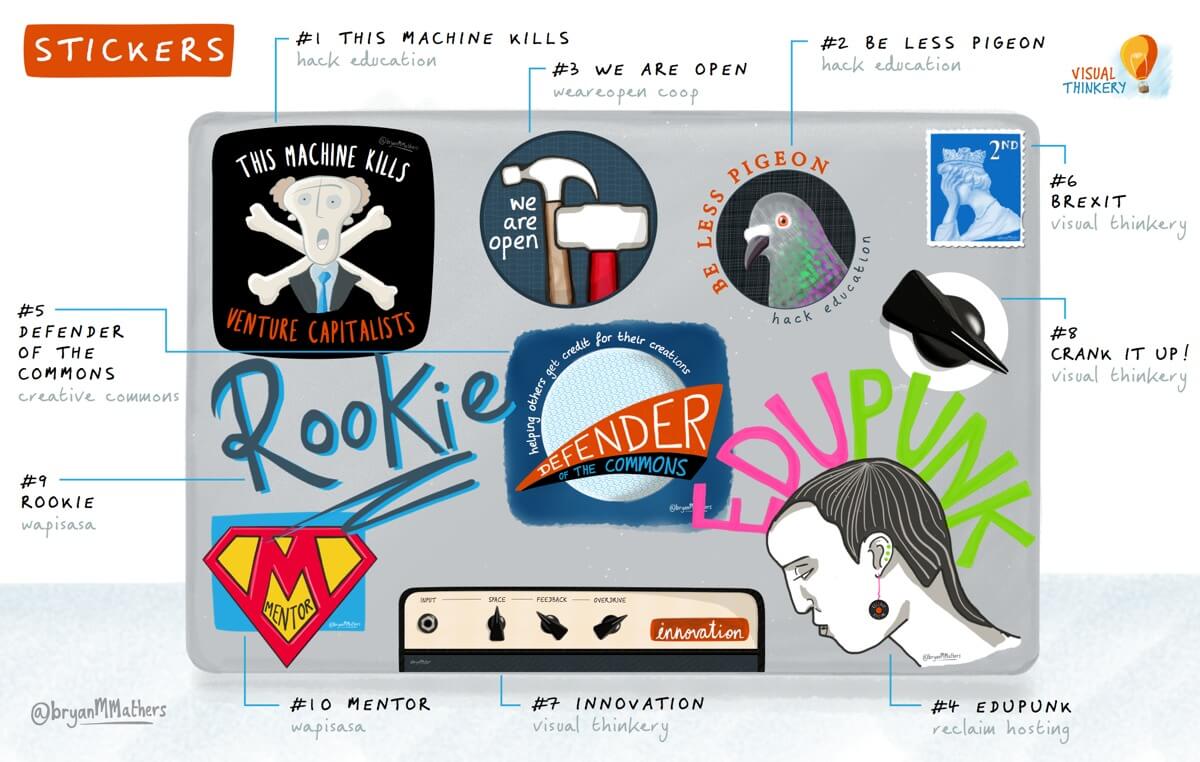
Visual Stickery by @BryanMMathers campaign https://www.indiegogo.com/projects/visual-stickery-laptop-art–2#/
Also early in 2017 I supported this brilliant campaign by Bryan Mathers, offering a range of options to support the work of Wapisasa CIC (Community Interest Company). I am a great fan of Bryan’s work and the causes he champions and as well as supporting a worthwhile cause I got the best laptop stickers anyone could wish for.
Emergency Rations, edited by David Hopkins http://www.dontwasteyourtime.co.uk/books/edtechrations/
In March a new book edited by David Hopkins was published and I was delighted to be able to contribute one of the chapters. It was a really rewarding collaborative writing process (read about it) and I wrote about the things that I can’t live without, professionally speaking (my edtech rations outtakes).
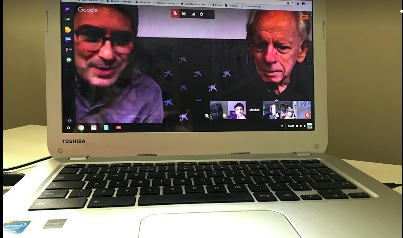
Appraisal via laptop… from left to right: Maren Deepwell, Josie Fraser, Martin Weller
I have a lot of support, many people who help me achieve what I do and one of the ways in which I develop my practice further is a robust annual appraisal process. This year I met with Josie Fraser and Martin Weller to discuss progress and set goals for the coming year – a thoroughly inspiring day that set out some very ambitious targets and got me thinking about how I could develop further in a new way. As you can see from the picture, plenty of stickers were involved… . Having heard many others’ experiences of appraisal and mentoring in their roles, I think I am fortunate indeed to have had many exceptional individuals to work with over the past five years and each of them has contributed to my work. You know who you are. Thank you.
The KingPin Bowling Alley in Bloomsbury, OER17 Conference social
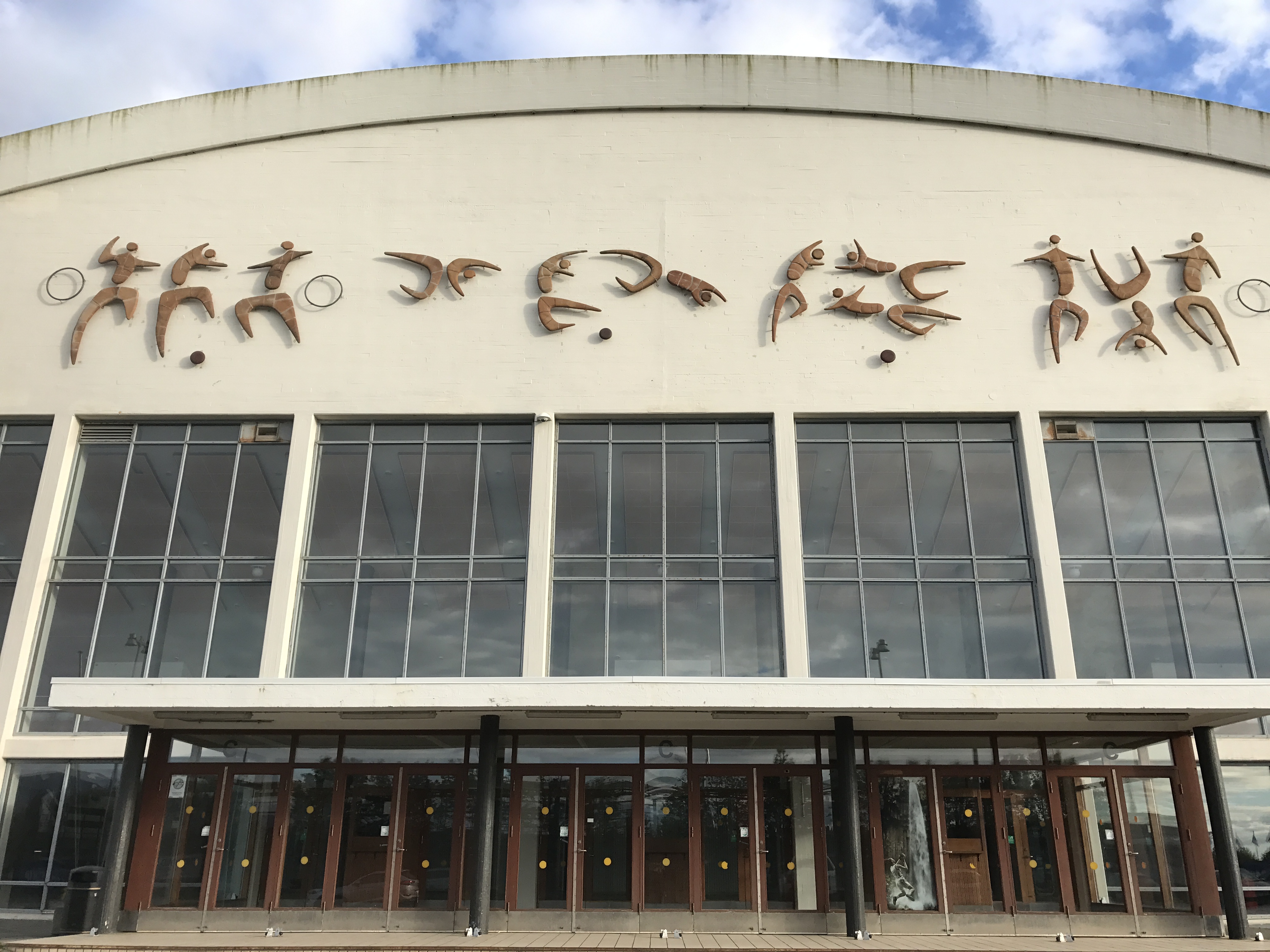
The OER17 Conference in London in April had a rather unusual social programme, with an evening at the KingPin Suites in Bloomsbury, where there was karaoke (which I stayed well clear of), table tennis (again, not for me) and plenty of drinks, snacks and music…. as well as bowling. A good time was had by all, I believe. And I was comprehensively out-bowled by my colleagues Tom and Martin.
Bon Stewart ‘beaming in’ to the Future Happens workshop at the LSE
I also took part in one of the excellent Future Happens workshops run by Donna Lanclos, David White and Peter Bryant this summer, at the LSE in London. It was a great day of thinking and doing that really inspired me both in helping to promote this particular work but also because it gave me great pleasure to see Bon Stewart in action. Bon took part remotely, intervention style, from her base in Canada and it was an impressive example of how much can be conveyed by a remote speaker if they are as good as Bon Stewart! Of course, I had the pleasure of witnessing the electric ‘real life’ keynote Bon gave later in September at ALT’s Annual Conference.
During the summer I also recorded my first podcast as a guest on Sophie Bailey’s Edtech Podcast. I really enjoyed it and we ended up talking about quite a few things besides Learning Technology.
Exploring further into different recording media, I joined Lorna Campbell, Sheila MacNeill and our congenial host John Johnston on Radio Edutalk. Together we discussed ALT’s Annual Conference and a lot of other things. As I am not a fan of being on video, I found myself really enjoying this kind of recording, chatting in the evening with colleagues on the other side of the country to an unseen audience.
Running to support Learning Technology across ALTerrain… with thanks to Bryan Mathers
Inspired by the visual thinkery from Bryan Mathers and together with a few of my fellow running colleagues, we created a t-shirt that helps support the cause we work to advance in a completely different context – on pavements, trails and at races up and down the country. Still work in progress, I think, but no doubt it won’t be long before you can spot a running Learning Technologist near you 😉
VConnecting at #PushingHE in Barcelona
One of the most memorable moments of my year in terms of conferences was a VConnecting session I joined at the #PushingHE Conference in Barcelona. The session was packed with excellent speakers from Tony Bates and Yishay Mor to Rikke Toft Nørgård and Allison Littlejohn. It was an amazing line up and a really interesting discussion. However, what made this session stick in my mind is that it took place the day after the Catalan Independence Referendum. The impact of what was going on in the conference host city was so palpable it really framed the discussion and made our thinking about pushing the boundaries of Higher Education and Learning Technology much more political. It really demonstrated the power of Virtually Connecting.
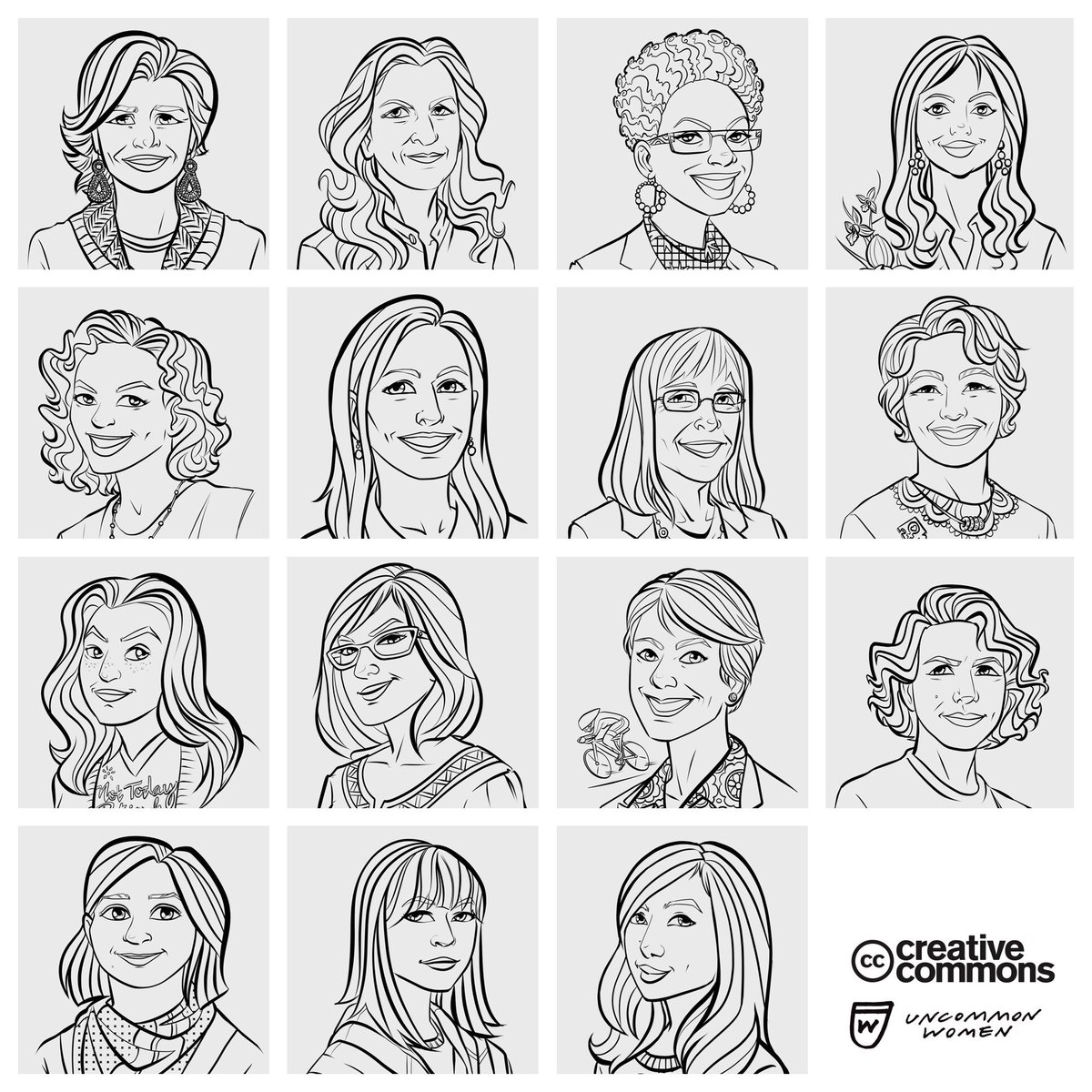
Another one of my conference highlights of the year was going to Mozfest where I met Kelsey Merkley and Ryan Merkley and received a copy of the wonderful uncommon women colouring book. Thanks for the kind gift (my own portrait is still work in progress).
I also discovered the feminist internet this year, thanks to Charlotte Webb and her talk at Online Educa. It’s been a great year to meet many outstanding women from all around the world who work in education and technology and work, like me, to achieve greater equality.
I’ve come to the end of this series of posts, and I’ve enjoyed sharing some of my thoughts with you, some insights and hopefully some useful links and ideas for further reading.
I ended my last big event of the year, taking part in a virtual fireside chat, hearing the crackling of (real) marshmallows being toasted over flames whilst colleagues were sharing their fears and hopes for openness in education and Learning Technology. It was a reminder of how much the human dimension matters when it comes to what we do, what I do.
So on that note, thank you for reading and to you a peaceful end of the year. I am looking forward to 2018.
The Open Education SIG fireside chat, at the ALT Online Winter Conference
This is part 2 of my look back at my year in Learning Technology in 2017 (read part 1).
The rise of the robots and the power of shared values
Another story that has shaped my work this year is the ‘rise of the robots’ with headlines once again prophesying a future where every job is under threat and where, in education in particular, robots will soon replace teachers and lecturers all together. From gleefully pronouncing the ‘uberfication’ of education to examining the potential efficiencies that can be gained by an automated system for delivering learning and accreditation, this past year has had it all. And many eloquent writers and researchers have dedicated their efforts to examining what is actually happening and what impact it may have.
In my previous post I wrote about how we can make use of the ubiquity of ‘digital’ to raise awareness of Learning Technology and the work we do. I argued for the need to define clearly what we mean when we talk about all things ‘digital’. When it comes to talking about intelligent or learning machines (or indeed teaching machines), language is even more important.
When we talk about robots coming to take our jobs what we are really talking about is human agency, human decision making to replace human workers with machines. Just because we may be able to make machines that are ever more sophisticated doesn’t necessarily mean that the ‘rise of the robots’ is inevitable. Those in power have choice. We have choice.
By talking about machines like human beings we transfer to them a sense of being similar to our own. We talk about how they learn, how they feel or what they need. As an Anthropologist I specialised in the study of Material and Visual Culture, more specifically the relationship we have as human beings to objects, and so I have a particular interest in this area. I know that our sense of who and what we are is shaped by how we perceive the world, our senses, and that even understanding another person’s view of the world can be a challenge, particularly if they have a different cultural background.
Thus, when I listen to conference presentations or vendor pitches evangelising about the next generation of caring machines, of robots who have empathy, who will provide care for our elderly or teach our children, it makes me pause.
It makes me pause because I think it’s important that we acknowledge our agency in the evolution of machines. It makes me pause because being human is more different from being a machine than the way we talk about it seems to imply.
Our relation with technology
Much of what I work on builds on decades years of research exploring how technology can be used effectively for learning, teaching and assessment. Learning Technology, by definition, advocates the use of technology in education even if it does so critically. Every part of our lives, and increasingly the lives of the majority of the human population, is permeated by digital technologies and our education and training systems reflect this.
In my last post I argued what we need to focus on is how we can best use technology to achieve our aims for learning, teaching and assessment. The next step is to consider what values we share that define our aims and what part, if any, machines play in that.
Over a year ago, when ALT set out to create a new strategy, we started on a journey that has given me a new insight into the power of values. My previous experience of setting out strategic aims was that usually one or two individuals end up writing such documents and few people ever read them. Instead we ended up on a journey through a collaborative, consultative process that resulted in articulating strong strategic aims and shared values that better communicate what we do, why and how. It was an empowering experience for everyone involved that has had significant impact not only for our organisation, but far beyond as I have openly shared not just the end result but also the process that got us there with other organisations including UCISA and the YMCA and at events like OER17, ILTA’s annual conference and Mozfest.
From supporting the campaign for right copyright to finding a new Open Access publishing arrangements for ALT’s journal, Research in Learning Technology, joining the Creative Commons Open Education platform, much of what I do day to day is all about putting our values into practice and advocating for what we care about as a community. I make sure that the values we have inform our aims and use that as a basis for operational decisions.
From values to action
One of the highlights of my year, ALT’s Annual Conference, provides an international stage on which you can see the power of the values we share in practice. Not only in the academic programme, but in the way the event is organised and how participants engage with it. For example, open elections in which every Member of ALT can vote each year result in three new Trustees joining ALT’s Central Executive and we welcome them at the AGM that is open to all to attend and live streamed. Like the strategy, ALT’s Annual Report is written by Members for Members and gives a clear account of finances, governance and achievements. Making the effort to issue open calls for getting involved in various activities, from conferences to publications, and ensuring there is regular turnover and transparency helps engage hundreds of professionals each year. It also ensures power and decision making is distributed throughout the community and that is really important to me.
Elizabeth Charles as a newly election Trustees of ALT
As well as good governance, I help recognise and celebrate the achievements of outstanding peers within our community, through for example supporting the Honorary Life Membership and the international Learning Technologist of the Year Awards. Members from across sectors and with different areas of expertise make up the selection panels I support and we actively promote diversity throughout the process. Each year winners reflect the the range of achievements in Learning Technology and showcase the impact of the work of individuals and teams from our community around the globe. It’s inspiring to see what can be achieved often against all the odds.
Josie Fraser receives her Honorary Life Membership of ALT (with Martin Weller and myself)Celebrating the Learning Technologist of the Year Awards 2017
Whilst the Annual Conference may be the biggest stage on which we recognise professional achievements, there’s much happening throughout the year that recognises and rewards Learning Technologists, like the recent CMALT celebration I took part in (cake and all).
Newly minted CMALT Holders at the University of Edinburgh (image with kind permission from Susan Greig)
Whether in person or online, what’s important about these kinds of celebrations is that they give expression to the value placed in professional practice, in valuing people. And what individuals do to play a part in this does matter. It makes a difference to colleagues, staff, managers. How we work together, how we support each other, how we talk about, relate to and use technology matters. As a Learning Technologist in a leadership position I leverage my position to purposefully set an example that reflect my values.
Taking personal responsibility to put values into action makes change happen. And that applies to the decisions we take about our relationship to robots, to machines, just the same. Coming back to the the rise of the robots, it’s not inevitable that much of what we currently do will be done by machines in the future. I argued for the difference individuals can make to achieving equality through openness in Learning Technology when I spoke at ILTA’s Annual Conference in June. Now, I hope that just as the fight for equality continues, our efforts to form an equitable relationship with machines and technology (in education) will provide a balancing weight to technological determinism.
I take a collegiate, collaborative approach to leadership and my work in general. This is particularly true of some of the examples I mention in this post. I am fortunate to have so many people to work, think and make things with. As you’re reading this you are likely to be one of those people, and I’d like to say thank you. You made all the difference to this year for me.