Category: things I like

  • Crafting keynotes… an inspiration from #OER19

    In June I am heading to Thompson Rivers University in Kamloops on what is a long awaiting (first) trip to Canada. Thanks to the organisers of the ETUG 25th anniversary conference I have a wonderful and rare opportunity to meet with colleagues in British Columbia and visit a community that has much in common with my own organisation, ALT – both long-established Member-led professional bodies committed to Learning Technology and sharing similar values and priorities.

    The ETUG Twitter account has been sharing news about the event, which has a movie inspired anniversary theme of Back to the Future: Looking Back, Moving Forward and so as one of the keynote speakers my own planning and preparations have long been underway.

    You can watch a short video of me talking with Clint Lalonde here as we get very excited planning for my talk.

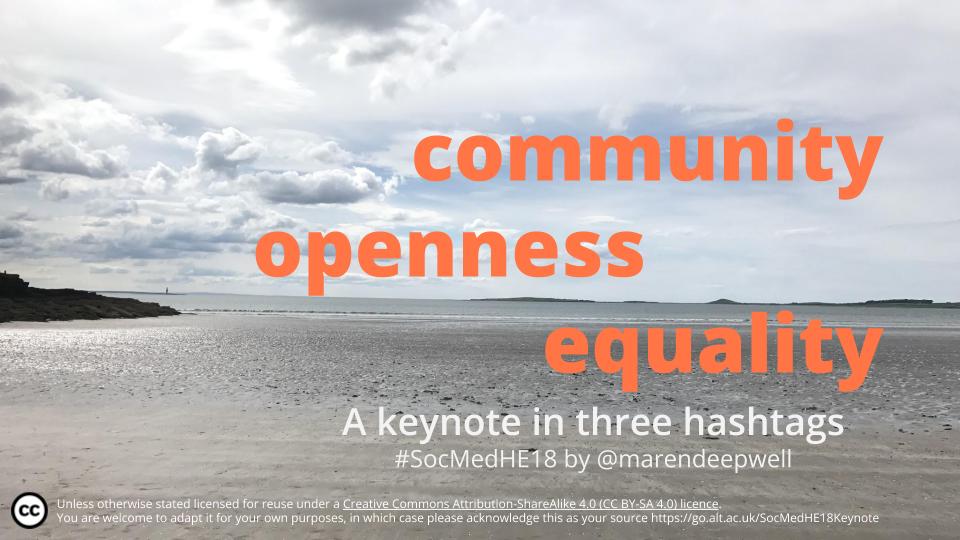
    And that got me thinking about all the work that goes into crafting a keynote for an event like this and the opportunity it presents for me to read, research, remix, make and think about things. Back in January I contributed to the #SocMedHE18 conference and the talk I ended up writing (Community, Openness, Equality: a keynote in three hashtags #SocMedHE18) was the result of a really inspiring process in dialogue with the conference committee and following the Twitter conversation, creating new artwork and images along the way.

    Whilst I do give a lot of talks the kind of opportunity to give a keynote of a more challenging or creative nature is rare for me and I value the chance to start from a blank canvas and re-imagine, re-think my ideas and views from scratch.

    One of the things I like best about crafting new keynotes is creating the artwork or images for the slides and I usually use my own or remix them. This time, I am hoping to remix a lot of images and use them to underpin my argument visually. It’s a great creative outlet for me to make openly licenced slide decks that I can then share back for others to use or remix. It also allows me to give credit in my talk to all those whose work I build on.

    But writing keynotes or planning them ahead of time is also very practical. After all, few people can create an engaging narrative with a strong argument on the fly and some of the speakers whose talks I have most enjoyed certainly write and think out what they will say well ahead of time. I find writing a summary at least, that I will then flesh out in the month before, adding slides and key points to remind myself is not only useful for me, but also provides transcripts for others to refer back to later or indeed remind myself of what I said or meant to say.

    But this keynote that I am working on just now may end up having a playlist more than a list of references and I think that is to do with what I took away from OER19 and the collection of reflections I have been reading. For one reason or another I missed all of the keynotes at the conference this year and like many who were not able to attend themselves, I have been going through the programme and listening to and watching the sessions we recorded – but my strongest impressions of the speakers has been through the memories and reflections of others who have written about them. And that has been quite an extraordinary experience because much of what others took away from the talks seemed to be about values, about what the speakers and their practice stand for.

    Being a keynote speaker can be a powerful thing particularly if you choose to use the platform it gives you for a cause that chimes with your audience. And it seems that in the case of OER19 that definitely happened. So much emotional investment and enthusiasm is rare at conferences I attend and as we are now nearly two weeks after the event and the posts and discussions keep on flowing this is further reflected in the continued engagement and activity. So there are fresh role models for me to be inspired by, keynotes to relive that really struck a chord and transcend what you can normally expect from an hour in a lecture theatre. And indeed there are many involved in making OER19 happen whom I have been inspired by in the past, like the Co-Chairs Catherine Cronin and Laura Czerniewicz, alongside Jim Groom, Lorna Campbell and Sheila MacNeill, or Bon Stewart, Martin Weller and Maha Bali and Jane Secker. All of whom have kept their audiences spellbound at previous OER or ALT’s Annual Conferences and I remember sitting back, listening, enjoying what each contributed to those events and to my own thinking. Some of these talks opened up my perspective to completely new concepts or problems, others inspired me with their example and encouraged my own practice. But each have made the hour I spent listening and participating very special, a moment stuck in my mind.

    We have all met speakers and participants who turn up for their session, who seem to have missed all instructions or information provided beforehand, who run over time, who don’t answer questions, who don’t speak on what they promised and who don’t really contribute.

    Fortunately, there is also the opposite of that. Keynotes who make the best participants and participants who make the best speakers and OER19 felt a lot like everyone’s places could be swapped around every few hours because everyone was working so hard to contribute, to listen, to make it happen for everyone else.

    And that is a big inspiration for me to take away and apply to participating and contributing when I head to Canada in June. And I am remixing and making and crafting to a soundtrack of inspiring working songs. Because sometimes music says it better and the mood from OER19 is not easily contained in words or even pictures.

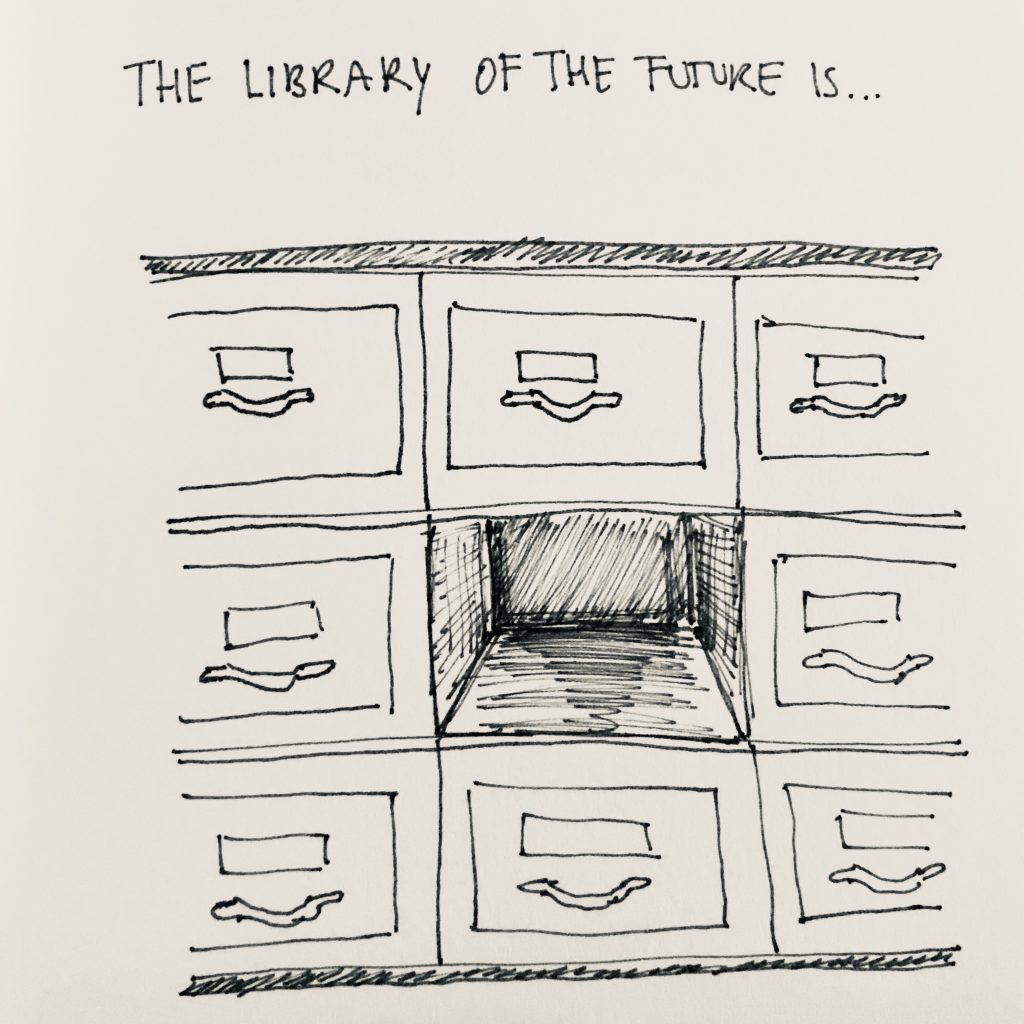
  • #OpenBlog19: The library of the future is…

    I have been really enjoying following #OpenBlog19 posts over the past week or more and if you haven’t come across it before now, start by reading David’s original post or browse the hashtag and discover the inspiring contributions to date.

    When I went to the Google doc, one topic really jumped out at me and so in this post I’m going to write about what I’d like the library of the future to be like. I’ve spent today walking through libraries of the past, so this post is inspired by the material traces of our histories.

    The library of the future is… #OpenBlog19

    The library of the future is a physical place, with many entrances and floor and wings to explore. It houses collections of books and manuscripts, tablets, carvings, materials, things, artwork, cultural artefacts and many indices. The library of the future is for human beings and about human beings, our history, our knowledge, our ideas and dreams and hopes.

    The library of the future is a place where you can find what you are looking for. A place in which to discover the unexpected. A refuge in which you can retreat from the world and find peace and quiet and contemplation. The library of the future is somewhere you can loose hours, days or whole years to following the red thread of inspiration.

    The library of the future is free and open to all.

    The library of the future is not dominated by digital data. The library of the future is not focused on making information useful. It does not require you to have a specific purpose or know what you are looking for. The library of the future rewards curiosity, accommodates procrastination and safeguards daydreaming.

    The library of the future keeps growing and being added to. It’s bigger than it looks from the outside, expanding into the space that only librarians can safely guide us through.

    The library of the future contains things we want to remember and things we try to forget. Recollections of wars won and loves lost. It contains everything ever published and posted, all the journals, newspapers, blogs, vlogs. sites and domains. The library of the future is our archive.

    The library of the future is a place of debate, disagreement and dialogue. An institution of reflection and critical literacy. A way of distributing knowledge and the power that comes with that. The library of the future will have a branch near you.

    The library of the future is a common good and owned by all.

    The library of the future is recruiting… apply now. There are many vacancies.

  • 2018: my year in miles and sunrises

    I started running a few years ago and unexpectedly found I love it. Ever since, I am grateful for every mile and every moment it brings me.

    Whether I’m catching the last light of the day or the first… I run to get some head space, to escape, to move, to breathe, to reflect, plot and plan. Sometimes I solve problems or work out talks whilst I run, other days I follow a training plan, sometimes I run to achieve a certain distance (hello, first few Half Marathons!) but most often I run to keep things balanced in my life, to be in the landscape in different seasons, feel heat, cold, wind or rain on my face.

    This year had a lot of running lows, like struggling with breathing (yep, asthma) and dusty, noisy building sites springing up along every route (affordable housing being built where I live starts at 560k and requires a 4×4… otherwise I would positively welcome new developments) and also various injuries, aches and pains.

    But there were more joyful, positive moments, a few races run, many sunrises seen, cats met and running friends made. There were light bulb moments as good ideas suddenly came to me at mile 4, improvised water stations prepared by my dad for long distance training during the heat wave, there were new trainers & kit (more than I would care to admit, but who can say no when it’s such a pretty colour ;)…

    Besides the highs and the lows, there were all the miles that simply went past below my feet, step by step. Most were covered on roads and paths, some on more adventurous terrain, very few fortunately on the treadmill.

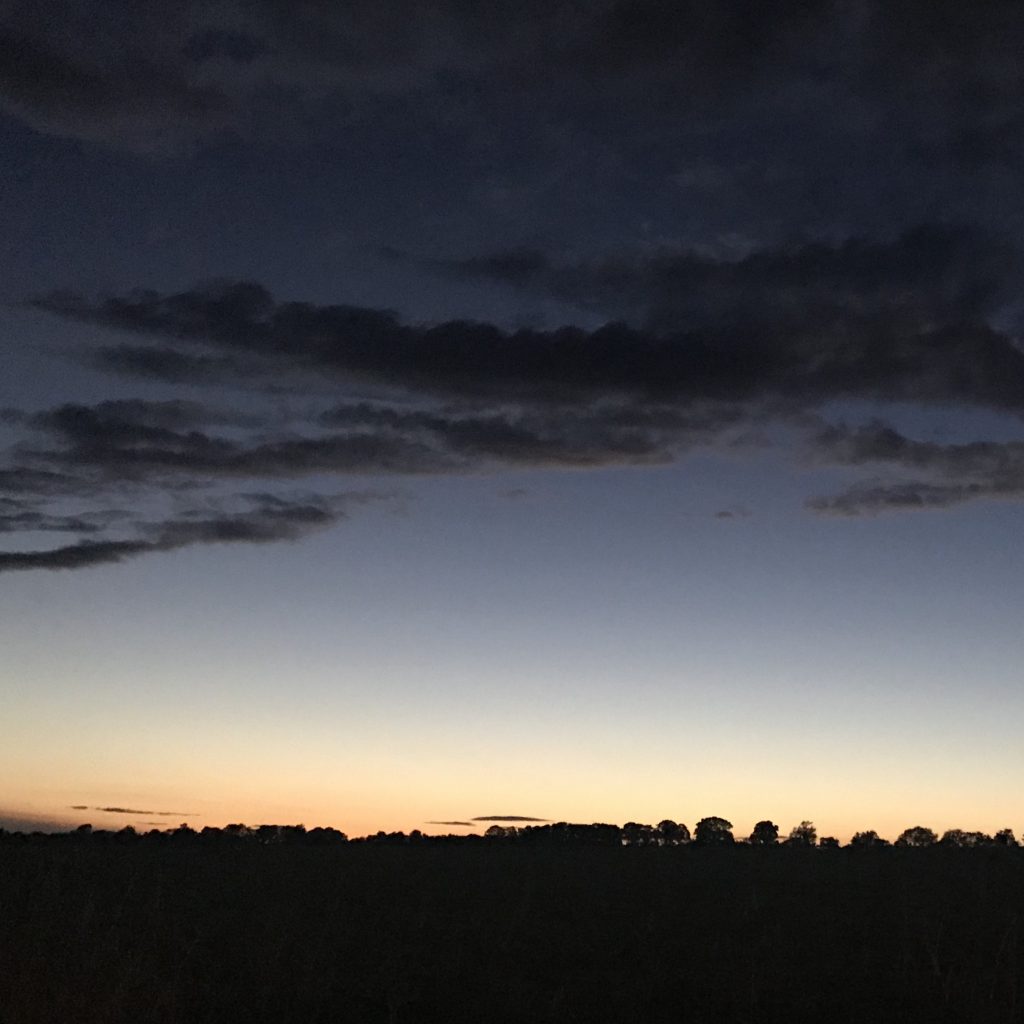
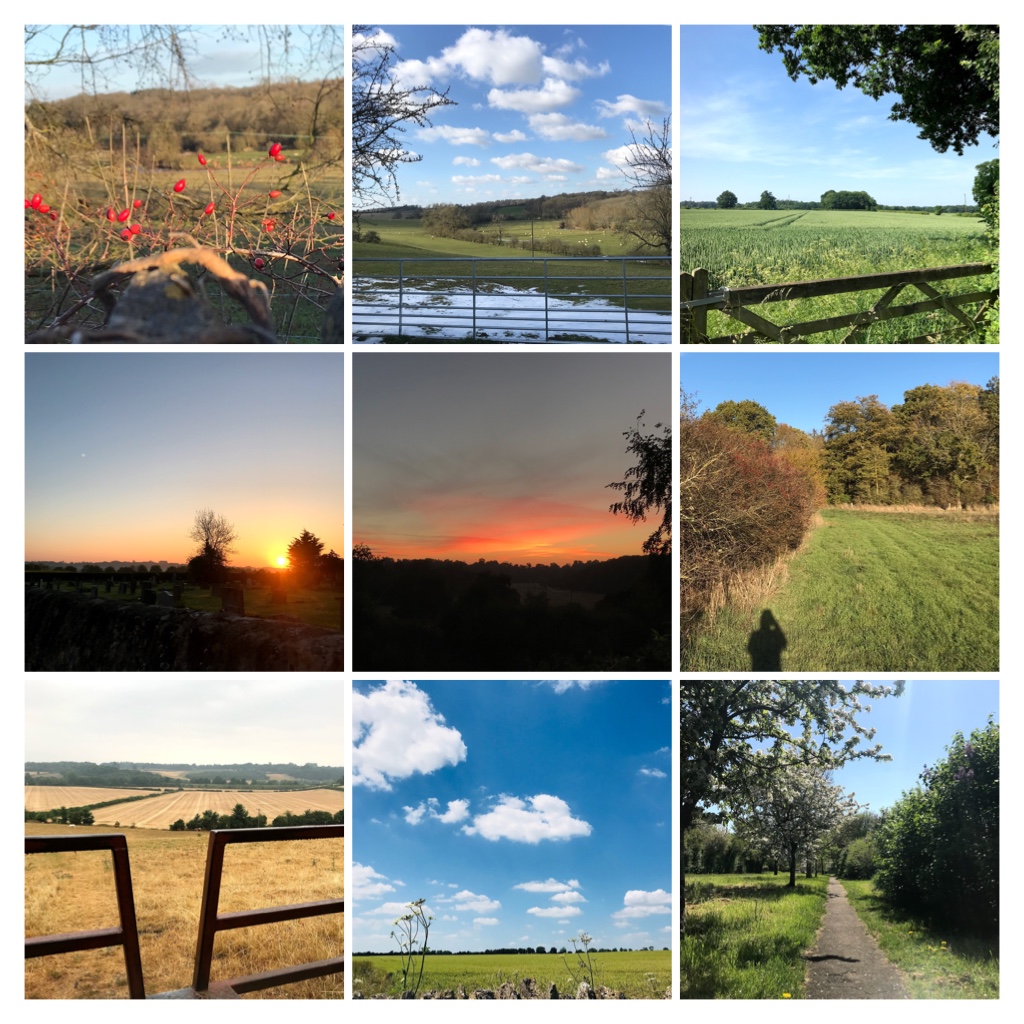
    Running for me is a largely solitary pursuit but I like taking a picture when I spot something that I like on my way. So here are some of my favourite snaps from 2018, some of my favourite miles and sunrises – from me to you with my best for 2019.

    2018 running snaps
  • Weekend post: leadership lesson from my favourite starship captain

    Weekend post: leadership lesson from my favourite starship captain

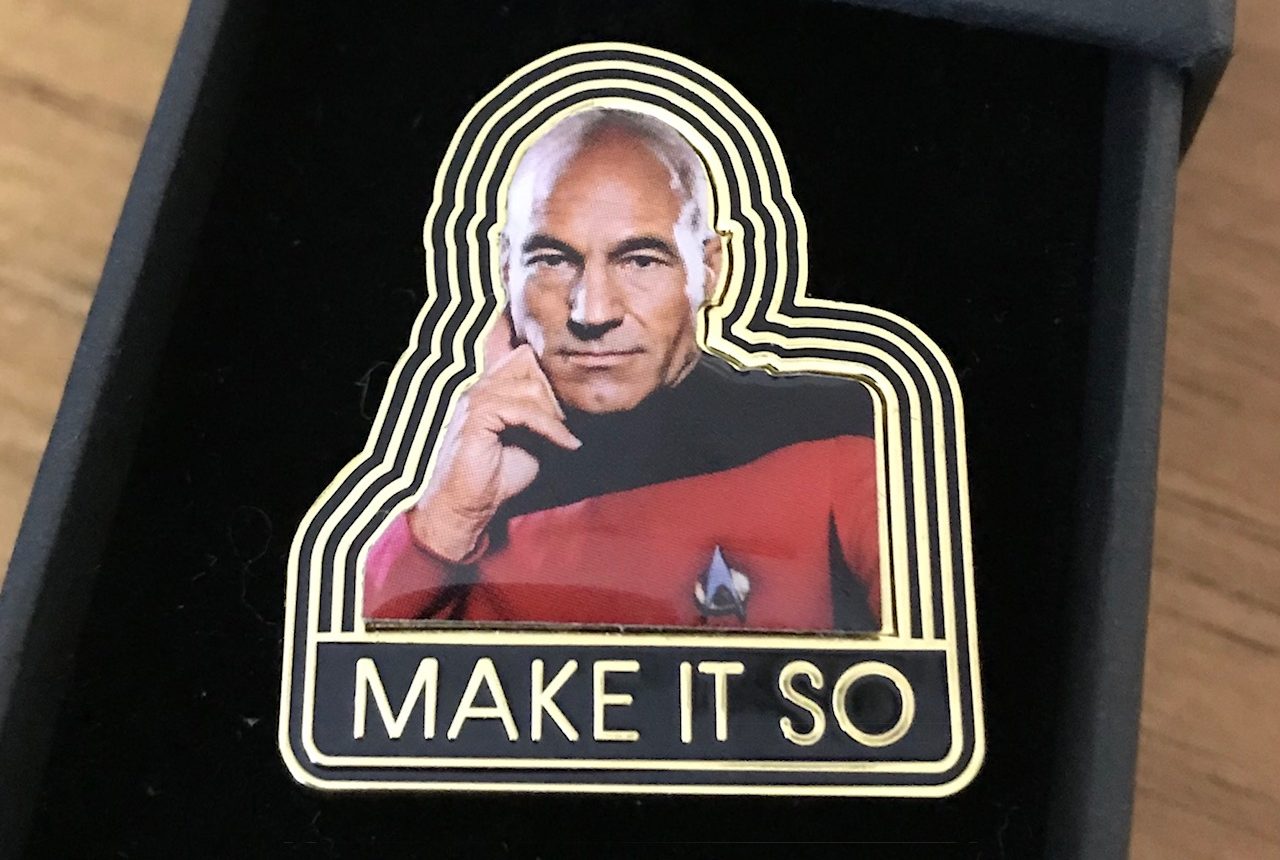
    As you may have gathered, I like Star Trek and Captain Picard is my favourite captain in that particular universe. I don’t agree with every aspect of his approach to leadership, but I like to think that we share a lot of values and every now and then I come across something he says or does that really resonates with me.

    I was watching an old episode of The Next Generation recently (fellow nerds: this is the one in which android Data loses his confidence after someone beats him in a futuristic strategy game), in which Picard says to Data that it is possible not to commit any mistakes and still loose. I like the episode in general, but that particular bit of dialogue stuck in my head, because it’s related to things I have been thinking about recently.  Here’s why it resonates with me:

    Much of the time following all the right steps and doing all the right things does result in the desired outcome. At least when things are reasonably within your sphere of influence. So, when something goes wrong or something bad happens in response to what we do, we seek to establish what we did wrong, where we made a mistake – same as Data does in the Star Trek episode. He thinks he must have made a mistake because he lost the game. It’s logical, and it’s comforting to have a sense of control, to believe that doing the correct thing will result in the correct outcome.

    But, in many instances, that’s not the case. That’s not the case in the well-ordered universe of the Starship Enterprise and certainly not the case in the chaotic reality we call home.

    The advice from Captain Picard cheered me. I thought it was a useful lesson to revisit because it reminded me that not everything that goes wrong is my responsibility or within my power to change. It made me reflect on the fact that even when things go wrong, often you can still get to your overall aim in other ways. And it made me think about how valuable it is to make mistakes, to learn how to cope with making them, learn from them and move on with your confidence still intact. 

    In a high-performing environment, like Starfleet in this instance, it’s doubly important to be considerate about that part of your working culture. To be able to share when things go wrong, to make the best of them and to move on. And that a little kindness, a moment of listening or recognition can go a long way to helping oneself and others weather difficult moments like that. 

    Back in the Star Trek story, a cheered Data returns to duty with the Captain’s advice fresh on his mind, but he also returns to face his opponent at the game table. This time, Data plays not to win, but for a stalemate, and he succeeds in not losing. He changes his winning conditions, what he wants to achieve to succeed. It’s a great ending to the episode and a good example to follow.

  • My week as guest curator of @femedtech

    My week as guest curator of @femedtech

    This week I’ve been volunteering as a guest curator of @femedtech. I actively work to promote equality in everything I do, so when the opportunity came up to support this growing network as a Twitter curator, I took the opportunity to help out gladly – but I wasn’t really sure what it would be like, taking over the voice of this kind of account. So one week in and with one more week to go, here is my personal reflection on how it’s going.

    Fortunately I had guidance, encouragement and advice from Frances Bell and Helen Beetham from the outset and they shared their experience and advice generously. I liked their suggestion to add my own identity to the account, which I did, and then I started tweeting and re-tweeting and following and.. a few days in everything started to feel a bit easier.

    I also set up a TAGS Twitter archive and TAGSExplorer for the #femedtech hashtag, to help chart and visualise the conversation as it evolves:

    As you can see, it’s still a fairly small conversation, but it is starting to grow and I found it really interesting to be able to see what is going on.

    Another approach I tried was to find and follow accounts with similar values or related ideas, such as @uncommon_women and the @feministintrnet for example and to welcome new followers or volunteers as they arrived. Hello to you all!

    With another week ahead, I hope I’ll get a chance to generate a bit more of a conversation and prompt more contributions (tagged as #femedtech) and have the chance to contribute to the development of information for future guest curators with Helen and Frances. My long term hope is that we can help draw together some of the existing initiatives, amplify the voices of those actively working to promote feminism and equality in Learning Technology and connect more people with each other. There are certainly enough challenges out there to be tackled, so let’s hope that we can help connect the dots to make a stronger movement.

    Note: this post was updated with a better TAGSExplorer view and links (thanks to @mhawksey)

  • More than swag: #oer18 material & visual culture

    More than swag: #oer18 material & visual culture

    As an Anthropologist I’m interested in how human beings shape to the world and relate to each other. In particular, I’m interested in how what we make, exchange or treasure articulates our relationships. This past week participants from the OER18 conference have shared a wealth of… well, you shall see.

    This is my story of the conference told through its material and visual culture. It is a story of swag … of badges, stickers, t-shirts … but it’s also a story of values, friendships and love, of rebellion and criticality, of struggle, adversity and diversity. It’s a study in gift giving, of intangibles made flesh, and it reminds me of the saying that ‘work is love made visible’ by Khalil Gibran. OER18 seemed to bring out a lot of that this week.

    All of the images included below have been captured from the OER media site, the Visual Thinkery Gallery or the #OER18 Twitter conversation. If you are keen to find out more about what OER18 was about and its impact, head to the conference news section and explore from there, in particular the growing list of blog posts.

    Shoes

    It all started with a shoe tweet … and like the insightful and thought-provoking narrative that Lorna presented in her opening keynote, the red ribbons on her shoes started to wind themselves through our conversations over the following two days. The anchors and the nautical theme that reflected both Lorna’s research interest and the conference location reflect a thoughtfulness that was part of every aspect of Lorna’s talk and I was grateful to be able to sit back and listen as her vision took shape. 

    Possibly my best conference shoes ever #OER18 #shoetweet by @LornaMCampbell
    Possibly my best conference shoes ever #OER18 #shoetweet by @LornaMCampbell


    VHS Video

    But even before the first keynote or welcome got underway, it all started with a VHS World Premiere… from the generous folk at Reclaim Video from Fredericksburg, Virginia. If you spot someone wearing a Reclaim Video shirt, ask them about the membership offers and upcoming movie premieres. I hear the Atari 5200 in particular will be big… .

    I admire how much thought, care and humour went into this launch. As well as being a video rental store, Reclaim Video is an inspired, playful project led by a small team with a big vision. It reflects the working culture and ethos of an organisation that cares about its mission to empower students and faculty with a domain of their own, to use technology in an informed way and to take control. As part of a similarly small team myself, I can feel the power such a shared endeavour has, for the wider community or customer base, but also for the team behind it. The renaissance of video (and a domain of one’s own for everyone) starts here…

    OER… remixed

    One of the strongest visuals of the conference was remixed by participants themselves over and over again using the sandbox and gallery set up by Bryan Mathers. Bryan shared his (visual) thinking behind this project himself in a blog post and during the conference he also shared his own genius creations with participants – but what I thought was so powerful about this particular process was that it enabled everyone to create like Bryan can! You went to the site, adjusted colours and sizes, added your own text and BANG: out came perfectly beautiful visual thinkery like magic. Like all the most effective OERs there were no barriers to re-using it. This was so easy to remix that it generated a lot of activity and adoption. You could be confident and playful from the very beginning. Yes, this was OER remixed – but it was also a really empowering sandbox to play in!


    Stickers, badges, gifts, shirts…

    There is a strong component of gift giving and exchange at OER Conferences as people who have never or only rarely meet in person exchange tokens that express and develop their digitally conducted relationships. It’s an opportunity to show what you stand for, what you believe in, to share and show your colours.

    Drawings and doodles

    Putting pen to paper or screen is a powerful way of capturing your thinking and there were many drawings and doodles shared at OER18. I often learn the most from these visual records of sessions I was not able to participate in myself, and I am grateful to everyone who takes the time and makes the effort to disseminate the different voices and perspectives, ideas and thoughts in this way. Please keep drawing and doodling in your own inspirational ways.

    Learning, looking, listening…

    Far beyond the swag was a boat tour, sunshine (the weather gods are definitely on the side of openness), music, walking tours and apprenticeship – OER18 brought people together to learn from each other, see the world from a new perspective and to listen to the other voices in our community.


    Hugs…

    There were many hugs exchanged and those moments are hard to capture. But some things just stay with you regardless. Like a dodo that made it’s way from Mauritius to OER18 travelling with one of our research student contributors and which I will treasure (thank you, Pritee!). This photo of the heart shaped padlock, shared by Dan Harding, was a nice symbol for me at the end of the event, and a fitting destination for the red ribbon of narrative that wound itself from the opening #shoetweet through our time in Bristol.

    If ‘You don’t stand for something, you fall for anything’ from Harder than you think by Public Enemy is one of my favourite lyrics. It reminds me that when people make an effort to show and make what they stand for, they contribute to change in the world. So I stand back and look at the people power reflected in the material and visual culture of OER18.