Category: leadership

  • The Future of Education in the House of Stairs…

    The Future of Education in the House of Stairs…

    I am looking forward to participating in the OEB Midsummit in June. Speakers have been invited to provide a quote about the future of education and you can read what others have written already on the event’s website (click on a speaker’s name to see their quote).

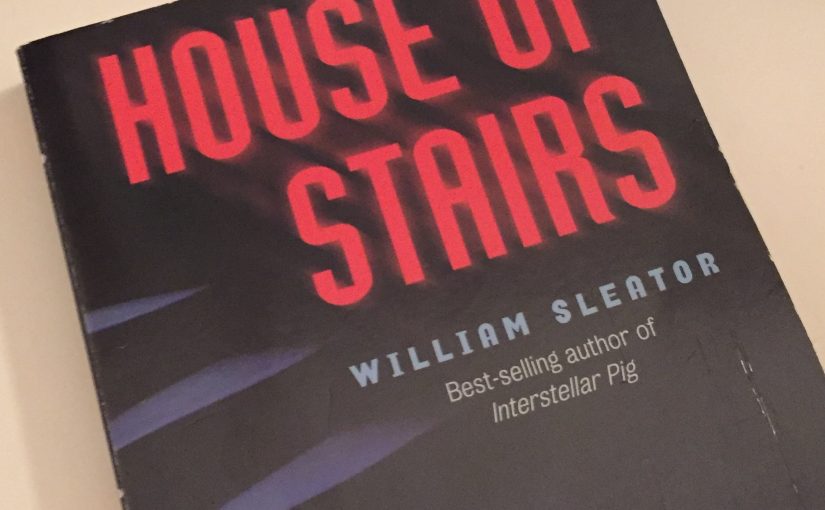
    Whilst I was thinking about what I might say, I read through what the others have written and one quote from Audrey Watters is “I’m afraid that the future of education will be built by people who read dystopian science fiction novels and liked the “innovations”.” That made me think about books I have recently been reading by William Sleator. I am only familiar with his young adult novels and one book in particular has stuck in my mind for the past 20 years or so: it’s called House of Stairs and was published in 1974.

    When I read it as a young adult I was most interested in the individual characters, five 16-year old orphans, trapped in a seemingly endless space that is filled with white stairs. The stairs become their world, the landscape in which they negotiate each other and themselves. As their struggle to survive intensifies their relationships do, too. At the end of the book [spoiler alert…] they are rescued. Yet despite the relative safety they find themselves in, their experience alters their behaviour and lives irrevocably. Some resist, others comply, and all pay a high price. It is not a happy ending and the vision of a dystopian future where even the most basic of rights and choices are beyond the characters’ control stayed with me.

    Reading it again recently I thought less about the individuals, although the story is still gripping, and more about those in charge. Those who watch over their experiment as it comes to its gruesome conclusion. The powers that be (political or economic) have needs that this experiment must meet and the fate of the young protagonists is only incidental, it is revealed, to the wider effort. They have no agency, no say over their fate or future.

    To be able to think, analyse and reflect is empowering. Having agency, having the power to determine the shape of things to come, seems to me to be a purpose of education. In the House of Stairs only extreme resistance offers the chance to exercise your own will, to have any form of agency.

    I just hope that the people Audrey Watters is talking about don’t have the same bedtime reading as me.

  • #edtechReflection: getting started, reflecting on failure & other ideas

    In the previous post I talked about how the aspect of professional practice I have most conversations about is reflection. Whether it’s discussing how useful it can be, questioning how you can safely reflect openly with others or how to get started, it seems to be a key topic for many. For me it’s become clear how important a part of my professional development it really is and so I want to share my approach in the hope that it might prove useful or indeed prompt others to do likewise.

    I have included tips for getting started, reflecting on failure and reflecting in the first person as well as developing reflection as a professional habit:

    Have a look at the slide deck below and do send me your thoughts or feedback:

    You can also access the slide deck together with my CMALT portfolio at https://goo.gl/44I4Bd .

  • #CMALT 1 year on: #edtech reflection & professional practice

    It’s been nearly a year since I gained CMALT accreditation and I have been using the start of the year and involuntary free time caused by a severely sprained toe (which causes more mischief than I would have imagined) to look back at my CPD activities over the past year. There are three things I learnt I want to share and in the process I have come to make this slide deck on reflection.

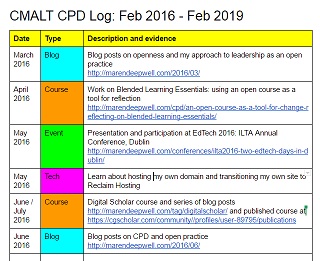
    What I have been up to CPD-wise: I have continued to use my CPD log to record activities over the past year and from that I have discovered that it’s quite difficult to keep track of these things. The log prompts me to record courses or blog posts or conferences more readily and usefully highlights the need to record/back up evidence. One course I took part in removed access rights quite quickly after it ended, making it difficult to record much of the experience retrospectively. Similarly, informal learning or development has been harder to record unless I write a blog post or personal reflection on it at the time. The kinds of things I have recorded meanwhile paint a picture of interests explored and ideas that I have had, which provides me with insights I didn’t have before (and hopefully should make it easier to update my CMALT portfolio when the time comes).

    Finding gaps: keeping a log of my CPD and writing things down has also led me to find gaps. Areas in which I haven’t done enough or thought I did more than I actually have done. One such area for example is publishing beyond my own blog and making more of an effort to find time to attend conferences I haven’t been to recently. While it’s a bit late to make new resolutions for this year I aim to do better in the coming year.

    Reflection: the aspect of professional practice I have most conversations about is reflection. Whether it’s discussing how useful it can be, questioning how you can safely reflect openly with others or how to get started, it seems to be a key topic for many. For me it’s become clear how important a part of my professional development it really is and so I want to share my approach in the hope that it might prove useful or indeed prompt others to do likewise. I have included tips for getting started, reflecting on failure and reflecting in the first person as well as developing reflection as a professional habit.

    Have a look at the slide deck below and do send me your thoughts or feedback:

    You can also access the slide deck together with my CMALT portfolio at https://goo.gl/44I4Bd .

  • Getting into the #23things habit – team update

    img_3141I’ve been writing quite a bit for the #23things course, some of the posts were about my personal experience, while others included reflections on my experience of taking part as a team together with my colleagues.

    My first post about this shared venture is dated 16 September, so it’s been over two months since we started and we have been participating pretty much every week since.

    We have taken a very flexible approach as a group, giving everyone express permission to take part in whatever manner they see fit. We have a shared scratchpad (Google doc) and at our weekly team meetings we talk about one of the 23 things, usually picked by one of the team who have a particular interest and questions. We have also had a guest or two join us for these discussions and that’s been particularly interesting (special thanks to Ewan!).

    However, while each week is different and sometimes we spent more time and others less, there is one particular impact that I am delighted about: we have started to get into the habit. The weekly spot in our team meeting agenda has become part of what we do as a group, the conversations becoming more lively and wide-ranging as we share our different perspectives and questions. It’s quite surprising to come upon topics where some know much and others have questions.

    As a team we have become more comfortable at being challenged by topics we know little about or tools we haven’t tried. It’s a lot of fun for me personally to be part of the process, because in a leadership position and as everyone’s boss I don’t always get a lot of time with my colleagues in that kind of context.

    So, whilst there are plenty more things to discover in the course itself, I am also thinking about how we can expand on the 23 things to maybe a weekly thing, a topic or question or tool or technology we can talk about. The kinds of interactions the course has prompted us to have regularly are definitely a habit I want to keep.

  • #LTHEchat reflections: metrics of success vs. stories of succeeding

    img_4487This post is inspired by taking part in a recent #LTHEchat tweet chat. If you haven’t yet discovered this excellent chat and have an interest in learning & teaching, go and explore their website before reading this. The topic of the chat was ‘what motivates us to use digital tools for learning and teaching’ and while the conversation was thought provoking the exchange that set my mind on a different tangent was the tweets pictured here with David Hopkins (@hopkinsdavid). Incidentally, if you haven’t already done so, this is a good time to discover the ‘Really Useful Edtech Handbook‘ David has edited.

    But now, back to my thought tangent. We tweeted about how reflection is useful and how reflecting on and sharing when things don’t go well is important. David then suggested that we can sometimes learn more from things that went wrong than what worked because we reflect more. And that got me thinking, because I reflect on why things worked or didn’t work all the time and and my working life is filled with ghantt charts, project plans and risk assessments that are all designed to help me understand and shape processes and why they work or otherwise. But I don’t think I reflect more on things that don’t work, because often I cannot afford for something to go really wrong – there aren’t a lot of spaces in my work where it is safe to fail. I am in a leadership position where a big failure can have serious consequences and my job is to make sure that this doesn’t happen. Instead, I think most about the things that went right for all the wrong reasons. And that is what this post is about.

    It’s a bit like the ‘known knowns’, the ‘known unknowns’ and so forth. There are things that go to plan and succeed, those that go to plan but fail, things that don’t go as planned and fail and then there are things that don’t go as planned but still succeed. You can easily imagine a pie chart that would show how all activities or projects can fall into these categories. If my plan is a good one it probably has enough flexibility built in to ensure that it can adapt to changes or unforeseen circumstances and still succeed. But it also happens that we arrive at the desired outcome, be that a successful project, resource or lesson, despite things going wrong. For example, if you end up having fewer people to work on something than expected, you might identify non-essential tasks and eliminate them. Or when faced with a problem someone might come up with an innovative solution. Or you might be able to reach your goal in a way that’s more efficient. The key for me is not in following the plan, but to reflect on the reasons why it had to change and to learn from them for next time.

    Yet, there is a difficulty when you succeed despite things going wrong I find, because when you report on success your audience will not question it in the same way as they would failure. Whether it’s a colleague, a customer or an Executive Board – successful outcomes are  noted and sometimes recognised, but also they can be taken for granted. When something works out we are quick to move on to the next thing, the bigger project… without really understanding why something has succeeded. Often the metrics of success do not reflect what it took to really deliver a successful course or new technology. The measures we set out are often reflective of impact, engagement, income… not usually of the number of times things had to change, how often plans amended or approaches adjusted. In very few instances do you wish to highlight to your audience all the things that went on behind the scenes to make what they are looking at possible. The final presentation, event or report is usually a sanitised version of what we went through, lessons learnt showing what we did right rather than wrong.

    I am generalising to a degree, but I do think it’s valuable to consider how we can learn from what succeeds and what doesn’t in a manner that is not as focused on outcomes. Openly sharing practice takes a lot of confidence and determination. Openly sharing the stories behind success AND failures even more so. Taking part in communities like the LTHEchat or indeed those organised by Members of ALT, the organisation I work for, can help with that I find. There is strength in numbers and reflecting on our experiences together can make it easier to share the more personal, less polished stories of we have in common.


  • Omni-directional expansion of the ‘Google me’: exploring my digital footprint in 10 screenshots

    Hello, and welcome to thing no.3 of the #23things course (also, this is my 100th post on this blog)… As I mentioned previously I am taking part in this course together with my team. If you are curious about our approach read the post, but here it is in a nutshell: we have given ourselves permission to lurk, audit, explore or participate in each thing as we deem fit on an individual basis. So… this is my attempt to contribute:

    img_4038This task starts with searching for yourself on Google and that’s where I have paused. It feels strangely personal writing about my own search results, but then of course that is the point of the exercise. This information is already in the public domain and easily discoverable by anyone. Why did searching for myself give me reason to pause? I want to explain why, using 10 screenshots I took:

    Front page: The most public version of ‘me’ is on the first page of results. Like most of you I monitor the information about me online regularly and the results presented here are what I expected. It’s sometimes surprising how high events I participate in appear in the search results, but so far, so good.

    img_4036Old News: In contrast to the first search results, this is not a list I look at frequently, but I’m already uncomfortable. Giving interviews or quotes is a circumspect business but no matter what I say it can read badly after a few years  (or sometimes far sooner). Looking at this list also reminds me that I am not consistent when it comes to archiving news items, so I suppose one advantage of having whatever you say archived and indexed is that you can compile at least a partial list at a glance. Next!

    Videos: I often ignore how much video there is now of img_4037me. Granted, it’s a tiny amount in comparison to others, but not even 10 years ago there was no video of me at all. In most cases the video is a recording of a live event either in front of an audience or online. It’s often improvised, never polished and can make for cringe-worthy watching for me. On the other hand, some of my favourite moments in my professional life have been in front of an audience, so on balance I think I am glad to have these videos and hope that some are useful or interesting to others.

    And now… images: this is where you can go down all sorts of rabbit holes and find surprises. First up: pictures in weird settings or combinations:

    img_4034

    img_4033

    Images I have no control over and that are ranked highly, can feel like an annoying part of my digital footprint. In other instances the images are not of me, but made by me or posted by me at some point in the past. It can be fun to rediscover a former self , but it strongly reminds me that each time I publish anything, this post included, I make a decision to add to this expansion of stuff about or by me:

    img_4032

    img_4029

    img_4030

    Some images, like this one above for example, I posted at some point and thought I had removed. Others, like the one below, are a blast from the past. In this instance it shows an outdoor trade-show of funerary wares, mainly coffins, that I visited as part of my doctoral research.

    img_4031

    Finally, there are also images I post on sites like JustGiving, when I was raising money for Cancer Research. I am not sure how I will feel seeing this in a few years time, particularly if my personal circumstances or those of my family are different by then. What if you find images of raising funds for someone who is no longer with you? img_4035

    All of this information about me is on the surface. I haven’t really started digging into what else you can find about me online and there are dire warnings about what can be done with personal information that isn’t safeguarded. That’s one reason why I am taking part in this course. Being online, particularly as an open practitioner, is making yourself vulnerable. Josie Fraser gave an inspiring keynote at ALT’s Annual Conference this year and I’ll end this post by encouraging you to watch it. Don’t let trolls follow your digital footprints…