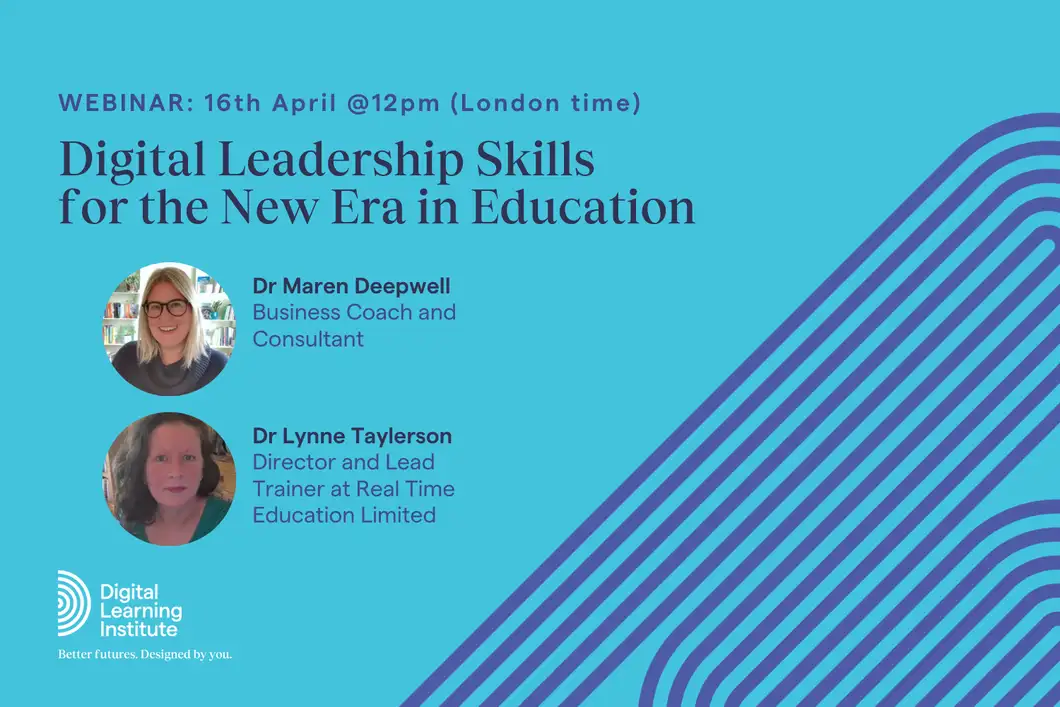
Working with Lou is easy as breathing, because Lou is such a prolific facilitator. It’s always a joy to work with someone who is THIS good at making collaboration easy, who makes everyone feel welcome and who has a gift for explaining complex concepts in such a way that you can relate very easily. It was such a joy!
Lou’s one of the people behind an innovative Instagram Magazine called Fusion, and inspired by our session I’ve submitted an article, which will hopefully be published in the summer.
The recording of the session is now available to watch and you can also access the slides with links to the resources we discuss:
‘Digital Skills for Emerging Leaders’ is a new micro-credential course from the Digital Learning Institute that I am working on together with the amazing Lynne Taylerson. It’s a super project to be involved in, and it’s extra special for me as I get a change to collaborate with Lynne outside of our other favourite project: AmplifyFE.
Usually we work on this kind of project at a distance, using the kind of digital skills we talk about in the course to collaborate and communicate. That said, there are also some precious hours of working together in person in the mix and so Lynne and I recently spent a day together recording videos and fine-tuning the course:
It was so fun to be able to do this together, a rarity for this kind of project, at least in my experience, and I am sure that will be reflected in the quality of the final product as well.
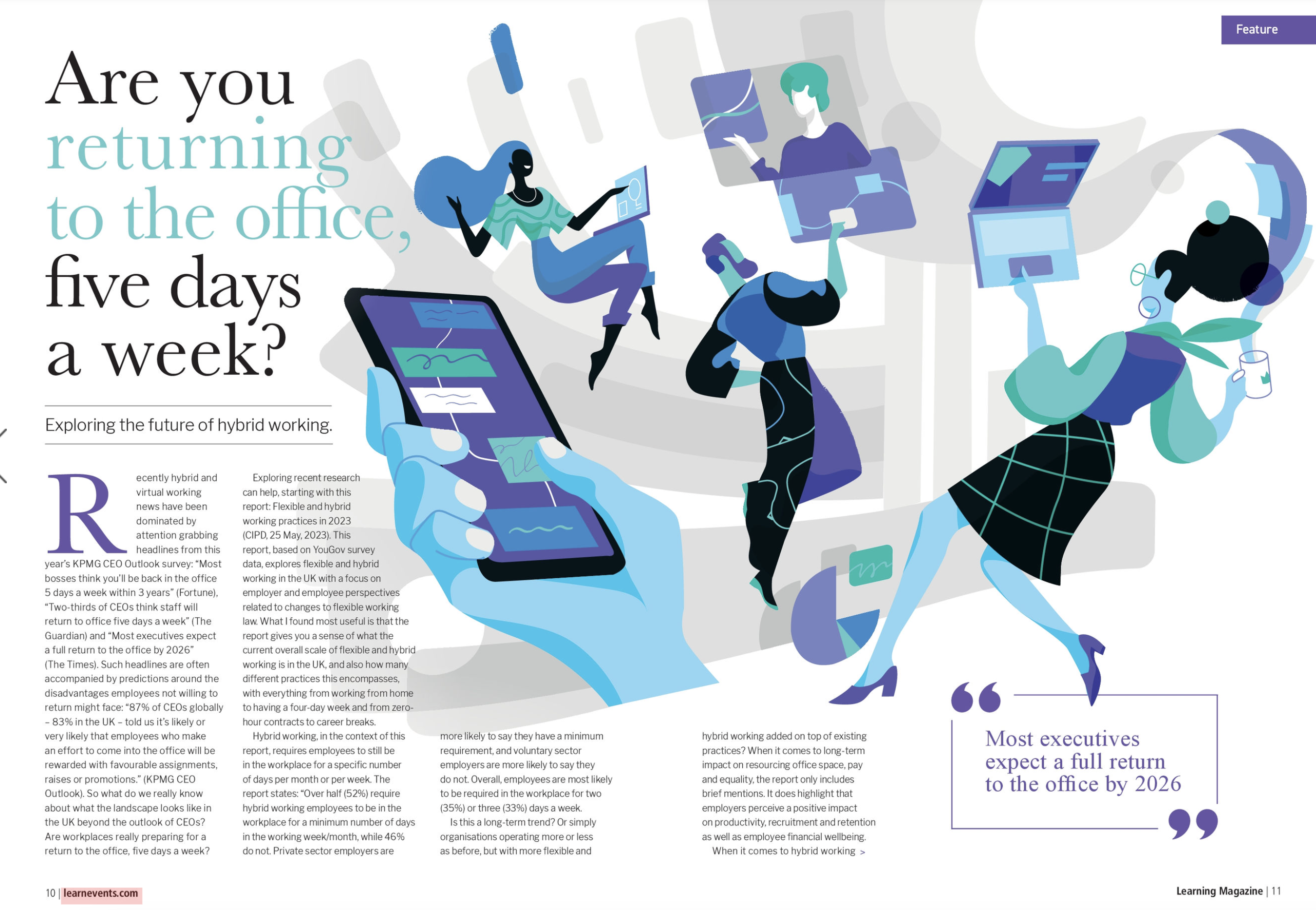
I am really looking forward to speaking an next week’s World of Learning Summit. In preparation for the session and to offer an insight into what my session will be about, I contributed an article to the Learning Magazine: you can read the article freely online.
Screenshot of the article with the caption: Are you returning to the office, five days a week?
My session at the summit is on Wednesday, and focused on offering an interactive discussion forum for leaders. We’ll explore hybrid working recruitment and retention, new trends in hybrid working and also challenges that arise over time from recruitment to long term retention.
Look out for the slides of the session, which I’ll be sharing via my linktree.
Don’t miss a post. Subscribe to my free newsletter and get a summary of everything once a month to your inbox.
Today is a big day! Together with colleagues from all across the UK, I am heading to London. It’s the Week of VocTech, and the annual showcase of everything that’s happening across the sector.
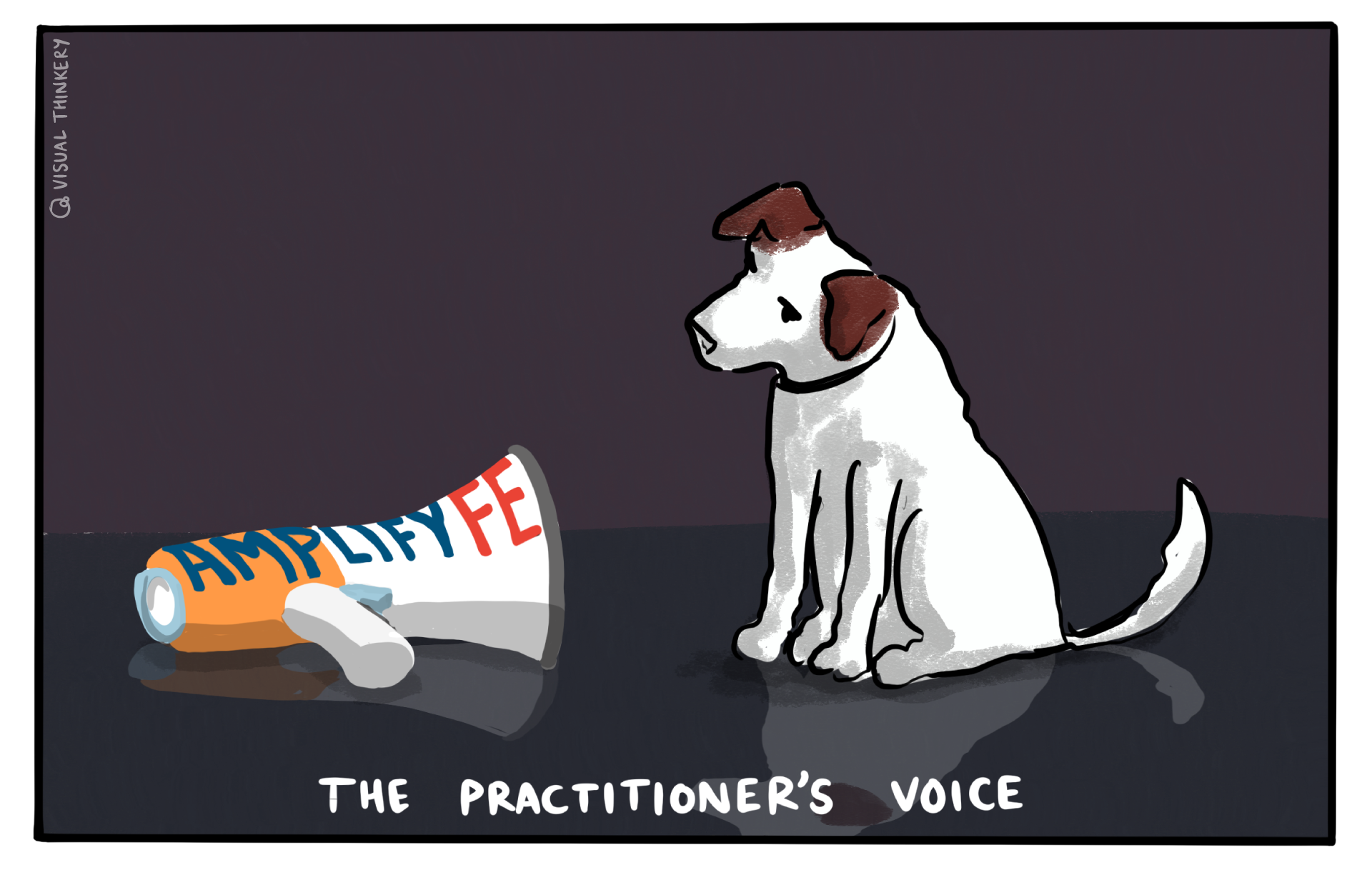
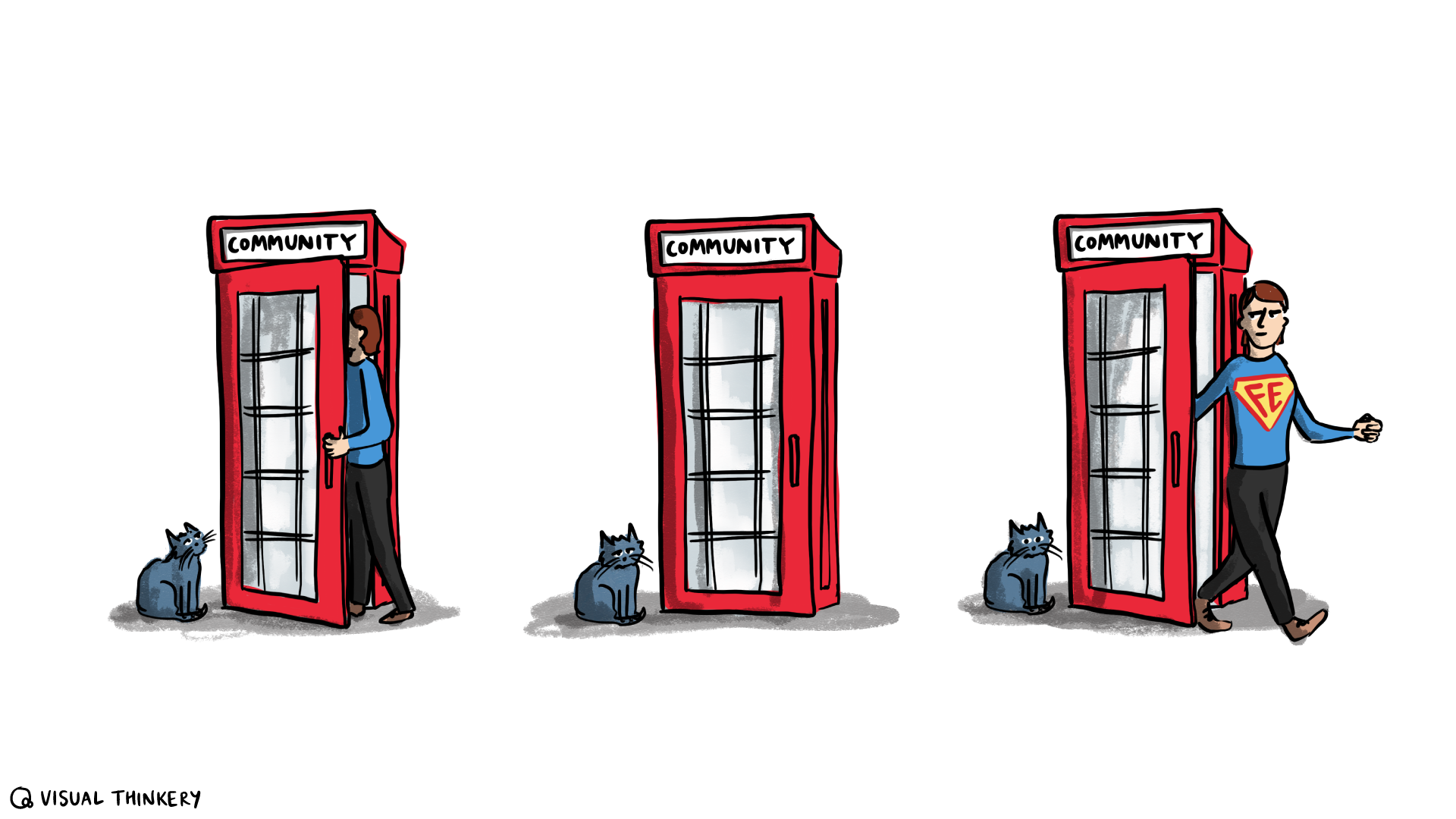
I feel fortunate to be continuing my work as Strategic Lead for the partnership between ALT and the Ufi VocTech Trust even though I stepped down as ALT’s CEO earlier this year. There’re a couple of reasons why: from a personal perspective, I love working in Vocational and Further Education because that’s where I took my first steps from alienated high school drop out to finding my way into further learning. Next, I love being part of a partnership where so much actively happens (and we have achieved much in the last few years). The biggest reason however is AmplifyFE. Yes, it’s a project, yes, it’s working in partnership, yes, there are awesome people involved, and it is also so much more than that: it’s a grassroots community of practice that is connecting the dots between individual practitioners, innovators and industry for the benefit of the learners furthest from opportunity. Since it’s launch in October 2020 (remember that time?) our community has grown to connect 2,700 practitioners.
Over the past twenty years I have worked with lots of projects that tried to achieve what we have done, and my bookmarks bar is a graveyard of moribund communities of practice in which tumbleweeds flourish. So what is the secret sauce of our success?
As we enter our fourth year, here are my reflections:
We connect, we don’t compete
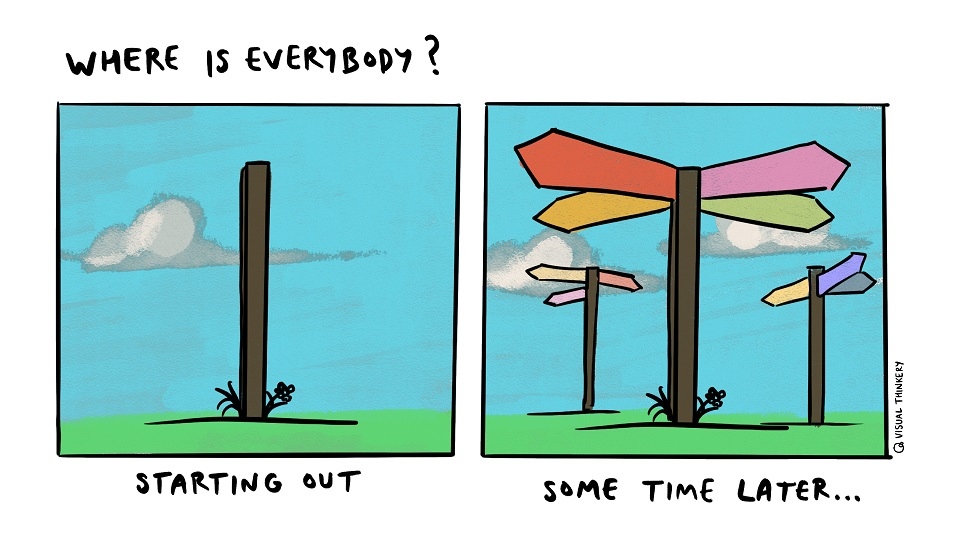
When we first started setting up AmplifyFE, we were very clear that we were building a network of networks, not a new network. This distinction is key to our success: we don’t aim to replace or take over existing networks, we act as a meta network, an overarching connection that links one specialist group with another, one sector event with practitioners who don’t know where to start. We don’t wait for you to come to us. We try to find and come to you.
Part of our mission is to help those who are isolated within their institution or specialist subject, those EdTech or IT teams of one, to connect with people who speak their language and share their concerns.
We put everyone on the map
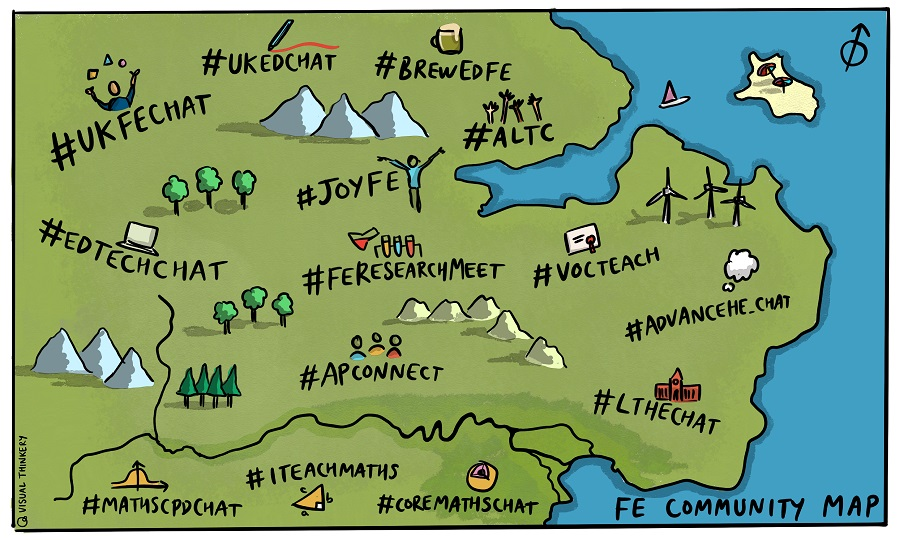
All of our artwork is created with Bryan Mathers via a Visual Thinkery process. Our community map was one of the first things we developed, and it was born out of a desire to show the communities and conversations that we already knew about and to allow others to (literally) put themselves on the map.
That’s a very powerful message to send. We say: put yourself on the map, and we will help others find you, join in and contribute. We want to map where the conversations about practice are really happening, no matter how informal or niche your interest. In a sector in which everyone is under pressure, short of funding and faced with mounting challenges, let’s connect you with the people who are in the same boat. We are not gatekeepers, we are map makers.
We reflect our community in our research and case studies
We also take a deeper diver into how learning technology and digital tools can be designed and deployed to support vocational learners most impacted by the ‘digital divide’. We explore what key advice can we give to those beginning or continuing an innovation journey in VocTech.
Our Insights Report shares fresh research and case studies that show what makes for truly successful co-creation between vocational educators and digital design project teams. We unpack how we can create effective learning solutions working in partnership with vocational learners to help narrow the ‘digital divide’ for those most in need of workplace skills development. Basically, we find practical examples that show what is the difference between what really works and what doesn’t deliver.
We learn from others
One of the phrases we think a lot about is ‘by the sector, for the sector’. I am always curious about what people mean when they say it. How much do you know about ‘the sector’ to begin with? How do you take part? How do you contribute? And what are you asking in return?
We work with a community that suffers greatly from the ever-changing policy and funding changes starting at top-level government policy, to sector bodies and then filtering down to the local level and to individual institutions. Excellent programmes are launched, and then disappear again 3 years later. Or funding is cut for frameworks and skills training that had been invested in for years.
From the outset, our work with AmplifyFE was designed to learn from that. We wanted to find the data that shows how much the constant changes impact on professional development and innovation. Since 2020 we have collected and analysed this data annually, and published the results in our sector audit.
It’s a fantastic piece of work that really shines a spotlight on the scale of change that Further and Vocational Education has to weather. We learn from that, and we aim to change that.
We use our funding to stay free and open
Thanks to the funding from the Ufi VocTech Trust and the partnership work between the trust and ALT, we benefit from three decades of expertise in how to run an independent community of practice and we can stay free and open to all practitioners to join.
And that brings me to the biggest lesson I learnt over the past three years:
We are here to stay
Building trust is key to our success. Our team (the fabulous Emma, Lynne, Chloe as well as Lou and also others) includes only people who really understand the sectors we serve, who have worked in Further and Vocational Education and often they still do. We are transparent about our aims and also what we won’t do (i.e. commercialise our community) .
Active communities of practice that grow are gold dust. We know from our sector audit how many communities disappear each year, either because no one is active or because of funding or policy changes. Or sometimes simply because a certain social network is taken over by madness. Remember the sector forums that suddenly closed? Or the demonstrator programme that stopped? Or the skills training that was cut? Well, we do, too. And that is why we are here to stay, actively supporting our community and amplifying what is happening across sectors as an independent network of network.
I’ve put together three ideas to try out whether you are having a busy summer or taking a break. So if you are looking for some inspiration and ideas to recharge for the next academic year, have a go:
Tips for a week of complete rest
It’s taken me a long time to be able to step away from all types of work all together, and for me, having a complete week off is a big achievement.. as well as a reflection of how busy I have recently been. I took some practical steps to ensure that I had a complete break, and I wanted to share some tips that worked for me:
I completed a holiday handover, with my amazing colleagues and deputy, and then logged off all work systems completely on my last day at work;
No laptops came on holiday, and all computers at home where switched off when work ended;
I deleted all work-related apps from my phone or switched notifications off completely, included direct messaging, emails, and task management apps;
I logged out of/deleted all social media apps, like Twitter and LinkedIn, that I only use in a professional context;
calendar notifications were switched off or paused
A simply note to make a list of anything that I thought of, which were work related and which I wanted to pick up upon my return;
I intentionally packed books, audiobooks and other entertainment that would help me focus on things other than work.
Many of my clients are looking to make progress in their work or personal lives: to make a change, develop their career path or build personal habits. Many of us have goals like ‘progress in my career’ or ‘be happier’… but it can be hard to break down exactly what to do in order to achieve our aims and define what ‘success’ means to us. In this post I share practical steps to help you put your goals on paper and break them down into achievable chunks, including:
I am always on the look out for new tools or resources for coaching, and I want to share this one I came across in a blog post by Laura Vanderkam: It’s called a ‘List of 100 Dreams’. If this is a new concept, then head over to Laura’s blog to read more about the original exercise from Career coach Caroline Ceniza-Levine and how Laura has used this exercise as part of her work on productivity and time management. The ‘List of 100 Dreams’ is exactly that: a long list of things you wish to do, have or devote time to. In essence, it’s a very long bucket list.
I felt this was a lot of fun to try out, so if you are curious to learn more and try this for yourself, here’s how to get started.
I was delighted to contribute to the VocTeach FE Symposium – Aggregating High Quality Online Educational Resources for FE organised by the Open University alongside experts including Bob Harrison, Vikki Liogier, Caroline Wright and John Domingue.
VocTeach FE Symposium kickstarted a broad community around this issue related to supporting the aggregation of high quality learning resources for online FE education. Specifically, we will bring together FE educational experts and practitioners, EdTech experts, awarding organisations and other stakeholders to begin to agree next steps.
My talk focused on AmplifyFe, a project I have been leading for ALT for the past year.
AmplifyFE launched in October 2020 and we already connect hundreds of professionals.
Get involved
If you are looking to share news about your work, find experts to collaborate with or learn more about specific subject areas, then the AmplifyFE network can help.
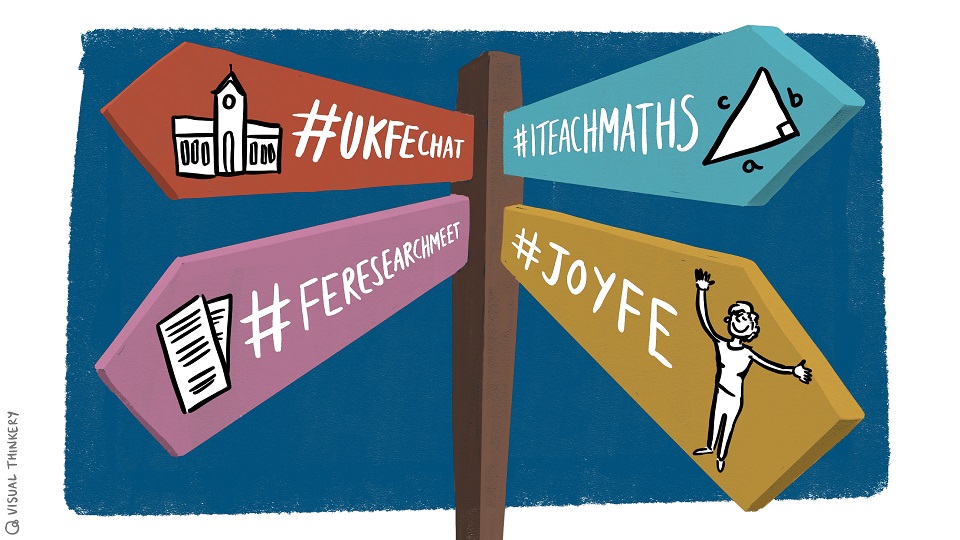
Tag your posts #amplifyFE on social media, and we will help you spread the word.
Sign up to our mailing list to keep informed and get involved.