“There are a lot of competing priorities, not least of all the new area reviews of post-16 education and training that Bobbie McClelland, Deputy Director at the Department for Business, Innovation and Skills (BIS), spoke about at the recent ALT Annual Conference – you can watch the briefinghere.
For many colleagues the start of the new term and a whole new cohort of students will likely have stretched the capacity to its limit, and new systems, tools and procedures put an added pressure on giving learners the best possible experience from day one.”…
Read the full article in FE News here. Published 15 October 2015.
I’ve been working in my #CMALT portfolio. Given that I haven’t yet submitted it for assessment (it’s not quite finished) you might rightly think that a blog post about sharing it is a little premature. Of course you are right – and I won’t actually share it until it has been assessed and (hopefully!) passed sometime in the future. But my intention to share it openly has definitely shaped how I have approached things and to me it’s interesting to reflect on the why and how of that process.
The main reason why I want to share my portfolio is that reading others’ portfolios has been a really valuable part of making my own. I have found it interesting to see how others have build theirs, from the technology used to reflections shared. At times, I have been humbled by what others have achieved (often single-handed) and often I have felt empathy with individuals whom I don’t know, but who were struggling with the same things I have. In what is largely solitary undertaking the portfolios of others have provided inspiration and motivation.
But sharing what is essentially a personal artifact incorporating examples of work and reflection has not been entirely straight forward. My chosen format, Google docs, makes sharing easy. I can even set up a shared folder for additional evidence and control who has access. Licencing, too, I have considered. The most restrictive Creative Commons licence seems like it might work for this purpose. Some of the examples/evidence in the portfolio is already licensed under Creative Commons so that aligns well. I should be able to produce backups, copies for updating and different formats of the portfolio quite easily and that is an important consideration for me – I wanted to make it as easy as possible for me to actually do work on it initially and subsequently keep it updated.
But what about the actual content, what I describe and reflect on – in particular working with other people? What about reflecting on failures? In most instances I have opted for not mentioning individuals by name, using role titles or generic terms instead. This is particularly important I feel when talking about colleagues in the team I lead. While it hasn’t always been easy, the consideration that what I am writing could potentially be read by anyone has contributed to making my work more balanced. But there has also been tension between accurately describing what I do and respecting the privacy of those I work with. Now that the portfolio is nearly finished I have shared with my staff team for feedback. This way everyone who is referred to has the opportunity to read what I have written and comment on it.
A further consideration has been including things that don’t work, things that have gone wrong. Given that this is a portfolio meant to demonstrate professional experience and skills, you are more likely to include examples of things that have worked. But for me there is value in reflecting on things that could have gone better, what I could have done differently. Including that in a publicly-shared document however deserves consideration.
From the outset, the intention of sharing my portfolio has shaped how I have approached my portfolio. It’s been particularly valuable as it has encouraged me to reflect on the guiding principles of the #CMALT framework in my work – one of which is empathy with and willingness to learn from others. In that spirit, I hope that my portfolio can one day be useful to others in similar ways.
Compiling my portfolio for submission for CMALT, ALT’s peer-based accreditation scheme, has been a long term project. Originally I started in 2011, but I didn’t complete it. Now I am close to finishing and planning to submit my portfolio (finally). As part of the process, I have made drawings for each section of the portfolio, usually one per section. The first few drawings I made close to a year ago, but I am still adding new ones. Some are illustrations based on CMALT criteria or headings, others are from my work and blog posts. Most of the drawings start life with pen and paper, but many end up being re-drawn on the paper app on an iPad and later edited again with more apps to add text, adjust colours and so forth. This kind of professional development definitely doesn’t require you to get your colour pencils out and start drawing things, so why? Here are my thoughts:
First, drawing is something that’s been a key part of my practice, of the way I think, long before I started working in Learning Technology and I still find it an invaluable part of my work today. Whether it’s designing open badges or trying to figure out a complex network of use-cases, I often find drawing things down helps with problem solving and communication.
Second, drawings are a good way for me to express different parts of my vision, my personality. I like using them as part of my approach because they can be more eloquent than words and allow me to contribute something more. When I contributed #rhizo15 earlier this year, I found that drawings were a great tool for participating either together with text posts or as stand alone posts. There is something about using colour and images that really connects wit the way I think about things. In the case of my #cmalt portfolio, adding drawings helped to make it feel more like me, help me focus on what I wanted to communicate about my work.
Finally, and importantly in this context, drawing takes time and focus. For me it is an excellent way to reflect and reflecting on your practice is a key part of the #cmalt framework. I often started a section with a drawing and by the time it was finished, I would be ready to start writing, having laid out the ideas in my head. The reflection is probably the most rewarding part of the process for me.
It’s not really about the drawing in itself, more about the process as a way of giving myself time and space to really think about things, figure out how I feel about something and sometimes, it ends up surprising me with unexpected ideas. That’s the best part for me.
As part of the organising team my experience of ALT’s Annual Conference is different from most. I’ve been really enjoying reading others’ reflections of this year’s event and that’s inspired me to share my own. So this is looking back #altc… from my personal perspective.
Badges in the making… Photo credit : Maren Deepwell CC-BY
The week before the conference is always hectic and full of anticipation. One of the tasks we help complete all together is making badges. It’s much quicker if everyone pitches in and I find it interesting to see who is coming, reading the names and institutions on each badge as the lanyard clicks into place. This is my sixth year coming to the conference and I’ve come to know many of the participants but there are always plenty of new names to learn. This year is the third time I’m seeing the event in Manchester. It’s a great location and does have the added bonus of a strong technology connection with a blue Alan Turing plaque on the building close by.
The day before the conference. Photo credit : Maren Deepwell CC-BY
When the actual day before the conference finally arrives and set up is underway, I get to spend some time in the main theatre. I like standing on the stage when the room is empty, learning its layout, checking the set up. It’s good to know what speakers will experience so that we can support them on the day. It’s also my habit to get comfortable well before welcoming hundreds of participants the following morning. Once the first wave of registration is underway the atmosphere changes and gradually the conference comes to life.
From keynote by Laura Czerniewicz
During the plenary sessions I get to sit at the very front and over the years our keynote speakers have created some of my favourite #altc moments. This year was no different. What connected them for me was their desire to share the spotlight. From a new generation of teachers to a new community of connected learners to a global voice on equality – for me each of the speakers chose to turn our attention to some of the big questions we face. I come away with notes on what we might do better or what we could do more of in order to meet these challenges.
AGM voting in action. Photo credit : Chris Bull CC-BY-NC-SA ALT
Another key moment of my conference experience is the Association’s AGM. For me it’s a culmination of a year’s work, another milestone in the history of the community I serve. It’s also a symbol of our member-led governance structure and a powerful reminder of the hundreds of individuals who contribute day in day out. Every year after the AGM the Trustees meet briefly in a formal Convening Meeting. It’s usually in a small room somewhere away from the conference sessions and for a short period everyone turns serious and gets focused on the business at hand. This is when all Trustee appointments are confirmed. It’s an essential part of the Association’s governance and the moment when newly appointed Trustees take on their role.
Learning Technologist of the Year Awards winners. Photo credit : Chris Bull CC-BY-NC-SA ALT
Once that is all safely out of the way and with the second day nearly finished, the mood turns celebratory as everything is made ready for the Awards. Together with the judging panel I am one of the few people who knows who the winners are in advance and seeing their excited faces, teams and individuals getting ready to be called up on stage, is one of my favourite conference moments. My job is to safely convey award certificates and running orders without giving away the results until the big moments for our finalists is finally here. Having managed the process from initial application to interview, it’s incredibly rewarding to see how much it means to each to be recognised, to be celebrated.
Welcoming everyone on the first morning. Photo credit : Chris Bull CC-BY-NC-SA ALT
There’re many big moments over these three days, but fundamentally my experience consists of many more small encounters, a conversation over lunch with a first time participant, a chat with an exhibitor during a quiet break, a friendly hello to an acquaintance on the way to another session.
Or the moment when the whole auditorium suddenly goes quiet just before I get up on stage welcoming everyone (and reading out housekeeping announcements). That’s special to me.
Three days later, when we say thank you and goodbye I’m always a little sad that it’s over. Fortunately, planning for the next year is already underway, so there’s a lot to look forward to #altc.
“August is usually the month where everyone is on holiday. For us, it’s the busiest time of year. So if you are keen to browse and think ahead of what this year’s Annual Conference of the Association for Learning Technology has in store, here is a personal preview. This year’s programme features an FE and skills track on Wednesday which I am really looking forward to (and if you cannot participate in person, you can follow much of it online)…”
Read my full FE News article here . Published 5 August 2015. Or visit the conference web site.
Having finished reading/listening to a new memoir by Felicia Day – You are never weird on the Internet (almost) – I wanted to note my thanks. So here goes:
I’ve never met you, Felicia Day, but I am grateful to you for adding your voice to the story of the Internet, of gaming, of women working in tech-focused industries and for sharing your story of incredible achievement against many odds.
It’s inspiring to read how hard making things happen can be and how the generosity and engagement of your community has made things possible. It’s important I think to tell stories about living, working and playing with technology both good and bad.
If you haven’t read it, you might enjoy it. I certainly did. The only draw back is that it will probably be a decade or two until the sequel is published…


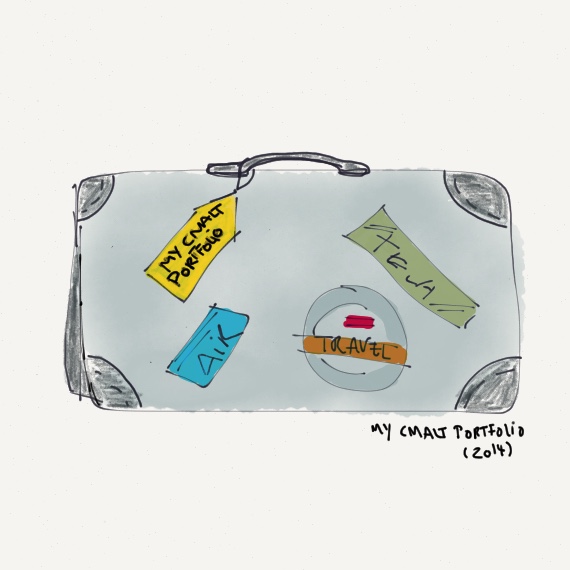 Compiling my portfolio for submission for


 “August is usually the month where everyone is on holiday. For us, it’s the busiest time of year. So if you are keen to browse and think ahead of what this year’s Annual Conference of the Association for Learning Technology has in store, here is a personal preview. This year’s programme features an FE and skills track on Wednesday which I am really looking forward to (and if you cannot participate in person, you can follow much of it online)…”