With the end of the year around the corner, I’m adding my contribution to the many excellent reviews and reports reflecting on Learning Technology in 2017. I work at the intersection of policy, research and practice, focusing not on technology as such, but on the professionals, the human dimension of technology in education. As such, it’s been an interesting year as the relationship between people and machines evolves. I hope that there will be three posts in this series, starting with this on on…
The ‘digital’ Trojan Horse and the rise of Learning Technologists
This year ‘digital’ was everywhere, specially in education. In the UK Matthew Hancock MP became the Digital Minister (incidentally, it looks like equality still has a way to go when it comes to ‘new paradigm’ Ministers in the G7), I was involved in a UK-wide open course to Develop Digital Skills led by Diana Laurillard and Neil Morris, we read much about the digital skills gap, there were a number of digital policy developments (UK Digital Strategy, Digital Skills and Inclusion Policy, Digital Skills Partnership to name but a few) and everyone from High Street banks to executive training providers is offering to train and educate… everyone in ‘digital’ including teachers.
In education the term has become shorthand for anything to do with using or being influenced by technology, added to existing terms to make new meanings, for example digital education, digital leadership, digital teachers and digital degrees. Beyond education we operate in a digital economy and try to engage with digital democracy. We leave digital footprints, manage digital identities and sign up for digital detox. Digital is a term that has left its clearly defined roots so far behind that it is challenging to unpack its meaning even when there is a clear context – and most of the time it is a convenient way for the ill informed to describe something perceived as new or disrupted or innovative without being specific about what’s actually involved.
Many times this year (for example taking part in the Department for Education’s edtech stakeholder group alongside colleagues from the Learning and Work Institute, the Ufi Trust, Nesta or Naace, in conversation with industry leaders like Panopto’s CEO Eric Burns or working with Aula’s CEO Anders Krohn on a guide to working with edtech start ups, writing about skills development and accreditation on the Efficiency Exchange or talking about FELTAG and workforce development or discussing professionalisation at Online Educa) I have found that the term doesn’t help when discussing learning, teaching or assessment with technology. That’s because it encompasses infrastructure and hardware just as much as having basic digital literacy and goes on to include learning design, purchasing decisions and strategic planning or governance of technology. Digital can mean many things to many people. Deciding how to ‘fix’ problems or address challenges requires more definition to begin with.

Understanding professional practice
I try to unpack what we mean when we talk about digital in education, for example in the context of skills needed in a professional context: whether we mean basic digital literacy that everyone needs to use technology effectively, or the specific skills required to support the use of technology in the classroom informed by pedagogic principles and subject-specific requirements. Or whether we are talking about a professional who takes decisions about which technology to use or buy, how to implement it, how to support the use of it for staff and learners alike. Or indeed whether we are talking about senior professionals who need to take effective strategic decisions about technology, associated risks and how to make intelligent use of it for their organisation.
The vagueness of the term and how it is used can be problematic because it leaves much open to interpretation and doesn’t push us to define and agree on what we actually mean. The language we use when we formulate national policies, when we set institutional strategies, when we define personal responsibilities matters. It shapes our understanding of the world and our part in it. In Learning Technology the language we use helps us understand how professional practice is changing and critically reflect on it.
And yet I find that the ubiquity of the term digital is extremely helpful in many ways. It builds a bridge between Learning Technology and wider social, political and economic developments. It is easy to use and less of a mouthful than other terms like technology enhanced learning. It is used widely across sectors and nations. It feels contemporary, modern, new. And that is attractive to many people.
Like MOOC before it, the term digital helps raise awareness of technology being used for learning, teaching and assessment. We can use it to foster a broader, critical discourse. It can be our Trojan Horse, to open gates in the minds of individuals and institutions who have their heads buried in the sand. We can use its ubiquity to help illustrate the scale of the challenges we are facing and how we might meet them not only in education, but the workplace and beyond. Often having a digital strategy or a post with digital in the job title can be a useful first step to starting a conversation about more complex issues.
The rise of Learning Technologists
What gives me hope in this ‘digital age’, is that there are now more professionals working in all different contexts and sectors who play a part in shaping how technology is used for learning, teaching and assessment.
With over 3000 Members for the first time in its 25 year history and Members Groups all across the UK, ALT is a good example of how this professional community is growing. More and more roles in education now have a Learning Technology component and we see ever more senior roles demand such expertise also. On the one hand I still meet too many people who are looking for a magic box they can buy, plug in and which has a little green LED light that blinks and assures them that their organisation is now ready for ‘digital’. One the other hand more and more institutions invest in their people and create specialist roles to make effective use of Learning Technology.

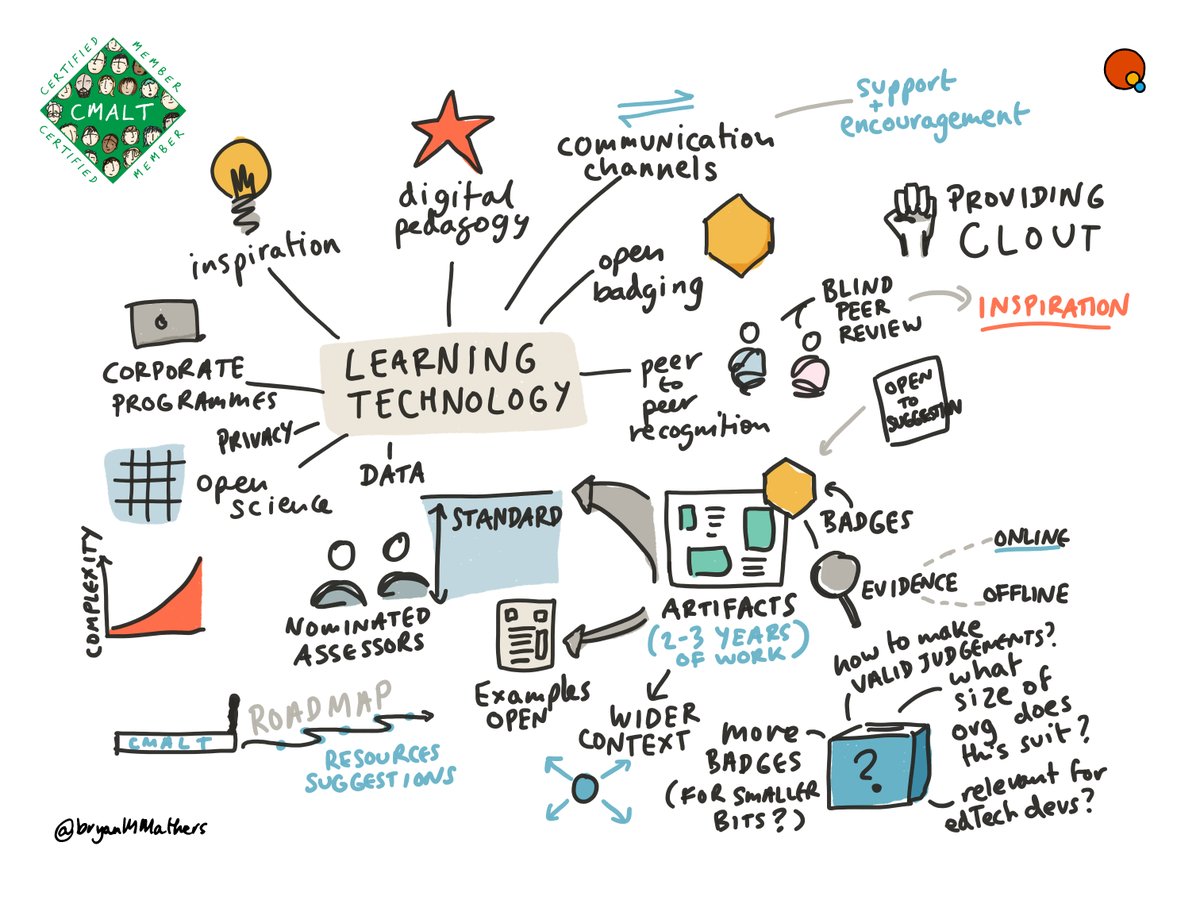
In many cases these professionals aren’t called Learning Technologists and instead have a whole variety of job titles. They may be based anywhere from the library to the IT department or their own department. In some cases they might be on their own, or work across all areas of their organisation. Or they might work independently as a consultant, trainer or manager. From schools, to colleges, private providers and universities, everyone needs more and more know-how in Learning Technology. We have seen a rise in the demand not only for training, but accreditation and professional development from all sectors. Projects like expanding ALT’s accreditation scheme and mapping the CMALT framework to other UK and international standards are a response to the rise of Learning Technologists. The breadth of professional practice that is showcased in the growing register of accredited CMALT portfolios meanwhile highlights that we now have an understanding of the skills and competencies required for this kind of work that is independent of platforms and tools and that remains relevant as we retrain and adapt to new technologies. My personal experience of gaining professional recognition as a Learning Technologist in a leadership role adds to my understanding of how the profession is evolving.
Yet as we move further into a world, and an education system where everything is ‘digital’, one question I get asked frequently is “How we know if or when we’ve arrived in the future that Learning Technology promised?”.
I discuss this questions again and again with policy makers or leaders, in consultation responses or with other experts for example on Wonkhe (here and here). Over the past 10 years I have worked with people who have thought about this question from many different angles. And we return to it frequently as we compare ourselves to what’s happening in other countries, other industries and at other times throughout history.
“How”, they ask, “can we have made progress when there are primary schools without WiFi, bans on mobile phones or laptops in the classroom, inspection/funding/accreditation bodies whose policies often don’t even mention the words technology or digital?”.
“How, and when, will we arrive in the vision of learning that the potential that technology has offered for so long?”.
From my perspective the answer is that we have long since arrived. The promised land of Learning Technology has simply turned out to be no less messy, inconsistent or challenging than what we had before. The forces of global capitalism still shape our education systems. “Are things better with technology in education?” is the wrong question to ask in my opinion.
Instead “How can we best use technology to achieve our aims for learning, teaching and assessment?” is a more useful way of thinking about the future.
And we need a diverse, critical and empowered Learning Technology community to help find the answers. I am glad that the work I do for ALT plays a part in making that happen in the UK and beyond.
Recent posts by me on professional practice
- Don’t think you are brilliant? Think again…
- Forging new pathways to professional recognition
- “How to…” heroes – or how to do CPD at a micro scale
Thanks
I take a collegiate, collaborative approach to leadership and my work in general. I am lucky to have so many people to work, think and make things with. As you’re reading this you are likely to be one of those people, and I’d like to say thank you. You made all the difference to this year for me.